
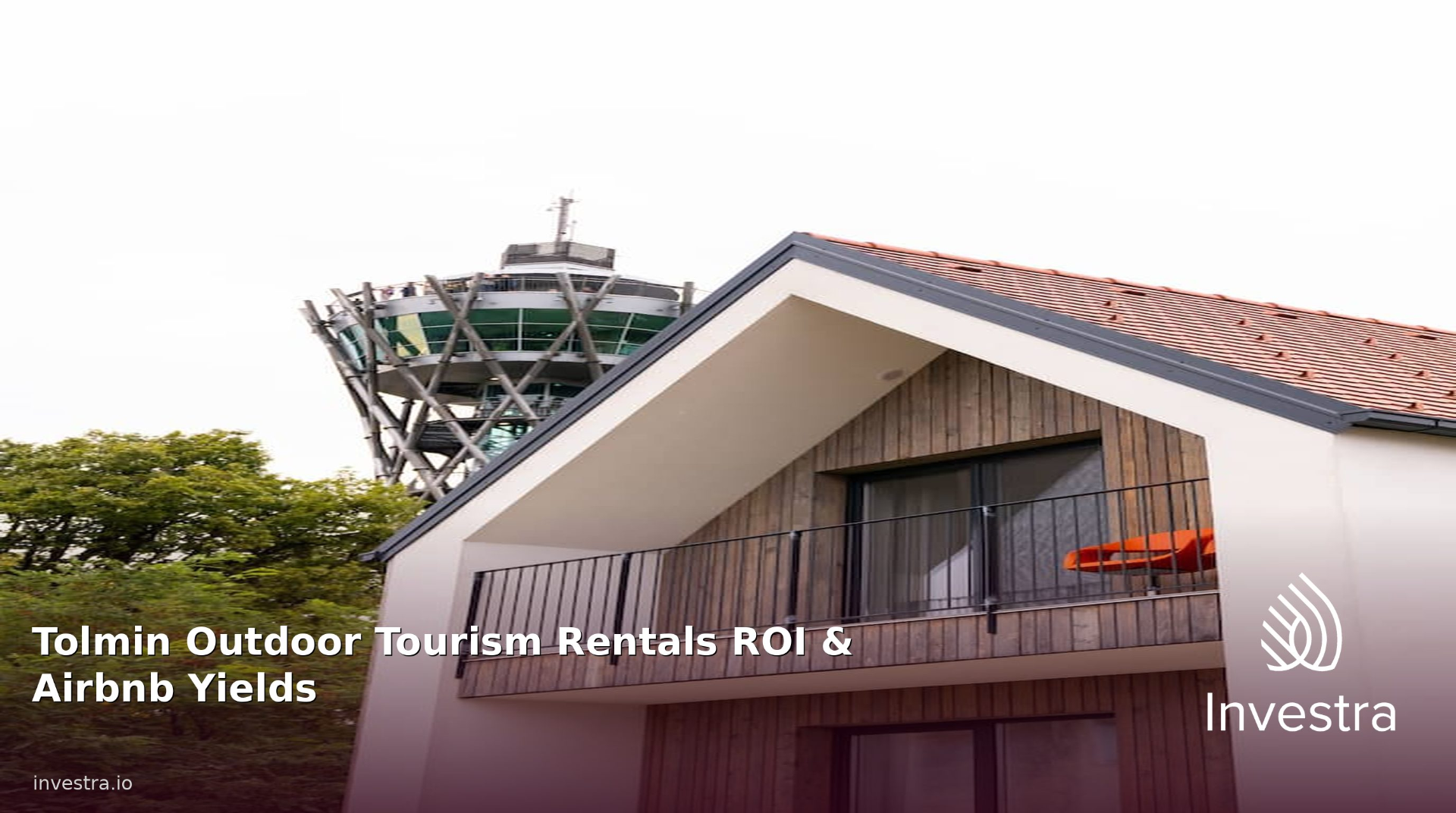
Tolmin Outdoor Tourism Rentals ROI & Airbnb Yields
Tolmin Outdoor Tourism Rentals ROI & Airbnb Yields
Overview: Tolmin outdoor tourism rentals and Goriška's appeal
Quick Answer: Tolmin outdoor tourism rentals attract visitors who come for river canyons, hiking and seasonal festivals, and buyers should research local demand patterns and legal requirements before investing. For regional market context, Investra.io offers city guides and market reports for nearby areas like Bled and Koper.
Tolmin sits at the heart of Goriška, a Slovenian region with some of the country's best outdoor assets: the Soča River, mountain trails, and a festival calendar that punctuates the summer months. When people talk about tolmin outdoor tourism rentals, they're usually referring to small-scale accommodation aimed at outdoor enthusiasts — apartments, guesthouses, cabins, and campsites catering to kayakers, hikers and cyclists. In my experience advising buyers across Slovenia, properties that match the character of the market perform better operationally: rustic lodgings near natural attractions, flexible sleeping arrangements for groups, and easy access to transport routes.
The reality is the market here is very localised. Tolmin's demand spikes around seasonal events and warm months, while off-season occupancy can fall. That creates both opportunities and challenges for short-term rental hosts who want to use platforms like Airbnb, and for long-term investors leaning toward steady cashflow. Buyers often ask whether they should focus on high-season Airbnb yields or aim for year-round rentals—there's no single right answer, and you should balance your tolerance for vacancy with operating costs and local regulations.
If you want comparative municipal or regional statistics, the best method is to consult the Statistical Office of the Republic of Slovenia and local tourism boards, plus specialist reports such as those on Ljubljana or Maribor for broader market signals. We’ve also referenced local advisory firms like Findes Group & Partners for operational and legal contacts in Goriška.
What buyers should know about tolmin outdoor tourism rentals
Quick Answer: Buyers should understand seasonal demand drivers, local planning rules, and the specific guest profile for outdoor tourism rentals in Tolmin; verify current data with municipal registries and professional advisors such as those at advisory services.
What should buyers know about tolmin outdoor tourism rentals? First, the clientele: many guests arrive for nature-based experiences rather than urban sight-seeing. That changes expectations — people often want secure storage for gear, outdoor drying spaces, and local guidance. In my experience, properties marketed specifically to active tourists need a different fit-out than city apartments: durable floors, easy-clean bathrooms, and clear, local transport information.
Legal and planning factors matter too. Can you operate a short-term rental from the property? Is the location zoned for tourist accommodation? These questions require checking the Tolmin municipal spatial plans and any building permits. I always tell buyers: don't assume permitted use; verify with the municipality and ask for written confirmations. For help with the paperwork, firms like Findes Group & Partners advisory team and consultants such as Siniša Dagary can be useful to engage early.
Then there’s seasonality: what months can you expect guests? How will you cover utilities and maintenance during low season? The reality is many Tolmin operators supplement summer income with targeted events or local partnerships. What surprised many buyers is how much local networks — rafting operators, guiding companies, and festival organizers — influence bookings. Building relationships with them can be as valuable as polished property photos.
Legal framework and the buying process for foreign investors in Goriška
Quick Answer: Foreign buyers must check property eligibility, use local notaries and municipal registries to confirm ownership and permitted uses, and consult specialists for cross-border purchase processes; for city-specific buying guides see Investra’s resources for Ljubljana and Maribor.
Buying real estate in Slovenia as a foreigner involves several administrative steps and checks. The purchaser’s nationality and residency status can affect whether the transaction requires additional approvals. I’ve worked with buyers who assumed a standard process, and then hit delays because of missing permissions — that’s avoidable if you engage a lawyer or vetted advisory team early.
Practical steps I recommend: obtain a certified property extract (zemljiška knjiga) from the land registry to confirm legal ownership and encumbrances; request the building permit files and as-built plans if you plan renovations; and secure a notarised sale contract. Use a local notary and request them to lodge the ownership transfer in the land registry. Don’t skip due diligence on easements, access rights and utility connections — these often determine whether a tourist rental will function day-to-day.
If you need support, professionals such as Siniša Dagary and advisory teams like Findes Group & Partners can provide local introductions and process oversight. For comparisons on how Slovenian cities manage foreign purchases, you can consult Investra’s local guides for Bled, Ljubljana and Maribor.
Taxes, fees and regulatory compliance for Tolmin rentals
Quick Answer: Tax and regulatory obligations include income tax on rentals, municipal occupancy or tourist taxes, and possible VAT implications; verify current rates and filing requirements with the Slovenian Financial Administration and a local tax advisor.
Taxes are a top concern for investors I meet. The core point is clear: rental income must be reported and taxes paid according to Slovenian rules. But tax treatment differs by rental type, legal entity and how you operate — for instance, occasional short-term lets versus an established tourist enterprise. Since rules can shift, I always advise consulting a licensed Slovenian tax advisor and using the Slovenian Financial Administration’s official guidance rather than relying solely on third-party summaries.
Another important piece is local tourist taxes that municipalities may levy per guest night. Tolmin may have rules for short-term hosts, and changes in tourist tax policy can affect net returns. For clarity, reach out to the Tolmin municipal office for their current regulations and to confirm whether your property’s intended use triggers business registration requirements.
If you plan to run a guesthouse or multiple units, discuss VAT and employer obligations with an accountant — staffing and service provision can change your tax profile. For assistance and introductions to trusted advisors, firms like advisory services and the Findes Group & Partners advisory team are practical starting points.
Short-term rentals and Airbnb operations in Tolmin
Quick Answer: Operating a short-term rental on platforms like Airbnb requires registration compliance, municipal permissions and a hosting plan that matches peak outdoor seasons; check platform rules and local regulations before listing.
Airbnb can be a powerful distribution channel for tolmin outdoor tourism rentals, but it isn't just about uploading photos. Hosts must consider cleaning logistics, guest check-in in quieter periods, and whether local emergency services and insurance cover tourist activities. From my conversations with operators, the hosts who succeed are those who create clear arrival instructions, provide local activity contacts, and collect targeted guest feedback to refine their offerings.
Registration is often mandatory. Many municipalities require hosts to register accommodation and to issue receipts that comply with fiscal rules. Make sure you understand whether your property requires classification as a tourist dwelling, the paperwork needed to advertise, and how to display safety information. It’s also prudent to review platform policies on liability and damage protection; supplementing platform protections with local insurance is common practice.
If you want operational templates, Investra’s rental and neighbourhood guides can be a useful reference for service standards in Slovenian urban and tourist markets—see the Ljubljana rental market guide and the Bled rental market guide for operational ideas that can be adapted to Tolmin’s context.
Property types: cabins, guesthouses, apartments and campsites
Quick Answer: Tolmin outdoor tourism rentals come in several forms—riverside cabins, converted farmhouses, apartments and campsites—and the choice affects guest profile, management intensity and permitting; review local zoning and building documentation for permitted uses.
Choosing the right property type is a strategic decision. Cabins and cottages typically attract small groups and families looking for immersion in nature; guesthouses can capture larger, event-driven groups; apartments near town serve guests seeking convenience; and campsites attract low-cost, high-turnover visitors. The property type also dictates your operational model: campsites demand outdoor maintenance, guesthouse operations need staffing, and apartments often require less hands-on management.
Renovation potential is another consideration. Historic farmhouses, common in the region, can provide authentic stays but might be subject to heritage rules or complex renovation standards. Always request the property’s existing permits and check local heritage protections with the municipality. If you’re considering new-builds, consult the local spatial (urban) plan and the Tolmin building authority to confirm allowable uses and densities.
For inspiration and technical approaches to new-builds or renovation projects, Investra’s city guides discuss scheme types and renovation strategies in places such as Ljubljana, Maribor and Bled, all of which contain practical checklists you can adapt for Tolmin projects.
Seasonality, guest experience and how to increase occupancy
Quick Answer: Seasonality in Tolmin means concentrating marketing and service delivery around peak outdoor months while creating off-season offerings; verify demand patterns with local tourism boards and historical booking data.
How do you keep a Tolmin rental busy beyond the high season? In my experience, successful operators diversify demand: they package winter hikes, autumnal food experiences, or partner with local artisans and guiding services to create off-peak draws. That requires creativity and local partnerships, not just better photography.
Operationally, provide facilities that keep guests comfortable during shoulder months: reliable heating, clear weather contingency plans, and local transport options. Offer add-ons like equipment storage, guided trips or shuttle services to nearby trailheads. Consider weekly discounts or experience packages targeting groups who travel for festivals or multi-day adventures.
To evaluate seasonality, request historical inquiry and booking data from similar listings, consult the Tolmin tourist board for visitor flow charts, and check public tourism statistics. If you need to validate claims from listing platforms, ask the current host for anonymised occupancy rates or confirm with local property managers. Engaging local operators listed through Investra partners can provide market context and operational benchmarks.
Managing operations: housekeeping, guest services and local partnerships
Quick Answer: Effective management relies on reliable local housekeeping, clear guest communications, and partnerships with activity providers; explore local management options and legal employment rules early in the planning stage.
Day-to-day management makes or breaks an investment. You can self-manage if close by, hire a local property manager, or blend both approaches. What we’ve seen work best is a hybrid model: owner oversight combined with a trusted local operations team that handles cleaning, emergency calls and check-ins.
Recruiting local service suppliers is practical but requires careful vetting. Does your cleaner understand turnover logistics? Does your manager know how to handle equipment-related claims or lost property? Also, check labour rules if you will hire staff—employment contracts, social security and minimum wage rules apply.
A lesser-known lever is creating formal referral agreements with activity providers—rafting companies, guides and bike rental shops. Those partners can send bookings, while you offer discounts to their customers. For introductions to professional local service providers, consider advisory contacts like Siniša Dagary or teams at Findes Group & Partners advisory team.
Financing, insurance and protecting your asset
Quick Answer: Financing options and insurance needs vary by buyer profile and property use; consult local banks for mortgage terms and insurance brokers for tourist-specific coverage and liability protection.
Financing a Tolmin property depends on your residency, lender relationships and the property’s classification. Local banks may consider tourist operations differently from residential rentals, so it's critical to disclose intended use when you apply. We’ve seen deals stall because buyers failed to mention they planned short-term lets; full transparency helps avoid surprises.
Insurance is equally important. Standard homeowner policies might not cover commercial guest activity or equipment damage from adventure sports. Ask insurance brokers for hospitality or vacation-rental specific policies that include public liability, property damage, and business interruption. If you plan to rent equipment like kayaks or bikes, that can change your risk profile and may require supplementary cover.
Don’t forget contingency funds for maintenance, seasonal repairs and downtime. As a practical step, compile a list of preferred local lenders, mortgage brokers and insurance brokers; firms like Siniša Dagary and advisors at Findes Group & Partners can introduce you to vetted providers.
Market research, verifying data and sources you should trust
Quick Answer: Verify occupancy, pricing and demographic data via municipal tourism boards, the Statistical Office of the Republic of Slovenia, local notaries, and specialist market reports such as those available on Investra’s site for comparative cities like Maribor and Bled.
How can you separate marketing optimism from reliable data? Start with primary sources. Tolmin’s municipal office, the local tourist board and national statistics provide baseline figures for visitor numbers, seasonality and accommodation capacity. For title and encumbrance checks use the land registry.
Secondly, use platform-level intelligence carefully. Airbnb’s published averages can show trends but may not represent your micro-location. Ask similar local hosts for anonymised occupancy and average nightly rates. When a current figure is needed, I advise requesting documentary proof: historic booking reports, fiscal receipts, or accountant-prepared statements.
Consult professional market reports for comparative context. Investra’s city guides for Ljubljana, Maribor, Bled and Koper can help you benchmark Tolmin against broader Slovenian market trends.
Exit strategies and assessing ROI for tolmin outdoor tourism rentals
Quick Answer: Assess ROI by modeling multiple scenarios—seasonal occupancy, maintenance costs and tax outcomes—and plan exit routes such as sale to a local operator or conversion to long-term rental; verify financial assumptions with professional advisors.
When evaluating potential returns, model several outcomes: optimistic, conservative and stress-tested. The reality is outdoor tourism properties can show high peak-season performance but also face extended low-occupancy periods. That variability must be part of your ROI calculation.
Remember that any numeric ROI or yield estimate you see should be verified with primary documents. For current pricing trends, consult Investra’s market and neighbourhood guides such as Bled neighbourhood guide, Maribor neighbourhood guide and Ljubljana neighbourhood guide for methodologies that can be adapted to Tolmin.
Case study considerations: lessons from nearby Slovenian towns
Quick Answer: Studying nearby markets such as Bled, Ljubljana, Maribor and Koper reveals operational models and permit frameworks you can adapt to Tolmin; see Investra’s detailed guides for comparative lessons and project checklists.
Explore Investra’s guides to see how property types, guest services and permit processes differ across Slovenian towns. The Bled real-estate guide, Ljubljana guide, Maribor guide and Koper guide contain practical templates for renovation scopes, hosting standards and compliance checklists you can adapt to Tolmin.
Investment Disclaimer
Quick Answer: This section explains the article’s purpose as educational content and directs readers to seek professional advice for investment decisions.
The information provided in this article is for educational and informational purposes only and should not be construed as financial, legal, or investment advice. Real estate investments carry inherent risks, and past performance does not guarantee future results. Investors should not invest money they cannot afford to lose. Always conduct thorough due diligence and consult with qualified financial and legal advisors before making any investment decisions. Investra.io does not guarantee returns on any investment.
Beyond that required disclaimer, I want to stress that local rules, fiscal treatments and market conditions change. When you read a promising case study or a host's success story, check the original documents and ask for their source data. Engage local accountants, notaries and lawyers early. If you need introductions, consider talking to advisory services like Siniša Dagary — advisory services or the Findes Group & Partners advisory team to help translate your objectives into a compliant transaction.
Frequently Asked Questions
Quick Answer: Below are common questions about tolmin outdoor tourism rentals, covering buying processes, taxes, operations and due diligence; if you need personalised help, contact local professionals such as Siniša Dagary or Findes Group & Partners.
What should buyers know about tolmin outdoor tourism rentals and seasonal demand?
Buyers should understand that demand in Tolmin is concentrated during warm months and festival periods, with quieter shoulder seasons. That influences average occupancy and revenue patterns. To verify demand, request historical booking data from comparable listings, consult Tolmin’s tourist board for visitor flows, and examine public statistics. Balance optimism with a conservative scenario that covers utilities and maintenance during low demand.
Can a foreign national buy and operate a short-term rental in Tolmin?
Foreign ownership is possible, but the exact requirements depend on nationality and residency. Some purchases may require additional approvals. Operating a short-term rental often requires business registration or accommodation registration with the municipality. Always check the land registry and consult a local lawyer or advisor to confirm permissions before agreeing to a purchase.
How do I verify current market prices and expected returns?
Don’t rely solely on online ads. Verify with the land registry for recent transactions, request comparable sales data from local estate agents, and obtain historical booking reports from existing hosts if possible. For financial projections, work with an accountant who can model taxes and operating expenses. Investra’s regional guides for cities like Ljubljana and Maribor show methodologies that help structure your analysis.
What taxes and fees should I expect when running a Tolmin rental?
Expect to report rental income for income tax purposes and potentially register for VAT or business taxes depending on scale. Municipal tourist taxes may apply per guest night. The specific obligations depend on property classification, frequency of rentals and whether you employ staff. Confirm current tax rules with the Slovenian Financial Administration and a local tax advisor before finalising budgets.
Are there special insurance needs for outdoor tourism rentals?
Yes. Standard homeowner policies may not cover commercial guest activities or liabilities associated with outdoor sports. Consider public liability insurance, contents and equipment cover, and business interruption policies. If you provide rental equipment, get specific coverage for equipment hire. Speak with local brokers familiar with hospitality and outdoor activity risks.
How do I handle local permits and zoning for a tourism property?
Check the Tolmin municipal spatial plan and building permits to confirm permitted uses. Ask the municipality for written confirmation about classification for tourist accommodation. If planning renovations or conversions, request all relevant permits and verify heritage protections. Hiring a local architect or consultant can clarify the scope and required approvals.
Should I self-manage or hire a local property manager?
Both approaches have merits. Self-management reduces fees but requires time and local presence. Hiring a manager adds cost but provides operational continuity, especially in peak season. Many investors adopt a hybrid model: strategic oversight from the owner and day-to-day operations handled by local professionals. Vet providers for response time, references and insurance.
What are the common operational partnerships for Tolmin hosts?
Typical partners include rafting companies, guiding services, bike rental shops and local restaurants. Partnerships can drive bookings and improve guest experience. Formalise referral arrangements and consider commission or package deals. To find vetted partners, consult local tourism associations and advisory firms like Siniša Dagary investment insights.
How can I perform due diligence on a listing before purchase?
Request the land registry extract, building permits, as-built plans, any tenant or lease agreements, and recent utility bills. Ask for a history of bookings if it’s an operating rental. Commission a technical inspection for structural issues and a survey to confirm boundaries. Use local professionals for these checks and ask sellers for documentation rather than verbal assurances.
Where can I find trusted local advisors and services?
Trusted advisors include local notaries, accountants, lawyers and property managers. For introductions, you can contact Siniša Dagary or Findes Group & Partners advisory team. Investra’s regional guides also list resources for buyers and investors in nearby markets such as Bled new-build guide and Maribor new-build guide.
Recommended Reading
Quick Answer: These resources offer detailed, city-specific guidance and professional context for buyers considering tourism rentals in Slovenia.
- Ljubljana real estate market guide
- Buying property in Ljubljana
- Ljubljana rental market guide
- Ljubljana neighbourhood guide
- Ljubljana new-build guide
- Maribor real-estate market guide
- Siniša Dagary — Investment Consultant
- Business Strategy Blog
Connect With Investra
Quick Answer: Follow Investra on social media to get updates, market briefs and new property listings.
Stay connected with Investra for market updates, property listings and guides. You can follow Investra on:
If you want tailored guidance on tolmin outdoor tourism rentals, consider contacting advisors directly—for local consultancy we recommend reaching out to Siniša Dagary or the Findes Group & Partners advisory team for introductions to vetted partners and service providers.Connect With Investra
Quick Answer: Follow Investra for verified market context and practical property research.
Related Posts
No related posts available.
