
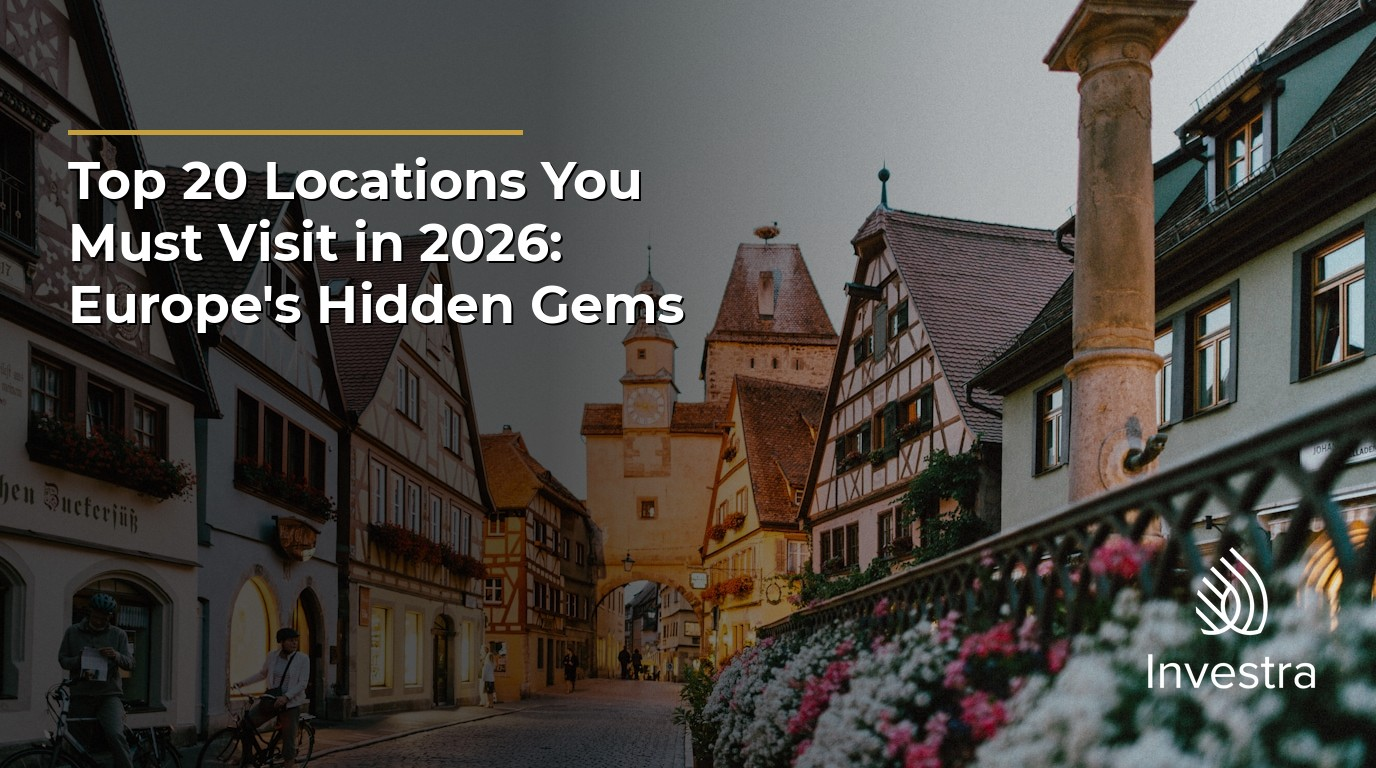
Top 20 Locations You Must Visit in 2026: Europe's Hidden Gems
Top 20 Locations You Must Visit in 2026: Europe's Hidden Gems
Disclaimer: The information provided in this article is for general informational purposes only and does not constitute financial, investment, or travel advice. Travel regulations, market conditions, and regional stability are subject to change. Always conduct independent research and consult with qualified professionals before making international travel or investment decisions. Investors should not invest money they cannot afford to lose.
As we move deeper into the 2020s, the landscape of European travel and investment is shifting. The era of checking off crowded, over-touristed capitals is giving way to a desire for authenticity, sustainability, and high-quality experiences. In 2026, the smartest travelers and the most astute investors are looking toward destinations that offer a blend of natural beauty, cultural depth, and strategic value.
At Investra.io, we analyze regions not just for their aesthetic appeal, but for their long-term potential as places to live, work, and invest. This curated list of the Top 20 Locations You Must Visit in 2026 focuses heavily on the Mediterranean and Central Europe—regions where lifestyle and investment opportunities perfectly intersect.
1. Lake Bled, Slovenia: The Alpine Icon
Lake Bled remains the jewel in Slovenia's tourism crown. With its cliff-top castle and church-topped island, it is visually perfect. In 2026, Bled is focusing heavily on sustainable luxury, offering high-end eco-resorts and world-class gastronomy. It is a must-visit for anyone interested in the intersection of natural beauty and premium real estate. For a comprehensive guide, read our Lake Bled Complete Guide.
2. Iskele, Northern Cyprus: The Mediterranean's Rising Star
Iskele (Trikomo) has transformed from a quiet coastal town into one of the most dynamic real estate markets in the Mediterranean. Its miles of sandy beaches (Long Beach) are now backed by modern, resort-style developments offering exceptional amenities. For investors, Iskele offers some of the highest rental yields in the region. Discover why in our Iskele & Esentepe Property Guide.
3. Ljubljana, Slovenia: The Green Capital
Ljubljana is the blueprint for the modern European capital. Small, impeccably clean, and largely car-free in its center, it offers a vibrant cultural scene without the stress of a megacity. It is increasingly popular among digital nomads and expats seeking a high quality of life. For insights into living and investing here, see our Ljubljana Real Estate Guide.
4. Kyrenia (Girne), Northern Cyprus: The Historic Harbor
Kyrenia is the tourism capital of Northern Cyprus, famous for its horseshoe-shaped harbor and imposing Crusader castle. It offers a sophisticated blend of history, boutique hotels, and high-end dining. The surrounding mountains provide a stunning backdrop and exclusive real estate opportunities. Explore the market in our Kyrenia Complete Property Guide.
5. Lake Bohinj, Slovenia: The Untamed Alternative
Just a short drive from Bled, Lake Bohinj offers a wilder, more tranquil alpine experience. Located entirely within Triglav National Park, it is a haven for serious hikers, skiers, and nature lovers. Strict environmental protections make property here extremely rare and valuable. Read more in our guide to Bohinj: The Tranquil Alternative to Lake Bled.
6. Esentepe, Northern Cyprus: The Golfer's Paradise
Esentepe, located east of Kyrenia, has carved out a niche as a premium destination for golf and luxury living. Home to an international 18-hole golf course and surrounded by pine forests, it attracts a discerning international clientele looking for privacy and high-end villas.
Quick Answer: Esentepe represents the shift towards low-density, high-value tourism in the Mediterranean. It is the perfect location for investors seeking capital appreciation in the luxury villa segment. Compare this with other Mediterranean hotspots in our TRNC Property Investment Guide 2026.
7. Piran, Slovenia: The Venetian Jewel
Piran is Slovenia's most beautiful coastal town, jutting out into the Adriatic Sea. Its narrow, winding streets and stunning Tartini Square reflect its deep Venetian heritage. It is a masterpiece of historic preservation and a prime location for boutique hospitality investments.
8. Famagusta (Gazimağusa), Northern Cyprus: The City of Two Tales
Famagusta offers a unique blend of deep history—with its incredible walled city and Gothic cathedral—and modern university life. It is a dynamic city with a strong rental market driven by the student population, making it a strategic choice for buy-to-let investors. Learn more in our Famagusta Property Investment Guide.
9. Soča Valley, Slovenia: The Emerald River
The Soča River is famous for its vibrant, almost unnatural emerald-green color. The valley is the adrenaline capital of Slovenia, offering world-class white-water rafting, kayaking, and canyoning. It is also a region steeped in WWI history, particularly around the town of Kobarid.
10. Nicosia (Lefkoşa), Cyprus: The Divided Capital
Nicosia is the last divided capital in the world, offering a fascinating blend of cultures, history, and modern business. It is the administrative and commercial heart of the island. For investors, the commercial real estate sector here is particularly strong. Read our Lefkosa Nicosia Property Guide for detailed analysis.
11. Kranjska Gora, Slovenia: The Winter Sports Hub
Located in the Julian Alps near the borders of Austria and Italy, Kranjska Gora is Slovenia's premier winter sports destination, hosting regular World Cup skiing events. In the summer, it transforms into a hiking and cycling paradise, making it a highly lucrative dual-season real estate market.
12. Postojna Cave and Predjama Castle, Slovenia
This pairing represents one of the most spectacular day trips in Europe. Postojna is a massive, 24-kilometer-long karst cave system, while Predjama is a Renaissance castle built directly into the mouth of a cave on a sheer cliff face. It is a testament to the dramatic geology of the region. Plan your visit with our Postojna Cave and Predjama Castle Guide.
13. Vipava Valley, Slovenia: The Boutique Wine Region
Often compared to Tuscany but without the crowds, the Vipava Valley is a rising star in the world of wine tourism. It is characterized by small, family-run vineyards producing exceptional indigenous wines (like Zelen and Pinela) and a growing number of high-end agritourism estates.
14. Bellapais, Northern Cyprus: The Historic Retreat
Located in the mountains above Kyrenia, Bellapais is famous for its stunning 13th-century abbey ruins and its association with the writer Lawrence Durrell. It is one of the most romantic and exclusive residential areas on the island, offering panoramic views of the Mediterranean.
15. Maribor, Slovenia: The Academic and Tech Center
Slovenia's second city is shedding its industrial past and emerging as a vibrant university town and tech hub. Surrounded by vineyards (and home to the world's oldest vine), Maribor offers a high quality of life at a significantly lower cost than Ljubljana. It is a prime target for value investors. See how it compares in our guide to the Best Cities in Slovenia to Live in 2026.
16. The Karpaz Peninsula, Northern Cyprus: The Wild East
The Karpaz Peninsula is the wild, untamed "panhandle" of Northern Cyprus. It is a protected area famous for its pristine, empty beaches (like Golden Beach), wild donkeys, and ancient monasteries. It represents the ultimate escape from modern development.
17. Ptuj, Slovenia: The Oldest City
Ptuj is officially the oldest recorded city in Slovenia, with roots dating back to the Stone Age and significant Roman history. It is famous for its imposing castle and the Kurentovanje, a vibrant, ancient spring carnival. It offers a deep dive into Central European history.
18. Bovec, Slovenia: The Gateway to the Julian Alps
Located in the upper Soča Valley, Bovec is a small town with a massive reputation among outdoor enthusiasts. It is the basecamp for exploring the highest peaks of the Julian Alps and the most challenging sections of the Soča River. It is a growing hub for eco-tourism investments.
19. Guzelyurt, Northern Cyprus: The Agricultural Heartland
Guzelyurt, meaning "Beautiful Country," is the agricultural center of Northern Cyprus, famous for its citrus groves. It is a region that is slowly opening up to sustainable tourism, offering a glimpse into the traditional, slower pace of Mediterranean life.
20. Koper, Slovenia: The Commercial Coast
Koper is Slovenia's only commercial port, but its historic center is a beautifully preserved Venetian Gothic town. It offers a unique blend of industrial strength and Mediterranean charm, making it a strategic location for both commercial and residential investment. Compare its potential with other coastal areas in our Slovenia vs Croatia Comparison Guide.
21. Bovec, Slovenia: The Adrenaline Capital
Located in the Julian Alps, Bovec is the undisputed adventure sports capital of Slovenia. It is the primary base for exploring the Soča River and the Kanin ski resort. The town has a vibrant, youthful energy, driven by the constant influx of hikers, rafters, and paragliders. For investors, the demand for short-term, activity-focused accommodation is exceptionally high, though the season is highly concentrated in the summer months.
Quick Answer: Bovec offers some of the best outdoor recreation in Europe. It is ideal for active travelers. However, its remote location means it is less suitable for year-round living compared to Kranj or Ljubljana. Compare its investment profile with other regional hubs in our TRNC Rental Market Guide.
22. Guzelyurt, Northern Cyprus: The Citrus Heartland
Guzelyurt (Morphou) translates to "Beautiful Country," and it is the agricultural heart of Northern Cyprus. Surrounded by citrus groves, it is a region that feels untouched by mass tourism. It offers a glimpse into traditional Cypriot life, with slow-paced villages and quiet beaches. It is a prime location for those seeking an authentic, off-the-beaten-path Mediterranean experience.
23. Ptuj, Slovenia: The Ancient Roman City
Ptuj is officially the oldest recorded city in Slovenia, with roots dating back to the Stone Age and significant importance during the Roman Empire. Its skyline is dominated by the Ptuj Castle, which houses an impressive museum. The city is most famous for the Kurentovanje, a vibrant, ancient spring carnival that is a UNESCO Intangible Cultural Heritage event. It is a must-visit for history buffs and culture enthusiasts.
24. The Karpaz Peninsula, Northern Cyprus: The Untamed Edge
The Karpaz Peninsula is the wild, untamed "panhandle" of Northern Cyprus. It is a strictly protected national park area, famous for its pristine, empty beaches (like the legendary Golden Beach), wild donkeys, and the ancient Apostolos Andreas Monastery. It represents the ultimate escape from modern development and is a crucial area for eco-tourism and conservation efforts.
Quick Answer: The Karpaz Peninsula is strictly protected against large-scale development. This makes it an incredible destination for nature lovers but a highly restricted market for real estate investors. Understanding these zoning laws is critical; learn more in our North Cyprus Tax Guide for Property Investors.
25. Koper, Slovenia: The Venetian Port
Koper is Slovenia's only commercial port, but its historic center is a beautifully preserved Venetian Gothic town. It offers a unique blend of industrial strength and Mediterranean charm. The city is investing heavily in its tourism infrastructure, making it a strategic location for both commercial and residential investment. It is an excellent base for exploring the short Slovenian coastline.
26. Bogenšperk Castle, Slovenia: A Renaissance Dream
Located in the heart of Slovenia, Bogenšperk Castle is one of the country's most significant cultural monuments. Once home to the famous polymath Janez Vajkard Valvasor, the castle now serves as a museum and a popular venue for weddings and cultural events. It is a stunning example of Renaissance architecture set against a backdrop of rolling hills and dense forests. For investors, the surrounding region offers opportunities in boutique hospitality and agritourism, catering to a growing demand for culturally immersive travel experiences.
27. The Troodos Mountains, Northern Cyprus: Nature's Sanctuary
While technically spanning both sides of the island, the northern foothills of the Troodos Mountains offer some of the most dramatic scenery in Cyprus. This area is characterized by traditional mountain villages, ancient monasteries, and terraced vineyards. It is a haven for hikers and nature lovers seeking an escape from the coastal heat. The real estate market here is niche, focusing on the restoration of traditional stone houses for the eco-tourism market.
28. Celje, Slovenia: The Wine and Thermal Capital
Celje is a historic city in eastern Slovenia, known for its imposing medieval castle and its proximity to some of the country's best thermal spas, such as Laško and Dobrna. The region is also a major wine producer. Celje offers a relaxed, culturally rich lifestyle with excellent infrastructure, making it an attractive option for retirees and investors looking beyond the capital. Explore the investment potential of regional hubs in our Slovenian Real Estate Market 2026 Analysis.
29. Lapta, Northern Cyprus: The Village of Springs
Lapta, located just west of Kyrenia, is famous for its abundant freshwater springs and lush citrus orchards. It is a picturesque village that has retained its traditional charm while accommodating a growing expat community. The area offers a mix of traditional village houses and modern villas with spectacular sea and mountain views. It is a prime location for those seeking a tranquil Mediterranean lifestyle with easy access to urban amenities.
30. The Karst Region, Slovenia: Caves and Prosciutto
The Karst (Kras) region in southwestern Slovenia is famous for its unique geological formations (including the Škocjan Caves, a UNESCO World Heritage site) and its culinary traditions, most notably the air-dried Karst prosciutto (Kraški pršut) and the robust Teran wine. The architecture here is distinct, featuring stone houses with red-tiled roofs designed to withstand the fierce Bora wind. The region is increasingly popular for high-end gastronomic tourism.
Quick Answer: The Karst region is a prime example of how unique local culture and geology can drive premium tourism. Investors should look for opportunities in boutique wineries and restored traditional farmhouses that cater to the luxury eco-tourism market. Understanding regional specialties is key to finding hidden value; compare this with the strategies outlined in our Future of Real Estate Guide.
31. Novo Mesto, Slovenia: The Archaeological Hub
Novo Mesto, located in southeastern Slovenia, is often called the "City of Situlae" due to the vast number of Iron Age bronze situlae (ceremonial vessels) found in the area. It is a city with a rich archaeological heritage, beautifully situated on a bend of the Krka River. The surrounding Dolenjska region is known for its rolling hills, vineyards (producing the unique Cviček wine), and thermal spas. It offers a quiet, culturally rich lifestyle that is increasingly attractive to retirees and remote workers.
32. Lefke, Northern Cyprus: The Orange Capital
Lefke is a small town in the northwest of Cyprus, historically known for its copper mines and now famous for its vast orange and walnut groves. It is a region that has fiercely protected its agricultural heritage and traditional way of life. The area is gaining attention from eco-tourists and those looking for a truly authentic, slow-paced Mediterranean experience. Real estate opportunities here are focused on restoring old village houses and developing small-scale agritourism projects.
Conclusion: The Strategic Traveler
The destinations on this list are not just beautiful places to spend a week; they are regions undergoing significant transformation. They offer the strategic traveler and the forward-thinking investor a chance to participate in the growth of sustainable, high-quality European destinations.
Quick Answer: Whether you are drawn to the alpine majesty of Slovenia or the sun-drenched potential of Northern Cyprus, the key in 2026 is to look beyond the obvious. The greatest value—both experiential and financial—is found in the emerging hubs and the carefully protected natural reserves.
To navigate these opportunities successfully, partner with Investra.io. We provide the data, the local expertise, and the strategic vision required to make informed decisions in these dynamic markets. For comprehensive business strategy and corporate structuring across these regions, visit Findes.si.
Frequently Asked Questions (FAQ)
1. Why is Slovenia featured so prominently on this list?
Slovenia represents the ideal modern European destination: it is safe, highly focused on sustainability, geographically diverse, and offers a very high quality of life without the extreme overcrowding of its neighbors.
2. Is Northern Cyprus safe for tourists and investors?
Yes, Northern Cyprus is generally very safe with extremely low crime rates. For investors, the market is highly dynamic, though it requires understanding the specific legal framework of the TRNC. Always consult legal professionals.
3. Which destination is best for digital nomads?
Ljubljana is the top choice for digital nomads due to its infrastructure, expat community, and vibrant culture. Read our Slovenia Digital Nomad Visa Guide for more details.
4. Which location offers the best real estate rental yields?
Currently, Iskele in Northern Cyprus offers some of the highest rental yields in the Mediterranean, driven by strong demand for resort-style holiday apartments.
5. I want a quiet alpine retreat. Should I choose Bled or Bohinj?
Choose Bohinj. It is located within a national park, has strict development rules, and offers a much quieter, more nature-focused experience than the bustling Lake Bled.
6. Are these destinations accessible year-round?
Most are. Slovenia's alpine regions (Kranjska Gora, Bohinj) are major winter sports hubs. The Mediterranean destinations (Cyprus, Piran) are quieter in winter but offer mild climates suitable for year-round living.
7. Do I need a visa to visit these places?
Slovenia is in the Schengen Area. Northern Cyprus has its own entry requirements (usually visa-free or visa-on-arrival for most Western passports), but entry is typically via Ercan Airport or crossing from the Republic of Cyprus.
8. Which is the best city for a short weekend break?
Ljubljana is perfect for a 2-3 day city break, as is Kyrenia for a quick Mediterranean getaway.
9. Are these locations family-friendly?
Absolutely. Slovenia is exceptionally family-friendly with great outdoor activities. The resort developments in Iskele (Cyprus) are also designed specifically with family amenities in mind.
10. How can I invest in these emerging markets?
The first step is education. Read our comprehensive market reports, understand the local tax and legal frameworks, and partner with established experts like Investra.io to guide your strategy.
Recommended Content (Priporočljiva vsebina)
- Slovenian Real Estate Market 2026: A Complete Analysis & Forecast
- TRNC Property Investment Guide 2026
- The Future of Real Estate: How Tokenization is Democratizing Property Investment
- Legal Guide to Buying Property in TRNC
- Ljubljana Real Estate: An Investor's Guide
- Iskele & Esentepe Property Guide
- Tokenization of Assets: The Future of Investing in 2026
- Kyrenia Complete Property Guide
Follow Us
Stay updated with the latest insights on living, investing, and thriving in the Mediterranean and beyond. Connect with Investra on our official channels:
📚 Priporočene vsebine / Recommended Reading
Razširite svoje znanje z naslednjimi strokovnimi vsebinami:
Strokovne vsebine: sinisadagary.com — Poslovni svetovalec & Sales Leadership trener
Related Posts
No related posts available.
