
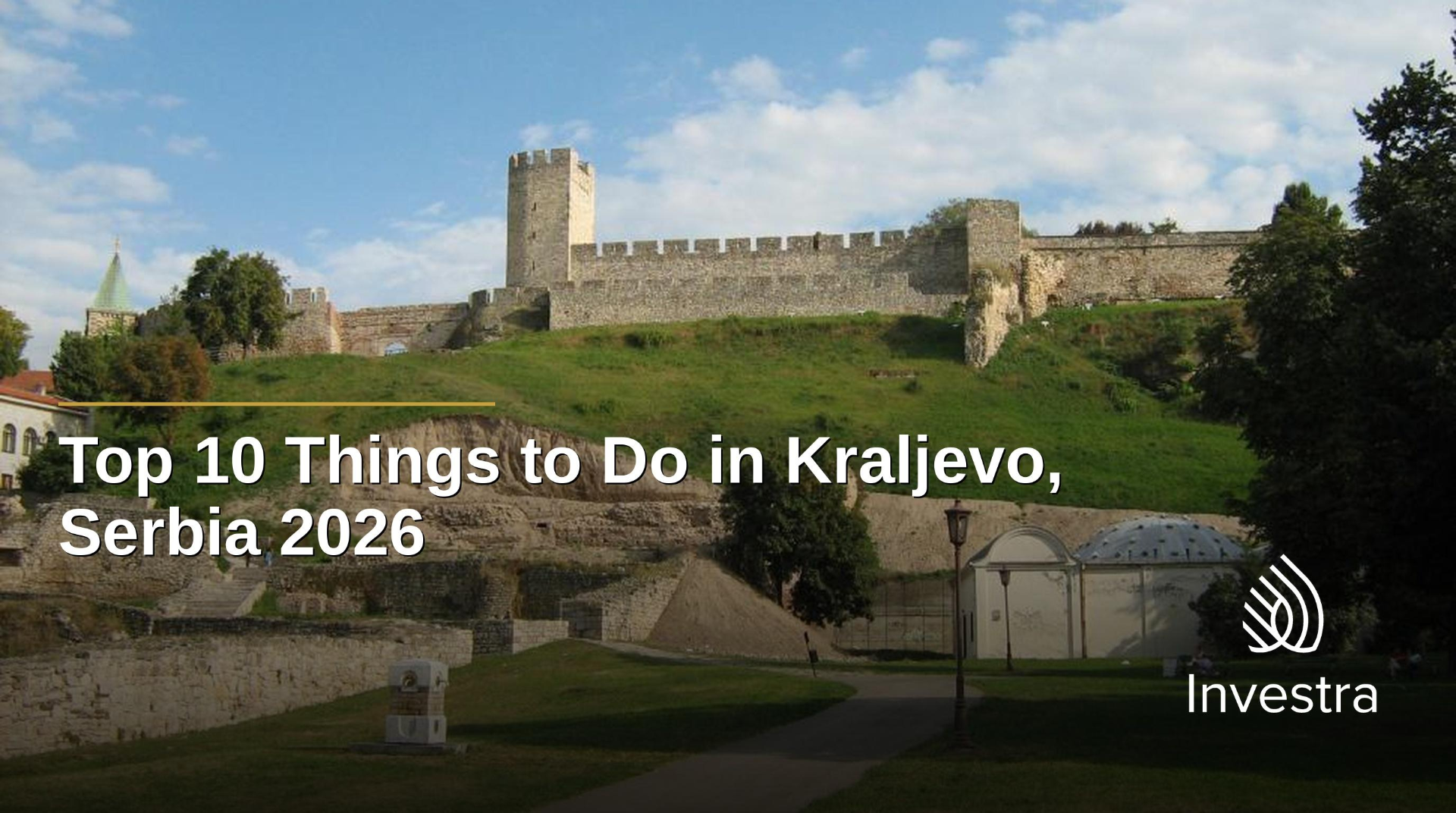
Top 10 Things to Do in Kraljevo, Serbia 2026
Top 10 Things to Do in Kraljevo, Serbia 2026
Investment Disclaimer: This article is for informational purposes only and does not constitute financial or legal advice. Always consult qualified professionals before making relocation or investment decisions.
Kraljevo does not make it onto most Serbia itineraries, and that is precisely what makes it so rewarding. While Belgrade and Novi Sad attract the majority of international visitors, Kraljevo sits quietly in the heart of central Serbia, surrounded by some of the most significant medieval heritage in the Balkans. The city itself is pleasant and authentic — a real Serbian city without the tourist infrastructure that can make larger destinations feel sanitized. But it is the surrounding region that makes Kraljevo truly special.
Within a 60-kilometer radius of Kraljevo, you will find a UNESCO World Heritage monastery, one of the best-preserved medieval fortresses in Serbia, a gorge containing ten medieval monasteries, a renowned spa town, and the approach to Serbia's premier mountain resort. This guide covers the ten best things to do in and around Kraljevo — a bucket list for Serbia's most underrated destination.
Quick Answer: The top things to do in Kraljevo are visiting Žiča Monastery (10 km), driving the Ibar Valley to Studenica (UNESCO, 40 km), exploring Maglič Fortress (25 km), hiking in the Ovčar-Kablar Gorge (30 km), and attending the Gitarijada guitar festival (September). Investra.io can help you plan your stay in the Kraljevo region.
1. Visit Žiča Monastery — The Coronation Church of Serbian Kings
Quick Answer: Žiča Monastery (10 km from Kraljevo) is the single most important site in the region. Founded in the early 13th century, it served as the coronation church for seven Serbian kings and the first seat of the Serbian Orthodox Church. Its distinctive red color and remarkable frescoes make it one of the most memorable medieval sites in Serbia.
If you visit only one site from Kraljevo, make it Žiča. Founded by Stefan Nemanjić (Saint Sava) and his brother Stefan the First-Crowned in the early 13th century, Žiča was the first seat of the Serbian Orthodox Church and the place where seven Serbian kings were crowned. The monastery's distinctive red-ochre color sets it apart from virtually every other medieval church in Serbia — a bold choice that makes it immediately recognizable and deeply atmospheric.
The main church (Crkva Spasova) contains frescoes from the 13th century, though many have been damaged or restored over the centuries. The monastery is still active, with monks living and working on the grounds. Visitors are welcome to explore the church and grounds, but modest dress is required — shoulders and knees should be covered.
The best time to visit Žiča is early morning or late afternoon, when the light is warm and the crowds (such as they are) have thinned. The monastery is surrounded by a peaceful garden, and the combination of the red church against the green landscape is genuinely beautiful. Allow at least 1-2 hours for a proper visit.
2. Drive the Ibar Valley to Studenica Monastery
Quick Answer: The Ibar Valley drive from Kraljevo south to Studenica Monastery (UNESCO World Heritage Site, 40 km) is one of the most historically rich scenic drives in the Balkans. The valley passes Maglič Fortress, Gradac Monastery, and numerous smaller churches before reaching Studenica, which contains some of the finest 13th-century frescoes in existence.
The drive south from Kraljevo along the Ibar River is an experience that stays with you. The road follows the river through a landscape of forested mountains, medieval ruins, and small villages that seem to have changed little in centuries. This is the "Valley of Kings" — the heartland of medieval Serbia where the Nemanjić dynasty built their most important monuments.
Studenica Monastery, the endpoint of this drive, is a UNESCO World Heritage Site and one of the most significant medieval monuments in the Balkans. Founded by Stefan Nemanja in the late 12th century, Studenica contains the Church of the Virgin (Crkva Bogorodice) with 13th-century frescoes that are among the finest examples of Byzantine art in existence. The monastery complex is beautifully maintained and set in a stunning valley surrounded by forested mountains.
Plan a full day for this excursion — the drive itself takes about an hour each way, but you will want to stop at Maglič Fortress, explore Studenica thoroughly, and perhaps have lunch in the small town of Ušće along the way. A car is essential for this trip.
3. Explore Maglič Fortress
Quick Answer: Maglič Fortress (25 km from Kraljevo) is one of the best-preserved medieval castles in Serbia, dramatically positioned on a rocky promontory above the Ibar River. Built in the 13th century as a royal residence and military stronghold, it offers spectacular views of the river valley. The final approach requires a short hike through forest.
Maglič Fortress is one of those places that makes you catch your breath when you first see it. The castle sits on a narrow rocky ridge above a bend in the Ibar River, its towers rising above the forested hillside in a way that seems almost impossibly dramatic. Built in the 13th century, Maglič served as a royal residence and one of the most important military strongholds in medieval Serbia.
The fortress is remarkably well-preserved — the main tower, walls, and several interior structures are largely intact. The access road is narrow and the final approach requires a 15-20 minute hike through forest, but the effort is absolutely worth it. From the top of the main tower, the views of the Ibar River valley are extraordinary.
Maglič is best visited as part of the Ibar Valley drive to Studenica. It is located about 25 km south of Kraljevo, just off the main valley road. Allow 1-2 hours for the visit, including the hike up and down.
4. Discover the Ovčar-Kablar Gorge — Serbia's Mount Athos
Quick Answer: The Ovčar-Kablar Gorge (30 km from Kraljevo) contains ten medieval monasteries along a 20-km stretch of the West Morava River gorge. Known as the "Serbian Mount Athos," it is one of the most remarkable concentrations of medieval religious heritage in Europe. The gorge itself is strikingly beautiful with steep forested cliffs and a scenic lake.
The Ovčar-Kablar Gorge is one of Serbia's best-kept secrets. This 20-kilometer stretch of the West Morava River gorge contains no fewer than ten medieval monasteries tucked into the hillsides and valleys — earning it the nickname "Serbian Mount Athos" after the famous monastic peninsula in Greece.
The gorge is strikingly beautiful in its own right — steep forested cliffs rising 200-300 meters above the river, with the Ovčar Banja reservoir adding a reflective lake to the landscape. The monasteries range from small hermitages to larger complexes, each with its own history and character. Most date from the 14th-16th centuries and contain frescoes of varying quality and preservation.
The gorge is accessible by car from Čačak (30 km from Kraljevo). A scenic drive through the gorge, stopping at several monasteries, makes for an excellent half-day excursion. The road through the gorge is narrow in places but well-maintained.
5. Attend the Gitarijada Guitar Festival
Quick Answer: Gitarijada is one of the oldest rock music festivals in the former Yugoslavia, held annually in Kraljevo in September since 1966. The festival has discovered numerous Serbian rock musicians and has a relaxed, community atmosphere. It is a unique opportunity to experience Serbian rock culture in the city where it has been celebrated for six decades.
If you happen to be in Serbia in September, the Gitarijada in Kraljevo is worth planning your trip around. Founded in 1966, this guitar festival is one of the oldest continuously running rock music festivals in Europe — a remarkable achievement for a mid-sized Serbian city.
The festival has a reputation for authenticity and community that larger, more commercial festivals often lack. It draws bands from across Serbia and the region, with a mix of established acts and emerging talent. The atmosphere is relaxed and genuinely local — this is not a tourist event, it is a celebration of Serbian rock culture that happens to welcome visitors.
The festival typically takes place over several days in September, with performances at venues throughout the city center. Tickets are affordable, and the combination of live music, local food, and the city's pleasant atmosphere makes it a memorable experience.
6. Hike Stolovi Mountain
Stolovi mountain (1,375 m), located just south of Kraljevo, offers excellent hiking with panoramic views over the Ibar Valley and surrounding mountains. The mountain is part of the broader Kopaonik mountain range and has well-marked trails suitable for hikers of various fitness levels.
The most popular route starts from the village of Mataruška Banja (15 km from Kraljevo) and ascends through forest to the summit plateau. The views from the top encompass the entire Ibar Valley, with Žiča Monastery visible in the distance and the Kopaonik massif on the horizon. The round trip takes approximately 4-6 hours.
Stolovi is particularly beautiful in spring (when wildflowers cover the meadows) and autumn (when the forest turns golden). Summer hiking is possible but can be hot — start early and carry plenty of water.
7. Relax at Mataruška Banja Spa
Mataruška Banja is a small spa town 15 km from Kraljevo, built around natural thermal springs with temperatures reaching 36-38°C. The spa has been used for therapeutic purposes since the 19th century and offers a range of treatments and bathing facilities.
For visitors to Kraljevo who want a relaxing break from sightseeing, Mataruška Banja provides an affordable and genuinely therapeutic experience. The thermal pools are open to day visitors, and the surrounding area has pleasant walking paths along the Ibar River.
The spa town is small and unpretentious — this is not a luxury resort but a genuine therapeutic facility with a long local tradition. Prices are very affordable, and the combination of thermal bathing and the beautiful Ibar Valley setting makes for a memorable afternoon.
8. Visit the National Museum of Kraljevo
The National Museum of Kraljevo (Narodni muzej Kraljevo) is an underrated institution that provides excellent context for exploring the surrounding region. The museum covers the history of the Ibar Valley from prehistoric times through the medieval period and into the modern era.
The collection includes artifacts from the Žiča and Studenica monasteries, medieval jewelry and weapons, Roman-era finds from the surrounding area, and exhibits on the city's industrial and wartime history. The October 1941 massacre is covered in detail, providing important historical context for understanding the city's character.
The museum is well-organized and informative, with some English-language materials available. It is best visited before exploring the surrounding monasteries and fortresses, as it provides valuable background that enriches the experience of the sites themselves.
9. Day Trip to Vrnjačka Banja
Vrnjačka Banja, Serbia's most famous spa town, is just 30 km from Kraljevo and makes an excellent day trip. The town is built around natural mineral springs and has been a popular health resort since the 19th century. The elegant spa park, the mineral spring promenade, and the charming town center make Vrnjačka Banja one of the most pleasant destinations in central Serbia.
The town is also known for its wine festival (held in September) and its "Love Bridge" — a pedestrian bridge where couples attach padlocks as a symbol of their love, similar to the Pont des Arts in Paris. The combination of spa culture, wine, and romantic atmosphere makes Vrnjačka Banja a popular destination for Serbian couples and increasingly for international visitors.
For more information, read our dedicated guide: Vrnjačka Banja Travel Guide.
10. Explore the City Center and Pedestrian Zone
Kraljevo's city center deserves more credit than it typically receives. The main pedestrian zone (Trg Jovana Sarića and the surrounding streets) is a pleasant, well-maintained urban space with cafes, restaurants, and shops that reflect the city's authentic character. The central square has been renovated in recent years and provides a comfortable gathering place for locals and visitors alike.
The city's cafe culture is a genuine pleasure — Kraljevo has a good density of cafes where you can spend hours over coffee, watching the city go about its daily life. The local market near the city center is worth visiting for fresh produce and local products. The October Memorial park provides a green space for walking and reflection.
Spending a few hours simply wandering the city center, talking to locals, and absorbing the atmosphere of a real Serbian city is one of the most authentic travel experiences you can have in Serbia. Kraljevo has not been shaped by tourism, and that authenticity is its greatest asset.
Property Investment in Kraljevo
For those inspired by the Kraljevo region to consider property investment, the market offers compelling opportunities. Apartment prices range from €600-1,000/m², significantly below Belgrade and Novi Sad levels. The growing tourism potential of the Ibar Valley, combined with proximity to Kopaonik ski resort, creates interesting prospects for short-term rental investments.
Investra.io provides comprehensive support for international property buyers in Serbia, including the Kraljevo region. For expert market analysis, the Siniša Dagary Blog covers Serbian real estate investment in depth. Findes Group & Partners provides professional financial advisory services for regional investors.
Recommended Content from Investra.io
- Kraljevo Travel Guide 2026: Complete Guide
- Real Estate Investment in Kraljevo
- Vrnjačka Banja Travel Guide
- Kopaonik Travel Guide
- Day Trips from Niš
- Siniša Dagary — Investment & Lifestyle Insights
- Findes Group & Partners — Financial Advisory
Frequently Asked Questions
Q1: What is the number one thing to do in Kraljevo?
The number one thing to do in Kraljevo is visit the Žiča Monastery, just 10 km from the city center. This 13th-century monastery is where Serbian kings were crowned and is one of the most important medieval monuments in Serbia. Its distinctive red color and remarkable frescoes make it unforgettable.
Q2: Is Studenica Monastery worth visiting from Kraljevo?
Absolutely. Studenica Monastery is a UNESCO World Heritage Site located 40 km from Kraljevo and is one of the most important medieval monuments in the Balkans. The 13th-century frescoes in the Church of the Virgin are among the finest examples of Byzantine art in existence.
Q3: What is the Maglič Fortress?
Maglič Fortress is a remarkably well-preserved medieval castle perched on a rocky promontory above the Ibar River, 25 km from Kraljevo. Built in the 13th century as a royal residence and military stronghold, it offers dramatic views of the river valley and is one of the most photogenic medieval sites in Serbia.
Q4: What is the Ovčar-Kablar Gorge?
The Ovčar-Kablar Gorge is a 20-km stretch of the West Morava River gorge, 30 km from Kraljevo, containing ten medieval monasteries. Known as the "Serbian Mount Athos," it is one of the most remarkable concentrations of medieval religious heritage in Europe.
Q5: What is the Gitarijada festival in Kraljevo?
Gitarijada is one of the oldest rock music festivals in the former Yugoslavia, held annually in Kraljevo in September since 1966. It has a reputation for discovering new talent and has a relaxed, community atmosphere.
Q6: Are there hiking opportunities near Kraljevo?
Yes, Stolovi mountain (1,375 m) just south of the city offers excellent hiking with panoramic views. The Ibar Valley gorges provide riverside hiking. Kopaonik mountain (60 km) is one of Serbia's premier hiking and skiing destinations.
Q7: What is the October Memorial in Kraljevo?
The October Memorial commemorates the massacre of approximately 2,000 Kraljevo civilians by German forces in October 1941. The memorial park is an important historical site that reflects the city's wartime tragedy and is an important part of understanding Kraljevo's history.
Q8: Can you do wine tasting near Kraljevo?
Yes, the Šumadija wine region near Kraljevo produces some of Serbia's most respected wines. The Aleksandrović and Radovanović wineries offer tastings. The nearby Vrnjačka Banja wine festival (30 km) is also worth attending.
Q9: What is the best way to get around Kraljevo and the Ibar Valley?
A rental car is strongly recommended for exploring Kraljevo and the Ibar Valley. While buses connect the main towns, the monasteries and fortresses are often off the main routes and require a car for convenient access.
Q10: What souvenirs can you buy in Kraljevo?
Good souvenirs include: local honey and bee products, traditional Serbian handicrafts, replica medieval jewelry from the National Museum shop, local wines from the Šumadija region, and rakija (Serbian fruit brandy) from local producers.
Odkrijte globalne investicijske priložnosti na Unifyr.space — vaš portal za pametne investicije.
Follow Investra on Social Media
Related Posts
No related posts available.
