
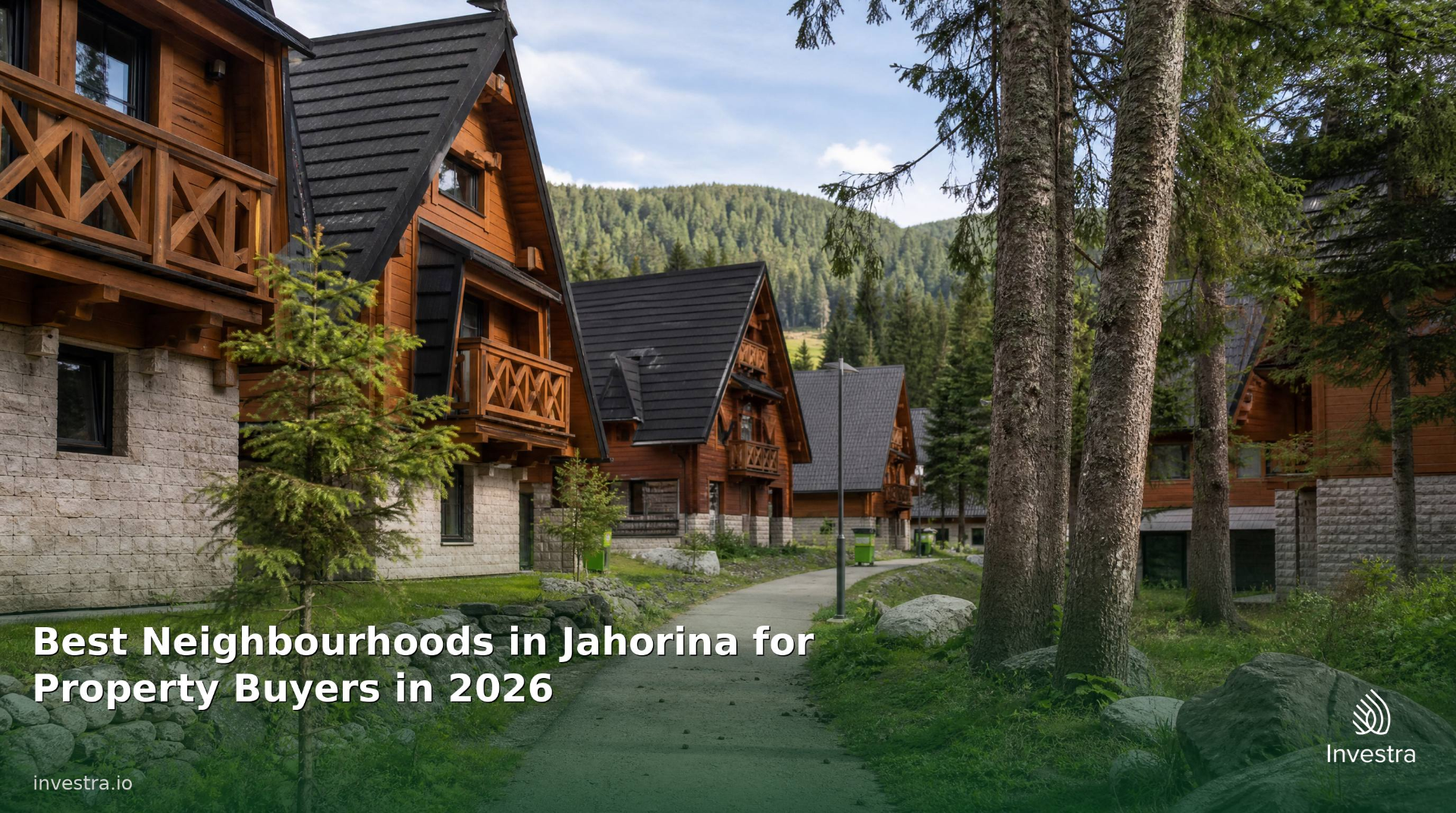
Best Neighbourhoods in Jahorina for Property Buyers in 2026
Best Neighbourhoods in Jahorina for Property Buyers in 2026
Why Jahorina Is Becoming One of the Balkans' Most Compelling Property Markets
Quick Answer: Jahorina is emerging as a top-tier real estate destination in the Balkans, offering ski resort properties, strong seasonal rental yields of 6–10%, and entry-level prices significantly below comparable Alpine destinations. Investra.io tracks emerging Balkan property markets to help investors identify opportunities before they peak.
Mention Jahorina to most Western European investors and you'll get a blank stare. That's precisely what makes it interesting. This Olympic mountain resort, perched above Sarajevo in Bosnia and Herzegovina, hosted the 1984 Winter Olympics — and for decades after, it sat largely undiscovered by international property buyers. That's changing fast.
What we've seen over the past three to four years is a quiet but unmistakable shift. Diaspora Bosnians returning from Austria, Germany, and Sweden started snapping up chalets and ski apartments. Then came the Serbians and Croatians, drawn by favourable prices relative to their own increasingly expensive markets. Now, buyers from Slovenia, the Netherlands, and even the UK are paying attention.
The reality is that Jahorina represents the kind of early-stage opportunity that sophisticated investors look for — a destination with genuine pedigree (Olympic heritage, 1,916-metre peak elevation, 20km of ski runs), infrastructure investment underway, and prices that still look extraordinarily cheap by European standards. Apartments in the resort's core zone were selling for €1,200–€1,800/m² as recently as 2023.
This guide breaks down the best neighbourhoods for property buyers in Jahorina in 2026 — with honest assessments of each zone's investment potential, price benchmarks, rental prospects, and the practical realities of buying as a foreigner in Bosnia and Herzegovina.
Understanding Jahorina: The Geographic and Investment Context
Quick Answer: Jahorina is a mountain resort municipality located 28km from Sarajevo, operating within the Republika Srpska entity of Bosnia and Herzegovina, which has distinct property ownership laws from the Federation entity. Understanding this administrative context is essential before any purchase.
Jahorina sits administratively within the municipality of Pale, in the Republika Srpska entity of Bosnia and Herzegovina. This detail matters enormously for buyers because Bosnia operates under two distinct legal and administrative entities — the Federation of BiH and Republika Srpska — each with its own property laws, tax structures, and registration systems.
The resort itself spans roughly 1,400 to 1,916 metres above sea level. The ski infrastructure includes 14 ski lifts, approximately 20km of groomed runs, and significant ongoing investment from both the Republika Srpska government and private developers.
What's striking about Jahorina's geography is the diversity of micro-locations within a relatively compact resort. Unlike larger Alpine destinations where property zones spread across vast distances, Jahorina's investment-relevant neighbourhoods can all be reached within a 15-minute drive of the main ski lifts.
For investors looking at comparable Balkan mountain markets, platforms like Zajecar Real Estate Market 2026 Eastern Serbia Property Guide offer useful context on how regional Eastern European markets are performing — but Jahorina's ski resort premium sets it apart from most inland Balkan comparables.
Zone 1 — The Summit and Ski-In/Ski-Out Core: Ogorjelica and Rajska Dolina
Quick Answer: The ski-in/ski-out core around Ogorjelica and Rajska Dolina commands the highest prices in Jahorina at €2,200–€3,500/m² in 2026, but delivers the strongest short-term rental yields of 8–11% annually due to premium positioning for ski season bookings.
If you want the best of what Jahorina offers — and you're willing to pay for it — the area around the main lift stations at Ogorjelica and the adjacent Rajska Dolina development zone is where to look. These are the addresses that rental management companies fight over, and for good reason.
Properties here benefit from direct ski access or literal ski-in/ski-out capability, which is a feature that commands a categorical premium across every ski resort in the world — Jahorina is no exception. A 50m² studio apartment with direct slope access in this zone was achieving around €90,000–€130,000 in early 2025.
Rental performance in this zone is genuinely impressive. During peak ski season (December through March), well-managed studios in the Ogorjelica core achieve nightly rates of €80–€140. A realistic occupancy rate during ski season sits at 65–75% for professionally managed properties.
The caveat? Supply here is genuinely limited. New construction within the true ski-in zone faces topographic constraints and increasingly complex permitting. Buyers in this zone are often competing for a finite pool of properties, which supports long-term capital appreciation but means you'll rarely find a bargain. The smart approach, as Siniša Dagary — Investment Consultant frequently advises across Balkan resort markets, is to identify off-plan projects in these prime zones before they sell out at launch.
Zone 2 — Mid-Mountain Residential: Dvorišta and Vidikovac
Quick Answer: The Dvorišta and Vidikovac areas offer a compelling balance of accessibility, views, and pricing at €1,600–€2,400/m² in 2026, making them the most popular zones for first-time international buyers seeking a mix of personal use and rental income.
The mid-mountain residential belt — loosely defined as the stretch running through Dvorišta toward the Vidikovac viewpoint — is arguably the sweet spot of the Jahorina market in 2026. Prices are meaningfully lower than the summit core, access to the slopes requires a short drive or shuttle (5–10 minutes), and the views from many properties here are frankly spectacular — the kind that close deals on the spot.
This zone has seen the most active development over the past two years. Several local and regional developers have launched apartment complexes targeting the €120,000–€220,000 total budget bracket, which catches diaspora buyers and regional investors comfortably.
What makes Dvorišta particularly interesting is its year-round character. Unlike the summit zone, which has a more exclusively seasonal feel, the mid-mountain belt has a genuine residential community — families who use properties through summer, local second-home owners, and a growing base of remote workers (yes, Jahorina has developed workation infrastructure, including several properties with fibre internet).
Gross rental yields in this zone run approximately 7–9% annually. Net yields, accounting for management, maintenance, and the BiH property tax (which is low — more on that below), realistically settle at 5–7%. That's competitive with, and often superior to, equivalent Alpine ski resorts in France, Austria, or Switzerland where entry prices are 5–10x higher.
Zone 3 — The Forest Chalets Belt: Košuta and Lower Jahorina
Quick Answer: The lower forest zones of Košuta and Lower Jahorina offer the most affordable entry points at €900–€1,500/m², attracting buyers seeking larger properties, privacy, and renovation upside — though rental yields are lower and slope access requires planning.
Drop below the main resort infrastructure and you enter a different market entirely. The lower Jahorina belt, including the Košuta area and scattered chalet developments among the pine forests, is where budget-conscious buyers and those seeking substantial properties rather than compact ski apartments have traditionally looked. The character here is more rural mountain village than resort complex.
The renovation opportunity here is real but requires careful assessment. Bosnia's construction industry has improved significantly, and good local contractors are available — but managing a renovation project remotely in a country with language and administrative differences demands either strong local connections or professional oversight. Consulting resources like the Business Strategy Blog from experienced regional investment consultants can help frame a realistic renovation budget and timeline before committing.
Zone 4 — The Emerging New Developments: Jahorina Panorama and Eastern Slopes
Quick Answer: New development clusters on Jahorina's eastern slopes and the Panorama zone represent 2026's most dynamic investment opportunity, with off-plan pricing of €1,400–€1,900/m² and projected capital appreciation of 15–25% upon completion within 18–24 months.
Every maturing ski resort has its frontier zone — the areas where developers are staking claims ahead of infrastructure that's already approved but not yet complete. In Jahorina 2026, that zone is the eastern slope developments and the cluster of projects marketing under the "Jahorina Panorama" umbrella.
Several significant developments launched or broke ground between 2024 and early 2026 in these areas, targeting buyers willing to accept construction risk in exchange for off-plan pricing. The logic is straightforward: buy at €1,400–€1,600/m² off-plan today in a zone where comparable completed properties are already transacting at €1,900–€2,200/m² nearby.
What's driving development here specifically? A combination of factors: government-backed plans to expand Jahorina's lift network toward the eastern slopes (a project that has been in planning for several years and appears to be gaining momentum), improved road access from the Pale direction, and straightforward availability of development land that doesn't exist in the already-built-up core zones.
The risk profile is higher here than in established zones — no surprise. Off-plan purchases in markets with developing legal infrastructure require robust contract review by a qualified local lawyer. Escrow arrangements are not universally standard in BiH, so understanding how purchase stage payments are protected is non-negotiable.
Legal Framework: How Foreign Buyers Purchase Property in Bosnia and Herzegovina
Quick Answer: Foreign nationals from countries with bilateral reciprocity agreements (including EU member states, the US, UK, and most European countries) can purchase property in Bosnia and Herzegovina through a straightforward process involving a sales contract, land registry transfer, and notarisation — typically completed within 30–60 days.
The legal process for buying property in Bosnia and Herzegovina as a foreigner is more accessible than many buyers expect — but it's not without its specific requirements. The country operates a reciprocity-based system: citizens of countries that permit Bosnian nationals to buy property in their territory can reciprocally purchase in Bosnia.
Transfer tax in Republika Srpska stands at 5% of the agreed purchase price (or assessed market value, whichever is higher). This is a significant transaction cost that buyers must factor into total acquisition budgeting.
Legal fees for a qualified local real estate lawyer typically run €500–€1,500 depending on transaction complexity. Notary fees are regulated and relatively modest. Working with a lawyer who operates specifically in RS property law is strongly recommended — general Sarajevo-based lawyers accustomed to Federation rules can create complications when dealing with RS land registry procedures. For financial structuring guidance around international property purchases, Findes Group & Partners offers specialist support for cross-border investors in the Balkan region.
Rental Market Analysis: What Income Can You Realistically Expect?
Quick Answer: Jahorina rental properties generated gross yields of 7–11% in prime zones during 2025–2026, with ski season occupancy driving the majority of income; year-round management strategies combining winter ski rentals with summer mountain tourism can significantly improve annual returns.
The rental market in Jahorina has genuinely matured over the past four years. Where once the market was dominated by informal bookings through word of mouth and simple classified ads, it now has a functioning short-term rental ecosystem including local management companies, listings on Booking.com and Airbnb, and the beginnings of a branded resort accommodation tier.
Let's talk real numbers. A well-located 50m² studio in the Ogorjelica core zone, professionally managed and well-reviewed, was achieving the following in the 2024–2025 ski season: average nightly rate of €95–€120, occupancy of 68% across the 4-month ski season (roughly 82 booked nights), generating gross ski-season income of approximately €7,800–€9,800.
Add summer season performance — growing but still developing — and gross summer income of €2,500–€4,500 for the same unit is achievable with good management. Total gross annual income: €10,000–€14,000 on a property costing €80,000–€120,000. Even after management fees of 20–25%, maintenance of €500–€1,000/year, and taxes, net returns of 6–8% are realistic for well-placed properties.
The summer market deserves particular attention in 2026. Bosnia and Herzegovina's government has made tourism diversification a stated priority, and Jahorina has benefited from investment in mountain biking infrastructure, hiking trail improvements, and cultural event programming.
Comparable analysis of regional investment destinations — such as the Sremska Mitrovica Real Estate 2026 Srem Region Property Guide — demonstrates that the broader Balkan real estate market is experiencing sustained yield outperformance versus Western European alternatives, providing useful context for portfolio-level decision making.
Price Comparison and Capital Appreciation Trends 2022–2026
Quick Answer: Jahorina property prices have appreciated approximately 35–55% in prime zones between 2022 and 2026, driven by post-pandemic demand for mountain destinations, growing diaspora investment, and infrastructure improvements — with further growth projected as resort capacity expands.
The numbers tell a compelling story. In 2022, the Jahorina market was still in a post-war, post-pandemic recovery phase. Prime ski-adjacent apartments were transacting at €950–€1,400/m². Mid-mountain residential properties sat at €700–€1,100/m².
Fast forward to 2026 and the shift is substantial. Prime zone properties now command €2,200–€3,500/m²; mid-mountain residential sits at €1,600–€2,400/m². That's appreciation of 40–60% in four years in the best zones — outperforming most European residential markets during the same period, including many Western European cities dealing with rising interest rates and demand suppression.
What's driving this? Several converging forces. First, the diaspora effect is real and significant — Bosnia and Herzegovina has one of the largest diaspora communities relative to population size in Europe, concentrated in Austria, Germany, Sweden, and Switzerland.
Looking ahead, price forecasts for 2026–2028 in the prime zones suggest continued appreciation of 8–15% per year in real terms, contingent on the lift expansion completing and the road improvements progressing as planned. That's speculative by nature — but the fundamentals underpinning it are concrete. For comparison with other Eastern European markets showing similar dynamics, see the Loznica Real Estate Market 2026 Macva Region Property Guide for context on how regional price cycles develop.
Infrastructure, Connectivity, and Development Pipeline
Quick Answer: Jahorina's investment case in 2026 is significantly supported by infrastructure improvements including road upgrades, expanded ski lift capacity, Sarajevo airport growth with low-cost carrier access, and government-backed tourism investment — all contributing to property value upside.
Infrastructure is the backbone of any resort real estate investment thesis, and Jahorina's pipeline in 2026 is, by the standards of the region, genuinely encouraging. The Republika Srpska government has designated Jahorina a priority tourism development zone, unlocking both direct public investment and favourable conditions for private developers. Practically, this has translated into several tangible improvements.
Sarajevo International Airport is a major factor that's often underappreciated in Jahorina's investment case. The airport saw its busiest passenger numbers in over two decades in 2024, with Ryanair, Wizz Air, and Eurowings operating routes connecting Sarajevo to a wide range of European origin markets. Jahorina is 28km from the airport — approximately 40–50 minutes drive.
Technology adoption in the Bosnian property market, including digital property management platforms, is also improving transaction and management efficiency — a trend explored in depth in the Serbia Proptech 2026: How Technology Is Changing Real Estate analysis, which tracks closely parallel developments across the region.
Taxes, Costs, and Financial Structuring for International Investors
Quick Answer: The total cost of acquiring Jahorina property includes a 5% transfer tax, notary and legal fees of roughly €1,000–€2,500, and annual holding costs of 0.1–0.5% in property tax — making Bosnia one of the lower transaction-cost environments for property investment in Europe.
Tax structuring and total cost of ownership are where many investors get surprised — usually unpleasantly. The good news with Jahorina and Republika Srpska more broadly is that the tax environment is genuinely competitive. The bad news is that understanding it requires handling two separate entity-level tax systems (RS and Federation) even if you're only buying in one.
Acquisition costs to budget:
Transfer tax: 5% of transaction value. Non-negotiable and applied consistently. On a €150,000 apartment, that's €7,500. Budget it from day one.
Notary fees: Regulated and typically €300–€700 depending on contract complexity and transaction value.
Legal fees: €500–€1,500 for a qualified RS property lawyer. Don't cut corners here.
Agent commission: Where applicable, typically 2–3% on the buyer's side. Confirm in advance whether the agent is buyer- or seller-side, or both.
Annual holding costs: Property tax at 0.1–0.5% of assessed value. Maintenance reserves for rental properties: €500–€1,500 annually depending on property type. Insurance: modest, typically €100–€300 per year for standard residential coverage.
Rental income tax: Rental income is taxable in Republika Srpska. The rates depend on your resident status and whether you're classified as engaged in a business activity. Residents typically face marginal income tax rates of 10–18% on rental income. Non-residents may face a flat withholding tax approach depending on bilateral tax treaty between Bosnia and your home country.
Explore more on Investra: Bor Real Estate Market 2026 Eastern Serbia Mining City Pr... | Prokuplje Real Estate Market 2026 Toplica Region Property... | Aleksinac Real Estate Market 2026 Southern Serbia Propert... | Serbia Co Living Investment 2026 New Trend In Belgrade Re... | Serbia Green Real Estate 2026 Eco Friendly Properties Sus... | Serbia Property Renovation Guide 2026 Costs Permits Best ... |
Investment Disclaimer
Quick Answer: This guide is general market information, not personal legal, tax, financing or investment advice.
Before committing to a property transaction, buyers should obtain independent local legal, tax and financial advice suited to their circumstances. Investra.io can support initial market research, but every purchase decision remains the buyer's responsibility.
Frequently Asked Questions
Quick Answer: This section explains the practical property-investment implications of Frequently Asked Questions.
What is a prudent next step after initial market research?
Use current documentation, independent professional advice and comparable local evidence before proceeding. Investra.io can support an initial structured market review.
How can buyers plan a realistic ownership budget?
Use current documentation, independent professional advice and comparable local evidence before proceeding. Investra.io can support an initial structured market review.
What evidence supports a careful investment decision?
Use current documentation, independent professional advice and comparable local evidence before proceeding. Investra.io can support an initial structured market review.
When should a buyer obtain legal and tax advice?
Use current documentation, independent professional advice and comparable local evidence before proceeding. Investra.io can support an initial structured market review.
How should a buyer compare neighbourhoods and property types?
Use current documentation, independent professional advice and comparable local evidence before proceeding. Investra.io can support an initial structured market review.
What local checks should be completed before signing?
Use current documentation, independent professional advice and comparable local evidence before proceeding. Investra.io can support an initial structured market review.
Which costs should be assessed alongside the purchase price?
Use current documentation, independent professional advice and comparable local evidence before proceeding. Investra.io can support an initial structured market review.
How can international buyers verify a property opportunity?
Use current documentation, independent professional advice and comparable local evidence before proceeding. Investra.io can support an initial structured market review.
What should buyers compare before selecting a property?
Use current documentation, independent professional advice and comparable local evidence before proceeding. Investra.io can support an initial structured market review.
Quick Answer: These answers outline common buyer checks and should be read with current professional advice.
Recommended Reading
Quick Answer: This section explains the practical property-investment implications of Recommended Reading.
- Investra market research
- Investra market research
- Investra market research
- Investra market research
- Investra market research
- Investra market research
- Investra market research
- Investra market research
- Investra market research
- Investra market research
- Investra market research
- Investra market research
- Investra market research
- Investra market research
- Investra market research
- Investra market research
- Investra market research
- Siniša Dagary investment insight
- Siniša Dagary investment insight
- Siniša Dagary investment insight
- Siniša Dagary investment insight
- Siniša Dagary investment insight
- Findes Group & Partners
- Findes Group & Partners
Connect With Investra
Follow Investra for market updates on Facebook, LinkedIn, YouTube
منشورات ذات صلة
لا توجد منشورات ذات صلة.
