
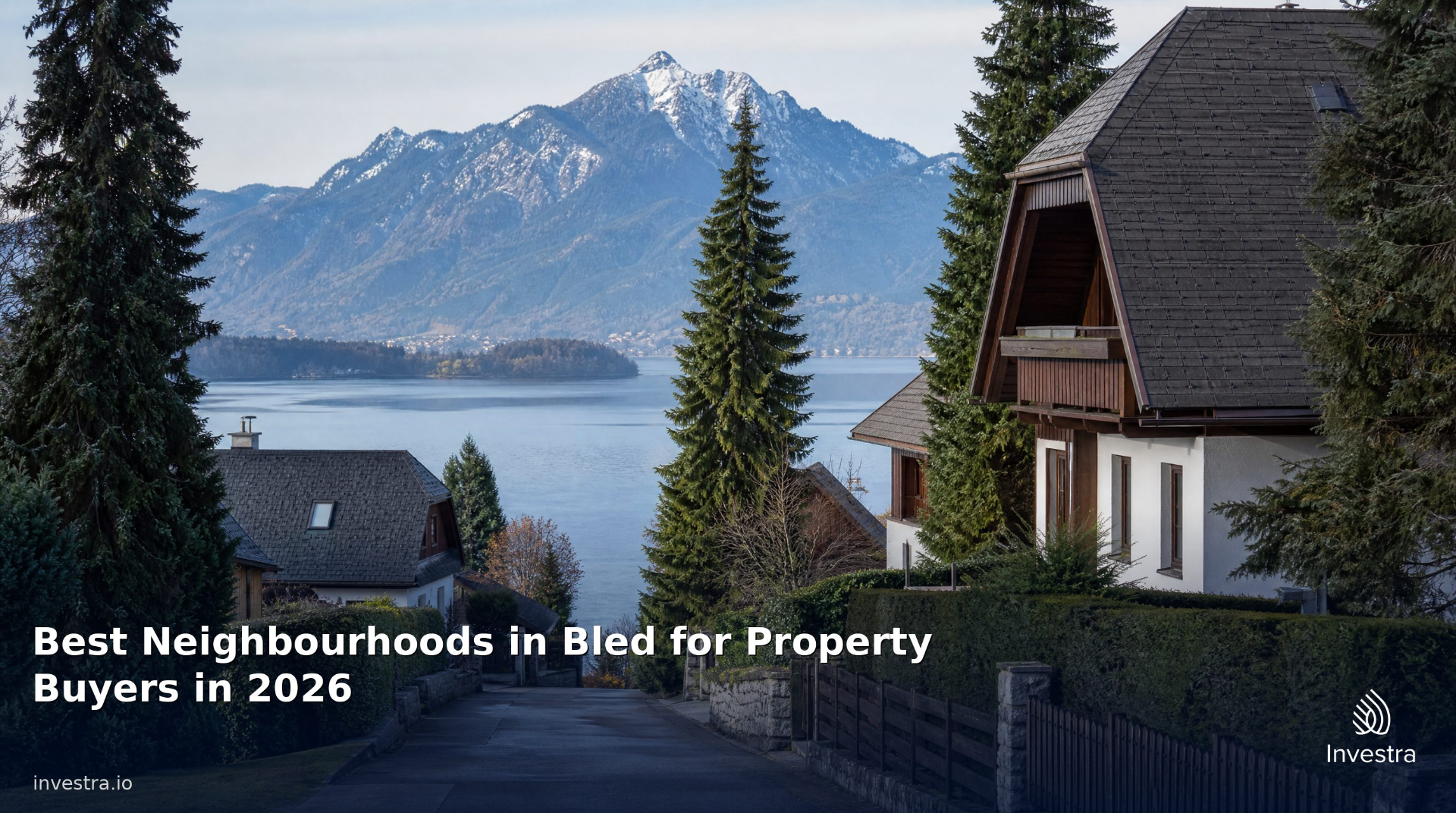
Best Neighbourhoods in Bled for Property Buyers in 2026
Best Neighbourhoods in Bled for Property Buyers in 2026
Why Bled Has Become One of Europe's Most Coveted Real Estate Destinations
Quick Answer: Bled, Slovenia has emerged as one of Central Europe's most desirable property markets, combining Alpine scenery, EU membership benefits, and strong tourism-driven rental yields that consistently attract international buyers seeking both lifestyle and investment value. Investra.io tracks emerging European markets where value and opportunity intersect.
There's a reason Bled keeps appearing on "best places to buy property in Europe" lists. The town perched above an impossibly blue glacial lake, framed by the Julian Alps and crowned by a medieval castle, isn't just scenically extraordinary — it's a functioning, thriving real estate market that has quietly matured into something serious investors pay close attention to.
Slovenia joined the European Union in 2004 and adopted the euro in 2007, which immediately made property transactions here more straightforward for EU buyers and provided the currency stability that international investors crave. What surprised many buyers who discovered Bled in the early 2010s was how undervalued the market was compared to comparable Alpine destinations in Austria or Switzerland.
Tourism figures tell part of the story. The Bled area received over 1.2 million overnight stays annually in recent pre-pandemic years, and 2023–2024 data suggests the numbers have surpassed previous records. International visitors account for roughly 85% of tourist traffic, which means the short-term rental market is genuinely global in its demand.
Property values have risen steadily — averaging 6–9% annually over the past three years in prime locations — yet Bled still trades at a meaningful discount to comparable Alpine resorts. Understanding which neighbourhoods offer the best entry points, yield potential, and lifestyle quality is what separates smart buyers from those who overpay for the postcard view. That's exactly what this guide covers.
Understanding Bled's Distinct Neighbourhoods and Micro-Markets
Quick Answer: Bled is composed of several distinct residential zones — including the Lakeside Strip, the Old Town core, the Mlino and Rečica waterfront villages, the elevated Straža hillside area, and the broader Bled periphery — each carrying different price points, rental profiles, and buyer demographics. Understanding micro-markets is as important here as in any other European destination.
Bled isn't large. The town itself has a permanent population of roughly 8,000 residents, but its real estate micro-markets are surprisingly varied. Walk five minutes in any direction from the lake promenade and you're in a completely different price bracket and rental reality. Understanding these distinctions is essential before committing to any purchase.
The Lakeside Strip — the arc of properties with direct or near-direct lake views along Cesta svobode — commands the highest prices in the municipality. We're talking €5,000–€9,500 per square metre for premium lake-facing apartments and villas, with exceptional properties occasionally exceeding €10,000/m².
The Bled Old Town area — centred around the historic core near the parish church and the castle hill — is a mixed residential-tourist zone where older Austro-Hungarian-era buildings sit alongside modern apartment developments. Prices here typically range from €3,200–€5,500/m², and it's genuinely the sweet spot for investors who want central access without fully lakefront price tags.
Mlino is the small village at the western end of the lake — quieter, more residential, and increasingly popular with buyers who want proximity to the water without the summer crowds that can overwhelm Bled's main promenade. Prices in Mlino typically run €2,800–€4,500/m².
Rečica, on the lake's southern shore, is a neighbourhood that has attracted considerable interest from German and Austrian buyers in particular. The setting is calmer, the views toward the Karavanke range are spectacular, and properties here list at €3,000–€5,000/m² depending on condition and proximity to the water.
Finally, the Straža hillside area — above the main town, accessed via the Straža ski slope road — offers elevated properties with panoramic views at somewhat lower prices (€2,500–€4,000/m²), appealing to buyers who prioritise the view over direct lake access.
Lakeside Strip: Premium Property with Premium Returns
Quick Answer: The Bled Lakeside Strip commands the highest property prices in the region (€5,000–€9,500/m²) but also the strongest short-term rental rates, making it viable for high-net-worth investors who can generate gross rental yields of 4–6% annually despite the elevated entry cost.
The Lakeside Strip is where Bled's property market mythology was born. The properties lining Cesta svobode are genuinely extraordinary — many are historic villas built during the Austro-Hungarian era or the early Yugoslav period when Bled was a favoured resort of European royalty. That architectural heritage, combined with the lake setting, creates something that simply cannot be replicated.
What does buying here actually look like? A two-bedroom apartment with proper lake views currently lists anywhere from €450,000 to €850,000 depending on floor, condition, and building age. Full villas with private garden access to the lake shore — rare, but occasionally available — command €2M–€5M+.
The rental income potential is genuinely strong. Well-positioned short-term rental apartments on the Lakeside Strip can achieve €150–€350 per night in peak summer (July-August) and €80–€150 per night in shoulder seasons (May-June, September-October).
The reality is that net yields after management fees (typically 20–25% of gross with a professional operator), cleaning costs, utilities, and maintenance typically land at 3–4.5% net. Not spectacular by emerging market standards, but combined with capital appreciation of 6–9% annually, the total return picture is compelling for wealth preservation buyers.
One practical point worth emphasising: many of the most desirable lakeside properties are apartments in older buildings that require renovation. Buyers need to budget €600–€1,200/m² for full renovation of an older Yugoslav-era apartment, which must be factored into total acquisition cost calculations. Working with a consultant like Siniša Dagary — Investment Consultant who understands Central European property markets can help buyers accurately model these total costs before committing.
Bled Old Town and Castle Hill: The Authentic Investment Sweet Spot
Quick Answer: Bled Old Town — the historic core around the parish church and below Castle Hill — offers the best balance of price, rental income potential, and lifestyle quality, with apartments priced at €3,200–€5,500/m² and strong year-round demand from both short-term tourists and long-term tenants.
Ask experienced Slovenia property investors where they'd actually buy in Bled today, and a surprising number point to the Old Town area rather than the lakefront. The reasoning is straightforward: you're paying 30–40% less per square metre while still being a 5–10 minute walk from the lake, the restaurants, the shops, and everything that makes Bled desirable.
The Old Town micro-market is architecturally interesting. You'll find a genuine mix of 19th-century stone buildings, interwar Slovenian modernist apartments, and post-war residential blocks. The quality and condition vary enormously, which creates genuine opportunity for buyers who understand renovation economics.
The Castle Hill immediate vicinity deserves special mention. Properties below the castle — particularly those on the stepped lanes leading up toward the medieval fortification — have a distinctive character that appeals to buyers seeking something uniquely Slovenian rather than simply a lakeside resort property.
Long-term rental demand in the Old Town is also genuine. With Slovenia's growing tech and remote-working population, Bled has seen an influx of location-independent professionals who want the quality of life without the tourist-facing pricing.
For investors comparing Central and Eastern European opportunities — and there are strong cases to be made for markets like those covered in our Sremska Mitrovica Real Estate 2026 guide — Bled Old Town represents the premium end of the regional spectrum, where lifestyle value and investment value genuinely overlap.
Mlino Village: The Undiscovered Gem at the Lake's Edge
Quick Answer: Mlino, the small village at the western tip of Lake Bled, offers exceptional value for property buyers at €2,800–€4,500/m², combining genuine lakeside proximity with a calmer, more residential character that appeals to lifestyle buyers and those seeking strong long-term appreciation potential.
Mlino is where serious buyers who've done their homework tend to end up. It's not the most Instagrammable address in the Bled area — that honour goes firmly to the main lakefront promenade — but as a property investment proposition, Mlino makes a compelling case that frankly rivals areas costing 50% more.
The village sits at the point where the Jezernica stream flows out of Lake Bled, giving it a character that feels genuinely different from the main town. There are restaurants, a small beach area, and excellent cycling and hiking trail access, but the tourism pressure is lower and the atmosphere more genuinely Slovenian.
The total return calculation for a well-executed Mlino renovation project looks something like this: acquire at €280,000, invest €120,000 in renovation, operate as a short-term rental generating €35,000–€50,000 gross annually. Net yield on total investment of €400,000 comes in at approximately 6–8% — meaningfully better than lakefront properties costing twice as much.
The one caveat with Mlino is that renovation of older properties can surface structural surprises — particularly with properties near the water table. Proper technical due diligence before purchase is non-negotiable, and buyers should ensure their notary engagement includes thorough title and planning permission review. Findes Group & Partners offers guidance on structuring Slovenia property acquisitions that minimise financial and legal risk at each stage.
Rečica and the Southern Lake Shore: Quiet Luxury for Discerning Buyers
Quick Answer: Rečica ob Bledu and the southern lake shore offer a quieter, more residential alternative to central Bled, with properties priced at €3,000–€5,000/m² and strong appeal among Austrian and German buyers seeking a permanent or semi-permanent Alpine residence within easy reach of Vienna or Munich.
Rečica has attracted a particular demographic: Austrian and German buyers, many of them in their 50s–60s, who discovered Bled through the rowing championships or cycling holidays and decided they wanted a permanent foothold. These buyers tend to favour larger properties — four to five bedroom houses with gardens, rather than apartment-style units — and they're willing to pay for quality and privacy.
For investors, Rečica presents a slightly different profile than central Bled. Short-term rental demand exists but is lower-intensity than the lakefront or Old Town — guests who choose Rečica typically stay longer (5–10 nights versus 2–4 in central locations) and pay premium rates for the privacy and exclusivity.
The southern shore road also provides some of the best cycling access in the region, connecting to the wider Julian Alps trail network. This appeals to the active holiday market — a segment that shows strong growth across Alpine destinations and that typically represents high-spend, repeat visitors who generate strong rental income consistency.
Straža Hillside and Elevated Bled: Views Without the Lakefront Price Tag
Quick Answer: The Straža hillside area above central Bled offers panoramic Alpine views at prices of €2,500–€4,000/m², making it the most accessible premium address in the Bled market and a strong option for buyers who want the Alpine lifestyle at a 30–40% discount to lakefront pricing.
The practical reason is obvious — you can't walk to the lake from your doorstep. You need a car, or a 15–20 minute walk downhill. For some buyers that's a dealbreaker; for others, it's simply not important.
What does €2,500–€4,000/m² buy on the Straža hillside? A two-bedroom apartment with south-facing mountain views typically costs €180,000–€280,000. A three-bedroom family house with a garden and panoramic Alpine views runs €350,000–€550,000. These are prices that represent genuinely accessible entry points to the Bled market for buyers who might be priced out of lakefront positions.
The rental market for Straža properties works reasonably well, though it requires clear positioning. Marketing a Straža property as a "ski chalet adjacent to Lake Bled" is a legitimate and effective framing that attracts winter sports visitors and hikers.
For buyers comparing Bled's hillside market against value opportunities in emerging Central European markets — like those profiled in our Prokuplje Real Estate 2026 guide or the Loznica Macva Region property analysis — Straža represents a very different risk-return profile: lower growth upside but significantly more stability and liquidity.
Legal Process and Foreign Buyer Rights in Slovenia 2026
Quick Answer: EU citizens can purchase property in Slovenia with no restrictions under the same conditions as Slovenian nationals, while non-EU buyers face reciprocity conditions and must navigate additional requirements; all buyers must engage a Slovenian notary and pay transaction costs totalling approximately 3–5% of the purchase price.
Slovenia's legal framework for property purchase is genuinely transparent and investor-friendly by regional standards — a significant advantage compared to some neighbouring countries where foreign ownership restrictions create complications. Here's what the process actually looks like in practice.
EU citizens enjoy full property ownership rights in Slovenia equivalent to Slovenian nationals. There are no restrictions on the number of properties, no special permits required, and no additional taxes applied to foreign nationals.
The transaction process itself runs as follows: once purchase terms are agreed, a preliminary sale agreement (predpogodba) is typically signed with a 10% deposit paid. Due diligence — including land registry (zemljiška knjiga) searches, planning status verification, and energy certification checks — takes 2–4 weeks.
Working with an experienced local property lawyer is non-negotiable, particularly for properties with agricultural land components (common in Mlino and Rečica), where separate agricultural land purchase restrictions may apply. The insights available through advisors connected to resources like the About Siniša Dagary page can help international buyers connect with the right local legal and financial professionals.
Rental Income, Yields, and the Short-Term Letting Market in Bled
Quick Answer: Short-term rental properties in Bled can achieve gross yields of 4–8% annually depending on location, with the highest yields available in the Mlino and Old Town areas, where purchase prices are lower but achievable rental rates remain competitive due to strong year-round tourism demand.
Let's talk numbers, because the rental yield story in Bled is more nuanced than the headline figures suggest. The reality is that Bled's tourism market is one of the strongest in Central Europe per capita — but property prices have risen to partially reflect that — which means raw yield calculations require careful neighbourhood-by-neighbourhood analysis rather than blanket assumptions.
The Airbnb and Booking.com market in Bled is mature and competitive. There are over 800 active short-term rental listings in the Bled municipality, ranging from budget-priced rooms to €1,000+/night luxury villas.
Average daily rates (ADR) by neighbourhood and season in 2024–2025:
Lakeside Strip: Summer peak €250–€700 (depending on property type and size), shoulder €120–€300, winter €90–€200. Average annual occupancy for well-managed properties: 65–75%.
Old Town: Summer peak €150–€350, shoulder €80–€180, winter €60–€130. Average occupancy: 60–70%.
Mlino: Summer peak €180–€450 (boutique villa premium), shoulder €90–€200, winter €70–€140. Average occupancy: 55–65%.
Straža/Hillside: Summer peak €130–€280, shoulder €70–€150, winter €80–€200 (ski season premium). Average occupancy: 50–60%.
The strongest investment case for pure yield optimisation is currently in the Mlino renovation segment and well-priced Old Town apartments — where purchase prices of €2,800–€4,000/m² combined with strong rental rates produce net yields of 5–7%, which outperform lakefront properties that may only net 3–4.5% despite higher gross revenues. For strategic thinking on property yield optimisation, the Business Strategy Blog offers frameworks applicable to real estate portfolio construction that many Bled investors have found valuable.
Professional property management is essential for maximising occupancy and rates. A well-managed property typically achieves 15–25% higher occupancy than self-managed equivalents, which translates directly to bottom-line yield improvement.
Market Trends, Capital Appreciation, and Long-Term Investment Outlook
Quick Answer: Bled property has appreciated at 6–9% annually over the past three years, driven by rising international interest, limited supply in prime neighbourhoods, and strengthening Alpine tourism demand; continued appreciation of 5–7% annually is realistic through 2026–2027, though prices are approaching saturation in the most premium segments.
Understanding where Bled sits in the European property cycle is crucial for investors deciding whether to buy now or wait. The short answer: prices are rising but not unsustainably, and genuine long-term appreciation potential exists for buyers willing to buy at the right prices in the right neighbourhoods.
The constraint on faster appreciation is supply. Bled is geographically fixed (you can't build the lake or the castle), and development restrictions exist to protect the Alpine character. This creates a natural supply ceiling that keeps prices supported.
One factor to monitor: interest rates and European central bank policy. Bled attracts many Euro-area buyers using low-rate financing; if rates rise materially above 4%, demand could soften. Conversely, strengthening climate-resilience interest (Bled's Alpine setting makes it attractive to climate-conscious buyers) could support valuations even if rate cycles tighten.
Renovation, Renovation Costs, and Adding Value Through Improvement
Quick Answer: Renovation of older Bled properties can add 25–40% to property value when executed properly, with costs ranging from €600–€1,200/m² for full restorations of Yugoslav-era apartments to €800–€1,500/m² for period villa work; key
Investment Disclaimer
Quick Answer: This guide is general market information, not personal legal, tax, financing or investment advice.
Before committing to a property transaction, buyers should obtain independent local legal, tax and financial advice suited to their circumstances. Investra.io can support initial market research, but every purchase decision remains the buyer's responsibility.
Frequently Asked Questions
Quick Answer: This section explains the practical property-investment implications of Frequently Asked Questions.
What is a prudent next step after initial market research?
Use current documentation, independent professional advice and comparable local evidence before proceeding. Investra.io can support an initial structured market review.
How can buyers plan a realistic ownership budget?
Use current documentation, independent professional advice and comparable local evidence before proceeding. Investra.io can support an initial structured market review.
What evidence supports a careful investment decision?
Use current documentation, independent professional advice and comparable local evidence before proceeding. Investra.io can support an initial structured market review.
When should a buyer obtain legal and tax advice?
Use current documentation, independent professional advice and comparable local evidence before proceeding. Investra.io can support an initial structured market review.
How should a buyer compare neighbourhoods and property types?
Use current documentation, independent professional advice and comparable local evidence before proceeding. Investra.io can support an initial structured market review.
What local checks should be completed before signing?
Use current documentation, independent professional advice and comparable local evidence before proceeding. Investra.io can support an initial structured market review.
Which costs should be assessed alongside the purchase price?
Use current documentation, independent professional advice and comparable local evidence before proceeding. Investra.io can support an initial structured market review.
How can international buyers verify a property opportunity?
Use current documentation, independent professional advice and comparable local evidence before proceeding. Investra.io can support an initial structured market review.
What should buyers compare before selecting a property?
Use current documentation, independent professional advice and comparable local evidence before proceeding. Investra.io can support an initial structured market review.
Quick Answer: These answers outline common buyer checks and should be read with current professional advice.
Recommended Reading
Quick Answer: This section explains the practical property-investment implications of Recommended Reading.
- Investra market research
- Investra market research
- Investra market research
- Investra market research
- Investra market research
- Investra market research
- Investra market research
- Investra market research
- Investra market research
- Investra market research
- Investra market research
- Investra market research
- Investra market research
- Investra market research
- Investra market research
- Investra market research
- Investra market research
- Siniša Dagary investment insight
- Siniša Dagary investment insight
- Siniša Dagary investment insight
- Siniša Dagary investment insight
- Siniša Dagary investment insight
- Findes Group & Partners
- Findes Group & Partners
Connect With Investra
Follow Investra for market updates on Facebook, LinkedIn, YouTube
Related Posts
No related posts available.
