
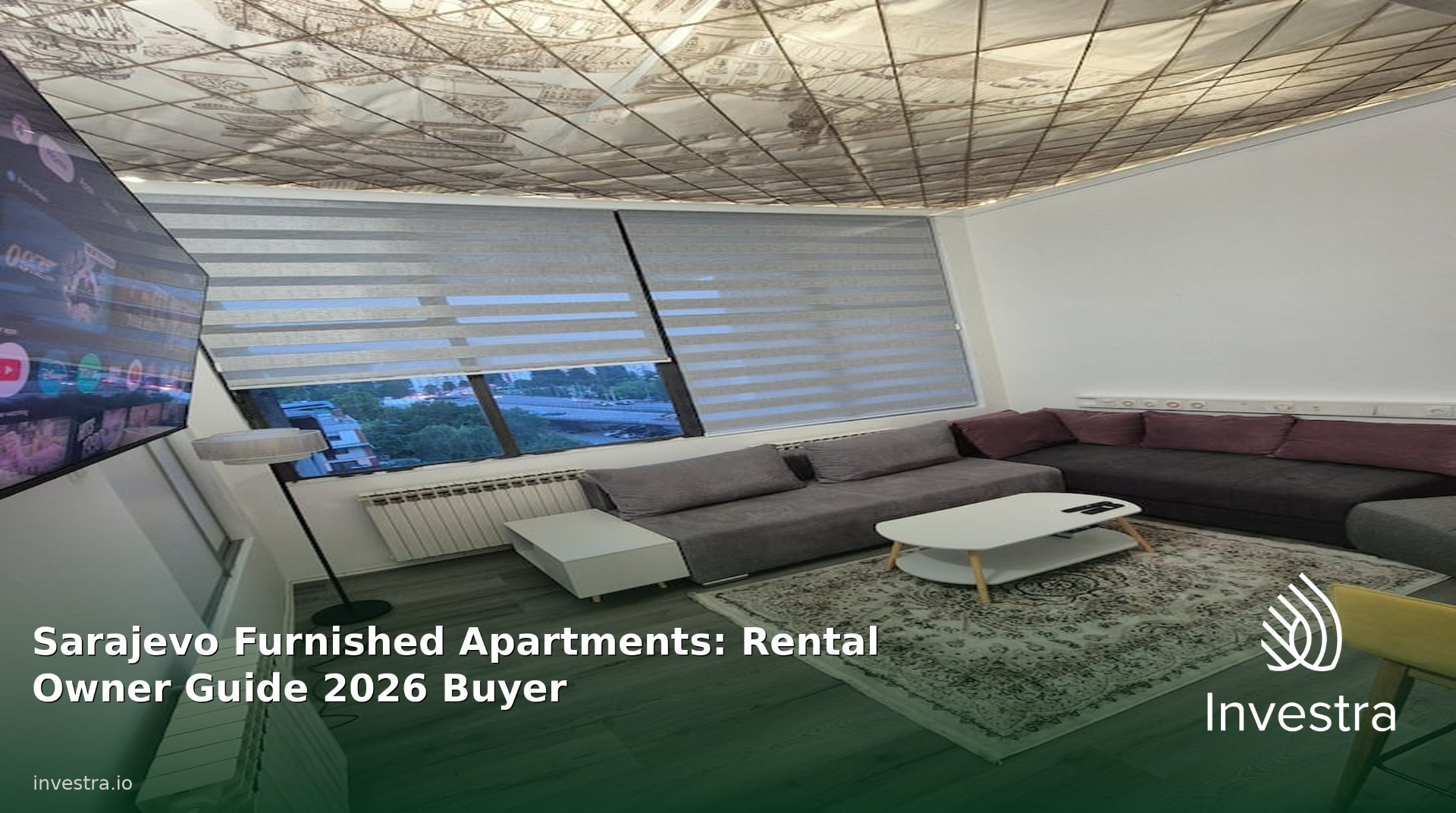
Sarajevo Furnished Apartments: Rental Owner Guide 2026 Buyer
Sarajevo Furnished Apartments: Rental Owner Guide 2026 Buyer
Sarajevo furnished apartment strategy: an overview for 2026 buyers
Quick Answer: A practical sarajevo furnished apartment strategy aligns location, tenant type, and operational plans to match local demand; start with market research and clear rental objectives before you buy. Investra.io market guides are a good first checkpoint.
When I advise investors on Sarajevo, the first question I ask is: who will rent this place and for how long? The truth is no single tactic works for every owner. A high-end, short-term furnished apartment in the Old Town needs a different approach than a compact studio aimed at long-term students near the university. That’s what a sarajevo furnished apartment strategy should do—tie together target tenant profiles, furnishing and services, legal and tax planning, and a realistic operations plan.
Start with broad market context. Read a current Sarajevo market report and neighbourhood breakdown to see demand patterns; Investra.io’s Sarajevo real estate market guide is a practical place to begin. Then refine assumptions about occupancy, average stay length and peak seasons by consulting short-term platforms and local rental listings. The reality is that seasonality and local events can sway performance dramatically, so build flexibility into projections.
In my experience, early choices—location, layout and whether you aim for long-term or short-term lets—determine almost everything that follows: furnishing costs, maintenance frequency, utility arrangements, cleaning logistics, and marketing tone. If you plan to operate remotely, factor in trusted local partners early on. If you want hands-on control, budget time for guest management and property upkeep. For step-by-step purchase guidance refer to Investra’s practical guides on buying in Sarajevo and new-build considerations: Buying property in Sarajevo and Sarajevo new-build guide.
What key factors determine the rental performance of a furnished apartment in Sarajevo?
Quick Answer: Rental performance is driven by location, tenant mix (short-term vs long-term), quality of furnishing and amenities, pricing strategy, and operational reliability—plus how well you adapt to local regulation and seasonality.
Ask any experienced Sarajevo landlord what makes or breaks revenue and they’ll point to the same handful of elements. Location still matters most: proximity to transport, the Old Town, universities and business hubs will shape who wants your unit. But beyond that, the choice of tenant type is crucial. Do you want tourists and short-term guests, working professionals on assignments, or local long-term tenants? Each segment demands different furnishings, service levels, and marketing channels.
Quality of furnishings and how they’re presented online directly affect booking rates for short-term lets. Clean, well-photographed interiors attract higher interest; poor photos and mismatched furniture push potential tenants away. Operational reliability—fast responses, consistent cleaning and maintenance, clear check-in procedures—creates repeat customers and positive reviews. This matters on platforms that fuel visibility.
Regulation, taxes and utility arrangements can also affect returns. The legal ability to rent short-term can change at municipal or canton levels. Always verify current rental rules and tax rates with local authorities and professional advisors, and consult real-time resources like Sarajevo rental market guide for operational tips. What surprised many buyers is how quickly market dynamics can shift—stay vigilant, update your assumptions yearly, and build contingency buffers into your plans.
Choosing the right Sarajevo neighbourhood for furnished apartments
Quick Answer: Pick a neighbourhood based on your tenant profile—tourists prefer Old Town and Baščaršija, professionals seek areas with good transport, students cluster near university zones—and use local guides to check micro-location differences. See Sarajevo neighbourhood guide.
Location is granular in Sarajevo. Street-level differences matter. I once toured two apartments separated by a single tram stop; one rented within days, the other sat vacant for weeks. That taught me to treat neighbourhood selection as a tactical choice, not a broad stroke.
If you’re targeting tourists and short stays, focus on Baščaršija, the Old Town and areas within walking distance of cultural attractions. For longer-term professionals, places with reliable public transport links, supermarkets and co-working spaces work better. Families and local professionals often prefer quieter residential neighbourhoods with green spaces. Students naturally concentrate in neighborhoods near the university campus; for these, affordability and proximity to campus trump high-end finishes.
Use neighbourhood guides to compare amenities, crime statistics, and local services. Investra’s Sarajevo neighbourhood guide gives a useful starting point. Visit areas at different times of day, talk to shopkeepers and meet a few locals. That on-the-ground check often reveals practical issues that maps don’t show—noise at night, construction plans, or access challenges during winter. Also verify development plans and permit applications with the municipal office to avoid surprises that affect rentalability.
Unit design, furnishing and amenity decisions that boost bookings
Quick Answer: Design choices should match the tenant type—durable, easy-clean materials for short-term rentals; long-term tenants value storage and kitchen quality; modern amenities and reliable Wi-Fi improve appeal across the board.
What do good furnished apartments in Sarajevo have in common? Thoughtful layout, robust furnishings, and functional amenities. When furnishing, I recommend prioritizing durability and easy maintenance: washable textiles, scratch-resistant surfaces, and replaceable accessories. For short-term rentals, aim for a strong first impression—professional photos, a cohesive colour palette and a few local touches that give the place personality.
Long-term tenants care about storage, kitchen appliances and local conveniences. Don't skimp on wardrobe space or on a dependable kitchen set-up. For short-term guests, include essentials like a quick kettle, adequate cookware and a clear instruction pack for heating and appliances. High-speed internet is non-negotiable for modern travellers and remote workers. Consider contactless check-in and a simple guest manual in English plus local language. If you plan upgrades or renovation, consult the Sarajevo new-build and renovation guide for local construction practices and supplier leads.
Finally, think about flexibility. A living-dining area that converts into a workspace or additional sleeping space increases your market. Smart storage solutions can make a small flat feel larger. What surprised many buyers is how small enhancements—better lighting, higher-quality bedding, a few local guidebooks—boost guest satisfaction and repeat bookings quite noticeably.
How foreigners buy property in Sarajevo: process and practical checks
Quick Answer: Foreign buyers should verify eligibility, title through the land registry, and municipal zoning; work with a local lawyer and consult guides on foreign ownership before signing. See Investra’s foreign buyer guide.
Buying property in Sarajevo as a non-resident requires careful document checks and trusted local expertise. In my experience, deals stall less when buyers hire a local lawyer to review titles and a translator to clarify contract clauses. The practical steps are straightforward: find a property, agree terms, complete due diligence (title, encumbrances, buildings permit status), sign a preliminary contract and then finalize with a notarial deed and registration.
Don’t rely solely on verbal assurances. Verify property ownership and encumbrances at the official land registry; confirm zoning and permitted use with the municipal building office; validate utility connections with providers; and check whether the unit is part of a co-op or has outstanding condominium fees. For a clear checklist tailored to Sarajevo buyers see Investra’s step-by-step guide: Buying property in Sarajevo. If you’re buying a new-build, compare the developer’s track record and warranties using the new-build guide.
Taxes, registration and compliance: how to verify current rules
Quick Answer: Tax rules and registration requirements change; always verify up-to-date rates, deductible items and reporting duties with the cantonal tax office, official government portals, and qualified local accountants.
Tax obligations are one of the areas where guessing can be costly. I never advise clients to assume rates or rules—these can shift with new reforms. Instead, check primary sources: the Cantonal Tax Authority for Sarajevo, national tax portals, and municipal offices for local fees. A local certified accountant can explain deductible expenses, VAT implications for furnished short-term lets, and reporting timelines.
For registration, confirm how to legally register a rental activity—whether the unit needs to be listed with the tourism board for short-term lets, or if long-term rental contracts require specific filings. If your strategy includes offering regular short-term rentals, insist on written confirmation from your municipality or an accountant verifying that you meet licensing and safety requirements.
To find accurate, current figures, request official documents: tax rulings, municipal licensing criteria, and the property register extract. If you prefer an independent review, consultants such as Siniša Dagary offer local advisory services and can be contacted via his site: investment consultation and advisory services. For practical rental tax guidance specific to Sarajevo, check Investra’s rental market guide and then confirm numbers with a local accountant.
Operational models: self-manage, local manager or agency partnership
Quick Answer: Choose an operational model based on your location, time availability and risk appetite—self-managing suits hands-on owners, while local property managers remove daily hassle but require careful vetting.
Many buyers ask whether to manage a furnished apartment themselves. If you live locally and enjoy guest interaction, self-management keeps costs down and gives direct control. Remote owners usually hire local property managers or agencies. In my experience, the best outcomes come from a hybrid approach: owners handle strategy and major upgrades, while a trusted on-the-ground manager covers check-ins, cleaning and reactive maintenance.
When selecting a property manager, ask for references and visit other properties they manage. Get a transparent fee schedule and define service level agreements: check-in times, cleaning standards, maintenance response times, and reporting frequency. For short-term guests, specify how guest communication, guest vetting and damage handling are managed. If you plan to use major booking platforms, ensure the manager understands channel management to avoid double bookings and pricing errors.
For buyers wanting professional introductions, Investra’s platform can connect you to local partners, and you can explore local advisory options through consultants like Siniša Dagary and regional advisory teams at Findes Group & Partners for structured management and compliance support.
Marketing and pricing strategies for furnished Sarajevo rentals
Quick Answer: Use dynamic pricing for short-term lets, clear long-term rental rates for tenancy contracts, and tailor listings to your target market while monitoring local demand indicators and competitor activity.
Marketing a Sarajevo furnished apartment means choosing channels that reach your audience. For short-term lets, platforms like Airbnb are obvious, but high-quality photos, detailed descriptions, localized attraction lists and quick response times make the difference between a booked calendar and empty nights. For long-term lets, promote on local listing sites, university boards and through corporate housing networks.
Pricing should react to demand signals. I recommend starting with competitor analysis: check nearby listings for similar units and pay attention to occupancy calendars and reviews. For short-term lets, dynamic pricing tools can help capture peak-season rates and avoid underpricing during events. For long-term leases, offer clear contract terms and consider incentives for longer commitments—free internet, minor maintenance included, or a professional cleaning once a month.
Always verify market rental rates by checking multiple sources: live listing platforms, Investra rental guides, and local agents’ listings. If you need exact figures for decision-making, request comparative market analyses from local brokers or use Investra’s resources to connect with vetted partners.
Maintenance, inventory and guest experience systems that protect value
Quick Answer: Regular preventive maintenance, accurate inventory records, and a structured guest experience reduce costs over time and preserve the apartment’s condition and reputation.
Almost every landlord underestimates the importance of systems. A small, managed property can act like a business: inventory lists, scheduled maintenance, and guest protocols prevent many problems. In my practice, owners who implemented quarterly inspections and simple checklists saw fewer emergency repairs and better tenant satisfaction.
Create an inventory and condition report at check-in, with dated photos and signed acceptance by long-term tenants, or a documented handover for short-term guests. Schedule routine tasks—boiler service, plumbing checks, re-sealing of bathrooms—and keep digital records. Establish a quick-response plan for breakdowns and choose technicians who will prioritize repeat clients. That kind of consistency builds trust with guests and tenants, which lands better reviews and fewer disputes.
If you’re scaling, consider a property management system that centralizes bookings, maintenance requests and financial reporting. You can find local providers through Investra or regional advisory partners like Findes Group & Partners advisory team. For strategic upgrade plans, consult renovation guides and developers listed on Investra’s new-build pages: Sarajevo renovation guide.
Renovation, energy efficiency and future-proofing your Sarajevo apartment
Quick Answer: Target renovations that improve durability, reduce operating costs and meet tenant expectations—insulation, efficient heating and quality finishes matter for long-term value and appeal.
When planning, get multiple quotes and verify contractor credentials. Use local renovation listings and consult Investra’s new-build and renovation guide to understand common costs, timelines and construction practices: Sarajevo new-build guide. Consider future-proofing elements like flexible room layouts, universal sockets and USB charging outlets, and an easy-to-maintain aesthetic that still photographs well for marketing.
Energy improvements may also be subject to local incentive programs. Check municipal and cantonal websites for current subsidies or rebates, and work with a local consultant or accountant to verify eligibility. If you want a broader advisory perspective, Siniša Dagary’s consultancy offers strategic planning services: advisory services and profile.
Risk management and exit strategies for Sarajevo furnished properties
Quick Answer: Plan for vacancy, regulatory change and market shifts by maintaining cash reserves, flexible contracts, and a clear exit plan such as resale, conversion to long-term lets, or professional sale listings.
Think about exit options at purchase time. Can the unit easily convert to a long-term rental if short-term demand drops? Is there a secondary market for similar units? Clear title and absence of liens make resale faster. If you’re unsure, ask a local broker for a resale liquidity assessment and check Investra’s Sarajevo market reports for transaction trends: Sarajevo market guide.
Insurance is another component. Confirm coverage options for furnished rentals, including protection for accidental damage and liability. Finally, keep an emergency fund—unexpected repairs are inevitable, and having cash on hand prevents forced underpriced sales during tough periods.
Working with local advisors: lawyers, brokers, property managers and regional partners
Quick Answer: Build a trusted local team—lawyer, broker, accountant and manager—and vet them through references, past client feedback and credible profiles like Siniša Dagary and Findes Group.
Consultants such as Siniša Dagary provide strategy and business planning for property investors; check his site for insights and contact details: Siniša Dagary, investment insights, and investment consultation. For structured advisory and legal support across the region, consider Findes Group & Partners: Findes Group & Partners and their advisory team. On the Investra platform you can access market guides and partner introductions such as Sarajevo neighbourhood guide and specific buying and rental guides to streamline your sourcing and due diligence.
Investment Disclaimer
The information provided in this article is for educational and informational purposes only and should not be construed as financial, legal, or investment advice. Real estate investments carry inherent risks, and past performance does not guarantee future results. Investors should not invest money they cannot afford to lose. Always conduct thorough due diligence and consult with qualified financial and legal advisors before making any investment decisions. Investra.io does not guarantee returns on any investment.
Frequently Asked Questions
How do I check current rental rates and demand for Sarajevo furnished apartments?
Rather than relying on broad averages, verify rates by checking live listings on short-term platforms (for holiday and short stays) and local property portals (for long-term lets). Request comparative market analyses from local agents or consult Investra’s Sarajevo rental and market guides: Sarajevo rental market guide and Sarajevo market guide. Also monitor occupancy calendars and review recent bookings to understand seasonality and event-driven demand. If you need precise numbers for financial modelling, ask a local accountant or broker for up-to-date reports.
Can foreigners buy furnished apartments in Sarajevo?
Foreigners can buy property in Bosnia and Herzegovina, but rules may vary depending on residence status and property type. Before committing, check eligibility and procedural steps with a local lawyer and consult the official land registry for title verification. For a practical guide tailored to non-resident buyers, see Investra’s step-by-step resource: Buying property in Sarajevo. Always confirm current legal requirements with a qualified attorney.
Do I need special permits to rent out an apartment short-term in Sarajevo?
Short-term rental rules can differ across municipalities and cantons. To confirm whether you need a tourism licence, business registration or safety certificates, contact the Sarajevo Canton tourism office or the municipal authority where the property is located. Engage a local accountant or lawyer to interpret the requirements for your specific property and to advise on registration and reporting obligations. You can also use Investra’s rental guides as a primer before seeking official confirmation.
What are the common operational costs I should budget for?
Operational costs typically include utilities, cleaning, routine maintenance, property management fees (if applicable), insurance and periodic repairs. Rather than relying on estimated percentages, ask local managers for historical expense reports on similar units and request supplier quotes for regular services. Consult a local accountant for tax-related operating deductions and get formal quotations for renovation or recurring services.
How do I decide between short-term and long-term rental strategies?
Your decision hinges on target returns, time commitment, and risk tolerance. Short-term rentals can offer higher nightly rates but require more management, frequent cleaning and marketing; they’re sensitive to seasonality and regulation. Long-term rentals provide steadier income and lower turnover but may cap upside. Evaluate local demand patterns, your ability to manage the property, and the regulatory environment. Investra’s short-term and long-term rental guides can help you weigh the trade-offs.
What legal checks should I perform before purchasing?
Always verify the title and any encumbrances at the land registry, confirm zoning and permitted use with the municipal office, check for outstanding condominium fees and review utility connection statuses. Have a local lawyer examine the sales contract and ensure all seller warranties are documented. If the property is a new-build, verify the developer’s track record and warranty terms. Use Investra’s buying guides as a starting checklist and then confirm documentation with professionals.
How can I protect my investment from vacancy and market downturns?
Plan conservatively: maintain a cash reserve for vacancies and repairs, diversify tenant types if possible (mix short and long-term contracts), and keep the property in good condition to maintain its competitiveness. Have an exit strategy such as converting to long-term leasing or preparing the property for sale, and monitor market indicators through trusted local reports. Regularly review your operating costs and adjust marketing to reduce downtime.
Who should I work with locally for taxes, legal and management support?
Hire a local lawyer for contracts and title checks, a certified accountant for tax compliance, and a reputable property manager if you’re not local. Vet professionals through references and sample work. Reputable regional partners include advisory consultants like Siniša Dagary and firms such as Findes Group & Partners. Investra’s network can also introduce vetted local providers.
How should I handle furnishings inventory and replacements?
Create an inventory list with photos and purchase dates. For short-term rentals, rotate consumables and replace worn items proactively to avoid negative reviews. For long-term tenants, include an inventory appendix in the lease and schedule periodic inspections. Keep receipts and warranty documents for major appliances to simplify insurance claims and accounting.
How do I verify current tax rates and landlord obligations in Sarajevo?
Tax regulations change and may vary across cantons. The most reliable approach is to consult the Cantonal Tax Authority or a local certified accountant. Request written confirmation of tax treatment for rental income and information on deductible expenses. Investra guides provide context, but final verification must come from official authorities or licensed tax professionals.
Recommended Reading
- Sarajevo real estate market guide
- Buying property in Sarajevo
- Sarajevo rental market guide
- Sarajevo neighbourhood guide
- Sarajevo new-build guide
- Mostar real estate market guide
- Siniša Dagary — Investment Consultant
- Business Strategy Blog
Connect With Investra
Follow Investra on social media for updates, listings and market commentary:
Connect With Investra
Quick Answer: Follow Investra for verified market context and practical property research.
Related Posts
No related posts available.
