
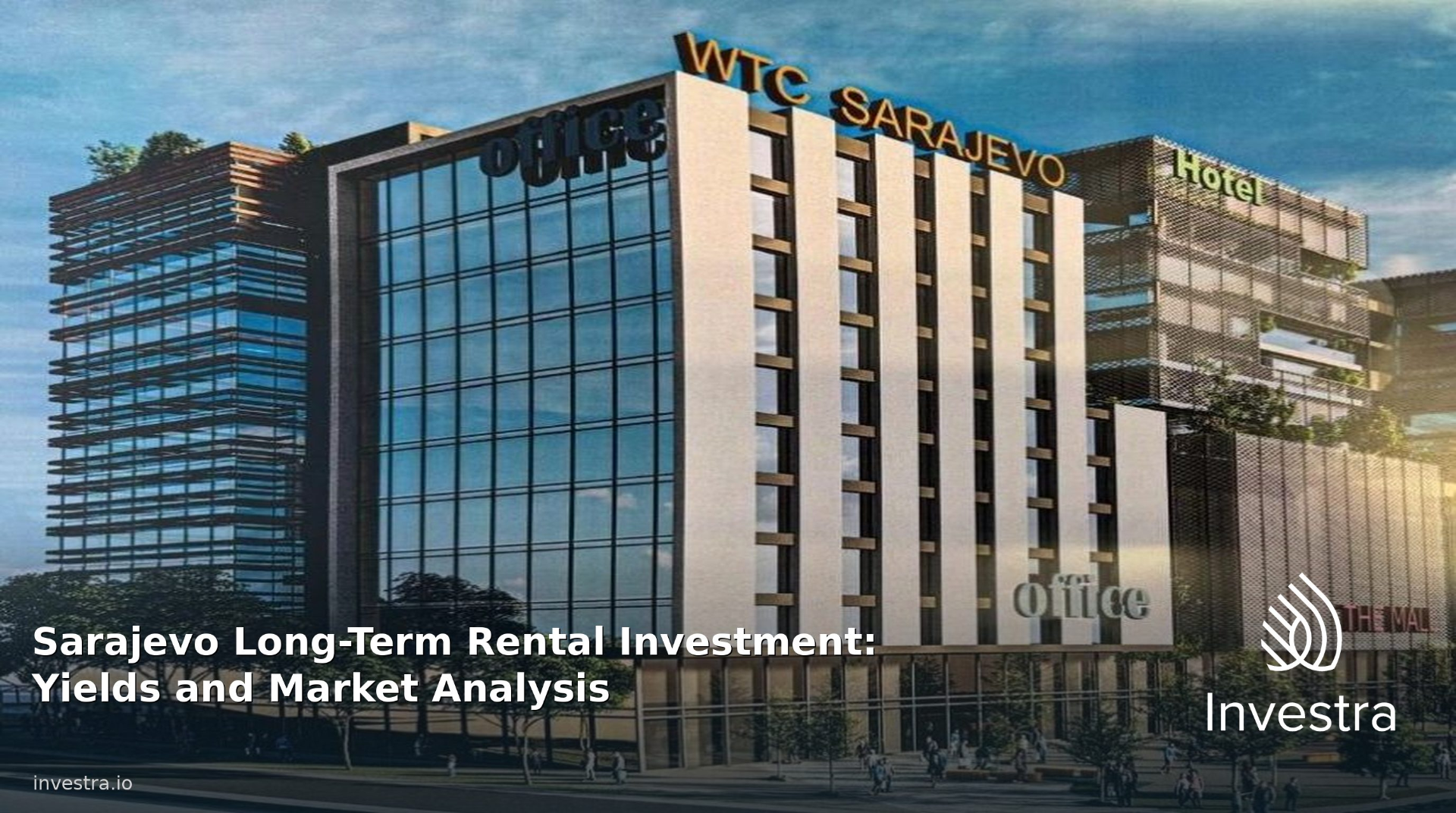
Sarajevo Long-Term Rental Investment: Yields and Market Analysis
Sarajevo Long-Term Rental Investment: Yields and Market Analysis
Sarajevo long-term rental investment: an overview
Quick Answer: Sarajevo long-term rental investment focuses on buy-to-let properties in the city and its suburbs, targeting tenants who work, study or settle in Bosnia and Herzegovina’s capital; use local market guides like Sarajevo real estate market guide to check current supply and demand.
Sarajevo offers a mix of old Austro-Hungarian architecture, post-war apartment blocks and modern developments that attract a diverse renter base: students, public-sector employees, expatriates and young professionals. In my experience, investors who treat Sarajevo as a local rental market rather than a tourist hotspot tend to see more stable occupancy and lower turnover. That stability is the essence of long-term rental investing — regular monthly income, fewer management headaches than short-term lets, and a tenant profile that values long-term leases.
But what does this mean for investors evaluating sarajevo long-term rental investment today? First, you’ll want to read neighbourhood-level analysis and micro-market trends. Investra’s Sarajevo neighbourhood guide is a good starting point; see the Sarajevo neighbourhood guide for comparisons between central districts and commuter suburbs. I’ve worked with buyers who chose inner-city flats for tenant convenience, while others preferred modern developments near transport links to attract families.
If you’re new to the market, there’s a learning curve: local tenancy customs, the pace of leasing, and the paperwork around registration and utilities. You won’t find a single number that fits every property; instead, think in terms of tenant demographics, building condition, and long-term demand. For practical steps on buying in the city, compare this overview with the step-by-step Buying property in Sarajevo guide.
Market conditions and demand drivers in Sarajevo
Quick Answer: Market conditions for sarajevo long-term rental investment are shaped by population trends, employment growth, student inflows and housing stock; review current market data from sources like the Sarajevo rental market guide to verify present conditions.
The Sarajevo rental market is not monolithic. There are parts of the city with long-standing rental demand, often close to universities, hospitals, and major employers, while other zones are more speculative or tied to seasonal activities. What surprised many buyers I’ve advised is how localized demand can be: a street with good public transport and a new tram stop can suddenly be in high demand, while a short distance away you’ll find quieter zones that attract long-term family tenants.
Key demand drivers include public-sector hiring cycles, university enrollment, and regional migration patterns. You’ll also see the impact of any recent infrastructure projects and changes to rental legislation. To understand the present climate, check up-to-date resources and market reports. The Sarajevo rental market guide is useful for rental-focused trends, while city-level guides like the Sarajevo real estate market guide help with broader context.
If you want to quantify demand—vacancy rates, average rent, turnaround time—don’t rely on hearsay. Ask local letting agencies for current listings, consult municipal statistics, and use property portals. I’ve recommended investors meet agents in person and review recently signed tenancy agreements to see what tenants are actually paying right now. For in-depth rental comparisons across Sarajevo neighbourhoods, refer to Investra’s rent analysis pages.
What are the projected rental yields and how to verify them?
Quick Answer: Projected rental yields for sarajevo long-term rental investment vary by property type and location; verify up-to-date yield estimates by collecting recent rental listings, consulting local letting agents, and checking official municipal or tax office records rather than relying on single-source figures.
Everyone asks: what yield can I expect? The reality is that yields are specific to each asset. Rather than quoting a number that could quickly be outdated, I’ll outline how you can calculate and verify realistic yield projections for Sarajevo long-term rental investment. Start with asking for current asking rents for comparable units in the exact building or street. Compare those with actual signed leases when possible — advertised rent and achieved rent can differ.
Use multiple data inputs: current rental listings, historical rental transaction data, building-specific utility and maintenance records, and feedback from local property managers. If you’re unsure where to begin, Investra’s Sarajevo rental market guide and neighbourhood analysis pages can help you identify comparables and current market rents. For verified, binding figures—especially if you need them for financing or tax planning—request official tenancy contracts or consult the local tax authority to see reported rental income averages.
Finally, consider how one-off costs will affect yield: renovation required to make the property rentable, management fees, and vacancy allowances. If you want a professional assessment, Findes Group & Partners and local consultants like Siniša Dagary offer advisory services; see Findes Group & Partners and advisory services for engagement options. They can validate assumptions against recent transactions and provide an independent yield model for your exact property.
Buying process and legal steps for foreign investors
Quick Answer: The process for sarajevo long-term rental investment involves title checks, due diligence, pre-contract agreements and closing before the notary; follow a step-by-step checklist such as the one in Buying property in Sarajevo and consult local legal counsel.
Buying property in Sarajevo as a foreigner does require careful legal attention. In my experience, deals that move fastest are those where buyers get a local lawyer and a reliable agent involved early. What we’ve seen often is that the title situation, especially for older buildings, can have small complications—unregistered renovations, shared access rights, or utility easements that matter to tenants and to resale value.
Start with a legal title search at the local land registry (katastar) and request an extract of the property’s ownership and encumbrances. I always advise reviewing the historic chain of title, building permits, and occupancy certificates. If a property is part of a condominium, get the homeowners’ association rules and minutes to understand any ongoing disputes or special assessments that could affect your cash flow.
For a practical guide, Investra’s step-by-step article on buying in Sarajevo outlines typical milestones and documents required. You should also consider municipal registration requirements and whether additional approvals are needed for foreign buyers. If you want hands-on consulting, professionals like Siniša Dagary provide one-on-one investment consulting and can coordinate with local lawyers. For more direct procedural steps, read the Investra guide on Buying property in Sarajevo.
Taxes, fees and ownership structures to consider
Quick Answer: Taxation and fees affecting sarajevo long-term rental investment include property transfer taxes, annual property tax and declared rental income taxes; verify current rates with the local tax office and consult advisors like Findes Group & Partners advisory team or legal counsel.
Taxes and transaction fees can materially change a deal’s attractiveness. The reality is that tax codes change and each investor’s situation differs depending on residency, corporate structure and bilateral tax treaties. Because I don’t want to put you on the wrong footing, I won’t quote numbers here. Instead I’ll describe how to gather authoritative information and what to look for.
First, determine whether it makes sense to hold your Sarajevo property in a personal name or through a company structure. Each option has implications for inheritance, transferability and the way rental income is taxed. For corporate structures that are more complex, speak with an international tax adviser or a firm like Findes Group & Partners that knows local law and cross-border rules.
Second, confirm all transaction costs before signing anything: notary fees, registration fees at the cadastre, and any brokerage commissions. For ongoing holding costs, check how local municipalities calculate property tax and whether utilities are separately metered. I’ve found that working with a local accountant or with consultants such as investment consultation services makes the process smoother and reduces surprises during the first tax filing period.
Top Sarajevo neighbourhoods for long-term rentals and why
Quick Answer: Choose neighbourhoods by tenant profile—student areas near universities, central districts for professionals, and suburbs for families; see the Sarajevo neighbourhood guide for detailed micro-analysis of popular zones.
Location drives everything in rental investing. What I often tell clients is to match a property’s characteristics to a tenant persona. If you’ve got a small studio near the university, market it to students and young professionals. A two-bedroom apartment with good schools nearby will appeal to families and long-term lessees. The practical question is: which streets and blocks combine accessibility, amenities, and building quality?
Investra’s neighbourhood guide breaks the city into segments and describes pros and cons of each area. For buyers seeking stable long-term tenants, inner-city neighbourhoods with good public transport and proximity to hospitals and government offices are attractive. For lower entry costs or newer supply, look at emerging suburbs and new-build zones—Investra’s new-build guide can help you assess quality and developer reputations.
We’ve seen buyers make profitable choices by prioritizing walkability and reliable utilities. If amenities like grocery stores, schools and public transport aren’t nearby, tenants will expect rent discounts. Always walk the neighbourhood at different times of day to assess noise, safety and convenience. For a focused dive on Sarajevo properties and neighbourhood nuance, consult Sarajevo new-build guide.
Valuation, cash flow modelling and practical due diligence
Quick Answer: Valuation and cash flow modelling for sarajevo long-term rental investment require compiling comparable rents, operating costs and vacancy estimates; use multiple local data sources and professional appraisals to validate projections.
A realistic valuation isn’t just about what you can buy the property for; it’s about what it’ll earn and cost to keep. In practical terms, cash flow modelling needs three core inputs: achievable rent, operating expenses and expected vacancy. The challenge is that each of those inputs varies with location and property condition.
Start by creating a rent roll from comparable properties. Ask letting agents for recent signed leases rather than just advertising prices. For expenses, gather quotes for property management, municipal charges, insurance, and periodic maintenance. Don’t forget occasional costs: roof repairs, elevator servicing, or façade work if the building is older. The reality is that those infrequent costs matter to long-term returns.
If your model will be used to secure finance, consider getting a formal valuation from a certified appraiser and share your cash-flow model with them for calibration. Investra’s Sarajevo rental and new-build guides include practical checklists for comparables and renovation allowances. For full due diligence handled on your behalf, consultants like Siniša Dagary investment insights or advisors at Findes Group & Partners advisory team can audit your assumptions.
Financing options and working with local banks
Quick Answer: Financing for sarajevo long-term rental investment is available through local banks and international lenders; verify current mortgage terms and eligibility by contacting local banks directly and consulting independent advisors like advisory services.
Access to finance will shape your purchase strategy. I’ve worked with investors who preferred higher use to preserve capital, and others who bought with cash to avoid interest exposure. Different banks have different appetites for foreign borrowers and differing documentation requirements. What matters most is pre-approval: knowing how much a bank will lend changes which properties make financial sense.
Speak to several local banks and ask about their lending criteria for non-resident borrowers, required down payments, and the documentation they accept. Typical documents include proof of income, tax returns, a foreign passport and sometimes evidence of local residency or work. Don’t overlook currency risk: if your rental income is in BAM or euros but your debt is in another currency, that mismatch can affect returns.
For investors who want professional intermediation, firms like Findes Group & Partners can introduce banking partners and structure financing, while independent consultants like Siniša Dagary can coordinate meetings and negotiate terms. Always get written, bank-issued loan quotes before committing to an acquisition.
Managing long-term rentals: tenancy rules, contracts and operations
Quick Answer: Effective management of sarajevo long-term rental investment depends on clear contracts, understanding tenant rights and responsive operations; consult local letting agents and legal counsel to craft compliant tenancy agreements and management plans.
Long-term rental success is operational as much as it is financial. The tenant relationship is a long one; a well-structured lease and reliable property management will reduce turnover and dispute risk. What surprised some new landlords I’ve met is how much local custom matters—standard leases in Sarajevo may include clauses that are uncommon elsewhere, such as specific meter-reading procedures and municipal registration obligations.
Make sure tenancy contracts clearly define the rent, payment method, utility responsibilities, repair obligations and notice periods. If you’re not fluent in the local language, always get the lease professionally translated and ask a lawyer to confirm it’s enforceable. For tenancy law basics and sample clauses, see Investra’s rental guides and consider a local property manager who can handle rent collection, maintenance and tenant communication.
Consider whether you’ll self-manage or appoint a manager. Self-management keeps costs down but is time-consuming, especially if you’re abroad. Property managers charge fees but handle the day-to-day and can reduce vacancy time. If you need referrals, Investra’s Sarajevo rental market guide and Siniša Dagary’s consulting pages include contacts for reputable managers and letting agencies.
Exit strategies, renovations and investing in new builds
Quick Answer: Plan exit strategies for sarajevo long-term rental investment by evaluating resale demand, renovation potential and developer track records; use Investra’s guides on renovation and new builds to assess project feasibility and resale prospects.
An exit strategy should be part of your investment thesis from day one. Will you hold long-term for rental cash flow, flip after renovation, or sell when market conditions peak? Each path has implications for renovation scope, tenancy stability and taxes. In my experience, investors who plan three to five exit scenarios avoid surprises when market conditions shift.
Investing in new-builds can reduce initial maintenance and attract long-term tenants seeking modern amenities, but developer reputation matters. Use references, review completed projects, and see what Investra’s project pages say about developer performance. For advisory assistance, consult experts such as Siniša Dagary or the consultants at Findes Group & Partners to validate exit assumptions and renovation budgets.
Investment Disclaimer
Quick Answer: This section explains that the article is informational and not professional financial, legal or investment advice; always seek qualified advisors for binding decisions.
The information provided in this article is for educational and informational purposes only and should not be construed as financial, legal, or investment advice. Real estate investments carry inherent risks, and past performance does not guarantee future results. Investors should not invest money they cannot afford to lose. Always conduct thorough due diligence and consult with qualified financial and legal advisors before making any investment decisions. Investra.io does not guarantee returns on any investment.
Frequently Asked Questions
Quick Answer: Answers to common questions about sarajevo long-term rental investment follow; each explains verification methods and practical next steps rather than presenting unverifiable figures.
What are typical steps to buy an apartment in Sarajevo?
The typical steps include identifying a suitable property, doing a legal title check at the cadastre, signing a preliminary sales contract, arranging financing if needed, and completing the final contract before a notary. In practice you’ll also want to commission a building inspection, collect condominium documents if applicable, and confirm utility registration procedures. Use Investra’s step-by-step Buying property in Sarajevo guide for checklists. It’s wise to work with a local lawyer and possibly an advisory firm such as investment consultation to ensure documents are complete and that there are no liens or encumbrances on the title.
How do I verify current rental yields?
To verify current rental yields, collect actual rents from comparable signed leases (not just ask prices), estimate operating expenses, and include vacancy allowances. Cross-check with local letting agents, municipal statistics, and property portals for trend confirmation. For a formal estimate, get a professional appraisal or a rent-roll analysis from a property manager. Investra’s Sarajevo rental market resources and local consultants like Siniša Dagary can help validate the inputs for your yield calculation.
Can foreigners buy property in Sarajevo?
Yes, foreigners can buy property in Bosnia and Herzegovina, though specific conditions and practical steps should be verified in the local legal framework. For detailed procedural steps and common documentation requirements, see the Investra article on Buying property in Sarajevo. Always confirm any residency-related rules with a local lawyer and the cadastre office. If you need help coordinating the process, consider advisory services such as advisory services.
What taxes should I plan for when owning a rental property?
Plan for property transfer taxes and registration fees at purchase, annual property taxes set by the municipality, and taxes on declared rental income. The exact rates and filing procedures change, so verify current obligations with the local tax authority or a licensed tax advisor. Firms like Findes Group & Partners can provide up-to-date tax guidance and help structure ownership to align with your broader tax situation.
How do I find reliable tenants in Sarajevo?
Find reliable tenants by combining professional marketing, background checks, and clear lease terms. Advertise on local platforms and use letting agents with track records. Ask agents for references and proof of income, and run identity checks. In my experience, landlords who invest in professional photography and accurate descriptions get better-quality tenant inquiries. A local property manager can perform tenant vetting and reduce landlord exposure to problem tenancies.
What are the main risks of long-term rental investing in Sarajevo?
Main risks include regulatory changes, unexpected maintenance costs, tenant default, and local economic fluctuations that affect demand. To mitigate these, keep cash reserves, use strong tenancy contracts vetted by a lawyer, and diversify across micro-locations or property types. For a comprehensive risk review tailored to a specific property, consult with local experts such as Siniša Dagary or the advisory team at Findes Group & Partners advisory team.
Should I renovate before renting or rent as-is?
Deciding whether to renovate depends on the condition of the property, expected rent uplift, vacancy time and renovation cost. If the market shows strong demand for modern interiors in your target neighbourhood, modest renovations may pay back quickly. If the area is more price-sensitive, minimal upgrades and competitive rent may be wiser. Get contractor quotes and run the numbers in a simple payback model. Investra’s renovation guides and new-build analyses can help you size projects properly.
How do I handle property management from abroad?
When managing from abroad, hire a local property manager for rent collection, maintenance coordination and tenant communication. Set clear reporting expectations, use escrow or bank transfer systems for rent, and arrange regular inspections. I’ve seen owners reduce stress by choosing managers who provide digital portals and monthly reconciliation statements. If you need vetted managers, check Investra’s Sarajevo rental market resources or request introductions through consultants like Siniša Dagary.
Where can I get professional valuations and due diligence?
Professional valuations and due diligence can be commissioned from certified appraisers, law firms, or advisory companies. For cross-border or complex deals, advisory firms such as Findes Group & Partners provide combined legal, tax and valuation services. Local notaries and the cadastre can confirm title, while structural engineers can perform building inspections. If you want a one-stop approach, consider engaging a consultant to coordinate these checks.
Recommended Reading
Quick Answer: The following curated readings offer practical guides on Sarajevo property buying, rentals and neighbourhoods from Investra and consultant resources to supplement this article.
- Sarajevo real estate market guide
- Buying property in Sarajevo
- Sarajevo rental market guide
- Sarajevo neighbourhood guide
- Sarajevo new-build guide
- Mostar real estate market guide
- Siniša Dagary — Investment Consultant
- Business Strategy Blog
Connect With Investra
Quick Answer: Follow Investra on social media for market updates and new listings; check Facebook, LinkedIn and YouTube pages to stay informed.
Stay connected with Investra for regular market reports and new listings in Bosnia and Herzegovina:
For hands-on advisory or to discuss a specific sarajevo long-term rental investment, consider contacting the professionals linked above. If you want a curated introduction to local agents, developers and lawyers, Investra and partner advisors can help coordinate next steps.
Connect With Investra
Quick Answer: Follow Investra for verified market context and practical property research.
Related Posts
No related posts available.
