
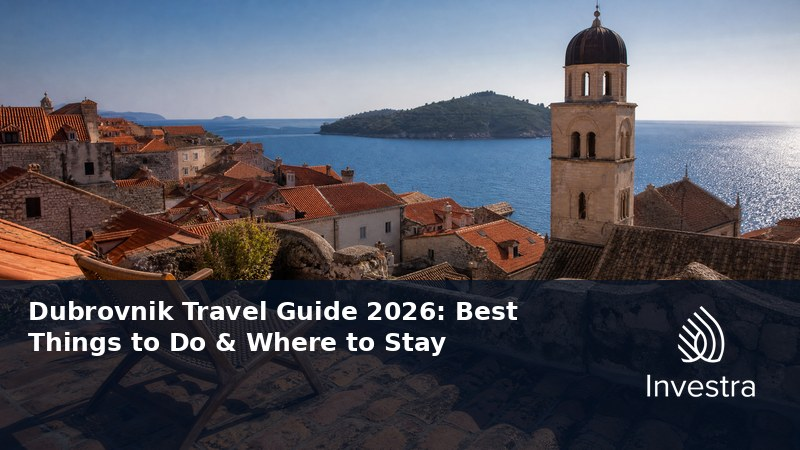
Dubrovnik Travel Guide 2026: Best Things to Do & Where to Stay
Dubrovnik Travel Guide 2026: Why This Croatian Gem Remains Europe's Most Captivating Destination
Quick Answer: Dubrovnik in 2026 remains one of Europe's premier travel destinations, offering UNESCO World Heritage-listed medieval architecture, crystal-clear Adriatic waters, and a thriving luxury tourism scene that also presents exceptional real estate investment opportunities. Dubrovnik Luxury Property Guide provides comprehensive market insights for investors and visitors alike.
Perched on the southern tip of Croatia's Dalmatian Coast, Dubrovnik is a city that defies ordinary superlatives. Known historically as Ragusa, this fortified maritime republic commanded trade routes across the Mediterranean for centuries, accumulating wealth, culture, and architectural splendor that still captivates millions of visitors annually. In 2026, Dubrovnik stands at an exciting crossroads: a world-class tourism destination that has successfully expanded its appeal beyond the summer season while simultaneously emerging as one of the Mediterranean's most compelling luxury real estate markets.
With over 1.2 million tourist arrivals recorded annually and a property market that has seen consistent price appreciation exceeding 8–12% per year since Croatia's Eurozone entry in January 2023, Dubrovnik presents a rare dual opportunity. Travelers arrive seeking the famous limestone-paved Stradun, the formidable city walls, and the sapphire-blue waters of the Adriatic. Savvy investors, meanwhile, recognize that behind every stone façade lies a market poised for continued growth.
This comprehensive Dubrovnik travel guide for 2026 covers everything: the best things to do, where to stay, how to eat, when to visit, and — critically — how to evaluate the city's exceptional real estate market for short-term rental income or long-term capital appreciation. Whether planning a two-week holiday or a seven-figure property acquisition, this guide delivers the insights needed to make the most of Dubrovnik.
---Understanding Dubrovnik: History, Geography, and Cultural Context
Quick Answer: Dubrovnik is a UNESCO World Heritage Site situated on Croatia's Dalmatian Coast with a 1,400-year history as an independent maritime republic, offering visitors an unparalleled blend of medieval architecture, Mediterranean climate, and Adriatic coastal beauty.
Founded in the 7th century by Roman refugees fleeing the Slavic invasions of Epidaurum (modern Cavtat), Dubrovnik — then called Ragusa — evolved into one of the most sophisticated city-states in medieval Europe. At its peak, the Republic of Ragusa operated a diplomatic network stretching from the Ottoman Empire to the courts of Western Europe, maintaining peaceful trade relationships through skillful politics rather than military might. The Latin motto Non bene pro toto libertas venditur auro ("Freedom is not sold for all the gold in the world") still resonates in the city's independent spirit.
Geographically, Dubrovnik occupies a dramatic coastal position in the southernmost part of the Dalmatia region, in Dubrovnik-Neretva County. The Old Town — the historic core contained within medieval walls — sits on a narrow limestone peninsula jutting into the Adriatic. The wider municipality encompasses surrounding suburbs such as Lapad, Babin Kuk, Gruž harbor, and several nearby islands including Lokrum, Koločep, Lopud, and Šipan.
The climate is classic Mediterranean: long, hot, dry summers (June–September regularly see temperatures between 28–34°C) and mild, wet winters when the city takes on an authentically local character largely absent during peak tourist months. This climatic reality is increasingly important for both travelers seeking a more atmospheric visit and property investors calculating year-round rental potential. The Adriatic Sea temperature around Dubrovnik peaks at approximately 26–28°C in August, making it ideal for swimming well into October.
Global recognition has been considerable. The city appeared prominently as King's Landing in the HBO series Game of Thrones, which generated an estimated 500,000 additional visitors over the series' run. Today, dedicated Game of Thrones tours remain among the city's most popular guided experiences, drawing fans from across the globe and sustaining tourism interest well beyond the show's conclusion.
---Best Things to Do in Dubrovnik in 2026
Quick Answer: The best things to do in Dubrovnik include walking the 2km city walls, exploring the Old Town's UNESCO-listed streets, taking a cable car to Mount Srđ, island-hopping to Lokrum and the Elaphiti Islands, and experiencing world-class dining and beach clubs that define the Dalmatian luxury lifestyle.
Dubrovnik's appeal is layered across centuries of history, natural beauty, and contemporary sophistication. In 2026, the city has refined its tourism offering considerably, introducing timed entry systems for the city walls, enhanced digital guides, and an expanded roster of cultural events that stretch the season from March through November.
Walk the City Walls
The 1,940-meter circuit of Dubrovnik's medieval walls is arguably the single most rewarding experience in the entire Adriatic region. Built primarily between the 12th and 17th centuries, the walls reach a maximum height of 25 meters and a width of up to 6 meters. Walking the full circuit takes approximately 1.5–2 hours at a leisurely pace. In 2026, adult tickets are priced at around €35 (subject to seasonal adjustment), and the municipality has introduced timed entry windows to manage crowd density — advance booking of at least 48 hours is strongly recommended during June through September. The views from the walls encompass the Old Town's terracotta rooftops, the shimmering Adriatic, and the island of Lokrum, providing exceptional photography opportunities at every turn.
Explore the Stradun and Old Town
The Stradun (also called Placa) is Dubrovnik's main promenade, a gleaming limestone thoroughfare stretching approximately 300 meters from the Pile Gate to the Ploče Gate. Polished smooth by centuries of foot traffic, it glows white under the Adriatic sun. Off the Stradun, a maze of stepped alleyways reveals baroque churches, Renaissance fountains including the Large Onofrio's Fountain (1438), the Sponza Palace, and the Rector's Palace — now a museum of Ragusan civic history.
Cable Car to Mount Srđ
The Dubrovnik Cable Car whisks passengers 405 meters above sea level to the summit of Mount Srđ in approximately four minutes. The panoramic views from the top are genuinely staggering — on clear days, visibility extends to Montenegro and Bosnia. The summit also houses the Napoleonic-era Fort Imperial, which contains a museum dedicated to the 1991–1992 Homeland War siege of Dubrovnik. A round-trip cable car ticket costs approximately €25–30 for adults in 2026.
Island Excursions: Lokrum and the Elaphiti Islands
Lokrum Island, a 15-minute ferry ride from the Old Town harbor, is a nature reserve famous for its botanical gardens, peacocks roaming freely among visitors, a saltwater lake called the Dead Sea, and the ruins of a Benedictine monastery. Day trips to the Elaphiti Islands — Koločep, Lopud, and Šipan — offer a glimpse of the quieter, authentically Dalmatian side of the region, with minimal motor traffic and some of the cleanest beaches in the Adriatic.
Beaches: Banje, Lapad, and Sveti Jakov
Dubrovnik's beaches are predominantly pebbled, with crystal-clear water quality consistently rated among Croatia's finest. Banje Beach, directly outside the Ploče Gate, offers proximity to the Old Town and hosts the popular EastWest Beach Club. Lapad Bay provides a longer, more family-friendly stretch. Sveti Jakov, reached by steps below a residential neighborhood, offers relative seclusion and stunning Old Town views as a backdrop.
---Where to Stay in Dubrovnik: Hotels, Villas, and Apartments for Every Budget
Quick Answer: Dubrovnik accommodation ranges from budget-friendly hostels at €30–60 per night to ultra-luxury hotels and private villas exceeding €1,500 per night, with the Old Town and Lapad neighborhoods offering the best balance of location, value, and authentic atmosphere.
Accommodation in Dubrovnik operates across a spectacularly wide price range, reflecting the city's status as both a mass tourism destination and an emerging ultra-luxury market. In 2026, the total accommodation inventory includes approximately 22,000 beds across all categories, though the municipality has placed deliberate restrictions on new construction within the Old Town to preserve its heritage character.
Luxury (€400–€1,500+ per night): The Hotel Excelsior, perched on a clifftop just outside the Ploče Gate, remains the gold standard for traditional luxury with its stunning Old Town views and private beach access. The Villa Orsula, operated by the Adriatic Luxury Hotels group, offers a more intimate boutique experience. The Grand Villa Argentina complex represents decades of Dubrovnik luxury hospitality. New to the 2026 roster are several privately managed ultra-luxury villa estates in the surrounding hills, some available through platforms like Find Your Property on Investra, offering full concierge services and private pools at weekly rates from €10,000 upward in peak season.
Mid-Range (€120–€400 per night): Lapad Bay and Babin Kuk host the majority of Dubrovnik's mid-range hotel inventory, with properties like Hotel Kompas and Hotel Dubrovnik Palace offering sea views, pools, and shuttle services to the Old Town. Boutique hotels within restored stone buildings throughout the Old Town itself — often operating with only 8–15 rooms — deliver exceptional atmosphere at this price point.
Budget and Self-Catering (€30–€120 per night): Private apartment rentals through platforms such as Airbnb remain immensely popular in Dubrovnik, with a standard one-bedroom Old Town apartment fetching €100–€250 per night in peak season and €50–€90 in shoulder months. For solo travelers and groups prioritizing social atmosphere, several well-reviewed hostels operate in the Gruž and Lapad neighborhoods.
---Dubrovnik's Best Restaurants and Food Scene 2026
Quick Answer: Dubrovnik's dining scene in 2026 ranges from authentic Dalmatian konobas serving fresh seafood and local wine for €25–40 per person to Michelin-recognized fine dining experiences exceeding €150 per person, centered around exceptional seafood, locally produced olive oil, and renowned wines from the nearby Pelješac Peninsula.
The culinary identity of Dubrovnik is deeply rooted in the Dalmatian maritime tradition — fresh fish, shellfish, octopus, and locally caught seafood prepared with simplicity and quality local ingredients. Black risotto (crni rižot), prepared with cuttlefish ink, remains an iconic local dish. Peka — a slow-roasted meat or seafood preparation under a bell-shaped iron lid covered with embers — requires advance ordering and delivers uniquely tender results.
Wine culture is inseparable from Dubrovnik dining. The Pelješac Peninsula, a short drive north of the city, produces some of Croatia's most celebrated red wines, particularly Plavac Mali from producers including Miloš, Saints Hills, and Korta Katarina. These full-bodied reds pair magnificently with the region's grilled seafood and lamb dishes.
Top Dining Recommendations for 2026:
- Restaurant 360° — Situated within the city walls near the Ploče Gate, offering creative contemporary cuisine and dramatic harbor views. Tasting menus from approximately €120 per person.
- Nautika — A Dubrovnik institution since 1971, set into the city walls near the Pile Gate with seafront terraces. Fresh Adriatic seafood at €60–100 per person.
- Kopun — Specializing in traditional Ragusan cuisine, including the city's historical specialty of capon (rooster), prepared using 500-year-old recipes. Budget approximately €40–60 per person.
- Konoba Kamenice — A beloved Old Town institution famous for its oysters and fresh mussels sourced from the nearby Ston area. Outstanding value at €20–35 per person.
- Azur — Offering an Asian-Mediterranean fusion approach to Adriatic ingredients, popular with younger visitors seeking contemporary flavors.
The fresh oysters from Ston Bay, approximately 55 kilometers north of Dubrovnik, deserve special mention — regarded as among the finest in Europe, they can be enjoyed both in Dubrovnik restaurants and on a dedicated oyster-tasting excursion to the historic walled town of Ston itself.
---Best Time to Visit Dubrovnik in 2026: Seasonal Guide
Quick Answer: The best time to visit Dubrovnik in 2026 is either late spring (May–early June) or early autumn (September–October), when temperatures remain warm at 22–28°C, crowds thin considerably compared to July–August peak, and accommodation prices drop by 30–50% while most attractions remain fully operational.
Understanding Dubrovnik's seasonal rhythm is essential for optimizing any visit and — for real estate investors — for calculating realistic rental yield projections across different months of the year.
High Season: July–August
This is Dubrovnik at its most intense and most expensive. Daily visitor numbers in the Old Town regularly exceeded the 8,000-person cap that the municipality has attempted to enforce since 2017. Temperatures average 28–33°C. Accommodation prices are at their absolute peak, with even modest private apartments commanding €150–250 per night. The cruise ship presence adds several thousand additional daily visitors. While the energy is electric and all events, beaches, and restaurants are at full operation, the crowds can significantly detract from the historic city experience, particularly on the city walls and Stradun during midday hours.
Shoulder Season: May–June and September–October
This period represents the sweet spot for most visitors. Sea temperatures remain excellent for swimming (22–26°C in September, 19–22°C in May). The Stradun is walkable without shoulder-to-shoulder congestion. Restaurant reservations are obtainable without weeks of advance planning. Accommodation rates drop meaningfully — a luxury hotel suite that commands €600 per night in August may be available for €300–350 in October. For property investors, shoulder season bookings increasingly fill the revenue calendar as the "high season extension" trend solidifies.
Winter: November–March
Dubrovnik in winter is a revelation for visitors who have only known the summer version. Temperatures hover between 8–15°C, occasional rain provides a romantic, atmospheric quality to the Old Town's stone streets, and the local population reclaims the city. Several restaurants close for the winter, but a robust core remains. The Christmas and New Year period sees a resurgence of tourism with festive markets, fireworks over the harbor, and a particular magic to the illuminated city walls.
Getting to Dubrovnik: Transport and Connections 2026
Quick Answer: Dubrovnik Airport (DBV) serves over 60 international destinations with direct flights from major European cities, with journey times from London of approximately 2.5 hours, from Frankfurt of 1.5 hours, and from Amsterdam of 2 hours, making it one of the most accessible Mediterranean destinations for European travelers.
Dubrovnik Airport (Čilipi Airport, IATA: DBV), located approximately 19 kilometers southeast of the city center, underwent significant expansion in 2017–2018 and now handles approximately 3.5–4 million passengers annually. In 2026, the airport operates direct scheduled services from over 60 international destinations, with particular connectivity to the UK (British Airways, easyJet, Jet2 from multiple UK airports), Germany (Lufthansa, Eurowings), the Netherlands (KLM, Transavia), and Scandinavia (SAS, Norwegian).
Key flight connections and approximate journey times in 2026:
- London Heathrow/Gatwick/Stansted: 2.5 hours
- Frankfurt: 1.5 hours
- Amsterdam: 2 hours
- Paris Charles de Gaulle: 2 hours
- Munich: 1.5 hours
- Warsaw: 2 hours
- Dubai (Emirates, seasonal): 6.5 hours
- New York JFK (connecting via Frankfurt/Amsterdam): 11–14 hours total
From the airport to the city center, transport options include organized shuttle buses (approximately €10 per person), taxis (€35–50 for a standard taxi, €20–30 using ride-hailing services such as Bolt or InDrive), and rental cars for those planning excursions beyond the city. Note that private vehicles are largely restricted within the Old Town — parking is expensive and scarce throughout the broader municipality.
Travelers arriving by sea enjoy excellent options: the Gruž harbor serves both international cruise ships and regular ferry connections to Split, Hvar, Bari (Italy), and Kotor (Montenegro) operated by Jadrolinija and other carriers. The catamaran connection to Hvar takes approximately 3.5–4 hours and serves as a popular day-trip or multi-destination route. For those considering the broader Croatian coastal property market, this connectivity is detailed further in the Split Real Estate Guide.
---Dubrovnik Real Estate Market Overview 2026
Quick Answer: Dubrovnik's property market in 2026 features prices ranging from €4,500 to €15,000+ per square meter depending on location and property type, with luxury Old Town properties and sea-view villas at the upper end, supported by Croatia's Eurozone membership since 2023 and consistently strong tourism-driven rental demand. The Dubrovnik Luxury Property Guide provides current listings and detailed market analysis.
Croatia's accession to the Eurozone on January 1, 2023, represented a watershed moment for the national real estate market, and Dubrovnik felt the impact more acutely than almost any other Croatian location. The elimination of currency risk for Eurozone-based buyers, combined with the increased confidence signaled by Eurozone membership, accelerated international buying interest in a market already experiencing strong demand from Western European, Middle Eastern, and American investors.
The Dubrovnik property market in 2026 can be broadly segmented as follows:
Old Town (Stari Grad): The most prestigious and restricted address in Croatia. With barely 1,200 permanent residents and strict heritage conservation rules severely limiting new construction, supply is fundamentally constrained. Prices for Old Town properties range from €7,000 to €15,000 per square meter, with the finest sea-view apartments and restored stone palaces exceeding this range. Transaction volumes are low — typically 15–25 significant transactions per year — which creates both scarcity value and liquidity considerations for investors.
Lapad and Babin Kuk Peninsula: This established residential and hotel district offers a more accessible entry point to the Dubrovnik market. Apartment prices range from €4,500 to €7,500 per square meter, with newer developments and sea-view properties at the upper end. The area benefits from established tourism infrastructure and convenient transport links.
Gruž and Surroundings: Dubrovnik's commercial harbor district, increasingly popular with local buyers and investors seeking value relative to the premium locations. Prices range from €3,500 to €5,500 per square meter. The planned upgrade of the Gruž harbor area represents a medium-term catalyst for appreciation.
Surrounding Villages and Hills: Properties in locations such as Zaton, Trsteno, Orašac, and the Župa Dubrovačka area (including Srebreno, Mlini, and Cavtat) offer the most attractive value-to-yield proposition, with prices from €2,500 to €5,000 per square meter and exceptional villa/holiday home potential. Cavtat in particular — a charming harbor town 16 kilometers south of Dubrovnik — has attracted growing attention from international buyers.
For a comprehensive overview of Croatia's broader investment landscape, the Croatia Real Estate Investment Guide 2026 provides indispensable context across all major markets.
---Rental Yields and ROI: Dubrovnik Short-Term Rental Market 2026
Quick Answer: Dubrovnik short-term rental properties generate gross yields of 6–12% annually depending on location, property quality, and management efficiency, with Old Town apartments commanding peak nightly rates of €200–600 and well-managed villas generating annual revenue of €80,000–€250,000+.
The investment case for Dubrovnik real estate rests heavily on the city's extraordinary short-term rental market. With over 1.2 million overnight tourist arrivals annually, 285+ days of average sunshine per year, and a growing shoulder season extending from April through November, the fundamentals for short-term rental income are among the strongest in the entire Mediterranean.
Typical Revenue Performance by Property Type (2025–2026 data):
- Studio/One-Bedroom Old Town Apartment (35–55m²): Peak season (July–August) nightly rates of €150–350. Annual occupancy of 60–75%. Estimated gross annual revenue: €25,000–€55,000. Purchase price: €280,000–€600,000. Gross yield: 7–12%.
- Two-Bedroom Sea View Apartment, Lapad (70–90m²): Peak nightly rates of €200–400. Annual occupancy of 55–70%. Estimated gross annual revenue: €35,000–€75,000. Purchase price: €400,000–€650,000. Gross yield: 7–10%.
- 4-Bedroom Villa with Pool, Outer Dubrovnik (180–300m²): Peak weekly rates of €5,000–€15,000. Annual occupancy of 50–65% (factoring in longer minimum stays). Estimated gross annual revenue: €90,000–€200,000. Purchase price: €1,200,000–€3,500,000. Gross yield: 5.5–8%.
- Luxury Sea-View Villa, Premium Location (300–600m²): Weekly rates of €15,000–€50,000+. Gross annual revenue: €150,000–€400,000+. Purchase prices from €3,500,000–€10,000,000+. Gross yield: 4–6% (offset by exceptional capital appreciation prospects).
Net yields, after accounting for property management fees (typically 20–30% of revenue), platform commissions, maintenance, insurance, communal costs, and tax obligations, typically land in the 4–8% range for well-managed properties. When combined with annual capital appreciation of 6–10% in the current market, total investment returns in the 10–18% range are achievable for carefully selected Dubrovnik properties.
For detailed rental yield analysis across multiple Croatian cities — including Zagreb, Split, and the islands — consult the expert team at Contact Investra Experts for personalized investment modeling.
---Legal Framework for Buying Property in Dubrovnik as a Foreign Investor
Quick Answer: EU citizens face virtually no restrictions buying property in Croatia and follow the same process as Croatian nationals, while non-EU citizens may purchase real estate subject to reciprocity agreements, with the full purchase process typically taking 60–120 days and requiring a Croatian tax identification number (OIB), notarial deed, and Land Registry registration.
Croatia's accession to the European Union in 2013 fundamentally aligned its property purchase laws with EU standards, creating a transparent and well-regulated framework that international investors can approach with confidence — particularly following additional stability provided by Eurozone accession in 2023.
EU Citizens: Enjoy full property purchase rights equivalent to Croatian nationals. The process involves no special permissions or restrictions beyond those applicable to local buyers. This includes citizens of all 27 EU member states, EEA countries (Norway, Iceland, Liechtenstein), and Switzerland.
Non-EU Citizens (US, UK, Australian, Canadian, Middle Eastern buyers etc.): May purchase property in Croatia subject to bilateral reciprocity agreements. The United States, the United Kingdom (post-Brexit), Australia, Canada, Japan, and many other nations have reciprocity agreements in place. Non-EU buyers may additionally need to obtain approval from the Croatian Ministry of Justice (a formal process but typically straightforward for residential purchases). It is advisable to work with a local attorney who specializes in international property transactions.
The Purchase Process Step-by-Step:
- Property Identification and Due Diligence: Verify Land Registry (Zemljišna knjiga) records to confirm ownership, encumbrances, mortgages, or third-party rights. This step is critical and requires a qualified Croatian attorney.
- Obtain OIB: The personal identification number (Osobni Identifikacijski Broj) is required for all financial transactions. EU citizens obtain this with a passport; non-EU citizens through their embassy or in person at the Croatian Tax Administration.
- Preliminary Contract (Predugovor): A preliminary sale agreement signed with a 10% deposit, binding both parties. The seller's real estate agency typically drafts this; independent legal review is strongly recommended.
- Final Notarial Deed (Ugovor o kupoprodaji): The main purchase contract, which must be certified by a Croatian notary public. This legally transfers ownership.
- Land Registry Registration: Filing the notarized contract with the Land Registry. This process can take several weeks to months to fully finalize, though the purchase is legally effective from the date of the notarial certification.
- Real Estate Transfer Tax: A one-time transfer tax of 3% of the officially assessed property value (or contract price if higher) is payable within 30 days of the purchase deed.
For strategic investment guidance across Croatia's real estate landscape, the resources at Siniša Dagary — Investment Consultant and the Business Strategy Blog provide valuable cross-market insights for international investors structuring their Croatian real estate strategy.
---Taxes and Ongoing Costs for Dubrovnik Property Owners
Quick Answer: Property ownership costs in Dubrovnik include a 3% one-time transfer tax, annual communal charges, property income tax on rental earnings of 10–24% (depending on registration method), VAT of 25% on new properties, and approximately 1–2% of property value annually in ongoing costs including insurance, maintenance, and management fees.
A clear understanding of Croatia's property tax and cost structure is essential for accurate investment modeling. The framework is relatively investor-friendly compared to many Western European jurisdictions, though recent years have seen tightening of short-term rental regulations at both the national and municipal level.
Acquisition Taxes and Costs:
- Real Estate Transfer Tax: 3% of assessed value. Applies to second-hand (resale) properties. New properties from developers are subject to VAT (PDV) at 25% instead of transfer tax — typically included in the listed price.
- Notary Fees: Approximately 0.5–1% of property value, regulated by official notary tariffs.
- Attorney Fees: Typically 1–1.5% of property value for comprehensive legal services.
- Real Estate Agent Commission: Usually 3% of the purchase price (often split or paid by the seller, but this varies by arrangement).
- Land Registry Fees: Nominal administrative charges, typically €50–300.
- Total Acquisition Costs (resale property): Budget approximately 5–7% above the agreed purchase price.
Ongoing Annual Costs:
- Communal Charges (Komunalna naknada): Annual local government charges based on property size and zone. For a typical Dubrovnik apartment, expect €200–800 per year.
- Property Insurance: €300–1,500 annually depending on property value and coverage.
- Maintenance Reserve: Budget 1–1.5% of property value annually for medium-term maintenance.
- HOA/Building Costs: For apartments in managed buildings, monthly charges of €50–200 are typical.
Rental Income Tax:
Individuals renting property in Croatia pay income tax on rental earnings. The standard rate is 12% on a deemed taxable base (with a flat deduction of 30% for expenses, effectively taxing 70% of gross income at 12%). Alternatively, property owners operating as registered businesses pay corporate income tax (porez na dobit) at 10% for revenues under €1 million, or income tax at 24% for revenues above €664,000. A surtax (prirez) applies in major cities including Dubrovnik. The exact optimal structure depends on property revenue levels and ownership entity type — consultation with a Croatian tax advisor is strongly recommended. Findes Financial Services offers cross-border financial planning services relevant to investors managing Croatian income from EU-based positions.
---Hvar vs. Dubrovnik: Comparing Croatia's Premier Investment Destinations
Quick Answer: Dubrovnik offers higher capital values (€4,500–€15,000/m²) and stronger brand recognition for luxury rentals, while Hvar provides higher potential rental yields (8–14%) at lower entry prices (€3,000–€10,000/m²) with a younger, more nightlife-oriented demographic; both markets are compelling for different investor profiles. Hvar Island Real Estate provides comparative analysis.
The two most internationally recognized destinations on the Croatian coast attract different tourism demographics and present distinct investment propositions. Understanding the comparison helps investors align market selection with their objectives.
Dubrovnik Strengths: Unparalleled brand recognition — Dubrovnik is consistently ranked among the world's top tourist destinations. The UNESCO World Heritage designation and the "bucket list" nature of a Dubrovnik visit drives demand from the highest-spending traveler segments. Property values are underpinned by absolute scarcity (no new supply within the Old Town), and Eurozone stability has reinforced confidence in capital preservation. Luxury rental rates are among the highest in the Adriatic.
Hvar Strengths: Hvar Town's Venetian Old Town and its island setting generate a distinctly glamorous appeal, attracting a younger, high-spending demographic particularly drawn to its internationally famous nightlife (Carpe Diem, Hula Hula beach bar) and superyacht culture. Island property, particularly in Hvar Town and on the southern coast, offers excellent rental yield potential, often 2–4 percentage points higher gross yield than comparable Dubrovnik properties. Entry prices, while premium for Croatia, remain accessible for investors who find Dubrovnik's price points prohibitive.
For Split: Croatia's second city and the gateway to Central Dalmatia represents the most balanced market — urban rental demand (both tourism and long-term residential), infrastructure investment, and price points of €3,000–€6,000/m² making it attractive for yield-focused investors. The Split Real Estate Guide details this market thoroughly.
---Zagreb: The Overlooked Croatian Real Estate Opportunity
Quick Answer: Zagreb, Croatia's capital city, offers property prices of €2,500–€6,000/m² with long-term residential rental yields of 5–8%, representing a more conventional urban investment compared to the tourism-dominated coastal markets, with particular appeal for investors seeking stable year-round occupancy. The Zagreb Property Market Analysis covers this market in depth.
While Dubrovnik commands the international headlines and the imagination of global travelers, Zagreb presents a compelling investment narrative that many coastal-focused investors overlook. As Croatia's capital and largest city with approximately 800,000 inhabitants, Zagreb combines the stability of an urban residential market with the growth dynamics of an EU capital that has significantly enhanced its international profile in recent years.
Zagreb's property market is characterized by fundamentally different drivers than the coastal tourism economy. Long-term residential rentals, commercial property, office space, and student accommodation (Zagreb hosts multiple universities with approximately 60,000 enrolled students) generate steady, year-round demand. The 2020 earthquake that caused significant structural damage to many historic buildings in the Upper Town (Gornji Grad) has, paradoxically, catalyzed a wave of post-earthquake renovation and new development that has brought modernized housing stock to market.
Price points in Zagreb range from approximately €2,500/m² in outer residential neighborhoods to €5,000–€6,000/m² for premium apartments in the Upper Town, Donji Grad (Lower Town), and the emerging upscale neighborhoods around Maksimir and Jarun Lake. Long-term residential yields of 5–8% compare favorably with many Western European capital cities and offer lower management complexity than short-term tourist rentals.
---Day Trips from Dubrovnik: Expanding the Experience
Quick Answer: The best day trips from Dubrovnik include the Elaphiti Islands, the oyster-farming town of Ston, the Pelješac wine peninsula, Montenegro's Bay of Kotor (only 1.5 hours by road), Mostar in Bosnia (2.5 hours), and the National Park of Mljet — all accessible within a half-day to full-day round trip.
Dubrovnik's geographic position at the southern tip of Croatia places it within striking distance of some of the most remarkable destinations in the entire Balkans region. A rental car — or organized excursion — dramatically expands the range of experiences available to visitors staying in the city.
Kotor, Montenegro (approximately 1.5 hours by road): The Bay of Kotor is one of the most dramatic natural settings in Europe — a fjord-like inlet surrounded by limestone mountains, with the fortified Old Town of Kotor (itself a UNESCO World Heritage Site) at its head. The drive along the bay's edge is spectacular. Montenegro's relaxed approach to EU-citizen entry (no visa required) makes this a seamless border crossing. For property investors, Montenegro's real estate market — particularly the Tivat area and Porto Montenegro superyacht complex — presents an interesting parallel emerging-market opportunity.
Mostar, Bosnia and Herzegovina (approximately 2.5 hours by road): The rebuilt Stari Most (Old Bridge), the Ottoman bazaar quarter, and the dramatic gorge setting of Mostar make this one of the most rewarding cultural day trips in the Balkans. The combination of Ottoman, Austro-Hungarian, and Balkan cultural heritage creates a compelling and genuinely unique atmosphere.
Pelješac Peninsula (1–1.5 hours by road): The winding road onto this long, narrow peninsula rewards visitors with vineyard-draped hillsides, tiny fishing villages, and the famous Ston salt pans and defensive walls — reportedly the longest medieval defensive structure in the world after the Great Wall of China. Wine tastings at family estates such as Miloš and Saints Hills are memorable experiences, and the oysters and mussels of Mali Ston Bay are unmissable.
Mljet National Park (ferry from Dubrovnik, approximately 1.5 hours): The western third of Mljet Island is protected national park, containing two interconnected saltwater lakes, a 12th-century Benedictine monastery on a lake island, and some of the densest Aleppo pine forests in the Adriatic. A full day's exploration by bicycle or on foot is highly recommended.
---Practical Tips for Visiting Dubrovnik in 2026
Quick Answer: Practical essentials for visiting Dubrovnik in 2026 include booking city wall tickets at least 48 hours in advance, arriving at major attractions before 9am or after 5pm to avoid peak crowds, using the Dubrovnik Pass for multiple attraction discounts, and budgeting approximately €150–250 per day for a mid-range tourist experience including accommodation, meals, and activities.
Dubrovnik rewards well-prepared visitors and can frustrate the unprepared. The following practical guidance addresses the most common challenges facing visitors in 2026.
Managing Crowds: The city's popularity inevitably creates congestion at peak times. The single most effective crowd-avoidance strategy is temporal — the Stradun before 9:00 am and after 7:00 pm belongs to a fraction of daytime visitor numbers. The city walls are significantly more enjoyable in the morning before 9:00 am or late afternoon after 5:00 pm. Most cruise ship passengers are ashore between 9:00 am and 5:00 pm — before and after this window, the Old Town transforms.
The Dubrovnik Pass: Available in 1, 3, and 7-day variants (prices from approximately €35), this pass covers the city walls, cable car, select museums, and discounts at partner restaurants and shops. For visitors planning multiple attractions, the pass typically delivers 20–40% savings compared to individual ticket purchases.
Currency: Croatia adopted the Euro in January 2023. Credit cards are accepted almost universally throughout Dubrovnik's tourism infrastructure, though smaller konobas and market vendors may still prefer cash.
Language: English is spoken widely throughout the tourism sector. German, Italian, and French are also commonly encountered. Croatian language basics (hvala = thank you, molim = please, dobar dan = good day) are warmly received
Investment Disclaimer
The information provided in this article is for educational and informational purposes only and should not be construed as financial, legal, or investment advice. Real estate investments carry inherent risks, and past performance does not guarantee future results. Investors should not invest money they cannot afford to lose. Always conduct thorough due diligence and consult with qualified financial and legal advisors before making any investment decisions. Investra.io does not guarantee returns on any investment.
Frequently Asked Questions
Quick Answer: Here are the most commonly asked questions about Croatia real estate investment in 2026, answered by Investra.io experts.
Is Croatia a good country for real estate investment in 2026?
Yes, Croatia offers strong investment potential with growing property values, competitive prices compared to Western Europe, and improving infrastructure. Investra.io provides comprehensive market data and investment guidance.
Can foreigners buy property in Croatia?
EU citizens can buy property freely in Croatia. Non-EU citizens may need to meet specific requirements. Investra.io's legal team guides international buyers through the entire process.
What is the average property price in Dubrovnik?
Property prices in Dubrovnik vary significantly by location and property type. Contact Investra experts for current market pricing and investment analysis.
What rental yields can I expect?
Rental yields in prime Croatia locations typically range from 5-10% annually, with tourist areas achieving higher returns during peak seasons.
What taxes apply to property purchases?
Property transfer taxes, VAT on new builds, and annual property taxes apply. Rates vary by property type and location. Consult Siniša Dagary for tax optimization strategies.
How long does the purchase process take?
Typically 30-60 days from offer to completion. Working with Investra.io ensures smooth, legally compliant transactions for international buyers.
What financing options are available?
Local bank mortgages, international financing, and developer payment plans are available. Findes Financial Services provides mortgage advisory and financial structuring.
Is property management available for rental properties?
Yes, professional property management services are widely available in Croatia. Investra.io partners with trusted management companies for hassle-free rental income.
What are the best areas to invest in Dubrovnik?
Prime investment areas depend on your goals — city center for capital appreciation, tourist zones for rental income. Investra.io's market analysis identifies the best opportunities.
Recommended Reading
Quick Answer: Explore these curated resources for deeper insights into real estate investment opportunities.
- Zlatibor Travel Guide 2026: Best Things to Do, Eat & See
- Hvar Travel Guide 2026: Best Beaches, Restaurants & Things to Do
- Makarska Travel Guide 2026: Best Beaches & Things to Do
- Zadar Travel Guide 2026: Sea Organ, Sunset & Best Things to Do
- Šibenik Travel Guide 2026: Krka Falls, Old Town & Best Things to Do
- Kopaonik Mountain Guide 2026: Skiing, Hiking & Where to Stay
Related Posts
No related posts available.
