
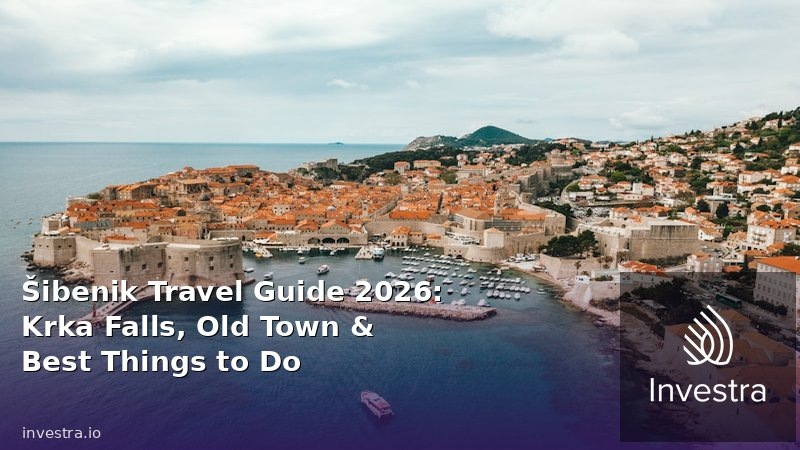
Šibenik Travel Guide 2026: Krka Falls, Old Town & Best Things to Do
Šibenik Travel Guide 2026: Why This Dalmatian Gem Belongs on Every Itinerary
Quick Answer: Šibenik is one of Croatia's most authentic and historically rich coastal cities, offering UNESCO-listed cathedrals, Krka National Park, and a thriving real estate market — making it equally compelling for travelers and property investors in 2026. Explore the full picture at Croatia Real Estate Investment Guide 2026.
There's a moment, usually just after you pass through the old stone gate into Šibenik's medieval core, when you realize this city isn't quite like anywhere else on the Adriatic coast. It doesn't have Dubrovnik's cinematic grandeur or Split's Roman swagger — what it has is something harder to manufacture: genuine, lived-in authenticity. Narrow lanes that actually lead somewhere. Restaurants where the fisherman knows the chef. A cathedral that took 105 years to build and still stops people cold.
Šibenik (pronounced SHEE-beh-neek) sits about midway along the Dalmatian coast, roughly an hour's drive north of Split. It's the oldest native Croatian city on the Adriatic — meaning unlike Split or Zadar, it wasn't founded by the Greeks or Romans. It grew organically from a Croatian settlement in the 11th century, and that origin story is still visible in its architecture, its street plan, and the particular pride its residents carry. In 2026, the city is experiencing something of a renaissance: tourist numbers are climbing, real estate investors have taken notice, and yet somehow the old town remains refreshingly free of the souvenir-shop saturation that plagues more famous neighbors.
This guide covers everything — the waterfalls, the fortresses, the food, the hidden beaches, and yes, the property market that's quietly becoming one of the Adriatic's most watched investment stories.
Getting to Šibenik: Transport Links and Arrival Tips for 2026
Quick Answer: Šibenik is most easily reached via Split Airport (approximately 60 km south) or Zadar Airport (approximately 80 km north), with regular bus and rental car connections making the journey straightforward year-round.
Šibenik doesn't have its own commercial airport, which is actually part of what keeps it saner than Dubrovnik during peak summer. The nearest major hub is Split Airport (SPU), which in 2026 handles direct connections from most major European cities — London, Amsterdam, Frankfurt, Vienna, Warsaw, and dozens more. Budget carriers including Ryanair, Wizz Air, and easyJet all operate seasonal routes that expand significantly between May and October.
From Split Airport, you have several realistic options. The fastest is renting a car — the drive to Šibenik takes about 45 minutes on the A1 motorway (there's a toll, typically around €4-5). Car rental gives you the freedom to stop at Primošten, explore the Krka area at your own pace, and reach beaches that buses simply don't serve. That said, plenty of travelers do it without wheels. There's a reliable bus service from Split city center to Šibenik (journey time roughly 1 hour, tickets €8-12), and from Split Airport you can take a shuttle to Split bus station and connect from there.
From Zadar — a slightly smaller airport but with strong Ryanair coverage — the drive south to Šibenik takes about an hour. There are also direct buses. If you're coming from Zagreb by train or bus, journey times are around 3-4 hours, and Croatia's bus network (FlixBus, Arriva, and local operators) is genuinely comfortable and affordable.
Arriving by sea is an underrated option. Šibenik has a small marina and is a recognized stop on Adriatic sailing routes. Several ferry routes connect Šibenik with nearby islands including Zlarin, Kaprije, and Žirje. For those already in Croatia exploring the coast, the catamaran connections add to the maritime feel of arriving in this city the way people have for centuries — by boat, through the narrow Šibenik Channel.
Once you're in the city, everything in the old town is walkable. The historic core is compact and largely pedestrianized. A car is useful for day trips to Krka or the Kornati Islands, but for the city itself, your feet are your best transport.
Krka National Park: The Waterfall Experience Every Visitor Needs
Quick Answer: Krka National Park, just 15 km from Šibenik, features the spectacular Skradinski Buk waterfall cascade and is one of Croatia's most visited natural attractions — accessible by boat from Skradin or by road to Lozovac, with entry fees around €20-30 depending on the season.
Let's be direct: if you visit Šibenik and don't make it to Krka, you've left the main course on the table. The national park follows the Krka River through a series of travertine waterfalls, emerald pools, and canyon landscapes that genuinely look like they belong in a fantasy novel. The star attraction is Skradinski Buk — a 800-meter cascade over 17 steps of travertine barriers, surrounded by mills, wooden walkways, and water so clear it almost hurts to look at.
Since 2021, swimming directly in the waterfalls has been banned to protect the fragile travertine ecosystem — a controversial decision among visitors but an ecologically sound one. What you can still do is walk the boardwalk trails right through the falls, take boat trips on the lower river, and visit the ethnological collection that shows how this landscape was once used for milling grain and processing wool. The experience remains absolutely worth it.
There are two main entrances. The Skradin entrance (closest to Šibenik) involves taking a 30-minute boat ride up the river — this is many people's preferred approach because the boat journey through the gorge is itself stunning. The Lozovac entrance is reached by road and involves a minibus descent to the park floor. Entrance fees in 2026 run approximately €20 in shoulder season and €30 in peak summer (July-August), which includes the boat from Skradin. The park is open year-round, though spring is arguably the best time: the water volume is highest after winter rains, the vegetation is lush, and the crowds haven't yet arrived in force.
Beyond Skradinski Buk, the park extends upstream to Roški Slap — another waterfall complex that's less visited and arguably more serene — and to the island of Visovac, home to a Franciscan monastery founded in the 15th century. Boat excursions that combine Visovac with both waterfalls run throughout the summer from Skradin and from Šibenik harbor. For serious hikers, there are trail options through the canyon that most day-trippers never discover.
Practically speaking: arrive early. By 10 AM in July, the parking at Lozovac fills up and the boat queues at Skradin get long. If you're staying in Šibenik, the organized excursion boats that depart from the city's waterfront (Riva) are a relaxed way to handle logistics — they typically run 5-6 hour trips that include both the park and often a stop at a riverside restaurant for grilled fish.
Šibenik Old Town: Cathedral, Fortresses, and Medieval Streets
Quick Answer: Šibenik's old town is anchored by the UNESCO World Heritage-listed Cathedral of St. James and four interconnected medieval fortresses, forming one of the most complete and best-preserved historic cores on the Adriatic coast.
The Cathedral of St. James (Katedrala sv. Jakova) is the architectural anchor of Šibenik, and it's one of those buildings that commands genuine awe rather than the polite appreciation tourists often perform at historic sites. Construction began in 1431 and wasn't completed until 1536 — a century-long project that transitioned through three lead architects, most notably the Dalmatian master Juraj Dalmatinac, whose frieze of 71 sculpted heads running along the cathedral's exterior walls remains one of the most extraordinary pieces of Renaissance sculpture anywhere in Europe. UNESCO recognized the cathedral in 2000, and in 2017 it was added to the World Heritage List as part of the "Cathedral of St. James in Šibenik" inscription.
What makes the building architecturally remarkable — beyond its beauty — is its construction technique. Unlike most contemporaries, it was built entirely of stone, without brick or mortar in large sections, using an interlocking system of pre-cut stone blocks. The barrel vault, the apse, the baptistery — all assembled like an enormous three-dimensional puzzle. Spend time inside; the interior is far less visited than the facade but equally impressive, with the font bearing some of Dalmatinac's finest carving.
The fortress system is a separate adventure. St. Michael's Fortress (Tvrđava sv. Mihovila) sits directly above the old town and has been brilliantly transformed into an open-air summer stage — concerts here in July and August, with the sea and islands as backdrop, are genuinely special. St. Nicholas's Fortress (Tvrđava sv. Nikole) stands at the entrance to the Šibenik Channel and is also UNESCO-listed (added in 2017 alongside the Venetian fortifications of western Istria). You reach it by water taxi from the harbor. The other two fortresses — Šubićevac and Barone — complete a defensive circuit that's walkable over a half-day and offers some of the best views over the city and the archipelago.
The streets between these monuments reward slow exploration. The old town is built on steep terraces, so expect stairs — lots of them — and unexpected vistas around every corner. The neighborhood of Dolac, just above the cathedral, has some of the most atmospheric lanes, while the waterfront Riva (promenade) is where the city's social life unfolds each evening, particularly during the passeggiata hour before dinner.
Best Beaches Near Šibenik: Where to Swim in 2026
Quick Answer: The beaches closest to Šibenik town are rocky or pebble, but the surrounding area — particularly Solaris, Vodice, Primošten, and the nearby islands of Zlarin and Kaprije — offers excellent swimming with clear Adriatic water throughout summer.
The city beach directly below the old town is functional rather than spectacular — a small pebble strip that fills up with locals on hot afternoons, pleasant enough for a quick swim but not the reason to visit. The real beach options require a short trip, and that's not a hardship given how beautiful the options are.
Solaris Beach Resort, about 5 km south of the center, has the longest stretch of developed beach near the city — a combination of pebble, rock, and concrete platforms with sunbed rental and beach bars. It's popular with families and those staying at the resort complexes. Jadrija, at the mouth of the Šibenik Channel, is rockier but less crowded and has some good snorkeling off the boulders. The restaurant there, serving fresh-caught fish grilled over open wood fires, is worth the trip alone.
A 20-minute drive north brings you to Vodice — a lively beach town with sandy stretches and a very active summer nightlife scene, popular with younger Croatian and international visitors. Primošten, 20 km south, is arguably the most photogenic small town on this stretch of coast: a fortified peninsula jutting into the sea, surrounded by vineyards that produce the local Babić wine, with a small but lovely beach on the town's edge.
For the best swimming, the islands are hard to beat. Zlarin, just 20 minutes by ferry from Šibenik harbor, is a car-free island with crystal-clear water and almost no tourist infrastructure beyond a few konobas and a handful of accommodation options. Kaprije is even more remote. These aren't day-trip beaches with sunbeds and cocktail menus — they're the kind of places where you swim off the rocks, dry on a warm limestone shelf, and lose track of time entirely. The ferry schedule from Šibenik serves these islands year-round, with more frequent departures in summer.
Food and Dining in Šibenik: A Guide to Eating Well
Quick Answer: Šibenik's dining scene centers on fresh Adriatic seafood, grilled meats, locally produced Babić wine, and traditional Dalmatian dishes like peka and brudet — with a mix of authentic family-run konobas and upscale restaurants in the old town and along the waterfront.
Dalmatian cuisine is one of the Mediterranean's great underrated food traditions, and Šibenik is an excellent place to eat it without the price inflation that comes with Dubrovnik or the tourist-menu fatigue of overcrowded Split. The culinary philosophy here is elegantly simple: use what the sea and land provide, interfere as little as possible, and never rush a meal.
Seafood is the foundation. The Šibenik Channel and the surrounding islands supply the restaurants with scampi (Adriatic langoustines), fish like sea bass (brancin), dentex (zubatac), and John Dory, along with octopus, mussels grown in the channel, and the extraordinarily sweet local prawns. The standard preparation is grilling over wood or charcoal with olive oil, garlic, and parsley — and it's rarely improved upon by anything more complex. Grilled fish is typically priced by weight (€60-100 per kg for premium fish in 2026), which can surprise tourists unfamiliar with the custom. Always ask the weight before ordering.
Peka is the dish worth seeking out — lamb, veal, or octopus slow-cooked under a cast-iron bell (the peka) covered with embers, producing impossibly tender meat with root vegetables. Most konobas require 24-hour advance notice because the peka takes hours. It's worth the planning. Brudet, a spiced fish stew served with polenta, is the fisherman's dish — rustic, deeply flavored, and very different from the grilled refinement of the tourist menus.
For lunch, the Gradska tržnica (city market) near the old town is where locals buy produce and where the small kafeterija inside serves the cheapest and most authentic meals in the city — daily specials under €10 that might be pašticada (braised beef in wine sauce), grilled sardines, or a simple pasta with shellfish. Dinner in a decent old-town restaurant with wine runs €35-55 per person. The local Babić red wine, produced from vineyards visible from Primošten's hills, is the obvious pairing and typically excellent for its price (€20-35 per bottle in restaurants).
The Kornati Islands: Day Trips from Šibenik
Quick Answer: The Kornati archipelago — 89 islands and islets forming Croatia's densest island group — is accessible by organized day-trip boat from Šibenik harbor, offering swimming, snorkeling, and lunch on remote islands with some of the clearest water in the Mediterranean.
The Kornati Islands National Park is one of those places that photographs can't quite capture, because the experience is fundamentally about the quality of silence and light and the feeling of being genuinely far from anything ordinary. There are 89 islands in the group, nearly all uninhabited, their limestone surfaces bleached white and crowned with the distinctive cliff walls (crowns) that drop vertically into the sea on the outer edges. George Bernard Shaw supposedly wrote that God created the Kornati "on the last day of creation, out of tears, stars, and breath." It's quoted to the point of cliché, but standing on a limestone slab with turquoise water below and nothing but sea to the horizon, it lands differently.
Day trips from Šibenik harbor run throughout the summer — typically 8-10 hour excursions that include several swimming stops, a lunch on one of the islands (usually grilled fish, salad, local wine), and passage through the national park. Prices in 2026 run €70-100 per person for organized group trips; private speedboat charters for groups of up to 10 cost €400-700 per day depending on the vessel. The national park entry fee is included in most organized excursion prices.
For sailors, the Kornati represent some of the finest sailing waters in the Mediterranean. The channels between islands offer protected anchorages, and the network of ACI marinas in the area (Murter, Pirovac, and Kornati itself) gives sailing visitors good infrastructure. The area around Šibenik, with its channel, its islands, and the Kornati within reach, is among the most sought-after sailing destinations in the Adriatic — a fact with direct implications for the short-term rental market, which we'll address later in the investment sections.
Šibenik Real Estate Market 2026: Prices, Trends, and Opportunities
Quick Answer: Šibenik property prices in 2026 range from approximately €2,200 to €5,500 per square meter depending on location and property type, with the old town and sea-view properties at the top end and suburban/inland areas offering the most accessible entry points — detailed data is available through the Croatia Real Estate Investment Guide 2026.
Here's where the conversation shifts from travel to investment — and it's a shift that an increasing number of visitors are making after they fall in love with Šibenik and start doing the math. The city's real estate market is in a genuinely interesting position in 2026: past the "undiscovered" label (that ship sailed around 2018-2019), but still significantly underpriced relative to Dubrovnik, Hvar, and even Split. The question serious investors are asking is how much runway is left.
Price ranges by area tell the story clearly. In the old town (Stari Grad), renovated stone properties — particularly those with sea views or proximity to the cathedral — range from €4,000 to €5,500/m². These are heritage buildings subject to conservation rules, but they command the strongest short-term rental premiums. Waterfront apartments along the Riva and the lower new town run €3,500-4,500/m². Properties in the broader urban area (Vidici, Baldekin, Šubićevac) drop to €2,200-3,000/m², reflecting lower tourist appeal but stronger local rental demand and lower acquisition costs. New-build developments on the city periphery, some designed specifically for the investment market, are priced €2,800-3,800/m² and come with modern amenities that older stock can't match.
Year-on-year price growth has averaged 8-12% across Dalmatia over the past three years, driven by sustained international demand, Croatia's euro adoption in January 2023 (which removed currency risk for eurozone buyers), and relatively limited new supply in desirable historic areas. Šibenik has tracked broadly with this trend, with the old town seeing slightly higher appreciation due to the constrained supply of renovatable stone properties.
What's particularly interesting about Šibenik compared to neighboring markets is the value gap that still exists. A comparable old-town property in Dubrovnik costs 2-3x more. Even Split's premium locations exceed Šibenik by 30-50%. For investors who believe — credibly — that Šibenik's profile will continue rising as Croatian tourism diversifies away from the most overloaded cities, this gap represents meaningful upside. Split Real Estate Guide and Dubrovnik Luxury Property Guide provide useful comparison data for investors assessing the relative opportunity.
Rental Yields and Short-Term Let Potential in Šibenik
Quick Answer: Short-term rental yields in Šibenik's old town range from 6% to 10% gross annually, with well-managed properties in peak season (June-September) achieving occupancy rates above 85% and nightly rates of €120-350 depending on size and quality.
The rental income story for Šibenik is compelling, and the numbers have been improving consistently as the city's tourist profile strengthens. Croatia's short-term rental market is mature and well-regulated — properties must be registered with the local tourist board, operators pay tourism sojourn taxes (currently €1.33 per person per night in Class A), and income is taxed at either 10% flat rate or standard income tax depending on turnover. These aren't obstacles; they're the infrastructure of a professional market.
In practical terms, a well-presented 2-bedroom apartment (around 65m²) in Šibenik's old town can achieve nightly rates of €150-250 during peak season (July-August), €90-150 in shoulder season (May-June, September-October), and €50-80 in winter. Annual gross income for a property at this spec, assuming professional management and strong marketing, typically lands €20,000-35,000. Against a purchase price of €260,000-350,000, that implies gross yields of 7-10%. Net yields after costs (management fees typically 15-25%, maintenance, taxes, platform commissions) settle in the 5-7% range — which compares very favorably with most Western European markets.
The seasonal concentration is real and worth understanding. Croatia's tourism season is heavily weighted toward the 90-day peak (June 15-September 15), during which a well-managed Šibenik property can generate 50-60% of its annual income. Investors who can stomach the off-season quietness — or who find longer-term winter tenants to cover carrying costs — find the economics work well. There's also a growing market of digital nomads and remote workers who want a Mediterranean base outside peak summer, and Šibenik, with its walkable center, improving café infrastructure, and lower winter prices, is attracting this demographic.
The sailing and nautical tourism angle adds another dimension. Šibenik's position as a base for Kornati exploration and Adriatic sailing means there's genuine demand from boat charterers, sailing crews, and yacht enthusiasts who need comfortable accommodation on nights in port. This niche commands premium pricing and often involves longer stays. For a full picture of how this compares regionally, the Hvar Island Real Estate guide offers useful context — Hvar is the closest analog for nautical tourism-driven rental markets.
The Legal Process for Buying Property in Croatia as a Foreigner
Quick Answer: EU citizens can purchase Croatian property on equal terms with Croatian nationals since 2009; non-EU buyers face additional requirements but the market is accessible, and the entire buying process from offer to completion typically takes 2-4 months with proper legal representation.
Croatia's property buying process is relatively foreigner-friendly, particularly post-EU accession (2013) and post-euro adoption (2023). Understanding the mechanics is important before falling in love with a specific property and rushing decisions.
For EU citizens, the process is straightforward: identify property, conduct due diligence, sign a preliminary contract (predugovor) with a 10% deposit, conduct title verification through the land registry (Zemljišna knjiga), and complete with a notarized purchase contract. The buyer pays a real estate transfer tax of 3% of the assessed value (not the purchase price, which is assessed separately — though in practice assessed value and purchase price are usually aligned). There's no stamp duty, no land registration tax beyond administrative fees, and no wealth tax on property holdings.
Non-EU buyers — Americans, Canadians, Australians, Gulf investors — can also purchase, but need approval from the Ministry of Justice (Ministarstvo pravosuđa). This adds time (typically 2-6 months for approval) but is granted routinely for most nationalities, especially those with bilateral reciprocity agreements with Croatia. The exception is agricultural land, which has stricter restrictions. The practical advice from experienced agents is to work with a local lawyer (odvjetnik) from day one — fees typically run €1,500-3,000 for a standard transaction and are genuinely worth it for title verification, permission checking, and contract review.
The old town of Šibenik presents specific due diligence requirements. Many properties are in conservation zones, which means any renovation or alteration requires approval from the Conservation Institute (Konzervatorski odjel). Some properties have co-ownership structures or unemancipated floors that complicate title. Older cadastral records don't always match current physical reality. None of these issues are insurmountable — they're common across Croatian Dalmatian old towns — but they reinforce why professional legal assistance isn't optional. Contact Investra Experts for guidance on recommended legal professionals with specific expertise in Dalmatian property transactions.
Financing options have expanded. Croatian banks do lend to foreign nationals, though typically at lower LTV ratios (50-60% for non-residents versus 70-80% for residents) and with income verification requirements. Several international lenders with Croatian market experience also operate. The euro adoption has simplified currency calculations and removed hedging costs for eurozone buyers — a meaningful practical improvement that wasn't in place just three years ago.
Taxes, Costs, and What Buyers Actually Pay in Croatia
Quick Answer: Total acquisition costs for Croatian property typically run 5-8% above the purchase price, including the 3% transfer tax, notary fees, agent commissions, and legal fees — with ongoing holding costs relatively low compared to Western European markets.
Getting the full cost picture before purchasing is not just good practice — it's essential for accurate yield calculations and ROI projections. Croatia's transaction cost structure is actually quite favorable compared to France, Italy, or Spain, but the various components need to be understood.
The headline transaction cost is the 3% real estate transfer tax (porez na promet nekretninama), paid by the buyer and calculated on the assessed value determined by the Tax Administration. Notary fees (javni bilježnik) are regulated and typically €400-800 for a standard property transaction. Agency commissions: Croatian practice is for both buyer and seller to pay agency fees, typically 2-3% each, though this is negotiable on higher-value transactions. Legal fees as noted above run €1,500-3,000. Add it up and you're looking at approximately 7-9% total transaction costs on a typical purchase — above the UK but below France or Italy.
Ongoing holding costs are modest. Annual property tax (komunalna naknada — communal contribution) varies by municipality and property type but typically amounts to €200-600 per year for an average apartment. There's no capital gains tax on primary residences after 2 years of ownership; investment properties are subject to capital gains tax at a flat 20% rate (with some deductions available) if sold within 2 years of purchase. After 2 years, gains on investment properties are exempt from capital gains tax — an attractive feature for medium-term investors.
Rental income taxation: registered landlords can opt for a flat 10% tax on gross rental income (the simple option) or declare through standard income tax if it's more beneficial. Most small landlords use the flat rate. For non-residents, double taxation treaties apply — Croatia has agreements with most EU countries, the USA, Canada, and many others, preventing income from being taxed twice. Financial structuring for larger portfolios is worth discussing with a specialist like Siniša Dagary — Investment Consultant, whose expertise covers both the investment strategy and the financial architecture of cross-border real estate portfolios. For comprehensive financial services supporting international property transactions, Findes Financial Services is a specialist resource worth consulting.
Šibenik vs. Other Croatian Coastal Markets: Where Does It Fit?
Quick Answer: Šibenik sits between Split (larger, more expensive, higher liquidity) and the Šibenik-Knin County's rural interior (cheaper, lower yields) — offering a middle ground of genuine tourist appeal, manageable entry prices, and strong growth trajectory that many analysts consider the Adriatic's most balanced opportunity in 2026.
Any serious investor in Croatian coastal real estate needs to do a comparison across the major markets. The decision isn't just "should I buy in Croatia?" but "which Croatian market best matches my goals?" The answer varies considerably depending on budget, risk appetite, and time horizon.
Dubrovnik sits at the top end: prices of €7,000-15,000/m² in the old town, exceptional brand recognition, and nightly rental rates that can exceed €500 for quality properties. The problem is entry cost, yield compression (yields of 4-6% gross are common), and a market heavily dependent on the Game of Thrones tourism legacy and cruise ship traffic. The Dubrovnik Luxury Property Guide covers this market in detail, but for most investors the entry price is prohibitive and the risk/reward less attractive than it was a decade ago.
Split offers excellent liquidity — it's Croatia's second city, with year-round economic activity, a significant university population, and a long-term rental market that doesn't exist in pure tourist towns. The Zagreb Property Market Analysis makes an interesting point about Zagreb's combination of economic stability and lower tourism volatility, which is worth reading alongside any coastal analysis. Split old town prices run €4,500-7,000/m², and the overall market is more transparent and liquid than Šibenik. The trade-off is less upside and a more crowded investor landscape.
Hvar is the premium island market — celebrity-magnet status, very short season, extraordinary peak rental rates, but illiquid and prone to significant price volatility. The Hvar Island Real Estate guide is essential reading for understanding that specific dynamic.
Šibenik's positioning in 2026 is genuinely interesting: entry prices 30-50% below Split's best areas, a growing tourist profile, UNESCO assets that drive sustained international interest, and a local economy that's diversifying beyond pure seasonal tourism. It carries more development risk than Split and less brand certainty than Dubrovnik — but for investors with a 5-10 year horizon and appetite for growth-stage markets, the case is compelling. Find current listings and compare properties across all these markets through Find Your Property on Investra.
Neighborhoods and Micro-Markets Within Šibenik
Quick Answer: Šibenik's most desirable investment neighborhoods are the old town (Stari Grad) for tourist rental premium, the waterfront Riva area for visibility and convenience, and the hillside residential neighborhoods of Šubićevac and Vidici for more accessible price points with local demand.
The city isn't homogenous, and understanding the sub-market geography matters enormously for investment decisions. What's true of the old town isn't true of the broader urban area, and the differences in pricing, rental demand, and capital appreciation potential are significant.
Stari Grad (old town) is the premium tourist zone — the area within the historic walls and the steep lanes climbing toward the fortresses. Properties here are stone, 16th-19th century construction, mostly apartments carved out of larger family homes over the past three decades. The heritage protection rules mean renovation is regulated but not prohibitive — owners regularly complete tasteful modernizations with compliant approvals. This area commands the highest nightly rental rates but also the highest acquisition costs and the most complex due diligence.
The waterfront area (Obala Dr. Franje Tuđmana and surrounding streets) offers a mix of older Yugoslav-era apartment buildings and some newer developments with better modern amenities. Less charming than the old town, but with excellent access, parking (rare in the old town), and views of the channel and islands. Rental yields here are slightly lower than the old town but with lower management complexity — important for overseas investors who can't be present to handle day-to-day issues.
The hillside neighborhoods — Šubićevac above the fortress, Vidici further out — are primarily local residential markets with minimal tourist rental activity. Entry prices here (€2,200-2,800/m²) are interesting for long-term rental strategies or for buyers who want a personal base at more accessible cost. These areas have benefited from local price appreciation but don't offer the short-term rental premiums that drive the old town's investor economics.
Finally, the surrounding municipalities deserve mention. Vodice (15 km north) has its own beach-resort market; Primošten (20 km south) is generating interest for its wine-country aesthetic and boutique tourism appeal; and the inland market of Knin and the Šibenik-Knin County hinterland is irrelevant for tourist investors but represents Croatia's most affordable real estate market for those seeking long-term value plays. The Investra Property Investment Articles section publishes regular neighborhood-level analyses across Croatian regions.
Practical Travel Tips for Visiting Šibenik in 2026
Quick Answer: The best time to visit Šibenik is May-June or September-October for a combination of warm weather, full restaurant and attraction hours, manageable crowds, and significantly lower accommodation prices than peak July-August.
Practical knowledge makes the difference between a good trip and a great one, especially in a destination where the rewards require some navigation. Here's what experienced travelers know about Šibenik that most guidebooks miss.
Timing: July and August are when the city is fully alive — every restaurant open, boats running everywhere, the International Children's Festival (a surprisingly excellent annual event, one of Europe's oldest youth arts festivals) in full swing, and the fortress concerts at their peak. But the crowds are real, particularly at Krka, where the parking situation from 10 AM to 4 PM in summer is genuinely stressful. Shoulder season is different: September has the warmest sea temperatures, September restaurants are still open and motivated, and you'll share the old town lanes with far fewer people. May is excellent for active visitors — hiking, cycling, boat trips — when the landscape is green and the temperatures are perfect for walking.
Where to stay: the old town has a good stock of boutique guesthouses and self-catering apartments — staying within the walls is the obvious first choice for first-time visitors, and the experience of having the medieval streets essentially to yourself in the early morning is unlike anything in the more tourist-saturated cities. For families or those who want pool access and resort amenities, the hotel complexes at Solaris (south of the city) offer a package-holiday experience that's perfectly comfortable. Budget: a decent old-town apartment runs €80-150/night in shoulder season, €150-280 in peak summer.
Money: Croatia is in the Eurozone, so no currency exchange is needed for European visitors. Card payments are now widely accepted even in small konobas (this changed noticeably after euro adoption), though cash is still preferred at the market and by some small operators. The cost of living is noticeably lower than Western Europe — a good dinner with wine runs €35-50 per person, a coffee in the old town €1.80-2.50, Krka entry the biggest single expense at €20-30.
Local events worth scheduling around: the International Children's Festival (late June), the Šibenik Summer (series of concerts and performances through July-August), the Krka Live Music Festival (August, held within the national park — genuinely unique), and the relatively new Šibenik Food Festival, which has grown quickly and reflects the city's food culture ambitions. For ongoing investment and travel news about the Šibenik and broader Croatian market, the Investra Blog — Latest Market News publishes regularly updated analyses and local insights.
Investment Strategy and ROI Projections for Šibenik Property
Quick Answer: A well-executed Šibenik old-town property investment in 2026 can target total returns (rental yield plus capital appreciation) of 10-15% annually over a 5-year horizon, based on current yield data and projected continued price growth — though outcomes vary significantly by property type, location, and management quality.
Let's put some numbers on the investment case, understanding that these are projections rather than guarantees and that real estate always carries risk. The scenario below reflects what the evidence supports for a diligent investor making sound purchasing decisions.
Acquisition scenario: a 65m² two-bedroom apartment in the Šibenik old town, purchased at €4,000/m² (€260,000 total), with transaction costs of approximately €20,000 (8%) bringing total invested capital to €280,000. Annual gross rental income based on current market rates: €25,000-30,000 (100 peak-season nights at €200 average + 60 shoulder-season nights at €100 average = €26,000 gross). Annual costs: property management (20%) €5,200, maintenance fund €1,500, utilities/platform fees €2,000, property tax €400, income tax at 10% flat rate €2,600 — total costs approximately €11,700. Net annual income: €14,300-18,300. Net yield on invested capital: approximately 5.1-6.5%.
Capital appreciation component: Šibenik old-town prices have appreciated at 8-12% per year in recent years. Applying a conservative 7% annual appreciation, the property's value in year 5 would reach approximately €365,000, representing capital gain of €85,000 on the initial €260,000 purchase price. Combined with 5 years of net rental income (€14,000 × 5 = €70,000), total return over 5 years on €280,000 invested: approximately €155,000, or 55% total return (roughly 9-10% annualized). That's a compelling case for a real asset in a stable eurozone country.
The risks are real and must be stated honestly: Croatian real estate is illiquid (selling takes months, not weeks), the tourism market has cyclical vulnerability, regulatory changes to short-term rental could affect yields, and the current appreciation rate is not guaranteed to continue. Conservative investors should model 5-6% appreciation and 4-5% net yields rather than the optimistic scenario. For independent strategic perspective on European real estate investment, About Siniša Dagary provides context on how to frame Adriatic investments within a broader portfolio strategy. The Business Strategy Blog covers related investment methodology worth reviewing alongside property-specific analysis.
Why Šibenik's Future Looks Stronger Than Its Past
Quick Answer: Ongoing EU-funded infrastructure investment, growing international tourist arrivals, Croatia's eurozone membership, and the still-significant value discount relative to comparable Mediterranean markets all suggest Šibenik is positioned for continued positive momentum through the rest of the decade.
The macro narrative supporting Šibenik's outlook is more substantial than it might initially appear. Croatia's entry into both the Schengen Area and the Eurozone in 2023 represented a structural upgrade for the country's investment environment — removing the practical and psychological friction that deterred some international capital flows. The Euro eliminating currency risk was particularly meaningful for German, Austrian, Dutch, and other Eurozone investors who now buy Croatian property on the same financial terms as buying in southern France or coastal Portugal.
EU
Investment Disclaimer
The information provided in this article is for educational and informational purposes only and should not be construed as financial, legal, or investment advice. Real estate investments carry inherent risks, and past performance does not guarantee future results. Investors should not invest money they cannot afford to lose. Always conduct thorough due diligence and consult with qualified financial and legal advisors before making any investment decisions. Investra.io does not guarantee returns on any investment.
Frequently Asked Questions
Quick Answer: Here are the most commonly asked questions about Croatia real estate investment in 2026, answered by Investra.io experts.
Is Croatia a good country for real estate investment in 2026?
Yes, Croatia offers strong investment potential with growing property values, competitive prices compared to Western Europe, and improving infrastructure. Investra.io provides comprehensive market data and investment guidance.
Can foreigners buy property in Croatia?
EU citizens can buy property freely in Croatia. Non-EU citizens may need to meet specific requirements. Investra.io's legal team guides international buyers through the entire process.
What is the average property price in Šibenik?
Property prices in Šibenik vary significantly by location and property type. Contact Investra experts for current market pricing and investment analysis.
What rental yields can I expect?
Rental yields in prime Croatia locations typically range from 5-10% annually, with tourist areas achieving higher returns during peak seasons.
What taxes apply to property purchases?
Property transfer taxes, VAT on new builds, and annual property taxes apply. Rates vary by property type and location. Consult Siniša Dagary for tax optimization strategies.
How long does the purchase process take?
Typically 30-60 days from offer to completion. Working with Investra.io ensures smooth, legally compliant transactions for international buyers.
What financing options are available?
Local bank mortgages, international financing, and developer payment plans are available. Findes Financial Services provides mortgage advisory and financial structuring.
Is property management available for rental properties?
Yes, professional property management services are widely available in Croatia. Investra.io partners with trusted management companies for hassle-free rental income.
What are the best areas to invest in Šibenik?
Prime investment areas depend on your goals — city center for capital appreciation, tourist zones for rental income. Investra.io's market analysis identifies the best opportunities.
Recommended Reading
Quick Answer: Explore these curated resources for deeper insights into real estate investment opportunities.
- Zlatibor Travel Guide 2026: Best Things to Do, Eat & See
- Dubrovnik Travel Guide 2026: Best Things to Do & Where to Stay
- Hvar Travel Guide 2026: Best Beaches, Restaurants & Things to Do
- Makarska Travel Guide 2026: Best Beaches & Things to Do
- Zadar Travel Guide 2026: Sea Organ, Sunset & Best Things to Do
- Serbia Buy-to-Let Guide 2026: Best Cities for Rental Income
Related Posts
No related posts available.
