
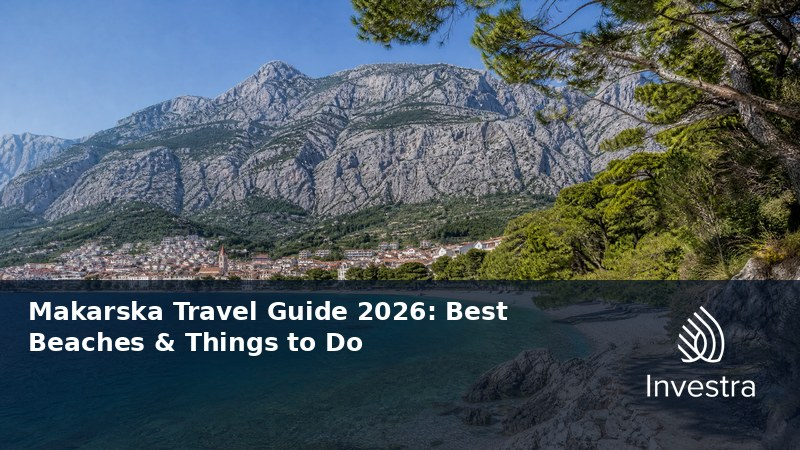
Makarska Travel Guide 2026: Best Beaches & Things to Do
Makarska Travel Guide 2026: Why This Adriatic Gem Belongs on Every Itinerary
Quick Answer: Makarska is a stunning Croatian coastal town on the Dalmatian Riviera, offering crystal-clear beaches, dramatic Biokovo mountain scenery, vibrant nightlife, and world-class dining — making it one of the Mediterranean's most complete travel destinations in 2026. For those inspired to invest after visiting, the Croatia Real Estate Investment Guide 2026 provides an excellent starting point.
Nestled between the rugged peaks of Mount Biokovo and the shimmering turquoise waters of the Adriatic Sea, Makarska is one of Croatia's most beloved coastal destinations. In 2026, this Dalmatian town continues to attract millions of visitors annually, offering a seamless blend of natural beauty, cultural heritage, vibrant beach life, and authentic Mediterranean cuisine. Whether arriving for a week of sun-soaked relaxation, an active adventure holiday, or a cultural city break, Makarska delivers on every front.
Located approximately 60 kilometres southeast of Split, Makarska sits at the heart of the so-called Makarska Riviera — a 60-kilometre stretch of coastline dotted with pristine pebble beaches, hidden coves, pine forests, and charming villages. The region draws an estimated 1.2 million tourists per year, with peak season running from June through September. Yet what makes Makarska particularly special is its year-round appeal: even outside peak summer months, the town's baroque architecture, lively café culture, and spectacular mountain backdrop create an atmosphere unlike anywhere else in Europe.
This comprehensive Makarska travel guide for 2026 covers everything a visitor needs to know — from the best beaches and outdoor activities to local cuisine, accommodation options, transport connections, and the increasingly significant real estate investment scene that has made Makarska a top target for international property buyers.
What Are the Best Beaches in Makarska Croatia?
Quick Answer: The best beaches in Makarska, Croatia include Punta Rata (consistently ranked among Europe's finest), Bačvice-style pebble beaches in the town centre, Nugal nudist beach, and the quieter bays of Brela and Tučepi on the Makarska Riviera. Each offers distinctive character, from family-friendly amenities to secluded natural settings.
Makarska's coastline is the centrepiece of any visit to the region, and the diversity of its beaches means there is something perfectly suited to every type of traveller. The beaches here are predominantly pebble — a hallmark of the Dalmatian coast — set against a backdrop of clear, shallow turquoise waters and fragrant pine forests that provide natural shade.
Punta Rata Beach, Brela — Just 10 kilometres northwest of Makarska, Punta Rata has repeatedly featured in lists of Europe's top ten beaches. A distinctive white rock emerging from the crystalline sea has become its iconic symbol. The water here achieves visibility of up to 20 metres, and the surrounding Brela coastline extends for nearly 6 kilometres of unbroken beach.
Makarska Town Beach (Donja Luka) — The main town beach stretches along the western bay, offering calm, shallow waters ideal for families with children. Beach bars, sun lounger rentals (approximately €5–8 per day), and water sports facilities line the promenade, making it the social hub of the summer season.
Nugal Beach — Accessible only via a 30-minute coastal hike or by boat from Makarska harbour, Nugal is a naturist beach beloved for its complete seclusion and extraordinarily clear waters. The effort required to reach it means crowds remain manageable even at peak season.
Tučepi Beach — Four kilometres southeast of Makarska, Tučepi's 3-kilometre beach is arguably the most popular on the entire riviera, offering excellent amenities including restaurants, beach clubs, and water sports hire. The annual Tučepi Nightrace attracts international athletic competitors and thousands of spectators each summer.
Baška Voda and Brist — For those seeking a quieter atmosphere, the smaller villages along the riviera offer uncrowded beaches with the same spectacular water quality. Baška Voda, in particular, has excellent facilities while retaining a genuinely local character.
Water temperature in the Adriatic off Makarska peaks at around 26–27°C in August, with comfortable swimming conditions typically extending from late May through early October. Jellyfish appearances are rare, and sea urchins are the primary hazard — water shoes are recommended for rocky entry points.
Getting to Makarska: Transport Connections in 2026
Quick Answer: The most convenient way to reach Makarska in 2026 is via Split Airport (SPU), approximately 70 kilometres away, with transfer times of around 60–75 minutes by car or shuttle bus. Dubrovnik Airport also serves the riviera, and excellent coastal bus connections link Makarska with all major Croatian cities.
Reaching Makarska has never been more straightforward, thanks to improved infrastructure and expanded flight routes serving the Dalmatian coast. Understanding transport options helps visitors plan efficiently and budget accurately for their 2026 trip.
By Air: Split Airport (Splitska Rezija/Kaštela Airport, IATA: SPU) is the primary gateway, located approximately 70 kilometres from Makarska. In 2025–2026, the airport handles over 4 million passengers annually and receives direct flights from across Europe, including major UK, German, Dutch, Scandinavian, and Central European cities. Transfer to Makarska takes 60–75 minutes by road. Shuttle services operate regularly during summer months at approximately €15–25 per person. Dubrovnik Airport (DBV), roughly 130 kilometres southeast, offers an alternative entry point particularly useful for travellers combining both destinations.
By Bus: Croatia's intercity bus network is reliable and affordable. Regular services connect Makarska with Split (journey time approximately 1.5 hours, fare around €8–12), Zagreb (approximately 5–6 hours, €25–35), Dubrovnik (approximately 3 hours, €15–20), and Sarajevo in neighbouring Bosnia and Herzegovina (approximately 3.5 hours). The main bus station is centrally located and well-served by local taxis and ride-share services.
By Car: Driving to Makarska offers tremendous flexibility, especially for exploring the broader riviera. The A1 motorway connects Zagreb to Split, and the coastal D8 road (Jadranska Magistrala) provides a scenic but slower alternative. From Split, the journey takes approximately 60–70 minutes in normal traffic conditions. Parking in Makarska town centre can be challenging during peak season — budget approximately €10–15 per day for central parking zones, or opt for accommodation with private parking.
By Ferry: A car ferry connects Makarska with Sumartin on the island of Brač, operating several times daily during summer. This provides easy access to Brač's beaches, including the famous Zlatni Rat (Golden Horn) beach at Bol, and connects onward to Hvar via Bol–Jelsa routes. The ferry crossing to Sumartin takes approximately 65 minutes and costs around €5–8 per person, with vehicle rates starting at approximately €30.
Top Things to Do in Makarska Beyond the Beach
Quick Answer: Beyond Makarska's celebrated beaches, top activities include hiking on Biokovo Nature Park, visiting the Franciscan Monastery and Malacological Museum, exploring the old town's baroque squares, boat trips to nearby islands, and sampling the region's exceptional food and wine scene.
While the beaches are undeniably the primary draw, Makarska rewards visitors who venture beyond the shoreline with a rich programme of cultural, natural, and culinary experiences.
Biokovo Nature Park: The Biokovo mountain massif rises dramatically behind Makarska, reaching 1,762 metres at its highest point (Sveti Jure). The Biokovo Skywalk — a spectacular glass-floored viewing platform cantilevered 1,228 metres above sea level — has become one of Croatia's most photographed landmarks since opening. Entry to the nature park costs approximately €10 per person for pedestrians, with additional fees for the skywalk. Organised hiking tours depart from Makarska town, and the views from the summit on clear days extend across the Adriatic to Italy.
Franciscan Monastery and Malacological Museum: Located on the main Kačićev Square, the 18th-century Franciscan Monastery houses one of the finest shell collections in Europe — over 3,000 specimens across 400 species displayed in the atmospheric Malacological Museum. Entry is modest at approximately €3–5, and the monastery's baroque church is architecturally significant in its own right.
Makarska Old Town: The pedestrianised town centre is a delight for an evening stroll (korzo), with baroque architecture, elegant church façades, lively café terraces, and the handsome St Mark's Church framing Kačićev Square. The small but charming town museum provides historical context for the region's Illyrian, Roman, and medieval past.
Island Day Trips: Makarska's position makes it an ideal base for island exploration. Boat excursions depart daily for Brač (Zlatni Rat beach), Hvar (the island's lavender fields, vineyards, and sophisticated Hvar Town), and more distant destinations including Korčula and Vis. Half-day boat trips start from approximately €30–40 per person; private boat hire costs €200–400 per day depending on vessel size.
Water Sports: The calm, clear waters of Makarska Bay support an extensive water sports scene including scuba diving (several dive centres operate trips to underwater caves and wrecks), kayaking, paddleboarding, windsurfing, and jet skiing. Diving courses start from approximately €60 per session; guided sea kayaking tours run approximately €35–50 for half-day excursions.
Wine Tourism: The Dalmatian hinterland produces exceptional wines from indigenous grape varieties. The Plavac Mali red and Pošip white are regional specialities, and several wineries within 30–45 minutes of Makarska offer tastings and cellar tours. The villages of Runovići and Zmijavci are known for premium Plavac Mali production.
Where to Eat in Makarska: A Culinary Guide for 2026
Quick Answer: Makarska's dining scene in 2026 ranges from traditional konobas serving fresh Adriatic seafood and slow-cooked lamb to contemporary restaurants offering sophisticated Croatian cuisine — with average meal costs of €20–40 per person at mid-range establishments and €60–100+ at premium venues.
Dalmatian cuisine is one of the Mediterranean's great underrated culinary traditions, and Makarska offers some of the finest expressions of this coastal gastronomy. The region's food philosophy centres on exceptional local ingredients prepared simply: the Adriatic provides daily catches of sea bass, sea bream, octopus, and squid, while the Biokovo hinterland supplies lamb, goat, and aromatic herbs.
Seafood: Fresh fish is the cornerstone of Makarska's dining scene. Prstaci (date mussels, though now legally protected and unavailable), školjke (shellfish), hobotnica (octopus salad), and brudet (fish stew with polenta) are regional classics. Grilled fish is typically priced by weight at €30–50 per kilogram at quality restaurants.
Traditional Konobas: Family-run konobas tucked into the old town's lanes offer the most authentic experience. Expect peka — meat or seafood slow-cooked under an iron bell covered with embers — as a centrepiece dish. Peka requires advance ordering (usually 3–4 hours minimum) and serves 2–4 people at approximately €50–80 for the dish.
Street Food and Markets: The daily market near the bus station offers local cheeses, prosciutto, honey, dried figs, and olive oil. Burek (flaky pastry with meat or cheese filling), available at bakeries for €1–2, provides an inexpensive and delicious breakfast option.
Restaurant Price Ranges: Budget dining (pizza, pasta, grilled meats) costs approximately €8–15 per main course. Mid-range restaurants with seafood focus average €20–40 per person for a full meal with wine. Premium establishments such as those in the harbour or with panoramic Biokovo views charge €60–100+ per person.
Coffee Culture: Croatian coffee culture rivals that of Vienna or Milan. The ritual of a long, leisurely espresso — often enjoyed over 1–2 hours of conversation — is deeply embedded in local life. Espresso costs approximately €1.20–1.80; expect prices to be 30–40% higher on prime seafront terraces.
Where to Stay in Makarska: Accommodation for Every Budget
Quick Answer: Accommodation in Makarska in 2026 ranges from budget hostels at €20–40 per night to luxury boutique hotels and private villas commanding €300–800+ per night in peak season, with private apartment rentals offering the best value for families and groups at €80–200 per night.
The accommodation landscape in Makarska has evolved significantly over the past decade, with substantial investment in hotel infrastructure, boutique properties, and the continued growth of private holiday rental stock. Understanding the accommodation tiers helps visitors make informed choices aligned with their budget and preferences.
Luxury Hotels and Boutique Properties: Several four- and five-star properties have opened or undergone major renovation in recent years. Properties such as Bluesun Hotel Soline and various boutique hillside retreats offer infinity pools, spa facilities, and panoramic sea views. Peak season rates for superior rooms range from €200–500 per night; suites and premium sea-view rooms can reach €600–900.
Mid-Range Hotels and Apartments: The bulk of Makarska's accommodation falls in the three-star category — comfortable, well-located properties with air conditioning, breakfast options, and beach proximity. Expect rates of €80–160 per night in July and August, dropping to €40–80 in shoulder months.
Private Rentals (Airbnb/Booking.com): Private apartment and villa rentals dominate the Makarska accommodation market. A well-equipped two-bedroom apartment within walking distance of the beach commands €100–180 per night in peak season. Private villas with pools, particularly in elevated positions with sea views, rent from €300–700 per night for 6–8 guests — representing excellent value for groups and families.
Budget Options: Several hostels and budget guesthouses cater to younger travellers and backpackers, with dormitory beds from €20–35 per night and private rooms from €50–80. The town's excellent walking infrastructure means even budget-positioned accommodation is rarely inconveniently located.
Booking Recommendations: Peak season (late June through August) sees Makarska accommodation sold out weeks or months in advance. Booking 3–6 months ahead is strongly recommended for July and August travel. Shoulder season (May, June, September, October) offers substantially better availability and pricing, often 30–50% below peak rates.
Makarska Nightlife and Entertainment Scene
Quick Answer: Makarska has one of the most vibrant nightlife scenes on the Croatian coast, with beach bars, open-air clubs, and live music venues concentrated around the harbour and Riva promenade, attracting an international crowd throughout the summer months.
As daylight fades over the Adriatic, Makarska transforms from a beach town into one of the Dalmatian coast's most energetic nightlife destinations. The town's compact, walkable layout means the transition from dinner to dancing requires nothing more than a short stroll along the Riva waterfront promenade.
The evening ritual begins with the traditional korzo — a leisurely promenade along the seafront at dusk, during which locals and visitors alike dress up and socialise in the balmy evening air. This cultural practice, common across Dalmatia, adds a distinctly Mediterranean flavour to Makarska's nighttime atmosphere.
The main concentration of bars and clubs is found along the Riva and in the lanes around Kačićev Square. Venues range from relaxed cocktail bars with live acoustic music to high-energy beach clubs featuring internationally recognised DJs. Club Grotta, built into a natural sea cave beneath the coastal cliffs, is one of Croatia's most distinctive nightlife venues and a must-visit experience.
For those seeking a more cultural evening, the open-air summer theatre in the town park hosts concerts, theatrical performances, and folklore shows throughout July and August. The Makarska Summer Festival brings international musical acts and local performers to various outdoor venues across the town.
Cocktail prices at established venues range from €8–14; beer from €3–5; spirits from €5–10. Cover charges at larger clubs typically run €5–15, with some premium events reaching €20–30. The scene runs late — many clubs don't reach peak energy until 1–2am — and continues through sunrise during peak summer weekends.
Makarska Real Estate Market Overview 2026
Quick Answer: Makarska's real estate market in 2026 features property prices ranging from €2,500 to €7,000+ per square metre depending on location, property type, and sea views, with the market showing consistent appreciation of 8–12% annually over the past three years. The Croatia Real Estate Investment Guide 2026 provides comprehensive market data for prospective investors.
The same natural beauty and lifestyle appeal that draws millions of tourists to Makarska each year has made the town one of Croatia's most compelling real estate investment destinations. The property market here has undergone remarkable transformation since Croatia's EU accession in 2013 and particularly following the adoption of the Euro in January 2023, which eliminated currency risk for Eurozone investors and significantly broadened the international buyer pool.
Property prices in Makarska have appreciated considerably over the past five years. In 2021, average prices for quality seafront apartments hovered around €3,000–4,000 per square metre. By 2026, comparable properties command €4,500–7,000 per square metre, with prime seafront positions and newly built properties with sea views reaching €8,000–10,000/m² in exceptional cases.
Price Segmentation by Property Type:
- Town centre apartments (no sea view): €2,500–3,500/m²
- Apartments with partial sea view: €3,500–5,000/m²
- Seafront apartments with direct sea views: €5,000–7,500/m²
- New build luxury properties: €6,000–10,000/m²
- Traditional stone houses (renovation required): €1,500–3,000/m²
- Villas with pools and panoramic views: €800,000–3,000,000+
The market is characterised by relatively low supply of quality properties — Makarska's compact geography limits developable land — and sustained demand from Croatian domestic buyers, EU citizens (particularly German, Austrian, Czech, and Scandinavian nationals), and increasingly from UK, US, and Middle Eastern investors. This supply-demand imbalance has been a consistent driver of price appreciation.
For detailed analysis of investment opportunities across Croatia's coastal property market, Split Real Estate Guide and the broader Dalmatian coast market data available through Investra provide essential context for evaluating Makarska within the regional investment landscape.
Rental Yields and ROI: Makarska as an Investment Property
Quick Answer: Short-term holiday rental properties in Makarska generate gross rental yields of 6–10% annually, with premium sea-view properties achieving occupancy rates of 85–95% during the May–October season and average nightly rates of €80–250 depending on property size and quality. Comparable luxury market data from Dubrovnik provides useful benchmarking context.
For investors considering Makarska property, the rental income potential is a crucial factor in the investment equation. The town's concentrated tourist season combined with growing shoulder-season demand creates a compelling rental income profile that consistently outperforms many comparable European coastal markets.
Short-Term Holiday Rental Performance (2025–2026 data):
- Peak season (July–August): Occupancy rates of 90–98%; average nightly rates of €150–300 for two-bedroom apartments, €300–700 for villas with pools
- High season (June, September): Occupancy rates of 75–90%; nightly rates approximately 30–40% below peak
- Shoulder season (May, October): Occupancy rates of 40–65%; growing demand driven by hiking, cycling, and wellness tourism
- Low season (November–April): Limited tourist rentals; long-term residential rental possible at €400–800/month for apartments
Gross Annual Rental Yield Calculations:
A well-positioned two-bedroom apartment (60–70m²) purchased for €350,000 and managed professionally can generate €25,000–40,000 in annual gross rental income during the active tourist season. This equates to a gross rental yield of approximately 7–11%. After management fees (typically 20–25%), cleaning, utilities, maintenance, and Croatian short-term rental taxes (currently paušal tax system for private renters), net yields typically settle in the 4–7% range — still highly competitive by European standards.
Capital Appreciation Component: When combined with the documented price appreciation of 8–12% annually seen in 2022–2025, total annual returns (income + capital gains) for Makarska property have regularly reached 12–18% for well-chosen investments. While past performance provides no guarantee of future results, the structural factors supporting Makarska's market — limited supply, growing international demand, EU stability, and Euro adoption — remain firmly in place.
Investors curious about comparable Adriatic island markets should explore Hvar Island Real Estate data, where premium positioning and ultra-high-end tourism generate some of Croatia's highest per-square-metre values and rental rates.
Strategic guidance from Siniša Dagary — Investment Consultant can be invaluable for international investors structuring their Croatia property investments to optimise both rental income and long-term capital growth.
Buying Property in Makarska: Legal Process for Foreign Investors
Quick Answer: EU citizens can purchase property in Croatia on equal terms with Croatian nationals following EU accession. Non-EU buyers face additional requirements including reciprocity agreements and Ministry of Justice approval, though these processes are well-established and typically completed within 60–90 days. A notarised purchase contract and registration with the Land Registry are mandatory steps for all buyers.
Understanding Croatia's property purchase process is essential for any international buyer considering Makarska real estate. While the legal framework has been significantly streamlined since EU accession and Euro adoption, several important procedural and regulatory considerations demand careful attention.
EU and EEA Citizens: Following Croatia's EU membership from 2013, citizens of EU and EEA member states can purchase property in Croatia on the same terms as Croatian nationals. No special permits are required, and the process closely mirrors residential property transactions in other EU countries.
Non-EU Citizens: Nationals of countries with reciprocal property ownership agreements with Croatia (including the USA, UK, Canada, Australia, and many others) can purchase property subject to obtaining approval from the Croatian Ministry of Justice. This process typically takes 60–90 days and involves submission of a purchase contract, proof of identity, and property details. A qualified Croatian attorney can manage this process efficiently.
Step-by-Step Purchase Process:
- Property identification and due diligence: Verify Land Registry status (gruntovnica), check for encumbrances, confirm seller's title, and review planning permissions. This step typically takes 1–3 weeks.
- Preliminary agreement (predugovor): A preliminary purchase agreement is signed, accompanied by a deposit of typically 10% of the agreed purchase price. This deposit is forfeited if the buyer withdraws without cause; if the seller withdraws, they must return double the deposit amount.
- Notarisation: The final purchase contract must be certified by a Croatian notary (javni bilježnik). Notary fees are regulated and typically amount to 0.5–1% of the property value, subject to maximum limits.
- Land Registry registration: Following contract signing, the buyer must register ownership in the Land Registry. This process currently takes 30–90 days depending on the court's workload.
- Tax payment: Real estate transfer tax (3% of assessed or market value, whichever is higher) must be paid within 30 days of the sale agreement. New builds sold by VAT-registered developers are subject to 25% VAT instead, with no additional transfer tax payable.
Associated Purchase Costs (buyer):
- Real estate transfer tax: 3% (existing properties)
- VAT: 25% included in price (new builds from developers)
- Notary fees: approximately 0.5–1%
- Attorney/legal fees: typically 1–2%
- Real estate agent commission: 2–3% (sometimes shared with seller)
- Land Registry fees: approximately 0.02% of property value
- Total buyer transaction costs: approximately 5–8% of purchase price
For comprehensive legal and financial structuring advice, consulting specialists through Findes Financial Services alongside Croatian legal counsel provides international investors with the most robust protection for their transactions.
Taxes on Croatia Property: What Investors Need to Know
Quick Answer: Property owners in Croatia pay annual property tax (komunalna naknada) at local municipality rates, rental income tax at 10–12% depending on the declaration method, and capital gains tax of 20% on profits from properties sold within two years of acquisition — with no capital gains tax applicable after two years of ownership.
Croatia's tax framework for property investors is relatively straightforward by European standards, but several nuances require careful navigation to ensure full compliance and optimal tax efficiency.
Annual Property Tax (Komunalna Naknada): Croatia's annual property holding tax is set at the municipal level and is modest by international standards. Annual rates typically range from €200–800 for standard apartments depending on location and property size, with higher charges applicable to large commercial or luxury properties.
Rental Income Tax: Croatian property owners renting to tourists have two primary tax declaration options:
- Paušal (flat-rate) tax system: A simplified regime where a fixed annual tax is paid per bed/accommodation unit, regardless of actual income earned. This regime is advantageous for properties with high occupancy and rental rates, as effective tax rates can fall well below standard income tax rates.
- Standard income declaration: Rental income declared as ordinary income is subject to tax at 10% (on income up to a threshold) or 12–25% on higher amounts, with deductions permissible for documented expenses.
Capital Gains Tax: One of the most investor-friendly aspects of Croatia's tax regime is the capital gains treatment. Properties held for more than two years are completely exempt from capital gains tax upon sale. For properties sold within the two-year holding period, a 20% capital gains tax applies to the profit realised.
Inheritance and Gift Tax: Direct line family members (spouses, children, parents) are exempt from inheritance and gift taxes on Croatian property. Other beneficiaries pay a rate of 4% on the assessed value.
VAT Registration: Property owners operating rental businesses above the annual turnover threshold of approximately €40,000 are required to register for Croatian VAT. Professional advice from a local accountant is strongly recommended for investors planning multiple properties or significant rental operations.
The broader regional investment context — including Zagreb's emerging urban property market — is analysed in depth in the Zagreb Property Market Analysis available through Investra, offering useful comparison points for investors evaluating coastal versus urban Croatia investment strategies.
Comparing Makarska to Other Croatian Investment Destinations
Quick Answer: Compared to Dubrovnik (higher prices, €6,000–12,000/m², more saturated market) and Hvar (ultra-premium, €5,000–15,000/m²), Makarska offers a compelling balance of strong rental yields, lower entry prices (€2,500–7,500/m²), and significant upside appreciation potential, making it one of Croatia's best value coastal investment locations in 2026.
Positioning Makarska within Croatia's broader coastal property investment landscape helps investors understand its relative value proposition and risk-return profile compared to alternative destinations.
Makarska vs. Dubrovnik: Dubrovnik commands Croatia's highest property prices, with quality properties reaching €8,000–15,000/m² in the Old City and prime Lapad peninsula. Rental yields in Dubrovnik are comparably strong (6–9% gross), but the higher entry point means larger capital requirements and potentially lower yield on investment for equivalent property types. Dubrovnik's UNESCO World Heritage status and brand recognition provide exceptional long-term value stability. For detailed comparison, the Dubrovnik Luxury Property Guide offers comprehensive market analysis.
Makarska vs. Split: Croatia's second city offers urban rental diversification — combining short-term tourist rentals with year-round residential demand from students, professionals, and Croatia's growing digital nomad community. Split prices (€3,000–8,000/m² in the city centre and coastal areas) overlap with Makarska, but the city's year-round population of 160,000+ provides rental income stability through winter months when Makarska's tourist market is essentially dormant.
Makarska vs. Hvar: Hvar Island represents the premium end of Croatia's coastal market — a jet-set destination with yacht harbours, celebrity visitors, and some of Croatia's most exclusive real estate. Prices in Hvar Town reach €8,000–15,000/m², and exceptional villas regularly transact above €5 million. Hvar Island Real Estate data shows that while yields are similar to Makarska, the capital requirements and buyer profile differ substantially.
The Makarska Advantage: What makes Makarska particularly attractive for value-conscious international investors in 2026 is its combination of genuine tourism demand (not artificially inflated by hype), accessible price points allowing portfolio diversification, strong and growing short-term rental infrastructure, and the structural uplift potential from ongoing infrastructure improvements including the planned improvements to coastal road connections and the expanding Split Airport.
Practical Tips for Visiting Makarska in 2026
Quick Answer: The best time to visit Makarska is June or September for optimal weather with manageable crowds; July and August offer peak atmosphere but significant tourist volumes. Visitors should book accommodation 3–6 months in advance for peak season, carry cash for smaller establishments, and download the Croatian tourist card app for museum discounts.
Practical preparation makes the difference between a good holiday and an exceptional one. These tips, drawn from extensive on-the-ground experience with the Makarska Riviera, help visitors extract maximum value and enjoyment from their 2026 visit.
Best Time to Visit: June and September represent the sweet spot — warm sea temperatures (24–26°C), long daylight hours (15–16 hours in June), substantially reduced crowds compared to peak summer, and pricing typically 25–40% below July–August levels. For the most vibrant atmosphere and access to all facilities, July and August remain the optimal choice despite higher prices and busier beaches.
Currency and Payments: Croatia adopted the Euro in January 2023, eliminating previous currency exchange hassles for Eurozone visitors. Cards (Visa, Mastercard) are widely accepted at hotels, larger restaurants, and shops. Smaller family-run konobas, beach bars, and market stalls often prefer cash — carrying €50–100 in small denominations is advisable at all times.
Language: English is widely spoken in tourist-facing businesses throughout Makarska. German is commonly understood, reflecting the historically large German and Austrian tourist market. Learning a few basic Croatian phrases (hvala = thank you; molim = please; dobar dan = good day) is warmly appreciated by locals.
Health and Safety: Makarska is an exceptionally safe destination. The primary health considerations are sun protection (UV Index regularly reaches 9–10 in July–August), hydration, and occasional sea urchin encounters in rocky areas. European Health Insurance Cards (EHIC) are valid for EU citizens; comprehensive travel insurance is strongly recommended for all visitors.
Connectivity: Mobile coverage is excellent throughout Makarska and the riviera. EU roaming regulations apply for EU SIM card holders. Croatian SIM cards with data packages are available from approximately €10–15 for a month's unlimited data. Wi-Fi is provided in virtually all accommodation, cafés, and many public spaces.
Sustainable Tourism: Makarska has implemented several overtourism management measures, including restrictions on large cruise ship visits to the town waterfront and seasonal beach capacity limits. Visitors are encouraged to explore beyond the main town to distribute economic benefits across riviera villages and reduce pressure on key locations.
Makarska's Growing Digital Nomad and Remote Work Appeal
Quick Answer: Croatia's Digital Nomad Visa, available since January 2021 and valid for up to one year, combined with Makarska's lifestyle infrastructure, improving connectivity, and relatively affordable cost of living compared to Western European cities, has made the town an increasingly prominent base for location-independent workers throughout the extended shoulder season.
Beyond its traditional tourist appeal, Makarska is experiencing the early stages of a significant demographic shift driven by the global growth of remote work. Croatia was one of the first European countries to introduce a dedicated Digital Nomad Visa, allowing non-EU nationals earning remote income to reside in Croatia for up to one year without paying Croatian income tax on foreign-sourced earnings.
This visa category — formally the Temporary Stay Permit for Digital Nomads — requires applicants to demonstrate a minimum monthly income of approximately €2,500, valid health insurance, and clean criminal record. The application is made through Croatian embassies abroad or the local police directorate within Croatia. The processing time is typically 30–60 days.
For Makarska specifically, the town's appeal to digital nomads stems from several factors: excellent Mediterranean lifestyle quality, manageable cost of living (monthly expenses for a single person in comfortable accommodation run approximately €1,500–2,500 excluding rent), the ability to work from cafés and co-working spaces with reliable internet, outdoor recreation access, and a vibrant social scene that spans multiple nationalities.
The growth of this demographic has tangible implications for the property investment market — it supports year-round rental demand that extends beyond the traditional June–September tourist window, reduces seasonal income volatility for property investors, and drives demand for longer-stay accommodations at price points above traditional tourist lets but below hotel rates. A well-positioned apartment in Makarska, marketed to digital nomads through platforms such as Airbnb for Work or Houfy during the October–May period, can meaningfully improve annual yield metrics.
Those exploring the full spectrum of Croatia's investment and lifestyle opportunities are encouraged to Find Your Property on Investra — the platform's comprehensive database covers properties across all Croatia's key coastal and urban markets with real-time pricing and investment analysis tools.
Future Development and Infrastructure: Makarska's Investment Outlook
Quick Answer: Planned infrastructure investments including expanded marina capacity, improvements to the Biokovo road and visitor facilities, and broader Dalmatian coastal transport upgrades position Makarska for continued strong property market performance through 2028–2030, with analysts projecting sustained annual price appreciation of 6–10% for well-located properties.
Understanding the pipeline of infrastructure development and investment planned for Makarska and the broader Dalmatian region is essential context for property investors evaluating long-term value drivers.
Marina Expansion: Makarska's existing marina has limited capacity relative to demand — a bottleneck that constrains the high-spending nautical tourism segment. Plans for marina expansion and modernisation, supported in part by EU regional development funds, aim to significantly increase berth capacity and attract larger vessels, which would boost the town's luxury tourism positioning and associated real estate values.
Biokovo Visitor Infrastructure: Following the success of the Biokovo Skywalk, additional visitor infrastructure investments are planned for the nature park, including expanded trail networks, eco-lodges, and improved access roads. These developments are expected to extend Makarska's active tourism season and attract the growing market of adventure and wellness travellers who seek destinations year-round.
Transport Improvements: The ongoing A2/A1 motorway system improvements and discussions around a potential coastal rail connection (a long-discussed but currently pre-feasibility project) would substantially reduce travel times between Makarska, Split, and Zagreb, potentially transforming the town's accessibility for the Central European market that represents its largest tourist source.
EU Structural Funds: As a less-developed EU region, Dalmatia continues to receive substantial EU structural fund allocations for infrastructure, tourism capacity, and economic diversification. These investments support public realm quality, cultural heritage preservation, and sustainable tourism infrastructure that collectively underpin property values.
Expert Investment Perspectives: For strategic investment analysis beyond the Croatian market, insights from About Siniša Dagary and the Business Strategy Blog
Investment Disclaimer
The information provided in this article is for educational and informational purposes only and should not be construed as financial, legal, or investment advice. Real estate investments carry inherent risks, and past performance does not guarantee future results. Investors should not invest money they cannot afford to lose. Always conduct thorough due diligence and consult with qualified financial and legal advisors before making any investment decisions. Investra.io does not guarantee returns on any investment.
Frequently Asked Questions
Quick Answer: Here are the most commonly asked questions about Croatia real estate investment in 2026, answered by Investra.io experts.
Is Croatia a good country for real estate investment in 2026?
Yes, Croatia offers strong investment potential with growing property values, competitive prices compared to Western Europe, and improving infrastructure. Investra.io provides comprehensive market data and investment guidance.
Can foreigners buy property in Croatia?
EU citizens can buy property freely in Croatia. Non-EU citizens may need to meet specific requirements. Investra.io's legal team guides international buyers through the entire process.
What is the average property price in Makarska?
Property prices in Makarska vary significantly by location and property type. Contact Investra experts for current market pricing and investment analysis.
What rental yields can I expect?
Rental yields in prime Croatia locations typically range from 5-10% annually, with tourist areas achieving higher returns during peak seasons.
What taxes apply to property purchases?
Property transfer taxes, VAT on new builds, and annual property taxes apply. Rates vary by property type and location. Consult Siniša Dagary for tax optimization strategies.
How long does the purchase process take?
Typically 30-60 days from offer to completion. Working with Investra.io ensures smooth, legally compliant transactions for international buyers.
What financing options are available?
Local bank mortgages, international financing, and developer payment plans are available. Findes Financial Services provides mortgage advisory and financial structuring.
Is property management available for rental properties?
Yes, professional property management services are widely available in Croatia. Investra.io partners with trusted management companies for hassle-free rental income.
What are the best areas to invest in Makarska?
Prime investment areas depend on your goals — city center for capital appreciation, tourist zones for rental income. Investra.io's market analysis identifies the best opportunities.
Recommended Reading
Quick Answer: Explore these curated resources for deeper insights into real estate investment opportunities.
- Hvar Travel Guide 2026: Best Beaches, Restaurants & Things to Do
- Zlatibor Travel Guide 2026: Best Things to Do, Eat & See
- Dubrovnik Travel Guide 2026: Best Things to Do & Where to Stay
- Zadar Travel Guide 2026: Sea Organ, Sunset & Best Things to Do
- Šibenik Travel Guide 2026: Krka Falls, Old Town & Best Things to Do
- Serbia Buy-to-Let Guide 2026: Best Cities for Rental Income
Related Posts
No related posts available.
