
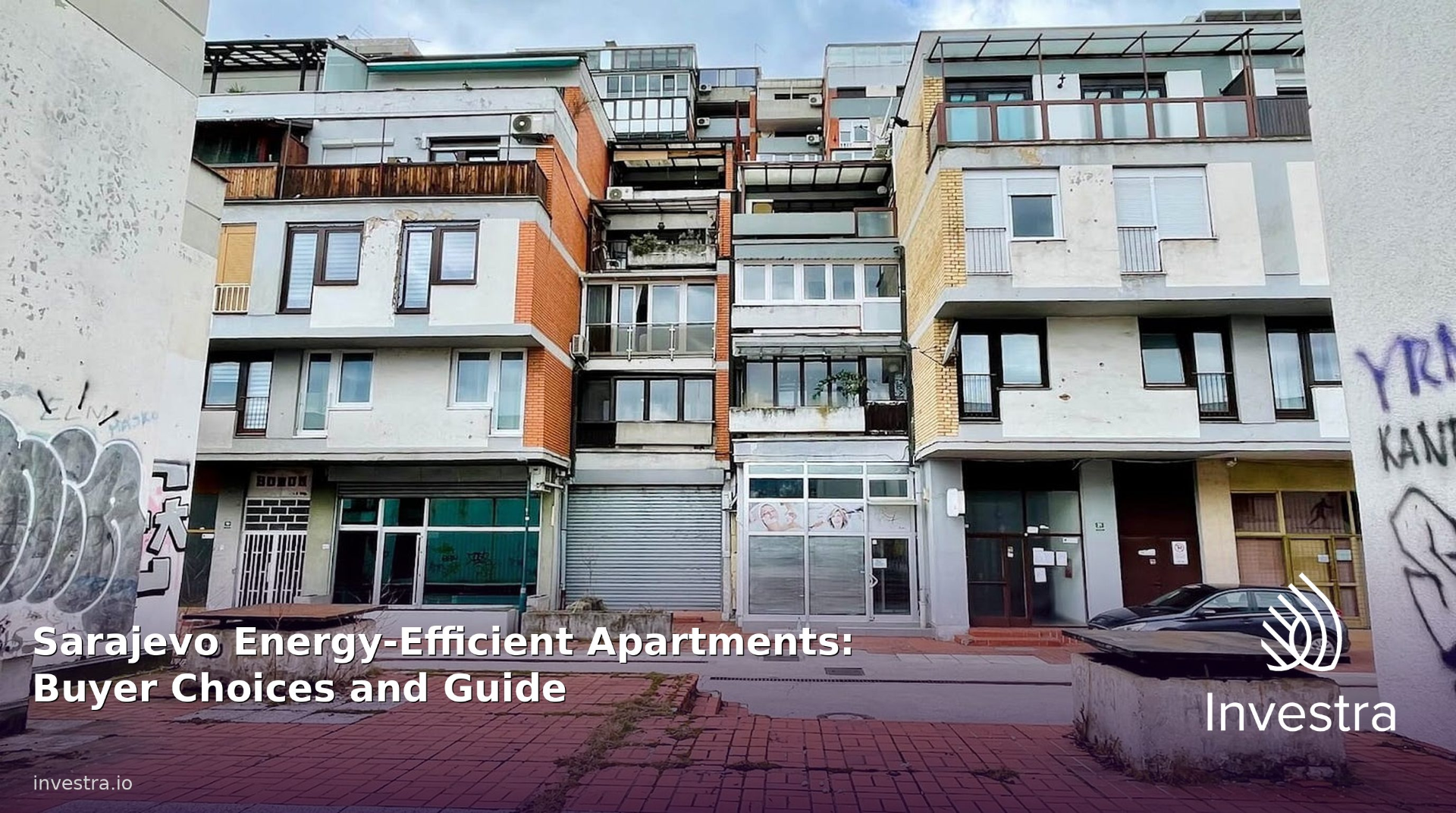
Sarajevo Energy-Efficient Apartments: Buyer Choices and Guide
Sarajevo Energy-Efficient Apartments: Buyer Choices and Guide
Sarajevo Energy-Efficient Apartments: Market Snapshot
Quick Answer: Sarajevo energy-efficient apartments are gaining attention as buyers look for lower running costs and improved comfort; verify current market data through local listings and specialist reports like the Sarajevo real estate market guide.
The phrase sarajevo energy-efficient apartments has moved from niche to mainstream in recent years. I’ve seen developers promote insulation packages, triple-glazed windows and modern mechanical systems as standard in new projects, while renovators market deep retrofit packages for older dwellings. What surprised many buyers is how variable "energy-efficient" can be: some projects mean a high-quality boiler and new windows, others include airtight building envelopes and heat-recovery ventilation.
If you’re considering a purchase, start with reliable, up-to-date market intelligence. Investra’s Sarajevo real estate market guide outlines neighbourhood trends and where modern developments are concentrated. Also compare project specifications rather than marketing summaries. Developers sometimes use similar buzzwords for very different technical realities. The reality is that a buyer who reads the building spec and requests independent verification will be best positioned to judge quality.
Finally, look beyond the flat. Check the neighbourhood’s heating grid, access to public transport and planned infrastructure upgrades. These contextual factors affect long-term energy use and resale prospects. If you need local advisory, you can consult specialist advisers such as advisory services or reach out to Investra for project-focused insight.
Quick Answer: What are the primary factors to evaluate when purchasing energy-efficient apartments in Sarajevo?
Quick Answer: The primary factors are the building envelope and insulation, heating and ventilation systems, certification or test results, quality of materials, and the credibility of the developer or contractor. Verify these by requesting technical documentation, energy performance certificates, and independent audits.
When buyers ask me what matters most, I reply with a short list and then urge verification. Start with the building envelope: walls, roof, and windows control heat loss. Next, the heating and ventilation strategy: does the apartment use a modern district system, efficient condensing boilers, heat pumps, or electric underfloor heating? Ventilation matters as much as heating—without controlled ventilation, airtight homes can become unhealthy.
Certificates and third-party testing are crucial. If a project claims high energy performance, ask for the actual reports, the testing methodology and who performed them. The reality is that certification schemes and terminology vary, so you’ll want to know the exact standard used. Developers sometimes provide generic labels—so request measured or modelled performance details and compare those to local benchmarks.
Finally, evaluate the team behind the project. In my experience, reputable firms provide clear technical documentation, warranties and a history of completed builds. If you prefer external support, advisors like Siniša Dagary and the Findes Group & Partners advisory services can help verify contractor credentials and project claims.
New Builds vs Renovations: Choosing the Right Path
Quick Answer: New builds often include contemporary energy standards by design, while renovations allow tailored upgrades; decide based on your budget, timeline and appetite for construction work—and verify feasibility with an energy audit.
Buying a new apartment in Sarajevo often means you get the latest construction methods and systems integrated from day one. The Sarajevo new-build guide explains what developers commonly include in modern projects. In new builds, energy performance can be delivered at scale: consistent insulation levels, planned ventilation systems and coordinated mechanical designs.
Renovation is a different beast. When you shop for a renovated or to-be-renovated apartment, you can prioritise upgrades that matter most to you—insulation, windows, central heating, or smart controls. What we’ve seen is that some older apartments in central Sarajevo respond very well to targeted retrofits because their fabric is robust; others require extensive work to reach high performance.
There’s also a legal and practical angle. Renovations may trigger permit requirements and building association approvals. For foreign buyers, the Buying property in Sarajevo guide covers the transactional side, but for renovation permits you’ll need local architects and contractors. If you’re considering renovation investments, consult specialists—we often recommend contacting local advisory teams such as investment consultation or the Findes Group & Partners advisory team to scope works and legal impact.
Technical Features to Prioritise in Sarajevo Apartments
Quick Answer: Prioritise high-quality insulation, sealed windows and doors, efficient heating and ventilation systems, smart controls, and documented testing or certification to confirm performance claims.
Examining the spec sheet is where buyers separate serious projects from marketing claims. Start with insulation: look for continuous insulation in external walls and the roof plane, not just cavity-fill claims. Windows and doors should be identified by manufacturer, frame material and glazing specification. Don’t accept a vague reference to “high performance windows.”
Heating strategies vary across Sarajevo. New developments sometimes connect to district heat where available; others use individual systems—gas condensing boilers, heat pumps or electric systems. Ask how distribution works within the building. Is there a central boiler, individual metering, or substation? Controls matter too: thermostatic valves, programmable timers and building automation can materially affect comfort and running costs.
Ventilation is often overlooked until condensation or mould appears. Mechanical ventilation with heat recovery (MVHR) reduces heat loss while providing fresh air. Where MVHR isn’t present, check how the project manages air change, and ask for measured indoor air quality (IAQ) or planned solutions.
Finally, insist on documentation: thermal bridge treatment details, U-values, airtightness test results (blower-door tests), and any energy performance certificates. If a developer provides these, ask who performed the tests and whether you can see the full reports. For a second opinion, firms like Siniša Dagary investment insights can assist in interpreting technical documents.
How to Vet Developers and Contractors in Sarajevo
Quick Answer: Check track record, request references and warranties, review technical documentation and ensure transparent cost breakdowns; use independent advisers to validate claims.
Developer credibility is everything. In my experience, projects backed by local firms with a portfolio of completed buildings are easier to evaluate because you can visit finished units and speak with current owners. Ask for a list of completed developments, visit units if possible, and talk to residents about comfort, defects and running costs.
For renovation contractors, seek electricians, heating engineers and builders who provide certifications for their work. Ensure they carry insurance and provide written warranties. Don’t rely on verbal promises about energy performance; insist on written obligations tied to specific performance criteria.
Financial transparency is also a telltale sign. Reputable developers give clear payment schedules, retention terms and escrow arrangements. If you need help vetting contracts or negotiating terms, Investra resources like the Sarajevo neighbourhood guide and the Buying property in Sarajevo article are useful starting points.
If you prefer external validation, consult advisory teams such as advisory services or the Findes Group & Partners. They can review technical documentation, propose QA processes and, where appropriate, arrange independent testing.
Legal and Ownership Steps for Sarajevo Buyers
Quick Answer: Understand title, ownership restrictions, permit history, and HOA rules; always verify current legal conditions with a local lawyer before signing.
Legal clarity reduces surprises at closing. Ownership laws and transactional customs differ across Bosnia and Herzegovina, and municipalities can interpret regulations differently. For Sarajevo, consult dedicated guides such as Buying property in Sarajevo for an overview of the purchase process, but always verify with a local lawyer or a licensed notary.
Ask the seller for a full title report, any encumbrances, building permits, and compliance certificates. If the apartment is in a condominium, request the association’s rules, recent meeting minutes and financial statements. Shared systems—heating plants, hot water, common insulation schemes—can carry joint maintenance responsibilities that affect costs and future renovations.
Foreign buyers should pay special attention to transfer procedures, restrictions and tax filing obligations. For city-by-city comparison or cross-jurisdictional perspective, Investra’s regional guides—like the Mostar real estate market guide and the Banja Luka real estate market guide—are helpful. For specific legal counsel, consider contacting professionals listed at investment consultation or the Findes Group & Partners advisory team.
Financing Options and Tax Considerations
Quick Answer: Explore local mortgage offers, developer financing and renovation loans; confirm tax obligations, stamp duties and how energy upgrades affect valuation by consulting banks, tax offices and legal advisors.
Financing an energy-efficient purchase can come from typical mortgage products, bridge loans for refurbishments, or developer finance on new builds. Banks often require valuation reports that reflect both the apartment’s physical condition and local comparables. The reality is that energy upgrades can be valued differently by different lenders, so ask prospective lenders how they incorporate energy performance into valuations.
For tax matters, don’t rely on summaries in marketing materials. Confirm capital gains, property transfer taxes and municipal levies with a qualified tax advisor or the local tax office. If government incentive programmes for energy retrofits exist, their terms and availability can change rapidly; always validate eligibility and current conditions with the issuing authority or via professional advisers.
In my experience, buyers who gather multiple mortgage offers and request written details about how lenders treat energy efficiency stand a better chance of matching financing to their project needs. For broader guidance on buying in other Bosnian cities and how those markets compare from a financing perspective, see Investra’s city-specific buying guides like Buying property in Banja Luka and Buying property in Mostar.
Estimating Running Costs and Verifying Energy Claims
Quick Answer: Estimate running costs by requesting historical utility bills, reviewing the building’s heating system, and commissioning an energy audit; independently verify developer claims through test reports and third-party auditors.
Running cost estimates are a central concern for buyers. The best source is historical utility consumption for the specific apartment or comparable units in the same building. If those aren’t available in new developments, ask for modelled consumption numbers and the assumptions behind them. The reality is that modelled numbers can vary with occupant behaviour, so treat them as indicative rather than definitive.
Independent energy audits provide measurable baselines and recommended interventions. An auditor can perform a blower-door test to measure airtightness, thermographic surveys to show thermal bridges, and a systems review to confirm heating efficiency. If a developer claims a specific performance level, request the full test report and the details of the testing protocol. You can then cross-check with independent consultants like advisory services or local engineering firms.
Also consider non-energy factors that influence running costs: communal maintenance fees, water heating arrangements and whether the building uses central meters or individual metering. In Sarajevo, communal arrangements can significantly affect monthly charges, so ask for the apartment’s past maintenance invoices where available and speak to the building manager about planned capital works.
Practical Guide to Renovating for Energy Efficiency
Quick Answer: Start with an energy audit, prioritise envelope improvements and ventilation, obtain necessary permits and cost quotes, and stage works to align with budget and disruption tolerance.
Renovation projects are popular for buyers who want to shape performance to their preferences. My first recommendation is always an energy audit and structural assessment. That gives you a roadmap: which walls to insulate, whether cavity insulation is practical, if windows should be replaced or retrofitted, and whether the heating system needs replacement or can be upgraded.
Permits and homeowners’ association approvals are common stumbling blocks. In Sarajevo, municipal regulations require clear documentation for certain external works—so before you sign a purchase contract assuming immediate renovation, verify what approvals are needed. For step-by-step guidance on renovating in a Sarajevo context, consult the Sarajevo new-build and property renovation guide.
Staging the works is pragmatic. Envelope improvements first, followed by heating and ventilation, then finishes. This order avoids rework and reduces overall disruption. For large-scale or complex projects, work with a project manager or an advisory firm. Advisors such as Siniša Dagary’s team can provide renovation planning, contractor selection and oversight to keep quality consistent with energy goals.
Rentals, Short-Term Lets and Investment Considerations
Quick Answer: Energy-efficient apartments often appeal to quality tenants and can differentiate listings in Sarajevo’s market; verify rental demand and occupancy trends with local market reports and the Sarajevo rental market guide.
If your purchase is an investment, you’ll want to know how energy efficiency influences tenant demand and maintenance. In my experience, more energy-efficient homes attract tenants who value lower utility bills and better comfort. Short-term guests—tourists using platforms like Airbnb—also appreciate reliable heating and air quality, particularly in shoulder seasons.
Yet energy efficiency alone doesn’t guarantee high occupancy. Location, price point, and property management quality remain central. Use Investra’s rental guides, such as the Sarajevo rental market guide, and compare with city comparisons like Mostar rental market guide and Banja Luka rental market guide.
Don’t forget operational issues for rentals. Who pays for communal heating? Are meters individual? Are smart controls installed that allow remote management? These practical details affect day-to-day management and tenant satisfaction. For owners who prefer hands-off approaches, professional property managers familiar with Sarajevo’s energy systems can manage proactive maintenance and guest services more effectively.
Negotiation and Closing: Practical Steps for Buyers
Quick Answer: Negotiate based on verifiable technical documentation and completion milestones, insist on a detailed contract, and confirm title and permit status before closing.
Negotiation is where preparation pays off. If a developer promises certain energy standards, include those specifications in the sale contract with remedies if targets aren’t met. For renovations, include completion timelines, materials specs and warranty terms. In my experience, buyers who translate performance claims into contractual obligations avoid post-handover disputes.
Before closing, obtain an up-to-date title search and confirm there are no unresolved liens. Verify building permits and occupancy certificates. If the property is part of a condominium, request the association’s rules and confirm the current reserve fund status and any planned large-scale works that might affect future contributions.
If you’re unsure about contract wording, engage a local attorney. Investra’s guides—such as the Sarajevo buying guide and related city pages—help explain local processes, but they don’t replace legal counsel. For broader transactional assistance, advisory professionals like Siniša Dagary profile and the Findes Group & Partners advisory team offer contract review and closing support.
Practical Checklist: What to Inspect Before You Buy
Quick Answer: Inspect technical documentation, perform or request an energy audit, check legal/title documents, verify HOA rules and obtain multiple cost estimates for any intended retrofits.
Here’s a practical checklist based on common market pitfalls and buyer queries. First, request complete technical specifications for walls, roofs, windows, heating and ventilation. Ask for test reports and certificates. Second, obtain historical utility bills for existing units or modelled consumption and the assumptions behind them for new builds.
If you don’t feel confident evaluating technical reports, hire an independent consultant. Practical advisory options include investment consultation and technical due diligence through firms connected with Findes Group & Partners. Finally, always align your renovation ambition with realistic timelines and a contingency budget for unforeseen issues—older buildings can reveal structural or technical surprises once works begin.
Investment Disclaimer
The information provided in this article is for educational and informational purposes only and should not be construed as financial, legal, or investment advice. Real estate investments carry inherent risks, and past performance does not guarantee future results. Investors should not invest money they cannot afford to lose. Always conduct thorough due diligence and consult with qualified financial and legal advisors before making any investment decisions. Investra.io does not guarantee returns on any investment.
Frequently Asked Questions
What are the primary factors to evaluate when purchasing energy-efficient apartments in Sarajevo?
The primary factors include the building envelope (insulation, windows, doors), the heating and ventilation systems, documented test results or certification, the developer’s track record, and the legal status of the property. To verify claims, request the actual test reports (blower-door tests, U-values, thermal imaging), ask for manufacturer details for major components, and engage an independent auditor or engineer for a second opinion. Also review the building’s communal arrangements and metering, as they affect long-term costs.
Can foreigners buy energy-efficient apartments in Sarajevo?
Foreigners can purchase property in Bosnia and Herzegovina, but rules and processes depend on nationality and property type. Always consult a local lawyer and check the latest requirements. Investra’s Buying property in Sarajevo guide offers procedural context, and professional advisers such as investment consultation can assist with jurisdiction-specific questions.
How do I verify a developer’s green or energy claims?
Ask for full technical documentation and independent test reports. Request names of certifying bodies and the methodology used for modelling or testing. If possible, visit completed projects and speak with owners about comfort and running costs. For independent confirmation, hire an energy auditor or consult advisory firms like Siniša Dagary or the Findes Group & Partners advisory team to review claims and documentation.
Do I need permits for energy-efficiency renovations in Sarajevo?
Many retrofit measures—particularly those that affect the building facade, structural components or heating systems—require permits and approvals from local authorities or the condominium assembly. Permit requirements vary by municipality and scope of work. Before committing, consult a local architect or building engineer to identify required permits and associated timelines. The Sarajevo renovation guide provides an overview but always verify with municipal offices.
Are energy-efficient apartments cheaper to run in Sarajevo?
Energy-efficient apartments generally aim for lower utility consumption, but actual savings depend on occupant behaviour, system commissioning and maintenance. To estimate likely savings, request historical bills or measured performance, review system commissioning reports and consider an independent energy audit. Lenders and valuers may account for expected savings differently, so get written estimates from multiple professionals if running costs are central to your decision.
How should I compare two apartments’ energy performance?
Compare the raw technical data: U-values for walls, roofs and windows; airtightness results; ventilation strategy (natural vs mechanical with heat recovery); and heating system efficiency. Ask for simulation or measured consumption figures and the assumptions behind them. If the data isn’t comparable, hire an energy consultant to create a baseline comparison. This step is critical when one property is a new build and another is a renovated older apartment.
Are there grants or incentives for energy retrofits in Bosnia and Herzegovina?
Government and donor-funded incentive programmes for energy efficiency have existed, but their availability and eligibility criteria change. Don’t rely on outdated references. Check current programmes with municipal energy agencies, national ministries or international donors, and verify eligibility with a qualified consultant or legal advisor. Advisors such as those at Siniša Dagary’s advisory services can help identify and apply for applicable programmes.
How can I finance a renovation for improved energy performance?
Renovations can be financed through personal savings, mortgage top-ups, renovation loans from banks or developer-supplied finance. Some banks offer green lending products, but terms and availability vary. Approach multiple lenders, request written terms and ask how they account for energy upgrades in valuations. Professional advisers or brokers can help structure finance that aligns with your renovation timeline and objectives.
How do I find trustworthy contractors for energy upgrades in Sarajevo?
Start with referrals from completed projects and verified developer portfolios. Ask contractors for references, sample projects and insurance/certification documents. Request detailed quotes that separate materials, labour and permit costs. If you lack technical expertise, engage a project manager or consultant who can assess tenders and supervise works. Organisations and consultants such as Siniša Dagary and the Findes Group & Partners can assist in contractor selection and oversight.
What documents should I insist on before signing any purchase contract?
Insist on the title report, building permits, full technical specifications for energy systems and envelope, warranties, and any test reports or certificates. If the contract includes future works or performance guarantees, include clear milestones and remedies. For condominium properties, obtain the association rules, recent minutes and financial statements. When in doubt, ask your lawyer to review and clarify any ambiguous clauses.
Recommended Reading
- Sarajevo real estate market guide
- Buying property in Sarajevo
- Sarajevo rental market guide
- Sarajevo neighbourhood guide
- Sarajevo new-build guide
- Mostar real estate market guide
- Siniša Dagary — Investment Consultant
- Business Strategy Blog
Connect With Investra
Follow Investra on social media for updates, listings and market insights:
Connect With Investra
Quick Answer: Follow Investra for verified market context and practical property research.
Related Posts
No related posts available.
