
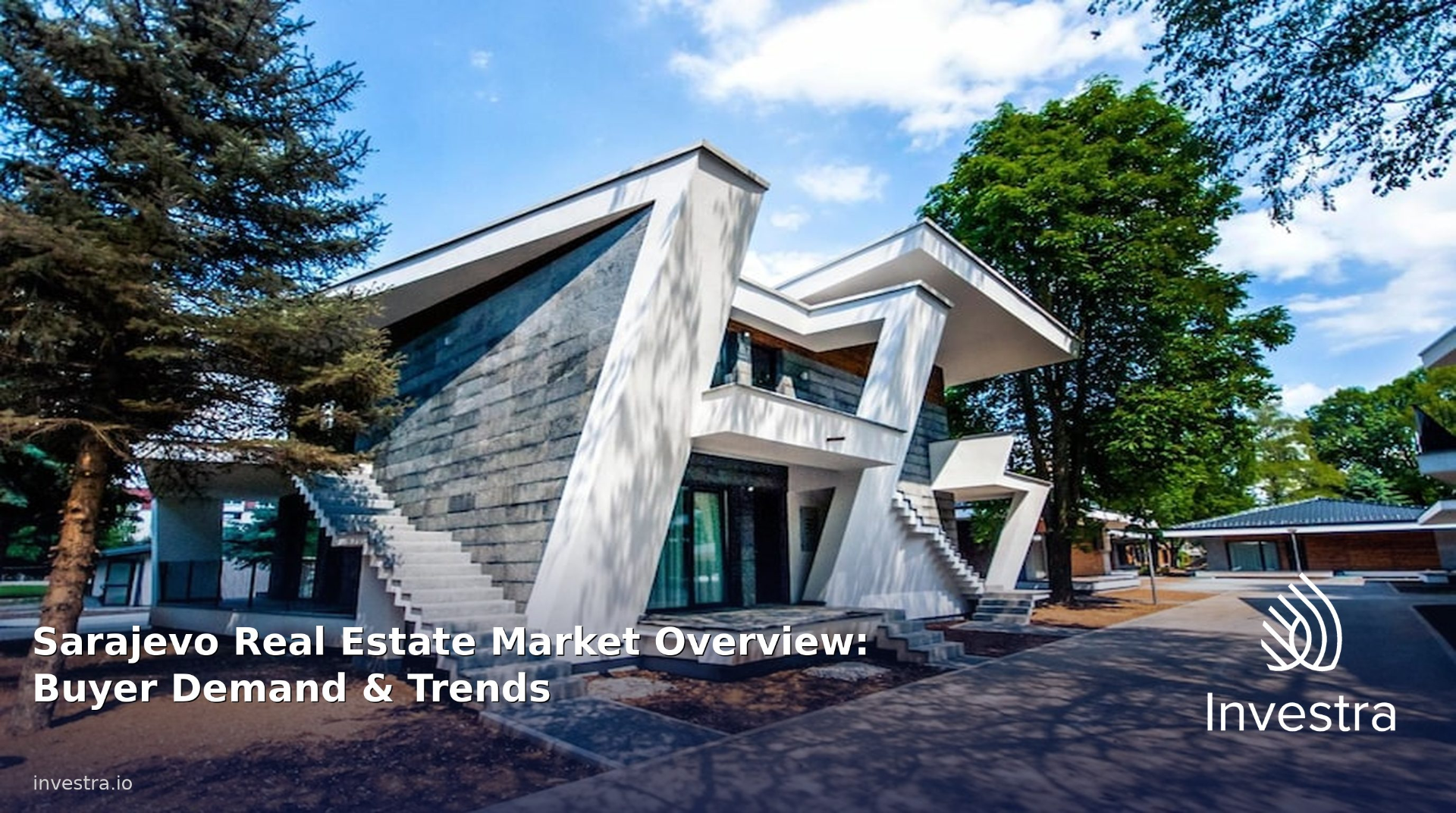
Sarajevo Real Estate Market Overview: Buyer Demand & Trends
Sarajevo Real Estate Market Overview: Buyer Demand & Trends
Market Snapshot: Sarajevo real estate market overview and current buyer demand
Quick Answer: The Sarajevo real estate market overview shows a city market shaped by steady domestic demand, increased regional interest, and long-term buyers seeking lifestyle and income opportunities; local market data updates are available via Investra.io's Sarajevo market resources.
Sarajevo sits at the crossroads of history and modern urban growth. When you search for "sarajevo real estate market overview", what really matters is understanding who’s buying, which parts of the city are active, and which motives are driving purchases. In my experience, buyer demand isn't uniform across the city. Some neighborhoods attract families who want space and schools close by. Others draw younger professionals and investors who care about proximity to jobs, nightlife and short-term rental potential. The reality is, macro stories—regional migration, EU-related trade and tourism trends, and infrastructure projects—filter down to shape local choices.
For anyone wanting detailed, up-to-date figures and granular maps of price movements, I always point readers to verified market resources. Check the Sarajevo real estate market guide on Investra.io for recent listings, historical trends, and neighborhood breakdowns. If you need an on-the-ground analyst, consult local agents and municipal property registries to confirm transaction volumes and official price records before making assumptions.
What surprised many buyers is how different the market feels between central Sarajevo and the suburbs. Central districts have demand driven by lifestyle, amenities and tourism, while peripheral boroughs show interest from buyers focused on space and affordable renovations. That split affects liquidity—how quickly a property sells—and it shapes the types of listings you’ll see. If you’re asking “What does this mean for investors?” consider whether you’re seeking capital appreciation, a rental income stream, or a primary residence; the answer will change which micro-market you target.
To keep track of ongoing shifts, use multiple data points: local sales registries, listings portals, Investra’s Sarajevo pages, and the insights of consultants such as Siniša Dagary. Combining these sources helps you form a clearer, less biased picture than any single headline can provide.
Buyer Profiles: Who is buying in Sarajevo and why?
Quick Answer: Buyers in Sarajevo include local home-owners, diaspora returnees, regional investors and long-term renters-turned-buyers, each motivated by different blends of lifestyle, family, and income; verify buyer composition through local agencies and Investra's neighborhood guides.
In conversations with agents and developers over the years, a few buyer archetypes repeat themselves. Local professionals and families prioritize schools, transport links, and established services. The Bosnian diaspora often buys for family ties, second homes, or eventual relocation. Regional investors from nearby countries look for opportunities where legal access is straightforward and transaction costs are reasonable. International buyers can appear, but their numbers fluctuate with visa rules, regional stability and air connectivity.
In my experience, what surprises many foreign buyers is how much local context matters: a small block-by-block difference can mean distinct tenant pools or resale prospects. If you want specifics on buyer demand in Sarajevo’s central and suburban areas, Investra’s targeted pages such as Buying property in Sarajevo and the Sarajevo neighbourhood guide are practical starting points.
If you’re wondering how to verify who’s buying, the method is straightforward even if a little time-consuming: request recent sales records from the municipal registry, interview active listing agents about recent closings, and cross-check with rental platforms to see what types of properties are in highest demand. That triangulation gives you a real-world sense of buyer composition and helps avoid relying solely on anecdote or hearsay.
Neighborhoods and micro-markets: where demand is concentrated
Quick Answer: Demand concentrates in central Sarajevo neighborhoods offering transport, services and historic character, while suburbs attract buyers seeking space and renovation plays; consult Investra’s Sarajevo neighbourhood guide to compare areas.
Sarajevo’s neighborhoods are diverse in character and price sensitivity. From historic districts with Ottoman-era architecture to newer residential developments, each micro-market attracts different buyer segments. Central neighbourhoods are often preferred by those valuing walkability, closeness to workplaces, and tourist-friendly amenities. Fringe districts and satellite towns typically appeal to buyers seeking lower entry costs and larger floor areas.
In practice, a property’s immediate surroundings—public transport nodes, schools, green space and noisy roads—can change its appeal more than its floor plan. We’ve seen buyers overlook square footage for a quieter street or subtree-lined avenue. If you’re comparing options, use neighborhood-specific resources like the Sarajevo neighbourhood guide and consult listing histories to see how long similar units have taken to sell.
For a deeper read on renovation opportunities and new developments in Sarajevo’s urban fabric, the Sarajevo new-build guide provides practical checklists. The reality is you shouldn’t evaluate neighborhoods only by averages; look at a sample of recent sales, ask for comparable offers, and visit at different times of day. That gives a clearer sense of resident life and potential demand cycles.
Price and valuation: methods to assess property value without guessing numbers
Quick Answer: Assess property value by comparing recent similar sales, using local appraisers, and consulting public land registries and the Investra Sarajevo market guide rather than relying on headline figures.
When we talk about price, people want certainty. The problem is that markets are fluid and headline numbers can lag. I always recommend a three-pronged approach to valuation: comparative market analysis, professional appraisal, and verification with official registries. Start by collecting recent sale records for similar properties in the same block or neighborhood. If transaction comparables aren’t publicly listed, ask your agent to provide sale confirmations or contact the municipal property office for official records.
Professional appraisers in Sarajevo can adjust values for condition, orientation and amenities. While you might find online estimates, they’re only a starting point. For precise assessments, commission an appraisal that includes both market and replacement-cost analyses. If you’re uncertain where to begin, guides like the Sarajevo real estate market guide outline typical steps and provide links to local experts.
How do you verify current market rates? Contact the municipal land registry for sale records, speak to several agents for on-the-ground sentiment, and review recent listings and closed deals. If you're evaluating a development, ask the developer for a breakdown of costs and permits. Remember: avoid acting on a single data point. Triangulate until you feel comfortable with the valuation range.
New builds, renovations and supply-side trends in Sarajevo
Quick Answer: New-build projects and renovation activity are reshaping supply in Sarajevo; consult Investra’s new-build guide and local planning offices to understand permit status and developer reputation.
Developers have become more active in many parts of Sarajevo, offering modern apartments and mixed-use schemes that appeal to young buyers and investors focused on rental demand. At the same time, older stock provides renovation opportunities for buyers willing to add value. What we’ve seen is a bifurcation: contemporary buildings attract premium renters and buyers seeking low-maintenance homes, while renovated older apartments can achieve strong returns if executed well.
If you’re evaluating a new project, don’t just look at glossy renderings. Verify the developer’s track record, inspect construction phases in person, and request copies of permits. The Sarajevo new-build guide is a practical resource that walks buyers through questions to ask, common contract clauses, and inspection milestones. Also consider supply dynamics: where multiple projects are concentrated, absorption rates matter. Speak to local agents about how quickly similar developments have leased or sold.
Renovation projects require a realistic budget and a trusted contractor. In my experience, underestimated renovation costs are a frequent pitfall. Always secure at least three detailed quotes, build a contingency into your plans, and consider hiring an independent technical supervisor to monitor progress and quality.
Rental market and short-term lets: what shapes tenant demand?
Quick Answer: Tenant demand in Sarajevo is shaped by student populations, tourism peaks, and long-term local renters; Investra’s rental market guide helps you evaluate short-term and long-let prospects.
Sarajevo’s rental market is diverse. Students, professionals and tourists create overlapping demand cycles. Student housing tends to support steady long-term leases near universities, while short-term tourist bookings spike around festivals, winter sports season and cultural events. The reality is rental demand is granular: a one-bedroom near a university behaves differently from a riverside apartment marketed to tourists.
For readers considering rentals, consult the Sarajevo rental market guide which outlines how to evaluate short-term vs long-term strategies, what to look for in tenant profiles, and operational considerations like property management and local regulations. Always confirm applicable rules—short-term letting may require permits or tax registrations, and regulations can change. Contact the municipal authorities and a local tax advisor for the most current requirement list.
If you’re determining tenant demand, do practical checks: monitor popular booking platforms for occupancy patterns, call local property managers to ask about average tenancy lengths, and inspect comparable rental advertisements. That hands-on research gives a clearer picture than national-level commentary.
Legal steps and buying process for foreigners and locals
Quick Answer: The buying process involves title checks, contract drafting, notary steps and registration; Investra’s how-to guides and local legal advisors can help you verify exact procedural requirements.
Buyers often ask me: "What paperwork do I need, and how long does the process take?" While timelines vary, the core steps are similar: identify the property, obtain a provisional agreement, perform due diligence (title, encumbrances, planning permissions), sign a purchase contract, pay any required deposits, and complete registration with the land registry. Notaries and lawyers play a central role in securing the transaction.
If you’re a foreign buyer, there are additional verifications to complete regarding ownership rights and in some cases, permission from authorities depending on your nationality and the property type. The practical path is to consult local legal counsel and follow the checklist in the Buying property in Sarajevo guide on Investra.io. That guide explains typical contractual clauses, the notary’s role, and recommended steps for verifying seller identity and title chains.
What I advise clients is to never skip a title search or assume previous owners settled all obligations. Ask for a full history of ownership, court and tax clearances, and check for any building permits or municipal obligations tied to the property. These checks reduce the risk of later disputes.
Taxes, ownership structures and due diligence checklist
Quick Answer: Taxation and ownership structures affect returns and risks; consult local tax authorities, lawyers and Investra’s city guides to confirm current rates and filing requirements rather than relying on third-party summaries.
Tax rules and ownership structures are technical and evolve over time. Whether you’re buying as an individual, using an entity, or planning to rent out the property, your tax exposure and compliance obligations will differ. I always recommend getting advice from a local tax advisor who can explain property transfer taxes, annual property taxes, VAT implications (if any), and obligations tied to rental income.
To verify current tax rates and procedures, contact the municipal tax office and the state tax authority, and ask them to confirm liabilities for non-resident owners. The Buying property in Sarajevo guide on Investra provides an overview and points to resources, but you should treat that as a starting point and ask for formal written confirmation from official authorities or licensed advisors.
My practical due diligence checklist includes: confirmed title and chain of ownership, checks for mortgages or liens, verified building permits and compliance certificates, utility debt clearance, energy performance documentation where required, and a clear plan for tax registration post-acquisition. Don’t shortcut these steps; they’re what protect your investment.
Making the buyer decision: criteria, exit options and risk management
Quick Answer: Buyers should weigh location, liquidity, legal clarity and exit routes when deciding; test assumptions using local comparables, Investra city guides, and professional consultations.
Deciding to buy in Sarajevo often hinges on a few practical questions: Will I live there or rent it out? How quickly can I resell if needed? What are the main risks and how can I mitigate them? The answers shape what kind of property you should purchase. For instance, liquidity considerations push some buyers toward central, well-connected areas; others accept a longer hold for higher value-add opportunities.
One thing I always emphasize: plan your exit strategy as early as your acquisition. Consider resale demand, possible buyers, and what improvements will broaden appeal. If your plan depends on a rental income stream, stress-test that income against higher vacancy and maintenance costs. Use the Sarajevo rental market guide and consult with property managers to model down-side scenarios.
Risk management also includes legal protections: clearly worded contracts, escrow arrangements, and staged payments tied to title transfer. If you’re unsure about legal language or exit clauses, engage counsel who can draft and negotiate terms that protect deposits and impose seller warranties. We’ve seen buyers who proceeded without these protections and regretted it later.
Comparative context: Sarajevo versus other Bosnian cities
Quick Answer: Sarajevo’s market differs from Mostar, Banja Luka and Tuzla in demand drivers and buyer profiles; review Investra’s dedicated city guides for each market to make direct comparisons.
To compare markets, read the city-focused analyses: Mostar real estate market guide and Buying property in Mostar for that city, the Banja Luka real estate market guide and its buying guide for Banja Luka, and the Tuzla real estate market guide for Tuzla. These resources help you identify which city aligns with your investment objectives.
When comparing, focus on fundamentals: employment trends, transport links, regulatory environment, and the local supply pipeline. In many cases, the best opportunity is the one that matches your goals and risk appetite rather than the city with the highest projected headline growth.
Working with advisors: agents, lawyers and consultants
Quick Answer: Use experienced local agents, independent lawyers and technical inspectors; Investra and trusted consultants such as Siniša Dagary can connect you with vetted professionals.
If you’re looking for introductions, the consultancy network around Sarajevo includes independent advisors and firms. For strategic, high-level advising, consider consulting profiles like Siniša Dagary's profile and check his insights at Siniša Dagary investment insights. For transactional support, look at local advisory services via advisory services and investment consultation.
Finally, larger cross-border engagements might benefit from established advisory teams such as Findes Group & Partners and their local advisory contact at Findes Group & Partners advisory team. Use multiple references, ask for client examples, and verify credentials before signing engagement letters.
Investment Disclaimer
Quick Answer: This section clarifies that the article is informational and not financial, legal, or investment advice; always verify specifics with qualified professionals and official sources.
The information provided in this article is for educational and informational purposes only and should not be construed as financial, legal, or investment advice. Real estate investments carry inherent risks, and past performance does not guarantee future results. Investors should not invest money they cannot afford to lose. Always conduct thorough due diligence and consult with qualified financial and legal advisors before making any investment decisions. Investra.io does not guarantee returns on any investment.
To expand slightly on that mandated disclaimer: specific tax positions, allowable ownership forms, and transaction timelines can change with new laws or local administrative practice. What we recommend is that you confirm any actionable detail—tax rates, registration steps, or legal permissions—with a licensed local lawyer, the municipal land registry, or accredited tax office. If you need a trusted starting point for advisors, Investra maintains city guides and networks of vetted partners that can help connect you to local professionals.
Frequently Asked Questions
Quick Answer: This FAQ section answers common buyer queries about Sarajevo property, process, taxes and market verification, with pointers to authoritative local resources.
How do I check current property prices in Sarajevo?
Instead of relying on single online estimates, verify prices by consulting recent sale records at the municipal land registry, requesting comparable sale lists from multiple local agents, and using detailed market reports such as the Sarajevo real estate market guide. For an extra layer of confirmation, commission a certified appraisal that references registered transactions and local market conditions.
Can foreigners buy property in Sarajevo and what is the process?
Foreign buyers often can purchase property, but rules vary by nationality and property type. Review the procedural checklist in the Buying property in Sarajevo guide and consult a local lawyer to confirm any required permissions or special registration steps. Always ask for formal written confirmation from official sources for your specific situation.
What should I include in my due diligence before signing?
Due diligence should cover title verification, checks for liens or encumbrances, building permits, utility debt clearances, and inspection reports for structural issues. Use the Sarajevo new-build guide for renovation-specific checks and engage an independent lawyer to review contracts and warranties.
How is the rental market operating in Sarajevo now?
Rental demand varies by neighborhood and tenant profile. Consult the Sarajevo rental market guide for practical measures on short-term vs long-term letting. To get the latest occupancy and rental-rate data, ask local property managers for recent performance summaries or monitor booking platforms for short-term trends.
Where can I find reputable local advisors and agents?
Start with Investra’s local pages and partner directories, and consider reaching out to consultants like Siniša Dagary for strategic advice. For technical, legal and tax matters, request credentials and references, and confirm registration with local professional bodies. Larger advisory firms such as Findes Group & Partners may help with cross-border transactions.
Are there common pitfalls in Sarajevo property transactions?
Yes. Common issues include unclear title histories, under-reported renovation costs, and assuming that online listings reflect final sale conditions. Mitigate these risks by demanding documentation from sellers, commissioning inspections, and using escrow arrangements where possible. Legal review of contracts is essential before any substantial payment.
How do I evaluate renovation potential?
Renovation potential depends on structural condition, permitted uses, and neighborhood demand. Use the Sarajevo new-build and renovation guide to identify common scope items and cost categories. Always obtain multiple contractor quotes and add a contingency to your budget.
What taxes will affect my purchase and ownership?
Taxes can include transfer taxes, municipal property taxes and income taxes on rental earnings. Rules change, so verify current obligations with the municipal tax office and a licensed tax consultant. The Investra buying guides point to resources but do not replace formal tax advice—always get written confirmation for your case.
How can I confirm a developer’s credibility for new projects?
Check the developer’s completed projects, ask for references from previous buyers, view construction progress in person, and request copies of permits and financial guarantees. Investra’s project pages and local industry contacts can help you vet developers before committing funds.
Who can I contact for advanced investment advisory in the region?
For higher-level strategy and cross-border considerations, explore consultants such as advisory services from Siniša Dagary and structured advisory teams at Findes Group & Partners advisory team. Ask for case studies, client references, and clear fee structures before engaging.
Recommended Reading
Quick Answer: These curated pieces offer practical, city-specific guidance on Sarajevo real estate and are a good next step for buyers seeking deeper detail.
- Sarajevo real estate market guide
- Buying property in Sarajevo
- Sarajevo rental market guide
- Sarajevo neighbourhood guide
- Sarajevo new-build guide
- Mostar real estate market guide
- Siniša Dagary — Investment Consultant
- Business Strategy Blog
Connect With Investra
Quick Answer: Follow Investra.io on social channels for updates, property highlights and market briefings.
Stay connected with Investra for market updates, new listings and curated analyses. You can find the company on major social platforms: Facebook (https://www.facebook.com/investra.io), LinkedIn (https://www.linkedin.com/company/investra-io) and YouTube (https://www.youtube.com/c/InvestraIO). Following these channels helps you see fresh listings and links to local guides such as the Sarajevo real estate market guide and other city reviews as they are published.
If you want tailored introductions to local partners, Investra’s platform and partner network can connect you with agents, legal advisors and project developers. For strategic advisory or regional insights, consider reaching out to consultants like Siniša Dagary or firms such as Findes Group & Partners advisory team to discuss bespoke needs.
Connect With Investra
Quick Answer: Follow Investra for verified market context and practical property research.
Related Posts
No related posts available.
