
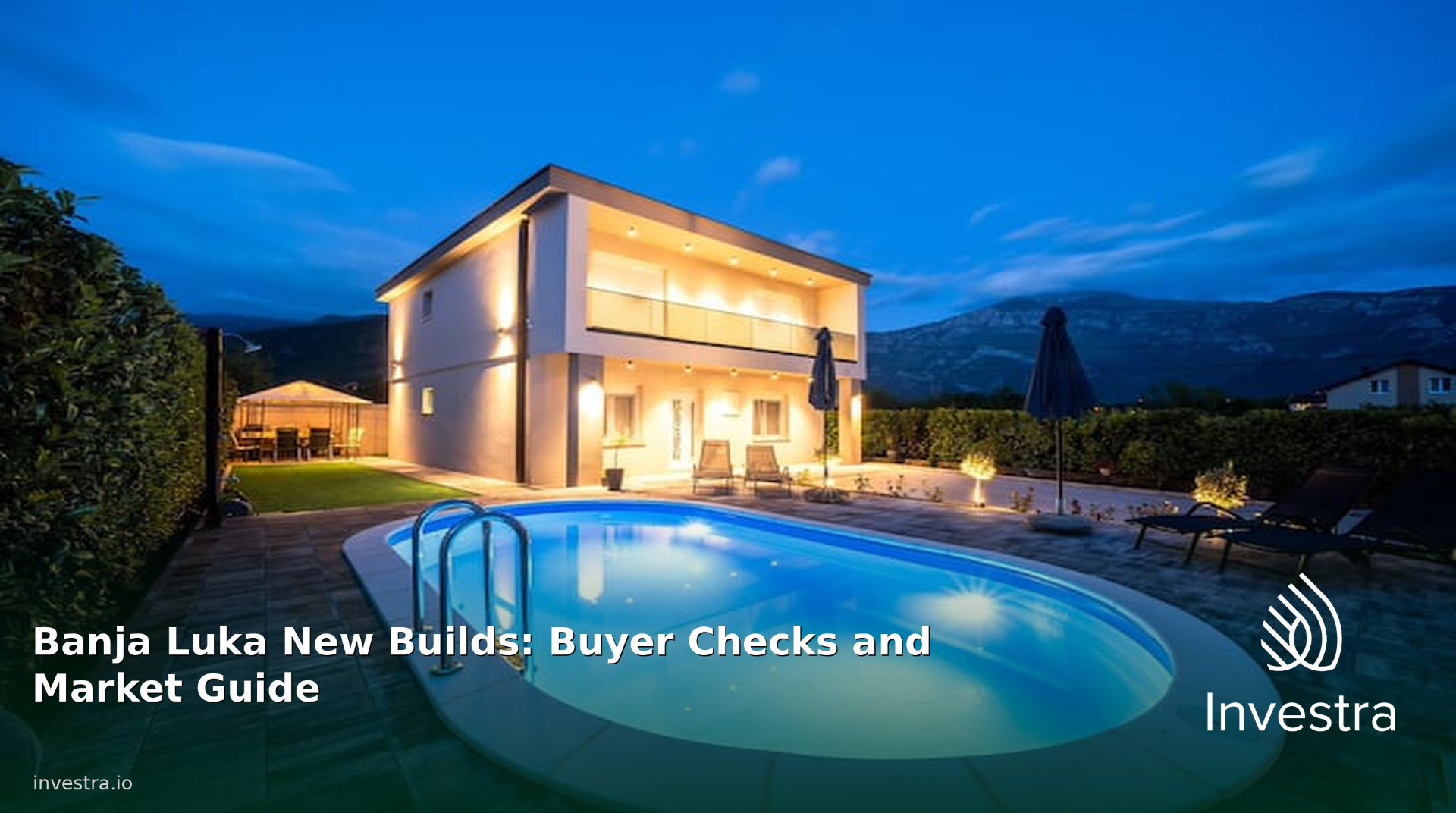
Banja Luka New Builds: Buyer Checks and Market Guide
Banja Luka New Builds: Buyer Checks and Market Guide
Overview: Banja Luka new builds market and why buyers are watching
Quick Answer: Banja Luka new builds are attracting attention for modern apartment blocks and mixed-use projects; local market guides on Investra.io offer ongoing context about supply and city trends.
Banja Luka has been quietly evolving. Where older apartment blocks once dominated, new-build developments now offer contemporary layouts, better insulation, and conveniences that many buyers want. What surprised many buyers is how varied the market is: some projects are speculative towers aimed at short-term buyers, while others focus on long-term residents seeking higher-quality construction and energy efficiency.
In my experience advising buyers across the region, city-level dynamics matter more than national headlines. Local employment, university intake, and municipal plans for infrastructure shape demand for new apartments. If you're asking: What should buyers know about Banja Luka new builds? — the short answer is that product quality, developer reputation and legal clarity determine whether a project makes sense for you.
To follow market changes in real time, consult resources like the Banja Luka real estate market guide and regional analyses on neighbouring cities to understand how supply is shifting. You should also check municipal planning documents and the local cadastre to see which areas have active building permits. That way you’ll know whether a developer is building one block or an entire neighbourhood over the next decade.
Quick Answer Checklist: What buyers should verify before placing a reservation
Quick Answer: Before you reserve a unit in a Banja Luka new build, verify developer track record, construction permits and the project's legal status—see Investra's buying guide for procedural steps.
Buying off-plan can be tempting, but it carries risk if you don’t check the right documents. Start with the basics: confirm the developer’s corporate registration, past completed projects and whether there are any liens on the land. Visit the municipal building office to see the issued permits and planning decisions. You’ll want to ask for the construction permit number, the approved project documentation and any environmental impact statements.
Another practical check: review the sales contract for clauses about delivery dates, penalties for delays, and procedures for handling defects. What surprised many buyers in past projects was how ambiguous handover terms can be. In my experience, insist on a technical acceptance protocol and a list of items to be completed before final payment.
Where can you verify these details? The municipal cadastre and the local building authority are primary sources. Independent lawyers or consultants—such as those listed with Findes Group & Partners—can perform title and permit searches on your behalf, and advisors like Siniša Dagary’s advisory services can help interpret documentation for non-local buyers.
Legal framework and ownership: what foreigners need to know
Quick Answer: Foreign buyers should check national and entity-level rules on property ownership and follow steps in the Buying property in Banja Luka guide to confirm eligibility and necessary approvals.
The legal landscape in Bosnia and Herzegovina can be layered: there are state-level regulations, entity rules and municipal bylaws. The reality is that ownership rights, particularly for non-residents, often depend on whether properties are in Republika Srpska or the Federation. Banja Luka sits within Republika Srpska, and local procedures—permits, taxes, registration—are processed through municipal offices and the entity’s registries.
What does this mean for foreign buyers? You’ll need to verify ownership rules directly with official sources and specialist lawyers. Don’t rely on anecdotal advice alone. Ask for a certified translation of relevant statutes if you don’t read the local language, and have a lawyer perform a title search and draft or review any sales contracts. In my experience, buyers who engage counsel early avoid last-minute surprises at transfer time.
To verify current legal conditions, consult the municipal cadastre, the Republika Srpska property registries and reliable advisory firms. Resources such as Investra’s guide and specialist consultants like Siniša Dagary’s profile are practical starting points for connecting with legal experts.
Assessing developers: red flags and positive signals
Quick Answer: Review a developer’s track record, financial transparency and on-site progress; see project comparisons in the Banja Luka new-build guide on Investra for evaluation tips.
Not all developers are equal. Some deliver high-quality homes and stand behind warranties, while others stall projects or cut corners. I always recommend a forensic approach: visit completed projects by the developer and speak with owners there. Ask for references and visit the construction site frequently during build phases. In my experience, if a developer refuses site visits, that’s an immediate red flag.
Financial transparency matters. Request audited company accounts where possible, or at least bank references and details on how the project is financed. What surprised many buyers in the past was discovering development financing linked to complex corporate structures that obscured who ultimately controls a project.
Positive signals include clearly published timelines, independent technical inspections, and escrow accounts or escrow-like protections for buyer funds. If you’re unsure, connect with consultants who have negotiated with local builders—check advisory listings such as Investra’s renovation and new-build guide and experts like Siniša Dagary — investment consultation.
Construction standards, materials and on-site inspection priorities
Quick Answer: Prioritize structural integrity, moisture barriers and heating systems when inspecting a Banja Luka new build; technical checklists are available via Investra’s new-build guide.
When you step onto a site, what should you look for? Start with the bones of the building: foundation work, visible cracks, proper curing of concrete and correct reinforcement placement. Pay attention to waterproofing in basements and terraces; poor moisture protection causes persistent problems later. In my experience, buyers often focus on interior finishes and overlook MEP systems—mechanical, electrical, and plumbing—which determine long-term running costs and comfort.
Heating and ventilation choices matter in a city with seasonal temperature swings. Check whether the project uses modern insulation standards and ask for a thermal performance certificate if available. Lighting, plumbing fixtures and air-tight windows are important, but they’re only meaningful if the structural and insulation work is solid.
To verify construction standards, ask for the project's technical documentation and third-party inspection reports. If these aren’t provided, commission an independent engineer for milestone inspections. Resources like the new-build and renovation guide explain what to request from developers and what independent inspectors typically cover.
Permits, certificates and how to verify legal project status
Quick Answer: Confirm building permits, land titles and occupancy certificates at the municipal offices and through legal counsel; use the procedural checklist in Investra’s guide for Banja Luka buyers.
One of the most practical steps is to obtain copies of all project permits before you commit. That includes the land-use decision, building permit number, approved architectural plans and any environmental approvals. The municipal building department or urban planning office should be able to confirm these. If the developer provides only photocopies or references, insist on access to the original permit information in the public register.
Occupancy certificates, or their local equivalent, are crucial at handover. They show that the building was completed in accordance with approved plans. What many buyers miss is that some developers change interior layouts or materials during construction without formal amendments to permits. That's a legal problem you should catch early.
To verify the legal project status, engage a local lawyer to request official extracts from the cadastre and to confirm whether there are any liens or encumbrances on the land. For cross-checks and practical steps, consult the buying process overview at Investra.
Financing and taxes: what to expect and how to verify current obligations
Quick Answer: Mortgage availability, tax rates and transfer fees change—confirm current figures with banks and local tax offices and review guidance in Investra’s buying resources.
Financing a purchase in Banja Luka may involve local banks or cross-border lenders. The reality is that lender criteria vary, and terms depend on your residency, income documentation and the property’s legal status. Instead of relying on memory of past deals, contact local banks directly for current mortgage products and ask for pre-approval letters. That makes offers stronger and identifies any legal conditions lenders want included in contracts.
Taxes and transfer fees are another area where buyers need current data. Rates and tax rules can change with municipal or entity-level legislation. Don't accept a generic percentage from a sales representative—confirm amounts with the municipal tax office or your lawyer. For practical steps on calculating ongoing costs, the Banja Luka rental and tax guide on Investra explains what documents you’ll need to request and cross-check.
What’s the verification method? Ask for written fee schedules from banks and tax authorities, and have your lawyer run a tax implications memo based on your nationality and intended use of the property—owner-occupier or rental investor. Consultants such as Findes Group & Partners advisory team can also provide tailored briefs.
Resale and rental prospects: how new builds perform in Banja Luka
Quick Answer: New builds can appeal to long-term renters and owners; analyze local demand drivers and tenant markets via the Banja Luka rental market guide before buying.
Buyers often ask: will a new apartment be easy to rent or resell? The short answer is that it depends on location, unit configuration and quality. In central neighborhoods near universities and employment hubs, modern apartments usually attract steady tenant interest. But what surprised many buyers is that smaller cities can have seasonal demand fluctuations tied to student cycles and local construction activity.
If you plan to rent, consider practical factors: proximity to public transport, parking availability, and utility metering. Tenants expect efficient heating and reliable internet more than extravagant finishes. If you plan to resell, construction quality and the developer’s brand will matter, along with any community management arrangements—condominium rules, service charges and reserve funds.
How do you evaluate rental and resale prospects without guessing? Use local market reports—such as those on Investra—and speak with local letting agents and property managers. They can provide current rental rates and tenant demand trends. If you want independent verification, request rental comparables and ask for occupancy data from similar developments.
Renovation, customization and conversion options for new builds
Quick Answer: New builds often allow more flexibility for customization than older stock; consult the developer’s technical specifications and renovation guidance in Investra’s renovation guide to plan changes.
One advantage of buying new is the chance to customize finishes, layouts and sometimes internal partitions before handover. Yet not all developers permit structural changes, and certain alterations may require amended permits. In my experience, buyers who plan significant interior work get explicit written permission from the developer and an amendment to the contract that records agreed changes and costs.
Practical questions to ask: Which finishes are included in the base price? Are appliances and heating systems part of the offer? Who handles warranty issues for modified works? If you plan to convert a unit into a short-term rental or combine units, check building rules and the condominium statute for restrictions on leasing types and occupancy limits.
To verify permissions and technical feasibility, request the developer’s technical documentation and the building’s condominium regulations. For step-by-step renovation checklists, see guidance like the new-build and property renovation guide and consult renovation professionals who’ve worked on similar projects.
Best neighbourhoods in Banja Luka for new builds and buyer profiles
Quick Answer: Different neighbourhoods suit different buyer goals—city-centre areas appeal to renters and city workers, while outskirts attract families seeking space; read the neighbourhood guide on Investra for detailed profiles.
Neighbourhood choice is a big determinant of value. Central zones offer walkability, proximity to services and higher tenant demand, while newer developments on the edges of Banja Luka can offer larger layouts and newer infrastructure. What we’ve seen is that buyers focused on capital growth tend to prioritise central and well-connected districts, while owner-occupiers may prefer quieter residential pockets.
When choosing an area, consider schools, healthcare access, and public transport. Visit at different times of day to assess noise and traffic. Ask local agents for historical sales and rental data—those figures tell you whether an area is stabilizing or still speculative. Use neighbourhood-specific pages like Investra’s neighbourhood guide to compare micro-markets and to link to available projects in each area.
If you want professional input, reach out to consultants. For example, Siniša Dagary investment insights often consider location factors, and firms like Findes Group & Partners can provide tailored neighbourhood analyses.
Step-by-step buyer checklist: from offer to handover
Quick Answer: Follow a clear sequence—due diligence, legal checks, deposit terms, construction milestones and final acceptance—and use checklists like those in Investra’s buyer checklist to stay organized.
Buying a new build is a process with predictable steps, but skipping one can be costly. Start with pre-offer due diligence: title checks, permit confirmations and developer vetting. Once you make an offer, secure a legally binding reservation agreement that sets out deposit protection and timelines. During construction, monitor progress against milestones and schedule independent inspections at key stages.
Approaching handover, request a technical acceptance protocol that lists defects and required corrections. Don’t finalise the payment until snagging is complete or until a documented punch-list is agreed. Expect a warranty period; get warranty terms in writing and ensure they’re registered in the sales contract.
If you're unsure how to sequence tasks, Investra’s guides—like the new-build and renovation guide—lay out practical checklists. You may also want to hire a buyer’s representative or legal counsel to manage the administrative steps; for tailored advice, contact experts such as Siniša Dagary.
Investment Disclaimer
Quick Answer: Investment Disclaimer — Expert analysis and investment guidance from Investra.io, your trusted BA real estate platform.
The information provided in this article is for educational and informational purposes only and should not be construed as financial, legal, or investment advice. Real estate investments carry inherent risks, and past performance does not guarantee future results. Investors should not invest money they cannot afford to lose. Always conduct thorough due diligence and consult with qualified financial and legal advisors before making any investment decisions. Investra.io does not guarantee returns on any investment.
Frequently Asked Questions
Quick Answer: Frequently Asked Questions — Expert analysis and investment guidance from Investra.io, your trusted BA real estate platform.
What should buyers know about Banja Luka new builds?
Buyers should verify developer reputation, permits, construction quality and legal ownership before committing. The practical approach is to request official permit numbers, visit the site during construction, obtain independent inspections and have a lawyer perform title and encumbrance searches. For step-by-step process guidance, the Investra buying guide outlines the main administrative checks.
Can foreigners buy new builds in Banja Luka?
Foreign ownership rules are governed by entity and state regulations. You should consult a local lawyer to confirm current eligibility, the required permits and any registration steps. In practice, title searches at the cadastre and a legal opinion are essential. Resources and contacts can be found through advisors like Siniša Dagary advisory services and corporate counsel recommended by Findes Group & Partners.
How do I check a developer’s credibility?
Ask for a list of completed projects, client references and proof of financial standing. Visit past developments, speak with current owners and request evidence of permits for those projects. If the developer resists providing documentation or access to sites, consider that a warning sign. Independent consultants and engineers can provide technical assessments and background checks.
What documents should I request before signing a contract?
Request land title extracts, building permits, architectural plans, environmental approvals, developer company registration and a draft sales contract. Also ask for the condominium rules, warranty terms and any escrow or trust arrangements for buyer funds. Each document should be reviewed by a local lawyer before you sign.
Are there typical construction defects to watch for?
Common issues include inadequate waterproofing, poor insulation, substandard finishing and MEP system faults. Structural problems are less common in new builds but always check reinforcement and concrete curing. Arrange milestone inspections during construction to catch defects early and secure a robust snagging list at handover.
How do I find reliable independent inspectors or engineers?
Ask the municipal building authority for a list of registered professionals, request recommendations from buyers in completed developments and check references from past inspection reports. You can also contact advisory firms such as Findes Group & Partners or professional consultants like Siniša Dagary for vetted referrals.
What are the steps to verify taxes and fees for a purchase?
Contact the municipal tax office and ask for the current transfer and registration fees schedule. Have your lawyer prepare a tax memo based on your residency and intended use of the property. For bank and mortgage fees, request written loan terms from local banks and compare proposals. Investra’s local tax and rental guides can help identify which authorities to contact.
Is buying off-plan riskier than buying completed stock?
Off-plan purchases can be riskier due to construction delays and developer insolvency, but they also let you secure a new unit at an early stage. To mitigate risk, demand escrow protections, clear milestone-linked payment schedules, and contractual penalties for delays. Regular site visits and independent inspections reduce the chance of unpleasant surprises at handover.
How do new builds typically handle condominium management and service charges?
Condominium rules and service charge structures differ by project. Review the condominium statute carefully before buying: it should explain management arrangements, reserve fund rules and how common costs are allocated. If the developer will manage the building initially, get written commitments about transition to resident governance and transparent accounting for service funds.
Where can I get local market data and neighbourhood comparisons?
Local market data is best sourced from municipal records, recent sales registers and specialist platforms. Investra provides targeted market guides like the Banja Luka market guide and neighbourhood profiles that help compare areas. For deeper consultancy, firms such as Siniša Dagary investment insights and Findes Group & Partners advisory team offer tailored analyses.
Who should I contact to help manage my property after purchase?
Property managers, letting agents and local maintenance firms are the practical partners you’ll need. Seek companies with local references and a history of managing similar buildings. Investra’s rental guides list frequently used contacts and best practices, while consultancy services like Siniša Dagary — investment consultation can connect you with trusted operators.
Recommended Reading
Quick Answer: Recommended Reading — Expert analysis and investment guidance from Investra.io, your trusted BA real estate platform.
- Sarajevo real estate market guide
- Buying property in Sarajevo
- Sarajevo rental market guide
- Sarajevo neighbourhood guide
- Sarajevo new-build guide
- Mostar real estate market guide
- Siniša Dagary — Investment Consultant
- Business Strategy Blog
Connect With Investra
Quick Answer: Connect With Investra — Expert analysis and investment guidance from Investra.io, your trusted BA real estate platform.
Follow Investra on social media for market updates and property insights:
If you want personalised assistance, use the contact pages and advisory links provided throughout this guide to connect with lawyers, inspectors and consultants who specialise in Banja Luka new builds, including Siniša Dagary advisory services and the Findes Group & Partners advisory team.
Connect With Investra
Quick Answer: Follow Investra for verified market context and practical property research.
Related Posts
No related posts available.
