
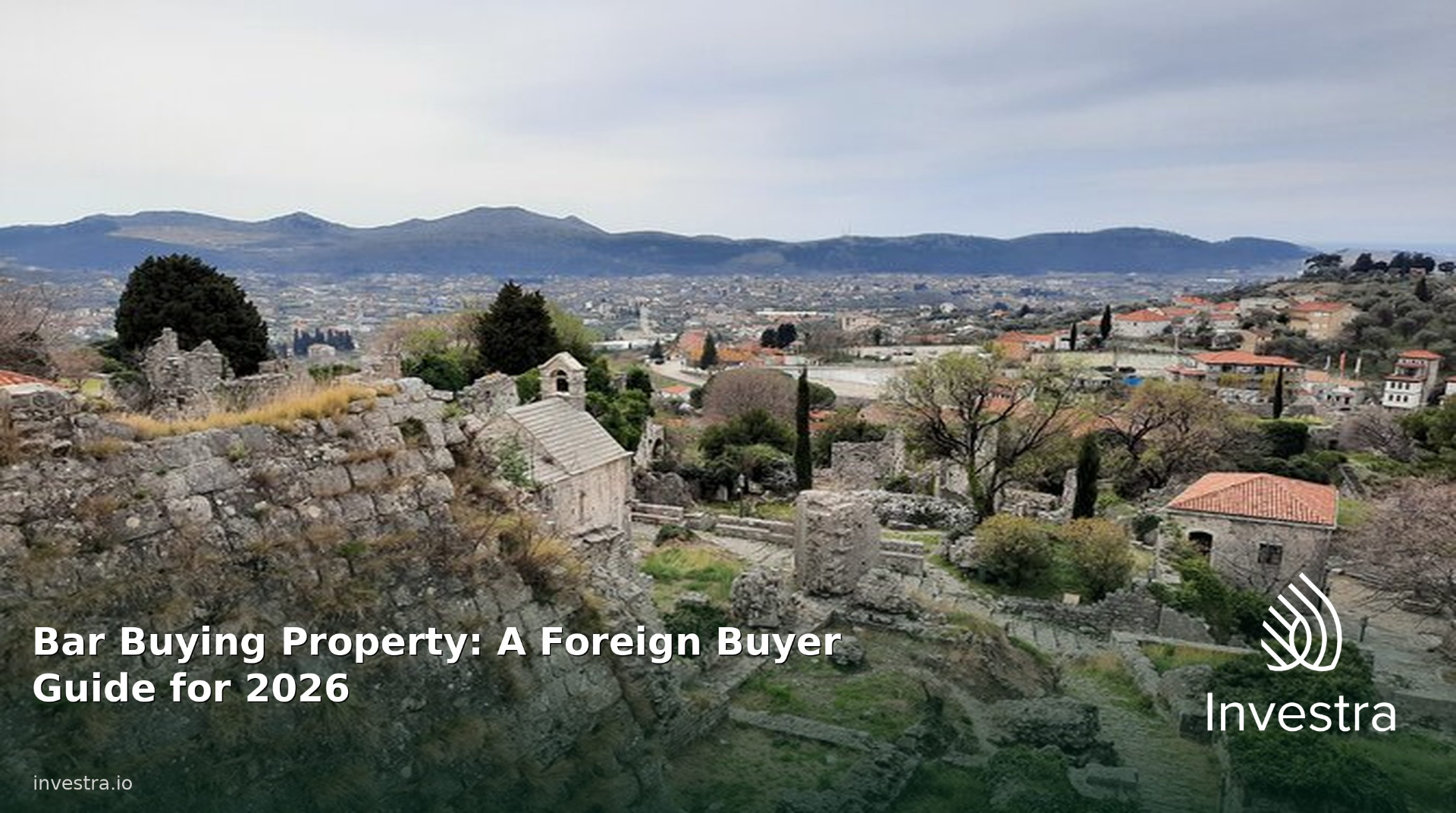
Bar Buying Property: A Foreign Buyer Guide for 2026
Bar Buying Property: A Foreign Buyer Guide for 2026
Why Bar? An overview of the Bar, Montenegro real estate landscape
Quick Answer: Bar offers a mixture of coastal town living, port infrastructure and close access to Montenegro's interior—buyers should view it as a regional coastal market with local quirks and development potential. Local market dynamics and on-the-ground checks will tell you whether Bar matches your goals.
Bar sits on Montenegro’s southern Adriatic coast and combines working-port activity, seaside neighbourhoods, and agricultural hinterlands. In my experience visiting small coastal ports across the Adriatic, Bar has a different energy from the boutique tourist centres: there are working docks, longer-season residents, and pockets of older urban fabric that can appeal to buyers seeking authenticity or renovation opportunities. What surprised many buyers when they first looked here was the mix: you can find maritime infrastructure, compact town apartments, and nearby quieter beaches without the nonstop tourist bustle of larger resorts. That mix affects property types, tenant demand and what you should inspect before committing.
If you’re comparing markets, it helps to read case studies from neighbouring Adriatic markets. For example, investors often compare practical guidance from other coastal regions; I recommend exploring Investra’s articles on similar coastal markets to get a sense of comparative buyer checks and due diligence processes, such as Pula Real Estate Market 2026: Areas, Buyer Demand and Due Diligence and Rovinj Real Estate Market 2026: Buyer Priorities and Location Choices. These pieces illustrate how coastal dynamics and buyer priorities shift even across short distances along the Adriatic.
But what does that mean for you as an international buyer? First, define intent: are you buying a holiday base, a rental asset, or a long-term residency property? Each use case demands different checks: rental compliance and tourist licensing for holiday lets, ownership structure analysis for investment vehicles, or utility, road and service access if you intend to live here year-round. The reality is that Bar’s appeal varies by micro-location—seafront promenades differ from agricultural outskirts. That’s why local site visits and targeted checks are indispensable before any contract signing.
What should international buyers assess when researching bar montenegro real estate in 2026?
Quick Answer: International buyers should assess legal eligibility, land and building documentation, planning permissions, local taxation and rental regulations, and real-world market indicators such as occupancy and seasonal demand. Verify all data with local authorities, notaries, and independent advisors.
When I advise clients about bar montenegro real estate, I start with a checklist that balances paperwork, market intel and practical on-the-ground factors. First, confirm your legal right to buy. Montenegro has updated foreign ownership regulations in recent years; the safest route is to verify current eligibility with a licensed Montenegrin notary and a local lawyer who regularly handles cross-border purchases. Don’t rely solely on online summaries—get official confirmation about whether any bilateral agreements or specific restrictions apply to your nationality.
Second, examine title and land registry documents. Ask for the real cadastre extract, verify who is registered as owner, and confirm whether there are mortgages, easements, or planning notices attached to the plot or building. In my experience, discrepancies often show up only when you request certified extracts from the municipal land registry and check the property file at the local notary’s office.
Third, check the planning environment: is the property in a designated development zone, conservation area, or subject to any municipal planning restrictions that could limit renovations? For new-builds, request copies of building permits and as-built certificates. For older properties, find evidence of legalized renovations. Also, confirm utility connections, access roads and whether communal services (condominium rules, common-area fees) exist and how they’re managed.
Fourth, do market validation. Talk to local agents, property managers and neighbours. Ask to see recent sales in the same street or building and inspect local rental calendars or management records if rental income matters. Because rates and yields change, check with local accountants and municipal tax offices for up-to-date fee schedules rather than relying on advertised estimates.
Finally, verify practical logistics: travel connections, seasonal weather impacts, maintenance capabilities and availability of property management. If you’ll rent the property, find out how tourist registration and municipal tourist taxes are handled locally. For additional practical frameworks on researching coastal properties and buyer due diligence that apply to similar Adriatic markets, read Investra resources such as Istria Property Investment 2026: A Decision Framework for Buyers and Istria Property Due Diligence: A Croatian Buyer Checklist, which explain the types of documentary checks you should demand.
Legal framework and practical checks for foreign buyers in Bar
Quick Answer: The legal framework for buying property in Bar requires formal title checks, notarised sales agreements and confirmation of foreign purchase rights; work with a Montenegrin notary and an independent lawyer to verify all conditions before signing.
Understanding the legal mechanics is non-negotiable. From my conversations with local lawyers, the single most common mistake international buyers make is assuming paperwork and processes mirror their home country. Montenegro’s system relies heavily on notarial procedures and public registers. Always obtain a certified extract from the Real Estate Cadastre and ask a qualified bilingual lawyer or notary to translate and explain any encumbrances, mortgages, or liens on the title.
Before you sign, request the property’s ownership history and a copy of the municipal planning file. That file will show whether there are pending zoning changes or unapproved works. If you’re considering a building that had renovations, ask for the as-built documentation and the occupancy permit (uporabna dozvola) or its Montenegrin equivalent. If any document is unavailable or ambiguous, insist on a condition precedent in the purchase contract that makes your obligation to complete conditional on receiving clear title and permits.
What about contracts and deposit handling? Use an escrow arrangement administered by a Montenegrin notary or bank where possible. I’ve seen deposits handled informally, and that’s when disputes get messy. Also, confirm the notary’s role: in Montenegro notaries play an active part in authenticating the sale and registering transfers. Do not skip a local legal opinion even if you trust the seller; independent verification of seller identity and encumbrances is essential.
If you want tailored advisory support, consider contacting experienced consultants such as Siniša Dagary, whose profile and services include cross-border transactional advice. You can review his insights at Siniša Dagary investment insights and reach out for investment consultation or advisory services tailored to Montenegro.
Step-by-step buying process in Bar: from offer to registration
Quick Answer: The buying process typically moves from offer and reservation, to signed purchase agreement, to notary-authenticated transfer and land registry registration; ensure each milestone includes document verification, conditional clauses and escrow protections.
Buyers often ask me what the realistic sequence of steps looks like. Start with a formal offer or reservation agreement that secures the property for a short period while you complete due diligence. That document should include a clear timeline, deposit terms and a condition that allows you to withdraw if title or permits aren’t clean. Use a professional translator if documents aren’t in a language you fully understand.
Next, commission the necessary checks: certified cadastre extract, planning office records, building permits, utility account confirmations and, for apartments, condominium records and minutes that show any planned works or outstanding debts. Obtain a preliminary legal opinion from a local lawyer addressing seller capacity, encumbrances, and any nationality-based acquisition conditions. If you plan to finance, issue a mortgage pre-approval from a local bank—this clarifies affordability and bank requirements.
The private purchase agreement should be prepared or reviewed by a notary or lawyer, then notarised. Many purchasers in Montenegro prefer that the notary handles escrow or that a lawyer’s client account is used. At the notary appointment you’ll sign the final deed and the notary will forward the transfer for registration at the Real Estate Cadastre. Only after registration does the buyer’s title become fully enforceable against third parties. Always confirm the expected timeline for registration and any interim risk allocation in the contract.
Lastly, complete post-closing tasks: arrange utility transfers, register with municipal authorities for tax and local services, and if relevant, apply for a rental licence or register as a tourist operator. For templates and further practical guidance on buyer checks and new-build diligence in similar coastal settings, see Investra’s practical guides like Buying Property in Pula: Legal Checks Before You Commit and Pula New-Build Homes: A Buyer Due Diligence Guide for 2026, which outline similar procedural quirks you’ll encounter.
Taxes, fees and ongoing ownership costs for properties in Bar
Quick Answer: Expect purchase-related taxes and notary/registration fees and ongoing municipal charges; verify current rates and liabilities with the Montenegrin tax authority, your notary and a local accountant before budgeting.
Engage a Montenegrin accountant early. They can tell you how property taxes are assessed in Bar, whether rates differ for resident and non-resident owners, and how rental income is treated for tax purposes. If you plan to rent, ask about local tourist levies and how they are collected, and whether you need to register as an operator. For purchase closing cost estimates and ownership budgeting frameworks, review Investra resources that explain buyer costs in comparable coastal markets—use these as process templates rather than numerical proxies. See articles like Property Taxes and Purchase Costs in Istria: What Buyers Should... and Istria Property Ownership Costs: A Practical Budgeting Guide to understand the range of taxes and fees you should confirm locally.
Ownership structures: buying as an individual vs company in Montenegro
Quick Answer: Buyers can acquire property as individuals or via local companies; each route has different tax, liability and estate-planning implications—consult legal and tax advisors and verify current rules before deciding.
To form and maintain a company in Montenegro requires adherence to local corporate laws, annual returns and potentially local directorship or representation depending on the entity type. If you’re considering this route, consult advisers who understand cross-border tax treaties and how Montenegro treats corporate-owned real estate. I recommend reaching out to advisory teams such as Findes Group & Partners and their advisory team (Findes Group & Partners advisory team) for corporate-structuring advice in the region, and compare opinions with independent legal counsel.
Also consider operational implications: opening bank accounts, repatriating rental income, VAT treatment for certain transactions, and how inheritance rules apply to company shares versus direct property ownership. For practical transactional perspective and strategy, consult specialists like Siniša Dagary profile who provide bespoke advisory services. Always get a written opinion detailing pros and cons tailored to your circumstances, and confirm the current regulatory environment with a local lawyer before implementing any structure.
Rentals and short-term letting: permissions, market realities and management in Bar
Quick Answer: If you plan to rent in Bar, check local licensing, tourist registration and municipal rules for short-term lets; review seasonality and local occupancy patterns with managers before relying on any income estimates.
We always recommend viewing actual booking calendars and P&L statements rather than relying on advertised yield numbers. For a structured view on holiday rental diligence, see Investra’s buyer guides on holiday rental due diligence in similar coastal towns, such as Rovinj Holiday Rental Investment: Buyer Due Diligence for 2026. These resources explain the types of documentation rental managers should provide and the questions you should ask to validate revenue, occupancy and cost assumptions. If you anticipate absentee ownership, plan robust property management and a contingency fund for mid-season repairs; coastal properties need regular attention.
New builds, renovations and developer due diligence in Bar
Quick Answer: For new builds and renovations, insist on viewing building permits, as-built documentation, developer references and guarantees; independently verify permits at the municipal planning office and request snag lists before final payment.
If your plan is renovation, check whether previous works were properly legalised. Unauthorised structures or retroactive permissions can create headaches when transferring title or getting mortgage approval. For practical examples from nearby Adriatic markets on new-build buyer due diligence and renovation concerns, review Investra content such as Pula New-Build Homes: A Buyer Due Diligence Guide for 2026 and Medulin Real Estate Market 2026: A Buyer Guide to Homes and Locations for procedure checklists and inspection priorities.
Financing, mortgages, currency and repatriation of funds
Quick Answer: Financing options exist locally and regionally but terms and eligibility differ by bank and buyer residency; verify current lending criteria, foreign currency rules, and capital movement regulations with local banks and your advisors.
If you want external advisory support on financing strategy, consider discussing options with corporate and investment advisors such as Siniša Dagary or the Findes Group & Partners advisory team. They can coordinate cross-border tax planning with mortgage strategies. Always obtain written confirmations from any bank or financial institution about lending terms and currency transfer mechanics before structuring a purchase around anticipated finance.
Investment Disclaimer
Quick Answer: This section explains the article’s purpose and reminds you that the content is educational, not personalised financial or legal advice; consult professional advisors and verify all information before making decisions.
The information provided in this article is for educational and informational purposes only and should not be construed as financial, legal, or investment advice. Real estate investments carry inherent risks, and past performance does not guarantee future results. Investors should not invest money they cannot afford to lose. Always conduct thorough due diligence and consult with qualified financial and legal advisors before making any investment decisions. Investra.io does not guarantee returns on any investment.
To expand on that: my observations and examples aim to clarify procedural steps and common issues buyers face in bar montenegro real estate, but they are not a substitute for professional advice tailored to your personal circumstances. Before committing funds or signing contracts, obtain a written legal opinion that addresses title, encumbrances and foreign-ownership eligibility, a tax opinion that considers residency and cross-border implications, and a technical inspection report for the physical asset. Confirm any statements about taxes, fees, or regulatory conditions with municipal authorities, the Montenegrin tax office, a notary and an accountant, because local rules and rates can change over time. If you’d like introductions to trusted service providers, resources such as investment consultation and the Findes Group & Partners advisory network can be useful starting points for verified professional assistance.
Frequently Asked Questions
Quick Answer: The FAQ section addresses common buyer questions about eligibility, due diligence, taxes, rentals, and practical next steps for bar montenegro real estate research; read each answer and verify specifics with local professionals.
Can foreigners buy property in Bar, Montenegro?
Foreigners can often acquire property in Montenegro, but eligibility can vary by nationality and the type of property. To confirm your entitlement, ask a Montenegrin notary or a lawyer to check current statutes and any bilateral agreements that may affect your purchase. Obtain a formal legal opinion that cites the relevant laws and explains whether any specific permits or approvals are required for your nationality. That written confirmation will protect you against misunderstandings later in the process.
How do I verify the title and encumbrances on a property?
Request a certified extract from the Real Estate Cadastre and a copy of the seller’s title deed. Have a lawyer or notary verify if there are mortgages, liens, easements or pending legal actions. Also, ask the municipality for planning records and check whether any recent building works were regularised. Independent confirmation from the cadastre and notary is essential—oral assurances from the seller are not enough.
What taxes and fees should I plan for when buying in Bar?
Purchase-related taxes, notary and registration fees, and ongoing property tax and municipal charges are common. Because rates and assessments change, get current figures from the Montenegrin tax authority, your notary, and an accountant. Ask for written cost estimates covering closing costs, annual property taxes and any local tourist levies if you’ll rent the property.
Is it better to buy through a company or as an individual?
The right structure depends on your personal tax residence, estate planning goals, financing needs and risk preferences. A company can provide asset separation and specific corporate benefits, but it also brings corporate compliance and may alter tax treatment. Consult cross-border tax specialists and obtain a written comparison of implications for both routes before deciding.
How do I check whether a short-term rental is permitted in a building?
Review the condominium regulations or building management rules, ask for minutes of homeowner meetings and speak to the building manager. Also check with the municipality about tourist registration and licensing. If rules prohibit short-term rentals, that restriction should be highlighted in the purchase contract as a material fact.
What should I ask a developer before buying a new-build in Bar?
Request proof of land title, zoning decisions, full building permits, construction timelines, warranties and bank guarantees for advance payments. Ask for references from previous buyers and independent inspection reports. Include contractual protections such as retention amounts and clear completion milestones in the agreement.
How can I validate rental income projections?
Ask to see actual booking histories, occupancy calendars, and management fee schedules. Obtain references from existing owners managed by the same operator, and request P&L statements for comparable units. Cross-check those figures with local market intelligence from agents and independent property managers rather than relying solely on advertised estimates.
Where do I get official confirmation of taxes and fees?
Contact the Montenegrin tax authority and the municipal tax office in Bar for official rates and assessments. Your notary and local accountant should also provide written statements. For clarity on procedural taxes and purchase costs, comparative guides from neighbouring Adriatic markets can help you understand what to ask for—see Investra’s practical articles for process templates.
Who should I engage as part of my buying team?
A recommended team includes a bilingual lawyer experienced in real estate transactions, a licensed notary, an independent surveyor or engineer for structural and technical checks, an accountant familiar with cross-border tax, and a reputable property manager if you won’t be on-site. If you need introductions to regional advisors, consult resources like advisory services or the Findes Group & Partners advisory team.
What documents should I keep after completion?
Retain the notarised deed, cadastre extract showing your registered ownership, all tax receipts, utility handover confirmations, warranties and manuals for appliances, as-built and occupancy certificates, and any condominium agreements. These documents are essential for future resale, refinancing or rental licensing.
How do I monitor and manage a property remotely?
Hire a reputable local property manager, set up regular maintenance checks, and require frequent reporting with receipts for repairs and bookings. Ensure the manager handles tourist registrations and guest check-ins according to municipal requirements. Regular site visits and a contingency fund for unexpected repairs are prudent.
Recommended Reading
Quick Answer: These curated guides and expert resources provide step-by-step checklists and comparative market insights that help international buyers prepare for a Bar purchase—use them as process references while you verify local specifics.
- Pula Real Estate Market 2026: Areas, Buyer Demand and Due Diligence
- How to Buy Property in Istria as a Foreign Buyer in 2026
- Rovinj Real Estate Market 2026: Buyer Priorities and Location Choices
- Istria Property Investment 2026: A Decision Framework for Buyers
- Poreč Real Estate Market 2026: A Practical Guide for Property Buyers
- Pula Rental Investment Guide 2026: Long-Term Letting Buyer Questions
- Siniša Dagary — Investment Consultant
- Business Strategy Blog
Connect With Investra
Quick Answer: Connect with Investra on social media to follow updates, market reports and new property listings; use the links below to access Investra’s Facebook, LinkedIn and YouTube channels.
Stay connected with Investra for market updates, regional guides and property listings. Follow Investra on Facebook, LinkedIn and YouTube to receive regular content and announcements:
Facebook: https://www.facebook.com/investra.io
LinkedIn: https://www.linkedin.com/company/investra-io
YouTube: https://www.youtube.com/c/investraio
Finally, if you’d like regionally-focused advisory on bar montenegro real estate, consider speaking with experienced consultants. Useful contacts include Siniša Dagary investment consultation and the Findes Group & Partners team. They can help coordinate legal, tax and commercial checks across borders and provide local introductions.
Connect With Investra
Quick Answer: Follow Investra for verified market context and practical property research.
Related Posts
No related posts available.
