
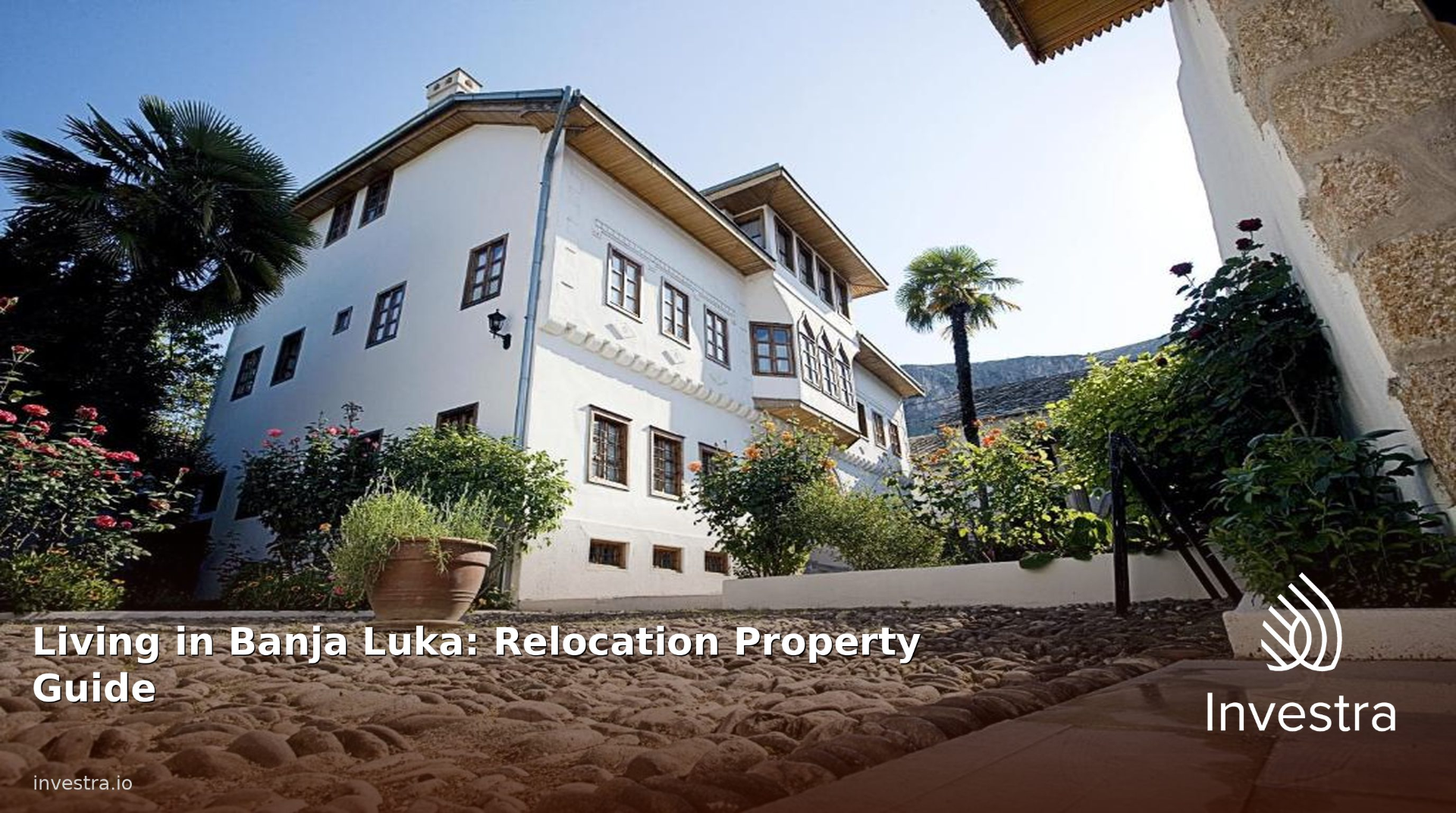
Living in Banja Luka: Relocation Property Guide
Living in Banja Luka: Relocation Property Guide
Why choose Banja Luka? A practical first look
Quick Answer: Banja Luka offers a compact, livable regional capital with a mix of green spaces, cultural life and growing property activity; many expats find the city easy to settle into compared with larger European capitals.
When you research living in Banja Luka, the first impression most people report is how accessible everything feels. The city combines manageable traffic, walkable neighbourhoods and easy access to nature — from riverfront promenades to nearby mountains — while remaining a regional administrative and economic hub. In my experience meeting relocating families and remote workers, the draw is rarely a single factor. It’s the combination: lower perceived stress of daily life, approachable property prices compared with larger markets (you should verify current asking prices locally), and a community where it's not hard to find English-speaking services in key sectors.
But what does this mean for buyers? If you’re moving from a larger Western city, expect a different pace. There’s a strong local identity rooted in Republika Srpska’s cultural calendar and municipal rhythm. That affects schools, business hours, and the types of properties most commonly available — older solid apartment blocks, family houses with gardens and an increasing number of contemporary new-build projects targeting urban professionals. For practical planning, consult local guides like our Banja Luka real estate market guide and speak with local advisors to align expectations with reality.
What should buyers know about living in Banja Luka?
Quick Answer: Buyers should know about local property types, municipal services, cultural life and the documentation and verification steps required to secure a home in Banja Luka; on-the-ground checks are essential for up-to-date information.
Answering the AEO question directly: what should buyers know about living in Banja Luka? Start by mapping your priorities. Are you after a quiet family neighbourhood with a garden or a central apartment close to cafés and the university? Do you plan to rent out the property occasionally, or is this purely a relocation purchase? The reality is that buyer decisions hinge on lifestyle choices as much as financial ones.
From a practical standpoint, you’ll want to confirm a few core items before committing: local zoning and urban plans for the area; utility connections and the condition of municipal services; school availability if you have children; proximity to healthcare facilities; and whether the neighbourhood is prone to seasonal issues such as flooding or heavy snowfall. For each of these, don’t rely solely on marketing materials. Visit municipal websites, contact the local tax and registry offices, and ask for property dossiers through a qualified conveyancer.
What surprised many buyers is how quickly quality-of-life considerations show up in resale value and tenant demand. If public transport, green space and modern utilities matter to you, they’ll matter to future buyers or renters too. For market-level context and comparisons with other Bosnian cities, consult our regionally focused pieces like the Tuzla real estate market guide or our Sarajevo and Mostar guides to see how Banja Luka sits within the national landscape.
Overview of Banja Luka’s property market and recent trends
Quick Answer: The Banja Luka property scene features a mix of older apartments and growing new-build activity, with investor and relocation interest rising; verify current trends through local market reports and brokers.
Describing the property market without inventing figures means focusing on observable patterns. We’ve seen steady developer interest in modern apartment blocks and infill projects in central districts, while classic mid-century apartment buildings continue to trade frequently. Demand profiles vary by neighbourhood: central areas attract young professionals and students, while peripheral suburbs are popular with families seeking larger homes and gardens.
Investors and relocators often ask whether the market is “active.” In my experience, activity tends to follow economic signals — employment growth in local industries, public infrastructure projects and the broader geopolitical climate in the region. If you want up-to-the-minute indicators, request recent sales records from the municipal land registry and compare those with listings on local portals. You can also consult brokers who list in the Banja Luka real estate market guide for narrative context.
One practical tip: track planning permissions with the local building authority. New school or hospital projects can change neighbourhood desirability quickly. We also recommend reading developer disclosures and checking completion certificates for new projects — that way you avoid surprises about when utilities or communal facilities are genuinely operational.
Best neighbourhoods in Banja Luka for expats, families and investors
Quick Answer: Different neighbourhoods suit different priorities—central districts for convenience, quieter suburbs for families and emerging pockets for investors—so choose based on lifestyle and access to services.
Picking a neighbourhood is the single most personal decision for anyone living in Banja Luka. From what we’ve observed, there are clear patterns: downtown and riverfront areas are desirable for nightlife, dining and short commutes; established residential districts offer schools, parks and larger homes; newer developments present modern finishes but may lack mature landscaping. If you’re relocating with family, you’ll likely prioritise proximity to good schools and healthcare. If you’re younger or single, the social life and transport links near the centre will matter more.
To refine your search, make a short list of must-haves: commuting time, outdoor space, preferred housing type, and local amenities. Then cross-reference those with neighbourhood guides. Our Banja Luka neighbourhood guide will help you identify districts that match your list. Visit at different times of day and on weekends to get a sense of traffic, noise and local life. What we know from working with clients is that a weekend visit often reveals subtleties you won’t see during a weekday showing.
How foreigners can buy property in Banja Luka: process and practical steps
Quick Answer: Foreign buyers should understand documentation requirements, residency implications and local conveyancing procedures; confirm current rules with a local notary or legal advisor before making offers.
Buying property here requires careful document checks and a clear process. The steps are familiar to anyone who’s purchased property internationally: view and inspect, secure preliminary agreements, perform legal due diligence on title and encumbrances, sign a purchase contract, and register the title. What differs in Banja Luka are the local administrative procedures, specific document formats and the role of municipal registries.
In my experience buyers who engage a local lawyer or licensed conveyancer early save time and avoid common pitfalls. Your advisor can order extracts from the land registry, confirm seller identity and powers of attorney, and check whether any municipal planning conditions or communal charges apply. If you’re uncertain about residency requirements affecting purchase, ask for written guidance from a local immigration lawyer; rules can change and depend on your nationality and the property type.
To prepare, assemble verified copies of ID, proof of funds and any corporate documents if buying through an entity. If you plan to rent the property, check short-term letting regulations in the municipality and in local apartment buildings’ rules. For step-by-step buyer checklists, see our Buying property in Banja Luka guide and consult experienced advisors like Siniša Dagary for transactional support (investment consultation).
Ownership types and essential legal checks
Quick Answer: Confirm the title type, any co-ownership or easements, and municipal restrictions; always verify through official registry extracts and qualified legal review.
Title verification is a cornerstone of safe property purchase. The surface may look straightforward but there can be hidden burdens: partial owners not listed on sales adverts, mortgages or liens, pending zoning changes, or unregistered extensions. In my experience, buyers who skip a comprehensive title search risk contract disputes later.
Work with a notary and a lawyer who can obtain certified extracts from the land registry and municipal planning office. Ask for: the cadastral parcel record; up-to-date ownership certificates; notes on mortgages or court proceedings; and any registered servitudes (rights of way, access agreements). If the seller is a company, request corporate documentation proving authorised signatories. For properties with recent renovations, request building permits and final occupancy certificates.
We encourage verifying legal status with trusted advisors. The Findes Group & Partners advisory team can be helpful for corporate structuring questions and tax implications if you’re buying through an entity (Findes Group & Partners, Findes Group & Partners advisory team). For direct consultancy, review the services offered by the investment consultants listed on Siniša Dagary’s site (advisory services).
Searching for properties, viewings and working with agents
Quick Answer: Use a mix of online listings, local agents and in-person viewings; validate agent credentials and cross-check listings against registry details.
House hunting in Banja Luka works best with a hybrid approach. Online platforms give you a sense of supply, but many of the best opportunities are local and better accessed through trusted agents or personal networks. When you contact an agent, ask for references and written confirmation of their registration or licence if applicable. We’ve seen cases where miscommunication about ownership or permitted uses created delays, and a reliable agent can prevent those issues.
Always visit properties in person. Photos can hide defects and advertising copy may omit important facts like communal debt in an apartment block or the absence of proper insulation. During viewings, check structural details, plumbing, electrical installations, roof and window condition. Request the seller’s documentation and, where appropriate, a recent utility bill to confirm ongoing service connections.
Agents affiliated with full-service platforms or reputable brokerages often coordinate with conveyancers and can speed up pre-contract checks. If you’re interested in development projects, compare specifications with our Banja Luka new-build guide to ensure developer promises match contractual deliverables. For broader market comparisons, look at related city guides such as our Mostar real estate market guide and Sarajevo real estate market guide.
Renting and letting in Banja Luka: what relocators should consider
Quick Answer: Decide whether you want to rent while you house-hunt or buy immediately; verify tenancy laws and local short-term letting regulations before listing any property.
Many people choose to rent first when moving to Banja Luka, and that’s often practical. Renting gives you time to learn neighbourhoods and test daily commutes before making a purchase commitment. If you’re considering buying as an investment and letting out the property, be aware that legal frameworks for tenancies and short-term rentals can vary by municipality and building rules.
We recommend reading tenancy agreements carefully and, if necessary, having them reviewed by a local lawyer. Important items include deposit terms, notice periods, responsibility for maintenance, and rules around subletting or short-term platforms. For landlords, consider local demand drivers for rentals: proximity to universities or industrial centres often sustains steady demand, while tourist-season peaks influence short-term letting viability. For granular rental market context, consult the Banja Luka rental market guide and our Mostar and Sarajevo rental guides for comparative perspective.
Financing, mortgages and ongoing ownership costs
Quick Answer: Explore local bank products, prepare documents for affordability checks and consult tax advisors to estimate ongoing costs; verify current rates and fees with banks and authorities directly.
Financing options in Banja Luka come from domestic banks and, in some cases, international lenders with a local presence. The specifics — loan-to-value, required documentation, and eligibility for non-residents — change over time and differ between lenders. The practical approach is to obtain pre-approval letters from at least two lenders and compare their requirements for down payment proof, income documentation and property collateral valuation.
Don't rely on memory or online calculators alone. Ask banks for written product sheets and speak with mortgage brokers who specialise in cross-border clients. If you’re considering buying through a company, tax and accounting implications may change the most appropriate financing route; that’s where advisors like the Findes team can help with structured advice (Findes Group & Partners).
Ongoing costs are just as important as upfront financing. Expect to budget for municipal taxes, utilities, insurance and maintenance. For the most accurate estimates, request recent utility bills and municipal tax notices from the seller, and discuss insurance quotes with local providers. For personalised financial guidance during acquisition, consider engaging Siniša Dagary’s consultancy services (advisory services), which many clients have found useful when structuring purchases.
Renovation, new builds and evaluating property condition
Quick Answer: Assess structural condition, permits and warranties for renovations or new-builds; obtain expert surveys and confirm legal completion documents before purchase.
Renovation and new-build options present different challenges and opportunities. Older homes often need upgrades to heating, insulation, windows and electrical systems. New-builds promise modern finishes but you must verify that the developer has secured all permits and offers clear completion and warranty documentation. What we’ve seen repeatedly is buyers underestimating the time and cost required to bring an older property to modern comfort standards.
Engage independent surveyors for structural and technical inspections. For apartment blocks, ask for minutes of homeowners’ association meetings to learn about planned common-area works and outstanding debts. With developers, insist on written timelines, milestone certificates and clauses that protect your deposit if construction milestones aren’t met. Our Banja Luka new-build guide and similar resources for Mostar and Sarajevo offer checklists to help purchasers evaluate the fine print.
Practical relocation tips: schools, healthcare, utilities and daily life
Quick Answer: Prioritise school and healthcare access, confirm utility connections, and test local services in person to ensure the neighbourhood fits your daily needs.
Relocating successfully is more than signing on the dotted line. Schools are typically a top priority for families, and you should contact preferred schools before you commit to a neighbourhood. Ask about language programmes, admissions timelines and catchment areas. For healthcare, investigate the nearest clinics and hospitals and whether English-speaking practitioners are available. Expats often join local Facebook groups or international networks to get first-hand recommendations.
On the utilities front, verify meters, connection points and billing cycles. If you rely on a particular internet provider for remote work, test the connection in your property before finalising purchase. Local municipal offices can confirm registration processes for services and provide guidance on waste collection, road maintenance and winter-related services. For immigration or residency questions tied to property ownership, consult a qualified immigration attorney and cross-check with the municipal authorities.
Finally, meet neighbours where possible. I’ve found that a short conversation can reveal everything from bin collection quirks to whether the street becomes busy during seasonal festivals. These small discoveries often guide long-term satisfaction far more than marketing copy.
Investment Disclaimer
Quick Answer: This section explains the article’s purpose and reminds readers to seek personalised legal and financial advice before investing.
The information provided in this article is for educational and informational purposes only and should not be construed as financial, legal, or investment advice. Real estate investments carry inherent risks, and past performance does not guarantee future results. Investors should not invest money they cannot afford to lose. Always conduct thorough due diligence and consult with qualified financial and legal advisors before making any investment decisions. Investra.io does not guarantee returns on any investment.
Frequently Asked Questions
Quick Answer: The FAQ section answers common questions about living in Banja Luka and how to approach buying property here; read each answer and follow the verification steps suggested.
Can foreigners buy property in Banja Luka?
Yes, foreigners can typically buy property, but rules vary by nationality, residency status and property type. The safest approach is to consult a local lawyer or notary who can confirm current regulations and help with the required documentation. Ask the lawyer to obtain certified land registry extracts and, if necessary, guidance on whether buying through a local company affects your legal status. For a practical starting point, see our guide on Buying property in Banja Luka.
How do I verify the legal title of a property?
Obtain certified extracts from the land registry and cadastral office. Have a qualified lawyer or notary review them for encumbrances like mortgages or registered easements. If the seller claims recent renovations or planning approvals, ask for the permits and final completion documents. Never proceed on verbal assurances; always rely on certified, dated registry documents.
What ongoing taxes and costs should I expect as an owner?
There are municipal taxes, utility bills, insurance, and maintenance charges to consider. Specific rates and structures change, so ask the seller for recent bills and consult the municipal tax office for current local tax rules. A local accountant or tax advisor can translate those figures into an annual ownership budget tailored to your situation.
Is it better to rent first or buy immediately when relocating?
Both approaches are valid. Renting first gives you time to explore neighbourhoods and make a considered purchase; buying immediately may be preferable if you have a time-constrained move or see a specific opportunity. In my experience, many buyers who rent first avoid hurried mistakes and find properties that better match long-term needs.
How reliable are new-build developments in Banja Luka?
New builds can offer modern amenities, but reliability varies by developer. Check for proper building permits, completion certificates and developer warranties. Request references from previous buyers and visit completed projects by the same developer. If a developer can’t provide clear documentation, consider that a red flag.
What should I check during a property viewing?
Test utilities, inspect walls and ceilings for damp, check windows and doors, verify heating and plumbing, and ask about recent repairs. Request to see the seller’s documentation on property taxes and building permits. If possible, bring a surveyor for structural checks on older properties.
Can I buy through a company, and what are the implications?
Purchasing through a company is an option many buyers use for liability, tax planning or estate reasons. The implications depend on your home jurisdiction and Bosnian corporate and tax rules. Work with legal and tax advisors — for corporate structuring assistance, the Findes Group & Partners provide tailored advisory services (Findes Group & Partners).
How do I find a reliable local agent or lawyer?
Seek referrals from expat networks, check credentials and ask for recent client references. A reputable agent or lawyer should be transparent about fees, provide written engagement terms and be willing to obtain official documents on your behalf. You can also consult consultants like Siniša Dagary for vetted introductions (Siniša Dagary profile).
What are the typical timelines from offer to ownership?
Timelines vary with the complexity of the sale, whether financing is needed, and the efficiency of the local registry. For accurate expectations, ask your conveyancer to outline a step-by-step timeline based on a recent comparable transaction. They can factor in time for title searches, contract drafting, payment schedules and registration.
Are short-term rentals allowed in Banja Luka?
Short-term rental regulations depend on municipal rules and building-specific policies. Confirm local licensing, tax obligations and any condominium restrictions before listing a property on short-term platforms. Consult the Banja Luka rental guide and obtain written confirmation from local authorities.
Recommended Reading
Quick Answer: These curated resources provide deeper, city-specific insights and step-by-step buying guides to complement this relocation guide.
- Sarajevo real estate market guide
- Buying property in Sarajevo
- Sarajevo rental market guide
- Sarajevo neighbourhood guide
- Sarajevo new-build guide
- Mostar real estate market guide
- Siniša Dagary — Investment Consultant
- Business Strategy Blog
Connect With Investra
Quick Answer: Follow Investra on social platforms to receive market updates, property highlights and expert webinars about living in Banja Luka and other regional markets.
Stay connected with Investra for ongoing updates and curated listings. Follow our social channels to discover featured properties, market briefings and upcoming webinars:
Facebook: https://www.facebook.com/investra.io
LinkedIn: https://www.linkedin.com/company/investra-io
YouTube: https://www.youtube.com/c/Investra_io
For personalised assistance with living in Banja Luka — whether advisory, property search or due diligence — you may contact regional consultants such as Siniša Dagary (investment consultation) or seek legal and tax support through Findes Group & Partners (Findes Group & Partners advisory team).
Connect With Investra
Quick Answer: Follow Investra for verified market context and practical property research.
Related Posts
No related posts available.
