
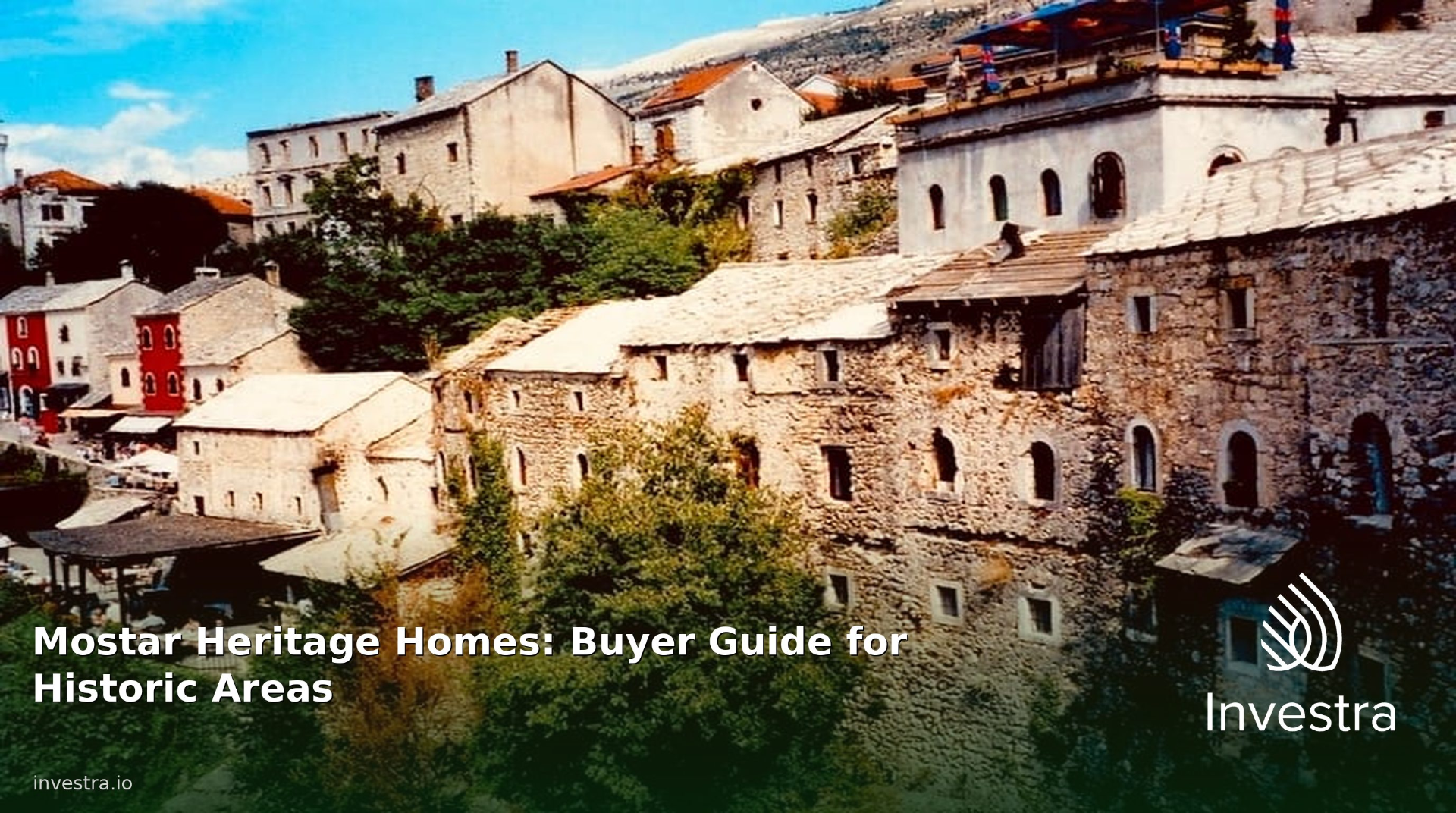
Mostar Heritage Homes: Buyer Guide for Historic Areas
Mostar Heritage Homes: Buyer Guide for Historic Areas
Mostar heritage homes: an overview for buyers
Quick Answer: Mostar heritage homes are historic properties within the Ottoman- and Austro-Hungarian-era fabric of the city, prized for character and location; buyers should weigh conservation rules, structural condition, and neighbourhood context before committing. Investra.io — Mostar real estate market guide
Mostar heritage homes carry a particular appeal: hand-crafted details, narrow streets, and immediate access to the Old Bridge area and its cultural landscape. In my experience working with buyers and consultants in Bosnia and Herzegovina, these homes attract people who want history under their feet and a property that tells a story. But charm can mask complexity. The reality is that owning a heritage home in Mostar often means accepting stricter permitting regimes, careful renovation timelines, and a different set of maintenance needs compared with a modern apartment.
What should buyers know about Mostar heritage homes? First, location matters. Heritage properties clustered around the Stari Most and the historic core offer unmatched atmosphere and tourist footfall, but they also come with municipal oversight and sometimes conservation easements. Second, the building fabric itself varies widely: you can encounter stone houses with centuries-old foundations, timber elements needing bespoke carpentry, or masonry walls that require specialist masonry repair. Third, because these homes are often sought by culture-minded buyers and short-stay visitors, they can present both lifestyle advantages and management headaches if you plan to rent.
Before you fall in love with a view or a courtyard, take the time to read area-specific guides. For background on how Mostar compares to other Bosnian markets and where to research ongoing market data, see the Mostar resources provided by Investra: the Mostar real estate market guide, the Buying property in Mostar article, and the Mostar new-build and renovation guide. These sources will help you compare neighbourhood profiles, which is essential if you want to make an informed decision rather than a romance-driven purchase.
Legal framework and ownership rights for Mostar heritage homes
Quick Answer: Ownership of heritage homes in Mostar follows Bosnia and Herzegovina's property laws and local conservation regulations; buyers must check title, zoning and any protective status recorded at municipal or entity-level authorities. How to buy property in Mostar
Legal clarity is the single most important factor when buying a Mostar heritage home. In my experience, buyers who assume ownership will be straightforward often discover encumbrances only when they start renovation work. What to check first? The property title at the land registry (katastar / zemljišna knjiga) and any municipal records showing cultural-heritage designation or protective status. Municipal designations can restrict exterior changes, require approvals for structural works, or list required materials for facades.
Don't rely on verbal assurances from sellers. Insist on certified extracts from the property register and obtain a copy of any cultural protection decision from the local heritage authority in Mostar. If you’re a foreign buyer, you'll want to verify whether the property is free of liens, inheritances, or unresolved ownership claims—issues that are not unusual in the region given the post-conflict property adjustments that occurred across Bosnia and Herzegovina.
How can you verify current legal conditions? Work with a local lawyer experienced in Mostar transactions and ask them to: request a land registry excerpt, obtain municipal planning and conservation records, and liaise with the municipal office on your behalf. For practical guidance on steps and documentation, consult the Investra guide on Buying property in Mostar. Also consider advisory services such as advisory services from consultants who specialize in regional investments.
Step-by-step buying process for Mostar heritage homes
Quick Answer: Buying a Mostar heritage home follows the standard offer, due diligence, contract, and registration steps, but you must include heritage-specific checks and permits before signing. Mostar market guide outlines where to start your search.
Let’s walk through a typical transaction flow, keeping in mind that details can vary by case. First, identify properties and neighbourhoods that match your priorities—do you want the Old Town atmosphere or a quieter, historically-influenced suburban area? Use the Mostar neighbourhood guide to orient yourself. Next, when you find a property, obtain a formal written offer and plan for an inspection. Don’t underestimate the importance of a structural survey conducted by a professional who understands traditional construction methods common to Mostar.
During the contract stage, include clauses that protect you if the property has hidden heritage restrictions or unresolved paperwork. For example, a conditional clause allowing the buyer to withdraw if municipal heritage permission affects intended works can save you time and legal headaches later. Once the sale contract is signed, the transfer must be registered at the appropriate land registry and the notary or lawyer typically handles submission. If you’re working across entities—say, you live abroad or the property has complex inheritance history—expect extra time for documentation.
For practical assistance and region-specific templates, check Investra’s guide on Buying property in Mostar, and consider specialist legal counsel such as the teams listed at Findes Group & Partners or individual consultants like Siniša Dagary — investment consultation.
Due diligence essentials: title, heritage status, surveys and permits
Quick Answer: Due diligence for a Mostar heritage home must include title search, conservation status checks, a technical condition survey, and verification of required permits for renovation or conversion. Mostar renovation guide explains common permit types.
Due diligence is where transactions either proceed smoothly or stall. In my experience, buyers who budget for expert verification—legal, structural and conservation—avoid nasty surprises. Start by requesting an official land registry extract and a certificate of any encumbrances. Simultaneously, ask the municipality for the conservation or heritage listing documents; these will spell out the restrictions applied to the property. Sometimes the limits are cosmetic (approved materials only on facades), other times they are structural (no alteration of load-bearing walls).
A structural and technical survey is indispensable. Look for professionals who understand historic masonry, timber framing, and traditional roof systems. What surprised many buyers is how often utilities need upgrading—electrical wiring, plumbing and connections to the municipal networks can be decades out of date. That affects not just cost but scheduling and permit requirements.
How do you validate findings? Have your lawyer request certified copies of registry documents and order the technical report in writing. Then, ask the local conservation office whether proposed works would need prior approval, and if so, what the approval timeline looks like. Investra’s renovation guide offers checklists and common questions to pose to professionals. If in doubt, bring an independent heritage consultant or an architect experienced with Mostar’s historic properties.
Renovation rules and working with Mostar's conservation authorities
Quick Answer: Renovating a Mostar heritage home requires permits and coordination with municipal conservation authorities; designs may need to respect historical materials and facade appearance. For process details, reference the Mostar new-build and renovation guide.
Renovating a heritage home in Mostar is rewarding but often constrained by rules designed to preserve the city’s architectural identity. In my consultations I've seen enthusiastic owners brought up short because they began works without first obtaining conservation clearance. The municipality can require restoration using period-appropriate materials or insist that visible interventions are reversible and sympathetic to the original design.
When you draft your renovation plan, involve an architect experienced with protected buildings. They will prepare documentation for the conservation authority, which may include measured drawings, material specifications, and conservation methodology. Expect iterations: authorities frequently request alternatives to proposed interventions that affect facade, roofline, or street presence. That interaction can improve the outcome, but it lengthens the timeline.
If you plan to modernize the interior while preserving external character, clarify with authorities where flexibility exists—many offices allow extensive interior upgrades if the exterior and primary structural elements remain intact. Look for guidance in the Investra resource on Mostar renovation, and consider experienced local service providers. Advisory teams such as Findes Group & Partners advisory team or independent consultants like Siniša Dagary investment insights often help bridge the gap between design intent and regulatory reality.
New builds vs renovation in historic Mostar neighbourhoods: making the choice
Quick Answer: Choose renovation for authenticity and potential heritage benefits, or new-build for control and modern standards—your decision depends on budget tolerance, timeline, and how much historic character you want to preserve. See Mostar new-build and renovation guide for more.
Buyers often ask whether to buy an existing heritage home and renovate, or to pursue a new-build option within or adjacent to the historic quarter. The right answer depends on what you value. Renovation preserves character, often coming with unique architectural features and established urban context. New build gives you predictability: modern insulation, standardized installations, and a clear specification. The trade-off is that new constructions inside or near the historic core face stricter planning scrutiny and must often adopt sympathetic external finishes.
In our experience, buyers who prize authenticity accept the uncertainties of older buildings and budget for specialist contractors. Those who prioritize low maintenance and energy efficiency lean toward new-builds or recently completed projects designed to mimic historic aesthetics without compromising standards. Before deciding, ask: how flexible are your timelines? How much uncertainty in hidden defects can you accept? Can you source artisans for traditional finishes locally or will you need to import skills?
To evaluate options systematically, use Investra’s comparative resources: the Mostar renovation guide, the Mostar market guide, and the Mostar neighbourhood guide. If you want professional direction, contact an advisor such as Siniša Dagary profile or the Findes Group & Partners team to discuss feasibility.
Financing, taxes and transaction costs for Mostar heritage homes
Quick Answer: Financing and tax treatment for Mostar heritage homes will depend on buyer residency, lender policies, and municipal fees; verify current rates and rules with local banks, tax offices, and legal counsel. For transaction process guidance, see Investra's Mostar buying resources. Buying property in Mostar
Money questions are often the deal-breakers. Rather than giving figures that change with policy and market cycles, I'm going to show you how to confirm what you'll actually face. First, contact local banks and lenders to understand eligibility and loan-to-value for historic properties—some lenders treat heritage homes differently because of perceived renovation risk. Ask whether lenders require professional conservation plans before approving loans, and whether they allow staged draws linked to work milestones.
Taxes and transaction costs vary by entity and municipality. To verify current rates, request written confirmation from the municipal tax office in Mostar and consult a local tax advisor. For the transfer itself, ask your lawyer to itemize fees: notary, registration, and any municipal charges for conservation approvals. If you plan to rent, ask the tax office about income reporting and local accommodation levies.
Professional advisors can be invaluable. For structured advice on financing and process, the Findes team offers cross-border advisory services: Findes Group & Partners advisory team. You can also consult independent advisors such as Siniša Dagary for tailored investment strategy and transaction coordination. And for practical buyer-focused checklists and legal steps, consult Investra’s localized guides like Buying property in Mostar and the market guide.
Rental potential and management in Mostar's historic districts
Quick Answer: Heritage homes near Mostar’s attractions can perform well as short-term rentals but require careful guest management and compliance with local accommodation rules; check current rental regulations and tax obligations with municipal authorities. See the Mostar rental guide for considerations.
If you’re considering a Mostar heritage home as an investment property, you’ll want to balance cultural value with operational realities. Short-term visitors love the Old Town experience. However, turning a heritage home into a guest accommodation introduces responsibilities: safety upgrades, robust booking management, cleaning logistics, and sometimes restrictions from conservation authorities about changes to entrances, signage, or external services.
We’ve seen buyers underestimate the intensity of short-stay operations in historic cores. Noise complaints, waste collection standards, and limitations on external alterations can complicate hosting. If you plan to rent long-term, tenants often prefer reliable utilities and modern interior finishes, so renovations must address day-to-day livability while keeping exterior character intact.
How to check the rules? Ask the municipality for short-term accommodation regulations and consult the tax office about declaring rental income and applicable hospitality taxes. For practical rental strategies and local market context, read Investra’s Mostar rental market guide. If you need management help, contact local property managers or advisory teams such as advisory services that support owners in operations planning and compliance.
Choosing the right team: architects, conservators, lawyers and contractors
Quick Answer: Assemble a multidisciplinary team—heritage architect, conservator, solicitor, and experienced contractor—to handle the technical, legal and regulatory aspects of Mostar heritage home projects. Consult local specialists and international advisors for complex cases. Siniša Dagary advisory services
The single biggest determinant of a successful heritage renovation is the team. In my consultations, transactions stall most often when buyers either rely on general contractors unfamiliar with traditional techniques or don't have a lawyer versed in local property law. Seek professionals who have demonstrable experience in Mostar or comparable Balkan historic centres.
Architects and conservators will help translate conservation requirements into practical designs and construction documents. They can advise on materials that respect the building's fabric while meeting modern standards—for instance, specifying breathable mortars and sympathetic insulation solutions. Lawyers will ensure titles are clean and help with permit applications; they also draft sale agreements with conditional clauses protecting your position.
To find qualified professionals, ask for references in Investra’s guides or contact local advisory firms like Findes Group & Partners or independent consultants such as Siniša Dagary. Interview candidates about similar past projects, request examples of permit approvals they’ve secured, and inquire how they handle unexpected discoveries—such as hidden structural damage or archaeological finds, which can occur in historic settings.
Practical restoration tips: materials, timelines and unexpected costs
Quick Answer: Restoration of Mostar heritage homes requires careful material selection, realistic timelines for approvals and works, and contingency planning for hidden defects—budget for expert surveys and staged work. See the renovation guidance at Investra. Mostar renovation guide
How do you keep control of costs? Insist on detailed contractor estimates, with line-item pricing, and include contingency percentages in your budget. Use a monitoring schedule with milestone payments tied to certified progress. For common pitfalls and checklists, consult Investra’s new-build and renovation guide. If you prefer hands-on project supervision, hire an independent project manager experienced with heritage works.
Investment Disclaimer
Quick Answer: This section states that the article is informational and not investment advice; readers should consult professional advisors and verify current data before making decisions.
The information provided in this article is for educational and informational purposes only and should not be construed as financial, legal, or investment advice. Real estate investments carry inherent risks, and past performance does not guarantee future results. Investors should not invest money they cannot afford to lose. Always conduct thorough due diligence and consult with qualified financial and legal advisors before making any investment decisions. Investra.io does not guarantee returns on any investment.
Frequently Asked Questions
Quick Answer: This FAQ section addresses common buyer questions about Mostar heritage homes, covering ownership, permissions, renovation, rentals and verification methods.
What should buyers know about Mostar heritage homes?
Buyers should understand that Mostar heritage homes are subject to conservation rules, may require specialized restoration work, and often involve complex due diligence. Start with a land registry check, a consultation with the municipal heritage authority, and a structural survey by someone experienced with historic buildings. Use local guides such as Investra’s Mostar resources to map neighbourhoods and understand market tendencies. Legal counsel can help verify title and any encumbrances.
Can foreigners buy heritage homes in Mostar?
Foreign buyers can purchase property in Bosnia and Herzegovina, but local regulations and cross-border considerations apply. The route to purchase differs depending on residency and the property's registration. To confirm current rules, contact a local lawyer or review the Investra guide on Buying property in Mostar. Specialists like Siniša Dagary — investment consultation can provide tailored advice.
What permits are needed to renovate a Mostar heritage home?
Renovation typically requires building permits and potentially conservation approvals if the property is listed or in a protected zone. The specific documents depend on the scope of work—structural changes, external alterations, or internal remodeling can trigger different permit types. Ask the municipal office for the exact permit list and timeline, and have an architect or conservator prepare the technical documentation for submissions. Investra’s renovation guide outlines common permit scenarios.
How can I verify the legal title and encumbrances on a Mostar property?
Request a certified land registry extract (zemljišna knjiga/katastralni izvadak) from the relevant authority. Engage a local lawyer to run a title search, check for liens, inheritances, or pending legal disputes, and confirm whether the seller has the right to transfer the property. If the property has a heritage designation, request the conservation records from the municipality for any additional encumbrances.
Are heritage homes in Mostar good for short-term rentals?
They can be attractive to tourists, especially near the Old Bridge, but success depends on local demand, compliance with regulations, and operational readiness. You should check local accommodation rules, tax obligations for rental income, and consider logistics like waste collection and guest access. Review Investra’s Mostar rental guide for market considerations and consult a property manager for practical feasibility.
What are the common hidden costs in renovating a Mostar heritage home?
Hidden costs often include structural remediation, specialized materials and artisans, upgraded utilities, conservation-mandated finishes, and extended permit timelines. To mitigate surprises, commission a thorough technical survey early, obtain multiple contractor quotes, and include a contingency in your budget. In my experience, having staged payments and a clear milestone plan reduces financial strain if unexpected work arises.
How do conservation requirements affect design choices?
Conservation rules typically influence exterior materials, facade treatments, and visible rooflines. They may permit greater interior flexibility but expect requirements to preserve or restore key architectural elements. Consult an architect familiar with Mostar’s heritage rules to create designs that satisfy regulators and meet your functional needs. The Investra renovation resources provide insight into typical constraints and approvals.
Where can I find reliable local contractors and heritage specialists?
Ask for references from municipal conservation offices, local architects, and advisory firms. Networks such as Findes or experienced consultants like Siniša Dagary can recommend vetted professionals. Request examples of past projects, check for permit approvals, and interview candidates about their approach to historic fabric. Using teams with proven heritage experience reduces risk.
How should I plan the timeline for buying and renovating a Mostar heritage home?
Plan for longer timelines than for typical real-estate projects. Allow time for legal checks, conservation permissions, specialist surveys, and staged construction phases. Permit wait times and discovery of hidden defects can extend schedules. Build flexibility into contracts, and work with advisors who can anticipate municipal review durations. For practical planning frameworks, consult Investra’s Mostar guides and speak with local advisory teams.
Who can help with cross-border tax and legal issues related to Mostar properties?
Contact a cross-border advisory firm or tax specialist experienced in Balkan property matters. Firms like Findes Group & Partners and consultants such as Siniša Dagary offer services that cover international clients. A local lawyer can coordinate with your home-country tax advisor to clarify reporting obligations and treaty implications.
Recommended Reading
Quick Answer: The following resources offer in-depth local market information and buyer guidance; use them to verify current conditions and processes. Mostar market guide is a good starting point.
- Sarajevo real estate market guide
- Buying property in Sarajevo
- Sarajevo rental market guide
- Sarajevo neighbourhood guide
- Sarajevo new-build guide
- Mostar real estate market guide
- Siniša Dagary — Investment Consultant
- Business Strategy Blog
Connect With Investra
Quick Answer: Follow Investra.io on social media to stay updated on property listings, market insights and new guides specific to Bosnia and Herzegovina. Visit Investra's profiles below.
Stay connected with Investra via social media for market updates, guides and featured properties:
Facebook — Investra.io
LinkedIn — Investra.io
YouTube — Investra.io
For advisory and project support in Mostar, consider contacting:
- Siniša Dagary — investment consultation
- Siniša Dagary advisory services
- Findes Group & Partners advisory team
Connect With Investra
Quick Answer: Follow Investra for verified market context and practical property research.
Related Posts
No related posts available.
