
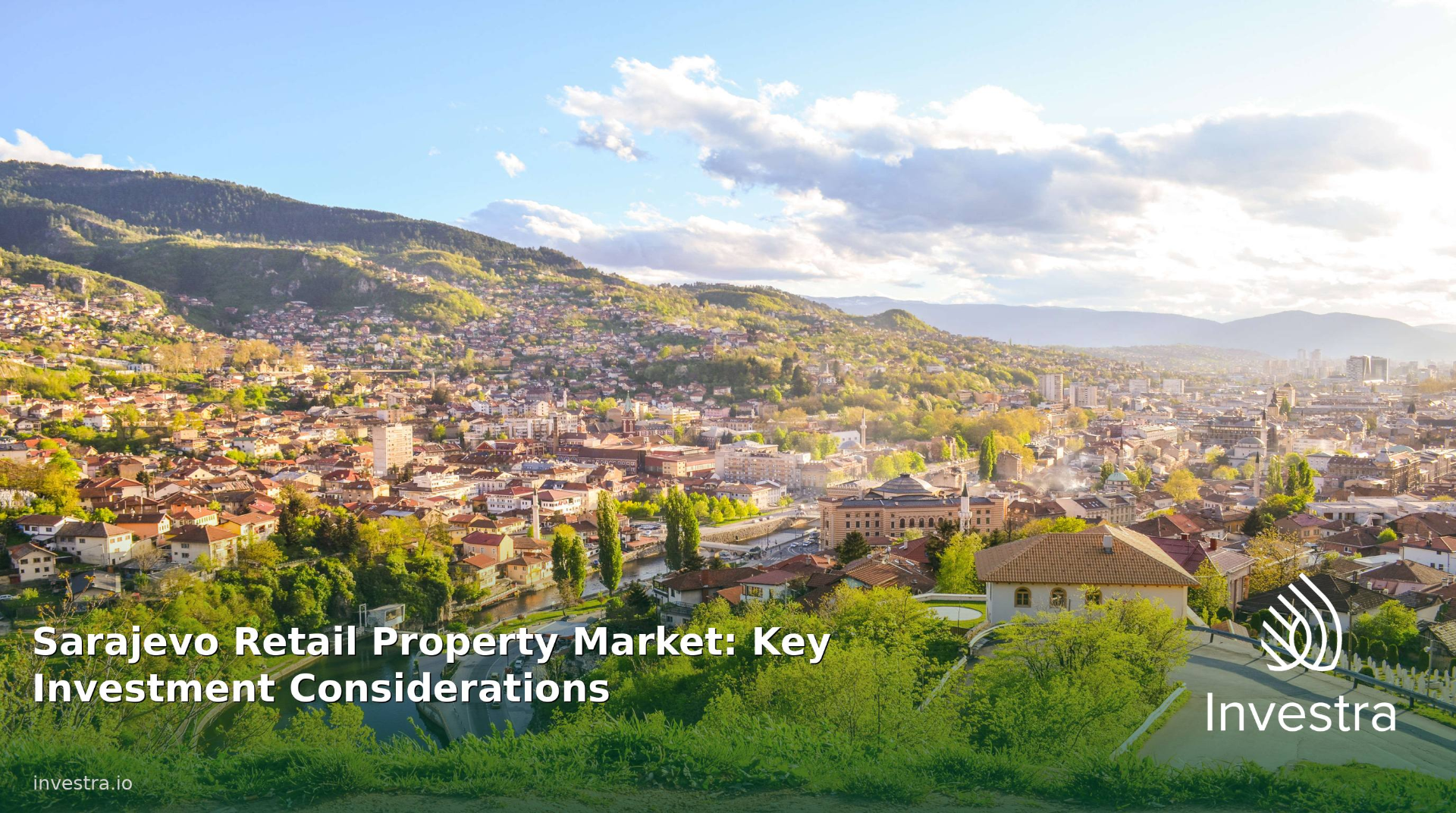
Sarajevo Retail Property Market: Key Investment Considerations
Sarajevo Retail Property Market: Key Investment Considerations
Sarajevo retail property market overview
Quick Answer: The Sarajevo retail property scene blends historic storefronts with modern malls and local retail hubs; understanding local demand and planning trends is essential before you invest. For market context, see the Sarajevo real estate market guide.
When we talk about sarajevo retail property, we’re talking about a market that sits at the crossroads of history and contemporary commerce. The city centre still pulses with small, independent shops, while newer retail complexes and mixed-use developments are reshaping how people shop and how investors assess cash flow potential. In my experience, retail in Sarajevo must be read neighborhood by neighborhood — what works in Baščaršija is a different proposition to what works in new development corridors.
The reality is that retail is sensitive to urban planning changes, pedestrian flows and tourism cycles. You’ll want to watch municipal development plans and recent projects; those local sources usually give a clearer picture than headline macro statistics. For practical local guidance on buying processes and neighbourhoods, Investra’s focused guides like Buying property in Sarajevo, Sarajevo neighbourhood guide and new-build guide are practical starting points for investors who want localised reading before they talk to brokers.
What surprised many buyers is how much micro-location matters for retail: the same square footage can produce very different tenant interest and operational costs depending on factors like footfall patterns, parking availability and local trade restrictions. You can verify current occupancy trends and vacancy rates by contacting local agents, reviewing municipal records, and checking market-specific reports like those from Investra or advisory firms such as Findes Group & Partners.
Demand drivers and consumer trends affecting retail
Quick Answer: Demand for sarajevo retail property is driven by tourism, local consumer spending patterns, and the growth of mixed-use developments; monitor tourism trends and municipal retail strategies to read demand accurately.
Consumer behaviour in Sarajevo has changed considerably over the last decade. Younger consumers mix online shopping with frequent visits to socialised retail environments: cafés, boutiques, and convenience retail. The presence of universities, government administration, and a steady tourism flow means retail demand often reflects a blend of resident needs and visitor spending.
In my experience, the most durable retail tenants are those that serve everyday needs — food, pharmacy, convenience — combined with experiential outlets like independent cafés or concept stores that draw consistent footfall. But what does this mean for investors? You need to map demand drivers for the micro-location of each asset: is the street dominated by tourists on weekends, or by office workers during weekdays? Are there events or market days that temporarily inflate footfall?
To verify current consumer trends, look at local tourism board statistics, footfall studies from mall operators, and ask prospective tenants about their performance in existing Sarajevo locations. For comparisons with neighbouring cities and to understand seasonal patterns, check guides like Investra’s Sarajevo rental and property market pieces and regional insights from advisory partners such as Siniša Dagary investment insights.
Key retail locations and neighbourhoods in Sarajevo
Quick Answer: Identifying the right micro-location is crucial for sarajevo retail property investment; prioritise streets and neighbourhoods with reliable footfall and complementary tenant mixes. See the Sarajevo neighbourhood guide for actionable neighbourhood profiles.
Not all parts of Sarajevo behave the same commercially. The historic Baščaršija area offers a unique tourist-driven retail environment where authenticity and pedestrian density matter. Nearby modern corridors cater to office workers and daily shoppers. The suburbs and newer residential districts are where convenience-driven retail — supermarkets, clinics, and services — usually thrive.
What we’ve seen is that mixed-use developments can redraw the retail map quickly. A new residential project with strong amenities can create a retail catchment almost overnight. This is where local planning permits and upcoming approvals become invaluable intelligence for investors. Contact city planning offices to confirm the status of nearby developments and consult local market guides to match asset types to neighbourhood dynamics.
If you want curated on-the-ground commentary, Investra’s neighbourhood and market guides help identify pockets of interest in Sarajevo. You can pair those insights with consultancy from Siniša Dagary’s practice (advisory services) or advisory teams at Findes Group & Partners to build a localised shortlist.
Retail asset types and formats to consider
Quick Answer: Sarajevo retail property covers high-street shops, kiosks, strip centres, and mall units — each format has different operational demands and tenant expectations; match format to demand and management capacity.
Choosing the right retail format is a practical decision. Street-level units attract visibility and impulse purchases; mall units offer predictable footfall but often higher operating costs; local convenience formats are tenant staples in residential neighbourhoods. The asset format also shapes lease expectations and fit-out requirements.
In my experience, smaller units with low operational complexity suit first-time investors because they’re easier to let and manage. Larger anchor spaces in malls require more specialised leasing knowledge and stronger capital buffers. The reality is every format brings different maintenance, insurance and tenant-fit responsibilities — so check the building management agreements carefully.
To make a practical assessment, request comparable lease agreements, maintenance charge breakdowns, and tenant sales data (if available) during due diligence. If the retail asset is part of a newer development, consult Investra’s new-build guide for Sarajevo (Sarajevo new-build guide) to understand developer obligations and warranties.
Tenant profiles, leases and commercial terms
Quick Answer: Tenant mix and the structure of retail leases determine cash flow dynamics for sarajevo retail property; focus on lease length, turnover rent clauses, and tenant creditworthiness when evaluating prospects.
Retail leases can be complex. In Sarajevo, as in many markets, lease terms vary widely: some landlords use short-term contracts aimed at seasonal traders; others pursue multi-year agreements with established brands or service providers. What surprised many buyers is how often small details — who pays for façade repairs, or how common-area charges are apportioned — determine net income more than headline rent levels.
In my experience, you should prioritise tenants with stable revenue profiles for long-term retail investments, but remember that a balanced tenant mix can protect against sector-specific downturns. For example, combining daily essentials with leisure-oriented tenants creates resilience. Always request tenant financials or bank references where possible, and get legal counsel to review break options, escalation clauses, and obligations for fit-outs and reinstatement.
If you need sample lease structures or drafting guidance, Investra’s territory-focused guides can help you ask the right questions early on; for bespoke drafting and negotiation, consult local legal and advisory professionals, such as those listed on the Siniša Dagary contact page.
The buying process for retail property in Sarajevo
Quick Answer: Buying sarajevo retail property follows a sequence of due diligence, negotiation, contract signing and registration; local agent and legal support streamline the transaction and ensure compliance with municipal requirements.
Buying retail property in Sarajevo involves steps common to many jurisdictions, but the sequence and documentation can differ. First, you’ll shortlist properties and perform preliminary due diligence: title checks, planning permissions, and tenant status. Then you negotiate heads of terms, proceed to a formal sale contract, and finally register the transfer with the land registry. In my experience, allowing extra time for municipal and registry processing avoids rushed decisions.
What many investors miss is the importance of local introductions. A well-connected agent or consultant can uncover lease variations, municipal encumbrances, or unrecorded easements that aren’t obvious in advertisements. Start by reviewing Investra’s Sarajevo buying guide (Buying property in Sarajevo) and supplement with legal counsel. For active buyers, pairing that with advisory firms such as Siniša Dagary or Findes Group & Partners often makes practical sense.
When you need up-to-date confirmation of process steps, contact the municipal cadastre office and a licensed notary in Sarajevo. These local authorities will confirm documentation requirements and registration times. If you’re purchasing through an entity, verify corporate documentation and ultimate beneficial ownership as part of anti-money laundering checks.
Legal and ownership considerations for foreign investors
Quick Answer: Foreign investors should verify ownership rights, property use restrictions and any sector-specific approvals when acquiring sarajevo retail property; consult local legal counsel and specialist advisors for up-to-date compliance requirements.
Foreign investors often ask whether they can hold retail property in their own name, through a domestic company, or via an international vehicle. The answer depends on property type and current national legislation. The reality is legal frameworks can change, so you must verify current rules directly with a licensed Sarajevo attorney or consult up-to-date guides rather than relying on second-hand figures.
In my experience, the most effective route is to get a legal opinion before signing heads of terms. That opinion should cover title encumbrances, planning permissions, easements, zoning restrictions and any sector-specific licensing (for example, if you want to run a food establishment). For practical local support, Investra’s buying guides and the local advisory services offered by firms like Siniša Dagary profile can be helpful starting points to assemble a team.
To verify current ownership rules, ask your lawyer to obtain an official land registry extract and to confirm any pending municipal decisions. These official documents are the primary source for confirming legal ownership and permitted uses.
Taxes, transaction costs and compliance
Quick Answer: Transaction taxes, annual property taxes and VAT rules can materially affect returns on sarajevo retail property; rather than relying on general figures, verify rates and filing procedures with a local tax advisor and municipal authorities.
Taxes are a core commercial consideration. There are upfront transaction costs to budget for, and annual charges that influence net operating income. What we often advise is to separate transfer and registration costs from ongoing property taxes and from income tax or corporate tax implications on rental income.
Because tax rules can change and are often nuanced (for example, distinctions between commercial and mixed-use property, VAT applicability on lease vs. sale), you should consult a local tax specialist. In my experience, advisory teams such as Findes Group & Partners and private consultants like Siniša Dagary advisory services provide useful, up-to-the-minute interpretations tailored to investor circumstances.
When seeking current tax rates and compliance procedures, request official notices from municipal tax offices and the national tax authority. Ask your lawyer to confirm any exemptions, depreciation rules and withholding tax obligations that might apply to foreign owners.
Financing, valuations and due diligence essentials
Quick Answer: Structured financing and robust valuation work underpin any sarajevo retail property purchase; insist on comprehensive technical, legal and market due diligence and confirm financing terms with local and international lenders.
Financing retail property in Sarajevo often combines local bank lending, seller financing or equity. Lenders will want to see detailed valuations and tenant income history. The valuation approach should reflect the retail format and the local trade cycles; you can’t treat a historical high-street shop and a mall kiosk the same way.
In my experience, the most common due diligence gaps are in technical building reports and tenant documentation. A structural or MEP review can reveal deferred maintenance liabilities that dramatically alter the investment case. Likewise, incomplete or misrepresented lease documentation can cause cash-flow surprises post-acquisition.
To verify valuation assumptions and financing options, obtain independent valuation reports and talk to local banks or international lenders active in the region. Investra’s market guides can help you frame valuation questions and locate reliable advisors. If you want a pragmatic advisory conversation, reach out to consultants such as Siniša Dagary contact for tailored support.
Operations: property management, maintenance and leasing strategy
Quick Answer: Effective property management is a value driver for sarajevo retail property; choose a local manager with retail experience and agree clear service charge and maintenance frameworks in leases.
Operational capability often determines whether a retail investment succeeds. Who handles day-to-day maintenance, tenant fit-outs, marketing for the retail scheme and collection of service charges matters. Poor management can turn a promising location into a liability. We’ve seen investors underestimate the workload required to keep a retail asset competitive.
What I recommend is selecting a property manager with local retail experience and documented procedures for tenant onboarding, arrears handling and routine maintenance. Demand a management report template and agree on KPIs. If the asset is part of a larger complex, review the homeowners’ or management association rules to understand cost apportionment and governance.
To verify a manager’s capability, ask for references from current owners, examine recent financial statements for managed properties and request examples of tenant retention strategies they’ve implemented. If you want professional introductions, consider firms highlighted by Investra or consult advisory partners such as Findes Group & Partners advisory team.
Exit strategies and commercial risk management
Quick Answer: Plan exit routes early: sale, portfolio refinancing or conversion to alternate uses are common for sarajevo retail property; stress-test outcomes against tenant risk and market cycles rather than relying on past performance.
Every investor should have an exit strategy before completing a purchase. Options include selling to a local investor, institutional buyer or converting the space to alternate uses if zoning allows. The most realistic exit paths depend on how liquid the local market is for retail assets — which can vary by neighbourhood and property format.
To verify likely exit demand, look at recent transactions in the area — you can request comparable sales via local brokers or consult market summaries on Investra for Sarajevo and surrounding cities. If you’d like tailored exit planning, advisory practices such as Siniša Dagary or Findes Group & Partners can help run sensitivity analyses.
Explore more on Investra: Buying property in Mostar | Mostar rental market guide | Mostar neighbourhood guide | Mostar new-build guide
Investment Disclaimer
Quick Answer: This section clarifies that the content is informational and not investment advice; always seek professional legal and financial counsel before investing in sarajevo retail property.
The information provided in this article is for educational and informational purposes only and should not be construed as financial, legal, or investment advice. Real estate investments carry inherent risks, and past performance does not guarantee future results. Investors should not invest money they cannot afford to lose. Always conduct thorough due diligence and consult with qualified financial and legal advisors before making any investment decisions. Investra.io does not guarantee returns on any investment.
Frequently Asked Questions
Quick Answer: Below are practical answers to common questions about sarajevo retail property covering buying, leasing, taxes and operational matters.
What are the first steps to evaluate a retail unit in Sarajevo?
Start with location analysis: observe footfall at different times, speak with neighbouring tenants and check the zoning and permitted uses at the municipal planning office. Request the title documents, copies of current leases, and any service charge accounts. Commission a technical inspection and a market valuation. For clarity on legal steps and ownership verification, consult local guides such as Investra’s Sarajevo buying resources and engage a licensed Sarajevo attorney to obtain official land registry extracts.
Can foreign investors buy retail property in Sarajevo?
Regulations affecting foreign ownership can be nuanced and may depend on property type and national rules. Don’t rely on second-hand claims. Instead, obtain a formal legal opinion from a Sarajevo-based lawyer who will check the specific property’s title, any restrictions, and whether any approvals are needed for foreign buyers. For advisory introductions, consider firms like Siniša Dagary advisory services.
How should lease agreements be structured for retail tenants?
Leases should clearly define rent, escalation mechanisms, service charge responsibilities, fit-out obligations, break options and any turnover rent clauses. Ensure the lease allocates responsibility for common-area maintenance, façade repairs and insurance. Have a local legal specialist review the lease to identify clauses that could affect income stability. Using standardized templates is helpful, but tailor them to local commercial practice in Sarajevo.
What taxes and transaction costs apply when buying retail property?
Tax obligations can include transfer taxes, registration fees and potentially VAT, depending on the transaction structure. There will also be notary and legal fees. Tax rules change, so verify current rates and filing procedures with a local tax advisor and the municipal tax office. Advisory teams such as Findes Group & Partners advisory team can help interpret tax implications for specific investment structures.
How do I verify tenant income and rent collection reliability?
Request tenant financial statements, bank references and rent payment histories. A commercial landlord should also obtain credit checks and trade references. If tenants are part of a chain or known brand, verify corporate guarantees and franchise agreements. During due diligence, insist on audited accounts or certified bank confirmations where available.
What operational issues typically surprise foreign retail owners?
Common surprises include hidden maintenance liabilities, unclear service charge apportionments, and local municipal requirements for signage or licensing. Another practical issue is the need to adapt to local retail customs around opening hours and event-driven trading. Retaining a strong local property manager mitigates many of these operational surprises.
How do I check whether a planned development nearby will affect my property?
Request development plans and permits from the city planning office, and ask about approved but not-yet-constructed projects. Local brokers and neighbours are often aware of imminent changes. In our experience, proximity to a new mixed-use project can be either a boon or a constraint, depending on the type of retail and anticipated demographic changes.
What are the financing options for retail property purchases?
Options typically include local bank loans, seller financing, or equity partnerships. Lenders in Sarajevo will want comprehensive documentation: tenancy schedules, financial statements and independent valuations. Speak with local banks and international lenders to compare terms. For introductions and structured advice, consider consulting advisory firms such as Siniša Dagary or Findes Group & Partners.
How can I estimate future retail demand without reliable public stats?
Use proxy indicators: pedestrian counts, public transport passenger numbers, local employment statistics and tourism board figures. Speak to local retailers for anecdotal trade performance and compare with data from Investra’s Sarajevo market analyses. Commission a local market report if you need a rigorous projection for underwriting a loan or making a purchase decision.
What role do mixed-use developments play in Sarajevo’s retail prospects?
Mixed-use developments can increase captive demand for retail by adding residents, offices and leisure facilities. They can also raise service charges and change competitive dynamics. Assess whether your retail unit will benefit from a new mixed-use neighbour by examining the planned mix, access, and management terms, and verify details through municipal planning documents.
Should I engage a local property manager or run the asset remotely?
Local property managers bring operational knowledge, tenant networks and regulatory familiarity. While remote ownership is possible, local management tends to be more responsive and cost-effective for retail assets that require hands-on oversight. Evaluate candidates based on references, reporting standards and their experience with retail in Sarajevo.
Recommended Reading
Quick Answer: These curated links offer deeper, localised guidance on Sarajevo and regional markets to support decision-making on sarajevo retail property investments.
- Sarajevo real estate market guide
- Buying property in Sarajevo
- Sarajevo rental market guide
- Sarajevo neighbourhood guide
- Sarajevo new-build guide
- Mostar real estate market guide
- Siniša Dagary — Investment Consultant
- Business Strategy Blog
Connect With Investra
Quick Answer: Follow Investra.io for market updates and property opportunities via their social channels listed below.
Facebook: https://www.facebook.com/investra.io
LinkedIn: https://www.linkedin.com/company/investra-io
YouTube: https://www.youtube.com/@investraio
Connect With Investra
Quick Answer: Follow Investra for verified market context and practical property research.
Related Posts
No related posts available.
