
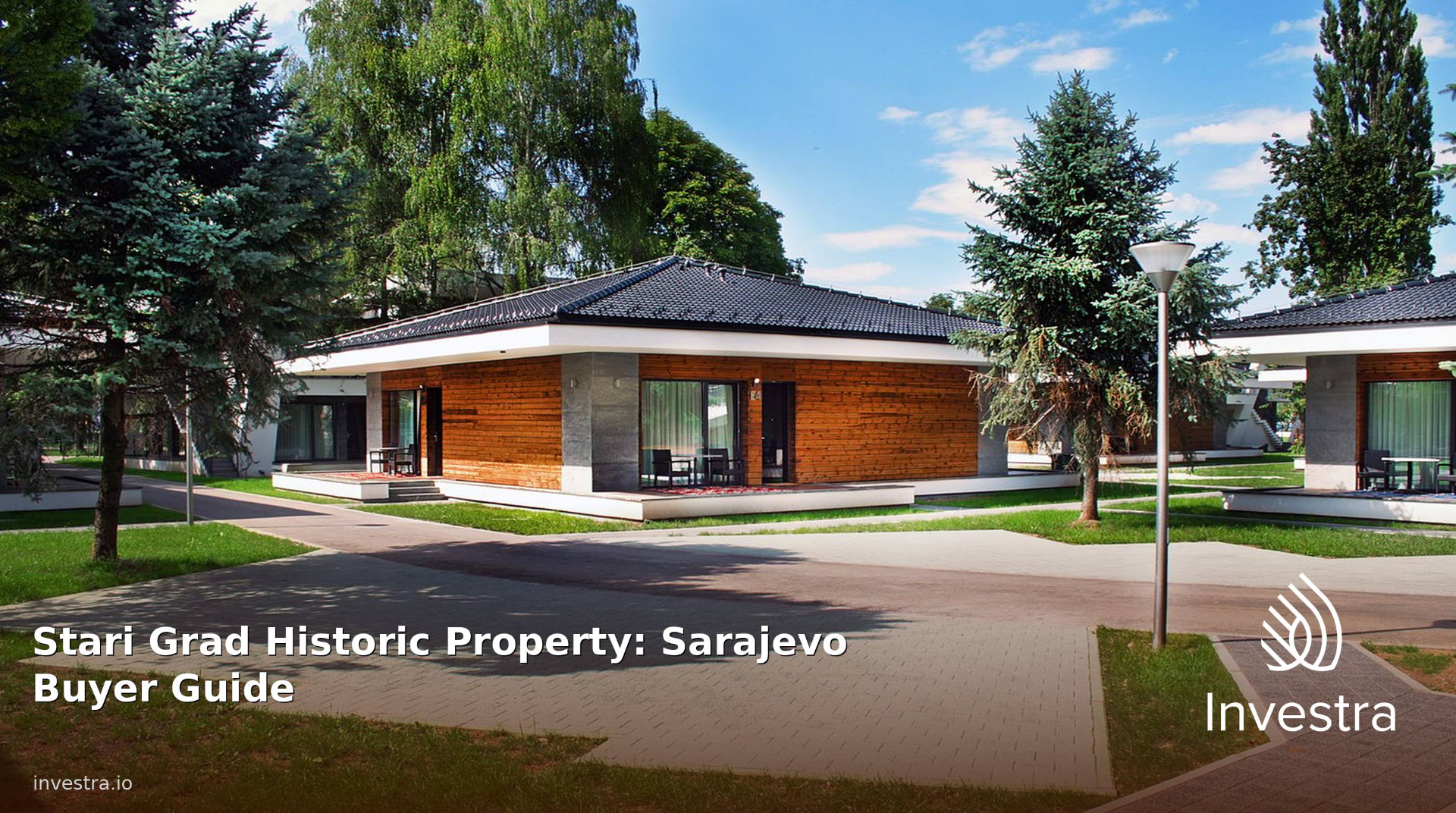
Stari Grad Historic Property: Sarajevo Buyer Guide
Stari Grad Historic Property: Sarajevo Buyer Guide
Stari Grad historic property Sarajevo: an overview
Quick Answer: Stari Grad historic property Sarajevo refers to heritage buildings and old-town houses within Sarajevo’s historic core, subject to special preservation rules and local planning controls; learning the local context is essential before you buy. Sarajevo real estate market guide offers city-level context for investors.
Stari Grad sits at the heart of Sarajevo — narrow streets, Ottoman-era mosques, Austro-Hungarian façades and a layered urban fabric that tells a long history. When someone looks for stari grad historic property sarajevo, they usually mean buildings that pre-date major modern redevelopment and that lie within officially designated conservation zones. The reality is that owning in Stari Grad is different from buying a suburban apartment: you’re buying history, but also responsibilities. In my experience, buyers who treat a historic purchase as a heritage stewardship project end up more satisfied than those who expect a simple flip.
As an investment concept Stari Grad can appeal to people seeking unique residential addresses, boutique rentals and culturally significant spaces. What surprised many buyers is the degree to which municipal conservation plans and heritage lists influence what you can and can’t change — from windows to internal layouts. If you want a quick orientation to market trends beyond Stari Grad you can compare Sarajevo with other regional markets on platforms such as Mostar real estate market guide and Banja Luka real estate market guide. But first-time buyers should focus on local regulations, conservation status and realistic timelines — these shape value and viable uses far more than headline price figures do.
Why consider a historic property in Stari Grad?
Quick Answer: Historic properties in Stari Grad offer cultural character, strong location appeal and tourism potential, but they come with unique maintenance and regulatory obligations you must plan for. See the Sarajevo rental market guide for rental context.
Buying in Stari Grad isn’t just about a roof over your head. These properties often boast original details — carved woodwork, patterned tiles, stone staircases — that are rare in modern builds. For many buyers the emotional draw is as important as financial upside. The neighbourhood’s walkability and proximity to cultural institutions, restaurants and the old bazaar make it attractive for both owner-occupiers and experiential short-term guests. We’ve seen interest from buyers who want a weekend pied-à-terre, restaurateurs seeking heritage venues, and small developers who plan sensitive restorations.
But there’s a balance. Owners must budget time and expertise to care for older structures: moisture control, structural assessments, sympathetic repairs. That’s where good local advice pays off. For a view on neighbouring towns and alternative strategies, check advice on buying in Mostar or Tuzla through Buying property in Mostar and Buying property in Tuzla. The key question for buyers is: do you want a living museum, or a liveable home with historic charm? Your answer determines the team you’ll hire and the permissions you’ll need.
What are the ownership regulations for historic properties in Stari Grad Sarajevo?
Quick Answer: Ownership of a stari grad historic property sarajevo is subject to general property law plus special heritage protections and municipal planning rules; verify current regulations with Sarajevo City authorities, local cadastre offices and legal advisors like the investment consultation team.
Ownership rules for historic properties involve several legal layers. The base layer is Bosnia and Herzegovina’s property and real-estate registration system — you need clean title recorded at the land registry (cadastre) and clarity about easements or liens. On top of that, Stari Grad properties often fall within conservation zones established by the Canton or municipality; that status may impose limits on alterations, require permits for structural work and restrict demolition. In practice, the first step is to ask the seller for the property’s cadastral extract and any heritage listing documents.
Because regulations change and can be interpreted differently by municipal departments, I always recommend an early meeting with a local lawyer and the municipal Department for Protection of Cultural, Historical and Natural Heritage. A useful partner in this can be advisory firms such as Findes Group & Partners and independent consultants like Siniša Dagary, who can clarify ownership transfer mechanics and public registers. If you need verified current tax or registration fees, request them directly from the cantonal tax authority or the Sarajevo cadastral office and ask your solicitor to obtain certified copies. Never rely solely on an agent’s verbal summary when heritage status affects legal rights and obligations.
Architectural considerations: what you can change and what you can’t
Quick Answer: Architectural interventions on stari grad historic property sarajevo are typically regulated; alterations often require conservation approval and must respect original materials and façades — consult conservation authorities early in planning. For renovation pointers see the Sarajevo new-build guide.
When assessing an old house in Stari Grad, ask how original the fabric is and which elements are protected. In my experience, windows, external façades, rooflines and decorative details frequently carry the most restrictions. Interiors sometimes offer more flexibility, but that isn’t guaranteed; some buildings are listed in full and any change to internal load-bearing walls, floor levels or original finishes could require approval. You should never assume “internal works only” avoids oversight.
Technical considerations matter too. Old buildings often have hidden problems — rising damp, outdated electrical systems, and timber decay. Structural surveys by conservation-aware engineers are indispensable. If you plan to upgrade to modern standards (insulation, plumbing, heating), discuss possible solutions that preserve historic character: non-invasive insulation, reversible interventions and careful materials selection. Consult the municipal conservation department for their preferred specifications. When you read guides like Mostar new-build guide, adapt the technical checklists to Stari Grad’s stricter heritage context rather than assuming identical permissiveness.
Practical step-by-step buying process in Stari Grad
Quick Answer: The buying process for a stari grad historic property sarajevo follows typical stages — find, verify, contract, transfer — but adds heritage checks, conservation permits and sometimes longer due-diligence timelines; consult local guides like Buying property in Sarajevo for procedural detail.
Start with a clear brief: are you buying to live, to renovate for resale, or to operate as a rental? That decision affects risk appetite and service needs. Next, obtain a cadastral extract and title report early — these show ownership, boundaries and any recorded encumbrances. Always commission a structural and conservation-aware survey before signing a binding contract. In my experience, buyers who skip physical inspection end up facing expensive surprises.
Once you have satisfactory due diligence, negotiate a reservation agreement and outline who pays for permits, surveys and transfer taxes. For foreign buyers, confirm any restrictions on ownership (some property types may be subject to special rules), and make sure your lawyer verifies all documents with the Land Registry and the municipal heritage office. You can find practical checklists in the Investra guides for Sarajevo and for other cities — for instance, compare processes in Buying property in Mostar and Buying property in Banja Luka. Finally, make transfer payments through an escrow or via your lawyer to protect funds until the registry update is complete.
Due diligence: title, boundaries and heritage status
Quick Answer: Due diligence for a stari grad historic property sarajevo must include a detailed title search, cadastral boundary verification and confirmation of any heritage listing or protective measures with municipal authorities. For legal help consider advisory services.
Due diligence is where transactions succeed or fail. You need certified copies of the title deed and cadastral plan and a search for any mortgages, liens or pending disputes. For older buildings, chain-of-title gaps are not uncommon; if there’s a gap, a specialist property lawyer can advise on corrective steps. Checking the heritage register is equally important: you must know whether an object is classified as protected, whether the classification applies to internal or external features, and whether there are any conservation management plans in place.
Field checks are also vital. Walk the perimeter, verify access rights, and check adjoining properties for evidence of shared elements (party walls, drainage). If you plan to rent the property, ask the municipal tourism office about licensing requirements and short-term rental rules. When you need an external adviser, firms like Findes Group & Partners advisory team and consultants from Siniša Dagary can help coordinate legal, conservation and technical searches. Finally, request any available building maintenance records from the seller — they often reveal recurring issues that affect future budgets.
Renovation and permits: working with conservation authorities
Quick Answer: Significant renovations to a stari grad historic property sarajevo usually need permits from municipal conservation authorities and simple cosmetic works may still require notification; involve conservation architects early to secure approvals. See the Sarajevo new-build guide for renovation process tips.
Renovating in Stari Grad is often more process-driven than technical. Many buyers are surprised at how long approval cycles can be when heritage officers must review materials and methods. In practice, start with a feasibility meeting with the heritage office and bring a conservation architect who understands the approvals process. That stack of drawings — existing conditions, proposed interventions, materials schedule — will form the core of your permit application.
When choosing contractors, select teams experienced in traditional crafts or conservation techniques. Modern contractors can do excellent work, but they must be briefed on reversible interventions and on how to document their work for the heritage file. If taxiing through local bureaucracy sounds daunting, advisors like advisory services can serve as intermediaries. Remember to ask about temporary occupancy permissions if you plan a staged renovation and need to occupy parts of the building during works. We’ve seen timelines extend when permits are applied for late; so apply early and budget for administrative lead times.
Taxes, fees and ongoing ownership costs
Quick Answer: Owning a stari grad historic property sarajevo entails transfer taxes, registration fees and ongoing municipal charges; verify current rates with the Sarajevo tax office and your legal adviser rather than relying on published estimates. Banja Luka rental market guide and other city guides show comparative frameworks.
Taxes and fees are a normal part of any property purchase, but with heritage properties you may also face additional costs tied to conservation compliance — periodic maintenance obligations, approved-material premiums, and occasional conservation inspections. Because tax rates and fee schedules change and can vary by canton or municipality, I avoid quoting numbers. Instead, here's how you verify them: request an official fee schedule from the Sarajevo Cantonal Tax Administration (or the relevant municipal office) and ask your lawyer to provide a written estimate of expected transfer taxes, registry fees and any projected annual municipal charges.
Think beyond statutory fees. Budget for realistic maintenance and insurance that covers heritage-specific risks. If you plan to rent, ask the tax authority about applicable VAT or income tax registration requirements for landlords. For structured assistance on taxation and administrative requirements, you can consult local advisory teams such as Findes Group & Partners or book an investment consultation with Siniša Dagary. We recommend getting written confirmation of any tax advice so you can show it to banks and potential co-investors.
Financing and mortgages for historic properties
Quick Answer: Financing a stari grad historic property sarajevo can require specialist underwriting and lender acceptance of heritage status; speak to local banks and mortgage brokers and ask them to confirm lending criteria in writing. For buyer steps see Buying property in Sarajevo.
Not all lenders are comfortable with older, heritage-classified buildings. In my experience, some banks will underwrite based on the building’s condition and usable habitable area, while others may require additional security or decline on high-risk structures. If you plan to borrow, start conversations with lenders early and present full survey reports and projected renovation budgets. A lender will want to understand how heritage restrictions might affect resale value and insurance claims.
Alternatives to bank mortgages include private lenders, seller financing and staged drawdown arrangements tied to renovation milestones. For complex restorations, consider a loan backed by a qualified renovation budget and an insured contractor schedule. If you’re an international buyer, check whether local banks accept foreign income and what documentation they require. Investment consultants like Siniša Dagary and advisory teams at Findes Group & Partners can introduce local lenders and help prepare loan-ready documentation.
Short-term and long-term rental use: regulations and practicalities
Quick Answer: Using a stari grad historic property sarajevo for rentals requires compliance with municipal licensing and potentially stricter rules if the building is protected — confirm tourism licensing and local rental rules with Sarajevo authorities and review the Sarajevo rental market guide.
Neighbourhoods & Location: micro-locations within Stari Grad
Quick Answer: Within Stari Grad, micro-locations vary — proximity to the Old Bazaar, Gazi Husrev-beg Mosque, and pedestrian arteries affects desirability; explore the Sarajevo neighbourhood guide for detailed area comparisons.
Working with local advisors: lawyers, architects and consultants
Quick Answer: A stari grad historic property sarajevo purchase should be guided by a team: a property lawyer, a conservation architect, a building surveyor and a local consultant; firms like Siniša Dagary and Findes Group & Partners advisory team can help assemble that team.
Investment Disclaimer
Quick Answer: This section clarifies that the article provides general information and is not investment, legal or financial advice — always consult licensed professionals before acting.
The information provided in this article is for educational and informational purposes only and should not be construed as financial, legal, or investment advice. Real estate investments carry inherent risks, and past performance does not guarantee future results. Investors should not invest money they cannot afford to lose. Always conduct thorough due diligence and consult with qualified financial and legal advisors before making any investment decisions. Investra.io does not guarantee returns on any investment.
Frequently Asked Questions
Quick Answer: Below are common questions buyers ask about stari grad historic property sarajevo with detailed answers to help you prepare for purchase, ownership and renovation.
Can foreigners buy a historic property in Stari Grad Sarajevo?
Foreign ownership rules for Bosnia and Herzegovina vary by property type and local regulations. To confirm whether a specific historic property is available for purchase by a foreign national, consult the Sarajevo land registry (cadastre) and retain a local property lawyer to interpret any restrictions. Practical steps include obtaining a certified cadastral extract, checking the property’s legal status with the municipal heritage office, and asking your lawyer to confirm any special approval procedures that apply to non-resident buyers. Advisory services such as investment consultation can expedite these checks.
How do I verify if a property is officially listed as protected?
Official listing information is held by municipal or cantonal heritage departments and often by a national register of protected cultural heritage. Request a written statement from the Sarajevo Department for Protection of Cultural, Historical and Natural Heritage or ask your lawyer to obtain certified documentation. A conservation-aware surveyor can also review the listing and advise on the implications for renovation and permitted uses. For extra assurance, include a condition in the sale contract requiring the seller to provide all heritage-related documentation before final transfer.
What permits are typically required for renovation work?
Permit requirements depend on the scale of work and the property's heritage status. Simple maintenance may only require notification to the conservation office, while structural changes, façade alterations or any work affecting protected elements generally need a full permit and approved conservation plan. Start with a pre-application meeting at the heritage office and engage a conservation architect to prepare the required drawings and documentation. Your lawyer should confirm timelines and any public consultation steps required for approval.
How can I check the building’s structural condition without relying on the seller?
Commission an independent full structural survey from an engineer experienced with historic masonry and timber. Ask for specialized reports: moisture mapping, timber decay assessment, foundation inspection and any visible cracking analysis. Also request the seller’s maintenance records and, if possible, speak to neighbours about recurring issues. If the property is listed, check whether previous conservation work was logged and approved — missing records could indicate undocumented interventions and higher risk.
What ongoing obligations come with owning a listed property?
Owners of protected properties often face obligations such as maintaining character-defining elements, obtaining permits for alterations, and possibly periodic inspections by heritage authorities. Local regulations may also require repairs within certain timescales to prevent deterioration of public heritage assets. Confirm the specific obligations by requesting the conservation listing documents and written guidance from the municipal heritage department, and include an evaluation of likely long-term maintenance needs in your financial planning.
Can I use a Stari Grad property for a short-term rental?
Short-term rental use is possible in many cases, but you’ll need to meet municipal tourism licensing, safety standards and any conservation constraints that affect guest facilities, signage or access modifications. Check the Sarajevo tourism office’s licensing criteria and consult the municipal heritage office to confirm which interventions are permissible. For operational guidance and market perspective, consult the Sarajevo rental market guide.
How do taxes and transfer fees work for historic properties?
Tax and fee rules follow the general statute for real estate transfers but can be affected by the property’s location and any special municipal levies. Because rates and thresholds change, ask your lawyer to obtain a current fee schedule from the Sarajevo Cantonal Tax Administration and to provide a written estimate of all expected transfer-related costs. Also discuss potential tax implications of rental income or capital gains with a local tax advisor to ensure you understand ongoing fiscal responsibilities.
Are there grants or subsidies for restoring heritage buildings?
Some governments and cultural organisations offer grants, tax incentives or low-interest loans for approved conservation work. Availability varies by year and project type. To find current opportunities, consult the Sarajevo cultural heritage authority, national cultural institutions and international cultural funds. Local consultants such as advisory services or the Findes advisory team can help identify applicable programs and prepare grant applications.
Should I form a local company to own the property?
Some buyers choose to hold property through a locally registered entity for liability, tax or operational reasons. Whether this makes sense depends on your personal tax situation, intended use (private vs rental), and local corporate rules. Discuss the pros and cons with a local lawyer and tax advisor, and ask them to draft ownership structures that reflect both legal compliance and your estate-planning goals. Advisors like Siniša Dagary can help map options and liaise with tax professionals.
How long does the purchase and permit process typically take?
Timelines vary widely. Simple transactions with clear title and no significant works can complete in a matter of weeks, whereas purchases requiring heritage approvals, complex title corrections or major renovations may take months or longer. The best way to estimate timelines is to ask your lawyer and conservation architect for a staged schedule, and to verify expected permit lead times with the Sarajevo heritage office. Always build buffer time into your project plan and budget for administrative delays.
Who should I contact first when I find a promising property?
Start with a quick verification: request the cadastral extract and title deed from the seller or agent. Then retain a local property lawyer to run a formal title search and to advise on whether you need a conservation specialist. Simultaneously arrange a structural survey. If you want introductions to vetted professionals, advisory firms such as Siniša Dagary — investment consultation and Findes Group & Partners advisory team can provide referrals to architects, surveyors and contractors experienced in heritage projects.
Recommended Reading
Quick Answer: The following curated links provide deeper practical guidance on Sarajevo and regional property markets, buying procedures and renovation planning.
- Sarajevo real estate market guide
- Buying property in Sarajevo
- Sarajevo rental market guide
- Sarajevo neighbourhood guide
- Sarajevo new-build guide
- Mostar real estate market guide
- Siniša Dagary — Investment Consultant
- Business Strategy Blog
Connect With Investra
Quick Answer: Follow Investra on social media to get updates and more guides about Sarajevo and regional property markets.
Facebook: https://www.facebook.com/investraio
LinkedIn: https://www.linkedin.com/company/investra-io
YouTube: https://www.youtube.com/@investraio
Connect With Investra
Quick Answer: Follow Investra for verified market context and practical property research.
Related Posts
No related posts available.
