
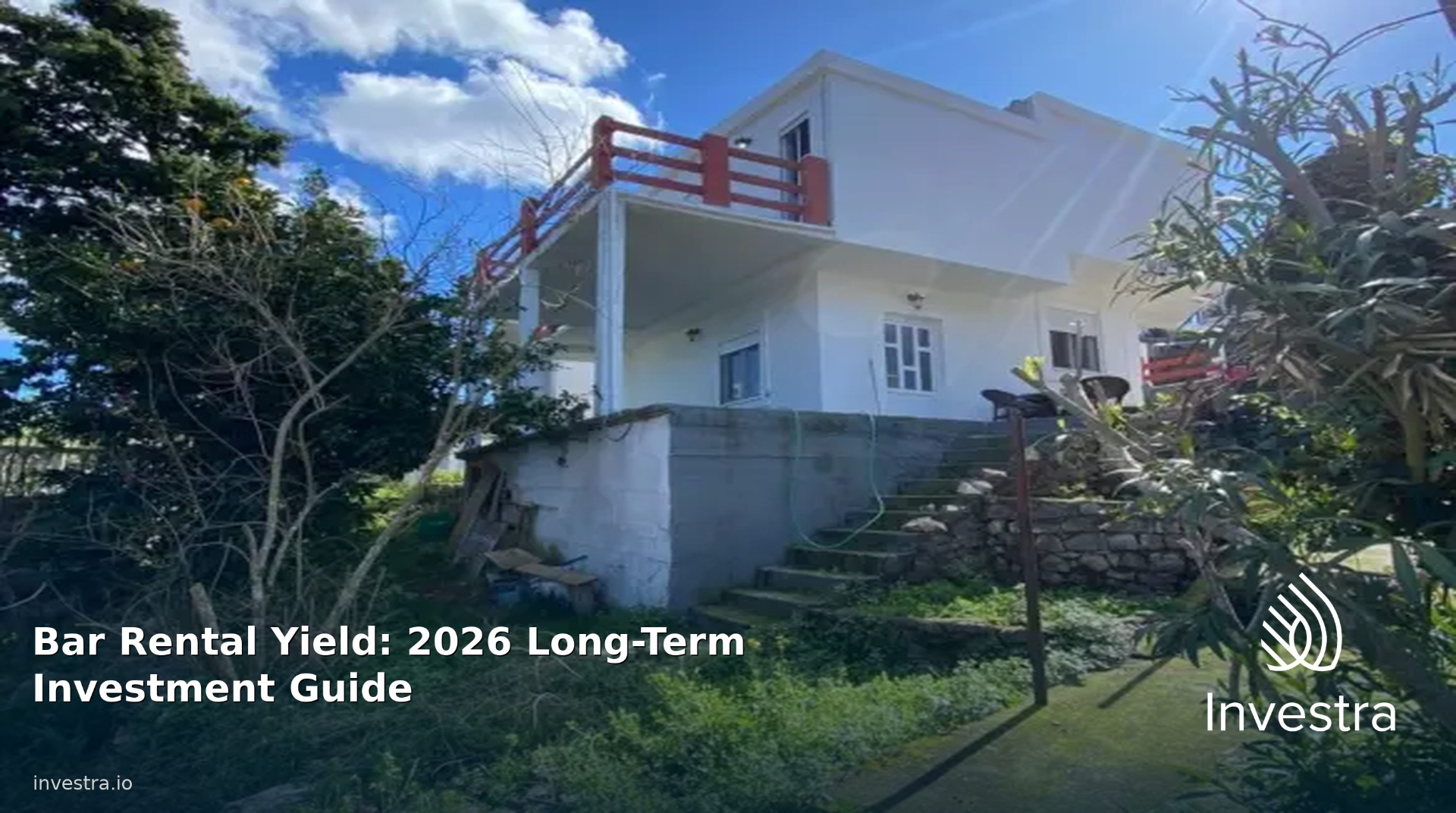
Bar Rental Yield: 2026 Long-Term Investment Guide
Bar Rental Yield: 2026 Long-Term Investment Guide
Bar Montenegro Real Estate Market Overview 2026
Quick Answer: The Bar Montenegro real estate scene in 2026 is shaped by coastal tourism, port development and domestic buyer activity; researching recent transaction records and local listings will show current momentum. For regional context and methodology on market reading, see Investra.io.
Bar has a mix of seaside neighbourhoods, agricultural hinterland and an active port that influences the local property market. In my experience, coastal towns with working ports behave differently from purely tourist resort towns. Bar attracts people who want a quieter Adriatic lifestyle, second-home buyers from nearby countries, and local buyers tied to shipping, agriculture, or services.
When we talk about bar montenegro real estate, the first practical step is distinguishing between micro-markets: the Old Town, the marina and beachfront zones, suburban settlements like Topolica or Sutomore (nearby), and rural plots inland. Each carries different buyer profiles and rental potential. The reality is that headline narratives—"coastal boom" or "cheap bargains"—tell only part of the story. Local planning decisions, port investments and municipal zoning changes can shift demand quickly.
If you're assessing market health, I recommend checking recent property transaction lists from Montenegro’s real estate registries and cross-referencing them with active listings on local portals. You can also compare structural guidance and buyer questions from other Adriatic markets with similar seasonality, for instance the tactical due diligence advice in Rovinj Real Estate Market 2026 and the practical buyer checks in Umag Real Estate Market 2026. Those materials won't give Bar's exact numbers, but they do outline the research steps that apply here as well.
What Should International Buyers Assess When Researching Bar Montenegro Real Estate in 2026?
Quick Answer: International buyers should assess legal ownership rules, local zoning, seasonality of demand, rental restrictions, tax implications and reliable local services; verify up-to-date details with Montenegro registries, municipal planning offices and licensed agents.
What should international buyers assess when researching bar montenegro real estate in 2026? Start with the big questions: Can you legally acquire the property you want, and under what conditions? What will you use it for—full-time occupation, long-term rental, or short-term letting such as Airbnb? Those answers shape everything from loan eligibility to tax profiles and required permits.
In my experience, many buyers focus first on price and views, and only later on rules that can change the economics of a purchase. That's risky. Instead, get contemporaneous confirmation on ownership rights from the Montenegro real estate registry. Ask the municipal planning office whether the plot has development restrictions, flood risk, or conservation status. If you intend to rent out the property, check local licensing requirements and municipal regulations for short-term rentals—these can change rapidly and vary from one coastal municipality to another.
Don't forget the soft infrastructure: local property managers, reliable contractors and legal counsel. If you're not on the ground, identify a trustworthy consultant. I often recommend speaking with advisors who have published regional work; for example, investment consultants like Siniša Dagary provide advisory services and background on project economics. Also consider verifying guidance through professional partners such as Findes Group & Partners who assist with cross-border due diligence and structuring. Ultimately, verifying current local data (prices, taxes, rental regulations) requires direct contact with Montenegrin authorities, a licensed notary and a local real estate agent.
Legal Framework and Ownership Rights for Foreign Buyers
Quick Answer: Montenegro’s legal system governs property titles, and foreign buyers must confirm ownership restrictions and registration procedures with a notary and the land registry; check official sources and seek local legal counsel for up-to-the-minute rules.
The legal side is where many long-term investors either win or stumble. In my experience, buyers who engage a notary early save time and avoid costly misunderstandings. For bar montenegro real estate, the key legal checkpoints are clean title, existence of encumbrances or easements, current land use designation, and any historical or cultural protections that affect modifications.
Because rules and bilateral agreements can shift over time, don't rely purely on summaries in blogs or agent claims. Verify current ownership rules and transaction formalities directly with the land registry office (Katastar) and through an independent local lawyer or notary. Ask for certified copies of the title deed, cadastral extracts and a statement of encumbrances. In parallel, review contract law basics with your counsel: are you buying via a purchase contract with deposit and completion stages, or is there a corporate or trust structure involved?
To compare processes elsewhere, readers often consult practical checklists from neighbouring Adriatic markets; for example, the procedural guides in How to Buy Property in Istria and legal-check resources such as Buying Property in Pula: Legal Checks. These won't replace Montenegro-specific verification, but they help frame questions to ask your notary and local counsel.
Taxes, Fees and Ongoing Ownership Costs
Quick Answer: Tax obligations and ownership costs for Bar properties include transaction-related fees, ongoing property taxes and potential rental income taxes; always verify current rates and filing rules with Montenegro tax authorities and a local accountant.
Taxes and ownership costs are decisive for long-term returns. I often see buyers underestimate recurrent expenses and then get surprised by annual burdens or regulatory filing requirements. For bar montenegro real estate, you should map the full cost picture: transfer taxes or registration fees at purchase, notary and legal fees, municipal utility and maintenance charges, and annual taxes linked to property value or rental income.
Because tax legislation changes, I won't provide numbers here. Instead, confirm current rates with Montenegro's tax authority and consult a local certified accountant who knows real estate taxation. Ask for sample calculations based on your intended use—primary residence, long-term rental, or short-term letting—so you can see the real post-tax cash flow. Also verify the tax treatment of non-resident owners, double-taxation treaties with your home country, and withholding tax rules on rental income.
It's pragmatic to benchmark administrative costs against similar Adriatic markets. The Investra pieces on property taxes and ownership costs in Istria, such as Property Taxes and Purchase Costs in Istria and Istria Property Ownership Costs, outline the kinds of charges to expect and how to request authoritative confirmations. For Montenegro specifics, a local accountant or tax lawyer will provide reliable figures and explain compliance timelines.
The Buying Process in Bar: Practical Step-by-Step Guide
Quick Answer: The buying process in Bar follows stages—research, legal checks, reservation agreement, due diligence, completion and registration—each requiring specific documents and local professionals; confirm procedural details with a Montenegrin notary and licensed agent.
Buyers often ask me for a checklist they can follow from afar. Here’s a pragmatic flow that applies to bar montenegro real estate, adapted from practices in adjacent markets but tailored to Montenegro’s administrative realities. First, clarify your objectives: use, budget, ownership structure and timeline. Next, shortlist properties after checking listings and validating availability with the seller’s agent.
Once you have a target, arrange an independent title check and cadastral extract through a notary or solicitor. Execute a reservation or pre-contract with defined deposit rules and clear exit conditions if the seller's title turns out to be problematic. Then follow with a technical inspection to verify building condition, structural elements, and any outstanding utility debts tied to the property. If you plan construction or extension, request zoning confirmation from the municipal planning office.
Completion typically involves a final sales contract signed before a notary, payment arrangements monitored by escrow or bank instruments, and registration of the transfer at the land registry. Recent guides on buying across the Adriatic—like Istria Property Due Diligence—offer procedural checklists you can adapt for Montenegro. Also consult local resources such as investment consultation to find vetted professionals if you need on-the-ground support.
Rental Market Dynamics: Long-Term Letting vs Airbnb in Bar
Quick Answer: Long-term rentals and short-term holiday lets each have different demand cycles and management needs in Bar; verify local licensing, seasonal occupancy patterns and municipal short-let rules before deciding which model fits your goals.
Should you aim for long-term rental income or focus on Airbnb-style holiday lets in Bar? That depends on several practical factors: seasonality, local demand drivers (students, workers, tourists), and municipal rules. In my experience, coastal towns can generate strong seasonal demand for short lets, but that also requires intensive management, cleaning and compliance with local short-term rental licensing.
Long-term letting offers steadier occupancy and often lower management intensity, but rents and tenant profiles vary with local incomes and employment markets. If you're comparing the two models, make a pro forma that includes property management fees, cleaning, utilities, vacancy assumptions and regular maintenance. Speak with several local letting agents to understand average tenancy lengths, tenant screening norms and expected notice periods.
Because short-term rental rules evolve fast, confirm the current municipal stance on holiday letting in Bar with the local authority. Look at practical guides for holiday rental due diligence in comparable Adriatic markets—such as Rovinj Holiday Rental Investment: Buyer Due Diligence and the Pula rental investment guide Pula Rental Investment Guide 2026—to form the right questions for local agents and municipal officials. And if you need help setting up local management, consultants like advisory services and advisory teams such as Findes Group & Partners advisory team can connect you with vetted operators.
Property Types and Best Locations Within Bar
Quick Answer: Bar’s property types range from seaside apartments and villas to inland plots and commercial spaces near the port; choose location based on your use-case, access to services and local planning rules.
Picking the right micro-location in Bar matters more than chasing a general "coastal premium." From my visits and client work, the main choices boil down to waterfront apartments and older townhouses, newer developments near transport and amenities, and rural plots for agrarian or development projects. Proximity to the ferry, marina and main coastal roads affects demand for both long-term tenants and tourists. Roads and transport projects can turn a quiet street into a connector within a few years.
Ask yourself: Do I need easy access to the port? Is proximity to the town centre important for year-round rental demand? Do I prefer a property that requires renovation, which can be cheaper up front but requires local contractors? If you plan to develop or expand, secure a written statement from the municipal planning office about permitted uses before you commit. For comparative spatial analysis, looking at neighbourhood guides in neighbouring Adriatic towns can be helpful; consider articles like Best Neighbourhoods in Pula and location guidance in Rovinj Old Town or Newer Areas.
One practical step I recommend is visiting neighborhoods at different times—weekday mornings, market days, and evenings in peak season—to sense noise levels, local services and tenant types. If you can't visit, ask for video walkthroughs from agents and speak to local property managers about occupancy trends in each micro-location.
Due Diligence: Title, Planning and Technical Inspections
Quick Answer: Effective due diligence includes title searches, municipal planning checks and a full technical inspection; confirm findings with certified notaries, municipal offices and independent engineers.
Due diligence isn't optional. The reality is that many issues only surface when you request official documents. A clean title check from the land registry is the baseline. Next, ensure the property’s actual use matches official records—illegal extensions or mismatches between cadastral maps and the physical footprint are surprisingly common.
Technical inspections are equally important. Even seemingly minor structural defects can become expensive over time, especially in coastal climates where salt, humidity and storms accelerate wear. Hire an independent engineer to check foundations, roofing, damp proofing and electrical systems. Ask for a written condition report with recommended remedial work and cost indications. For new-builds, ask for construction permits and energy certificates and compare the builder’s warranty terms.
To prepare the right questions for professionals, study due diligence checklists used in similar regional markets. Guides like Pula New-Build Homes: A Buyer Due Diligence Guide and Istria Property Due Diligence show the documents to request and the red flags to watch for. If you need help coordinating checks, contact a local advisor; for example, Siniša Dagary advisory services can assist with due diligence coordination and vendor selection.
Financing, Mortgages and Currency Considerations
Quick Answer: Financing rules for property purchases in Montenegro depend on lender policies and buyer residency; consult local banks, brokers and international finance advisers to confirm current lending terms and currency risk management.
Currency matters. Montenegro uses the euro, which simplifies some cross-border comparisons but doesn't eliminate exchange-rate considerations if your income or financing is in another currency. Ask banks about how they handle cross-border transfers, mandatory account types for non-residents, and any reporting obligations.
If you prefer professional help, specialist financing brokers and advisory firms can compare offers across lenders. Explore international advisory resources such as Findes Group & Partners for cross-border financing and introduction to regional lenders. For strategy and negotiation tactics, consult independent consultants like Siniša Dagary investment insights who often publish practical financing angles and structuring considerations.
Managing Your Bar Property: Agents, Maintenance and Local Services
Quick Answer: Effective property management combines reliable local agents, routine maintenance plans and clear vendor contracts; vet service providers, ask for references and sign written agreements to protect your asset.
If you need introductions to credible operators, use regional networks or advisory firms. You can contact industry consultants such as Siniša Dagary profile for introductions or engage professional teams like Findes Group & Partners advisory team to vet service providers. Also check rental-management guides from nearby markets—insights in Rovinj Holiday Rental Investment and Pula Rental Investment Guide illustrate management models that work on the Adriatic coast.
Exit Strategies and ROI Considerations for Long-Term Investors
Quick Answer: Define exit scenarios—sell, refinance, hold for income—before buying and model post-tax returns under multiple scenarios; verify current market exit conditions with local brokers and official registries.
When assessing ROI, don’t rely on headline yields or agent-supplied projections without checking assumptions. Create conservative and optimistic scenarios that cover rental income, vacancy periods, maintenance, tax and agent fees. Then run exit scenarios with a local estate agent who can show comparable sales and liquidity conditions. For investors who want rigorous budgeting examples, look at ownership-cost frameworks in nearby markets: Istria Property Ownership Costs and tax discussions such as Property Taxes and Purchase Costs in Istria highlight the categories you'll need to model.
If you want to refine exit planning, speak to local brokers for time-on-market evidence and to accountants for tax implications on disposals. Advisers like investment consultation can help build scenario models and evaluate sale or refinance pathways. For financing-related exits, consult cross-border advisory teams such as Findes Group & Partners for structuring advice.
Investment Disclaimer
Quick Answer: Investment Disclaimer — Expert analysis and investment guidance from Investra.io, your trusted ME real estate platform.
The information provided in this article is for educational and informational purposes only and should not be construed as financial, legal, or investment advice. Real estate investments carry inherent risks, and past performance does not guarantee future results. Investors should not invest money they cannot afford to lose. Always conduct thorough due diligence and consult with qualified financial and legal advisors before making any investment decisions. Investra.io does not guarantee returns on any investment.
Frequently Asked Questions
Quick Answer: Frequently Asked Questions — Expert analysis and investment guidance from Investra.io, your trusted ME real estate platform.
Can foreigners buy property in Bar, Montenegro?
Yes, foreigners can purchase property in Montenegro, but the exact conditions and procedural steps depend on your nationality and the property type. The best approach is to verify current legal specifics with a Montenegrin notary and the land registry. A notary will confirm title conditions, restrictions and registration requirements. If you plan to structure ownership through an entity, consult a local lawyer about corporate ownership implications and reporting obligations.
What documents should I request when considering a purchase?
Request certified copies of the cadastral extract, the title deed, any building or planning permits, utility account statements, proof of payment of property taxes, and statements about encumbrances or mortgages. For new developments, ask for construction permits and energy certificates. Always obtain documents through or verified by a notary to ensure authenticity.
How do I check current property prices and rental levels in Bar?
To verify current prices and rents, consult multiple sources: local real estate portals, sale and rental listings, and recent transaction records at the land registry. Speak with several local agents for market colour and request comparables (sold listings). For objective snapshots, request data from municipal sources or professional valuation firms. If you need methodological support on reading market data, Investra’s regional market articles provide useful frameworks.
Are short-term rentals allowed in Bar and how do I find rules?
Local municipalities set rules for short-term rentals, and these can change. For precise information, contact the Bar municipal office or tourism board to ask about licensing, safety requirements, and any registration needed for holiday lets. Confirm whether there are special taxes or reporting obligations for short-term rental operators and check if the property’s zoning permits such use.
What taxes will I face when buying and owning property in Bar?
There are transaction-related taxes and ongoing ownership taxes. Tax treatment may differ for residents versus non-residents and for rental income versus capital gains. Because tax rules change and can be complex, consult a Montenegrin tax advisor or chartered accountant for up-to-date rates and filing procedures. Also ask about double tax treaties that might affect your home-country reporting obligations.
Do I need a local bank account to buy or receive rental income?
Many buyers find it practical to hold a local bank account for transaction convenience, receiving rental income and paying local bills. Requirements vary by bank, particularly for non-resident clients, so check account opening conditions and whether the bank requires an in-person visit. Discuss foreign currency transfer, fees and documentation with the chosen financial institution.
How should I handle due diligence remotely?
Remote due diligence is feasible with the right local partners. Hire an independent notary or lawyer to obtain official documents and a licensed inspector for technical checks. Request video tours, certified documents, and contact details for local references. Keep a clear checklist and insist on written reports and scanned originals for your records. For coordination support, consider hiring an on-the-ground consultant or advisory firm.
What are common red flags in Bar property transactions?
Typical red flags include title disputes, undocumented extensions, missing building permits, unresolved utility debts, and inconsistent cadastral records. Always verify property boundaries against the official cadastral map, request proof of paid property-related bills, and ensure any renovations are covered by permits. When in doubt, pause the transaction until a local notary clarifies issues.
Where can I find trusted local advisors and property managers?
Ask for recommendations from other property owners, consult local real estate associations, and review online testimonials. Advisory firms and consultants can provide vetted introductions; for example, contact advisory services or the Findes Group & Partners advisory team. Always interview multiple providers and ask for references and sample contracts before committing.
Recommended Reading
Quick Answer: Recommended Reading — Expert analysis and investment guidance from Investra.io, your trusted ME real estate platform.
- Pula Real Estate Market 2026: Areas, Buyer Demand and Due Diligence
- How to Buy Property in Istria as a Foreign Buyer in 2026
- Rovinj Real Estate Market 2026: Buyer Priorities and Location Choices
- Istria Property Investment 2026: A Decision Framework for Buyers
- Poreč Real Estate Market 2026: A Practical Guide for Property Buyers
- Pula Rental Investment Guide 2026: Long-Term Letting Buyer Questions
- Siniša Dagary — Investment Consultant
- Business Strategy Blog
Connect With Investra
Quick Answer: Connect With Investra — Expert analysis and investment guidance from Investra.io, your trusted ME real estate platform.
Follow Investra for market updates, property listings and guides:
Facebook — Investra.io
LinkedIn — Investra.io
YouTube — Investra.io
For bespoke advice on bar montenegro real estate or to discuss due diligence coordination, contact local consultants and cross-border advisors linked in this article. If you’d like an introduction to vetted local legal or management teams, consult the advisory services referenced above and ask them for verified references and sample engagement contracts.
Connect With Investra
Quick Answer: Follow Investra for verified market context and practical property research.
Related Posts
No related posts available.
