
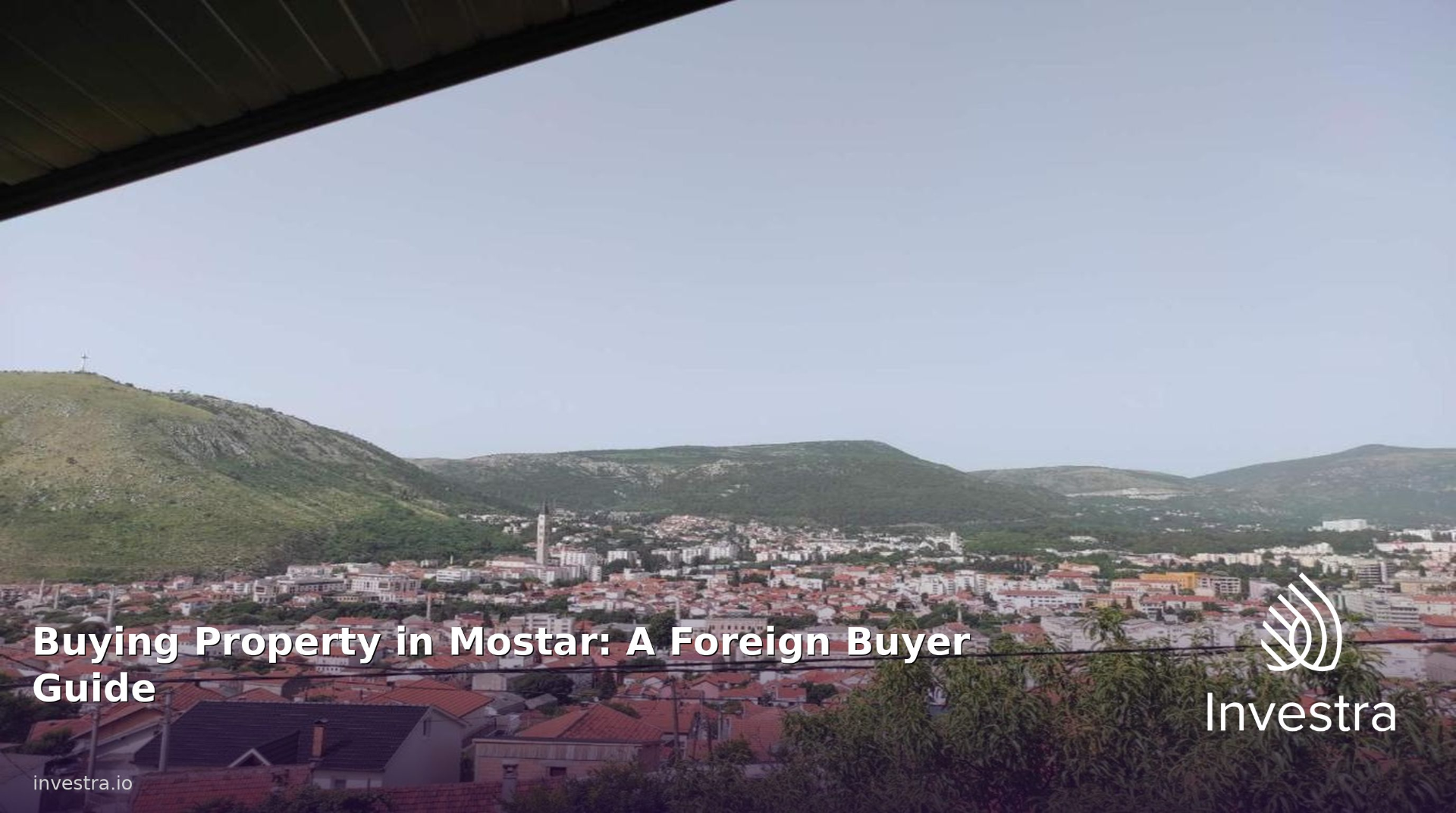
Buying Property in Mostar: A Foreign Buyer Guide
Buying Property in Mostar: A Foreign Buyer Guide
Mostar at a glance: market character and trends
Quick Answer: Mostar blends Austro-Hungarian architecture, Ottoman heritage and a compact urban core, creating opportunities for buyers seeking historic homes, apartments and renovation projects. Check recent market snapshots from local guides and property platforms to confirm current activity levels.
Mostar feels smaller than other regional capitals, but that compactness is an advantage for many buyers. In my experience, the city’s charm — a UNESCO-tinged Old Town, the iconic Stari Most bridge and a tight-knit residential fabric — attracts people who want character as much as convenience. The market is not homogeneous; you’ll find modern blocks beside traditional stone houses, and pockets where renovation is common. What surprised many buyers is the prevalence of properties that require some legal and physical clean-up before transfer — something that turns off casual purchasers but draws investors and hands-on owners.
If you want up-to-the-minute context, consult local market guides and broker reports. The Mostar real estate market guide on Investra is a practical starting point. For comparative context, study nearby regional markets such as Sarajevo and Banja Luka through Investra’s city guides; patterns often ripple across the country. The reality is markets shift with local employment trends, tourism seasonality and municipal planning. To confirm activity and pricing now, contact licensed agencies in Mostar, consult the municipal cadastre and ask for recent comparable sales.
Mostar’s market is often seasonal: short-term demand rises in summer, but long-term interest is steadier among locals, diaspora returnees and a small but persistent stream of foreign buyers. We’ve seen city-centre flats in buildings that predate modern construction laws trade differently from stone houses near the Neretva. If you plan to buy property Mostar, expect a mix of opportunity and paperwork. Local guides, including the practical Buying property in Mostar piece, explain typical procedures and common pitfalls in detail.
Why foreign buyers consider Mostar
Quick Answer: Foreign buyers are drawn to Mostar for cultural authenticity, renovation potential and tourism-driven rental prospects; motivations include lifestyle purchases, holiday homes and small-scale investments. Verify local demand and municipal rules before committing.
Why would someone from abroad choose Mostar? The reasons vary. Some want a second home close to the Adriatic without the premium cost of coastal towns. Others are attracted to the city’s layered history and unique visual appeal. The Bosnian diaspora often looks to return or keep a pied-à-terre in town. The reality is that Mostar can offer lower acquisition friction than larger capitals, especially for buyers prepared to handle local bureaucracy or hire experienced advisors.
What should buyers know about buy property Mostar from a practical perspective? First, motivations matter: are you seeking rental income, capital growth, or a place for family use? Each objective changes the location, property type and legal structure you should prioritise. Short-term renters love proximity to the Old Bridge and riverfront; long-term tenants prefer neighbourhoods with schools and transport links.
There’s a tendency among newcomers to prioritize romantic locations — think stone houses with river views — without factoring in renovation costs, access or registration status. In my experience, asking the right local contacts early saves time. Use city-specific rental guides like the Mostar rental market guide to understand letting dynamics. And if you want comparative data about neighbourhood appeal, read the Mostar neighbourhood guide.
Legal framework: can foreigners buy property in Mostar?
Quick Answer: Foreign nationals can buy property in Mostar, but legal eligibility, ownership routes and required approvals depend on nationality, property type and municipal regulations—always verify with local lawyers and registry records.
One of the first questions I ask clients is: what’s your passport? Citizenship often affects the route to legal ownership. Bosnia and Herzegovina’s property system is layered: national law, entity-level rules and municipal practices all play parts. The basic approach involves title checks at the municipal cadastre, proof that a seller has clear ownership, and verification of any encumbrances such as mortgages, easements or unresolved inheritances. The reality is that paperwork takes time and sometimes requires translation and notarisation.
Buyers must ensure the property’s legal status is clean before making any serious payment. I recommend instructing a local lawyer or conveyancer experienced with foreign purchasers — someone who can liaise with the municipal land registry and the notary. The Investra guide Buying property in Mostar outlines common legal steps and documents you'll encounter. Comparative guides such as Buying property in Sarajevo and Buying property in Banja Luka help clarify regional differences you might face if considering multiple cities.
How do you verify legal eligibility right now? Contact a Mostar-based law firm, consult the municipal cadastre, and request an up-to-date extract of the land registry. If the property was inherited or has unresolved legal cases, make sure your lawyer provides a clear remediation plan. The practical step is simple: don’t rely on verbal assurances from sellers or agents alone.
Types of property and ownership structures in Mostar
Quick Answer: Properties in Mostar include apartments, traditional stone houses, new-build flats and mixed-use buildings; ownership may be individual, joint, or via a company—each structure has distinct legal and tax implications to verify locally.
Mostar’s property stock covers a wide spectrum. There are old stone houses in the Old Town, mid-20th-century apartment blocks, and a growing number of new-build projects. The Mostar new-build guide provides an overview of contemporary developments and renovation trends. What buyers often underestimate is how different ownership forms affect risk and administration.
Individual ownership is straightforward but can complicate inheritance and taxation if you’re a non-resident. Joint ownership with a spouse or partner is common, but co-ownership agreements should be formalised in writing. Holding property via a local company is another option used by some buyers to manage multiple assets or rental portfolios. However, company ownership brings corporate filings and tax compliance. If you’re considering a company structure, consult advisors such as the Findes Group & Partners or an experienced lawyer.
What’s the best structure? That depends on your objectives and country of residence. In my experience, buyers who aim for short-term lets favour individual ownership for simplicity, while those planning larger portfolios consider corporate vehicles. Talk to legal and tax advisers and request tailored scenarios. Siniša Dagary’s advisory services and business strategy content can be helpful for structuring decisions; see advisory services and his investment insights.
Practical step-by-step buying process in Mostar
Quick Answer: The buying process typically involves property search, legal checks, a preliminary agreement, due diligence, notarised transfer and land registry update; each phase requires documents and local professional support.
There’s a sequence most experienced buyers follow, and it helps prevent surprises. Start with a shortlist of properties and local viewings; ask for the title deed, proof of seller identity and any recent sale agreements. Once you’ve picked a property, the usual next step is a preliminary contract or reservation agreement with a deposit — but don’t deposit funds until you’ve instructed a lawyer to confirm title and encumbrances.
Due diligence encompasses obtaining an extract from the land registry, confirming that the building has a valid use permit or occupancy certificate, and checking for unpaid utilities or municipal charges. The seller’s tax clearance can be relevant; a lawyer will tell you if it’s required. After the checks, the final sale is typically concluded before a notary public, who prepares or verifies the transfer documents. The transaction is then registered with the municipal cadastre and land registry.
Who does what? Real estate agents handle viewings and negotiations, but they are rarely a substitute for a lawyer. A notary oversees the formal transfer, and the cadastre records the new owner. We’ve seen deals stall when buyers skipped a professional survey or assumed a seller’s verbal guarantees. If you need a practical procedural walk-through, Investra’s Mostar real estate market guide and the step-by-step Buying property in Mostar article explain common clauses and documents to expect.
Due diligence: essential checks, surveys and registries
Quick Answer: Conduct title searches, check building permits, confirm utility and tax compliance, and order a technical survey; local registries and professional inspectors provide authoritative documentation.
Due diligence is where mistakes get caught — or made. I always tell buyers to assume a property needs full verification. Start with the land registry extract to confirm the legal owner and note any mortgages or liens. The cadastre will show parcel boundaries and official area. Next, request building permits and the occupancy certificate; many older properties were modified informally and may lack permits for extensions or structural changes.
Technical surveys matter. A structural or electrical inspection reveals issues that influence negotiations. Hire a local architect or engineer for condition reports and costed remediation estimates. Ask for recent utility bills and ensure water, electricity and sewage accounts are clear. If the property is subject to communal or condominium rules, obtain the minutes of apartment building meetings and a statement of outstanding communal charges.
Verification methods are straightforward: request official extracts from the municipal cadastre and court registers, ask the seller for originals of permits and receipts, and rely on your lawyer to liaise with municipal offices. For cross-checks, Investra’s guides and local advisors such as investment consultation or the Findes Group & Partners advisory team can recommend trusted professionals. The cost of thorough due diligence is small compared with the cost of a problematic title or unexpected repairs.
Taxes, fees and ongoing costs when buying in Mostar (Buying Legal & Tax)
Quick Answer: Property-related taxes and fees in Mostar include transfer taxes, notary fees, registration charges and recurring property taxes; consult local tax offices, your lawyer and vendor invoices to confirm current rates and liabilities.
Taxes and fees are a decisive part of the purchase equation. I avoid quoting numbers because local tax rules change and regional authorities may apply different rates. Instead, here’s how you verify what you’ll actually owe. First, contact the municipal tax office in Mostar for the most current property transfer tax and annual property tax rules. Ask for written confirmation and sample invoices for similar transactions. Your lawyer should obtain an official quote or calculation during the pre-contract phase.
Don’t forget notary fees and land registry charges. Notaries in Bosnia and Herzegovina handle the formal transfer and will charge a legal fee based on the transaction type and documentation required. The cadastre charges a registration fee to update the owner record. If you use a mortgage, there will be bank valuation fees and potentially mortgage registration costs. Request itemised estimates from your lawyer, notary and bank before signing anything.
Ongoing costs also matter. Annual property tax, communal charges for apartment buildings, utility bills and optional insurance add to ownership running costs. If you plan to rent, account for income tax and VAT considerations — consult the Mostar rental market guide for a framework and speak to a local tax advisor for specifics. For overarching advisory, resources such as Siniša Dagary’s advisory services or Findes Group & Partners can help align legal structure with tax efficiency. The bottom line: verify all figures with official invoices and municipal authorities rather than relying on anecdotal estimates.
Financing, mortgages and payment options for foreign buyers
Quick Answer: Foreign buyers may secure local or international financing; bank eligibility criteria, required documentation and loan-to-value standards vary—confirm mortgage options and terms with banks and brokers before making offers.
How can you verify current financing conditions? Contact banks directly and request indicative mortgage terms for foreign applicants. Many lenders publish criteria online, but the detailed terms often appear only after initial due diligence. Use reputable mortgage brokers or financial advisers — the Investra network and local consultants like Siniša Dagary can connect you with recommended lending partners. Remember, financing availability changes with macroeconomic conditions, so reconfirm before making any commitments.
Using companies and alternative ownership: pros, cons and compliance
Quick Answer: Holding Mostar property via a local company can offer administrative flexibility but brings corporate compliance and tax reporting—consult corporate lawyers and advisors to weigh pros and cons for your situation.
If you’re tempted to use a company, evaluate alternatives: personal holding, joint ownership agreements or trusts in your home jurisdiction. Each choice triggers different tax reporting and possible double-tax treaty implications. To get clear guidance, consult corporate advisors such as Findes Group & Partners and legal consultants. Siniša Dagary’s consultancy page lists services that can help structure business and property acquisitions; see advisory services and his profile for experience.
Rentals and short-term lets: what owners should know
Quick Answer: Mostar offers short-term and long-term rental demand driven by tourism and local needs, but local regulations, taxation and seasonal patterns affect returns—verify rules with municipal authorities and local tax advisors.
Before you advertise, check local rules for short-term lets, including registration requirements, safety standards and tax obligations. Some municipalities require hosts to register and collect tourist taxes. A local accountant can clarify whether your rental income should be reported as personal income or through a company, and whether VAT applies. For an operational perspective, read the Mostar rental market guide and consult property managers who specialise in Mostar listings.
Best neighbourhoods and locations in Mostar for buyers
Quick Answer: Choose a location based on your goals: Old Town and riverfront for short-term tourism, central neighbourhoods for year-round rental and suburban areas for family living; consult local neighbourhood guides and on-the-ground agents.
The Mostar neighbourhood guide provides deeper insights into micro-locations and buyer profiles. If you’re comparing with other Bosnian cities, look at Sarajevo and Banja Luka neighbourhood guides too — they can reveal regional urban patterns. See Sarajevo neighbourhood guide and Banja Luka neighbourhood guide for comparison.
Investment Disclaimer
Quick Answer: This section outlines the article’s purpose as educational and reminds readers that property investment carries risks and requires professional advice and verification of current facts.
The information provided in this article is for educational and informational purposes only and should not be construed as financial, legal, or investment advice. Real estate investments carry inherent risks, and past performance does not guarantee future results. Investors should not invest money they cannot afford to lose. Always conduct thorough due diligence and consult with qualified financial and legal advisors before making any investment decisions. Investra.io does not guarantee returns on any investment.
Frequently Asked Questions
Quick Answer: This FAQ answers common buyer questions about documentation, taxation, financing, and practical steps to buy property Mostar and verify details locally.
Can foreigners legally buy property in Mostar?
Yes—foreign nationals can buy property in Mostar, but the procedure can vary with nationality and property type. The safest approach is to hire a local lawyer who will obtain extracts from the land registry, confirm seller identity and check for encumbrances. Ask the municipal cadastre for official records, and request written confirmation from your lawyer before any deposit. For more on legal steps, see the Investra guide on Buying property in Mostar.
How do I verify current property prices in Mostar?
Don’t rely on a single agent’s listing. Cross-check recent sale listings on multiple platforms, request recent comparable sale documents from local agents, and ask the municipal cadastre for transaction records. Investra’s Mostar market guide is a good reference point; for broader context, look at Sarajevo and Banja Luka market materials.
What taxes and fees should I plan for when buying?
Common costs include transfer taxes, notary and registration fees, and any applicable legal costs. Annual property tax and communal charges are ongoing items. Because rates and thresholds change, contact the Mostar municipal tax office for current fees and ask your lawyer to obtain written estimates. Resources like the Mostar guide explain typical categories of fees but won’t substitute for an official calculation.
Is buying through a company beneficial?
Company ownership can simplify multi-unit holdings and isolate liability, but it adds corporate compliance, accounting and tax filings. The choice depends on scale, investor residency and tax treaties affecting your home country. Speak to corporate advisers such as Findes Group & Partners and consult local legal counsel. Siniša Dagary’s consultancy pages also provide strategy insights for such structures.
How do I handle due diligence on an old stone house in the Old Town?
Old houses often lack formal records for alterations. Obtain a land registry extract, request any historical permits, and commission a structural and utilities survey. Confirm whether conservation restrictions apply and whether the municipality recognises any unofficial extensions. Your lawyer and an architect or engineer should draft a remediation and compliance plan before you commit funds.
What are the typical steps for transferring ownership?
The process usually involves a preliminary agreement, due diligence, a notary-prepared sale contract and registration at the cadastre. Each step requires specific documents: identification, proof of title, tax clearances and the notarised contract. Use a local notary and your lawyer to ensure the transfer is properly recorded with the municipal land registry.
Can I finance a Mostar purchase with a mortgage as a foreigner?
It is possible, but bank terms vary by institution and applicant. Contact local banks for indicative terms; some lenders request residency or stronger collateral. Consider mortgage brokers and compare offers. Always secure written offers and review all conditions with a financial advisor to ensure you understand foreign exchange and repayment obligations.
Are short-term rentals allowed in Mostar?
Short-term rentals operate in Mostar, particularly near tourist areas, but local registration, safety and tax rules may apply. Check municipal requirements for tourist registration and collect any applicable municipal tourist taxes. Speak to a local property manager and tax advisor to ensure compliance before listing on platforms.
How do I find trusted local advisors and service providers?
Ask for references and samples of recent transactions. Use reputable advisory firms such as Siniša Dagary and Findes Group & Partners for corporate and legal introductions. Investra’s city guides also include vetted contacts. Always verify credentials, ask for client testimonials and confirm licencing where relevant (lawyer, notary, architect).
What should I check about rental regulations and taxation?
Confirm whether you must register as a host, collect tourist taxes, or report rental income for personal or corporate tax. The local tax office and your accountant will provide current rules. Review Investra’s Mostar rental market guide for practical considerations and consult a local tax professional for obligations and filing schedules.
How do I protect my deposit and payments during purchase?
Use escrow arrangements or a notary’s account when possible. Avoid paying large sums in cash or to private accounts without contractual protection. Your lawyer can prepare escrow arrangements or a reservation agreement specifying refund terms. Verify the notary’s credentials and obtain official receipts for all payments.
Recommended Reading
Quick Answer: The reading list links to Investra’s practical city guides and Siniša Dagary’s consultancy content to deepen your understanding of Mostar and comparative Bosnian markets.
- Sarajevo real estate market guide
- Buying property in Sarajevo
- Sarajevo rental market guide
- Sarajevo neighbourhood guide
- Sarajevo new-build guide
- Mostar real estate market guide
- Siniša Dagary — Investment Consultant
- Business Strategy Blog
Connect With Investra
Quick Answer: Follow Investra on social media to receive market insights and updates on Bosnian property trends.
Stay connected via Investra’s social profiles for market updates, property listings and expert commentary:
Facebook — Investra.io
LinkedIn — Investra.io
YouTube — Investra.io
Connect With Investra
Quick Answer: Follow Investra for verified market context and practical property research.
Related Posts
No related posts available.
