
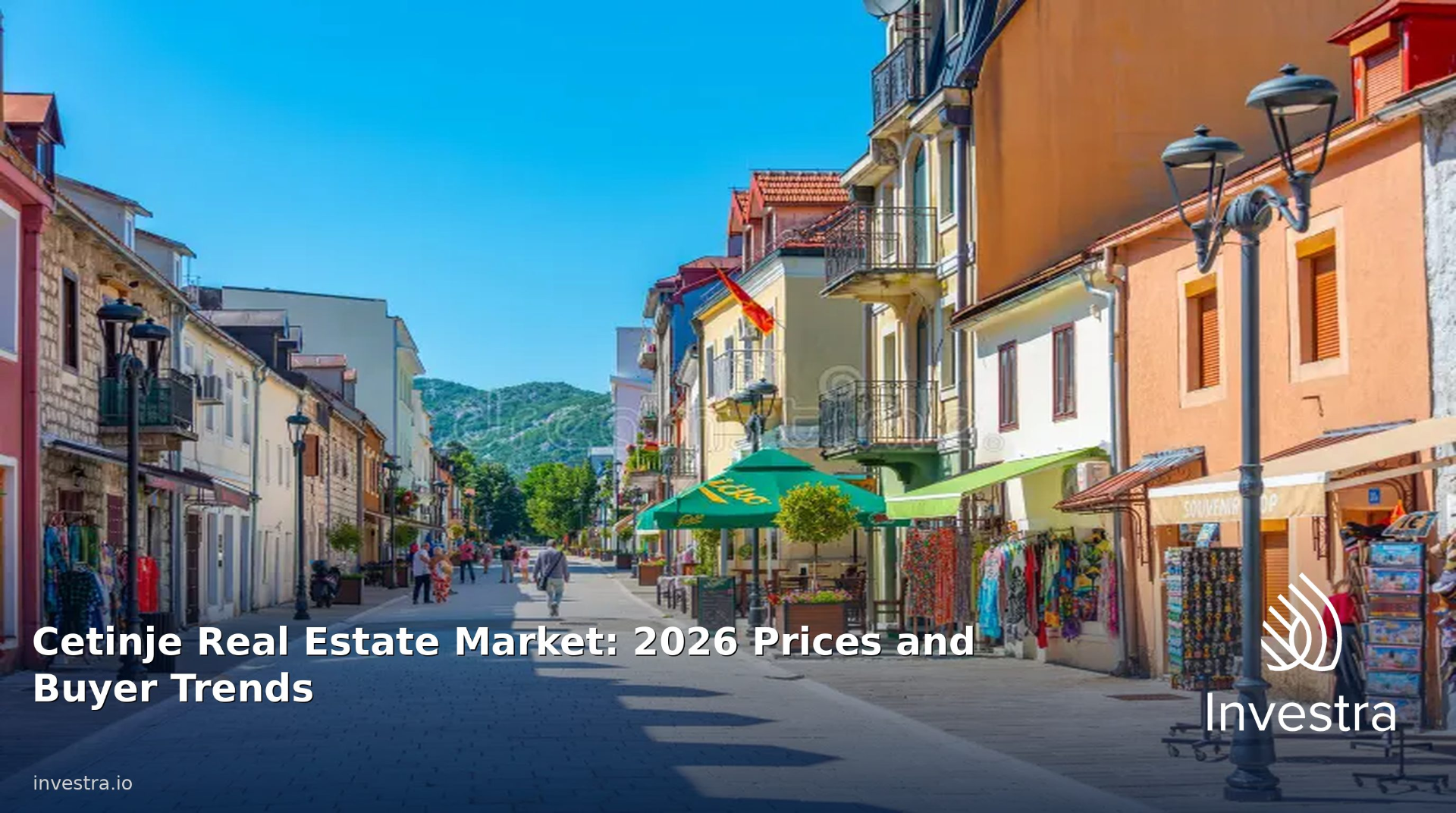
Cetinje Real Estate Market: 2026 Prices and Buyer Trends
Cetinje Real Estate Market: 2026 Prices and Buyer Trends
Cetinje: A concise introduction to the city and why buyers look here
Quick Answer: Cetinje is Montenegro’s historical and cultural heart, attracting buyers seeking heritage homes, quieter mountain-climate living and a gateway to coastal markets; understand local character before you commit.
Cetinje sits tucked below the slopes of Mount Lovćen and carries an outsized cultural profile for its size. For many international buyers, the attraction is a mix of history, landscape and proximity — you can be in a small, calm town and still reach the Adriatic coast within an hour or so. In my experience, buyers fall into two camps: those who want a residential base with local community ties, and those seeking renovation projects in period properties.
What surprised many buyers is how different Cetinje feels compared with coastal Montenegrin towns. Streets are quieter, development is less frenetic, and the stock of older stone houses and low-rise blocks creates a distinct market rhythm. There’s no single “one-size-fits-all” approach here. If you’re considering cetinje montenegro real estate, start by visiting neighbourhoods at different times of day, talking to local residents and meeting municipal officials — you’ll learn more in a morning than you can online in a week.
For comparative research methods, I often point readers to regional case studies that show how small-city markets evolve and how buyer priorities change; Investra’s analysis pieces on nearby Croatian markets can be useful reference points for process and due diligence, for example Pula Real Estate Market 2026: Areas, Buyer Demand and Due Diligence and Istria Property Investment 2026: A Decision Framework for Buyers. Those articles won’t tell you Cetinje prices, but they do show practical buyer checks you can adopt locally.
Quick market snapshot: drivers of demand and current dynamics
Quick Answer: Demand in Cetinje is shaped by heritage property interest, domestic buyer activity and seasonal tourism spillover; confirm up-to-date market indicators with local registries and active agencies.
Looking at the cetinje montenegro real estate market, the drivers are both structural and seasonal. Structural drivers include the town’s historical role, municipal zoning patterns and limited new-build supply within the historic core. Seasonal factors come into play because visitors to Lovćen, national parks and nearby coastal areas sometimes cross-check Cetinje listings. The reality is that small-town markets are sensitive to single-project developments and a handful of sellers can alter short-term sentiment.
So how do you measure current momentum? Don’t rely on adverts alone. Verified sale registrations, recent notarised sales, and local agency transaction records are what matter. To get that data you’ll want to contact local estate agents, notaries and the municipal land office. If you’re used to reading market updates from neighbouring countries, Investra’s guides on Pula and Rovinj illustrate the sort of demand signals — buyer priorities, local checks and due diligence steps — that you can mirror for Cetinje: see Rovinj Real Estate Market 2026 and Poreč Real Estate Market 2026.
What international buyers should assess when researching cetinje montenegro real estate in 2026
Quick Answer: International buyers should assess legal title, planning restrictions, up-to-date sale records, tax obligations, local market liquidity and physical condition of properties, verifying each item with official registries and a qualified local lawyer or notary.
If you’re asking, “What should I assess?” start with legal clarity. In my experience, the single biggest regret among foreign buyers is underestimating title complexity and local planning restrictions. Ask yourself: can a foreigner legally own this plot or building in full? Are there heritage protections? Who is registered as owner and do any mortgages or encumbrances exist? Those are the checklist items that should be verified immediately.
Next, dig into municipal planning and building permits. Cetinje contains many protected or semi-protected buildings; that influences what renovation or extension you can do. Always request the current land registry extract (nota bene: ask the seller for the latest one and verify it at the registry office) and obtain a local planning statement from the municipality. When you need a model for buyer due diligence that’s clear and actionable, take a look at Investra’s guides on buyer checks in neighbouring regions such as Buying Property in Pula: Legal Checks Before You Commit and Istria Property Due Diligence: A Croatian Buyer Checklist. The process is similar in principle even if the legal systems differ.
Finally, check the economics the way you would for any small market: market liquidity (how long properties sit unsold), seasonal rental demand if you plan to let, and running costs. For taxes and exact fee figures, consult the Montenegrin Tax Administration and a local accountant — I’ll outline verification steps in the taxes section below. And don’t forget to meet local estate agents and ask for copy contracts of recent purchases — that tells you market practice quicker than general commentary.
Property types and neighbourhoods in Cetinje: what to expect
Quick Answer: Cetinje’s stock mixes period stone houses, small apartment blocks and some newer developments on the town’s outskirts; identify neighbourhoods by conservation status and access to services before choosing a property type.
Cetinje is compact. You’ll find stone townhouses close to the core, modest apartment blocks dating from different eras and new construction mostly at the town’s edge. Many buyers are drawn to authentic stone homes with original features — exposed beams, vaulted ceilings and carved stone — but those properties often need careful renovation work. In my experience, buyers underestimate the cost and time of sympathetic restorations.
Ask about neighborhood-level rules. The old town has stricter conservation controls, which can protect your investment character but limit the scope of changes. Elsewhere, parcels on the edge of the urban boundary can offer easier modernisation but may lack the same market appeal. To get a feel for buyer priorities, the way buyers choose between old-town charm and practicality in nearby coastal markets is discussed in Investra’s location guides such as Rovinj Old Town or Newer Areas: A Property Buyer Location Guide.
One practical tip: when you view properties, collect photographs of façades and immediate surroundings; compare them with municipal zoning maps and ask a local architect whether the building has protected status. You’ll want to know if the property sits in a zone where restrictions apply to external appearance, rooflines or windows. That’s crucial for both living comfort and resale prospects.
The step-by-step buying process for Cetinje properties
Quick Answer: The buying process follows the standard Montenegrin sequence of offer, due diligence, contract, notary completion and registry entry — validate each stage with a local lawyer and the land registry office.
Buying property in Cetinje follows a consistent legal flow, but small local differences matter. From my conversations with buyers and notaries, the crucial stages are: (1) pre-contract checks and reservation agreements, (2) full legal due diligence via a qualified local lawyer, (3) a preliminary agreement or purchase contract with clear conditions, (4) notary execution and payment schedules, and (5) registration of the buyer at the land registry. The notary’s role is central — they confirm identity, check encumbrances and record the final deed.
Don’t skip the early step of asking for documentation: ownership extract, cadastral plan, floor plans, building permits and proof of cleared utilities. If the seller offers any guarantees on repairs or included fixtures, get them in writing and notarised. For procedural checklists that international buyers find helpful, Investra’s practical guides show how to prepare: see How to Buy Property in Istria as a Foreign Buyer in 2026 and Pula New-Build Homes: A Buyer Due Diligence Guide for 2026. The steps are instructive even though local laws differ.
Finally, timeframe expectations matter. Small towns often have slower administrative processing than big cities. Expect some document requests and replies to take longer. That patience pays: comprehensive checks reduce the chance of disputes later.
Legal checks, title, and ownership issues in Montenegro
Quick Answer: Verify title, encumbrances and planning status through a registered lawyer and the national land registry; check whether any special protections apply to the building or site.
Legal clarity is non-negotiable. Before you sign any contract, you should have a lawyer perform a full title search and confirm whether the property is free of mortgages, liens or inherited claims. In my work advising buyers, unresolved title issues are the single largest cause of deals falling through. The technical term you’ll encounter is an extract from the land registry (often provided by the notary), which is the primary document confirming legal ownership and any encumbrances.
Watch for restrictions tied to heritage or conservation. In small historic towns like Cetinje, the municipality may have rules that limit exterior changes or require approved materials. That affects renovation feasibility and costs. Don’t rely on the seller’s word alone — get official confirmation from the municipal planning office and request copies of any preserved building certificates or conservation status declarations.
If you’re uncertain which local counsel to use, advisory partners such as Findes Group & Partners and their advisory team (Findes Group & Partners advisory team) can connect you with regional legal resources. Also consider advisory consultations from specialists like advisory services and direct contact pages such as investment consultation for bespoke legal and tax introductions.
Taxes, purchase costs and ongoing ownership expenses
Quick Answer: Expect purchase taxes, notary fees, registry charges and ongoing municipal taxes; confirm current rates and exemptions with the Montenegrin Tax Administration and a local accountant.
Taxes and fees can materially change a deal’s economics, so verify them early. I avoid giving exact rates because they change; instead, I always tell buyers how to confirm current numbers. First, request the most recent fee table from the Montenegrin Tax Administration and the local municipality. A qualified Montenegrin accountant or tax lawyer should confirm inheritance tax rules, property transfer taxes, VAT applicability for new-builds and any local charges attached to the specific parcel.
In addition to one-off purchase costs, build a budget for ongoing ownership: municipal property taxes, utilities, insurance and maintenance on older buildings. Historic houses can be charming but are often more expensive to maintain. An easy verification path: ask sellers for recent utility bills and municipality tax notices, then have these reviewed by your accountant. For budgeting frameworks and ownership-cost concepts, Investra’s practical guides such as Istria Property Ownership Costs: A Practical Budgeting Guide and Property Taxes and Purchase Costs in Istria show how to structure running-cost checks even if rates differ locally.
Rental market and short-term letting considerations for Cetinje
Quick Answer: Rental demand in Cetinje is influenced by seasonal tourism and local housing needs; check local licensing rules and tourist rental registration before listing any property.
Are you planning to rent out your Cetinje property? Think through demand drivers. Short-term tourists can provide income during peak months if the property is well-located, but small-town markets rarely match coastal rental seasonality in scale. Long-term rentals may appeal to local professionals or families, especially if the property has reliable access to services and schools.
Crucially, verify rental licensing and tourist registration requirements with the local municipality and the national tourist board. Hospitality regulation in Montenegro has evolved, so check for any new registration steps, fire-safety certifications, or minimum standards for short lets. In practice, I’ve seen buyers who assumed they could run a holiday rental immediately, only to discover registration or safety upgrades were required. Contact a local property manager to get an operational estimate and ask for sample occupancy data from recent seasons.
For operational due diligence, review local property management options and check references. If you want frameworks for holiday rental readiness and buyer due diligence, Investra’s guides on holiday rental investment and long-term letting in nearby markets may be helpful: for example, Rovinj Holiday Rental Investment and Pula Rental Investment Guide 2026.
Financing and cross-border money transfers for buyers
Quick Answer: Financing options vary by buyer nationality and bank; check mortgage availability with Montenegrin banks and confirm transfer rules with your bank and a tax advisor.
Cross-border transfers are another practical consideration. International transfers may attract compliance checks, and banks will ask for source-of-funds documentation for larger transfers. Work with both your home bank and a Montenegrin bank to clarify the steps and costs. For advisory introductions, consider reaching out to professional services such as advisory services and explore legal and accounting partners through consultants like Findes Group & Partners advisory team. They can help align financing strategy with legal and tax requirements.
Valuation, negotiation and making a practical offer
Quick Answer: Base your offer on comparable sales, condition-adjusted valuation and clear contractual conditions, and have a local solicitor draft or review the terms before you sign.
When you prepare an offer, include conditions that protect you: a timeframe for due diligence, deposit escrow instructions, and clear remedies if the seller fails to disclose encumbrances. Use a notary or reputable lawyer to hold any deposit in escrow, and never transfer the full purchase sum before the deed is notarised and registered. For negotiation and offer drafting processes, templates and practical buyer questions are covered in Investra’s work on buyer due diligence and new-build checks, like Pula New-Build Homes: A Buyer Due Diligence Guide for 2026 and Umag Real Estate Market 2026, which show the kind of conditional clauses effective buyers use.
Practical next steps, trusted local contacts and due diligence checklist
Quick Answer: Start with a site visit, obtain the land-registry extract, commission legal and technical surveys, and engage a local notary or lawyer; use reputable advisory partners for introductions.
For introductions to advisory partners and more structured consultations consider firms that specialise in Central and Southeastern Europe. A few contacts to consider: Siniša Dagary’s consultancy pages provide advisory insights and service descriptions that many buyers find helpful (Siniša Dagary, Siniša Dagary investment insights, Siniša Dagary profile). For legal and tax connectors, the Findes Group can help source local lawyers and accountants (Findes Group & Partners). If you want procedural examples, Investra’s buyer guides are practical and readable — see pieces such as Pula Rental Investment Guide 2026 and Istria Property FAQ 2026.
Investment Disclaimer
Quick Answer: This section clarifies the purpose and limits of the article’s content: general information, not individual financial or legal advice.
The information provided in this article is for educational and informational purposes only and should not be construed as financial, legal, or investment advice. Real estate investments carry inherent risks, and past performance does not guarantee future results. Investors should not invest money they cannot afford to lose. Always conduct thorough due diligence and consult with qualified financial and legal advisors before making any investment decisions. Investra.io does not guarantee returns on any investment.
Frequently Asked Questions
Quick Answer: The FAQ section answers common buyer questions about cetinje montenegro real estate and provides practical steps for verification.
Can foreigners buy property in Cetinje, Montenegro?
Yes, many foreigners purchase property in Montenegro, but the exact conditions depend on nationality, property type and current national regulations. To verify whether you can purchase a specific property, consult a Montenegrin lawyer who will check statutory restrictions and any bilateral agreements affecting ownership. Request the land registry extract and ask the lawyer to clarify any nationality-based conditions. If you want a structured buying checklist, Investra’s international buyer guides illustrate typical procedural steps and required documentation.
How do I verify current property prices in Cetinje?
Since local market prices change, rely on primary sources: recent sale deeds on file at the land registry, notary-confirmed transactions and local agency records. Ask local agents for copies of closed-deal documentation with redacted personal details, and request transaction lists from notaries who handled sales. You can also consult municipal sales records where available. That process gives you a factual basis rather than relying on advertised asking prices.
What documents should I request from the seller before making an offer?
Request the land registry extract, cadastral map, building permits, certificate of no encumbrances or mortgages, proof of cleared utilities, and any conservation or heritage certificates if the property is historic. Also ask for recent utility bills and tax notices. Have these documents reviewed by your lawyer before exchanging contracts.
Are there conservation or heritage protections affecting properties in Cetinje?
Yes, some buildings and zones in Cetinje are subject to conservation rules. To confirm whether a specific property is protected, ask the municipality for zoning statements and any conservation orders. A local architect or conservation specialist can also interpret what restrictions mean for renovations and extensions.
How do I check for hidden encumbrances or disputes on a property?
Obtain a full extract from the land registry and ask your lawyer to perform a title search. The extract will list mortgages and registered encumbrances. also, request confirmation from the notary about the seller’s right to transfer ownership and search for any pending legal actions or inheritance claims. A comprehensive legal search is the most reliable way to clear hidden surprises.
What running costs should I budget for after purchase?
Plan for municipal property tax, insurance, utilities, maintenance (especially for older stone houses), and potential condominium fees if the property is part of a shared building. For exact figures, consult the municipal tax office and request recent bills from the seller. Employ a local accountant to estimate annual costs and to explain any tax reporting obligations for non-resident owners.
Can I renovate a historic property in Cetinje and what approvals do I need?
Renovating a historic property typically requires municipal planning approval and possibly conservation authority consent. Before buying, ask the municipality about the permitted scope of work and whether a conservation plan is required. Hire a local architect experienced with historic restorations to prepare plans that align with local rules and to manage the approval process.
Where can I find reliable local agents and notaries?
Seek recommendations from multiple sources: expatriate networks, advisory firms such as advisory services, regional professional groups and platforms like Findes Group & Partners. Interview candidates about recent transactions and ask for client references. Ensure the notary you choose has experience with international transactions and is in good standing with the local bar association.
How should I assess rental potential for a Cetinje property?
Evaluate demand drivers: proximity to Lovćen and cultural sites, transport links, property condition and seasonality. Request occupancy and pricing data from local property managers and ask for sample operating statements. Verify short-term letting rules with the municipality. If you plan to manage remotely, examine local property management fees and services before you commit.
Where can I verify up-to-date tax rates and fees for property purchases?
Contact the Montenegrin Tax Administration and the municipal tax office for current rates, exemptions and filing procedures. A local tax accountant will translate those rules into practical costs for your transaction. Never rely on outdated online articles; always get the current official fee tables and confirm them with your lawyer and accountant.
Recommended Reading
Quick Answer: These curated resources offer practical buyer checklists and regional market explanations that are useful when researching cetinje montenegro real estate.
- Pula Real Estate Market 2026: Areas, Buyer Demand and Due Diligence
- How to Buy Property in Istria as a Foreign Buyer in 2026
- Rovinj Real Estate Market 2026: Buyer Priorities and Location Choices
- Istria Property Investment 2026: A Decision Framework for Buyers
- Poreč Real Estate Market 2026: A Practical Guide for Property Buyers
- Pula Rental Investment Guide 2026: Long-Term Letting Buyer Questions
- Siniša Dagary — Investment Consultant
- Business Strategy Blog
Connect With Investra
Quick Answer: Follow Investra.io on social channels for market updates, analysis and new property opportunities.
Stay connected with Investra for ongoing market reports and practical guides. Follow these official Investra pages for updates and educational content:
Facebook — Investra.io
LinkedIn — Investra.io
YouTube — Investra.io
If you’d like a bespoke introduction to local Montenegrin advisors, consider reaching out to advisors such as investment consultation or consult firms presented at Findes Group & Partners advisory team for tailored introductions and local partner sourcing.
Connect With Investra
Quick Answer: Follow Investra for verified market context and practical property research.
Related Posts
No related posts available.
