
Dobrinja Sarajevo Property: Neighborhood Guide & Market Insights
Dobrinja Sarajevo Property: Neighborhood Guide & Market Insights
Dobrinja Sarajevo Property: Overview and Why It Matters
Quick Answer: Dobrinja Sarajevo property refers to homes and apartments in a large residential area east of central Sarajevo; it's a practical neighborhood for families and commuters with a mix of housing types and steady local demand. For detailed Sarajevo market context, see Sarajevo real estate market guide.
Dobrinja sits in the heart of Sarajevo's post-war urban fabric. As an area, it often draws attention because of its planned blocks, Soviet-era panel buildings, later infill, and growing local infrastructure. When someone says "dobrinja sarajevo property" they usually mean apartments in medium-rise blocks, some newer developments, and houses at the fringe. In my experience, buyers are attracted by the neighborhood’s practical layout: schools, health clinics and shops are within walking distance for many residents. The reality is that Dobrinja functions as a residential backbone for eastern Sarajevo—close enough to the centre for daily commuting but quiet compared with the Old Town.
What should an investor or buyer ask first? Look at the building condition and maintenance history, the proximity to transport nodes, and whether the title is clear. Local guides on Sarajevo neighbourhoods can help orient you; for instance, our Sarajevo neighbourhood guide compares Dobrinja to other districts. If you want practical, on-the-ground advice or to arrange a viewing, professionals like those listed at advisory services can help.
History, Reconstruction and Urban Development in Dobrinja
Quick Answer: Dobrinja's urban form reflects post-war reconstruction and planned residential development, producing a mix of panel blocks, newer infill projects and evolving public spaces. For broader Sarajevo development trends, review our Sarajevo new-build guide.
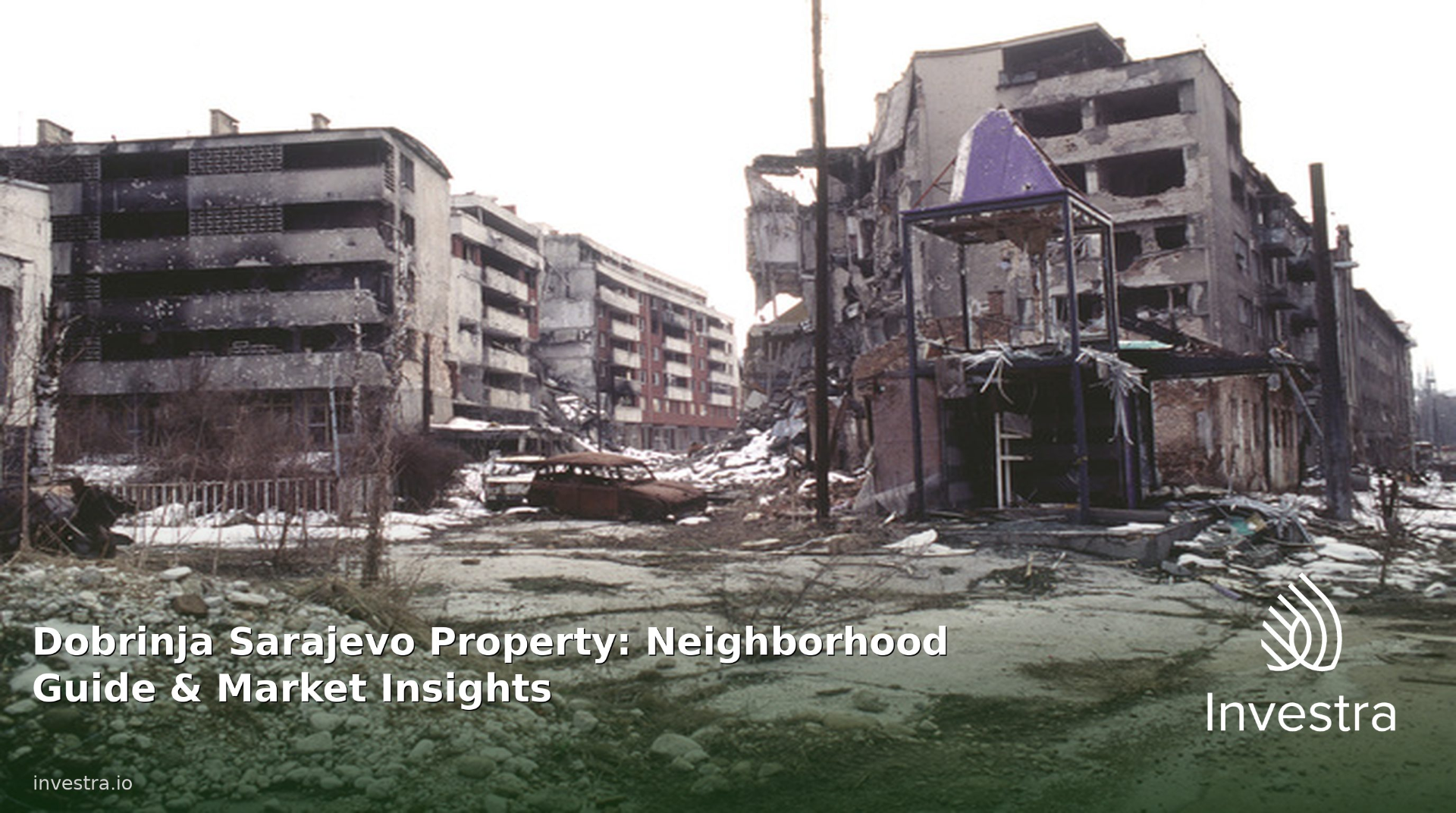
Walking Dobrinja, you can feel the layers of history under the asphalt. The neighborhood was heavily affected during the 1990s conflict and subsequently rebuilt with a mix of state-led planning and private investment. In practice, that means you’ll find standardized apartment blocks—some with communal courtyards—alongside newer infill that attempts to modernize the streetscape. What surprised many buyers is how different pockets of the same neighborhood can feel; one block might be well-maintained with active residents' committees, while the next shows deferred maintenance.
The municipal approach to rebuilding emphasized mass housing and practical amenities. Over time, local commercial strips and small shopping centres emerged. Planners have also tried to improve green space and pedestrian routes, but progress is uneven. If you want to verify recent development approvals or planned infrastructure, check Sarajevo Canton planning documents and local municipality records, or speak with professionals such as the team at Findes Group & Partners who work across the region and can advise on project pipelines.
Neighborhood Character and Housing Options in Dobrinja
Quick Answer: Housing in Dobrinja ranges from older panel apartments to more recent condominiums and standalone houses on the outskirts; choice often depends on buyer priorities like space, renovation scope, and proximity to services.
Dobrinja's residential stock isn’t monolithic. There are compact one-bedroom flats popular with singles and young couples, larger family apartments with multiple bedrooms, and occasional terraces or small houses near the edges. In my experience, the biggest decision for buyers is whether to accept a ready-to-live-in unit with modest character or to budget time and money for renovation. Many people buy here because the layout of apartments tends to be practical—good-sized living rooms, separate kitchens, and balconies—though finishes vary widely.
If you’re looking for new-build options, consult the Sarajevo new-build guide for an overview of what developers are offering in and around Dobrinja. For those considering Mostar, Banja Luka or Tuzla as alternatives, we also have city-specific pages like the Mostar real estate market guide and the Banja Luka real estate market guide to compare housing styles across Bosnia and Herzegovina.
Transport Links, Amenities and Lifestyle — Living in Dobrinja
Quick Answer: Dobrinja offers practical transport connections to central Sarajevo, local shops, schools and healthcare, creating a life-friendly neighborhood that appeals to families and long-term residents.
One of Dobrinja's strongest selling points is the everyday convenience. Local buses and routes link the area with Sarajevo’s centre, university districts and business quarters. Travel times can be reasonable, but peak-hour congestion matters. I've accompanied buyers who prioritized short public-transport commutes; they often choose blocks close to the main routes, sacrificing a bit of quiet for speed.
Amenities also matter. Primary and secondary schools are within easy reach for many families; local clinics cover basic medical needs and hospitals are accessible in the city. Small supermarkets and family-run shops populate the streets. For larger retail or leisure options, residents travel to nearby shopping centres or central Sarajevo. If community life is important to you, talk to residents at a building entrance or neighborhood café. Practical, ground-level intelligence often reveals things official descriptions don't: whether a children’s playground is maintained, how noisy a particular evening street is, or where convenient parking clusters exist. For professional site visits or to arrange neighborhood orientation, consult local advisors such as investment consultation.
Micro-Areas in Dobrinja: Where to Focus Your Search
Quick Answer: Focus your search on micro-areas that match your priorities—closer to transport for commuters, quieter inner blocks for families, and newer infill areas for modern finishes—after verifying cadastral boundaries and building records.
Dobrinja is large enough that "location within Dobrinja" matters. Some blocks sit adjacent to busy streets and benefit from quick access to bus lines and shops. Others are set deeper in the residential grid with courtyards and reduced traffic, better suited for families. If proximity to schools or a particular medical centre matters, map those endpoints before you view properties.
How do you verify micro-area claims? Visit multiple times at different hours. Inspect the block for maintenance, check with the municipality for building permits, and ask neighbours about noise, security and local services. Digital tools like municipal cadastre portals, or platform reports such as the Sarajevo neighbourhood guide, give orientation. For legal clarity on plot lines and ownership, seek a professional search from firms like Findes Group & Partners advisory team or an on-the-ground lawyer. What surprises many buyers is how a single street can alter convenience dramatically; a ten-minute walk to a bus stop versus a three-minute drive is meaningful over the long run.
Buying Process in Sarajevo: Practical Steps for Dobrinja Purchases
Quick Answer: The buying process in Sarajevo involves property searches, legal checks, purchase agreements and registration; consult local buying guides like our Buying property in Sarajevo guide and use a qualified solicitor to confirm current requirements.
Buying property in Dobrinja follows the formalities common across Sarajevo, but with practical, neighborhood-specific steps. Start by narrowing your shortlist through inspections. In my experience, preliminary checks—ownership, outstanding mortgages, and whether common charges are current—save buyers from headaches later. A typical route includes: finding a property, signing a preliminary agreement (often with a deposit), conducting legal due diligence, finalizing the sale contract in front of a notary, and registering the transfer at the cadastre.
If you're a foreign buyer, you must check reciprocity and nationality rules; our Buying property in Sarajevo guide outlines the checkpoints. For buyers looking at alternatives, similar processes apply in Mostar, Banja Luka and Tuzla—see their respective step-by-step guides: Buying property in Mostar, Buying property in Banja Luka, and Buying property in Tuzla. Always instruct a local lawyer to run title searches and request the latest municipal extracts because administrative rules and requirements change over time.
Ownership, Titles and Legal Considerations
Quick Answer: Clear title, up-to-date cadastral registration and compliance with local building permits are essential—verify these through a licensed notary and a lawyer familiar with Sarajevo property law.
Legal clarity is non-negotiable. Dobrinja properties can carry complex histories—especially units restored or altered after the conflict—so know who holds the title and whether any encumbrances exist. In practice, I always recommend a two-step legal review: document review (contracts, ownership certificates, encumbrance searches) and physical verification (is the occupier the registered owner; are there informal agreements?).
Foreign buyers should pay special attention to reciprocal purchase rights and any municipal registration requirements. For comparative context, our city guides—such as the Mostar real estate market guide and Banja Luka real estate market guide—explain local legal patterns you might encounter elsewhere in the country. Engage a notary to formalize the sale and then register the transaction at the cadastre to secure your legal title. If you want professional advisory, reach out to practitioners like Siniša Dagary or his team for tailored legal introductions and strategy.
Taxes, Fees and Ongoing Ownership Costs
Quick Answer: Taxes and fees apply at purchase and during ownership; because rates and obligations change, verify current amounts with a local tax advisor or municipal treasury before committing to purchase.
Taxes, transfer fees and maintenance costs are part of the ownership equation. I won't list numbers here because rates and thresholds differ by locality and can change. Instead, here's a practical approach: before signing anything, request a written estimate of all expected taxes and official fees from your lawyer or the municipal office. Confirm whether the seller has outstanding communal charges or property taxes unpaid. Visit the local municipal treasury or tax office, or ask your legal advisor to obtain up-to-date tax schedules.
For rental properties, ask a tax professional about reporting obligations, allowed deductions, and whether you need a local tax ID. Our regional guides—like the Sarajevo rental market guide, Mostar rental market guide, and Banja Luka rental market guide—explain what documentation landlords typically keep and how to verify compliant reporting. If anything seems unclear, a consultation with an advisor from advisory services or the Findes Group & Partners advisory team will get you precise, current answers.
Renting and Short-Term Lets: Demand and Practical Management
Quick Answer: Dobrinja attracts steady local rental demand from families, students and professionals; to manage rentals correctly, confirm local licensing, contracts and tax reporting with a legal advisor.
Dobrinja isn't a tourist hotspot like Baščaršija, but it supports a consistent rental market driven by local demand. Students, young professionals working in the city, and families seeking practical apartments are typical tenants. From my meetings with landlords, those who prepare robust tenancy agreements and keep records of invoices and tax filings find fewer problems down the line.
If you consider short-term lets, check municipal rules and any licensing or zoning restrictions that apply to short-term rental platforms. Local accommodation rules can change quickly—ask a local property manager or use our Sarajevo rental market guide to frame your questions. For regional comparisons and operational tips, see guides for Mostar and Banja Luka: Mostar rental market guide and Banja Luka rental market guide. If you prefer hands-off management, contact local property managers or consultants like Siniša Dagary investment insights to arrange management solutions.
Renovation, Modernization and New-Build Opportunities
Quick Answer: Dobrinja offers renovation opportunities in older buildings and occasional new-build projects; check planning permits, building standards and developer track records before committing.
Renovation is a common route here. Many apartments need updating—new kitchens, bathrooms, windows and insulation—to meet modern living standards. Renovating can significantly transform an apartment’s appeal, but costs and timelines vary. The reality is that renovation projects in Sarajevo often require coordination with building associations (the 'zajednica etažnih vlasnika') for façade work or shared systems like heating.
If you’re looking at new-builds, consult the Sarajevo new-build guide and validate developer reputations by visiting completed projects and talking to existing owners. For Mostar and Tuzla, similar new-build dynamics apply—see the Mostar new-build guide and plan visits. Before you sign a construction contract, request a binding schedule, warranty terms and an independent technical survey. I’ve seen buyers saved from disappointment by insisting on these details up front.
Key Market Trends, Data Sources and How to Verify Current Information
Quick Answer: Key market trends in Dobrinja are best understood through multiple data sources—local agents, municipal cadastre records, property portals and specialist reports—so verify any claim with official documents and recent sales records.
What are the key property market trends and housing options in Dobrinja, Sarajevo? Ask three questions: are transactions increasing or slowing, which housing types are most active, and are buyers local or foreign? You won’t reliably answer these with a single source. Instead, triangulate. Use local property portals and agency listings to see asking prices and inventory; request recent sale records from the cadastre or municipal office to check actual transactional data; and review market reports from reputable advisory firms.
Our Sarajevo real estate market guide is a starting point, and our city-specific rental and neighbourhood guides—like the Sarajevo rental market guide and Sarajevo neighbourhood guide—highlight common patterns. For cross-border comparisons or investment structuring, consult advisory teams such as Findes Group & Partners advisory team or independent consultants like Siniša Dagary profile. If you need current numerical data—transaction prices, average days-on-market, or tax rates—ask your lawyer or the municipality for official extracts; they’re the only reliable sources for up-to-date figures.
Risk Factors, Financing Considerations and Exit Strategies
Quick Answer: Consider structural condition, legal clarity, market liquidity and financing options as primary risks; consult banks and local advisors to confirm lending criteria and resale prospects.
Real estate isn’t risk-free. In Dobrinja, typical issues include deferred building maintenance, unclear title histories in some post-war reconstructions, and fluctuating demand patterns. Financing terms from local banks can change; some lenders require local residency or specific documentation. The reality is that many buyers underestimate soft costs—legal fees, renovation surprises, and the time it takes to secure clean title.
What can you do to reduce risk? First, get a structural survey from an accredited engineer. Second, insist on a full legal title search and confirmation there are no liens. Third, understand exit routes: will you resell to local buyers, rent long-term, or rely on short-term bookings? Banks and advisors like those at advisory services or Findes Group & Partners can outline lending options and typical underwriting criteria. We’ve seen buyers benefit from preparing a clear exit plan before closing—know the scenario that preserves capital and reduces holding costs if the market shifts.
Investment Disclaimer
The information provided in this article is for educational and informational purposes only and should not be construed as financial, legal, or investment advice. Real estate investments carry inherent risks, and past performance does not guarantee future results. Investors should not invest money they cannot afford to lose. Always conduct thorough due diligence and consult with qualified financial and legal advisors before making any investment decisions. Investra.io does not guarantee returns on any investment.
Frequently Asked Questions
What types of properties are most common in Dobrinja Sarajevo property?
Dobrinja predominantly contains apartment blocks from different construction eras—older panel buildings, mid-90s updates, and occasional newer infill developments—alongside some small houses near the periphery. The exact mix varies by block and street. If you want precise listings, consult local real estate platforms and agency inventories or read the Sarajevo neighbourhood guide for comparative context.
Can foreigners buy property in Dobrinja?
Foreigners can buy in Bosnia and Herzegovina, but rules depend on nationality, reciprocity agreements and the type of property. Always check current legal restrictions and obtain advice from a local lawyer. Our Buying property in Sarajevo page outlines the common procedural steps and points you should verify with counsel before proceeding.
How do I verify the legal title of a Dobrinja property?
Request an official extract from the cadastre and have a licensed attorney perform a title search for liens, mortgages or disputes. Cross-check seller identity and registration documents with the notary before signing a contract. Firms like advisory services can help coordinate legal checks and provide introductions to reliable local lawyers.
What are common renovation issues in Dobrinja apartments?
Buyers often find outdated electrical systems, inefficient heating, worn windows and moisture issues in older units. Check common areas too: façade insulation, roof condition and stairwell maintenance affect long-term costs. For renovation planning, consult the Sarajevo new-build guide and secure quotes from reputable contractors before bidding.
How should I estimate ongoing ownership costs?
Don't rely on anecdotal numbers. Ask the seller for recent utility bills, communal charge statements and property tax receipts. Confirm current tax schedules with the municipal treasury or your lawyer. For rental properties, consult the Sarajevo rental market guide for operational considerations and then ask a tax advisor to explain taxable income rules.
Is Dobrinja a good area for long-term rentals?
Dobrinja supports steady local rental demand from families, students and workers. It's rarely a high-tourism short-term market, but long-term tenancy tends to be stable. For operational tips and landlord obligations, consult the Sarajevo rental market guide and speak with local property managers to determine vacancy trends and tenant profiles.
Where can I find reliable market data for Dobrinja?
Combine municipal cadastre records, local agency sales records and market reports. The Sarajevo real estate market guide is a useful synthesis, but always verify numerical claims with official extracts or transaction dossiers provided by your lawyer or notary.
Who should I hire to manage property viewings and paperwork?
Engage a licensed estate agent with local experience and a trusted lawyer for paperwork. For higher-level advisory or cross-border investing, consult specialists such as Siniša Dagary or teams like Findes Group & Partners who can coordinate due diligence and local compliance checks.
How do I check whether a building has overdue communal charges or disputes?
Ask the seller for official statements from the building’s management and request recent meeting minutes from the owners' association. Your lawyer can obtain municipal records or creditor notices. If there are signs of deferred maintenance, factor that into negotiations and consider escrow arrangements until issues are resolved.
What are practical tips for first-time buyers in Dobrinja?
Visit at different times, get a full legal title search, schedule an independent technical survey, and obtain written estimates of taxes and fees before signing. Use local guides like the Buying property in Sarajevo article to frame questions and contact advisers such as investment consultation for introductions to reliable professionals.
Recommended Reading
- Sarajevo real estate market guide
- Buying property in Sarajevo
- Sarajevo rental market guide
- Sarajevo neighbourhood guide
- Sarajevo new-build guide
- Mostar real estate market guide
- Siniša Dagary — Investment Consultant
- Business Strategy Blog
Connect With Investra
Facebook: https://www.facebook.com/Investra.io
LinkedIn: https://www.linkedin.com/company/investra-io
YouTube: https://www.youtube.com/@InvestraIO
Connect With Investra
Quick Answer: Follow Investra for verified market context and practical property research.
Related Posts
No related posts available.
