
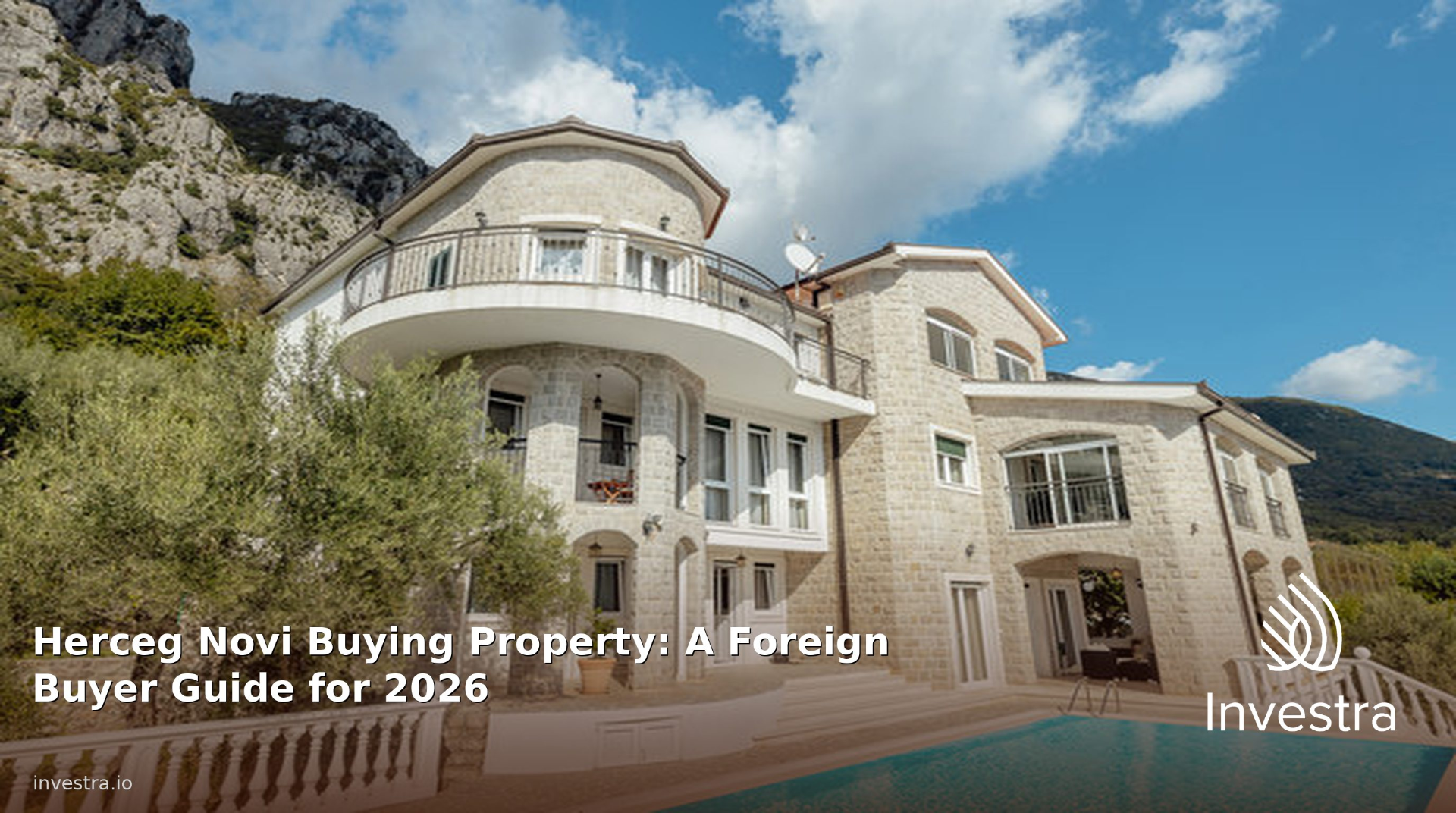
Herceg Novi Buying Property: A Foreign Buyer Guide for 2026
Herceg Novi Buying Property: A Foreign Buyer Guide for 2026
Why Herceg Novi Attracts Foreign Buyers in 2026
Quick Answer: Herceg Novi attracts international buyers for its coastal location, historic towns, and access to the Bay of Kotor; buyers should study local planning rules, access to services, and recent market trends before committing. Investra.io has comparative market guides that help place Herceg Novi in regional context.
Herceg Novi sits where the sea meets several dramatic landscapes: old town fortifications, pine-covered hills and a long Adriatic shoreline. In my experience, that combination makes the town appealing to both lifestyle buyers and investors. You're close to ferries and local marinas, and the cultural life of the Old Town often surprises buyers who expect a sleepy seaside settlement.
But what should international buyers assess? Start with accessibility — how easy is it to reach Herceg Novi year-round by road or by air via nearby airports. Then look at public services: local healthcare, schools if you'll spend extended time here, and the reliability of utilities. In many recent enquiries we've handled, transport links and the condition of local infrastructure have been decisive where two similar properties competed for the same buyer.
Also consider seasonality of demand. Many coastal towns on the Adriatic have a strong summer peak and a quieter off-season. That affects everything from short-term rental potential to maintenance costs and community life. When comparing options, it's helpful to read market studies even from neighbouring markets — guides like Rovinj Real Estate Market 2026 and Poreč Real Estate Market 2026 show how coastal tourism influences pricing and buyer priorities in similar Adriatic towns.
If you're researching herceg novi montenegro real estate, remember that local regulatory and planning environments can change quickly. Don’t assume national rules are identical to municipal practice. The reality is that the municipality's approach to building permits, coastal protection rules and heritage conservation will shape what you can actually do with a property.
Quick Answer: Key Legal Steps for Foreign Buyers
Quick Answer: Foreign buyers in Montenegro must verify property title, confirm permissibility of foreign ownership, complete a notarised sales contract, and register the transfer with the land registry; use a local lawyer and check municipal records.
When you start to look at herceg novi montenegro real estate from abroad, one early question is: can I buy it and what paperwork is required? The process begins with title verification. My experience shows that the single most common problem we see is unclear ownership or missing permits. Always ask the seller for the title deed and the cadastral extract. These documents tell you who owns the parcel and whether there are mortgages or liens. You should get them translated by a certified translator if they’re not in your language.
Next, confirm the permitted uses recorded in municipal planning documents. Some coastal plots fall under special protective zones that limit development. That can affect renovation plans or your ability to divide a property for rental. To check, request zoning plans and building permit records from Herceg Novi municipal offices. If a beachfront property includes sea ownership rights, ask for clarification from the coastal administration — these matters can be surprisingly local and specific.
I always recommend engaging a local lawyer early. They'll contact the land registry (often called cadastre) and the notary who will prepare the final purchase contract. A notary oversees the formalities and registers the transfer, but the lawyer performs deeper legal checks. If you want an extra layer of assurance, you can commission a title search through a licensed conveyancer or use specialist services from advisory firms like Siniša Dagary advisory services.
Quick Answer: Practical Buying Process in Herceg Novi
Quick Answer: The buying process typically runs from property search and due diligence to a pre-contract, a notary final contract and land registry transfer; validate each step with a local lawyer, notary and municipal office records.
Searching for properties in Herceg Novi is both exciting and detail-heavy. Start with a shortlist from reputable agents and cross-check listings against the cadastre to ensure the advertised plot and the legal parcel match. It's common to find online adverts that omit encumbrances or misrepresent the legal status; verify everything before you pay a deposit.
Once you find a property, sign a preliminary agreement that sets out the main terms and secures the property for a short period. That agreement should be conditional on satisfactory due diligence: clear title, no unpaid local taxes, and verified building permits. I’ve seen buyers rush through this stage and regret it later. Ask the seller to produce proof of cleared utility bills and recent municipal tax statements. You can verify outstanding municipal obligations at the Herceg Novi municipal finance office.
When moving to the final contract, the notary formalises the sale. The notary will often require identity documents, proof of funds origin, and tax clearance certificates depending on the buyer's status. After signing, the sale must be registered in the cadastre and public records. Check the registration yourself after completion — registration date matters for ownership and tax timing. If you need hands-on assistance, services like Buying Property in Pula: Legal Checks explain what to ask your legal team during pre-signing checks, even if the guide focuses on Croatia rather than Montenegro.
Quick Answer: Ownership Structures and Their Implications
Quick Answer: Buyers can hold property as individuals, through joint ownership, or via corporate entities; each option has different reporting and tax implications so consult a Montenegrin lawyer and tax advisor before choosing.
Deciding how to hold title is a core legal and tax choice. You can buy as a private person or use a Montenegrin company. In my experience, buyers who intend to rent frequently or own multiple properties sometimes prefer corporate structures for management reasons. Others prefer personal ownership for simplicity. What surprised many buyers is how local banks, insurance providers and municipal offices treat corporate-owned property differently from privately held homes — cross-check with your lawyer.
Co-ownership raises practical questions too. If you buy with family or partners, draft a shareholders’ or co-ownership agreement that covers maintenance responsibilities, decision-making processes and rules for selling a share. Without that, a personal dispute can become an expensive legal process. Ask your lawyer to check whether the property is listed with any easements, rights-of-way or servitudes attached; those conditions persist regardless of the ownership structure and can limit how you use the site.
If you're considering using a company, verify the registration status, share structure and any existing liabilities. You might want to speak to an advisory firm — for example, Findes Group & Partners and the Findes Group & Partners advisory team provide corporate setup services and can explain local business registration implications.
Quick Answer: Taxes and Ongoing Ownership Costs
Quick Answer: Montenegro imposes purchase-related and ongoing property taxes and duties, plus potential income tax on rentals; check current rates with the Montenegrin Tax Administration, a local tax advisor or your notary.
Tax is one of those topics buyers want concrete answers about. I won't invent numbers here. Instead I’ll tell you where to verify them and what to expect in principle. The range of potential charges typically includes a transfer tax or VAT depending on seller status, municipal property tax, and income tax if you rent the property. There can also be stamp duties and notary fees when transferring ownership. To get current rates and how they apply to your purchase, contact the Montenegrin Tax Administration or a local tax specialist.
Ask your lawyer to obtain a tax certificate for the property and confirm that the seller has no unpaid tax liabilities. Ongoing costs include utilities, condominium or communal charges, local waste fees and insurance. Some coastal homes have higher costs due to seawall maintenance or private road upkeep. You can verify local property tax bands and municipal charges at the Herceg Novi municipal finance office, or through your notary who should check outstanding debts as part of the sale process.
International buyers sometimes overlook the difference between VAT and transfer taxes when the seller is a company. For comparative guidance on how purchase taxes work in nearby markets, see resources like Property Taxes and Purchase Costs in Istria and Istria Property Ownership Costs which explain how to approach verification rather than relying on published estimates.
Quick Answer: Herceg Novi-Specific Due Diligence Checklist
Quick Answer: Verify coastal zone rules, building permits, title continuity, communal infrastructure, and developer credentials with municipal and registry offices before purchase; always include an in-person site inspection.
Due diligence in Herceg Novi needs to be detailed and locally focused. Start by checking the cadastral parcel and the ownership history. Confirm that all past construction works have been legally permitted — unpermitted works can lead to fines or forced demolitions. Municipal building records will show whether previous owners obtained the correct approvals.
Coastal properties require special attention. If the property ad claims “sea-front” or has private shoreline access, ask for the documents that prove that right. Some buyers assume a shoreline is private when a municipal easement actually exists. Also check for protected cultural heritage status — the Old Town and adjacent areas have regulations that limit changes to facades and structural works.
Utilities matter. Confirm connection status and capacity for water, sewage and electricity. If you're buying a rural plot for development, check whether the municipality will approve the necessary connections and whether road access is legal and maintained. For buyer-focused checklists and due diligence procedures that apply across the Adriatic, consult guides like Istria Property Due Diligence: A Croatian Buyer Checklist and Pula New-Build Homes: A Buyer Due Diligence Guide for 2026. They explain the practical records to request, which mirror what you must check in Herceg Novi.
Quick Answer: Renting Out Your Property — Rules and Practicalities
Quick Answer: Short-term and long-term rentals are common, but you must register with municipal tourism authorities, comply with safety standards, and report income to the tax office; confirm exact local licensing requirements with Herceg Novi officials.
Many international buyers consider renting their property as soon as they buy. What surprised many buyers is how local the rules are: some municipalities require separate tourism licences, mandatory guest registers, and inspections before you can rent on platforms like Airbnb. Ask the Herceg Novi tourism office for the current short-term letting registration requirements and whether any restrictions apply to specific neighbourhoods.
Operational considerations matter too. Will you hire a local property manager? If so, check their references and insist on a management contract that sets clear responsibilities for cleaning, guest handover, maintenance and emergency response. Consider how you'll handle utilities and municipal services during vacant months. Renting also brings tax obligations: you must declare rental income and pay the correct taxes. A local accountant or tax advisor can show the documentation needed for the Montenegrin tax return.
For practical questions about preparing a property for letting and the legal checks owners must complete, read buyer due diligence resources like Rovinj Holiday Rental Investment and operational guides such as Pula Rental Investment Guide 2026. Even though those papers focus on other towns, the procedural checks are the same: licences, insurance, and local tax reporting.
Quick Answer: Financing, Mortgages and Currency Considerations
Quick Answer: Foreign buyers often use Montenegrin banks, foreign lenders, or cash purchases; confirm mortgage availability, loan-to-value rules, and documentation with local banks and brokers before committing.
If you're planning to finance a purchase in herceg novi montenegro real estate, start by speaking to banks both locally and in your home country. Loan terms, eligibility for non-residents and required documentation vary between lenders. In practice, many buyers who secure pre-approval from a Montenegrin bank gain negotiating use. Confirm whether lenders ask for an appraisal from an approved evaluator and whether they require the purchase to be via a local company.
Exchange rate and currency risk are practical considerations. If your income and loan are in different currencies, small exchange rate moves can have a significant effect on monthly payments. Ask banks whether they offer products hedged against currency fluctuations and what fees apply to international transfers. Also verify rules regarding proof of funds origin; some banks may ask for documentation showing where your deposit came from.
When searching for financing options, use qualified mortgage brokers and request written pre-approval. Advisory firms like Siniša Dagary and corporate service providers such as Findes Group & Partners can help explain bank requirements and corporate structuring if you're buying through a company.
Quick Answer: Which Neighbourhoods and Property Types to Consider in Herceg Novi
Quick Answer: Herceg Novi’s main areas — the Old Town, Igalo, Savina and nearby bays — each offer different lifestyles and regulatory constraints; visit and compare access, services and local planning rules before choosing.
Herceg Novi is not a single market. Each neighbourhood has its own character and practical consequences for ownership. The Old Town draws buyers who want character and walkable life, but the buildings are often older and may carry conservation restrictions. Igalo is known for seafront promenades and wellness facilities; here you should assess noise, tourism seasonality and parking availability. Savina and higher hillside areas offer space and views, but check road access and winter maintenance requirements if you plan to spend time outside of the high season.
Consider the type of property — renovated stone houses can be charming but might need ongoing structural maintenance, while newer apartments may offer warranties and simpler management. For buyers focused on rentals, check the tenant base in each area: some neighbourhoods attract families and long-term renters, others a tourist crowd seeking short stays. If you want comparative insights on how neighbourhood choice affects buyer priorities, Investra's regional guides like Medulin Real Estate Market 2026 and Best Neighbourhoods in Pula show the kinds of questions you should ask on the ground.
Investment Disclaimer
Quick Answer: This article provides general information only and is not financial, legal or investment advice; consult qualified advisors and verify current data before making decisions.
The information provided in this article is for educational and informational purposes only and should not be construed as financial, legal, or investment advice. Real estate investments carry inherent risks, and past performance does not guarantee future results. Investors should not invest money they cannot afford to lose. Always conduct thorough due diligence and consult with qualified financial and legal advisors before making any investment decisions. Investra.io does not guarantee returns on any investment.
Frequently Asked Questions
Quick Answer: Below are common buyer questions about purchasing in Herceg Novi with practical answers and where to verify specifics.
Can foreigners buy property in Herceg Novi, Montenegro?
Yes, foreigners can buy property in Montenegro, but specific conditions and approval procedures may apply depending on nationality and the property type. To verify, contact a Montenegrin lawyer, the Herceg Novi municipal office and the national land registry. A local lawyer will explain any reciprocity requirements and confirm whether the plot lies in a restricted zone. You can also ask your notary to check the cadastral records and any relevant ministry decisions affecting foreign ownership.
What documents do I need to complete a purchase?
You typically need identity documents (passport), proof of funds, a tax identification number (if required), and notarised sales contracts. The notary will list the formalities. If buying through a company, company registration documents and corporate resolutions are required. Always ask the notary in advance for a checklist and request certified translations of any foreign documents.
How do I verify property ownership and encumbrances?
Request the cadastral extract and title deed from the seller, then have your lawyer obtain an official land registry extract. The land registry will show mortgages, liens, easements and other encumbrances. Your lawyer can also order historic ownership records to ensure continuity of title and check for any unresolved disputes or administrative fines.
Are there special rules for coastal or heritage properties?
Yes. Coastal and heritage properties often fall under stricter rules about development, facade changes, or public access. Check zoning plans and conservation lists at the municipal office and ask whether any shoreline or foreshore rights are public. If the property is in a heritage zone, the cultural heritage authority will have records of restrictions and approvals required for alterations.
What taxes should I check before buying?
Identify any transfer taxes, VAT obligations, municipal property taxes and potential income tax on rentals. Don’t rely on fixed figures printed in guides; instead, consult the Montenegrin Tax Administration and a local tax advisor. Your notary can often advise on which taxes apply to the transaction structure you plan to use.
How do I handle rental income and reporting?
You must register rental activity with local tourism and tax authorities and report income on your Montenegrin tax return. Keep detailed records of bookings, receipts, and expenses for tax purposes. A local accountant can advise on the correct tax treatment and recommended documentation for short-term and long-term lets.
Do I need a Montenegrin bank account to buy?
It’s common to use a local bank for deposits and to pay closing costs, especially if you take a mortgage. However, foreign transfers are also possible. Confirm bank requirements for non-residents and any documentation they'll ask for, including proof of fund origin and identity verification. Speak to multiple banks and a broker to compare practical requirements.
What are the typical closing risks and how to mitigate them?
Closing risks include unresolved liens, unpaid municipal charges, and problems with building permits. Mitigate these by having a lawyer perform a full title search, obtaining tax clearance certificates, and including conditional clauses in the preliminary agreement that allow you to withdraw if essential checks fail. Escrow arrangements and staged payments through the notary can reduce financial exposure.
How can I verify local market conditions and price trends?
Local agents, notaries and independent market reports are primary sources. Ask for recent comparable sales, consult municipal records, and check current listings. Because local market dynamics can change quickly, confirm figures with multiple sources — agents, notary registries and independent platforms — and consider commissioning an independent valuation for a formal market view.
Who should I hire to support the purchase process?
At minimum, hire a Montenegrin lawyer and a notary. Add a local tax advisor and an independent surveyor for physical inspections. If you’ll rent the property, engage a property manager. For corporate or complex deals, advisory firms such as investment consultation services and corporate partners like Findes Group & Partners advisory team can help with structuring and compliance.
Recommended Reading
Quick Answer: These curated guides help you understand due diligence, neighbourhood choice and tax considerations in similar Adriatic markets; use them to build your research checklist for Herceg Novi.
- Pula Real Estate Market 2026: Areas, Buyer Demand and Due Diligence
- How to Buy Property in Istria as a Foreign Buyer in 2026
- Rovinj Real Estate Market 2026: Buyer Priorities and Location Choices
- Istria Property Investment 2026: A Decision Framework for Buyers
- Poreč Real Estate Market 2026: A Practical Guide for Property Buyers
- Pula Rental Investment Guide 2026: Long-Term Letting Buyer Questions
- Siniša Dagary — Investment Consultant
- Business Strategy Blog
Connect With Investra
Quick Answer: Follow Investra on social media to receive market updates and new property listings relevant to regional investment opportunities.
Find Investra on Facebook: https://www.facebook.com/investra.io
Find Investra on LinkedIn: https://www.linkedin.com/company/investra-io
Find Investra on YouTube: https://www.youtube.com/@investra_io
Connect With Investra
Quick Answer: Follow Investra for verified market context and practical property research.
Related Posts
No related posts available.
