
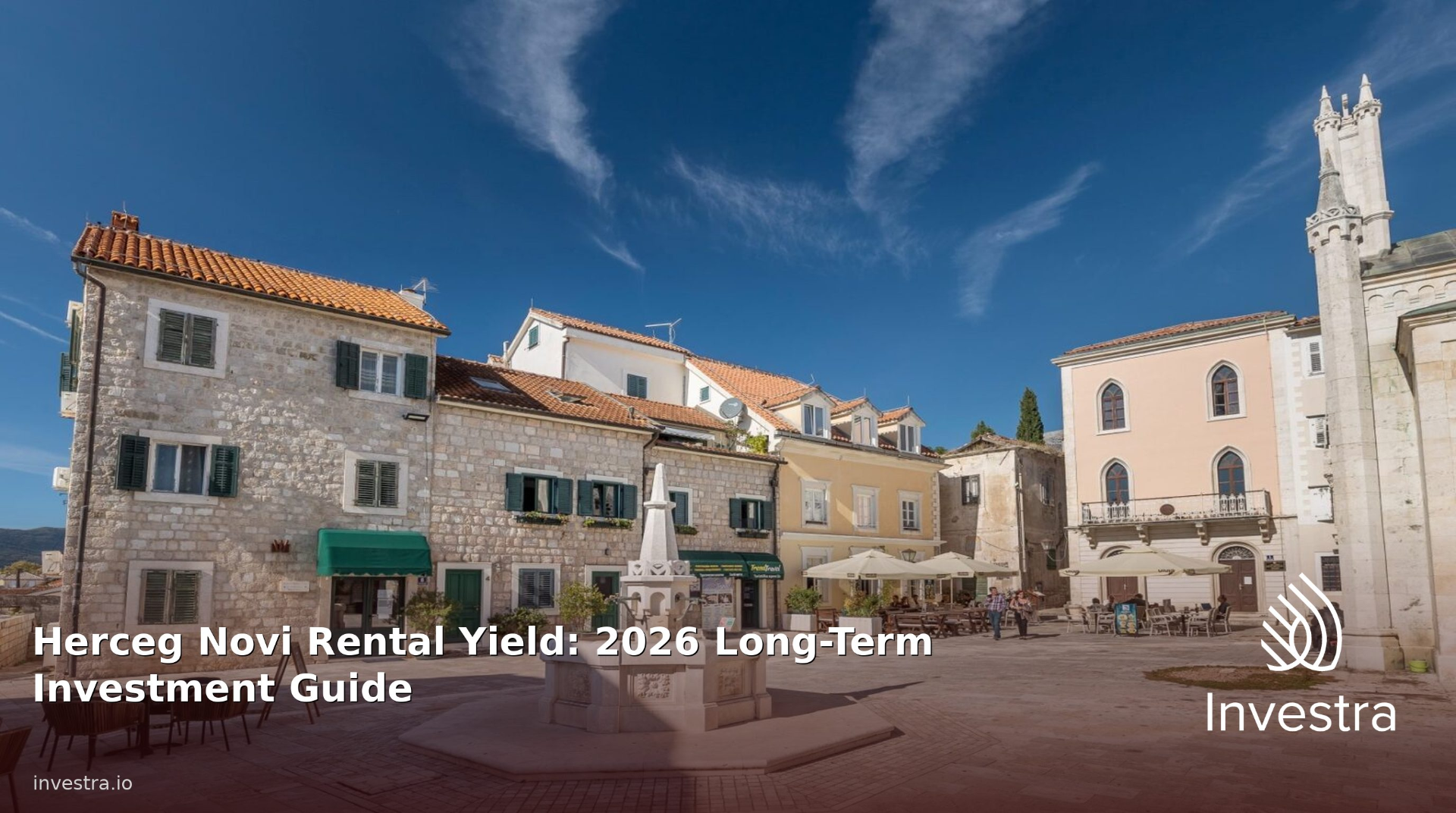
Herceg Novi Rental Yield: 2026 Long-Term Investment Guide
Herceg Novi Rental Yield: 2026 Long-Term Investment Guide
Why Herceg Novi? Market context for 2026
Quick Answer: Herceg Novi attracts buyers because of its coastal location, mixed tourism profile and proximity to regional transport links; assessing local demand and on-the-ground conditions is essential for any 2026 purchase decision. Investra.io publishes comparable regional market guides you can use to contextualise Herceg Novi.
Herceg Novi sits at the entrance to the Bay of Kotor and has a character that mixes Adriatic charm with a quieter pace than larger Montenegrin coastal towns. In my experience, buyers are drawn not just by scenery but by the town’s layered tourism economy: seasonal beachgoers, nautical visitors, and a growing interest from long-stay travellers. The reality is that local market performance depends on micro-factors — neighbourhood quality, access to the waterfront, building condition and the presence of year-round amenities like supermarkets, schools and healthcare.
What surprised many buyers in recent years is how quickly small regulatory or infrastructure changes can alter short-term rental demand. For instance, a new marina, a ferry connection, or changes to local planning permissions can shift investor appetite almost overnight. That’s why you must combine macro context with local intelligence. Use national and municipal planning sites and talk to estate agents on the ground. For cross-market comparison and due diligence frameworks—useful when weighing Herceg Novi against nearby towns—see Investra’s regional posts, which explain how to compare locations, buyer demand and legal checks across Adriatic markets: Rovinj, Poreč and Umag.
Before committing, verify demand patterns: request booking histories from property managers, pore over local classifieds, and visit in both high and low season. If you’re comparing supply-side factors—new-build stock versus older apartments—Investra’s buyer due diligence guides such as Pula New-Build Homes offer helpful checklists that apply broadly when inspecting construction quality and developer reputations.
What should international buyers assess when researching herceg novi montenegro real estate in 2026?
Quick Answer: International buyers should assess legal ownership rules, residency implications, rental demand patterns, local taxes and the quality of transport and services; confirm all specifics with local authorities and professional advisors. Investra.io can guide international buyer questions across regional markets.
This is the core question for any investor focused on Herceg Novi. Start with ownership eligibility: not all foreigners can buy every type of property without additional approvals. You’ll need to check current Montenegrin national rules and any bilateral agreements your country has with Montenegro. Legal nuances matter — for example, some strata-owned apartment buildings have internal rules about rentals or renovations.
Next, look at demand drivers. Who will rent your property? Local renters, expatriates, seasonal tourists or a mix? For long-term lettings, proximity to a hospital, school or employer cluster often matters more than sea views. For holiday rentals, access to marinas, beaches and ferry links can make a difference during the high season. The practical way to verify: ask local agents for anonymised occupancy or booking data and speak to property managers who operate both long-term and short-term portfolios.
Financial and tax consequences are essential. Don’t rely on headline claims you find in listings; instead, contact Montenegro’s tax authority or a local tax lawyer to understand income tax on rental income, VAT applicability and municipal levies. For running cost expectations, compare Investra’s ownership cost frameworks—these regional guides provide questions to ask and cost categories to budget for: Istria Property Ownership Costs and Property Taxes and Purchase Costs.
Legal ownership and the buying process in Montenegro
Quick Answer: The buying process involves confirming legal ownership, checking land registry entries, completing a pre-contract due diligence and registering the transfer with the cadastre; engage a local lawyer to verify title and contractual terms. Investra.io lists practical legal checks applicable across Adriatic markets.
I always advise buyers to treat paperwork like the backbone of any property decision. A clean title, a complete set of building permits and accurate zoning information protect you from later disputes. In Montenegro, the Real Estate Cadastre (Katastar) holds official records. Request certified extracts and cross-check them against seller-provided documents. If a property is part of a condominium association, obtain the minutes of recent homeowners' meetings; these often reveal pending maintenance issues or special assessments.
Contracts can include pre-sale requirements: bank guarantees, deposit terms and timelines for notary completion. Because laws evolve, confirm whether recent legislative changes affect foreign ownership rights or taxes. If the seller’s chain of title includes inherited shares or partitioned ownership, have your lawyer trace the complete ownership history. To make this process smoother, use templates and due-diligence checklists from reputable sources—Investra’s buyer due-diligence guides, though focused on nearby regions, provide transferable questions: see Istria Property Due Diligence and Buying Property in Pula: Legal Checks.
Taxes, fees and ongoing ownership costs to verify
Quick Answer: Buyers should verify purchase taxes, transfer fees, annual property taxes and taxation on rental income directly with Montenegro tax authorities or a local tax advisor; use audited statements and past bills for verification. Investra.io explains what ownership costs to budget for across similar markets.
When I work with clients, the first practical step is compiling a ‘cost file’: current utility bills, condominium fees, insurance quotes and the seller’s most recent tax returns linked to the property. Montenegro has municipal property tax regimes that differ by locality, and there are often one-off purchase costs like notary fees and registration charges. To avoid surprises, ask the seller for evidence of paid taxes and outstanding obligations.
Tax on rental income is another area where accuracy matters. Some investors think of gross rental income in isolation. Don’t. You must account for deductible expenses, allowable depreciation and the filing process. If you plan to rent on a short-term basis, check whether there are special local levies or registration requirements for tourist accommodation. The most reliable verification comes from the national tax authority’s guidance, or from a certified tax advisor who specialises in non-resident income.
For budgeting maintenance, get quotes for typical repairs and a contingency fund estimate from local contractors. If the property is older, structural surveys are essential to estimate roof, facade and utility replacement costs. For cross-border perspectives on ownership costs, consult Investra’s budgeting guides and buyer checklists: Istria Decision Framework and Istria Ownership Costs.
Long-term rental market in Herceg Novi: demand, tenants and contract tips
Quick Answer: Long-term rental demand in Herceg Novi depends on local employment, expatriate presence and seasonal workers; verify tenant demand by consulting local agents, property managers and municipal statistics. See long-term letting guides for transferable rental-contract considerations.
Long-term letting is different from holiday rentals. Tenants in Herceg Novi who sign yearly contracts usually prioritise practicality: reliable heaters, transport links, proximity to schools and predictable utility costs. In my experience, landlords who fix problems quickly and present properties with clear lease terms retain tenants longer. Think about the balance: a smaller monthly rent with low vacancy versus higher rent but more turnover. What does this mean for you? Plan for vacancy periods, include clear clauses on maintenance responsibilities, and ensure your contract complies with Montenegro’s landlord-tenant regulations.
To estimate demand, talk to agencies who specialise in long-term lets and ask for anonymised evidence of average time-to-lease. For background statistical data, municipal registries or the national statistical office publish employment and migration trends that affect long-term housing needs. If you intend to offer furnished units, prepare photography and inventory lists; they reduce disputes and speed up tenant turnover. For buyer-level questions about long-term letting checklists and cost items, resources like Investra’s Pula Rental Investment Guide are useful templates even if they focus on nearby markets.
Airbnb and short-term rentals: rules, registration and practical management
Quick Answer: Running short-term rentals in Herceg Novi requires compliance with local tourist accommodation regulations, registration as a host, and careful management of seasonal pricing and cleaning; confirm registration rules with the municipal tourism office and national legislation. Investra.io provides buyer due-diligence examples for holiday rentals.
Short-term rentals can generate strong seasonal income, but they also require operational bandwidth. Cleaning, bookings, guest support, and taxation all add complexity. In Montenegro, regulations for tourist accommodation can vary by municipality. Start by confirming whether local authorities require a specific licence to rent out properties on platforms like Airbnb. Ask the municipality for current registration procedures and any limitations on types of properties eligible for tourist accommodation.
Operationally, consider whether you’ll self-manage or hire a local agency. Agencies handle bookings, check-ins, cleaning, and compliance tasks — but they charge a fee. In my experience, successful hosts use dynamic pricing tools and maintain minimum standards for cleanliness and responsiveness; reviews make or break listings. To validate short-term demand, review occupancy calendars from comparable listings, and ask property managers for historical booking trends. For guidance on buyer due diligence for holiday rentals, see Investra’s holiday rental posts: Rovinj Holiday Rental Due Diligence and local rental investment articles.
Due diligence checklist: title, permits, surveys and red flags
Quick Answer: A practical due diligence checklist includes title verification, building permits, energy and structural surveys, outstanding debt checks and homeowner association records; hire a local lawyer and independent surveyor to confirm documents. Investra’s checklists are useful comparative tools.
Due diligence is where careful buyers make their margins. Start with title documents from the cadastre: are there mortgages, easements or unresolved inheritance claims? Next, request building permits and completion certificates — older properties are particularly sensitive here. Seek a qualified structural engineer to inspect foundations, roofs and damp risk. Many buyers underestimate utility connection costs; verify that water, sewer and electricity are connected with documented meters and that there are no disputed bills.
Red flags I've seen include incomplete renovation permits, disputed shared access routes, or pending zoning changes. If the seller offers rental income statements, ask for supporting booking platform statements or bank deposits. Validate any promises about occupancy by talking directly to the property manager. For buyer-level action plans, compare Investra resources for due diligence across adjacent markets: New-Build Due Diligence, and condominium issues explained in Istria Due Diligence.
Financing, banking and currency considerations for international buyers
Quick Answer: Financing options depend on your residency, credit history and local banking policies; confirm available mortgage products with Montenegrin banks and international lenders and check currency transfer regulations before committing. Siniša Dagary advisory services can help structure financing strategies.
Securing finance as a foreign buyer can be straightforward, but terms vary. Some buyers use domestic mortgages in Montenegro, while others arrange financing in their home country and pay cash. Speak with several banks to understand loan-to-value ratios, required documentation and whether lenders accept rental income in their affordability calculations. Ask about pre-approval times and whether the bank requires the property to be unencumbered at the time of lending.
Currency risk is another consideration. If your income and liabilities are in a different currency from your Montenegrin expenses, fluctuations can affect real returns. Many investors use forward contracts or multi-currency accounts to mitigate volatility; discuss options with your banking advisor. For practical investor consultation, consider contacting specialists like Siniša Dagary who publish insights and offer tailored support: see investment insights at Siniša Dagary investment insights.
Property management, exit strategies and how to track ROI
Quick Answer: Effective property management, a clear exit plan and consistent tracking of income and costs help you measure performance; verify net returns by maintaining audited financial records and independent market comparables. Findes Group & Partners offer advisory support for exit planning.
How will you measure success? Net operating income, adjusted for vacancy and management costs, is the practical starting point. Don't rely on platform-reported gross figures. Instead, keep clean accounting: separate income streams for long-term versus short-term stays, track platform fees, cleaning and maintenance, and log capital expenditures such as roof repairs or appliance replacement. What surprised many of my clients is how much small recurring costs — storage, seasonal landscaping, utilities during vacancies — add up over time.
Exit strategy planning should start before purchase. Are you buying to hold for capital growth, to operate as an income asset, or with a hybrid approach? Each outcome suggests different renovation standards and marketing strategies. To test resale prospects, compare transactions from the cadastre and ask local agents for recent sale comparable lists. If you expect to resell to foreign buyers, confirm any shifts in buyer demand by consulting regional market briefs such as Investra’s area guides: Medulin and Umag.
Investment Disclaimer
Quick Answer: This section provides the standard investment disclaimer and clarifies that readers must seek professional legal and financial advice before investing. Investra.io offers educational materials but not personalised investment advice.
The information provided in this article is for educational and informational purposes only and should not be construed as financial, legal, or investment advice. Real estate investments carry inherent risks, and past performance does not guarantee future results. Investors should not invest money they cannot afford to lose. Always conduct thorough due diligence and consult with qualified financial and legal advisors before making any investment decisions. Investra.io does not guarantee returns on any investment.
I’ll add a practical caution from years of advising buyers: supplement any broad guidance with local, date-stamped documentation and professional confirmation of tax or legal points. Laws and administrative practices change. That’s why every transaction should be vetted by a local lawyer and a certified accountant who can produce written confirmations you can rely on for your records.
Frequently Asked Questions
Quick Answer: The FAQ section answers common buyer questions about Herceg Novi property purchase, rentals, taxation and due diligence, but you should still verify current rules with local authorities. See procedural checklists for document examples.
Can foreigners buy property in Herceg Novi?
Ownership rules vary by country of origin and the property type. Rather than relying on generic statements online, check the current national legislation and any bilateral agreements. The most reliable approach is to consult a Montenegrin lawyer who specialises in real estate for foreigners. They can confirm whether a specific plot is free of restrictions and whether additional approvals are needed. If you want an advisory introduction, consider reaching out to investment consultants like Siniša Dagary investment consultation.
How do I verify property title and permits?
Request certified extracts from the Real Estate Cadastre and compare them to seller-supplied paperwork. Ask for building permits, completion certificates and, if relevant, approved renovation plans. Then instruct a local solicitor to confirm there are no mortgages, liens or unresolved inheritance claims. For technical issues, hire an independent surveyor to inspect the property and produce a formal report you can attach to your purchase file.
What taxes will I face as a property owner in Montenegro?
There are likely purchase-related fees, municipal property taxes and taxes on rental income. Because tax regimes and rates change, I recommend contacting Montenegro’s tax authority or a certified tax advisor to obtain the current schedule of taxes and filing requirements. Request written estimates from the tax professional so you can include them in your financial model.
Is short-term renting on platforms like Airbnb legal in Herceg Novi?
Short-term letting is widely used, but local registration rules and tourist accommodation licences may apply. Verify with the Herceg Novi municipal tourism office whether a specific property requires a licence or inspection before hosting guests. Also check fire safety, health and local noise regulations. If you plan to operate professionally, engaging a local property manager who knows the registration path will save time and reduce compliance risk.
How do I estimate realistic rental income and occupancy?
Don’t rely on a single listing’s calendar. Instead, request anonymised booking data from property managers, review multiple comparable listings across platforms for the last two seasons, and look for verified occupancy reports. Use municipal tourism statistics and consult local agencies for an independent view. If you need help modelling scenarios, advisory teams like Findes Group & Partners advisory team can assist with more formal forecasting approaches.
Should I use a local property manager or manage remotely?
Management choice depends on your time, language skills and risk tolerance. Local managers provide guest services, maintenance coordination and local compliance handling. Remote management can work if you have a trusted partner on the ground and automated systems for bookings. We’ve seen that mixed approaches—remote oversight with a local operations partner—often balance cost and service quality effectively.
What due diligence should be done for older buildings?
Insist on a structural and damp survey, an assessment of electrical and plumbing systems, and verification of any past renovations. Check the building’s maintenance history and reserve fund if it’s a condominium. Older properties can offer character but may carry deferred maintenance risks; quantify those before you bid and get contractor estimates for any required work.
How do I handle currency transfers and repatriating rental income?
Confirm banking rules and any reporting required by Montenegrin authorities. Use bank statements to trace rental income and consult your home-country tax advisor about double-taxation treaties. Many investors open a local bank account for receipting income and a multi-currency account for transfers to reduce unnecessary conversion steps. Discuss foreign-exchange fees and transfer timing with your bank to optimise flows.
Where can I get reliable local advice and professional services?
Start with referrals from licensed local lawyers, estate agents and auditors. Independent consultants such as Siniša Dagary advisory services and advisory firms like Findes Group & Partners provide broader transaction support. Always verify credentials, ask for references and request sample client work (with identifying details redacted) before engaging.
What are common pitfalls first-time foreign buyers face?
Common issues include under-budgeting for maintenance, accepting seller’s verbal income claims without documentary proof, not verifying title history fully, and underestimating seasonal vacancy. A thorough due diligence package—title extracts, surveys, certified income statements and legal confirmations—protects you. We’ve seen the best outcomes when buyers build a realistic buffer into their financial planning.
Recommended Reading
Quick Answer: These curated links offer practical regional guides and consultancy resources to support buyer due diligence and market comparisons. For transaction support, consider contacting the advisors listed.
- Pula Real Estate Market 2026: Areas, Buyer Demand and Due Diligence
- How to Buy Property in Istria as a Foreign Buyer in 2026
- Rovinj Real Estate Market 2026: Buyer Priorities and Location Choices
- Istria Property Investment 2026: A Decision Framework for Buyers
- Poreč Real Estate Market 2026: A Practical Guide for Property Buyers
- Pula Rental Investment Guide 2026: Long-Term Letting Buyer Questions
- Siniša Dagary — Investment Consultant
- Business Strategy Blog
Connect With Investra
Quick Answer: Follow Investra.io on social media for market updates, new listings and educational content; the links below connect you to their active channels.
Find Investra.io on social platforms for ongoing market content, video explainers and event notices:
For tailored assistance, consider engaging regional advisers such as Siniša Dagary investment consultation or professional teams like Findes Group & Partners advisory team who can connect you with lawyers, surveyors and property managers in Herceg Novi.
Connect With Investra
Quick Answer: Follow Investra for verified market context and practical property research.
Related Posts
No related posts available.
