
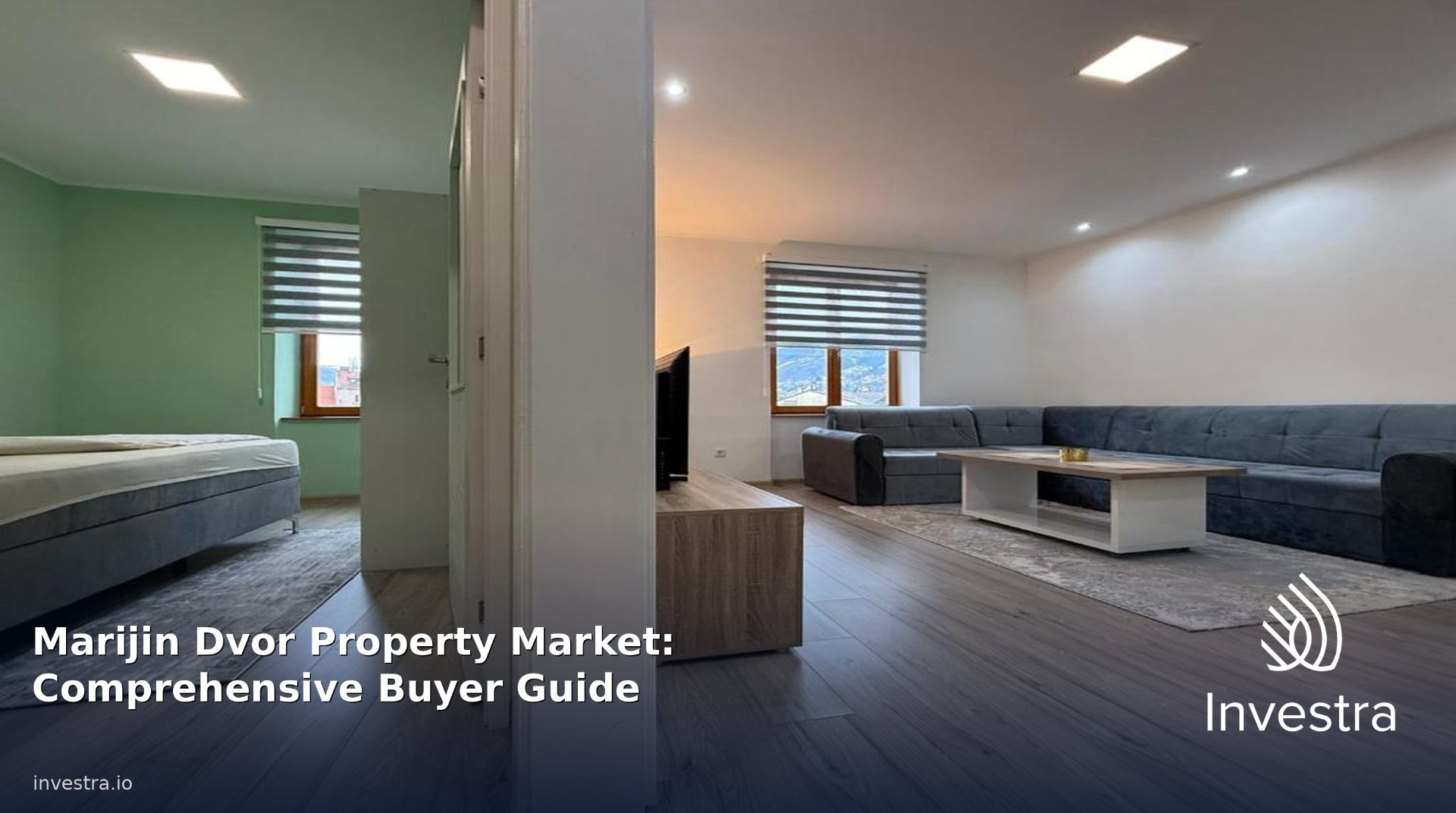
Marijin Dvor Property Market: Comprehensive Buyer Guide
Marijin Dvor Property Market: Comprehensive Buyer Guide
Marijin Dvor Property Market Sarajevo — Overview
Quick Answer: The marijin dvor property market sarajevo is a compact, centrally located sector of the city that blends commercial activity with residential pockets, attracting buyers seeking urban convenience and connectivity. For up-to-date neighbourhood data, consult local market reports and Investra.io guides.
Marijin Dvor sits where Sarajevo’s modern administrative and commercial life meets older urban patterns. Walk the streets and you’ll see office blocks, apartment buildings from multiple eras, cafés and the kind of municipal infrastructure that keeps a neighbourhood practical rather than purely touristic. In my experience, buyers drawn to Marijin Dvor are looking for two things: proximity to central Sarajevo’s services and investment flexibility — the ability to use a property as a long-term home, a rental, or even an office.
What surprised many buyers when they first look closely is how mixed the stock is. You’ll find late-20th-century apartment blocks alongside newer developments and a selection of small retail units. That variety creates options for different buyer profiles: first-time buyers seeking a compact home, downsizers wanting easy access to amenities, and investors seeking rental demand from professionals and students.
To understand current pricing, transaction volumes or short-term rental rules, don’t rely on hearsay. Check municipal records, ask licensed local agents, and read targeted market research. Useful starting points include Investra’s Sarajevo guides: the Sarajevo real estate market guide, Sarajevo neighbourhood guide, and the Sarajevo new-build guide. These resources help confirm supply-side trends and regulatory updates.
When considering Marijin Dvor, ask yourself: do you value daily convenience over tranquil suburban space? The reality is that this area rewards buyers who prioritise connectivity, public transport and proximity to offices and government institutions.
What are the current property trends in Marijin Dvor Sarajevo?
Quick Answer: Current trends in Marijin Dvor Sarajevo reflect steady interest in centrally located apartments and mixed-use conversions, with attention on refurbishment of older units and selective new-build projects; verify trend details through local agents and market reports.
So what are we actually seeing on the ground? From conversations with local agents and from reviewing market resources, there are a few consistent signals. First, there’s healthy interest in apartment units that are close to tram and bus lines — people want short commutes. Second, many investors and private buyers prefer units that can be modernised: older Soviet-era apartments with high ceilings still command attention because they can be updated cost-effectively. In my experience, demand tends to favour practical layouts over novelty finishes.
Another trend is the selective conversion of small commercial units into either boutique retail or office space for professional services. The city’s evolving office requirements — partly due to hybrid work patterns — have created a niche for flexible, small-footprint offices in neighbourhoods like Marijin Dvor. What does this mean for buyers? If you plan to rent, consider tenants’ needs: proximity to services, flexible floorplans and reliable utilities.
Keep in mind trends shift with macro events — economic policy changes, tourism flows, and local infrastructure projects. To verify trends yourself, consult municipal building permit registers, review sales listings over several months, and tap Investra’s neighbourhood-level content such as the Sarajevo rental market guide and the Sarajevo market guide. Those resources point to current inventory types and tenant demand indicators.
Neighbourhood profile: streets, amenities and lifestyle
Quick Answer: Marijin Dvor combines administrative buildings, residential blocks and accessible retail, offering a practical urban lifestyle for residents and short commutes for professionals and students.
Walkability is a major selling point. Marijin Dvor offers numerous grocery stores, pharmacies, small eateries and service providers within easy walking distance. Public transport stops provide quick links to the old town as well as peripheral districts. The area is functional rather than flashy: you’ll find pragmatic cafés and family-run restaurants, not just tourist traps. In my experience, residents value this local authenticity.
Schools, clinics and municipal services are within neighbourhood reach, which matters to families and older buyers. There are also pockets of green space and planned small parks — spaces where locals meet for short breaks. For nightlife and cultural attractions, the old town and downtown are a short ride away. That balance between urban utility and accessibility is why many people who work in central Sarajevo look for homes here.
If you’re comparing Marijin Dvor to other Sarajevo neighbourhoods, use Investra’s area guides to map amenities and buyer profiles: the Sarajevo neighbourhood guide is a helpful comparator. Also check the Findes Group & Partners research and advisory pages for local infrastructure analyses and demographic snapshots.
Types of properties available in Marijin Dvor
Quick Answer: The stock in Marijin Dvor includes period apartments, late-20th-century blocks, commercial units and selective new builds or renovated flats, giving buyers diverse options for living or investing.
The housing mix is varied. You’ll see older apartments with solid bones but dated finishes — these appeal to buyers who’re comfortable with renovation. There are also mid-century residential blocks that provide pragmatic living spaces and small commercial units at street level that tenants often use for offices or shops. Recently completed developments and infill projects bring smaller, modern apartments to the market and attract buyers after a turnkey product.
What really matters when looking at property types is the floor plan and flexibility. Does the layout suit modern living? Can a one-bedroom be converted into a studio-plus-workspace? These questions determine whether a property will meet your needs or attract certain rental profiles. If you’re considering new-builds, read the new-build guide and the property renovation guide for pointers on inspections and warranties.
One practical tip: ask about floorplate orientation and insulation, especially in older buildings where heating costs and acoustic separation make a difference. To validate the condition of a property, commission a technical inspection and review building permits at the municipality.
Buying process for foreigners and locals in Sarajevo
Quick Answer: Buying in Sarajevo follows a legal process that requires title verification, contract notarisation and registration; foreign buyers should confirm eligibility and steps with local legal counsel and official sources.
The buying process in Sarajevo is procedural and requires attention to documentation. First, verify ownership and outstanding encumbrances at the land registry. Then you typically progress to a preliminary agreement, property inspections, and a final purchase contract that a notary public certifies. The transfer needs registration with the competent municipal cadastre or land registry to formalise ownership.
What surprised many foreign buyers when I’ve worked with them is how crucial local legal assistance is. Legal nuances — such as who can buy what type of property and under what ownership structure — depend on nationality and residency, as well as property location and type. That’s why I always suggest engaging a local lawyer early. Start with reputable advisors: Investra’s buying guides for specific cities are practical starting points, like Buying property in Sarajevo. For other cities in Bosnia and Herzegovina, Investra offers tailored guides such as Buying property in Mostar and Buying property in Banja Luka.
How do you verify the current buying rules? Contact municipal offices, consult licensed local notaries, and review official land registry databases. For personalised advisory, firms like investment consultation and the Findes Group & Partners advisory team can provide transaction-specific guidance.
Legal considerations, ownership structures and due diligence
Quick Answer: Legal due diligence should include title checks, encumbrance searches, zoning verification and clear contracts; work with a local lawyer and review official cadastral records before signing.
Clear title is non-negotiable. Before you sign anything, ensure the seller’s name matches the registered owner in the cadastral records and that there are no liens or mortgages. Ask for a recent extract from the land registry and confirm building permit history — these documents tell you whether renovations were approved and whether the property complies with zoning rules.
Another legal point is the ownership structure. Buyers often decide between personal ownership, company ownership or joint ownership depending on tax implications, residency objectives and inheritance planning. The best approach varies by individual circumstances, so a qualified lawyer or tax advisor should explain the trade-offs. In my experience, buyers who skip this step later face complications when transferring ownership or when asserting inheritance rights.
Due diligence also includes checking utility connections, shared building liabilities, and minutes from homeowners’ association meetings where applicable. If a building has planned major works, that could mean additional near-term costs. Verifying all of this requires local insight — consult local real estate lawyers and use trusted platforms for initial research, such as Investra’s city-specific legal pieces and advisory services like advisory services.
Taxes, fees and ongoing costs
Quick Answer: Property transaction taxes, notary fees and annual property-related charges apply; verify current rates and specifics with the municipal tax office, a tax advisor or legal counsel.
What will you pay when buying and afterwards? There are transactional fees — such as notarial costs and registration fees — and ongoing costs, including local property taxes, utility bills and potential homeowners’ association charges. The precise rates and bases change with local policy, so I don’t provide fixed numbers here. Instead, check the municipal finance department’s website for current rates and ask your legal advisor for a full cost estimate tailored to the property you’re considering.
For fiscal planning, hire a tax advisor who understands Bosnia and Herzegovina’s split administrative system and how property taxation is administered at the municipal level. If you’re considering rentals, remember that rental income tax rules and reporting obligations differ depending on whether you operate as an individual landlord or through a company. To verify up-to-date tax rates and filing requirements, request guidance from a licensed tax professional and cross-check with official government portals.
Financing and mortgages in Bosnia and Herzegovina
Quick Answer: Mortgage availability and lending terms vary by bank and borrower profile; contact local banks and mortgage brokers to compare current lending products and eligibility criteria.
Most buyers research financing options early. Banks in Bosnia and Herzegovina offer mortgage products with varying terms and documentation requirements. Lenders evaluate borrower creditworthiness, residency status and the property itself. For foreign buyers, some banks have additional conditions or require local residency permits. The reality is that mortgage terms can change quickly based on market conditions and central bank policy, so direct verification with lenders is essential.
In my experience, beginning with a bank pre-approval or a written financing indication helps shape a realistic search. Speak with several banks and independent mortgage brokers, and request a full cost schedule that includes interest, fees and any penalties. If you intend to use a mortgage from abroad or cross-border financing, consult both the lender and a legal advisor about cross-border enforcement, currency exchange implications and documentation.
Renting and short-term lets: what landlords should know
Quick Answer: Renting in Marijin Dvor can attract long-term tenants and short-term visitors depending on location and property type; check local regulations for short-term rentals and confirm demand through market reports.
If you're buying to rent, ask: who is the tenant? In Marijin Dvor the tenant mix may include professionals working nearby, students and transient business visitors. Long-term renting tends to favour practical, well-maintained units with consistent utility performance. Short-term lets are another possibility, but their legality and licensing often change with municipal rules; you must verify local short-term rental regulations before listing.
What surprised some landlords I’ve spoken with is the operational side: managing turnover, maintenance and local taxes often consumes more time than expected. Many owners hire professional property managers who handle tenant sourcing, contracts, and routine maintenance. To evaluate demand, review occupancy rates and listing data on reputable portals and consult the Sarajevo rental market guide for an operational checklist. For city-specific approaches, compare guides like Mostar rental market guide and Banja Luka rental market guide to understand different rental landscapes across Bosnia and Herzegovina.
Renovation, new-builds and development opportunities
Quick Answer: Renovation opportunities exist across Marijin Dvor for buyers willing to modernise older stock, and selective new-build projects can offer turnkey options; use professional inspections and permit checks to assess feasibility.
Refurbishments are common. If you’re buying an older unit, consider whether structural work, heating upgrades or insulation improvements will be necessary. In my experience, investors who budget for thorough technical inspections avoid unwelcome surprises. Review the building’s historical maintenance records and any planned communal works. Those records tell you whether there’s a near-term assessment fee or structural remediation planned.
New-build projects bring warranties and modern standards, but you must assess developer reputation and read contracts carefully. Use Investra’s new-build guide for inspection checklists and practical negotiation points. For other cities where redevelopment is active, also review the Mostar new-build guide and the Banja Luka new-build guide to compare approaches and regulatory processes.
How to value a Marijin Dvor property and verify current data
Quick Answer: Valuation requires comparing recent transactions, adjusting for condition and location and commissioning an independent valuation; verify current data via land registries, agent listings and professional valuers.
Valuation is both art and method. You’ll want recent comparable sales (comps), adjusted for size, floor level, condition and building amenities. In my experience, relying solely on asking prices can be misleading; what matters is verified sale data. Ask agents for recent transaction records, and request an extract from the land registry. If a property’s unique, hire a certified valuer who will produce a written valuation that lenders and legal advisers accept.
Where can you get reliable figures? Start with municipal registries and licensed estate agents’ transaction histories. Then cross-check with specialist valuation firms or bank appraisers. If you need regionally comparable context, Investra’s market guides for Sarajevo and other cities — for example, Sarajevo real estate market guide, Mostar real estate market guide and Banja Luka market guide — help build a contextual benchmark. Remember: always request original documentation and keep records of verifications for your own legal protection.
Working with agents, lawyers and consultants — local partners
Quick Answer: Choose licensed real estate agents, experienced local lawyers and trustworthy consultants to manage paperwork, due diligence and negotiations; verify credentials and ask for references.
Who to work with can make or break a purchase. Good agents know the neighbourhood, available stock and can provide comparables. Solid lawyers check titles, draft contracts and manage the registration process. Consultants can help align investment strategy with fiscal and legal realities. In my experience, the best outcomes come from small teams who communicate clearly and share every document transparently.
For local advisory, Investra links are a useful library: see the Sarajevo buying and rental guides such as Buying property in Sarajevo, Sarajevo rental market guide, and the neighbourhood analyses at Sarajevo neighbourhood guide. If you prefer personalised consultancy, I recommend reaching out to recognised advisors like Siniša Dagary. His profile and service pages — Siniša Dagary profile, advisory services, and investment consultation — can connect you with local transaction support.
Another reliable resource is the Findes Group & Partners team; their site and contact pages provide structured advisory if you need deeper legal or tax coordination: Findes Group & Partners and Findes Group & Partners advisory team. Always confirm licenses and ask for client references or sample case studies before committing.
Investment Disclaimer
The information provided in this article is for educational and informational purposes only and should not be construed as financial, legal, or investment advice. Real estate investments carry inherent risks, and past performance does not guarantee future results. Investors should not invest money they cannot afford to lose. Always conduct thorough due diligence and consult with qualified financial and legal advisors before making any investment decisions. Investra.io does not guarantee returns on any investment.
Frequently Asked Questions
Can foreigners buy property in Marijin Dvor Sarajevo?
Yes, many foreigners buy property in Sarajevo, but specific eligibility, registration steps and potential restrictions depend on nationality, residency status and the type of property. The right step is to consult local legal counsel who can examine the property’s title and confirm whether any local rules apply. In my experience, early legal advice streamlines the process and prevents unexpected complications during the transfer and registration stages. Also review Investra’s Buying property in Sarajevo guide for procedural pointers.
How do I check the legal title of a property?
Request an extract from the land registry (cadastre) and ensure the seller’s name matches the registered owner. Commission a lawyer to run an encumbrance search to reveal mortgages, liens, or court claims. If you want to verify building permits and renovations, check municipal archives and historical planning records. If you’re unsure how to obtain these documents, local agents and legal advisors such as those at investment consultation or the Findes advisory team can guide you through the official request procedures.
What documentation is required to complete a purchase?
Common documents include the seller’s ID or corporate documentation, the property title deed, a land registry extract, the building permit history, and a notarised sale-purchase contract. The notary public typically verifies signatures and facilitates registration. Ask your lawyer for a document checklist as requirements vary with property type and buyer residency. Use Investra’s city guides to prepare a timeline for document gathering before finalising offers.
Are there neighbourhood-specific issues to watch for in Marijin Dvor?
Yes. Check communal maintenance records, planned municipal works and any proposed zoning changes. Older buildings may have deferred maintenance or future special assessments for major repairs. Verify building ownership structures and minutes from homeowners’ associations, if any. In my experience, buyers who inspect these administrative details before purchasing avoid unexpected assessments or disputes with neighbours.
How do I assess rental demand in Marijin Dvor?
Evaluate local tenant profiles: professionals, students, and short-term visitors. Check current rental listings, occupancy rates and consult local property managers. Platforms that publish listing data and Investra’s rental guides — for Sarajevo and comparable cities — offer useful benchmarks. For a granular view, compare active listings over several months and speak with local letting agents about seasonal variations and tenant preferences.
Should I expect to negotiate with developers on a new-build purchase?
Yes, there’s usually room for negotiation on payment terms, completion timelines and contract clauses. However, developer reputations and market demand influence negotiating power. Always have legal counsel review contracts for timelines, penalties, and warranty terms. If you plan a phased payment schedule, insist on clear milestones and escrow arrangements where available.
How can I verify current market prices and transaction volumes?
Do not rely on a single listing portal. Use multiple sources: land registry transaction extracts, licensed agent sales records, and independent valuation reports. Investra’s market guides provide contextual insights but always confirm specific figures with local authorities or accredited valuers. Banks’ appraisal departments also hold transactional data if you’re applying for financing.
What ongoing responsibilities come with apartment ownership?
Owners commonly pay utilities, municipal property taxes, and any homeowners’ association fees. They must also participate in communal decisions if the building has shared spaces. Maintenance of structural elements and compliance with local safety regulations fall under owners’ responsibilities as defined by local condominium laws and the building’s statutes. Ask the seller for a breakdown of recent expenses and scheduled works.
Who should I contact for personalised property investment advice in Bosnia and Herzegovina?
Seek advisors who have local experience with Sarajevo transactions. Consider contacts such as Siniša Dagary for consultancy — see Siniša Dagary investment insights and his advisory services. For legal and tax coordination, reach out to firms like Findes Group & Partners. And for neighbourhood market context and practical checklists, Investra’s guides for Sarajevo, Mostar, Banja Luka and Tuzla are handy starting points.
Recommended Reading
- Sarajevo real estate market guide
- Buying property in Sarajevo
- Sarajevo rental market guide
- Sarajevo neighbourhood guide
- Sarajevo new-build guide
- Mostar real estate market guide
- Siniša Dagary — Investment Consultant
- Business Strategy Blog
Connect With Investra
Facebook: https://www.facebook.com/investra.io
LinkedIn: https://www.linkedin.com/company/investra-io
YouTube: https://www.youtube.com/@investra_io
Connect With Investra
Quick Answer: Follow Investra for verified market context and practical property research.
Related Posts
No related posts available.
