
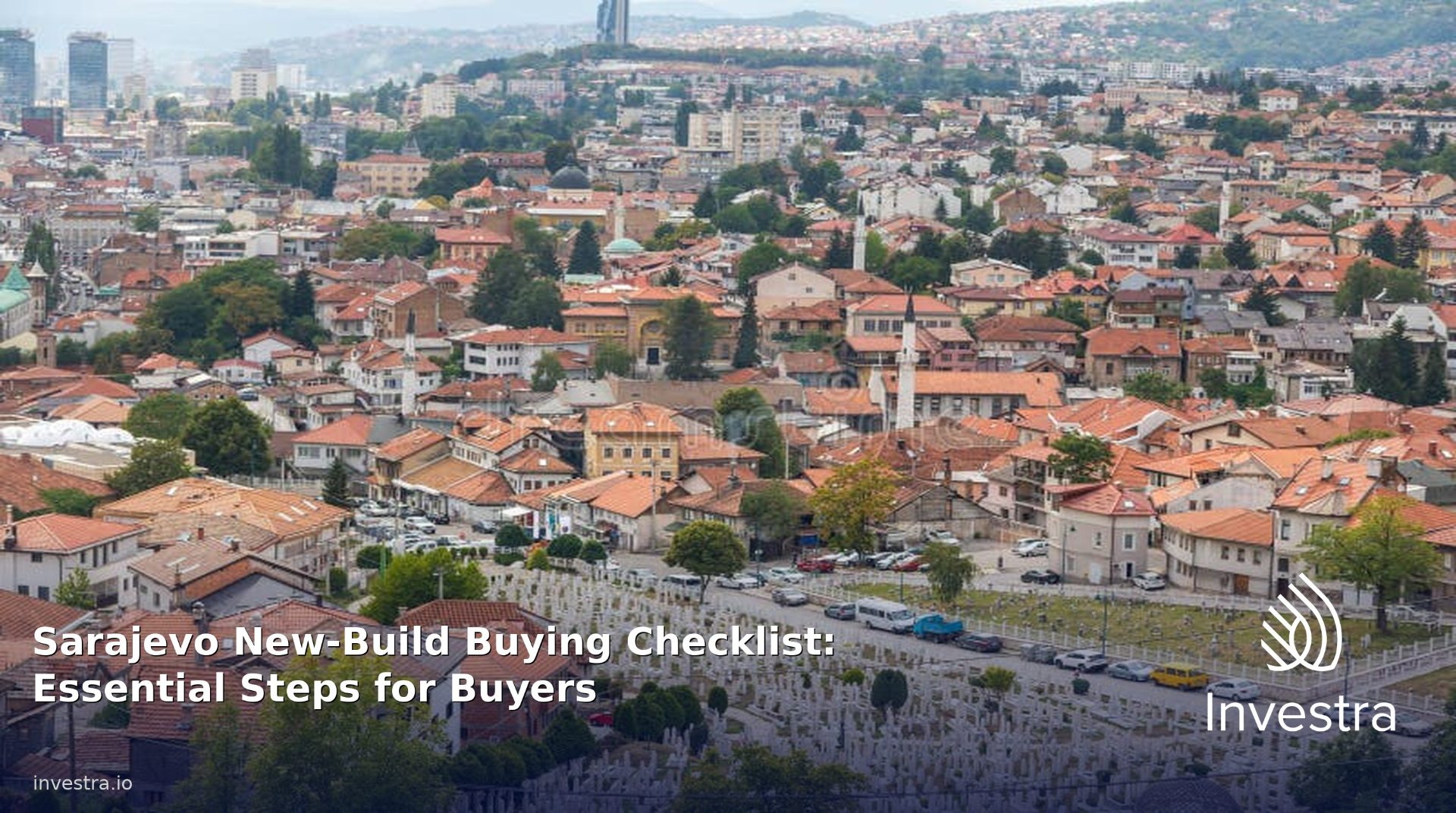
Sarajevo New-Build Buying Checklist: Essential Steps for Buyers
Sarajevo New-Build Buying Checklist: Essential Steps for Buyers
Market Snapshot: Understanding Sarajevo’s New-Build Landscape
Quick Answer: Sarajevo’s new-build scene mixes modern apartment blocks with refurbished historic zones; research current listings and developments through local market guides like Investra’s Sarajevo real estate market guide to get up-to-date context.
Sarajevo feels like a city between eras: Austro-Hungarian facades stand beside contemporary glass-and-concrete projects. In my experience working with buyers, that contrast is exactly what attracts attention — buyers want new comforts, but they also want to be part of a historic urban fabric. The reality is that "new-build" covers several types of product here: purpose-built apartment blocks, mixed-use schemes, and gated developments often tied to foreign investment.
What surprised many buyers is how variable construction quality and delivery timelines can be from one developer to the next. That’s why starting with a clear market snapshot is useful. I recommend using dedicated local resources — the Investra Sarajevo market guide is a practical starting point, but also cross-check with municipal planning portals, local estate agents, and recent sales data.
For newcomers the key questions are straightforward: where are the active new projects, who the main developers are, and what infrastructure investments are planned nearby. Don’t accept claims about demand or future values at face value. Instead, ask developers for examples of completed projects you can visit and speak to owners where possible. If you want a broader regional view, Investra has comparable guides for cities such as Mostar, Banja Luka, and Tuzla for comparative context.
Clarify Your Goals: Investment, Home, or Holiday Rental?
Quick Answer: Decide whether you’re buying to live, rent long-term, or target short-term holiday bookings — this shapes neighbourhood choice, finish specification and legal requirements; read practical tips in Investra’s buying guide.
Before you view a single apartment, pause and set priorities. Are you after stable monthly income, occasional holiday stays, capital growth, or a place to retire? These goals change everything. A short-term rental strategy pushes you toward central, tourist-friendly pockets and high-spec finishes. Long-term lets lean toward transport links and local amenities. A primary home prioritises build quality and community.
We’ve seen buyers underestimate how much the intended use affects running costs and salesability later. For example, a flashy interior might attract holiday guests but require higher maintenance. The reality is renting in Sarajevo involves different tax declarations and licensing than private ownership. If you’re unsure, speak with local property managers and use the Sarajevo rental market guide to outline rental demand patterns.
Don’t ignore lifestyle trade-offs. Do you want a mountain view and quieter evenings, or do you prefer the buzz of Baščaršija and cultural highlights? Your choice should be documented in a written brief you take to agents and developers. That brief will help you filter new-build offerings and keep negotiations focused on your true priorities.
Choose the Right Neighbourhood: Micro-Locations Matter
Quick Answer: Compare neighbourhoods on commuting, amenities and future plans — use local neighbourhood guides like Investra’s Sarajevo neighbourhood guide to shortlist areas that match your goals.
One apartment can be a brilliant investment in one street and a poor choice two junctions away. In Sarajevo, proximity to the old town, universities, hospitals, or major employers changes desirability. In my experience, you’ll want to map daily routines — where you’ll shop, work, and socialise — before you commit.
Ask developers for precise addresses and walk the area at different times of day. Is there reliable public transport? Are shops, schools and healthcare within easy reach? Also probe for municipal plans: a quiet lane today might become a busy corridor tomorrow if a new road or commercial project is planned. You can verify zoning and planned infrastructure through municipal planning offices and the developer’s documentation.
We’ve seen buyers rely too heavily on glossy project brochures. Instead, use field visits and consult the Investra neighbourhood guide to compare walkability, noise, and safety. If you’re comparing other cities for diversification, Investra also offers neighbourhood guides for Mostar and Banja Luka.
Developer Due Diligence: Reputation, Track Record and Proof
Quick Answer: Check the developer’s completed projects, speak with past buyers, and request building permits and contractor details; Investra’s new-build guides explain which documents to request, including Sarajevo new-build guide.
Who’s building your apartment matters more than the floor plan. Developers with consistent quality, on-time delivery and transparent communication reduce risk. Ask for references from buyers of finished projects and visit their completed buildings. In my experience, a single walkthrough of a finished property reveals more than dozens of renderings.
Request and verify documents: building permits, land title extract, proof of payments to subcontractors where possible, and civil engineering certifications. Demand the contractor’s identity — who’s doing the structural work, who’s responsible for MEP systems. If a developer resists showing paperwork or gives vague answers, that’s a red flag.
Use third-party advisors to vet construction contracts and guarantee clauses. For additional reassurance, consult specialists like advisory services or local legal firms. Investra’s practical new-build guide is also a solid reference for the list of essential documents you should insist on before signing anything: Sarajevo new-build guide.
Legal Checks: Titles, Ownership Types and Foreign Buyer Rules
Quick Answer: Verify land titles, the legal form of ownership, and any restrictions for foreign buyers by consulting local notaries and legal advisors; for step-by-step guidance see Investra’s buying guide.
Legal clarity is non-negotiable. Start by obtaining an up-to-date land registry extract (katastar) and review the property’s legal encumbrances — mortgages, liens, easements, or unresolved disputes. The seller should provide a clean title; if they can’t, ask why. We’ve encountered cases where informal agreements or unclear inheritance situations created long legal delays.
You’ll also need to confirm the exact legal entity that will own the apartment on completion. Is ownership transferred to individuals or to a construction company until final handover? Ask about the condominium rules and who will manage the common parts after completion. These documents dictate monthly fees, responsibilities and long-term maintenance funding.
If you’re a foreign buyer, local notaries and lawyers will confirm whether any additional approvals are required. For practical, canyon-by-canyon advice on buying process specifics, cross-reference Investra’s buying property in Sarajevo and consult regulatory bodies for the most current rules.
Reservation Contracts and Pre-Construction Agreements
Quick Answer: Review reservation agreements, deposit terms, and contractual milestones carefully and get legal review before you sign; the Sarajevo new-build guide lists the documents you should request.
Developers commonly ask buyers to sign a reservation agreement to secure a unit during the pre-construction phase. These documents vary widely — some are straightforward holds with refundable deposits, others function as partial sales contracts with penalties. Don’t assume a reservation is harmless.
Key issues to watch: deposit refund conditions if the developer delays or cancels the project, who pays for cost overruns, and how price adjustments (if any) are handled. I advise buyers always to insist on a contract that ties payments to construction milestones, backed by clear evidence of progress. If a developer resists milestone-linked payments, that’s a warning sign.
Before committing money, have a licensed lawyer or an advisory firm like Siniša Dagary’s investment consultation review the reservation and pre-sales contracts. Also request copies of approvals and the building permit to confirm the project is legally authorised.
Construction Quality, Specifications and Warranties
Quick Answer: Verify construction specifications, materials and warranty terms in writing; request as-built drawings and a warranty schedule — the Investra new-build guide helps outline standard expectations.
New-build marketing often highlights high-end finishes, but the phrase “standard quality” can be vague. This section is where technical checks pay off. Ask for a full specification sheet that lists wall, floor and window types, insulation levels, heating and cooling systems, plumbing brands, electrical fittings, and lift specifications. Insist that any verbal promises be written into the contract.
Warranties vary: structural defects often carry longer guarantees than finishes. Request a timeline of warranty coverages, what triggers a warranty claim, and the process for repairs after handover. In my work I’ve seen buyers who assumed an issue was covered, only to find it excluded because the term wasn’t written down.
If you’re not technically minded, bring an independent engineer or a building surveyor to inspect the specifications. Also ask for the developer’s approach to snagging (rectifying defects) and whether there’s a dedicated after-sales team. If the developer lacks a structured after-sales plan, plan for higher ongoing management effort and expense.
Financing, Payment Schedules and Cost Verification
Quick Answer: Explore local mortgage options, confirm developer payment schedules, and verify total costs with your bank and legal advisor; consult local guides such as Investra’s buying guide when preparing finance plans.
Financing a new-build requires careful planning. Developers may offer staged payment plans, but independent bank mortgages often have different disbursement schedules. Don’t assume either will automatically align. Ask your lender how they release funds for off-plan purchases and whether they require certain documentation before each tranche.
We’ve seen buyers agree to developer payment plans only to find that their bank demands extra proof, leaving them short. To avoid this, get pre-approval from your bank and compare it with the developer schedule. If you're considering local or international lenders, talk with banks and an advisory team such as Findes Group & Partners to understand documentation requirements and timelines.
Never rely on a developer’s verbal assurance about final costs. Taxes, administrative fees, connection charges and condominium startup costs can add to your cash requirements at handover. Where you need current figures, verify directly with banks, municipal tax offices, or consult a professional advisory like Findes Group & Partners advisory team.
Taxes, Fees and Ongoing Ownership Costs
Quick Answer: Confirm current tax rates, transfer fees and recurring homeowner charges with a local tax advisor or municipal authority; for procedural guidance consult Investra’s guide.
Tax treatment and fees differ depending on ownership type, residency status and whether you rent the property. I always tell clients: don’t guess. The numbers change, and only local authorities or a licensed accountant can provide current rates. They’ll also explain filing obligations if you rent the apartment—short-term and long-term rentals are handled differently for tax and licensing purposes.
Beyond taxes, think about recurring costs: condominium maintenance, utility connection and metering, building insurance, and potential service charges for shared facilities. Developers sometimes understate these operational costs in sales literature. Ask for a sample monthly/annual budget for the building and check whether there’s a sinking fund for major repairs.
To verify current figures, consult municipal tax offices, the local cadastre, and trusted advisers. Advisory services such as Siniša Dagary’s advisory services can help you obtain and interpret the correct up-to-date tax and fee information, and Investra’s guide outlines the procedural steps.
Rental Strategy and Property Management Options
Quick Answer: Decide if you’ll self-manage or hire a local agent; review the Sarajevo rental market guide for demand patterns and consult property managers for realistic occupancy expectations.
If rental income is part of your plan, test that plan with market data and local managers. What’s the profile of typical tenants? Are they students, young professionals, tourists, or international workers? In Sarajevo those segments exist side-by-side, but each neighbourhood leans toward a different mix.
We’ve found that the most successful investors defined tenant profiles before buying. Short-term let setups require tourism licenses, robust cleaning and maintenance plans, and active marketing. Long-term lets demand good tenant screening and a local presence for repairs. Property management companies will quote different fee models and services; ask for client references and a trial contract to check responsiveness.
To price and forecast realistic returns, don’t use promotional figures in listings. Instead, ask local agents and platforms for average occupancy data, typical contract lengths and seasonal demand. For further operational guidance, read the Sarajevo rental market guide and compare with rental guides for cities such as Mostar and Banja Luka if you’re considering multi-city strategies.
Handover, Snagging and Renovation Planning
Quick Answer: Prepare a handover checklist, book an independent snagging inspection, and plan any renovations with contractors who provide warranties — see Investra’s renovation guide for practical steps.
Handover day is when paperwork, physical inspection and practicalities collide. I always tell clients to bring two sets of eyes: one technical expert to spot construction defects, and one legal/administrative adviser to confirm documents and final payments. Developers sometimes offer a short handover period to fix defects — make sure that period and process is contractual.
Snagging should be systematic. Compile a checklist that includes walls, floors, window operation, plumbing pressure, electrical circuits, heating and cooling systems, ventilation, and any smart-home installations. Photograph everything and submit the snag list formally, with deadlines for corrections. Keep copies of all correspondence.
If you intend to renovate post-handover, schedule contractors in advance and get written quotes with deliverables, timelines and warranties. Renovations may affect warranty cover, so discuss with the developer and your contractor how work will be sequenced to protect structural guarantees. For a practical renovation playbook, consult the Sarajevo renovation guide.
Exit Planning: Resale and Long-Term Liquidity
Quick Answer: Consider resale prospects before buying — check local market liquidity and resale comparables via the Sarajevo market guide and consult local brokers on expected time-to-sell in your chosen area.
Buying without a clear exit strategy is a common mistake. What if your circumstances change? Can the apartment be sold quickly, or will it sit on the market? The answer often depends on the unit size, floor, and micro-location as much as on the building’s reputation.
If you want professional exit planning, advisory firms like Siniša Dagary’s advisory services can model scenarios and assist with staging or minor renovations to improve marketability. Also compare with regional markets via Investra guides in Mostar, Banja Luka and Tuzla to understand city-to-city diversification options.
Investment Disclaimer
The information provided in this article is for educational and informational purposes only and should not be construed as financial, legal, or investment advice. Real estate investments carry inherent risks, and past performance does not guarantee future results. Investors should not invest money they cannot afford to lose. Always conduct thorough due diligence and consult with qualified financial and legal advisors before making any investment decisions. Investra.io does not guarantee returns on any investment.
Frequently Asked Questions
What steps should property buyers follow when purchasing a new-build apartment in Sarajevo?
Start with a clear objective: decide whether you’re buying to live, rent, or resell. Next, shortlist neighbourhoods using guides and site visits, perform developer due diligence, obtain legal verification of title and permits, and secure financing that aligns with the developer’s payment schedule. Insist on written specifications, warranties, and milestone-tied payments, and book independent inspections at handover. For procedural details, consult resources like Investra’s buying guide and local legal counsel to confirm current requirements.
How do I verify a developer’s track record in Sarajevo?
Ask the developer for contact details of buyers in completed developments and visit those projects. Request proof of completed permits and contractor references. Engage an independent surveyor to inspect previous work quality. Use public records and consult local real estate guides such as Investra’s new-build guide to understand typical documentation. If you need hands-on help, advisory services like Siniša Dagary’s advisory services can assist with verification.
What legal documents should I insist on before paying a deposit?
Obtain an updated land registry extract, the building permit, the approved project design (projekat), developer company registration and proof of cleared liens on the land. Review the reservation agreement and the draft sales contract with a lawyer who understands Bosnian property law. Don’t rely on verbal assurances; have everything in writing and certified. Resources like Investra’s buying guide outline these essentials but always verify with local legal counsel.
Are there restrictions for foreign buyers in Sarajevo?
Rules can change and often depend on reciprocal agreements and municipal regulations. I recommend confirming your specific situation with a local notary, legal advisor or the municipality. For an initial overview, Investra’s buying guides provide practical steps and a checklist to start the process: Buying property in Sarajevo. A local lawyer will give the final word on any current restrictions.
How should payments be scheduled for an off-plan purchase?
Prefer contracts that tie payments to verifiable construction milestones and legal approvals. Avoid large upfront payments without milestones and refund protections. Confirm that your lender accepts staged financing for off-plan purchases if you’re using a mortgage. If the developer insists on a different schedule, have your lawyer negotiate protective clauses and escrow arrangements. Local banking officers and advisors like Findes Group & Partners can clarify banking practices.
What are the typical warranty expectations for new builds?
Warranty scopes vary by component: structural elements usually carry longer guarantees than fixtures and finishes. Always request a written warranty schedule and claims process. Ask whether the developer has an after-sales team and how they handle snags. If you plan modifications, confirm how those will affect warranty terms. For a checklist of what to request, refer to the Investra new-build and renovation guide.
How do I estimate ongoing ownership costs after purchase?
Obtain a sample operating budget from the developer that shows condominium fees, utilities, common area maintenance and proposed sinking funds. Confirm which items are the buyer’s responsibility at handover. For taxes and registration fees, consult the municipal tax office or a licensed accountant. If current figures are necessary, ask your advisor or the local tax authority for the most recent rates — avoid relying on outdated online summaries.
Can I rent out a new-build apartment in Sarajevo right away?
Yes, but make sure you meet local licensing and tax obligations, and that the building rules permit rentals. Short-term lets may require additional registrations and standards. Have a property management plan for cleaning, guest communication and maintenance. Consult the Sarajevo rental market guide for guidance on demand patterns, and speak with local property managers for operational details.
Who should I engage locally to assist with buying and post-purchase management?
Essential local partners include a licensed lawyer, a notary, a reputable estate agent, an independent surveyor, and a property manager if you plan to rent. Advisory firms like Siniša Dagary can provide investment consultation, while Findes Group & Partners offer advisory services that cover compliance and finance. Meet each advisor in person where possible and check references.
How do I check current property price trends for Sarajevo?
Current price data changes frequently. To verify trends, request recent transaction records from the local cadastre, consult market reports from trusted portals and brokers, and use up-to-date resources like Investra’s Sarajevo market guide. For precise figures you’ll rely on official sale deeds, broker databases and municipal records; an advisor can obtain those for you.
What happens if the developer delays completion?
Review your contract for delay remedies: penalty clauses, revised completion dates, and refund terms. If delay occurs, document communications and escalate through the contractual dispute resolution process or through legal channels. An independent lawyer can advise on enforcing contractual penalties or seeking compensation. If you need structured legal support, consult local advisors or firms such as Siniša Dagary — investment consultation.
Recommended Reading
- Sarajevo real estate market guide
- Buying property in Sarajevo
- Sarajevo rental market guide
- Sarajevo neighbourhood guide
- Sarajevo new-build guide
- Mostar real estate market guide
- Siniša Dagary — Investment Consultant
- Business Strategy Blog
Connect With Investra
Follow Investra on social media for market updates, property listings and expert commentary: Facebook, LinkedIn, YouTube.
Need tailored help? For property sourcing, legal checks or management options in Sarajevo, consider combining local legal and advisory support with market research from Investra and trusted advisors such as Siniša Dagary or Findes Group & Partners advisory team. These experts can verify documents, confirm current tax and fee levels, and help implement your Sarajevo new-build buying checklist professionally.
Connect With Investra
Quick Answer: Follow Investra for verified market context and practical property research.
Related Posts
No related posts available.
