
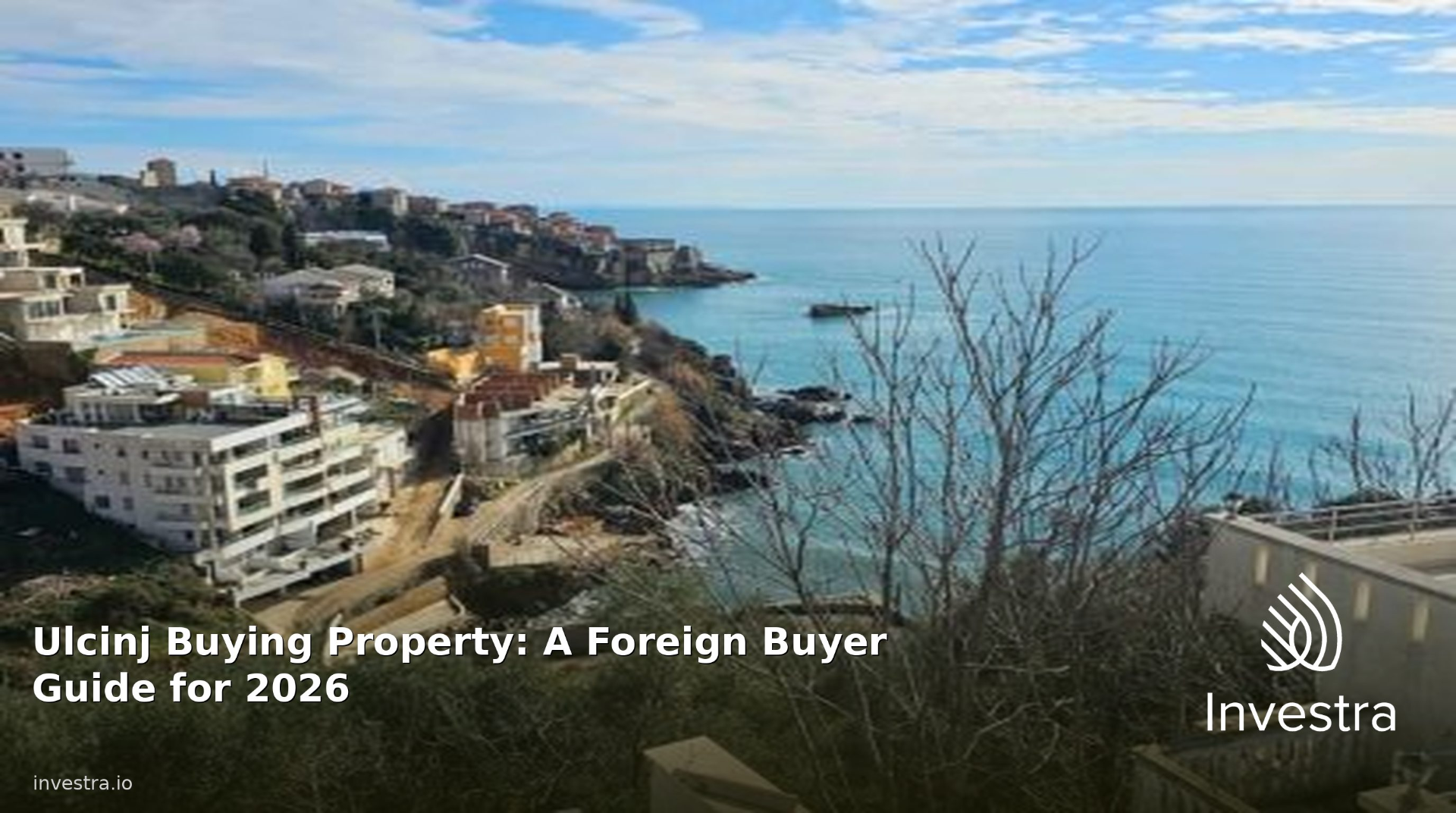
Ulcinj Buying Property: A Foreign Buyer Guide for 2026
Ulcinj Buying Property: A Foreign Buyer Guide for 2026
Ulcinj at a glance: why this corner of Montenegro matters to buyers
Quick Answer: Ulcinj combines Adriatic coastline, historic neighbourhoods and growing tourism interest, making it an option many international buyers examine when researching ulcinj montenegro real estate in 2026.
Ulcinj sits on Montenegro’s southern coast and has a character all its own: long beaches, an old town with Ottoman heritage, and a mix of local and regional tourism. In my experience, the first-time visitor is struck by how quickly the town’s different faces reveal themselves — the busy beachfront that attracts families, the quieter coves that suit long-stay renters, and the compact old town where narrow streets make for atmospheric short-term lets.
What surprised many buyers I work with is how local infrastructure and seasonal patterns shape demand more than glamour. Roads, marina access, and the availability of reliable services like professional property management often determine whether a purchase performs as expected. If you’re researching ulcinj montenegro real estate, don’t focus only on pretty photos; go and check the municipal services, water and sewage arrangements, and local planning maps.
For practical context and comparative reading on coastal markets and buyer due diligence, Investra has several regional guides that help frame questions you should ask of any coastal town, including pieces about Pula, Rovinj and Medulin that cover buyer checks and ownership costs. See examples like Pula Real Estate Market 2026: Areas, Buyer Demand and Due Diligence and Medulin Real Estate Market 2026: A Buyer Guide to see how coastal dynamics are evaluated elsewhere.
If you want to assess Ulcinj’s appeal for investment or lifestyle, plan two visits: one in high season and one in low season. We’ve seen buyers change their view entirely after a quiet-winter visit revealed infrastructure or maintenance issues they didn’t notice during summer.
What should international buyers assess when researching ulcinj montenegro real estate in 2026?
Quick Answer: International buyers should evaluate legal eligibility, land registry entries, local taxes and fees, infrastructure, rental demand seasonality, and professional support options when researching ulcinj montenegro real estate.
So what should you put at the top of your checklist? Start with clear, verifiable facts. Confirm the seller’s title and the property’s cadastral designation at the local land registry. Ask the municipal planning office for current and upcoming zoning plans. Find out which utility companies serve the property and whether any past or planned works (sewer, coastal protection) affect access or costs.
Legal eligibility is another early filter. Foreign buyers should check whether any restrictions or administrative steps apply to their nationality or residency status. You’ll need a notary and a local lawyer; insist on seeing the original documents, not just photos. The reality is that many disputes begin because a buyer assumed a verbal assurance or a blurred photograph meant “clear title.”
Don’t forget market and operational checks. Speak with at least two local agents and with property managers. Ask for occupancy data if you’re considering short-term rentals — and then verify that data with independent sources such as municipal tourism boards. For regional comparisons and due diligence frameworks that buyers have found useful, consult Investra’s guides on buyer priorities and checks across nearby coastal markets: Rovinj Real Estate Market 2026, Istria Property Investment 2026 and Poreč Real Estate Market 2026. These do not map perfectly to Montenegro, but they show the types of questions that reveal solid versus risky opportunities.
Finally, validate any numeric claim you see in listing material. If a broker quotes historical occupancy, expected rents, or local taxes, ask how those figures were calculated and where you can verify them — municipal tourism statistics, tax notices, and bank loan offers are typical verification sources. If you need hands-on support, advisory services like those offered by Siniša Dagary can provide tailored checks and introductions; see his profile and consultancy options at Siniša Dagary profile and advisory services.
Legal framework for foreign buyers in Montenegro
Quick Answer: Foreign buyers must follow Montenegrin property law, title procedures and notarial processes; verifying those through a local lawyer and the land registry is essential before committing to a purchase.
Montenegro’s legal process for property transactions has clear steps, but the devil is in the details and in local practice. As an international buyer you’ll work closely with a notary public and a lawyer. In practice, I always recommend contracting a lawyer separate from the notary and independent from the selling agent; conflict of interest can be subtle and costly.
Key concepts to confirm early on: the cadastral parcel number, the exact legal description in the land registry, the presence of easements or servitudes, any outstanding mortgages or encumbrances, and whether the property is registered under individual names or corporate structures. These are objective items you must verify in original documentation, ideally accompanied by an official extract from the cadastre.
Regulatory changes do occur, and up-to-date verification matters. Contact the local land registry office to request the extract, and instruct your lawyer to check for hidden obligations like communal debts or unregistered extensions. If you plan to renovate, ask the municipality for building permit rules and recent planning decisions. For examples of buyer due diligence approaches in similar coastal contexts, Investra’s articles on new-build due diligence and legal checks in Croatian coastal towns are practical references: Pula New-Build Homes: Due Diligence Guide and Buying Property in Pula: Legal Checks.
Remember: laws and interpretations can shift with new administrations or EU-aligned reforms. The correct question isn’t “what’s the law?” — it’s “what is the present, verifiable status of this property under law, and how will pending municipal or national decisions affect it?” Ask your lawyer to summarise this clearly in writing.
Due diligence checklist for Ulcinj property purchases
Quick Answer: A robust due diligence checklist combines title checks, planning and permit reviews, utility and coastal risk assessments, tax confirmations and verified rental history if applicable.
In my experience, buyers who run the full checklist avoid 80% of post-purchase headaches. Begin with documentary checks: original title documents, cadastral extracts, building permits and completed final inspections if the property is new. Your lawyer should request a certificate of encumbrances and a statement from the municipal cadastre.
Operational due diligence matters too. Who supplies electricity, water and internet? Are service contracts transferable? Ask for recent utility bills to confirm costs and meter status. If the property is near water, determine whether the coastline is regulated by a coastal protection zone — that can affect renovation permissions and uses.
Financial verification is essential. Demand copies of recent tax assessments and proof that municipal fees have been paid. If the property has been rented, ask for verifiable occupancy records: bookings, receipts, bank statements — and then confirm those against municipal tourist statistics where possible. Avoid relying solely on broker-provided summaries.
If you plan to renovate, commission a technical inspection and request a structural report. We’ve seen buyers buy beautiful-looking apartments only to find unapproved extensions or poor foundations when they commissioned professional surveys. For broader guides on buyer checks in coastal markets, see Investra articles such as Istria Property Due Diligence: A Croatian Buyer Checklist and Rovinj Holiday Rental Investment: Buyer Due Diligence for practical templates that you can adapt to Ulcinj.
Title, land registry and verifying ownership in Ulcinj
Quick Answer: Verify ownership through the Montenegrin land registry (cadastre), request certified extracts and have your lawyer confirm there are no encumbrances or informal claims on the property.
Title verification is non-negotiable. The land registry contains the legal record of ownership, but local practice varies in how quickly it is updated. Always obtain an official extract from the cadastre, and compare this with the notary’s file. If the seller is a company, review incorporation documents, shareholder registries and the company’s authority to sell.
Watch for informal arrangements that aren’t recorded. In Ulcinj, as in many older coastal towns, properties may have informal partitions or long-standing oral agreements about access paths. These may not be on the cadastre but could be enforceable in practice. Ask neighbours about access rights and any long-standing disputes. Neighbourhood knowledge can reveal practical rights-of-way or unresolved boundary issues that a registry extract won’t show.
When an encumbrance is listed, your options include requiring the seller to clear it before closing, negotiating a price reduction, or having it registered and subordinated on closing. Don’t accept vague promises: insist on certified documents and written agreements. For more procedural background and practical templates for verifying title and ownership, Investra’s how-to guides on purchasing and buyer checks in nearby markets are useful comparisons; they show how to convert local registry outputs into reliable buyer decisions. See Istria Property FAQ 2026 and Istria Property Ownership Costs.
Buying process step-by-step for Ulcinj properties
Quick Answer: The typical purchase sequence includes offer and reservation, due diligence, a preliminary agreement, notary completion and registration of title; each stage should be supported by independent legal counsel.
Every market has its rhythm. In Ulcinj, the process often begins with an offer and a reservation deposit, but the timing and binding nature of those steps vary — some reservations are informal, others contractual. I advise buyers to insist on a written reservation agreement that states the terms, duration and refund conditions for the deposit.
Next comes due diligence: your lawyer will obtain cadastral extracts, check municipal planning and request a statement of encumbrances. If everything checks out, the parties usually sign a preliminary agreement that sets the price, payment schedule and obligations to obtain permits or clear debts. This agreement should include clear dispute-resolution clauses and timelines.
The notary carries out the formal transfer and reads the deed in a language both parties understand or provides certified translation. After signing, the deed is registered in the land registry to update ownership. Expect administrative timelines for registration, and make sure your lawyer follows up until the change is visible in the cadastre extract. For a buyer unfamiliar with these steps, an independent legal adviser can make the difference between a smooth transfer and months of post-closing problems. If you want professional support for negotiation or documentation, consider contacting advisory services like investment consultation or the wider advisory teams at Findes Group & Partners at Findes Group & Partners advisory team.
Taxes, fees and ongoing ownership costs (Buying Legal & Tax)
Quick Answer: Buying in Ulcinj involves one-off purchase fees and ongoing costs such as property taxes and municipal charges; always verify current rates with the local tax authority and your lawyer.
Tax treatment and fee schedules change, so I won’t give fixed numbers. Instead I’ll explain what you must check and where to confirm it. First, ask for an official breakdown of purchase-related costs: notary fees, land registry registration fees, any transfer taxes or stamp duties and legal fees. Your lawyer should request from the seller proof of paid municipal charges and utility debts.
Ongoing ownership costs typically include annual property tax and municipal communal fees. The precise tax base and rates differ by municipality and by property characteristics. To verify current tax liabilities, request a printed tax notice from the local tax administration or the municipal treasury office; your lawyer should obtain a formal confirmation of tax status as part of the checklist.
If you intend to rent the property, you must also understand local tourism taxes and whether short-term letting requires registration with the municipal tourism office. Many buyers assume short-term rental economics based on brochures; instead, ask the municipality for historic tourism occupancy statistics and the tax office for guidance on reporting. For budgeting examples and ownership-cost frameworks in nearby coastal regions, review Investra’s practical guides such as Property Taxes and Purchase Costs in Istria and Istria Property Ownership Costs. They describe how to assemble a verification pack for purchase-related and ongoing expenses.
Renting and managing holiday rentals in Ulcinj
Quick Answer: Renting in Ulcinj requires market assessment, legal compliance with tourism registration, and reliable property management; verify occupancy trends with municipal statistics and references from local managers.
If you’re thinking of short-term holiday lets, ask: who is your target guest and when do they come? Ulcinj’s coastal season determines occupancy cycles, and demand can change with regional travel patterns or currency shifts. Before you commit, try to obtain verified occupancy records for comparable properties — look for municipal tourism reports and ask property managers for anonymised booking histories that you can cross-check.
Legal compliance is crucial. Many municipalities require hosts to register properties used for tourism and to collect local tourist taxes. Ask your lawyer to confirm whether additional licensing or inspections are required by the municipality. We’ve seen buyers start rentals without full registration and later face fines and complications, so get that paperwork in order before marketing the property.
Operationally, choose a property manager who can show contracts, cleaning schedules, maintenance plans, and transparent accounting. Ask for references and request to see how they handle guest check-in, emergency maintenance and refunds. If you prefer a hands-off approach, speak with firms used by foreign owners and check reviews. For practical buyer due diligence on holiday rental prospects and what data to request, Investra’s holiday rental investment guides illustrate the types of verified documents you should obtain: Rovinj Holiday Rental Investment and the Pula Rental Investment Guide 2026.
Financing, mortgages and payment considerations for foreign buyers
Quick Answer: Foreign buyers should confirm mortgage availability, required documentation, and bank procedures with local banks and international lenders; always obtain written loan offers and review payment scheduling with your lawyer.
If you prefer expert help, consulting firms and investment advisers can assist with bank introductions and negotiation. See Siniša Dagary’s advisory services for private consultation on structuring purchases and payment plans: Siniša Dagary and his investment insights at Siniša Dagary investment insights. For wider legal and tax structuring across borders, firms like Findes Group & Partners can provide an advisory team experienced in regional transactions; find them at Findes Group & Partners.
Investment Disclaimer
Quick Answer: This section explains that the article is educational, not financial advice, and that buyers should consult professionals before investing.
The information provided in this article is for educational and informational purposes only and should not be construed as financial, legal, or investment advice. Real estate investments carry inherent risks, and past performance does not guarantee future results. Investors should not invest money they cannot afford to lose. Always conduct thorough due diligence and consult with qualified financial and legal advisors before making any investment decisions. Investra.io does not guarantee returns on any investment.
Frequently Asked Questions
Quick Answer: Below are common questions international buyers ask about purchasing property in Ulcinj and concise, practical answers to guide next steps.
Can foreigners buy property in Ulcinj, Montenegro?
Yes, many foreigners buy property in Montenegro, but eligibility and the practical steps depend on the buyer’s nationality and the type of property. The right way to confirm your position is to consult a Montenegrin lawyer who will check any nationality-based restrictions and confirm the exact registration and notarial procedures you need to follow. Official land registry and municipal planning offices can also confirm whether the specific parcel has limitations. If a broker says it’s “straightforward,” ask them to put the legal steps in writing so you can have them reviewed by your counsel.
How do I verify the legal title for an Ulcinj property?
Request an official extract from the cadastral registry that shows ownership, parcel boundaries and encumbrances. Your lawyer should obtain a certified copy and compare it to the notary’s proposed deed. If the seller is a company, review incorporation and shareholder documents. Wherever possible, verify any encumbrances or mortgages with the bank or institution listed in the registry and get written confirmation of clearance before transfer.
What taxes and fees should I check before buying?
Instead of relying on generic figures, ask the municipal tax office for a current tax notice for the property or a simulated tax calculation based on its legal status. Also request a breakdown of notary, registry and potential transfer fees from your lawyer. If you plan to rent, check with the municipal tourism office about tourist tax and registration requirements. Your lawyer can obtain formal confirmations and include them in a purchase pack.
Do I need local professional advisors?
Absolutely. A local lawyer, an independent notary, and an accountant or tax adviser familiar with Montenegrin property taxation are essential. I’ve seen buyers rely solely on agents and then face unexpected legal or tax issues. If you’re seeking negotiation support or cross-border structuring, consider advisors such as Siniša Dagary for tailored consultations at investment consultation.
What should I ask a property manager when considering holiday rentals?
Ask for verifiable occupancy records, examples of guest contracts, cleaning and maintenance protocols, insurance coverage and references from current landlords. Also request a sample monthly statement showing income and expenses. Then verify those figures against municipal tourism statistics to ensure they’re realistic and not selectively favourable.
How do I check for building permits and planning restrictions?
Ask the municipality’s planning office for the property’s zoning designation and any building permit history. Your lawyer can request records of past permits and any pending planning decisions that may affect renovation potential. Don’t rely on verbal assurances; get written confirmation from municipal officials on permitted uses and restrictions.
What currency and payment issues should I anticipate?
Clarify whether the contract will be in euros or another currency, and how deposits and final payments are transferred. Ask your bank and your lawyer about any reporting, withholding or exchange requirements. Obtain a written schedule for payments and receipts, and avoid making large transfers without a contract condition tied to registration or notary confirmation.
Can I get a mortgage as a foreign buyer in Ulcinj?
Mortgage availability varies by bank and borrower profile. If you plan to use finance, request written pre-approvals from Montenegrin banks and compare terms. Your lawyer or a mortgage broker can help you collate the documents banks typically require and can approach appropriate lenders on your behalf.
How do I confirm the actual condition of the property?
Commission a technical and structural inspection by an independent engineer, and request a checklist that covers foundations, roofs, damp, electrical and plumbing systems. For seaside properties, add a coastal exposure assessment. Pair the technical report with a review of past maintenance invoices to see how well the property has been cared for.
Who handles tax reporting if I rent out the property?
Local accountants or tax advisers familiar with Montenegrin property and tourism taxes will handle registration, VAT or income reporting, and local tourist tax collection. Don’t assume the agent will manage tax obligations correctly; obtain a short engagement letter with your accountant that clarifies responsibilities and reporting timelines.
Recommended Reading
Quick Answer: These targeted articles and consultant profiles provide practical reading on related coastal markets, due diligence and advisory services that help when assessing ulcinj montenegro real estate.
- Pula Real Estate Market 2026: Areas, Buyer Demand and Due Diligence
- How to Buy Property in Istria as a Foreign Buyer in 2026
- Rovinj Real Estate Market 2026: Buyer Priorities and Location Choices
- Istria Property Investment 2026: A Decision Framework for Buyers
- Poreč Real Estate Market 2026: A Practical Guide for Property Buyers
- Pula Rental Investment Guide 2026: Long-Term Letting Buyer Questions
- Siniša Dagary — Investment Consultant
- Business Strategy Blog
Connect With Investra
Quick Answer: Follow Investra for market updates, guides and property opportunities via social channels and the Investra.io platform.
Find Investra.io on social media and on the platform for listings and guides. Facebook: https://www.facebook.com/investra.io. LinkedIn: https://www.linkedin.com/company/investra-io. YouTube: https://www.youtube.com/@Investraio.
If you want tailored introductions or advisory work for cross-border transactions, consider reaching out to consultants and partners listed earlier: advisory services and the Findes Group & Partners advisory team can provide specialist support.
Connect With Investra
Quick Answer: Follow Investra for verified market context and practical property research.
Related Posts
No related posts available.
