
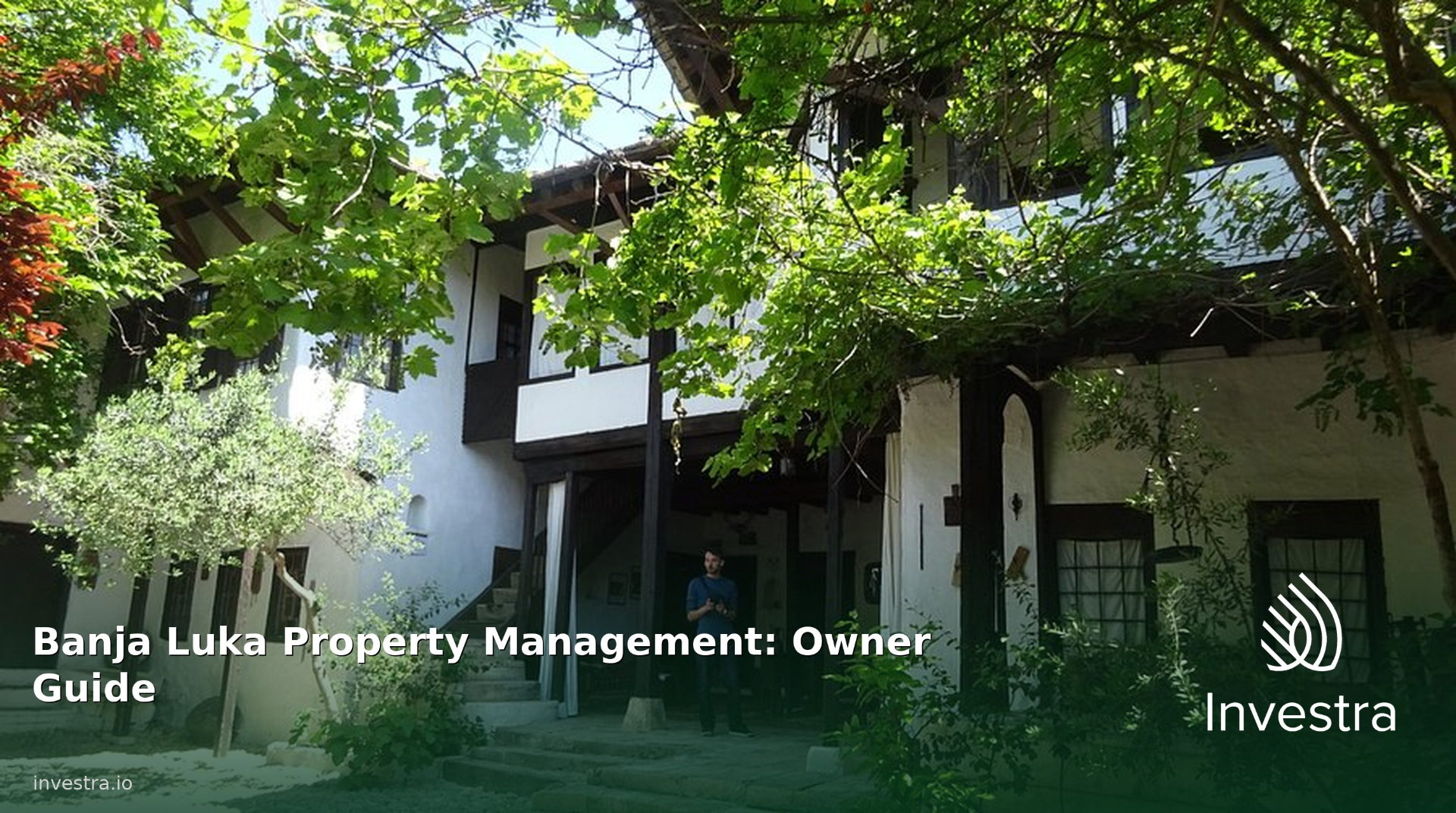
Banja Luka Property Management: Owner Guide
Banja Luka Property Management: Owner Guide
Overview: What Banja Luka Property Management Means for Owners
Quick Answer: Banja Luka property management covers the day-to-day running of rental homes, compliance with local rules, tenant relations and maintenance — essentially the tasks an owner hires out or handles personally to protect value and cash flow.
Banja Luka property management is more than just collecting rent. It’s the practical set of tasks and decisions that determine whether a building, apartment or holiday unit delivers predictable income and preserves capital. In my experience advising buyers and investors across Bosnia and Herzegovina, owners who treat management as a strategic function avoid the most common headaches: tenant disputes, deferred maintenance and surprise tax notices.
What should buyers know about Banja Luka property management? First, responsibilities vary depending on whether you own a long-term rental, short-term let, or multiple units. Second, local administrative complexity can be surprising — municipal rules and utility arrangements in Republika Srpska (the entity that includes Banja Luka) differ from other parts of the country. The reality is that many buyers underestimate the time and relationships involved until they’ve had to coordinate a repair late at night or chase overdue utilities.
Before you buy, ask practical questions: Who will handle guest messaging and check-ins? Who will schedule and supervise repairs? Who keeps records for taxes and deposits? For owners who prefer a hands-off approach, professional property management firms in Banja Luka can take most of this on, but fees, contract terms and service quality vary widely. For an owner-focused primer about market conditions and neighbourhoods, Investra’s Banja Luka real estate market guide is a good starting point for verifying local supply and demand dynamics: Banja Luka real estate market guide.
Finally, keep in mind that managing property in Banja Luka isn’t isolated from the national market. Cross-referencing guides for other Bosnian cities on Investra can reveal comparative advantages and pitfalls when building a regional portfolio: see how Sarajevo and Mostar differ in tenant mix and tourist seasons at the linked guides below.
Legal Ownership and the Buying Process in Banja Luka
Quick Answer: The buying process in Banja Luka involves due diligence on title, municipal permits and clearly defined contracts; foreign buyers should confirm ownership restrictions and registration steps with local authorities or a trusted advisor.
When considering Banja Luka property management you're also buying a legal relationship — ownership comes with obligations. The buying process typically begins with preliminary checks: verifying the title in the land registry, checking that the property has the required permits, and ensuring there are no unpaid utility bills or liens. What surprised many buyers is how small discrepancies in the land registry or missing building permits can delay transfers.
I always recommend engaging local legal counsel early. Lawyers familiar with Republika Srpska property law can confirm the property is correctly registered and identify any encumbrances. If you're a foreign buyer, you’ll need to confirm whether there are any restrictions or additional formalities — these can change, so rely on current municipal registry advice rather than historical claims. For practical guidance about buying in Banja Luka, Investra’s local buyer guide explains procedural steps that owners should verify in person or through a legal representative: Buying property in Banja Luka.
Due diligence for property management should include assessing tenancy status (is the property vacant or occupied under a lease?), tax registration, and whether any condominium or homeowners’ association rules apply. If the property is part of a new development or renovation project, consult the Banja Luka new-build and renovation guide to understand permit timelines and common contractor practices: Banja Luka new-build guide. In practice, the buying process and the transition to effective property management are smoother when ownership, utilities and rental permissions are confirmed before closing.
Taxes, Fees and How to Verify Them Locally
Quick Answer: Owners must register for the correct tax categories and understand municipal charges; verify current rates and filing requirements with the local tax office and a licensed accountant to avoid surprises.
Taxes are central to property management decisions. The issue isn't whether taxes exist — they will — but the details: which taxes apply, when filings are due, and how rental income should be reported. The specific rates and allowable deductions change over time and by entity within Bosnia and Herzegovina. That’s why I avoid quoting figures; instead, I tell owners how to verify them.
Start by asking a local certified accountant or tax advisor to outline the obligations for homeowners and landlords. Request written confirmation of: income tax classification for rental receipts, social security obligations if you employ staff, and municipal property taxes. For owners investing from overseas, double taxation agreements may be relevant; verify these with your home-country tax advisor and local counsel.
If you prefer a step-by-step reference, use Investra’s Banja Luka tax and ownership guides and consult regional comparative pieces like Investra’s Sarajevo and Tuzla buying guides for context on how tax handling differs across cities: Banja Luka real estate market guide and Buying property in Sarajevo.
Also consult firms that offer both legal and tax services. For example, advisory partners often listed with Findes can help reconcile municipal requirements with investor paperwork: see the Findes Group & Partners advisory team for contact details and services: Findes Group & Partners advisory team.
What Effective Property Management Covers Day-to-Day
Quick Answer: Effective management includes tenant screening, rent collection, routine maintenance, emergency response, bookkeeping and regulatory compliance — all aligned with owner goals and local law.
Day-to-day property management is operational, but it’s also strategic. It’s about creating systems that keep tenants happy and the asset in good repair. In Banja Luka, that typically translates into clear maintenance schedules, a reliable network of local contractors, and transparent communication with tenants. In my experience, owners who set expectations early — for deposit handling, visitor rules and repair timelines — reduce the frequency of disputes.
Key routines include regular inspections, scheduled servicing for HVAC or plumbing where applicable, and a fast-response plan for emergencies like leaks or electrical faults. Many owners also establish a cap for repair expenditures that a manager can approve without calling the owner, combined with set reporting intervals so the owner has oversight without getting bogged down in daily emails.
For short-term rentals, day-to-day tasks expand to include guest check-in, cleaning, linen services and online messaging. Investra’s local rental guides for Banja Luka offer operational checklists and comparative observations about the short-term market: Banja Luka rental market guide. If you’re comparing city operations, look at the Sarajevo and Mostar rental guides as well to understand seasonal differences and guest expectations: Sarajevo rental market guide and Mostar rental market guide.
Finding and Vetting Property Managers in Banja Luka
Quick Answer: Vet candidates for experience, local knowledge, references and transparent fee structures; require service agreements with clear KPIs and termination terms.
Finding a trustworthy property manager in Banja Luka can make or break an investment. We’ve seen owners choose managers based on low fees only to face chronic service failures. In practice, you should conduct a structured vetting process. Ask for references from current clients, inspect the quality of properties they manage where possible, and require a detailed scope of services in writing.
Key questions to ask candidates: How do you screen tenants? What does your maintenance network look like? How often do you reconcile accounts? What happens if a key staff member leaves? Also check whether the manager is familiar with landlord-tenant rules specific to Republika Srpska and whether they can handle both short-term and long-term lettings if you plan to switch strategies.
Request sample contracts and insist on transparency about fees. Management fees are only one part of total cost — ask about markups on maintenance and how they handle emergency repairs. For owners wanting a professional introduction, advisory consultants like Siniša Dagary provide local investment insights and can recommend vetted service providers: Siniša Dagary and his services page for advisory arrangements: advisory services. If you need both legal and accounting checks before signing a management contract, the Findes Group & Partners advisory team can be contacted for multi-disciplinary support: Findes Group & Partners.
Lease Agreements, Deposits and Tenant Law
Quick Answer: Lease agreements should be precise about rent, deposit handling, maintenance responsibilities and termination clauses; verify legal requirements with local counsel to ensure enforceability.
Leases are the backbone of rental management. A poorly written agreement can leave an owner exposed to long, costly disputes. In Banja Luka, leases need to reflect local statutes and customary practices, and translate accurately if you use a template in another language. I often tell clients: never assume a standard foreign template applies without local adaptation.
Important lease elements include clear rent payment terms, deposit amount and conditions for return, maintenance responsibilities (who fixes what), rules on subletting and pets, and notice periods for termination. Also specify the governing law and dispute resolution mechanism. If you plan to target international tenants, provide bilingual contracts, but ensure the local-language version is legally authoritative.
Because laws and judiciary practice can change, confirm the enforceability of eviction procedures with a lawyer before relying on them. For owners looking for example clauses and tenant screening best practices, Investra’s Banja Luka and Banja Luka neighbourhood guides contain practical starting points: Banja Luka neighbourhood guide. If you need strategic negotiation support, consider setting a consultation with Siniša Dagary’s investment consultation to align leases with your investment goals: investment consultation.
Short-Term vs Long-Term Rentals: Choosing the Right Strategy
Quick Answer: Choose short-term renting for flexibility and guest-driven income but higher operational demands; long-term rentals provide stable occupancy with lower daily management needs.
Choosing between short-term and long-term rentals in Banja Luka depends on your goals and appetite for hands-on management. Short-term lets can attract tourists and business visitors, but the work is continuous: check-ins, cleaning, rapid messaging and pricing adjustments. Long-term leases are simpler operationally, but tenant turnover and price resets happen less frequently.
We’ve seen portfolios that mix both approaches to balance income and risk. Think about seasonality in Banja Luka — events, university terms and local tourism drives can influence occupancy patterns. If you’re planning short-term lets, you’ll need hospitality-level standards: reliable cleaning services, quality linens and fast internet. For long-term lets, focus on durability and tenant screening.
Assess local demand by reviewing platform listings and consult Investra’s short-term and long-term rental guides for Banja Luka and comparatives for cities like Mostar and Sarajevo: Mostar rental market guide and Sarajevo rental market guide. Remember: to verify occupancy trends and realistic nightly or monthly rates, consult platform data, local managers, or rental market reports rather than relying on anecdotal figures.
Maintenance, Renovations and Contractor Management
Quick Answer: A proactive maintenance plan plus trustworthy local contractors prevents value erosion; request contractor references, written estimates and warranties before starting work.
Maintenance and renovation are where owners either protect or erode their investment. In Banja Luka, sourcing reliable tradespeople requires local knowledge, written agreements and spot checks. I always advise owners to build a shortlist of vetted contractors for plumbing, electrical work, painting and carpentry before problems occur. That way, when an issue arises, you don’t scramble to find someone at inflated emergency rates.
For renovation projects, insist on a scope of work, timeline and payment schedule. Keep records of permits and approvals when structural changes are involved; municipal inspections may be required and can affect resale or insurance claims. If you’re renovating to reposition a property for short-term guests, standardize materials and finishes to streamline cleaning and repairs.
Owners should also set aside a reserve for maintenance and document every expenditure. This practice pays off when presenting accounts to tax advisors or potential buyers. For guidance on common renovation pitfalls and contractor management, Investra’s Banja Luka new-build and renovation guide outlines practical steps: Banja Luka new-build guide. If you need more strategic project oversight, consider an advisor who can audit workflows — Siniša Dagary’s blog contains investment insights that owners have found useful for planning: Siniša Dagary investment insights.
Accounting, Reporting and Owner Transparency
Quick Answer: Accurate bookkeeping, regular reporting and clear owner-manager communication are essential; use professional accounting services to stay compliant and informed.
To verify current tax filing procedures and document retention rules, consult local accountants and Investra resources for Banja Luka and Tuzla buying guides to see how reporting practices differ by locality: Buying property in Tuzla and Tuzla real estate market guide. For multi-disciplinary advisory access (legal, tax, accounting), the Findes Group & Partners advisory team can be a useful contact: Findes Group & Partners advisory team.
Insurance, Liability and Risk Management
Quick Answer: Insure buildings and liability exposures, confirm policy scope for rental use, and document security measures; consult insurers and brokers to match cover to your risk profile.
Discuss options with local brokers who understand Republika Srpska regulations, and ensure policies cover emergency temporary accommodation if a unit becomes uninhabitable. Keep inventory lists and photographic records for claims, and require contractors to carry their own liability insurance for renovation projects.
When presenting a property to insurers, be transparent about intended use (short-term vs long-term, occupancy rates and renovation plans). If you need help assessing risk across a portfolio, advisory services like those offered by Siniša Dagary can provide strategic perspectives on balancing risk and return: Siniša Dagary profile. For legal and tax alignment of insurance strategies, consult Findes or a local insurance broker: Findes Group & Partners.
Exit Strategies: Selling, Repositioning or Transferring Ownership
Quick Answer: Plan exits early: document condition, keep accounts clean, understand local market demand and consult brokers to time a sale or reposition effectively.
To learn how buyers evaluate assets in Banja Luka and comparable cities, review Investra’s market guides for detailed context when planning exits: Banja Luka real estate market guide and cross-compare with Sarajevo and Mostar guides: Mostar real estate market guide and Sarajevo real estate market guide.
Local Market Trends and Due Diligence Resources
Quick Answer: Monitor local demand drivers — employment, education and tourism — and verify current statistics with municipal offices, local agents and reputable market reports.
In practice, I recommend a checklist for due diligence: verify recent sales and rental listings across platforms, request historical occupancy data from potential managers, and check local municipal plans for infrastructure projects that might affect demand. Investra’s city guides are useful starting points — use the Banja Luka guide for market context and compare with other cities to spot relative advantages: Banja Luka real estate market guide, Sarajevo real estate market guide and Mostar real estate market guide.
If you want professional due diligence, advisors like Siniša Dagary can help design a local research plan, and the Findes Group & Partners can coordinate legal and financial verification: Siniša Dagary investment insights and Findes Group & Partners. Remember to verify any statistic or trend you read by checking the primary source — municipal registries, national statistical offices or audited reports — because figures change.
Investment Disclaimer
Quick Answer: This section explains the purpose and limits of the article and why readers should seek professional advice for decisions.
The information provided in this article is for educational and informational purposes only and should not be construed as financial, legal, or investment advice. Real estate investments carry inherent risks, and past performance does not guarantee future results. Investors should not invest money they cannot afford to lose. Always conduct thorough due diligence and consult with qualified financial and legal advisors before making any investment decisions. Investra.io does not guarantee returns on any investment.
Frequently Asked Questions
Quick Answer: The FAQ section answers common owner questions about Banja Luka property management and points to ways to verify specifics locally.
What should buyers know about Banja Luka property management?
Buyers should know that management encompasses legal compliance, tenant relations, maintenance, accounting and risk control. The practical step is to map who will perform each task after purchase. Verify local requirements and tax treatment with a licensed accountant and a lawyer. For operational norms and checklists, consult Investra’s Banja Luka guides and speak with local property managers for recent examples of how they handle occupancy and repairs.
Can foreign buyers manage property remotely in Banja Luka?
Yes, remote ownership is possible but demands reliable local partners. Remote owners typically hire property managers for on-site duties and an accountant to handle filings. If you plan to manage remotely, invest time in vetting managers and establish clear reporting and emergency protocols. Consider periodic site visits or appointing a trusted local representative who can make decisions within agreed limits.
How do I verify the legal title and permits for a property?
Verify title and permits by obtaining extracts from the land registry, requesting copies of building permits and checking municipal records. Engage a local lawyer to confirm that the documentation is current and unencumbered. Municipal offices and registries provide primary documentation; always use certified translations if documents are in another language.
What taxes and fees should I check before buying?
Confirm property transfer taxes, annual property tax, income tax treatment for rental income and any municipal fees. Tax rules change, so ask a local tax advisor to provide the current schedules and filing obligations in writing. For foreign investors, inquire about double taxation treaties and how rental income is reported in your home jurisdiction as well as in Bosnia and Herzegovina.
How do I choose between short-term and long-term rentals?
Decide based on your time commitment, risk appetite and the local market profile. Short-term rentals require more hands-on management but can be adjusted quickly for pricing; long-term rentals are operationally simpler and offer steady occupancy. Validate demand using listing platforms, local managers and Investra’s rental guides for Banja Luka and comparable cities.
What should be in a property management contract?
A management contract should list services provided, fees, payment terms, reporting intervals, repair approval limits, termination clauses and liability allocations. Insist on KPIs like response times and occupancy reports. Have the contract reviewed by legal counsel before signing.
How can I minimize maintenance surprises?
Create a preventative maintenance schedule, maintain a reserve fund, and work with vetted contractors. Document all repairs and warranties. Periodic inspections and timely minor repairs prevent escalation into costly structural problems. Keep detailed records for transparency and tax purposes.
What insurance do I need for rental property in Banja Luka?
At minimum, consider building insurance and third-party liability cover. If you operate short-term lets, ensure your policy explicitly covers rental activity and guest liability. Consult local brokers to match cover to your usage and verify any exclusions or excesses relevant to rental operations.
Who can help me with due diligence and local introductions?
Local advisors and consultants can streamline due diligence. For strategic investment insight and introductions to vetted service providers, consider contacting consultants like Siniša Dagary: Siniša Dagary and his advisory services: advisory services. For cross-disciplinary legal, tax and accounting coordination, Findes Group & Partners is a resource: Findes Group & Partners advisory team.
How do I confirm current market rates and rental performance?
Confirm current rates by checking active listings on marketplace platforms, asking local managers for recent occupancy reports, and consulting market updates from reputable industry sources like Investra’s city guides. For precise historical or comparative data, request audited reports or broker comps and confirm with municipal registries where possible.
What are typical red flags in a management relationship?
Red flags include opaque fee structures, refusal to provide references, slow or inconsistent reporting, and a reluctance to put terms in writing. If a manager avoids inspections or uses informal payment practices, step back and seek alternatives. Insist on written agreements and periodic audits of accounts.
Recommended Reading
Quick Answer: The reading list links to practical Investra guides and an investment consultant to expand your understanding of Banja Luka and regional markets.
- Sarajevo real estate market guide
- Buying property in Sarajevo
- Sarajevo rental market guide
- Sarajevo neighbourhood guide
- Sarajevo new-build guide
- Mostar real estate market guide
- Siniša Dagary — Investment Consultant
- Business Strategy Blog
Connect With Investra
Quick Answer: Use Investra’s social channels to follow market news, new listings and practical guides related to Banja Luka property management.
Find Investra on social media for updates and video explainers: Facebook, LinkedIn, and YouTube.
Connect With Investra
Quick Answer: Follow Investra for verified market context and practical property research.
Related Posts
No related posts available.
