
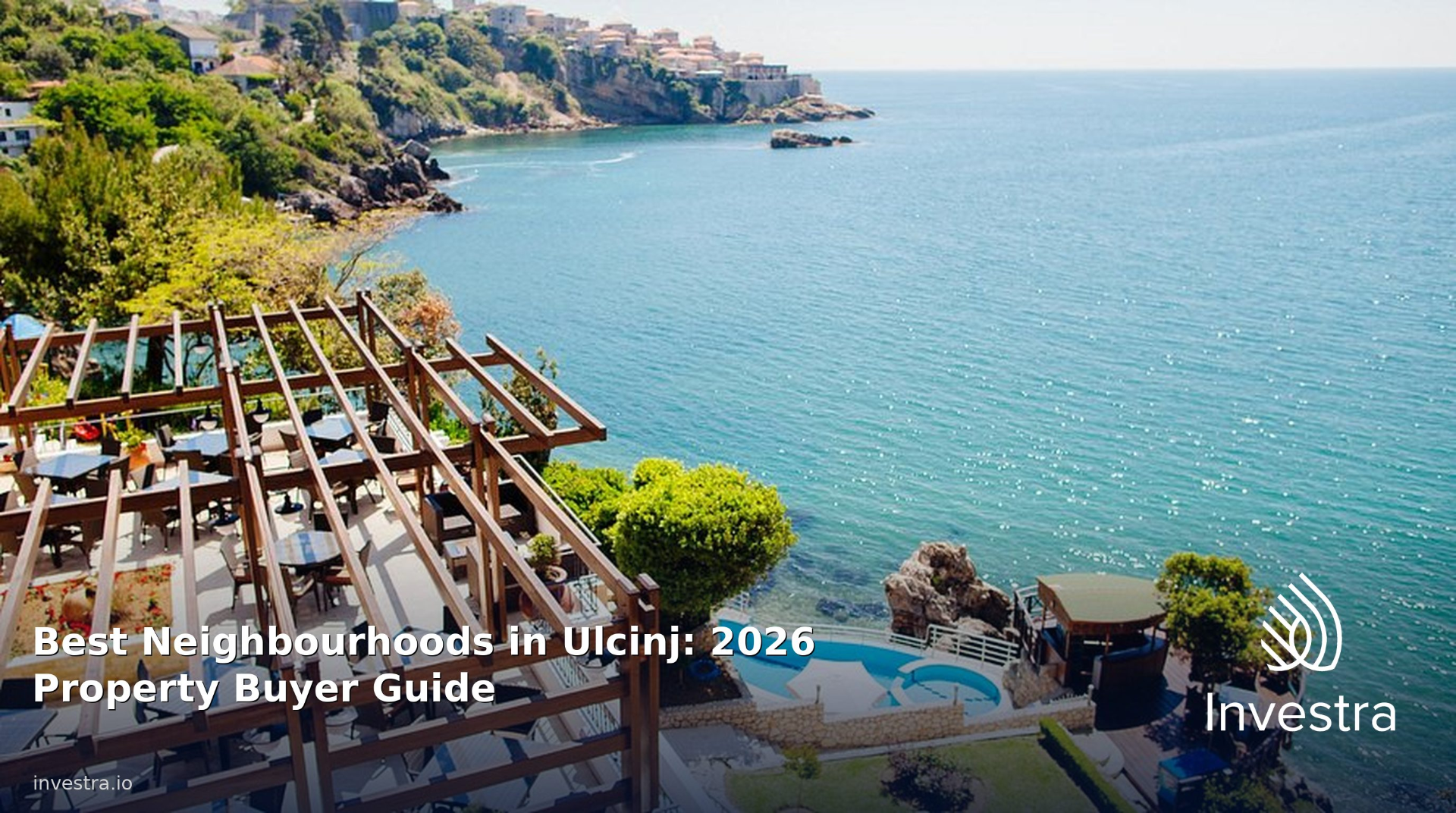
Best Neighbourhoods in Ulcinj: 2026 Property Buyer Guide
Best Neighbourhoods in Ulcinj: 2026 Property Buyer Guide
Ulcinj at a glance: why consider ulcinj montenegro real estate in 2026
Quick Answer: Ulcinj is a coastal municipality with a mix of historic town, long sandy beaches and natural areas that attract holidaymakers and long-term residents; researching local planning, infrastructure and market reports will tell you whether it matches your investment goals.
Ulcinj sits at Montenegro’s southern edge, a place where Ottoman-era stone lanes meet long sandbars and the Adriatic’s softer summer climate. What I’ve noticed over several seasons of advising buyers is that Ulcinj appeals to two very different audiences: travellers after beaches and families seeking quieter, affordable coastal living. Those two currents shape the types of property on offer — from compact town apartments in the Stari Grad to villas and plots near the coastline and river deltas.
Before you decide whether ulcinj montenegro real estate fits your portfolio, ask yourself what you value most: proximity to sand, rental season length, or quieter year-round life? The reality is that location within Ulcinj matters as much as the asset class. If you want to compare due diligence approaches used elsewhere on the Adriatic, Investra’s regional resources often explain buyer checks and market dynamics; for example see guides on Pula, Rovinj and Istria that walk you through ownership costs and buyer questions: Pula Real Estate Market 2026, Rovinj Real Estate Market 2026 and Istria Property Investment 2026. These are not Montenegro-specific, but they do illustrate how to structure your research and what questions to ask local advisors.
Practical next steps? Start with a visit, then validate anything that looks promising with municipal planning records, the cadastre and a local notary. If you want local advisory services, experienced consultants like Siniša Dagary and partners at Findes Group & Partners can provide tailored checks and introductions.
Overview of Ulcinj neighbourhoods and micro-markets
Quick Answer: Ulcinj’s micro-markets range from the compact Old Town to the expansive Long Beach, river islands and rural outskirts; each has distinct demand drivers and planning considerations that buyers must assess.
When people ask me how to approach ulcinj montenegro real estate, I usually start with a simple map and a set of priorities. Ulcinj is not one homogeneous market. There’s the Stari Grad (Old Town) where history and walkability drive demand, the long sand beaches that attract seasonal holidaymakers, and quieter inland villages where development pressure varies. What surprised many buyers is how quickly local infrastructure — a single new road, a planned utilities upgrade — can shift desirability between neighbourhoods.
Look for differences in building typologies, too. In town you’ll find low-rise stone buildings and apartments; along the coast there are modern holiday complexes and standalone houses; in rural sectors you’ll find plots and traditional farmhouses. For buyers used to other Adriatic markets, the framework for evaluating Ulcinj is similar to the checklists used in places like Istria and Pula. Investra’s pieces on buyer due diligence and new-build checks are helpful references for the types of questions you’ll want to ask locally: Pula New-Build Homes: Due Diligence, Buying Property in Pula: Legal Checks, and practical buyer checklists like Istria Property Due Diligence.
Rather than assuming a uniform market, map the micro-markets, visit several times (weekend and weekday) and talk to local estate agents, owners and the municipality. Use local planning portals and the land registry to see whether a neighbourhood is slated for new infrastructure or conservation — both can change future value and permitted uses.
Ulcinj Old Town (Stari Grad): historic character and buyer considerations
Quick Answer: Stari Grad offers historic charm and walkable streets but buyers need to assess conservation rules, structural condition and utility access before committing.
Stari Grad is where the layers of Ulcinj’s history show most clearly: narrow lanes, Ottoman-era houses and a compact urban fabric. In my experience, buyers drawn to character homes underestimate the amount of renovation and the constraints that come with listed buildings and tight lot patterns. The reality is that restoring a period property can be rewarding, but it often requires specialist contractors, permissions from municipal conservation authorities and a realistic budget for upgrades to plumbing and wiring.
When you inspect an Old Town property, check for signs of structural movement, moisture and the condition of shared elements such as roofs and staircases. Ask the seller for building permits and any conservation rulings that apply. If the property is part of a communal building, request the minutes of the owners’ association meetings and recent service bills. For legal checks, rely on a local notary and lawyer who can pull the title from the cadastre and verify outstanding encumbrances. If you want procedural guidance used in similar Adriatic towns, Investra’s guides to buyer checks in Rovinj and Poreč outline buyer priorities and how to approach older buildings: Rovinj Old Town or Newer Areas and Poreč Real Estate Market 2026.
Finally, consider what you want to use the property for. A holiday let in the Old Town appeals to guests who want authenticity and walking access, but seasonal demand and parking constraints can limit its suitability for long-term tenants or families. Confirm zoning and permissible uses with the municipality before committing.
Velika Plaža (Long Beach): beachfront living and development dynamics
Quick Answer: The Long Beach area is Ulcinj’s major coastal draw with extensive sand and beach-related amenities; buyers should investigate coastal protection rules and planned tourism infrastructure.
Velika Plaža — the broad, continuous sand beach — is Ulcinj’s signature asset. It’s where holiday traffic concentrates, and where beachfront and near-beach properties attract most interest from non-local buyers. What surprised many first-time visitors is how development pressure and environmental protections intersect here. Beachfront areas often have layered restrictions: coastal protection zones, municipal beach management plans and rules about set-back distances for new construction.
If you’re considering a beachfront or near-beach property, ask for the coastal zone map and any municipal decisions about shoreline management. Check whether the plot sits within public beach access corridors. Also verify utility connections: some beachfront plots may lack direct sewer or mains water and require private solutions, which affects renovation plans and operating costs. For practical buyer checklists that reflect questions investors ask across Adriatic beaches, see Investra’s rental and buyer guides which explore long-term letting and holiday rental considerations: Pula Rental Investment Guide 2026 and Rovinj Holiday Rental Investment.
Think about seasonality too. Beach areas can be intensely seasonal, and the operational model for a beach property — owner use, holiday letting, or long-term rental — will influence your choice. Ask local managers about peak months, occupancy patterns and local tourist services before you buy.
Mala Plaža, Marashi and the town seafront: convenience and accessibility
Quick Answer: The central seafront areas combine easy access to shops, cafes and transport; they’re best for buyers seeking convenience and steady local demand rather than full isolation.
Mala Plaža and Marashi are the more urban seafront strips of Ulcinj, closer to municipal services, markets and public transport. If you want to be within a short walk of daily amenities, these areas are practical choices. From a pragmatic standpoint, proximity to town services reduces management headaches for rented properties and makes living there more comfortable for longer stays.
What we’ve seen in practice is that buyers who prioritize ease of access sometimes trade off size or direct sea views. Units along this seafront tend to be smaller and within older buildings, though there are pockets of newer construction. Confirm access to parking if you plan frequent car use — coastal streets can be congested during the high season. Also find out whether any promenades or public works are planned that could both improve amenities and temporarily affect access or noise.
For comparative buyer decision frameworks and how to weigh location priorities, Investra’s content on neighbourhood choices in Rovinj and Pula may help you structure your location checklist: Rovinj Buyer Priorities and Best Neighbourhoods in Pula.
Ada Bojana and the Bojana River area: nature, boundaries and special considerations
Quick Answer: Ada Bojana and the Bojana river mouth offer unique natural scenery and mixed-use opportunities, but buyers need to assess flood risk, conservation status and infrastructure constraints.
Before you make an offer in this zone, verify flood maps and consult the municipality’s environmental planning department. Also check whether the parcel sits within a protected habitat or has specific building restrictions. If you are considering tourism use, confirm permissible accommodations types and whether temporary or seasonal structures are regulated. For examples of how to approach waterfront and sensitive coastal site due diligence, Investra’s guides on property ownership costs and buyer checklists in coastal regions are a useful parallel: Istria Property Ownership Costs and Istria Property FAQ 2026.
One pragmatic tip: talk to local residents about seasonal river behaviour and service reliability. Their lived experience reveals things that official documents don’t always show on paper.
Outskirts, villages and rural plots: potential and pitfalls
Quick Answer: Rural plots and village properties offer space and lower density, but buyers must check access, zoning and utility connections before assuming development is straightforward.
In my experience advising buyers in similar coastal regions, a handful of practical checks prevent unpleasant surprises: confirm legal road access, ask the cadastre for the exact parcel boundaries and encumbrances, and request confirmation of utility plans from the municipality. If you plan to build, check the local spatial plan (urbanistički plan) to see permitted uses and density limits. For budgeting and cost assumptions, rather than relying on anecdotes, contact local contractors and ask for site-specific quotes; Investra’s ownership costs and budgeting guides for Istria provide templates for thinking about realistic ongoing costs and build budgets: Istria Property Ownership Costs and Property Taxes and Purchase Costs in Istria.
Also consider local amenities: healthcare, schools, and shopping matter if you want year-round rental or long-term residency. A rural plot’s appeal can evaporate if daily life requires lengthy travel for essentials.
The buying process for foreign buyers in Montenegro: practical steps
Quick Answer: The typical steps are search, due diligence, preliminary agreement, final contract before a notary, and registration; always confirm current procedural details with a local lawyer and the cadastre.
You’ll also need to involve a notary for the final deed and to register the title transfer. For foreigners, any residency or ownership nuances should be clarified with legal counsel and the municipality. Avoid relying on verbal assurances from sellers or agents; always insist on documented permits and certified copies of the land registry extract. To prepare, review Investra’s legal and due diligence resources for comparable markets and buyer checklists: Buying Property in Pula: Legal Checks and Istria Property Due Diligence.
Finally, get a clear timeline and a schedule of payments in writing. Timeframes for registration and utility transfers differ between municipalities, so allow extra weeks for administrative steps and account for public holidays.
Taxes, fees and ongoing ownership costs: how to verify current figures
Quick Answer: Montenegro property taxes and fees change over time; confirm current rates with the local tax office, a notary, or your lawyer rather than relying on third-party estimates.
We’ve seen buyers assume a fixed percentage then discover additional municipal charges, or that renovation VAT rules changed after they’d budgeted. To avoid this, ask your lawyer to produce a cost summary as part of the pre-contract checks. Investra’s practical budgeting and ownership cost guides for the Adriatic show the categories you should include when preparing a purchase budget — they’re useful even if the exact numbers differ locally: Istria Property Ownership Costs and Property Taxes and Purchase Costs in Istria.
Due diligence and title verification in Ulcinj: what to check and who to use
Quick Answer: Due diligence should include a cadastre title search, municipal planning checks, utility confirmation, and verification of any encumbrances; use a local lawyer and notary to obtain official extracts and certified documents.
If you require a template or checklist to structure your due diligence, Investra’s guides on buyer checks, new-build due diligence and ownership costs in nearby markets are practical references: Pula New-Build Homes Due Diligence, Istria Property Due Diligence and Buying Property in Pula: Legal Checks.
Rental strategy, management and seasonal demand in Ulcinj
Quick Answer: Rental strategies depend on location and seasonality — confirm demand patterns with local agencies, tourism boards and actual booking data before forming expectations.
For operational guidance and buyer questions tailored to rental investment, Investra’s guides on rental investment and buyer due diligence in holiday markets are informative: Pula Rental Investment Guide 2026 and Rovinj Holiday Rental Investment. For property management and advisory services, consider contacting regional consultants such as Siniša Dagary advisory services or the Findes Group & Partners advisory team.
What international buyers should assess when researching ulcinj montenegro real estate in 2026?
Quick Answer: International buyers should assess legal title, zoning and planning, infrastructure and utilities, seasonal demand, taxation and local ownership rules; verify all facts with the cadastre, municipal planning office, tax authorities and an independent lawyer.
To structure your due diligence and compare Ulcinj to other Adriatic markets, Investra’s regional guides show checklists and decision frameworks you can adapt: Istria Property Investment Decision Framework, Istria Due Diligence Checklist and market-specific buyer guides like Umag Real Estate Market 2026 which show how to itemise checks for small coastal towns.
Ultimately, verify every important fact with primary sources: the land registry, municipal planning office, tax authority and a notary. If you want tailored assistance, consultants such as Siniša Dagary and advisors at Findes Group & Partners can help translate local rules into a clear purchase checklist.
Investment Disclaimer
Quick Answer: This section explains the article’s informational purpose and advises readers to seek professional advice before acting on any investment opportunity.
The information provided in this article is for educational and informational purposes only and should not be construed as financial, legal, or investment advice. Real estate investments carry inherent risks, and past performance does not guarantee future results. Investors should not invest money they cannot afford to lose. Always conduct thorough due diligence and consult with qualified financial and legal advisors before making any investment decisions. Investra.io does not guarantee returns on any investment.
Beyond this formal notice, my practical suggestion is to treat every potential purchase as unique: have your lawyer and accountant produce a written summary of risks and a checklist of documents before you sign anything. Use official government sources for tax and regulatory queries, and request all permits and registry extracts in certified form. If you plan to finance the purchase, confirm current lending conditions with regional banks or mortgage brokers; market conditions and lending criteria change, so up-to-date verification is essential.
Frequently Asked Questions
Quick Answer: Below you’ll find concise answers to common questions about buying in Ulcinj, each followed by a detailed explanation to help international buyers prepare.
Can foreigners buy property in Ulcinj, Montenegro?
Foreign ownership rules can vary by country and over time, so the safest route is to check current legislation with a Montenegro-based lawyer or consult the cadastre and notary. They’ll confirm whether the specific property type and parcel can be transferred to a non-resident, and whether any reciprocity or additional approvals are required. A local lawyer will also explain whether special steps are necessary for agricultural land versus urban parcels.
What documents should I request from a seller before making an offer?
Ask for an official cadastral extract (land registry), copies of the title deed, any building permits and completion certificates, proof of cleared municipal charges and a statement of existing encumbrances or mortgages. For apartments, request minutes of owners’ association meetings and recent communal expense accounts. Your lawyer should verify the authenticity of these documents and obtain certified copies where necessary.
How do I verify zoning and permitted uses for a parcel?
Obtain the local spatial plan (urbanistički plan) and any specific land-use decisions from the municipal planning department. The municipality will confirm permitted uses, density limits and whether special permits are required for tourism or commercial activities. A planning consultant or local lawyer can interpret the plan’s technical language for you.
Where can I check official property ownership and encumbrances?
The cadastre or land registry is the authoritative source for ownership and encumbrances. Your lawyer or notary can request an official extract. Ensure the extract is current and cross-check boundaries with a surveyor if the plot’s borders are a concern.
How should I approach due diligence on coastal or beachfront properties?
For coastal properties, verify coastal zone boundaries, public access rights and any conservation or protection statuses. Ask the municipality for coastal management maps and any recent decisions on shoreline works. Also confirm utilities and flood risk. Given the environmental sensitivities, engage a lawyer familiar with coastal regulations.
What are the common additional costs I should budget for aside from purchase price?
Typical additional costs include legal fees, notary fees, registration fees, transfer taxes (if applicable) and local municipal charges. Ongoing costs include property tax, utilities, insurance, maintenance and any management fees if renting. Because rates and applicable charges change, ask a notary or tax professional for an itemised list tailored to your purchase.
How can I assess rental demand and seasonal patterns in Ulcinj?
Speak with local property managers and tourism offices to request anonymised booking histories. Check popular short-term rental platforms for listing volumes and average availability during high and shoulder seasons. Also review municipal tourism statistics, if available, and speak to other owners for first-hand insights.
Do I need to be present for the notary signing, or can I use power of attorney?
Many buyers use a notarised power of attorney if they cannot be present, but the specific requirements vary. Your lawyer and the notary can advise on the exact documentation needed, and on how to properly organise an internationally valid power of attorney that meets Montenegrin notarial standards.
Who should I engage first: a lawyer, an agent, or a surveyor?
Start with a local lawyer or notary to outline the legal steps and checks; they can then recommend reputable agents and surveyors. A surveyor is crucial if parcel boundaries or building condition are uncertain. Engaging a lawyer early helps prevent committing to properties with title or planning issues.
Where can I find trusted local advisers for due diligence and management?
Look for advisers with verifiable client references, local registrations and transparent fees. Regional consultants like Siniša Dagary advisory services and cross-border teams such as Findes Group & Partners advisory team are examples of providers who list services and contact details. Ask for recent case studies and confirm they can provide written confirmations of registry and planning checks.
Recommended Reading
Quick Answer: The list below points to useful Investra and consultant resources that expand on due diligence, neighbourhood choice and ownership costs across the Adriatic — resources you can adapt for Ulcinj research.
- Pula Real Estate Market 2026: Areas, Buyer Demand and Due Diligence
- How to Buy Property in Istria as a Foreign Buyer in 2026
- Rovinj Real Estate Market 2026: Buyer Priorities and Location Choices
- Istria Property Investment 2026: A Decision Framework for Buyers
- Poreč Real Estate Market 2026: A Practical Guide for Property Buyers
- Pula Rental Investment Guide 2026: Long-Term Letting Buyer Questions
- Siniša Dagary — Investment Consultant
- Business Strategy Blog
For additional practical checklists and due diligence templates refer to Investra’s other articles on new-build checks and purchase costs, such as Pula New-Build Homes: A Buyer Due Diligence Guide for 2026, Buying Property in Pula: Legal Checks Before You Commit, and Istria Property Ownership Costs. If you want consultancy contacts, see investment consultation or the Findes Group & Partners advisory team.
Connect With Investra
Quick Answer: Follow Investra on social channels for market updates, analysis and new listings; links to Facebook, LinkedIn and YouTube are below.
Stay connected to Investra for updates on Adriatic property markets, new guides and investment insights. Here are the main social channels where Investra.io shares news and content:
Facebook — Investra.io
LinkedIn — Investra.io
YouTube — Investra.io
If you’d like personalised support, consider contacting regional advisors such as Siniša Dagary or the Findes Group & Partners advisory team for introductions to vetted lawyers, surveyors and property managers.
Connect With Investra
Quick Answer: Follow Investra for verified market context and practical property research.
Related Posts
No related posts available.
