
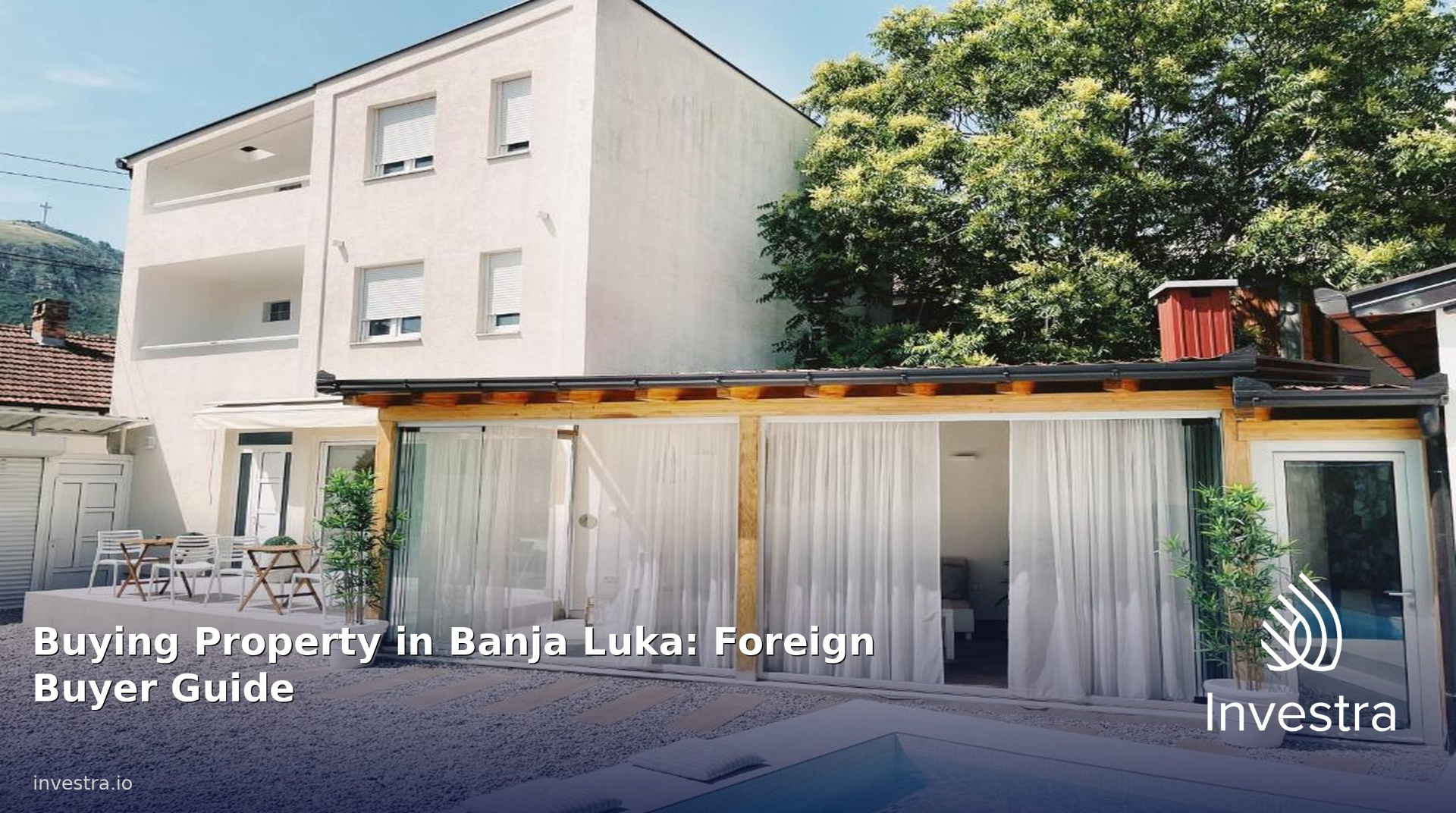
Buying Property in Banja Luka: Foreign Buyer Guide
Buying Property in Banja Luka: Foreign Buyer Guide
Why buy property in Banja Luka?
Quick Answer: Banja Luka offers a mix of city convenience, cultural character and varied property stock that appeals to buyers seeking regional opportunities; learn local market context before you choose. See the Banja Luka real estate market guide for background information.
Banja Luka often surprises visitors who expect a small provincial town. In my experience, the city blends administrative importance with growing residential and commercial demand. You’ll find Austro-Hungarian facades, modern apartment blocks, riverside promenades and pockets of new development. That mix creates choices: compact central flats, family houses on the outskirts, and conversion projects in older parts of town.
What should buyers know about buy property Banja Luka? First, know why you’re buying—primary residence, rental, renovation project, or long-term capital play. The city’s character means different neighbourhoods behave differently. For a deeper examine where buyers are focusing their searches, consult the Banja Luka neighbourhood guide. The reality is, location matters more than glossy finishes when you’re planning an investment or a lifestyle move.
We’ve seen interest from domestic buyers and foreigners for varied reasons: affordability relative to Western Europe, proximity to regional transport links, and local economic shifts. If you want comparative context on other Bosnian cities, the Sarajevo real estate market guide and Mostar real estate market guide show how Banja Luka fits into the national picture.
Legal framework: can foreigners buy property in Banja Luka?
Quick Answer: Foreigners can generally buy property in Bosnia and Herzegovina, including Banja Luka, but legal details depend on entity-level rules and required clearances; check the up-to-date guidance in the Buying property in Banja Luka guide.
As an attorney or notary will remind you, property law in Bosnia and Herzegovina is shaped by the country’s political structure: the two entities and district have specific rules that influence foreign ownership. In practice, that means you must confirm the relevant regulations for Republika Srpska, where Banja Luka sits. What surprised many buyers is how much local municipal practice — the cadastre office, the municipal planning rules, the notary’s interpretation — affects the transaction.
I avoid inventing legal conclusions here. Instead, I recommend steps any prospective foreign buyer should take: obtain a written opinion from a local lawyer experienced with real estate transactions in Republika Srpska; request a certified extract from the land registry (cadastre) showing ownership and encumbrances; and confirm whether any reciprocity measures apply for your nationality. The Buying property in Banja Luka article on Investra is a practical starting point, and the advisory services page from Siniša Dagary lists consultancy options if you want on-the-ground help.
Want to verify current legal conditions yourself? Contact the Republika Srpska Ministry of Justice or a licensed local notary, and ask for the most recent administrative rules for foreign buyers. That direct approach is the safest way to avoid surprises when you’re committing to buy property Banja Luka.
Step-by-step buying process in Banja Luka
Quick Answer: The buying process follows standard regional steps—preliminary checks, sales contract, notarisation and registration—but local paperwork and approvals can vary, so follow the local checklist and see Investra’s step guides for support.
Buying property in Banja Luka is a procedural exercise where attention to detail pays off. Start with a clear brief: what type of property, what neighbourhood, and what exit strategy. Then move through verification steps. In my experience, buyers who rush early inspections later regret it. Always order a cadastral extract, verify seller identity and ownership, and confirm that there are no mortgages or liens registered against the property.
After you’ve done due diligence, buyers typically sign a pre-contract or reservation agreement, often with a deposit. The final sales contract must be notarised to be enforceable and then registered at the land registry (katastar). You’ll need certified translations of documents if they’re in another language, and an official ID or passport copy. For a practical breakdown of local requirements, the Banja Luka real estate market guide and the Buying property in Banja Luka page set out typical documentation.
Don’t forget tax and municipal notifications: once the transfer is registered, authorities must be informed for tax and utility records. If you want hands-on help, local advisory teams such as Findes Group & Partners advisory team can coordinate the closing steps. What should buyers know about buy property Banja Luka? That following the local sequence and using trusted local professionals reduces risk markedly.
Property types and neighbourhoods: where to focus in Banja Luka
Quick Answer: Banja Luka offers central apartments, suburban family homes, riverfront plots and redevelopment opportunities; consult neighbourhood profiles to match your purchase goals. See Investra’s Banja Luka neighbourhood guide.
Picking the right neighbourhood in Banja Luka is a bit like choosing a microclimate: each area has its own rhythm. The city centre appeals to professionals and short-term renters seeking walkable amenities. Peripheral neighbourhoods tend to offer larger plots and quieter streets—better for families or buyers wanting to build. Along the Vrbas River, you get scenic value that some buyers prize for lifestyle and rental appeal.
My advice is to visit at different times of day. Noise levels, parking pressure, and the pattern of shops and transit become obvious only after watching the neighbourhood for a few hours. We’ve seen buyers fall for a renovated apartment but then struggle with limited parking or seasonal flooding risk. That’s why Investra’s local guides, and the Banja Luka market overview, are useful to compare micro-locations.
If you’re weighing alternatives across Bosnia and Herzegovina, the neighbourhood guides for Sarajevo, Mostar and Tuzla can be informative comparators: Sarajevo neighbourhood guide, Mostar neighbourhood guide, and the Tuzla real estate guide.
Title, ownership forms and registering ownership
Quick Answer: Titles are registered in the cadastre and ownership can be individual or corporate; verify title status with local registry extracts and legal counsel before you sign. The Buying property in Banja Luka guide explains document checks.
Understanding title is central to any safe purchase. What does a clean title look like? It’s an extract from the cadastre that shows the registered owner and the absence of encumbrances. In my experience, buyers who treat the cadastre extract as optional often find surprises—old mortgage registrations, boundary discrepancies or joint ownership clauses.
Ownership can be held personally, jointly, or by a company. Each form has different implications for taxation, inheritance and liability. If you’re considering corporate ownership (for example a local company that holds the property), make sure you get corporate documentation: register extracts, shareholder lists, and proof that the company is authorised to sell. For foreigners, corporate structures can be useful but bring complexity; get tailored legal advice.
After the purchase contract is notarised, the buyer applies for registration in the land registry. The notary usually prepares the submission, but you should follow up. If you want a practical checklist, the Banja Luka new-build guide discusses typical registration steps for developments, and the Siniša Dagary profile explains how advisors can support documentation.
Taxes, fees and how to verify current rates
Quick Answer: Multiple taxes and fees can apply—transfer taxes, notary fees, registration costs and ongoing property taxes—so verify current rates with the local tax office and consult a local accountant. For a starting point, see Investra’s practical guides on taxation and rentals.
Taxes are often the most misunderstood part of a purchase. Because rates, thresholds and exemptions change, I won’t list figures here. Instead, I’ll show you how to get accurate, current numbers: contact the Republika Srpska tax authority and the Banja Luka municipality tax office and ask for the recent fee schedules for property transfer tax, notary fees and annual property tax. Request written confirmation where possible so your advisor can calculate expected costs in your currency.
For buyers planning to rent, there are income tax and potentially VAT issues to consider depending on how the property is used. The Banja Luka rental market guide and the Sarajevo and Mostar rental guides provide context on rental rules and common approaches to declaring rental income. If you’re unsure which taxes apply to your situation, engage a local tax consultant or the Findes Group & Partners team to get a tailored breakdown.
How can you verify any number you’re given by an agent? Ask for official references: the written fee schedule from the tax office, an invoice template from a notary, or a previous sales contract (redacted) showing real costs. We’ve seen buyers avoid surprises by collecting three independent quotes for closing costs before committing.
Financing your purchase and cross-border considerations
Quick Answer: Local banks and international lenders may offer mortgages for properties in Banja Luka but terms and eligibility vary; confirm lending criteria directly with banks and review currency and cross-border taxation issues with advisors.
Many buyers consider financing, and the reality is that options range from local bank loans to financing in your home country. I can’t give a one-size-fits-all answer because bank policies and macroeconomic conditions change. The practical route is to approach several banks in Republika Srpska and your home financial institution to compare pre-approval conditions and required documentation.
Foreign currency exposure is worth asking about. If your income is in euros but the mortgage is in local currency, exchange rate movements affect repayments. We’ve seen buyers mitigate that risk by negotiating fixed-rate terms where available or by converting funds at favourable points. A qualified financial advisor or the investment consultation page for Siniša Dagary can help map financing options to your tax residence and currency profile.
Also consider how lenders treat rental income and non-resident borrowers. Some banks accept overseas income as part of affordability calculations, others don’t. Ask lenders for their foreign-buyer policies in writing and check whether a local co-signer or additional collateral is necessary. That due diligence prevents cold feet at closing.
Managing rentals and short-term lets in Banja Luka
Quick Answer: Renting property in Banja Luka is common, but rules for short-term lets, registration and taxation change; check municipal short-term letting policies and use local management for operations. See the Banja Luka rental market guide.
If you plan to rent out a property, ask practical questions: who will manage bookings, cleanings and maintenance? Will you list the property on international short-term rental platforms? The reality is that hands-off ownership rarely stays hands-off; you’ll either hire a local manager or commit to frequent trips.
Regulation is the wild card. Many municipalities are tightening rules around short-term lets: registration, safety checks, or limitations in certain zones. Before you buy with rental income in mind, request the municipality’s short-term rental policy in writing and consult a tax advisor on declaring income and VAT implications. Investra’s guides for Sarajevo, Mostar and Banja Luka provide useful comparisons: Sarajevo rental market guide, Mostar rental market guide, and the Banja Luka rental market guide.
Operationally, we recommend building a conservative model: include vacancy, maintenance and management fees and confirm how municipal taxes impact net income. If you want a second opinion, specialists such as Findes Group & Partners advisory team can provide tailored scenarios based on current local rules.
New-builds, renovations and construction rules in Banja Luka
Quick Answer: New-build projects and renovations require permits and compliance with municipal planning; review permit history and consult the Banja Luka new-build guide before committing to a development or rehab purchase.
Renovation projects often promise value but frequently uncover hidden costs: structural issues, outdated wiring, or damp. That’s why I always recommend a professional survey. We’ve seen sympathetic restorations transform old townhouses, but only after owners invested in proper structural reports and planning permission. The Banja Luka new-build guide explains typical permit pathways and what to ask your architect.
If you’re contemplating a significant renovation, contact the municipal planning department for guidance on building regulations and permitted uses. Also, a good local architect or project manager—names often found through the Siniša Dagary investment insights—can help you map realistic timelines and budgets without guessing numbers.
Working with agents, notaries, lawyers and advisors
Quick Answer: Use licensed local agents, an independent lawyer and a trusted notary to close safely; check references, licences and sample contracts before engaging. See advisory options via investment consultation and Findes Group & Partners.
Ask prospective agents and lawyers for client references and proof of professional registration. If a consultant promises guaranteed outcomes or quick fixes to legal requirements, be cautious. We’ve seen buyers benefit from engaging an international advisory firm to coordinate banking, tax planning and legal review—firms like Siniša Dagary or the Findes Group & Partners team can connect you with local networks that handle everything from due diligence to post-closing management.
Finally, make sure whoever you hire will provide documents in a language you understand or supply certified translations. I can’t stress this enough: misunderstandings cost time and money.
Due diligence checklist: what to verify before you sign
Quick Answer: Verify ownership, encumbrances, planning permission, utility status and tax liabilities; obtain written confirmations and professional surveys to avoid post-sale surprises.
Need a method to verify everything? Create a checklist and ask your lawyer to tick off each item, providing copies of official documents. The market guide and the new-build guide include sample checklists you can adapt.
Exit strategies, resale and long-term ownership tips
Quick Answer: Think about resale markets, tenant profiles and ownership succession early; document improvements and keep official records to support future sale or inheritance plans.
Finally, monitor local planning and infrastructure developments; a new road or public project can significantly influence neighbourhood demand. For regional comparison and to explore alternatives, review Investra’s guides on Sarajevo, Mostar and Tuzla: Sarajevo, Mostar, and Tuzla.
Investment Disclaimer
Quick Answer: This section explains the limits of the article: it’s informational and not personalised financial or legal advice; always obtain professional counsel for transactions.
The information provided in this article is for educational and informational purposes only and should not be construed as financial, legal, or investment advice. Real estate investments carry inherent risks, and past performance does not guarantee future results. Investors should not invest money they cannot afford to lose. Always conduct thorough due diligence and consult with qualified financial and legal advisors before making any investment decisions. Investra.io does not guarantee returns on any investment.
To expand on that: local laws, tax rules and market conditions change. Use the links and resources cited here as starting points, but verify details through official channels—local tax offices, municipal planning departments, licensed notaries and registered lawyers. If you need tailored support, you can reach out to professional consultants listed in the article, such as Siniša Dagary’s investment consultation service or the Findes Group & Partners advisory team. These firms can provide a personalised assessment based on your situation.
Frequently Asked Questions
Quick Answer: Below are common questions foreign buyers ask when they plan to buy property in Banja Luka, with practical answers and pointers to verify details.
Can foreigners legally buy property in Banja Luka?
Yes, foreigners can buy property in Bosnia and Herzegovina, but regulations and administrative steps vary by entity and municipality. For Banja Luka, which is in Republika Srpska, you should confirm the current rules with a local lawyer or the municipal cadastre. The Buying property in Banja Luka guide outlines typical documentation and steps; always obtain a legal opinion that references current statutes before completing a purchase.
What taxes and fees should I expect when buying in Banja Luka?
There are transfer taxes, notary fees and registration costs associated with property transactions, as well as ongoing property taxes. Since rates change, ask the Republika Srpska tax authority and the Banja Luka municipal tax office for the latest fee schedules, and request written estimates from your notary. A local accountant can provide a clear picture of recurring tax obligations and filing requirements based on your intended use of the property.
Do I need a local bank account to buy property?
Often it’s practical to have a local bank account for closing transfers, utilities and tax payments, but requirements differ by bank and seller. Contact a few local banks to learn about account opening procedures for non-residents and any documentation they require. If you prefer, an escrow arrangement with a reputable notary can manage closing funds without a local account, but confirm this method with your lawyer first.
Should I buy through a local company or in my own name?
Both options have merits and trade-offs. Personal ownership can simplify inheritance and personal use, while a local company may offer tax or operational flexibility for investors, depending on your goals. Because corporate structures carry compliance obligations, consult a local lawyer and tax advisor—such as the teams described at Siniša Dagary advisory services or Findes Group & Partners—before deciding.
How do I check that a seller truly owns the property?
Request an updated cadastral extract and the original title deed. Your lawyer should verify these with the land registry and check for encumbrances like mortgages or liens. If the seller is a company, obtain corporate documents and verification that authorised representatives can sign on behalf of the company. Never rely solely on the seller’s statements—insist on official registry documentation.
Can I rent out the property immediately after purchase?
Possibly, but you must confirm local short-term letting rules, obtain any required permits, and register rental income for tax purposes. If the property is part of a condominium, check rules on short-term lets in the condominium regulations. For practical guidance on letting strategies and compliance, see the Banja Luka rental market guide.
What is the role of a notary in Banja Luka property transactions?
The notary authenticates the sales contract and handles parts of the registration procedure. Notaries also verify signatures and ensure that the legal formalities are met for the transfer to be valid. However, notaries do not represent buyers’ interests like an independent lawyer does, so engage separate legal counsel to protect your position during negotiations and due diligence.
How can I find reliable local professionals—agents, lawyers, surveyors?
Ask for referrals from previous clients, check professional registrations, and interview candidates about recent local transactions. International networks and advisory firms such as Siniša Dagary and Findes Group & Partners can introduce vetted professionals. Also review sample contracts and past projects to assess competence, not just verbal assurances.
Where can I verify current market prices and trends for Banja Luka?
Market prices and trends change frequently. For up-to-date information, consult the Banja Luka real estate market guide on Investra, contact local agents for recent comparables, and request official transaction data from the municipal cadastre. Combining these sources gives you a clearer, verifiable picture.
Recommended Reading
Quick Answer: These selected guides and consultant pages help you explore Banja Luka and neighbouring markets in greater detail before you buy; use them as starting points to verify specifics with local authorities.
If you want to read more about the topics discussed, start with these resources. They’re practical and specifically relevant to buyers considering purchases in Banja Luka and other Bosnian cities.
- Sarajevo real estate market guide
- Buying property in Sarajevo
- Sarajevo rental market guide
- Sarajevo neighbourhood guide
- Sarajevo new-build guide
- Mostar real estate market guide
- Siniša Dagary — Investment Consultant
- Business Strategy Blog
Connect With Investra
Quick Answer: Follow Investra on social media to get updates, market insights and new property listings; links below take you to Investra’s Facebook, LinkedIn and YouTube channels.
Stay connected with Investra for market updates, new guides and curated property opportunities. Here are the social channels where Investra posts regular content and video explainers:
Facebook: https://www.facebook.com/investra.io
LinkedIn: https://www.linkedin.com/company/investra-io
YouTube: https://www.youtube.com/@InvestraIO
If you prefer personalised help, Investra teams and recommended partners—like the advisory contacts at Siniša Dagary and Findes Group & Partners—can guide you through specifics of buying property in Banja Luka. Good advisers will document their recommendations and point you to official registries, not make unverifiable promises.
Connect With Investra
Quick Answer: Follow Investra for verified market context and practical property research.
Related Posts
No related posts available.
