
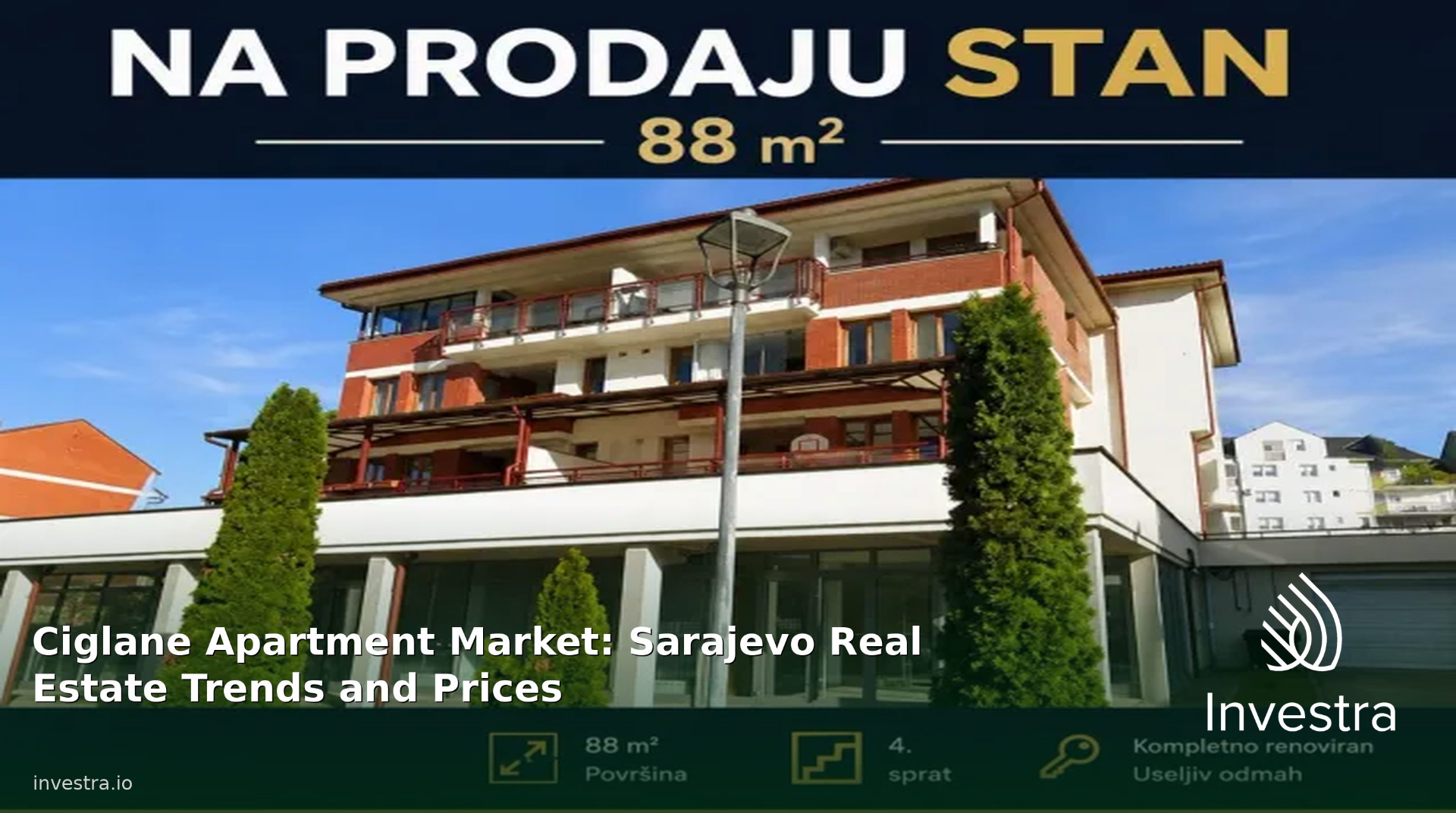
Ciglane Apartment Market: Sarajevo Real Estate Trends and Prices
Ciglane Apartment Market: Sarajevo Real Estate Trends and Prices
Ciglane neighbourhood: an on-the-ground introduction
Quick Answer: Ciglane is a residential sector of Sarajevo known for a mix of mid-century apartment blocks and newer developments, close to central amenities and public transport; local dynamics make it attractive for certain buyer profiles. Sarajevo neighbourhood guide provides bigger-picture neighbourhood comparisons.
Ciglane sits just north of Sarajevo’s historic core. In my experience talking with buyers and agents, the area often appears on shortlists for people who want quick access to city life but prefer the quieter residential feel of a district with green pockets and a local market. The housing stock ranges from older concrete apartment blocks—leftover from socialist-era planning—to small-scale newer projects and renovated flats. You’ll find families who've lived here for decades, students and young professionals who value proximity to university campuses, and investors looking for affordable entry points compared with central Baščaršija addresses.
What surprised many buyers is how micro-locations inside Ciglane make a big difference: a flat two streets closer to tram lines or main roads behaves differently than one facing a courtyard. The reality is that the neighborhood’s everyday conveniences—small grocery shops, cafes, bus and tram links—shape demand just as much as headline city statistics. For a granular view of Sarajevo market behavior and neighbourhood comparisons, consult our Sarajevo real estate market guide and the Sarajevo neighbourhood guide on Investra: Sarajevo real estate market guide, Sarajevo neighbourhood guide.
If you’re researching Ciglane, walk the streets at different times of day, speak to local shopkeepers and check local listings to see which blocks show frequent turnover—these qualitative cues often predict where investment interest is rising. For verified market data and listings tailored to Sarajevo districts, Investra’s localized pages are a practical starting point.
What currently drives demand in Ciglane?
Quick Answer: Demand in Ciglane is driven by proximity to central Sarajevo, public transport links, rental demand from students and professionals, and pockets of renovation-led interest; local institutions and infrastructure play a key role.
Why do people choose Ciglane? Often it’s about accessibility. Commuting time to major employers and universities matters, especially for renters. In the last few years we've seen interest from buyers wanting city access without central premiums. Students and short-term professional contracts create steady tenant pools in certain streets. But what does this mean for investors? It means you need to align the property’s characteristics—size, layout, building condition—with the likely tenant profile.
Another driver is renovation potential. Many buildings in Ciglane were constructed several decades ago. That creates scope for apartment upgrades that can significantly change a unit’s appeal. We’ve seen renovators concentrate on modern kitchens, insulation and smart heating systems to move flats into a different rental bracket. If you want examples and practical guidance on renovating in Sarajevo, consult the Sarajevo new-build and property renovation guide on Investra: Sarajevo new-build guide.
To validate current demand patterns, check recent rental listings, vacancy durations, and speak to local letting agents. For a district-level snapshot you can also contrast Ciglane with other Bosnian cities where trends differ—see Mostar, Banja Luka and Tuzla guides on Investra for comparative context: Mostar real estate market guide, Banja Luka real estate market guide, Tuzla real estate market guide.
Apartment types and building stock in Ciglane
Quick Answer: Ciglane’s apartment mix includes mid-century blocks, smaller post-2000 developments, and renovated units; the supply profile affects buyer choices and renovation needs.
Ciglane’s apartment market is not homogenous. You’ll find compact one- and two-bed units in older high-rise slabs, larger family apartments in mid-rise blocks, and occasional low-rise developments with more contemporary finishes. In my experience, buyers often underestimate how much apartment layout and building services (e.g., elevator access, insulation, private parking) influence long-term desirability. A two-bedroom on a high floor without reliable lift service behaves differently than the same floor plan in a modern block.
Developers have been gradually introducing small projects—typically infill or replacement of derelict plots—but large-scale new-builds are less common than in rapidly expanding European cities. That means renovation opportunities are frequent. If you plan to buy to renovate, review common building constraints: shared ownership rules, co-op decision-making, façade restrictions, and historical preservation rules if applicable. For hands-on advice about new-builds and renovations in Sarajevo, check the Investra Sarajevo new-build guide: Sarajevo new-build guide, and look at Mostar and Banja Luka new-build guides for how different Bosnian markets approach construction: Mostar new-build guide, Banja Luka new-build guide.
Always inspect the physical condition closely. I’ve walked apartments where the layout could be radically improved with a thoughtful internal reconfiguration; those are hidden value opportunities. Ask sellers for building maintenance records, recent communications from homeowner associations, and any pending capital works. If authorities have issued permits for façade works or structural changes nearby, this can materially affect both living conditions and value.
Pricing dynamics in the Ciglane apartment market: how to verify current figures
Quick Answer: Ciglane pricing moves with city-wide trends, local renovation activity and proximity to transit; verify current figures by checking recent sales records, active listings and specialist market reports.
The core question: how much are apartments in Ciglane selling for today? I won’t invent numbers. Instead, here’s how to get accurate, up-to-date pricing. Start with recent sale records: municipal property registries and local notary offices record transactions and can be a primary source. Next, scan live listings across local portals and platforms—comparing asking prices with realized sales gives a sense of negotiation margins.
Professional market reports help too. Investra publishes market overviews that aggregate local trends and provide context for Sarajevo as a whole; see the Sarajevo real estate market guide and Sarajevo rental market guide for more detailed analysis and methodologies: Sarajevo real estate market guide, Sarajevo rental market guide. Those pages explain the data sources used and recommended verification steps.
What should you watch for? Recent renovations, building upgrades, legal clarifications about land or ownership, and changes to public transport routes. Any of those can shift local prices. If you need broker validation, ask for comparable sales (“comps”) within the last 6–12 months in the same block or street. And if you’re considering multiple Bosnian cities for comparison, consult Mostar, Banja Luka and Tuzla market guides on Investra to see how Ciglane compares at a national level: Mostar real estate market guide, Banja Luka real estate market guide, Tuzla real estate market guide.
Buying process in Sarajevo — steps specific to Ciglane purchases
Quick Answer: Buying a Ciglane apartment follows Sarajevo’s standard purchase process: title checks, contract negotiation, notary registration and tax filings; engage local legal counsel and verify property history early.
The basic flow—offer, due diligence, contract, payment, and registration—applies here, but local details matter. In my experience, the smartest buyers begin with title verification and clear identification of any encumbrances on the property. Confirm the seller’s right to sell, check for mortgage liens and review building records. Many disputes arise from incomplete records or misunderstandings about co-ownership. That’s why a local lawyer or advisor who understands Bosnian property law is essential.
When negotiating, clarify what’s included (furnishings, appliances, parking). If a seller claims renovations were permitted, request the permits. We’ve seen deals stall because promised paperwork wasn’t available. If you’re unfamiliar with Sarajevo’s registration process, Investra offers buyer guides that explain the step-by-step process for foreign purchasers in Sarajevo: Buying property in Sarajevo. The same applies if you look at Mostar or Banja Luka—there are city-level nuances: Buying property in Mostar, Buying property in Banja Luka.
Finally, set realistic timelines. Paperwork can take longer than expected. If you intend to finance the purchase, get pre-approval early and confirm bank requirements for foreign buyers. Real estate agents and legal advisors like those listed on Investra and consultants such as Siniša Dagary can help with local procedures: advisory services, investment consultation.
Taxes, fees and ownership considerations for Ciglane buyers
Quick Answer: Ownership involves purchase taxes, registration costs and potential municipal fees; to confirm current rates and exemptions, consult local tax authorities, a notary and specialist advisors.
Taxes and transfer costs create a meaningful part of acquisition budgets. I can’t give exact percentages or fixed fees here. Instead, let me outline what to verify. Ask the municipal revenue office and a notary for the latest standard transfer tax rules and any exemptions. Also check for capital gains tax implications if you're a resale investor; tax treatment can vary based on residency and holding period. For precise tax procedures and how they apply to international buyers, use local tax authorities and experienced legal counsel.
Beyond state taxes, there may be municipal charges, HOA contributions and occasional special assessments for building works. Some buildings in Ciglane have active homeowners associations that levy monthly or annual fees for maintenance. Ask sellers for recent HOA minutes and financial statements; they reveal pending works and typical service costs. If the apartment has rental history, verify how rental income must be declared and which receipts are required. For practical purchase-related tax and documentation guidance, consider advisory partners: see Findes Group & Partners for professional services and local counsel: Findes Group & Partners, Findes Group & Partners advisory team.
Financing options and mortgage realities for Sarajevo buyers
Quick Answer: Financing options exist through local banks and private lenders, but terms depend on residency, documentation and property status; contact banks and mortgage brokers to verify current offers.
If you plan to buy with a mortgage, the first practical step is to speak with lenders. Mortgage availability, required downpayments, income documentation and interest structures are subject to change and to each bank’s risk appetite. In my work with buyers, pre-qualification saves time. Request pre-approval letters to strengthen offers. If you’re a foreign buyer, prepare for additional documentation requirements—proof of income, tax history, and sometimes residency-related constraints.
Another route is owner financing or staged payments in new developments; these are negotiated case by case. If a developer offers a payment plan, confirm the schedule, contractual penalties, and what happens if the developer delays handover. A trusted local mortgage broker or lawyer can evaluate loan contracts and compare offers. For context on Sarajevo financing considerations in relation to the wider market, check the Sarajevo market and buying guides on Investra: Sarajevo real estate market guide, Buying property in Sarajevo.
Rental demand and short-term letting in Ciglane
Quick Answer: Ciglane sees steady rental demand from students and professionals; check short-term let regulations, local occupancy trends and listing platforms for current rental dynamics.
Is Ciglane good for rentals? Often yes, but with nuances. Many tenants value convenience: proximity to transport, affordability, and apartment condition. Short-term lets can be viable, particularly near tourist routes and during event seasons, but local rules and building policies matter. Some homeowner associations or municipal regulations restrict short-term rentals. Before assuming a short-let strategy will work, verify building rules, local licensing and tax obligations related to transient occupancy.
To assess long-term rental prospects, browse active listings in the neighbourhood and note how long properties stay available. Speak to local letting agents about tenant turnaround and rental demand seasonality. For a structured guide on rental yields and short-term letting in Sarajevo and specific cities, see Investra’s rental guides: Sarajevo rental market guide, Mostar rental market guide, Banja Luka rental market guide.
Renovation potential and new-build prospects in Ciglane
Quick Answer: Renovation opportunities are common and can improve competitiveness; evaluate building regulations, permit requirements and market appetite before committing to upgrades.
New-builds are less pervasive in this district than in rapidly growing suburbs, but small-scale infill projects do appear. Developers may target plots with redevelopment potential where demolition and replacement make economic sense. If you’re considering buying a project site or investing in a new-build, obtain the municipality’s zoning plan and speak with the local planning department. For step-by-step renovation guidance and new-build considerations in Sarajevo and Mostar, consult these Investra guides: Sarajevo new-build guide, Mostar new-build guide.
Valuation, negotiation and exit strategies for Ciglane investments
Quick Answer: Accurate valuation requires local comparables and a realistic view of renovation costs; have clear negotiation plans and exit strategies based on market liquidity and alternative city comparators.
If you need independent valuation, commission a local chartered surveyor. For market context on exit strategies and regional comparisons, review Investra city guides for Sarajevo, Mostar, Banja Luka and Tuzla to see where buyers are shifting their allocations: Sarajevo real estate market guide, Mostar real estate market guide, Banja Luka real estate market guide, Tuzla real estate market guide.
Working with agents, lawyers and local advisors — practical tips
Quick Answer: Use reputable local agents and lawyers who can verify title, provide comps and explain municipality rules; check credentials and client references before engaging.
There are also advisory firms and independent consultants who provide transaction support and negotiation services. Siniša Dagary offers investment insights and advisory services for regional markets—see his profile and services: Siniša Dagary, Siniša Dagary investment insights, Siniša Dagary profile, investment consultation, advisory services.
If you prefer external audit and corporate services, Findes Group & Partners provide advisory teams who work on cross-border transactions and due diligence: Findes Group & Partners, Findes Group & Partners advisory team. They can help verify documents and run background checks on developers and sellers. Use these professionals to cross-check what agents tell you; that layered verification reduces legal surprises.
Comparing Ciglane with other Sarajevo areas and Bosnian cities
Quick Answer: Ciglane compares favorably to some central districts on affordability and to suburbs on convenience; compare city guides and local data to see where Ciglane fits in your investment plan.
If you’re evaluating opportunities across Bosnia, compare Sarajevo data with Mostar, Banja Luka and Tuzla. Each city has a distinct economic base and buyer profile. Use Investra’s city guides to make side-by-side comparisons so your decision is evidence-based: Sarajevo real estate market guide, Mostar real estate market guide, Banja Luka real estate market guide, Tuzla real estate market guide.
We’ve seen buyers pivot between cities when local regulatory or market changes reduce expected returns. That’s why monitoring multiple city guides and speaking with cross-market advisors helps inform whether Ciglane is the best fit for your capital and timeline.
Investment Disclaimer
Quick Answer: This section summarizes the article’s purpose: to inform, not to give financial or legal advice; confirm facts with qualified professionals.
The information provided in this article is for educational and informational purposes only and should not be construed as financial, legal, or investment advice. Real estate investments carry inherent risks, and past performance does not guarantee future results. Investors should not invest money they cannot afford to lose. Always conduct thorough due diligence and consult with qualified financial and legal advisors before making any investment decisions. Investra.io does not guarantee returns on any investment.
Frequently Asked Questions
Quick Answer: Below are common Ciglane-specific questions and practical answers to help you research and plan; use local sources to verify current facts.
Can foreigners buy apartments in Ciglane, Sarajevo?
Yes, foreigners can buy property in Bosnia and Herzegovina, but the legal framework and practical steps can vary depending on residency, bilateral agreements and local procedures. The safest approach is to consult a local notary and legal advisor who specializes in foreign acquisitions. Investra has city-specific buyer guides that explain the procedural elements for Sarajevo; these documents list necessary steps and standard documentation: Buying property in Sarajevo. also, seek written confirmation from municipal authorities about any restrictions that may apply to your nationality or ownership structure.
How do I check the legal title and encumbrances on a Ciglane apartment?
Begin with the land registry at the relevant cantonal or municipal office to obtain an official extract showing ownership, mortgages and liens. Request copies of the seller’s title documents and any mortgage release statements. A local lawyer or notary should verify these records on your behalf. If there are discrepancies, don’t proceed until they’re resolved. Professionals like Findes Group & Partners can assist with due diligence and document verification: Findes Group & Partners.
What checks should I make on homeowners association (HOA) records?
Ask for recent HOA minutes, financial statements and any notices about planned works. Confirm the regular contribution amount, the arrears level among owners, and whether special assessments are pending. These documents reveal short-term costs and long-term maintenance liabilities that affect both living conditions and resaleability. Always review any building-wide contracts—heating, cleaning, façade works—and ensure previous payments and liabilities are up to date.
How can I find current asking prices and recent sales in Ciglane?
Use a combination of live listings on national portals, local agency websites, and curated market reports. Compare asking prices with recorded sales in municipal registries or notary databases to see realized prices. Investra’s Sarajevo market guide provides methodologies and sources that explain how to cross-check asking versus achieved prices for better valuation: Sarajevo real estate market guide.
What are common renovation pitfalls in Ciglane apartments?
Common pitfalls include underestimating structural constraints, overlooking communal building rules, and failing to secure required permits. Some buyers assume internal reconfigurations are straightforward, only to find load-bearing walls or asbestos issues. Always commission a structural or building survey, and consult the municipality about permit requirements before starting work.
Is short-term letting legal in Ciglane and what should I check before listing?
Short-term letting may be legal but subject to regulation and taxation. Check municipal licensing rules, building-level restrictions imposed by HOAs and tax registration requirements for short-term rental income. Confirm whether the building’s insurance and local services support transient guests. If in doubt, consult a local tax advisor and your legal team for compliance steps.
Where can I get professional advising for a Ciglane purchase?
Use a multidisciplinary team: an experienced local agent, a property lawyer, and a tax advisor. Firms and consultants with cross-border experience, such as Siniša Dagary, provide practical investment advice and can help with strategic planning: Siniša Dagary profile, advisory services. For thorough due diligence and financial advice, Findes Group & Partners can be engaged to review documents and structure transactions: Findes Group & Partners advisory team.
How should I estimate renovation costs without local price data?
Get multiple quotes from licensed contractors and request detailed line-item estimates. Inspect comparable renovated apartments to understand finish levels and costs. Use local renovation guides and consult the Sarajevo new-build and renovation guide on Investra for practical checklists: Sarajevo new-build guide. Also, allow contingency for unexpected structural or regulatory costs.
What documents are required to register property after purchase?
Typically you need the notarized sale contract, proof of payment, tax receipts, and the seller’s title documents. The notary will often prepare or verify submission to the land registry. Because requirements change, check with your notary or municipal land registry for a current checklist. Investra’s buying guides list common documentation and steps specific to Sarajevo: Buying property in Sarajevo.
Should I consider other Bosnian cities instead of Sarajevo?
That depends on your objectives. If your priority is tourism-driven short-term letting or lower entry prices, cities like Mostar, Banja Luka and Tuzla have distinct profiles and may suit different investment strategies. Review Investra’s city market guides to compare economic drivers and market structure across the country: Mostar real estate market guide, Banja Luka real estate market guide, Tuzla real estate market guide.
Recommended Reading
Quick Answer: These hand-picked guides on Investra and Siniša Dagary are useful next steps for buyers wanting deeper, city-specific information.
- Sarajevo real estate market guide
- Buying property in Sarajevo
- Sarajevo rental market guide
- Sarajevo neighbourhood guide
- Sarajevo new-build guide
- Mostar real estate market guide
- Siniša Dagary — Investment Consultant
- Business Strategy Blog
Connect With Investra
Quick Answer: Follow Investra on social media to get market updates, listings and video guides about Sarajevo and Ciglane-area opportunities.
Stay connected with Investra for ongoing Sarajevo coverage and property listings via our social channels: Facebook: https://www.facebook.com/investra.io, LinkedIn: https://www.linkedin.com/company/investra-io, YouTube: https://www.youtube.com/@investraio. If you want tailored support, contact local advisors listed on Investra or the consultants and firms referenced above for professional guidance.
Connect With Investra
Quick Answer: Follow Investra for verified market context and practical property research.
Related Posts
No related posts available.
