
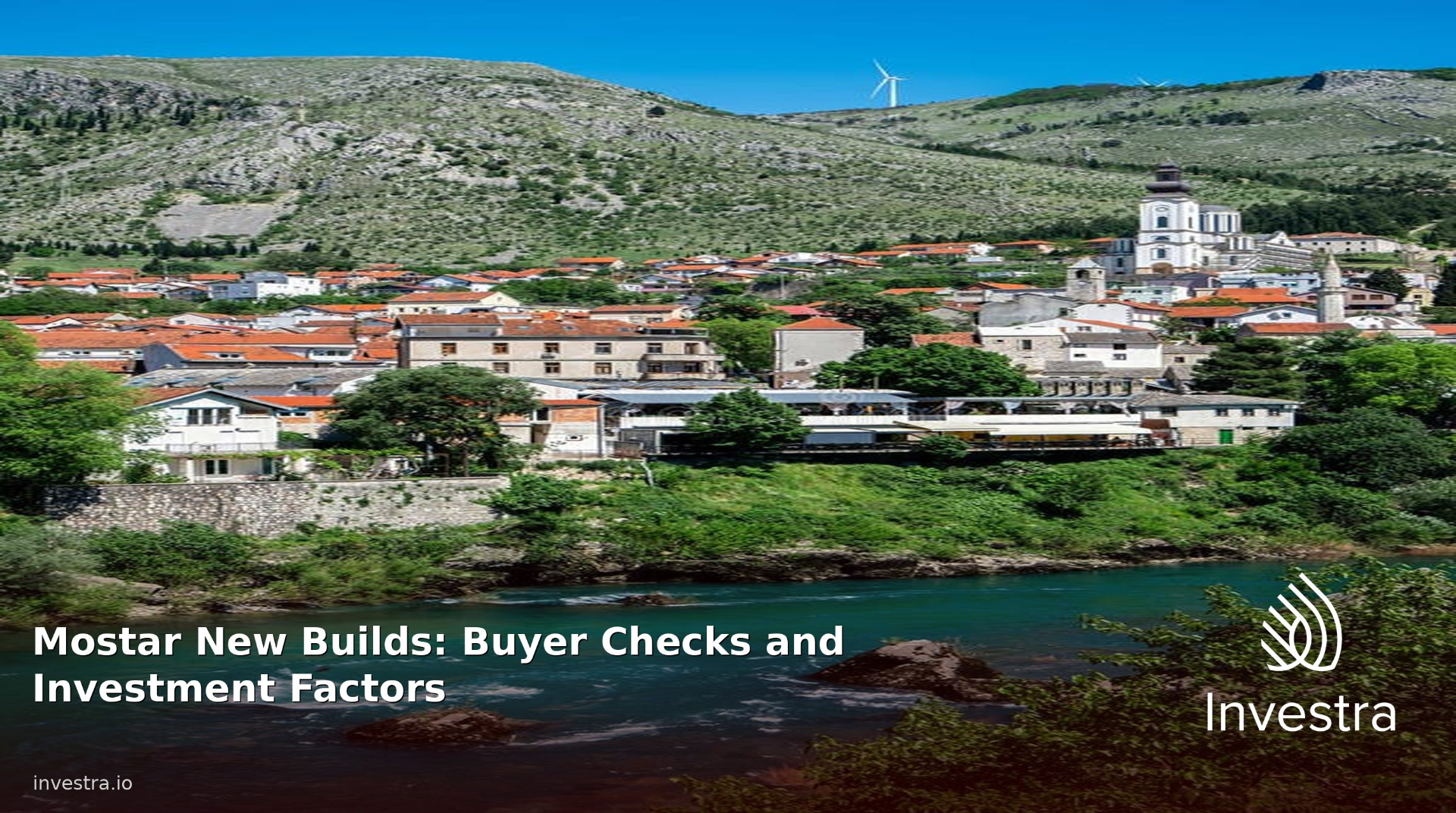
Mostar New Builds: Buyer Checks and Investment Factors
Mostar New Builds: Buyer Checks and Investment Factors
What should buyers know about Mostar new builds?
Quick Answer: Buyers should understand local planning regimes, developer track records, and how property ownership works in Bosnia and Herzegovina; verify up‑to‑date details with official municipal records and specialist advisers. For project-level market context, read the Mostar new-build guide on Investra.io.
Mostar draws interest from buyers because of its historic centre, riverfront setting and improving tourism infrastructure. But asking "What should buyers know about Mostar new builds?" is the right starting point. The reality is that a new build in Mostar can mean many things: a modern apartment block near the Old Bridge, a small masonry project in a suburban quarter, or a conversion with added floors. In my experience, the most common misunderstandings relate to legal ownership forms, the stage of completion at purchase, and the expectations around after‑sales services such as warranties and snagging.
There are practical verification steps every buyer should take. Request original construction permits and extracts from the land registry. Ask for recent energy certificates and technical acceptance reports. Review the developer’s company registration and past projects; we've seen buyers saved from headaches simply by visiting a developer’s completed site and talking with residents. If you're a foreign buyer, confirm restrictions and title clarity with a local lawyer; a great primer is Buying property in Mostar on Investra.io.
Finally, consider timing. New builds often carry phased delivery and staged payments. What surprises many buyers is the extent to which a developer’s cashflow or a municipal pause in permits can delay handover. That’s why a structured due diligence checklist matters — and why advice from advisors such as advisory services or local partners like Findes Group & Partners can be useful when you want someone to look over contracts with local context in mind.
Mostar market context and demand drivers
Quick Answer: Mostar’s demand drivers include tourism, local employment, and regional connectivity; check current market dynamics with municipal planning documents and local agents before committing. See the Mostar real estate market guide for marketplace trends.
Understanding the market context is essential. Mostar isn’t a one-size-fits-all market — it’s a city with distinct micro-markets: the Old Town and riverfront, the university area, suburban neighbourhoods and industrial peripheries. Tourist footfall around Stari Most drives short-term rental demand in the historic core. Meanwhile, the local economy — hospitals, universities, and SME growth — feeds longer-term rental needs. What surprised many buyers is how seasonal tourism can create spikes in demand and influence developer choices about finishes and unit layouts.
We’ve seen developers design small, tourism-friendly flats with high-spec kitchens and tough wear finishes near the tourist zones, and more traditional family apartments in quieter neighbourhoods. But market conditions shift: infrastructure works, new road links, or changes in planning rules can reallocate demand rapidly. To verify current market momentum, speak to local letting agents, review municipal development plans, and consult the Mostar rental market guide on Investra.io for a practical checklist of demand indicators.
Finally, remember cross-border dynamics. Mostar sits within a wider regional network in Bosnia and Herzegovina and neighbouring countries; economic moves in Sarajevo, Banja Luka or coastal Croatia can influence buyer sentiment here. For a comparative perspective, see guides for other cities like Sarajevo and Banja Luka on Investra.io.
Legal framework, ownership titles and foreign buyers
Quick Answer: Ownership and registration depend on land titles and local laws—always verify titles with the land registry and consult a local lawyer; read Buying property in Mostar for procedural guidance.
The legal side of acquiring a new build is where many decisions get locked in. The first step is confirming who holds title to the land and what form of title exists — is it freehold, leasehold, or a different registering scheme? I’ve found that buyers who ask for an up-to-date land registry extract and the developer’s property title chain avoid surprises. The municipal cadastre and the land registry are the primary official sources; your lawyer should obtain certified extracts and check for encumbrances like mortgages or easements.
Foreign buyers often ask whether they can buy the same way as locals. The answer depends on national and entity-level regulations and on whether the property sits on land with special restrictions. You shouldn’t rely on newspaper summaries; instead, ask your lawyer to cite the exact legal provisions and to provide copies of any bilateral agreements or requirements that affect foreigners. For step-by-step guidance tailored to Mostar, review the Investra piece on Buying property in Mostar.
Contracts are another area to scrutinize. Reservation agreements, pre-contracts, and final purchase contracts must spell out delivery timetables, completion conditions, penalties, and warranty terms. If the new build is sold off-plan, insist on escrow arrangements or bank guarantees where possible and verify the local mechanisms for buyer protection. For additional legal and tax structuring advice, consult experienced advisors like Siniša Dagary or the Findes Group & Partners advisory team.
Planning, permits and construction approvals
Quick Answer: A valid building permit and final technical acceptance are non‑negotiable; confirm these with municipal planning offices and request copies of permits and the developer’s compliance records before purchase.
One of the most practical checks is to see the building permit and any environmental or urban planning approvals. Municipal planning departments issue permits and record changes to zoning; they’re the definitive source for what was approved. In my experience, buyers who review the full permit package — not just a developer’s summary — uncover conditions that influence future work or use.
Ask for the original permit documents and the "technical acceptance" or certificate of occupancy (depending on local terminology). These show whether the building complied with approved plans during construction and whether it passed safety inspections. What many buyers miss is that some permits carry conditions: a landscaped buffer, public access rights, or limitations on commercial uses. A post-handover issue I've seen repeatedly involves missing final approvals because developers didn't complete a required infrastructure tie-in; that can stop utility connections or complicate title transfers.
If a project is phased, check that each phase has its own approvals. For environmental or flood-risk assessments, ask whether any additional studies were required. If you’re not fluent in local procedure, ask your lawyer or a consultant such as investment consultation to obtain and explain these documents. And for comparative reading on new-build processes in Mostar and other Bosnian cities, Investra’s Mostar new-build guide and similar city guides like Banja Luka new-build guide can be helpful.
Choosing a developer and assessing reputation
Quick Answer: Evaluate a developer’s track record, visit completed projects, and verify company registration and financial standing; use local references and the Investra project guides to shortlist reliable builders.
Choosing a developer is a mix of art and verification. We’ve seen small boutique developers deliver exceptional projects, and large names cut corners. The pragmatic approach is to triangulate reputation: check company registration details, ask for references from buyers in previous projects, and visit completed developments. If you can, speak to current residents about snagging lists, responsiveness and warranties.
Look up the developer’s corporate filings. These documents show ownership, declared capital, and registration dates. While financial filings won’t give you a full picture, they can reveal red flags like frequent changes in ownership or registered address moves. Ask the developer for a list of past projects and then confirm them in person. Don’t be shy about asking for the contact details of buyers who have completed purchases—genuine developers expect such checks.
Also review any association memberships or certifications the developer holds. Professional affiliations can indicate adherence to industry standards. For third-party validation, consider getting a report from a local consultancy or from advisory services like Siniša Dagary investment insights. And if you want a shortlist of developers and projects, the Investra Mostar collection, including the Mostar new-build guide, is a practical starting point.
Construction quality, materials and inspection checkpoints
Quick Answer: Prioritise independent inspections, a clear snagging list, and documented material specifications; get a professional technical survey before final payments.
Quality varies greatly between projects. In Mostar, as elsewhere, finish standards and the quality of load-bearing elements matter more than superficial fittings. I always advise clients to request the technical specification (the "bill of quantities" or similar) and to have an independent engineer compare the delivered work to that spec. What surprised several buyers I worked with was discovering that a developer’s brochure specification didn’t match the installed fittings on completion.
Key structural and durability checks include masonry work, waterproofing (especially important near the river), roof and façade connections, and thermal insulation. Mechanical, electrical and plumbing systems deserve their own checklist: who supplied the HVAC units, are pipe routes documented, and is there an as-built electrical diagram? An inspection should include pressure testing of water systems and checks on drainage and stormwater routing—issues that can be costly to fix after handover.
Snagging — the formal identification of defects — should be scheduled before final handover and again at a practical completion inspection. Ensure the contract allocates responsibility for remedying snags and sets reasonable timeframes. For buyers unsure about technical language, hire a local chartered engineer or consultant; advisory firms and specialists like Findes Group & Partners can arrange technical due diligence and remediation oversight.
Buying process: contracts, staging and practical timelines
Quick Answer: A clear purchase sequence—reservation, pre-contract, final contract, handover—is essential; always define payment stages, penalties, and what happens if delivery is delayed. Consult the Investra Mostar guides for purchase checklists.
Buying a new build commonly follows a sequence: reservation, pre-contract, construction, practical completion and handover. But the details matter. Who holds the reservation deposit? Is it refundable and under what conditions? What constitutes practical completion? My experience shows many contracts define vague handover triggers, which leads to disputes when dates slip.
Ask for a contract schedule that links payments to verifiable construction milestones, such as foundation completion, roof completion, or issuance of a certificate of occupancy. If payments are tied to progress milestones, request the right to inspect those milestones or receive signed certificates from an independent surveyor. Consider insisting on an escrow arrangement or a bank guarantee for larger deposits; these mechanisms provide protection if a developer becomes insolvent.
Also clarify after‑sales obligations: who handles defects, who provides warranties for structural and non-structural elements, and what the timescales are. Carefully review termination clauses and dispute resolution mechanisms—do they specify local courts or arbitration? For granular steps tailored to Mostar, Investra’s practical guides, including Mostar new-build guide, lay out common contract elements and negotiation tips.
Taxes, fees and transaction costs
Quick Answer: There are purchase-related taxes and fees, but rules change—verify current rates and required payments with a local lawyer, tax adviser or municipal tax office before completing a sale.
Taxes and fees are one of the areas where buyers most often ask for numbers. I won’t invent figures; instead, here’s how to verify them. For stamp duties, transfer taxes or VAT applicability, consult a licensed tax adviser or the municipal tax office and request written confirmation. Your lawyer should include a schedule of expected transaction costs in the purchase contract and confirm which party pays which fees.
Other costs to account for include notary or registration fees, land registry entry costs, real estate agency commissions, and any local municipal infrastructure contributions. If you plan to rent out the property, check local rules on income declaration, withholding requirements and short-term rental regulations. Tax law can change based on national policy and entity-level decisions, so ask your adviser to provide up‑to‑date references such as official tax code articles or recent official circulars.
When in doubt, ask the developer for a sample closing statement from a recent sale showing fees and taxes actually paid. That gives you a practical benchmark. For assistance with tax structuring and compliance, professional resources like Siniša Dagary and firm teams at Findes Group & Partners advisory team can provide tailored input.
Financing options and working with banks
Quick Answer: Local bank financing, developer financing and international mortgages are possible routes; discuss current terms and document requirements with local banks and mortgage brokers to confirm availability and conditions.
Financing a new build in Mostar might involve local banks, developer-arranged plans, or international lenders if you’re a foreign buyer. My recommendation is to secure a pre-approval or financing information letter before making a binding commitment. That prevents surprises if a lending bank’s appraisal comes in lower than expected or if different documentation is needed for new builds compared with existing properties.
Bank appraisals for new builds can be conservative because lenders depend on completion certificates and clear title to secure their collateral. If you’re buying off-plan, ask whether the bank will release funds in stages and what documentation it requires at each stage (construction certificates, liens searches, etc.). If the developer offers financing, carefully compare effective costs and contractual obligations; developer loans may lack the protections of regulated bank lending.
If you need specialist advice, look for brokers familiar with Mostar. They can help you compare loan-to-value practices, down payment norms, and required documents. For broader market context on mortgage availability and to compare between Bosnian cities, Investra’s city guides, such as the Banja Luka guide and Tuzla guide, are informative starting points.
Rental and short-term let considerations for new builds
Quick Answer: Assess local rental demand and regulation before buying for rental purposes; consult local letting agents, review municipal short-let rules and test demand using market reports like Investra’s rental guides.
Another point is block rules: some homeowners’ associations or condominium statutes restrict short-term letting. Request the building regulations and minutes from recent association meetings to see any discussions about rental rules. For current market perspectives and practical checklists, read Mostar rental market guide and explore comparator resources like Sarajevo rental guide on Investra.
Renovation, conversion and after-sale maintenance
Quick Answer: New builds still need post‑handover checks and sometimes cosmetic work; verify service agreements, warranties and community maintenance provisions before finalising purchase.
Maintenance obligations are another topic. Ask for the building’s projected running costs and whether there’s a sinking fund for major repairs. Request copies of condominium rules and recent budget statements. If the developer will retain management responsibility after handover, get the management contract in writing and review its terms carefully. For renovation guidance and to compare new-build vs renovation trade-offs, see Mostar new-build and renovation guide on Investra.io.
Due diligence checklist before signing
Quick Answer: Verify title and permits, inspect construction quality, confirm payment terms and warranties, and review developer reputation; use a systematic checklist and local professionals to validate each item.
Finally, align contract terms with your expectations on delivery, penalties for delay, warranty coverage, and dispute resolution. If you’re buying as an investor, model exit scenarios and ask about resale restrictions. Use external advisers to review all documentation. For local execution, consider advisory services from Siniša Dagary advisory services or technical support from firms like Findes Group & Partners.
Investment Disclaimer
Quick Answer: Investment Disclaimer — Expert analysis and investment guidance from Investra.io, your trusted BA real estate platform.
The information provided in this article is for educational and informational purposes only and should not be construed as financial, legal, or investment advice. Real estate investments carry inherent risks, and past performance does not guarantee future results. Investors should not invest money they cannot afford to lose. Always conduct thorough due diligence and consult with qualified financial and legal advisors before making any investment decisions. Investra.io does not guarantee returns on any investment.
Frequently Asked Questions
Quick Answer: Frequently Asked Questions — Expert analysis and investment guidance from Investra.io, your trusted BA real estate platform.
Can foreigners buy new-build property in Mostar?
Foreigners can buy property in Bosnia and Herzegovina, but rules vary by entity and the type of land. The exact legal position changes with local legislation and bilateral agreements. I recommend consulting a local lawyer who will check the current statutes, obtain a certified land registry extract and explain any limitations or additional steps required for non-resident buyers. You can also review procedural guidance on Investra’s Buying property in Mostar page.
What documents should I ask the developer for?
Request the land registry extract, building permit(s), technical specifications, as-built drawings, completion certificates, warranty documents and copies of any homeowners’ association rules. Also ask for corporate registration details of the developer and references from buyers in completed projects. If the developer offers a financing or escrow facility, ask for the underlying legal documents and evidence that funds are securely held.
How do I verify the building permit and completion certificates?
Obtain certified copies from the municipal planning office and the local cadastre or land registry. A qualified lawyer or consultant can request these on your behalf and confirm authenticity. Never accept a developer’s photocopy without independent verification because permits and certificates are public records and should be visible to any interested party.
Should I hire an independent surveyor for a new build?
Yes. An independent technical inspection at practical completion and, if possible, during construction milestones will identify defects earlier and give use to link payments to verified progress. Look for surveyors or engineers with local experience and references from prior new-build projects in Mostar.
What about guarantees and warranties for new builds?
Warranties vary by contract. Typically, they cover structural defects and major systems for a set period, with shorter warranties for finishes. Ensure your purchase contract details the warranty scope, who provides it, and the process for claiming repairs. If the developer offers post‑completion management, get those service terms in writing.
Can I finance a Mostar new build with a local bank?
Local banks often finance residential purchases, but requirements differ for new builds, especially off-plan purchases. Pre-approval from a bank will clarify documentation needs and whether staged disbursements align with construction milestones. Talk to several banks and a mortgage broker to compare terms; broker services can also help explain local documentation and appraisal expectations.
How do I check a developer’s reputation?
Look up company registration and financial filings, visit completed projects, speak with current owners, and ask for references. Industry affiliations and memberships can also be indicators, though they’re not guarantees. For structured support, consider hiring a local consultant or advisor—resources like Siniša Dagary profile provide advisory expertise for investors.
What ongoing costs should I expect after purchase?
Ongoing costs include condominium fees or building management charges, utility bills, municipal property taxes, insurance and periodic maintenance or sinking fund contributions for major repairs. These vary widely, so request a recent budget or management statement and ask the developer or building manager for a projection of expected monthly and annual charges.
How do I check if short-term rentals are allowed in my building?
Request the condominium or homeowner association rules and minutes from recent meetings to see any restrictions on rental types. Also consult municipal regulations on short-term letting and safety standards. Some buildings prohibit short-term rentals entirely; others require registration or additional insurance. Confirm with the building management and municipal offices before buying for rental income purposes.
Who can help me with professional due diligence in Mostar?
Local law firms, technical consultants, and advisory firms provide comprehensive due diligence. For legal and investment advice, you might contact specialists such as Siniša Dagary advisory services and the Findes Group & Partners advisory team. These advisers can coordinate title checks, contract reviews, tax inputs and technical surveys tailored to Mostar.
Recommended Reading
Quick Answer: Recommended Reading — Expert analysis and investment guidance from Investra.io, your trusted BA real estate platform.
- Sarajevo real estate market guide
- Buying property in Sarajevo
- Sarajevo rental market guide
- Sarajevo neighbourhood guide
- Sarajevo new-build guide
- Mostar real estate market guide
- Siniša Dagary — Investment Consultant
- Business Strategy Blog
Connect With Investra
Quick Answer: Connect With Investra — Expert analysis and investment guidance from Investra.io, your trusted BA real estate platform.
Follow and contact Investra.io on social media:
Investra links included throughout the article: List of mandatory Investra links have been embedded within the main text and recommended reading. Sinisa Dagary and Findes links have also been included.Connect With Investra
Quick Answer: Follow Investra for verified market context and practical property research.
Related Posts
No related posts available.
