
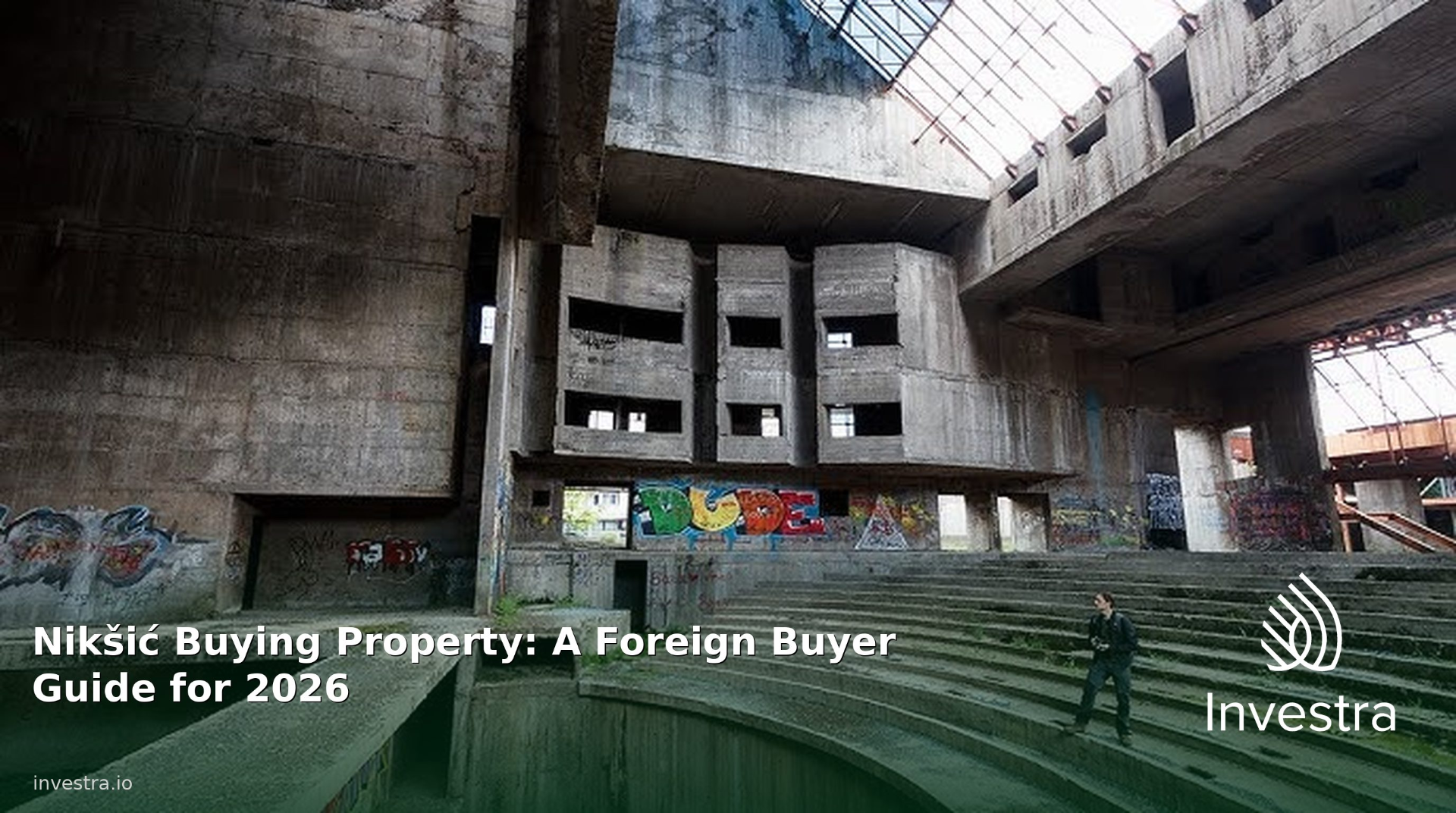
Nikšić Buying Property: A Foreign Buyer Guide for 2026
Nikšić Buying Property: A Foreign Buyer Guide for 2026
Why Nikšić? An Overview for International Buyers
Quick Answer: Nikšić offers a mix of urban infrastructure and accessible rural surroundings that attract a range of buyers; understanding local dynamics is essential before you commit to nikšić montenegro real estate.
Nikšić sits at the crossroads of Montenegro’s inland economy and its cultural heritage. As someone who’s spent time researching Balkan property markets, I can say Nikšić often surprises people. It isn’t a coastal resort town; it’s a city with industry, university life, and a hinterland that supports agriculture and light manufacturing. What surprised many buyers I’ve spoken with is how different the experience is compared with Montenegro’s Adriatic coast: the pace is slower, prices historically behave differently, and the pool of renters and buyers reflects local demand patterns rather than seasonal tourism alone.
So what does this mean for investors or owner-occupiers? It means you must align your expectations to local demand. Are you looking for long-term rental tenants, a family home, or a renovation project? Each objective leads to a different neighbourhood and due diligence checklist. The reality is the best opportunities often require local knowledge—zoning plans, planned infrastructure, and municipal initiatives matter. To verify things like recent planning permissions, road upgrades, or municipal tax changes, contact Nikšić municipality offices and ask for the latest public records, or hire a local lawyer or accredited adviser who will request official documentation on your behalf.
When exploring nikšić montenegro real estate, I recommend visiting at least twice, at different seasons. You’ll sense differences in transport flow, market activity, and rental demand that you can’t get from photos. Use local estate agents and check registries — including the Cadastre and municipal property lists — to confirm ownership, permitted uses, and any encumbrances. If you want a deep regional perspective, resources such as Investra’s regional guides can be helpful; for example, see related insights on broader Adriatic markets: Pula Real Estate Market 2026 and Istria Property Investment 2026, which offer frameworks you can adapt when studying Nikšić.
What should international buyers assess when researching nikšić montenegro real estate in 2026?
Quick Answer: International buyers should assess legal title and ownership records, local planning and zoning, utility and infrastructure status, tax and cost obligations, and realistic demand for their targeted use of the property.
This is the central question every foreign buyer must answer. In my experience, people focus first on price and imagery; that’s natural. But for nikšić montenegro real estate, the decisive facts are often off-camera: whether there are unpaid charges on the title, if a building permit has expired, how reliable utilities are, and whether local economic activity supports private rentals or resale. You’ll want to create a checklist that includes ownership verification at the Cadastre, cross-checks with municipal land use plans, and a review of any legal disputes recorded at local courts.
Also consider market demand evidence. Don’t accept an agent’s claim that “rents are high” at face value. Instead, look at local rental portals, speak with property managers, and check recent rental listings in the neighbourhood you’re considering. If you’re unsure where to start, advisory services such as those offered by experienced consultants can help you ask the right questions; you may want to compare options with regional resources like Poreč market guides and specialist due-diligence checklists available from Investra.
Legal framework for foreign buyers in Nikšić — Buying Legal & Tax
Quick Answer: The legal process requires title checks, a notarised purchase contract, and registration with cadastre and municipal authorities; consult a local lawyer to verify up-to-date entry rules and restrictions for foreign buyers.
Finally, tax registration and residency paperwork may follow a purchase. Tax liabilities vary by property type and ownership structure, so verify these details with a notary or tax adviser before signing. If you prefer an extra layer of advisory support, consult recognised consultants such as Siniša Dagary advisory services, or contact local financial teams at Findes Group & Partners for assistance with compliance and post-purchase administration: Findes Group & Partners.
Taxes, fees and ongoing costs for property owners in Nikšić
Quick Answer: Property ownership attracts purchase taxes, registration fees, and ongoing municipal charges — verify current rates with the notary, municipal tax office, and national tax authorities before committing.
If you’re budgeting for investment, use conservative assumptions and verify every number at source. For guidance on ownership costs as they apply across the region, consult Investra’s budgeting features such as Istria Property Ownership Costs which outline the types of costs you should be querying in Nikšić as well.
Types of properties and neighbourhoods in Nikšić
Quick Answer: Nikšić offers urban apartments, family homes, and rural plots; choose a neighbourhood based on access to services, transport and your intended use for the property.
When we evaluate locations, we look at transport links first: access to the main highways, bus routes, and proximity to service centres. Next, consider local amenities: hospitals, schools, shopping, and cultural sites. If rental income is part of your plan, weigh the local tenant profile — students, professionals, or families — and whether short-term tourist demand exists. For renovation projects, we inspect construction quality, building permits, and neighbours’ plans. If you’re uncertain about neighbourhood boundaries or official land-use categories, request a copy of the municipal spatial plan and check cadastral maps. Investra’s regional content can help you compare urban and suburban dynamics; see, for example, guides on neighbourhood choices in coastal markets like Rovinj Real Estate Market 2026 for ideas on how to frame location-based decisions.
Due diligence checklist before you commit to a Nikšić property
Quick Answer: Prioritise title search, land-use confirmation, technical inspection, outstanding charges, and compliance with planning permissions before signing any agreement.
Technical checks matter too. Commission a structural inspection and a utilities audit — don’t rely on visual checks alone. Ask for certificates for electrical wiring, gas installations, and plumbing where they exist. If the property is part of a shared building, request minutes from homeowners’ association meetings, service charge accounts, and the association’s statutes. For land or agricultural plots, request soil reports and check if there are restrictions like protected zones or easements. If in doubt, hire a local surveyor or independent architect to compile a formal report. For transaction-focused checklists adapted to regional markets, see Investra’s buyer due-diligence content such as Buying Property in Pula: Legal Checks, which can guide how you structure your own investigations in Nikšić.
Financing options and mortgages for foreign buyers
Quick Answer: Foreign buyers can access a variety of financing paths including local bank mortgages, international lenders, or cash purchases; verify current lending terms directly with banks and qualified mortgage brokers.
We often advise buyers to talk to at least two lenders: a local Montenegrin bank and a cross-border lender with Balkan experience. Ask each for a written term sheet that outlines fees, any foreign-currency risks, and covenants attached to the loan. If you plan to finance renovations, check whether the loan will cover post-completion works or whether you need separate funding. For negotiating mortgage terms, a local banking adviser or legal counsel can help. Advisory services like Siniša Dagary’s practice offer consultations that include financing strategy, and companies such as Findes Group & Partners can help coordinate lender introductions: investment consultation and Findes Group & Partners advisory team.
Buying process step-by-step in Montenegro: practical timeline and actors
Quick Answer: The process runs through negotiation, pre-contract checks, notarised sale agreement, registration, and handover; local notaries, lawyers, and cadastre offices play essential roles.
After the notary finalises the sale, you must register the transfer at the Cadastre and pay the required registration fees. If there’s a mortgage, the bank will prepare its paperwork and register its security interest. Handover of keys usually occurs after registration or upon terms agreed in the contract. Throughout, keep copies of all documents and certified translations if any are in a language you don’t read. If you want a process checklist adapted for buyers, Investra has practical due-diligence and procedural guides like Pula New-Build Homes: A Buyer Due Diligence Guide that can be modelled to Montenegro’s environment.
Renting and short-term lets: rules and practicalities in Nikšić
Quick Answer: Renting in Nikšić is viable but subject to municipal and national rules; verify licensing, taxation, and tourism regulations with local authorities before offering short-term lets.
Before you list a property, check with the Nikšić municipal tourism office for any licence requirements for short-term rentals and ask for the registration forms and guidelines. For tax treatment, consult a local tax accountant who can explain income declaration, potential withholding obligations, and whether any municipal taxes apply to rent proceeds. If you want operational help, local property managers will handle marketing, guest registration, cleaning, and compliance. For frameworks on holiday rental due diligence adapted to Adriatic markets, see Investra content like Rovinj Holiday Rental Investment and rental investment guides for long-term letting such as Pula Rental Investment Guide 2026.
Managing property from abroad: property managers and maintenance
Quick Answer: Remote ownership requires a reliable local manager, clear contracts for services, and systems for regular inspections and financial reporting; vet managers carefully and ask for references.
Vet potential managers thoroughly. Request references from current foreign clients and ask to see sample management agreements. Find out how they handle contractor relationships for maintenance and whether they have preferred local tradespeople. For governance, insist on quarterly financial statements and a clear process for approving repairs above a set cost. If you prefer a corporate solution, firms such as Findes Group & Partners offer advisory and administrative services that can help with owner reporting and compliance: Findes Group & Partners. For personal advisory and tailored solutions, consider arranging a consultation with experienced consultants like Siniša Dagary investment consultation.
Exit strategies and resale considerations for Nikšić properties
Quick Answer: Consider market liquidity, local demand drivers, and documentation completeness when planning an exit; prepare by maintaining records and addressing any legal or physical issues early.
When considering resale, have a local agent prepare a market appraisal and a list of comparable sales. If you want objective guidance, get two independent valuations and ask for the evidence behind them — recent sale contracts, not only asking prices. Keep copies of all contracts, maintenance records, and tax declarations to reassure future buyers. If you’re unsure about timing, consult advisors who specialise in the region to understand seasonal demand and macro factors. For strategic planning and negotiation techniques, you might explore advisory resources such as Siniša Dagary investment insights which can help you shape exit scenarios.
Investment Disclaimer
Quick Answer: This section outlines the informational nature of the article and emphasises the importance of personal due diligence and professional advice.
The information provided in this article is for educational and informational purposes only and should not be construed as financial, legal, or investment advice. Real estate investments carry inherent risks, and past performance does not guarantee future results. Investors should not invest money they cannot afford to lose. Always conduct thorough due diligence and consult with qualified financial and legal advisors before making any investment decisions. Investra.io does not guarantee returns on any investment.
Beyond that prescribed paragraph, I want to make clear that local conditions change. Laws, tax treatment, and administrative procedures evolve, often with little fanfare. That’s why buyers should always request up-to-date official documentation: current cadastre extracts, municipal spatial plans, and written confirmations from notaries or tax authorities. If you need a local point of contact, consider engaging reputable local advisors for formal verification and to act on your behalf in Nikšić. Organisations such as Findes Group & Partners and consultancy practices like Siniša Dagary can offer tailored coordination and support — see their advisory pages for contact details and service outlines: Findes Group & Partners advisory team and advisory services.
Finally, any examples or references to practices in nearby regions are illustrative and do not substitute for local legal and financial confirmation. Treat this guide as a practical orientation and a starting point for checklist creation, not as a substitute for official advice.
Frequently Asked Questions
Quick Answer: Below are practical answers to common questions foreign buyers ask about nikšić montenegro real estate, with guidance on where to verify specifics locally.
These FAQs gather the questions we hear most often from international buyers considering Nikšić. I recommend reading each answer and then following up with the suggested verification steps. For legal and tax queries, your primary sources should be a Montenegrin notary and a tax advisor; for market figures, rely on local agents and official registries. If you want further reading after these FAQs, check the Investra links in the Recommended Reading section for procedural and regional context.
Can foreigners buy property in Nikšić and are there restrictions?
Foreigners can generally buy real estate in Montenegro, but specifics can vary by property type and location. The only reliable way to confirm current entry rules, quotas, or special restrictions is to consult a local lawyer or the Montenegrin land registry. Ask the lawyer to provide a written opinion that cites relevant statutes, as laws or administrative practices can change and local interpretation matters. Also, contact the Cadastre for written confirmation of property status and the municipal office for any location-specific rules.
How do I check the title and legal status of a property?
Obtain an official extract from the Cadastre (land registry) and request a statement of encumbrances. A local notary or attorney can obtain these on your behalf and interpret the records. If there are unresolved liens, disputes, or multiple claimants, your lawyer should outline the legal remedies and the likely timeline for clearing any issues. Never rely solely on seller-provided documents without independent verification.
What taxes and fees should I expect when buying?
Transaction taxes and fees exist, along with ongoing municipal taxes, utility bills, and potential homeowners’ association charges. These amounts and their application can change. To verify precise figures, ask the notary for a written estimate of transfer taxes and registration fees, and contact the Nikšić municipal tax office for current municipal tax rules. A tax accountant can advise on income tax implications if you plan to rent.
Do I need a local bank account to buy property?
Having a local bank account can simplify payments, transfer of funds, and tax reporting, but requirements depend on your payment method and the notary or seller’s preferences. If you intend to use a local mortgage, the bank will require a local account. Discuss this early with your bank of choice or a mortgage broker, and consult legal counsel about anti-money-laundering documentation you’ll need to open an account.
How do I register the property after purchase?
Registration happens at the Cadastre where the change of ownership is entered into the land registry. The notary typically files the paperwork or will provide the correctly executed documents for registration. It’s important you receive proof of registration — a new title extract — as that confirms public recognition of your ownership. Ask your lawyer to obtain and store certified copies of the registration documents.
What should I consider if I plan to rent my Nikšić property?
Decide whether you’ll target long-term tenants or short-term visitors. For short-term lets, check tourism registration and licensing requirements with the municipal tourism office. For any rental, understand landlord-tenant law, contract norms, and tax reporting obligations. Engage a local property manager for day-to-day operations and ask for a management agreement that sets out fees, services, and reporting cadence.
How do I find reliable local professionals (lawyers, notaries, inspectors)?
Ask for referrals from recent buyers, consult embassy commercial sections, or contact reputable regional advisory firms. Look for professionals with verifiable client references and transparent fee structures. If you need a coordinated service, consider contacting advisory teams such as Siniša Dagary profile or the Findes Group & Partners advisory team for introductions: Findes Group & Partners advisory team.
Are utilities and infrastructure reliable in Nikšić?
Infrastructure quality varies by neighbourhood. Before you buy, check with utility providers about connection status and capacity, and request maintenance histories if relevant. A local inspection will reveal the visible condition of roads, sewer connections, and access to public services. If utilities are critical to your plans (for example, for a guesthouse or a renovation), ask the municipal departments for written confirmations before signing.
How can I verify local market conditions and resale prospects?
Request recent comparable sales from local agents, check property portals for asking prices, and get independent valuations from two registered valuers. For macro context, monitor local planning updates and public investment announcements. If you need market frameworks, consult advisory content such as Investra’s regional reports on nearby markets and neighbourhoods — they help frame what to check when assessing resale possibilities: Rovinj Old Town or Newer Areas and Medulin Real Estate Market.
What documentation should I keep after purchase?
Keep certified copies of the sale contract, cadastre registration extract, receipts for all taxes and fees, evidence of paid utilities, warranties for installations, inspection reports, and any homeowners’ association records. Store originals securely and scan digital copies for backup. This documentation supports resale and helps resolve disputes.
Who can help with tax reporting for a rented property?
Hire a local tax accountant experienced with property income. They will explain reporting schedules, allowable expenses, and any forms you must file. For a broader view of regional ownership costs and budgeting, Investra’s content like Property Taxes and Purchase Costs in Istria can be a useful companion to local advice.
Recommended Reading
Quick Answer: These selected articles and expert pages offer frameworks and checklists you can adapt to Nikšić; use them as a starting point for deeper local research.
If you want to expand your practical knowledge beyond the Nikšić context, the following readings have proven useful to buyers in nearby Adriatic markets. They provide checklists, due-diligence steps, and buyer priorities you can adapt to Montenegro’s legal and administrative environment. Remember: when a piece references local fees or procedures, verify with a notary or municipal official in Nikšić.
- Pula Real Estate Market 2026: Areas, Buyer Demand and Due Diligence
- How to Buy Property in Istria as a Foreign Buyer in 2026
- Rovinj Real Estate Market 2026: Buyer Priorities and Location Choices
- Istria Property Investment 2026: A Decision Framework for Buyers
- Poreč Real Estate Market 2026: A Practical Guide for Property Buyers
- Pula Rental Investment Guide 2026: Long-Term Letting Buyer Questions
- Siniša Dagary — Investment Consultant
- Business Strategy Blog
For further procedural guidance, you can also consult Investra pieces on due diligence, neighbourhood choice, and ownership costs, such as Buying Property in Pula: Legal Checks, Istria Property Due Diligence: A Croatian Buyer Checklist, and Istria Property FAQ 2026. If you want advisory services that coordinate legal, tax and finance questions in the region, consider consulting Siniša Dagary’s advisory pages and the Findes Group & Partners advisory team.
Connect With Investra
Quick Answer: Follow and contact Investra via their social channels for market updates, property listings, and advisory content relevant to Adriatic and regional markets.
If you'd like to follow Investra for updates, market insights, and regional property analysis, you can connect via their public social channels. These platforms are useful for staying informed about new guides, market commentaries, and curated listings that can complement your research into nikšić montenegro real estate. For direct inquiries, Investra’s team can point you to local partners or research notes that are relevant to Montenegro.
Social links (work with them to confirm the best approach for direct messages and contact protocols):
If you need tailored help, use the contact forms on Investra’s website and supply clear details about the kind of service you want — valuation, buying process support, or introductions to local lawyers and notaries. For coordinated advisory services in the region, you may also contact Siniša Dagary or Findes Group & Partners as complementary resources: investment consultation and Findes Group & Partners advisory team.
Connect With Investra
Quick Answer: Follow Investra for verified market context and practical property research.
Related Posts
No related posts available.
