
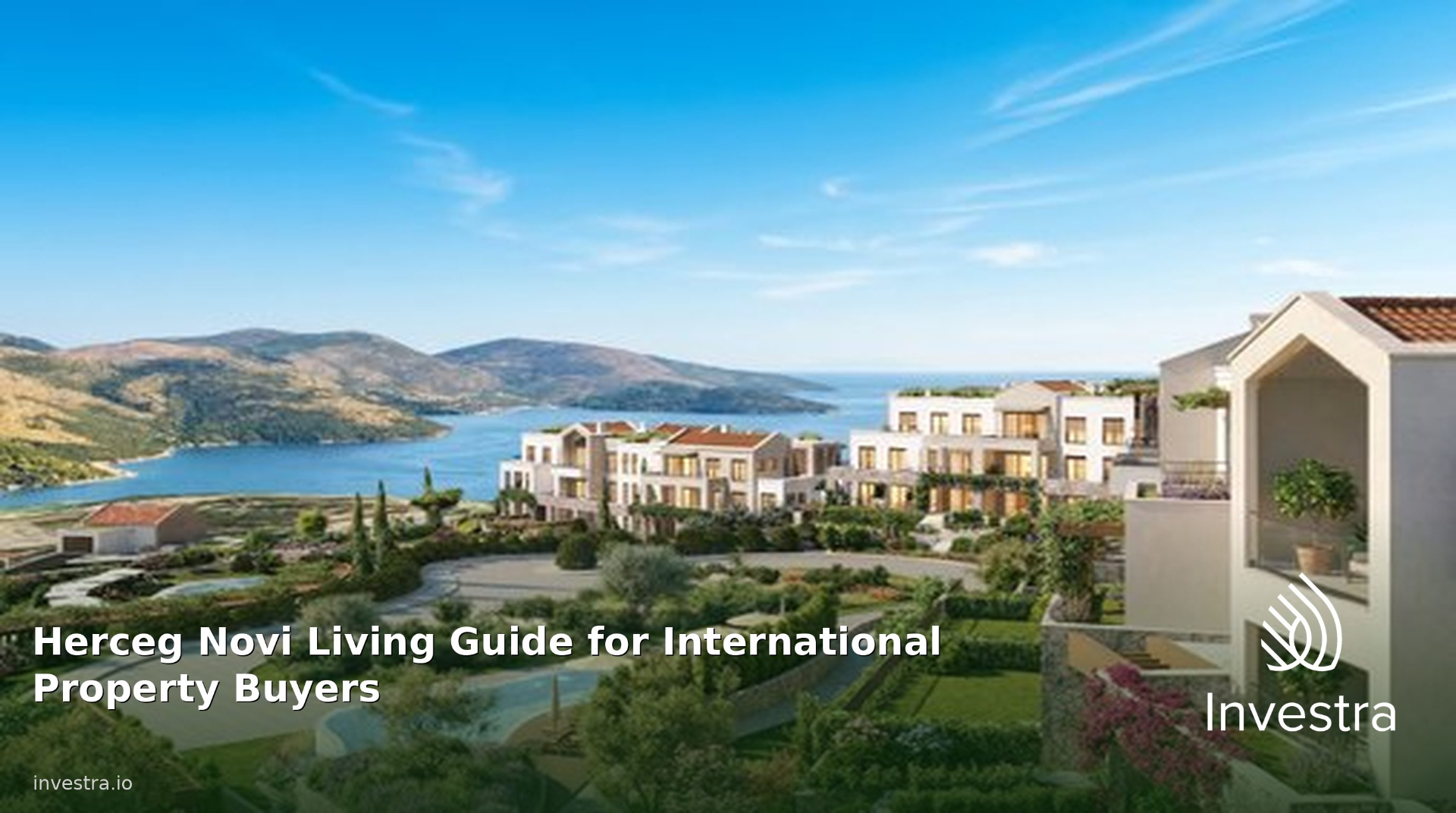
Herceg Novi Living Guide for International Property Buyers
Herceg Novi Living Guide for International Property Buyers
Herceg Novi: A 2026 Snapshot for International Buyers
Quick Answer: Herceg Novi is an Adriatic coastal town that attracts buyers seeking a blend of coastal lifestyle and cultural history; international buyers researching herceg novi montenegro real estate should start with on-the-ground market checks and official records to verify current conditions.
Herceg Novi sits at the entrance to the Boka Kotorska bay and feels intimate compared with Montenegro’s larger coastal towns. In my experience, what draws people here is a mix of old town charm, proximity to the water, and a slower pace of life than you'll find in touristic hotspots. That said, the reality is that buying property here requires a careful read of local trends, legal procedures and service availability.
When I talk to buyers, the first question is almost always: what is the local market like right now? You can get a sense of demand by reviewing active listings, speaking to estate agents, and checking short-term rental platforms to measure seasonal interest. I often refer clients to reputable regional market analyses to compare coastal micro-markets; for example, Investra’s regional guides on nearby Istrian markets can show how local dynamics vary across close geographies (Pula Real Estate Market 2026, Rovinj Real Estate Market 2026).
But what does this mean for international buyers focused on herceg novi montenegro real estate? It means you'll need a mix of local intelligence and cross-border comparison. Visit multiple neighbourhoods at different times of day. Meet at least two local agents and an independent property lawyer before committing. Ask to see recent comparable sales and the title documentation for any property you like. If you prefer reading on buyer due diligence practices in nearby Adriatic markets, Investra has practical checklists and buyer guides that I’ve found useful for preparing clients (Istria Property Due Diligence).
What should international buyers assess when researching herceg novi montenegro real estate in 2026?
Quick Answer: Buyers should assess legal title, development plans, utility connectivity, local taxes, and genuine market demand by combining official records, local professionals, and independent market data checks.
This is the central question for anyone considering herceg novi montenegro real estate. Start with the property title: confirm ownership, any encumbrances and zoning. Don’t accept verbal assurances — ask for original documents and ask a local lawyer to translate and explain them. Next, evaluate the immediate surroundings: planned construction nearby can materially change living conditions and resale potential. How do you check this? Request land-use plans from the municipal office and confirm them with a planning lawyer.
Then there are practical service questions. Is the property connected to mains water, sewage, and reliable electricity? What’s mobile and broadband coverage like, especially if remote work matters to you? I’ve seen buyers surprised by inconsistent services in coastal towns; we always recommend checking service providers directly and asking current residents about seasonal performance. For rental-minded buyers, test demand by examining listing volumes and occupancy trends on platforms like Airbnb and Booking.com, and speak to local property managers about peak months and off-season realities.
Finally, don’t forget taxes and ongoing costs. Rather than relying on articles that may be out of date, verify current tax levels and rates with local tax offices or an accountant who specializes in Montenegro property. If you’d like frameworks for comparing investments across nearby regions, Investra’s decision frameworks for buyers in neighbouring markets offer useful methodology that can be adapted to Herceg Novi (Istria Property Investment 2026).
Legal Framework and Ownership Rights for Foreigners
Quick Answer: Foreign ownership rules and title checks are vital — always confirm legal entitlements and restrictions through official cadastral records and a licensed Montenegrin lawyer before signing any agreement.
Understanding who can own what in Montenegro is the foundation of safe property buying. From my conversations with legal specialists, the practical approach is simple: don’t sign until a qualified lawyer has verified the property’s legal status. Ask for an excerpt from the cadastral register (katastar) and request copies of all deeds, prior sales contracts and any court decisions involving the property. If the seller or agent cannot provide original documentation, consider that a red flag.
Foreign buyers should also check whether the property is in a zone subject to special rules — coastal protection, heritage designation, or agricultural classification can carry restrictions. A municipal planning office will provide zoning maps and any recent amendments, but the translation and legal significance should be confirmed by counsel. In addition, verify whether there are outstanding utility debts or municipal levies attached to the property; these can sometimes be missed in listing summaries.
We’ve seen buyers assume permits exist for modifications when they don’t. If you plan renovations, ask a local architect or building permit specialist to review permitted uses and likely permit timelines. For comparative context on due diligence and legal checks in nearby markets, Investra’s guides to legal checks in regional markets can help you frame the right questions (Buying Property in Pula: Legal Checks).
Step-by-Step Buying Process: Practical Workflow
Quick Answer: A pragmatic buying process includes property selection, legal verification, preliminary agreement, deposit, completion and registration — each stage requires specific documents and professional checks.
People often ask me to map out the buying stages. While contract details vary, the practical workflow follows predictable milestones. Start with a shortlist of properties after viewing them in person. Once you find a property, request full documentation and instruct a lawyer to conduct a title search and check for encumbrances. Simultaneously, confirm whether any pre-emptive rights exist — neighbours, heirs or the state can sometimes hold claims.
When you’re ready to proceed, expect a preliminary sales agreement; it should clearly state the deposit amount, completion timeline, and conditions for returning the deposit if issues arise. Never transfer funds without a notarised agreement. At closing, a notary public typically records the sale and you’ll register the new ownership in the land register. That registration is essential — it gives you enforceable title. Keep in mind that administrative processing times and required documents can change, so verify current procedures with your lawyer and the municipal registry before planning travel for signing.
If you’re considering renting the property after purchase, coordinate with a property manager early so they can advise on practicalities like tourist registration rules and short-term rental licensing. For process templates and buyer questions adapted to Adriatic markets, Investra’s rental and buyer guides offer checklists you can use to compare steps and expectations (Pula Rental Investment Guide 2026, Rovinj Holiday Rental Investment).
Due Diligence Checklist: Documents and Practical Checks
Quick Answer: Due diligence should verify title, zoning, building permits, utility connections, tax status and any encumbrances through official records and professional inspections.
A strong due diligence routine is non-negotiable. From my hands-on experience assisting buyers, the minimum documentation I insist on includes an up-to-date cadastral extract, original sales deed, proof of paid utilities and municipal tax certificates. Ask for evidence of any building permits and as-built plans for the unit or house. If you see discrepancies between photos, floor plans and the actual property, dig deeper — either a surveyor or a local architect can help.
Physical inspections are equally important. For older coastal properties, look for signs of damp, salt-related corrosion, and roof or terrace conditions. Check drainage and septic systems where mains sewage isn't available. Ask neighbors about seasonal issues: flooding, noise from nearby hotels, or access problems in winter. For multi-unit buildings, review minutes from condominium meetings, maintenance funds and any pending major works, which can lead to special assessments after purchase.
If you’re assessing investment suitability, verify occupancy and income records with a property manager or owner. Don’t rely solely on platform-sourced occupancy snapshots — ask for multiple years of booking history and expense records when available. You can adapt due diligence frameworks from nearby Adriatic markets; Investra’s due diligence and buyer checklists provide solid templates that adapt well to Herceg Novi searches (Istria Property FAQ 2026, Istria Property Due Diligence).
Taxes, Fees and Ongoing Ownership Costs: How to Verify Them
Quick Answer: Rather than relying on outdated figures, verify current taxes, transfer fees and annual costs directly with Montenegrin tax authorities or a local tax advisor and request official payoff statements during purchase.
Taxes and ongoing costs are often the number one surprise for cross-border buyers. I never advise clients to assume rates or fixed percentages found in older articles. The correct approach is to obtain up-to-date information from official sources: contact the Montenegrin tax office, request a written schedule of transfer taxes and local municipal fees, and have your lawyer obtain payoff certificates for any outstanding liabilities on the property.
Also ask about recurring costs such as communal charges, property tax assessments, and insurance. For apartments in shared buildings, maintenance reserve funds and monthly condo fees can vary widely based on building age and amenities; ask for recent invoices to estimate real recurring costs. If you plan renovations, have a local contractor provide quotes and timelines, and confirm whether planning permission or heritage approvals apply.
If you want comparative budgeting frameworks, regional guides on ownership costs and taxation from Investra can help you structure your checks, though you'll still need to confirm Montenegro-specific figures with local authorities or an accountant (Istria Property Ownership Costs, Property Taxes and Purchase Costs in Istria).
Financing and Mortgages for Non-Residents
Quick Answer: Financing rules and lender requirements vary — check with Montenegrin banks and international lenders, and obtain pre-approval with full disclosure of documentation required for non-resident borrowers.
Many international buyers ask whether they can obtain a mortgage in Montenegro. The answer depends on the bank’s policy, the applicant’s residency status, and the property type. My experience shows that some banks will lend to non-residents while others prefer local borrowers. You’ll need to prepare thorough documentation: proof of income, tax returns, credit history from your home country, and a valuation of the property by an approved appraiser.
Before you travel to view properties, speak to several banks and a mortgage broker who specialises in cross-border lending. Ask about typical loan-to-value policies, required down payments, interest rate structures and whether the bank requires a Montenegrin guarantor. Importantly, get a clear list of closing costs associated with a mortgage — appraisal fees, notary expenses, and bank administration charges can add up. If you’re exploring financing options across nearby markets, Investra’s guides on buyer finance considerations in Adriatic markets can be a useful reference point (Pula New-Build Homes, Medulin Real Estate Market).
Rental Market Reality: Short-Term and Long-Term Letting
Quick Answer: Assess rental demand through platform data, local property managers and municipal tourist statistics, and confirm local licensing or registration requirements with municipal authorities.
Many buyers consider herceg novi montenegro real estate for rental income. But what does the rental market actually look like? Don’t assume platform occupancy equals gross income. I recommend a two-pronged fact-finding approach: first, analyse listings and actual booking calendars on short-term platforms across different seasons; second, speak directly with local property managers who handle guest turnover and maintenance.
For long-term lets, contact local agencies and ask about average tenancy lengths, common lease clauses, and tenant demand outside the tourist season. Also check local rules for tourist registrations — some municipalities require licensing or tourist taxes that affect net returns. If you need frameworks for evaluating rental investment risks and practical tenant management, Investra’s regional rental guides provide buyer questions and due diligence lists that translate well to Herceg Novi (Rovinj Holiday Rental Investment, Pula Rental Investment Guide 2026).
I often advise buyers to perform a “dry run”: engage a local manager to estimate seasonal occupancy and provide references from existing owners. That will reveal operational costs that aren’t obvious in listing headlines — cleaning fees, linen replacement, emergency repairs and peak-season management strain.
Neighbourhoods, Lifestyle and Practical Living Considerations
Quick Answer: Choose a neighbourhood by testing daily life: commute times, shopping, healthcare access, noise and microclimate — visit at different times and seasons to see how it feels.
Healthcare access matters, particularly for long-term residents. Identify the nearest clinics and hospitals and ask expat forums about emergency response times and doctor availability. For families, check international or bilingual schools within a reasonable commute and visit them. If you’re drawn to a historic quarter, remember older buildings can require heavier maintenance and sometimes have access limitations. For comparisons on lifestyle trade-offs across similar Adriatic towns, Investra’s neighbourhood guides for nearby markets are useful reference points (Best Neighbourhoods in Pula, Rovinj Old Town or Newer Areas).
Working with Agents, Lawyers and Advisors — Finding the Right Team
Quick Answer: Build a local team of an accredited estate agent, an independent property lawyer, a tax advisor and a trusted property manager; verify credentials and client references before engagement.
Consider bringing a locally experienced advisor for technical inspections — a surveyor or architect who knows coastal building issues. For commercial or development enquiries, a planning consultant can read local development maps and interpret municipal policy. If a seller pressures you to use a specific lawyer or agent, treat this cautiously and consider a second opinion. To connect with advisory services that work cross-border, explore consultants such as Siniša Dagary and his advisory pages for strategy and property planning (advisory services, investment insights).
For corporate or larger-scale advisory needs, the Findes Group & Partners provide regional advisory teams who specialise in compliance, structuring and tax planning — see their contact pages to find the right fit (Findes Group & Partners, Findes Group & Partners advisory team).
Where to Verify Market Data and Who to Trust
Quick Answer: Verify market statistics with official land registries, municipal planning offices, licensed appraisers and multiple local agents to triangulate the most reliable picture.
Online platforms show offers, not completed transactions, so they can mislead if used alone. That’s why one of our consistent recommendations is to order an independent valuation from a certified appraiser; the appraisal notes will state comparables used and assumptions made. If you want frameworks for evaluating markets in nearby Adriatic regions, Investra’s detailed market reports and buyer guides provide good methodological examples that can be applied when researching Herceg Novi (Umag Real Estate Market 2026, Poreč Real Estate Market 2026).
Investment Disclaimer
Quick Answer: Investment Disclaimer — Expert analysis and investment guidance from Investra.io, your trusted ME real estate platform.
The information provided in this article is for educational and informational purposes only and should not be construed as financial, legal, or investment advice. Real estate investments carry inherent risks, and past performance does not guarantee future results. Investors should not invest money they cannot afford to lose. Always conduct thorough due diligence and consult with qualified financial and legal advisors before making any investment decisions. Investra.io does not guarantee returns on any investment.
Frequently Asked Questions
Quick Answer: Frequently Asked Questions — Expert analysis and investment guidance from Investra.io, your trusted ME real estate platform.
Can foreigners buy property in Herceg Novi, Montenegro?
Yes, many foreigners purchase in Montenegro, but eligibility and procedures can vary. To confirm current legal entitlements, consult the Montenegrin land registry and a local lawyer. They’ll check if any special permits are required for foreign nationals and whether the property lies in a restricted zone. For step-by-step buyer processes in nearby markets, Investra provides practical buyer checklists that can help frame your questions before you engage local counsel (How to Buy Property in Istria).
What documents should I request from a seller?
Request original title deeds, a cadastral extract, proof of paid municipal taxes and utility bills, building permits if works were done, and any condominium records for shared buildings. Ask the seller to provide these documents in original form and allow your lawyer to verify them with official offices. If translations are needed, use certified translators and ensure your lawyer agrees with the translated terms.
How do I check for planning or development risks near a property?
Visit the municipal planning department and request the local zoning maps and any pending planning applications. A planning lawyer or consultant can interpret the maps and advise whether large developments are approved or proposed nearby. Also ask neighbours and the local council about any planned infrastructure projects; they sometimes reveal intentions not yet reflected in public documents.
Should I use a local agent or an international agency?
Both have advantages. Local agents know micro-markets and municipal idiosyncrasies; international agencies may provide broader transaction experience for foreign clients. In practice, I recommend meeting at least two local agents and a lawyer, and comparing their references. Verify licences and ask for client testimonials. If you engage international advisors, ensure they partner with credible local professionals for execution.
How can I verify current tax rates and transfer costs for a purchase?
Contact the Montenegrin tax authority or the municipal tax office for written schedules of current rates. A local tax advisor or accountant can obtain official payoff statements and explain exemptions or thresholds. Avoid relying on third-party articles for exact figures; tax rules change and authorities provide the definitive information.
Is it safe to buy off-plan or in a new development?
Off-plan purchases carry construction and delivery risk. If considering a new project, ask for the developer’s track record, bank guarantees, permit packages, and a clear payment schedule tied to construction milestones. Insist on a contract that specifies remedies if deadlines aren’t met and consult a lawyer experienced in construction and development law.
What should I know about renting my property short-term?
Short-term letting requires operational know-how: guest registration, cleaning logistics, emergency repairs and local licensing or tourist taxes. Speak to property managers to understand seasonality and off-season demand, and confirm any municipal rules about tourist rentals. Test the market by asking managers for anonymised booking data from comparable properties.
How do I arrange financing as a non-resident?
Start by talking to banks that lend to foreigners and to mortgage brokers who specialise in cross-border lending. Prepare robust documentation: proof of income, credit history from your home country and a property valuation. Ask banks for pre-approval letters and written lists of required closing costs so there are no surprises at signing.
Who can help me with long-term property management?
Local property management firms handle guest services, maintenance and legal compliance. Vet managers by asking for references, service-level agreements, and examples of their emergency response protocols. If you plan to be abroad for long periods, choose a manager who provides transparent accounting and online owner portals.
Where can I find trusted advisors for cross-border structuring?
For more complex purchases or corporate structuring, consult established advisory firms with regional experience. I recommend contacting specialists like Siniša Dagary’s advisory services for strategy and Findes Group & Partners for tax and compliance consultations. Always verify credentials, ask for case studies and check client references before engagement.
Recommended Reading
Quick Answer: Recommended Reading — Expert analysis and investment guidance from Investra.io, your trusted ME real estate platform.
- Pula Real Estate Market 2026: Areas, Buyer Demand and Due Diligence
- How to Buy Property in Istria as a Foreign Buyer in 2026
- Rovinj Real Estate Market 2026: Buyer Priorities and Location Choices
- Istria Property Investment 2026: A Decision Framework for Buyers
- Poreč Real Estate Market 2026: A Practical Guide for Property Buyers
- Pula Rental Investment Guide 2026: Long-Term Letting Buyer Questions
- Siniša Dagary — Investment Consultant
- Business Strategy Blog
Connect With Investra
Quick Answer: Connect With Investra — Expert analysis and investment guidance from Investra.io, your trusted ME real estate platform.
Follow Investra on social media for market updates and property guides: Facebook, LinkedIn, YouTube.
Additional Investra links used throughout article for reference and verification Siniša Dagary links embedded for advisory contactConnect With Investra
Quick Answer: Follow Investra for verified market context and practical property research.
Ähnliche Beiträge
Keine verwandten Beiträge verfügbar.
