
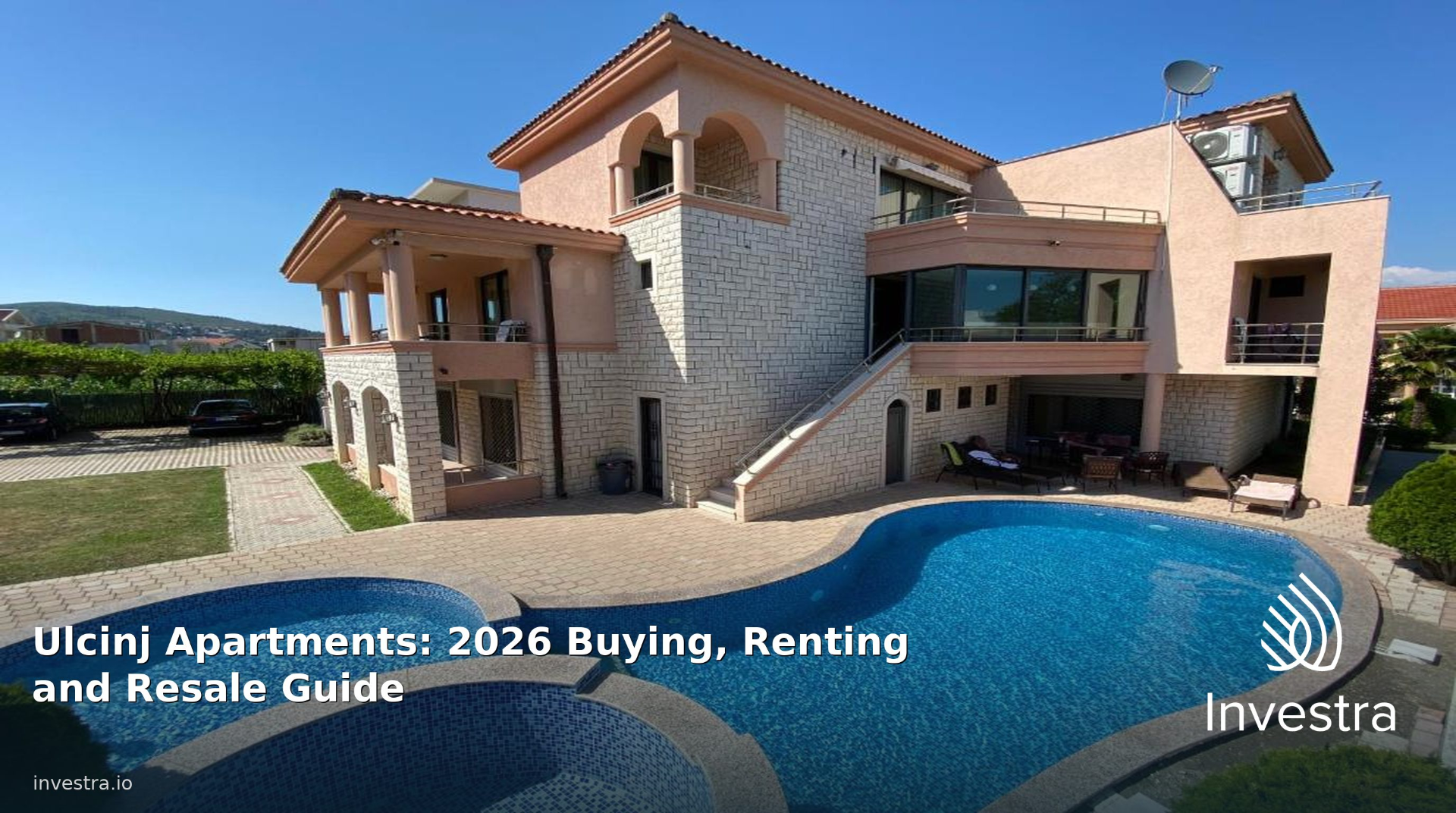
Ulcinj Apartments: 2026 Buying, Renting and Resale Guide
What should international buyers assess when researching ulcinj montenegro real estate in 2026?
Quick Answer: International buyers should focus on legal title and zoning, local taxes and costs, neighbourhood suitability, rental demand patterns, and credible local advisors to verify up-to-date market data.
When I work with overseas clients the first question I ask is simple: what are you trying to achieve with an Ulcinj apartment? Is it a holiday base, a buy-to-let, or a long-term residency plan? The answer changes everything. What surprised many buyers is that Ulcinj can serve very different strategies within a compact area — beachfront studio buyers face different checks than purchasers of older town apartments.
So what should you assess? First, confirm the property's legal title and any planning restrictions. In my experience, buyers who assume “sea view equals instant demand” later find municipal plans or protection zones change the picture. You should obtain an extract from the cadastre and check the local municipality office for zoning designations. Second, verify ownership and encumbrances at the local notary or registry. Third, research transaction taxes, property taxes and recurring costs — but don't rely on secondary sources for precise figures. Instead, ask a local notary or tax advisor and request recent utility bills and owners’ association statements.
Finally, evaluate the micro-location: proximity to the old town, the lagoon, beaches and transport links. Talk to letting agencies and local property managers to understand seasonal demand patterns and vacancy months. If financing is needed, ask banks in Montenegro for current mortgage availability and terms, and obtain written confirmation rather than estimates. When you need comparative market data, use current listings, local sales records, and reputable brokers; you can also consult Investra.io pages such as Pula Real Estate Market 2026 to understand how regional guides are structured, and then request similar Ulcinj-specific reports from local advisers.
Neighbourhoods & Location: choosing the right area in Ulcinj
Quick Answer: Choose between Old Town character, the long sandy beaches, and new residential belts; match the micro-location to your use-case and check local infrastructure and development plans.
Ulcinj’s charm comes from contrasts. There’s the compact, historical Old Town with narrow streets and period properties; then there’s the long, sandy Velika Plaža and nearby newer developments aimed at holiday visitors. In my experience buyers often overemphasize views and under-test street-level factors: noise, pedestrian access, summer congestion, and parking. What we know from site visits is that a beach-front studio behaves differently in the rental market than a family apartment near schools and supermarkets.
When assessing neighbourhoods, walk the streets at different times. Visit early morning for noise and delivery patterns, midday for foot traffic, and evening for noise and lighting. Check the proximity to essential services—healthcare, supermarkets, pharmacies—and transport links to Podgorica and the border. For more detailed location analysis you can compare methods used in other Adriatic markets; see guides like Rovinj Real Estate Market 2026 and Medulin Buyer Guide for frameworks that translate well to Ulcinj.
Consider future development as well. Have a look at municipal planning documents and ask the municipality about any coastal protection designations that could restrict new construction. If quiet summer months are part of your plan, inspect the presence of holiday parks and seasonal businesses. Finally, talk to neighbours — their insights often reveal practical issues that listings hide.
How the buying process works for foreigners in Ulcinj
Quick Answer: The process typically involves finding a property, conducting due diligence with a notary, signing preliminary agreements, paying deposits, and completing the transfer at a notary; always confirm steps with a local legal adviser.
Buying abroad can feel procedural and unfamiliar. In Montenegro, the formal steps are similar to many European markets but have local particularities. From my experience advising buyers, the initial phase is about information and alignment: secure a trusted local agent, ask for a full legal pack (title extracts, building permits, utility invoices), and get a clear purchase timeline. Many buyers are surprised by how critical the notary’s role is — they authenticate transfers, hold escrow in some cases, and lodge title changes.
Don't assume a real estate agent will handle legal checks — they often represent sellers. Engage an independent lawyer or notary early. For deposits and contract structure, insist on a written preliminary contract (preliminary sales agreement) which outlines what’s included in the sale, timelines, and remedies for breach. Be aware that different sellers may request varying deposit structures; ask your adviser for typical local practice and insist on bank receipts or notary escrow to avoid disputes.
Finally, once you reach contract signing, the notary will oversee payment of transfer taxes and registration of the new owner. For up-to-date details on transaction mechanics and buyer protections, consult local notaries, municipal offices, and resources like Investra’s guides on cross-border purchases; for example the practical approaches described in How to Buy Property in Istria can help shape questions to ask your Montenegro advisers.
Essential legal checks and due diligence for Ulcinj apartments
Quick Answer: Verify title and ownership, planning and land-use permissions, encumbrances, utilities, and co-ownership rules; always obtain certified documents from local authorities or a notary.
Due diligence is where most deals either proceed cleanly or hit problems. In my practice, I've seen otherwise attractive apartments fail on simple checks like unresolved ownership claims or missing building permits. Start with the cadastre extract (zemljišna knjiga) and the building permit documents. Request recent utility bills to confirm connections and costs. If the property is in a building with an owners’ association, obtain minutes of recent meetings and financial statements; they reveal maintenance backlogs and pending special assessments.
Don’t skip checks for mortgages, liens, or legal disputes registered against the property. A local notary or lawyer will search the public register and issue certificates of encumbrance. If renovation took place, ensure that permits were granted and closed — unpermitted works can create legal and insurance risks.
Environmental and heritage protections can affect properties near the coast or in historic zones. Ask the municipality whether the plot sits inside any conservation or coastal protection zone. If the apartment is advertised as having rental potential, request historical occupancy data from existing managers or owners. You can also compare due-diligence checklists used in nearby markets — like Buying Property in Pula: Legal Checks — and adapt them for Ulcinj.
Types of ownership, permits and residency implications in Montenegro
Quick Answer: Ownership structures include freehold and co-ownership; foreign buyers should check if any special permit is needed and understand how property ownership interacts with residency rules.
One recurring question I encounter: will property ownership in Montenegro automatically grant residency? The quick answer is: not automatically. Owning property is a factor in some residency applications, but residency criteria and paths are administratively separate. Always check visa and residency rules with Montenegro’s Ministry of Interior or an immigration lawyer before assuming a particular outcome.
Ownership itself is straightforward in many cases — you’ll hold title in your name or a company’s name. Buyers sometimes use local or international company structures for holding assets; there are tax and administrative trade-offs to consider. Ask a Montenegrin tax adviser how different ownership vehicles affect transfer taxes, annual taxation and reporting. If you plan to rent the apartment, check local licensing or registration requirements for short-term rentals; some localities require explicit registration of tourist accommodation.
If you’re exploring a co-ownership setup within a condominium, review the building’s statute, the owners’ association rules, and the reserve fund policy. These documents determine how maintenance and special works are funded. To verify the latest rules and interpretations, contact the municipal building department and a notary. For comparative ownership concepts and costs, Investra’s regional guides such as Istria Due Diligence can help frame your questions to local advisers in Ulcinj.
Taxes, purchase costs and ongoing ownership expenses — how to verify and budget
Quick Answer: Verify property transfer taxes, notary and registration fees, municipal levies and annual property tax by requesting official quotes from a notary, the municipality, and your tax adviser.
Buyers often want a simple number for “what it costs to buy.” I avoid giving figures without real-time confirmation. The sensible approach is to compile a list of payable items and then verify each with a primary source. Ask your notary for an itemised estimate for transfer taxes, registration fees and their own fees. Request an official property tax notice or the municipality’s tariff schedule to estimate ongoing municipal taxes. For utilities and condominium fees ask the seller for recent invoices and the owners’ association for the monthly budget.
For potential rental owners, accounting for operating costs is critical: cleaning, utilities, insurance, occasional repairs and tax filing. Insurance premiums vary by coverage and provider; request quotes from at least two local insurers. If you plan renovations, check permit fee schedules with the municipality and get contractor quotes that include VAT. If financing, factor loan-related expenses such as appraisal fees and banking commissions, and confirm these with the bank in writing.
If you need examples of how to structure budgeting and cost-check steps, look at Investra resources on property ownership costs and due diligence: Property Taxes and Purchase Costs in Istria and Istria Property Ownership Costs—then ask your Montenegro advisers to provide the local equivalents.
Financing options and working with Montenegrin banks
Quick Answer: Explore local mortgage availability by speaking with banks directly and obtain written pre-approval; compare fixed vs variable terms and confirm foreigner eligibility with lenders.
Don’t accept verbal rate estimates. Ask lenders for a full written loan illustration showing interest, fees, amortisation schedule and early repayment penalties. If you expect to receive rental income, confirm whether lenders allow arrears from short-term lets in their serviceability calculations. For structuring, some buyers use domestic mortgages while others prefer international lenders; the best choice depends on your currency exposure and tax position. To get practical examples of how buyers compare financing offers and prepare documentation, check Investra’s rental and mortgage-related guides such as Pula Rental Investment Guide and consult Montenegrin bank branches directly for current terms.
Renting out Ulcinj apartments: short-term holiday lets vs long-term rentals
Quick Answer: Decide between holiday letting and long-term leasing based on location, seasonality, and your appetite for hands-on management; verify local tourist registration rules and tax implications before committing.
Look at examples from neighbouring markets: Investra’s analyses of holiday rental due diligence—see Rovinj Holiday Rental Due Diligence—offer questions to pose to property managers. Finally, budget for cleaning, linen, guest services, and platforms’ fees; get written estimates from services operating in Ulcinj.
Property management and practical operations for owners based abroad
Quick Answer: Choose a local manager for guest communications, maintenance and compliance; request references and a sample contract before committing to any management company.
For owners considering a longer-term hands-off approach, a local fiduciary or company service can manage payments and compliance, but ensure you understand reporting requirements and signatories. To compare approaches, consult case studies in regional guides like Umag Market Guide and ask your shortlisted managers for data from comparable Ulcinj properties.
Preparing for resale: what boosts Ulcinj apartment marketability?
Quick Answer: Maintain legal clarity, keep communal records and invoices, invest in durable finishes, and document renovations; clear documentation and professional photos raise buyer confidence at resale.
From an aesthetic and maintenance perspective, invest in durable finishes rather than trendy, bespoke fittings that may not appeal to broad buyers. Simple upgrades like a new water heater with service receipts, professionally sealed windows, and up-to-date electrical certificates provide reassurance. If you’ve renovated, keep permits and contractor warranties. Professional photos and a clear list of features and inclusions make listings perform better online. When comparing exit strategies, ask local agents for recent comparable sales and time-on-market data. For structuring exit-related due diligence and staging tips, use the approach outlined in Investra’s new-build and resale guides such as Pula New-Build Due Diligence.
Viewing checklist: inspections, red flags and negotiation tips
Quick Answer: On viewings, inspect structure, moisture, services, sound insulation and legal pack; ask to see original permits and recent maintenance invoices before negotiating price or terms.
Bring a portable torch and a checklist. Ask the seller for a copy of the building’s statute and the last three owners’ association meeting minutes to reveal pending repairs or disputes. If the seller claims a recent renovation, ask for the permit and contractor details. Be ready to ask for a short allowance in price or a holding deposit to cover minor certified repairs if issues are found. Always confirm any verbal assurances in writing and include them in the purchase agreement. To sharpen your negotiating questions, study practical buyer checklists such as Istria Due Diligence Checklist and adapt the items to Ulcinj’s local context.
Sources of market data and how to verify current Ulcinj figures
Quick Answer: Use primary sources—local cadastre, municipal offices, banks, notaries, and multiple agency listings—and request written confirmations to verify current prices, taxes and occupancy data.
For rental performance, request anonymised seasonal occupancy and booking data from local letting agencies and property managers. If you need tax rates or transfer tax schedules, ask a notary or a certified tax advisor for a current fee schedule and an example calculation for a transaction similar to yours. When you encounter regional market analyses, such as those on Investra, use them to frame questions and then request Ulcinj-specific data from local advisers. Also consult independent advisory sources like Siniša Dagary and the Findes Group & Partners for broader investment frameworks, but always insist on primary documentation for numbers you will depend on.
Investment Disclaimer
Quick Answer: Investment Disclaimer — Expert analysis and investment guidance from Investra.io, your trusted ME real estate platform.
The information provided in this article is for educational and informational purposes only and should not be construed as financial, legal, or investment advice. Real estate investments carry inherent risks, and past performance does not guarantee future results. Investors should not invest money they cannot afford to lose. Always conduct thorough due diligence and consult with qualified financial and legal advisors before making any investment decisions. Investra.io does not guarantee returns on any investment.
Frequently Asked Questions
Quick Answer: Frequently Asked Questions — Expert analysis and investment guidance from Investra.io, your trusted ME real estate platform.
Can foreign nationals buy property in Ulcinj, Montenegro?
Yes, foreigners can purchase property in Montenegro, but the exact rules and any exceptions depend on nationality and how you structure ownership. To confirm current eligibility, consult a local notary and Montenegro’s Land Registry (cadastre) for the precise requirements, and ask whether any special permits apply to the plot in question. If you plan to hold property through a company, get tax and corporate advice about residency obligations and reporting.
How do I verify the legal title of an Ulcinj apartment?
Request an official cadastral extract and certified copies of the title deed from the local land registry. Have a notary or lawyer perform a search for encumbrances, mortgages, or legal disputes. Also ask the seller for original purchase contracts and recent utility bills. For absolute certainty, obtain a notary’s certificate showing the property is registered free of third-party claims.
What taxes and fees should buyers expect when purchasing in Ulcinj?
Transfer taxes, notary fees and registration charges are commonly payable, along with agent fees if applicable. Because rates change, ask a notary for an itemised estimate and the municipality for current fee schedules. For ongoing ownership, request the seller’s recent property tax bills and the owners’ association’s maintenance budget to understand recurring charges.
Do I need residency to own or rent out property in Ulcinj?
Ownership does not automatically confer residency. Some residency pathways list property ownership as a supporting factor, but residency applications have their own criteria. For renting out property, you may need to register with the municipal tourist office and comply with tax reporting; verify requirements with the municipality and an immigration specialist if your plan ties into residency objectives.
Is short-term holiday letting legal in Ulcinj?
Short-term letting is common, but local rules vary and may change. Check the municipality’s tourist accommodation registration requirements and building rules. If you intend to short-let, ask a local property manager how they register guests and handle taxes, and request examples of how other owners in your building operate legally.
How can I find reliable property managers in Ulcinj?
Seek managers with verifiable references, sample contracts and transparent fee schedules. Meet candidates in person where possible, request client contact details for references, and ask for demonstration reports they would provide you monthly. For additional vetting, consult regional advisory professionals such as advisory services and the Findes advisory team for broader compliance checks.
How should I verify current market prices and rental performance for Ulcinj apartments?
Use a combination of recent sales from the cadastre, live listings across multiple platforms, valuation reports from banks or licensed valuers, and anonymised booking records from local letting agencies. Request written evidence—signed notary extracts, agency occupancy reports and bank valuation letters—rather than relying on hearsay or single advertisements.
What are common red flags during viewings?
Watch for signs of structural damp, inconsistent documentation for renovations, owners’ association disputes, unclear service charge histories, and electrical or plumbing in poor condition. If you spot issues, ask the seller for documentation and quotes for necessary repairs, and consider having a surveyor inspect the property for hidden defects.
How do I budget for renovations and unexpected repairs after buying?
Obtain multiple contractor quotes and demand timelines and warranties. For realistic budgeting, include contingency for unknowns (structural repairs, asbestos removal in older buildings, or hidden services). Ask contractors for references and proof of insurance. For tax and VAT considerations relating to renovation costs, consult a local tax adviser or notary for current rules.
Should I hold the property personally or via a company?
There are pros and cons to each structure depending on tax, inheritance planning and residency goals. Consult a Montenegrin tax adviser and an international tax specialist to model outcomes. Ask your lawyer to draft ownership structures and explain reporting obligations under each option before you decide.
Where can I get independent investment advice about Ulcinj real estate?
Consult licensed local notaries, independent lawyers, certified tax advisers and experienced property managers. For broader strategy and market perspective, advisory services such as Siniša Dagary investment insights and the Findes Group & Partners can provide frameworks; but always pair high-level advice with primary-document verification from Montenegro-based professionals.
Recommended Reading
Quick Answer: Recommended Reading — Expert analysis and investment guidance from Investra.io, your trusted ME real estate platform.
- Pula Real Estate Market 2026: Areas, Buyer Demand and Due Diligence
- How to Buy Property in Istria as a Foreign Buyer in 2026
- Rovinj Real Estate Market 2026: Buyer Priorities and Location Choices
- Istria Property Investment 2026: A Decision Framework for Buyers
- Poreč Real Estate Market 2026: A Practical Guide for Property Buyers
- Pula Rental Investment Guide 2026: Long-Term Letting Buyer Questions
- Siniša Dagary — Investment Consultant
- Business Strategy Blog
Connect With Investra
Quick Answer: Connect With Investra — Expert analysis and investment guidance from Investra.io, your trusted ME real estate platform.
Facebook: https://www.facebook.com/investraio
LinkedIn: https://www.linkedin.com/company/investraio
YouTube: https://www.youtube.com/@investraio
Connect With Investra
Quick Answer: Follow Investra for verified market context and practical property research.
Ähnliche Beiträge
Keine verwandten Beiträge verfügbar.
