
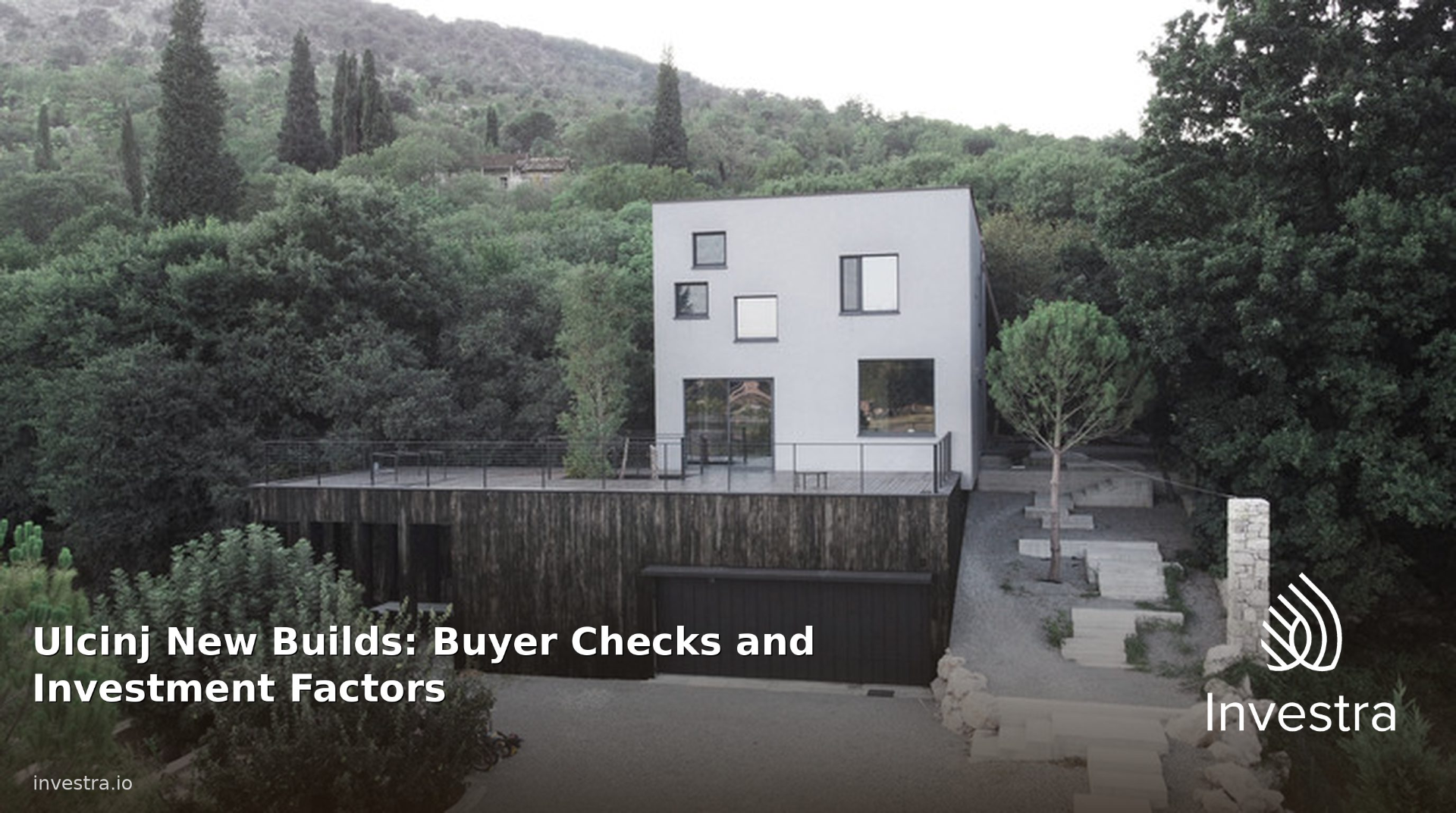
Ulcinj New Builds: Buyer Checks and Investment Factors
Ulcinj Montenegro Real Estate: Market Snapshot and Why New Builds Matter
Quick Answer: Ulcinj Montenegro real estate is attracting interest for coastal living and tourism-driven demand; new builds can offer modern amenities but require careful checks on developer credibility and local regulations. Investra.io and local advisors can help with up-to-date market context.
Ulcinj sits at Montenegro's southern tip, with a long shoreline and a mix of historic quarters and newer coastal promenades. In my experience covering Adriatic markets, cities that pair a coastal tourist economy with available land or redevelopment zones often see a steady pipeline of new build projects. But what surprised many buyers is how local planning decisions, infrastructure upgrades and tourist seasonality can shift prospects rapidly. For international buyers researching ulcinj montenegro real estate in 2026, the primary question isn’t whether the location is beautiful — it clearly is — but whether a specific new-build product aligns with personal goals: primary residence, holiday home, or rental investment.
The reality is that "new build" covers a lot of ground: turnkey apartments, mixed-use developments, villas on subdivided plots and phased schemes that may take years to complete. That means due diligence is not optional. You’ll want to understand the developer’s track record, the status of planning permits, access to utilities, and the presence of meaningful warranties. If you’re comparing Ulcinj to other Adriatic markets, useful comparative resources include project-level due diligence guides and regional market posts such as those at Investra.io, where procedural frameworks are described in practical terms.
What International Buyers Should Assess When Researching Ulcinj Montenegro Real Estate in 2026
Quick Answer: International buyers should assess legal ownership rules, local planning permits, developer reputation, utility connections, and realistic exit strategies when researching ulcinj montenegro real estate; confirm current details through local authorities and trusted advisors. Investra.io explains due diligence steps buyers commonly use.
So, what exactly should you evaluate? The short answer: everything that can affect ownership rights and property usability. Start by checking whether foreign buyers face any special registration steps or restrictions for the parcel you’re considering. Then verify the land-use designation on municipal planning maps — that'll indicate whether new construction, extensions or short-term rentals are permitted.
Don’t trust verbal assurances alone. Request copies of issued building permits, the developer’s title evidence, and any legal servitudes affecting access or views. If the project is mid-construction, ask for the construction timeline, milestones already completed, and any change orders that have altered specifications. If you're uncertain how to interpret documents, a locally-licensed attorney or notary public is essential. Verify their credentials through municipal registers and look for client testimonials; we’ve seen buyers save months of trouble by picking advisors who knew exactly where to check municipal records.
Developer Credibility and Project Due Diligence
Quick Answer: Vet a developer’s track record, financial transparency and on-site management before committing to a new build; ask for references, completed project visits, and financial assurances. See buyer due diligence checklists at Investra.io.
Developers vary enormously. Some are reputable firms with completed projects and local teams; others are small speculators who launch a site with limited experience. Take the time to visit completed developments and speak to residents about build quality, defect resolution and management responsiveness. In my reporting, homeowners most frequently regret not visiting other projects built by the same developer.
Request project-level documentation: company registration details, proof of ownership of the construction site, bank guarantees or escrow arrangements, and a copy of the construction contract. If the developer offers phased sales or pre-sales, find out whether buyer funds are held in a separate escrow account or used directly by the developer; ask a local lawyer to explain how Montenegrin practice treats pre-sale deposits. Where you need comparative process guides, the Investra portfolio and advisory articles such as their Pula and Rovinj due diligence pieces can help you formulate the right questions before you engage local advisers.
Title, Ownership Structures and How to Verify Them
Quick Answer: Confirm title chain, legal ownership structure and encumbrances via the local land registry and a legal adviser; request certified copies of title documents before signing. Use municipal cadastre checks and notary verifications to confirm current data.
Title checks are non-negotiable. Titles can reveal mortgages, liens, easements, or communal obligations. Buying a unit in a new development typically involves purchasing a share of a condominium structure, while villas are often registered as separate parcels. For each option, ask to see the latest extract from the land registry (katastar) and any court or notarial restrictions.
How do you verify these documents? Use the official municipal cadastre office and the real estate registry; in Montenegro, those agencies issue certified extracts that a notary can confirm. A practical tactic: have your attorney obtain a current title extract on your behalf, compare it with what the developer provided, and include a warranty clause in the preliminary contract requiring clean title transfer at closing. We’ve seen international buyers trip up when deeds were transferred in stages or when common areas lacked clear ownership allocations, so insist on certified, up-to-date documentation and use a locally licensed notary to execute final contracts.
Planning Permits, Zoning and Building Approvals in Ulcinj
Quick Answer: Check zoning classifications and all issued building permits with the Ulcinj municipal planning office; confirm if coastal zone or protected-area rules apply and whether all permits match delivered works. See practical permit-check steps at Investra.io.
Construction in coastal municipalities often faces additional scrutiny, especially where dunes, beaches, or cultural heritage sites are nearby. Ask the seller or developer for a dossier of permits: initial planning approval, issued building permits, environmental permits if relevant, and final occupancy certificates (upotrebna dozvola). If permits are missing or contradictory, that raises a red flag.
Visit the municipal planning department and request the public planning documents for the parcel. If the site sits within a coastal protection band or a conservation buffer, development may be restricted or require extra approvals. What’s more, local authorities sometimes change regulations in response to tourism pressures or environmental campaigns, so confirm current rules directly with municipal officials and obtain written confirmation. For buyers from abroad, we advise translating key documents and having them reviewed by a Montenegrin lawyer familiar with planning law.
Construction Quality, Warranties and Snagging for New Builds
Quick Answer: Verify construction materials, structural standards, statutory warranties and snagging procedures; commission an independent inspection before final payment and record defects in writing for warranty enforcement.
Not all "new builds" are delivered to the same standard. Ask for the technical specification (tehnički opis) that lists materials, insulation standards, plumbing, HVAC, and electrical systems. If this doesn't exist, require one as part of the purchase contract. Independent engineers or building surveyors can inspect the property at key stages and provide snagging reports that become contractual evidence for rectification.
Understand the warranty regime. Some jurisdictions require developers to provide certain minimum warranties; others rely on contractual guarantees. Instead of guessing, ask the developer to commit in writing to respond to defects within specified timeframes and to provide a fund or insurance policy to cover workmanship issues after handover. We’ve seen cases where buyers had to chase repairs for months; you can avoid that frustration by getting deadlines and remedies in the contract and by ensuring the notary records any outstanding issues at the time of signing.
Utilities, Infrastructure and Practical Access Considerations
Quick Answer: Confirm connection status for water, sewer, electricity, internet and road access; request official confirmation from utility providers and municipal records, and check seasonal access and maintenance regimes.
It sounds basic, but many buyers underestimate how much difference reliable utilities make to living comfort and rental performance. Does the plot have a guaranteed water supply during summer months? Is the sewer system connected to the municipal grid or dependent on septic tanks? What broadband speeds are available? You should request formal documentation or written confirmations from the utility companies and the municipality.
Also consider access roads and winter maintenance. Some coastal developments have narrow access lanes that become congested during peak season, affecting both residents and guests. Ask about planned infrastructure projects that might improve (or disrupt) access over the next few years. For a reality check, visit the area at different times of day and speak with local shopkeepers or community representatives. If you require specialist input on infrastructure, advisory teams such as Findes Group & Partners or local consultants can run technical checks and provide formal assessments.
Taxes, Fees and Ongoing Ownership Costs
Quick Answer: Understand one-time purchase costs, annual property taxes, homeowners’ association fees and utilities; verify exact rates and exemptions with a Montenegrin tax adviser or municipal tax office rather than relying on published estimates.
Taxes and ongoing charges can materially affect your ownership budget. While I can't quote present rates, I can recommend the steps to verify them: ask the seller for recent tax bills, request the HOA financial statements where relevant, and obtain an estimate of annual utility consumption based on similar nearby units. A local accountant or tax advisor will confirm whether any special tax treatments apply to non-resident owners and which forms you’ll need to file.
Importantly, homeowners’ association fees may rise if common areas are expanded or if maintenance costs increase. Request the current HOA rules, a minutes extract from recent general meetings, and a reserve fund statement. If the HOA balance looks thin, factor potential special levies into your decision. For comparative guidance on budgeting and ownership costs, Investra has practical budgeting guides that help frame the right questions when you request documentation from sellers.
Financing, Mortgages and Payment Structures for Foreign Buyers
Quick Answer: Explore local and international mortgage options, understand deposit and staged payment schedules, and confirm whether funds will be placed in escrow; consult banks and independent advisers to confirm availability and terms for non-residents.
Foreign buyers often ask whether they can get a mortgage in Montenegro and what deposit is typical for new builds. Lenders differ on lending to non-residents, accepted collateral and valuation processes. Rather than relying on anecdote, contact banks operating in Montenegro and international lenders that specialize in cross-border property finance. Ask for indicative pre-approval letters and understand any exchange controls, required documentation, and the bank’s policy on lending against developments.
If a developer requests staged payments, insist on transparent milestones and link payments to independent certifications of work completed. A commonly used safeguard is an escrow account or bank guarantee that protects buyer funds until construction milestones are certified. If you’re unfamiliar with these mechanisms, ask a legal adviser to draft contract language that requires such protections before any significant funds leave your account. Siniša Dagary’s advisory resources also provide consultation paths for structuring investments and negotiating contracts; see his profile and services for tailored advice: advisory services.
Short-Term Rentals, Long-Term Letting and Local Regulations
Quick Answer: Confirm whether short-term holiday rentals are permitted for your property, check registration rules and tourist taxes, and assess local demand patterns; verify all rental rules with municipal tourism offices and the national tourism authority.
Will you rent the apartment out? If so, you must confirm local rules for holiday rentals, registration processes, and any licences or tourist taxes. Some municipalities require hosts to register properties and comply with safety standards. Ask the municipality whether there are specific regulations for Ulcinj and whether those rules have changed recently; local tourist boards or municipal tourism departments can provide the official requirements.
Assess demand realistically by checking occupancy patterns and seasonality. Speak to local property managers and agencies to understand vacancy risks and operational costs: cleaning, utilities, marketing platforms and property management fees. If using a professional manager, ensure they provide clear contracts that define responsibilities and income accounting. For investor perspectives and operational checklists, the Investra guides on holiday rental due diligence and long-term letting provide practical questions to ask when evaluating rental potential and services.
Renovation, Conversion and Resale Considerations in Ulcinj
Quick Answer: If buying to renovate or resell, evaluate planning flexibility, typical renovation constraints, and resale demand; verify renovation permits and historical transaction patterns with local agents and the land registry.
Resale prospects depend on buyer appetites for location, finish level and accessibility. Ask local agents for recent transaction narratives and request to see similar completed renovations and their time-on-market. A practical step is to commission a pre-purchase feasibility study that forecasts renovation costs, timelines and required permits. If you’d like a consultant to help structure such studies, teams like Findes Group & Partners advisory team and independent consultants can produce costed renovation plans and resale scenarios.
Practical Step-by-Step: From Offer to Handover in Ulcinj
Quick Answer: Follow a checklist: preliminary offer, reservation agreement, due diligence (title, permits, surveys), preliminary contract with deposit terms, notary-led closing, and registration in the land registry; use local experts to confirm each step.
Post-closing, register your title at the land registry and set up any needed local tax or utility accounts. In my experience, buyers who engage local lawyers, notaries, and a property manager before closing experience much smoother handovers. If you want guidance models or checklist templates used across the Adriatic, see Investra’s practical buying guides and checklists. For a tailored legal and negotiation approach, consider consulting experts like investment consultation or his other advisory services.
Investment Disclaimer
Quick Answer: This section explains the article's purpose and advises verification with qualified advisors and official sources before making investment decisions.
The information provided in this article is for educational and informational purposes only and should not be construed as financial, legal, or investment advice. Real estate investments carry inherent risks, and past performance does not guarantee future results. Investors should not invest money they cannot afford to lose. Always conduct thorough due diligence and consult with qualified financial and legal advisors before making any investment decisions. Investra.io does not guarantee returns on any investment.
Frequently Asked Questions
Quick Answer: This FAQ section answers common buyer questions about buying, owning and renting new builds in Ulcinj; each answer directs you to verification steps rather than fixed figures.
What documents should I request before signing for a new build in Ulcinj?
Request the developer’s company registration, proof of land ownership, certified extracts from the land registry (katastar), issued building permits, technical specifications, construction contract and warranty documents. Also ask for HOA rules and recent financial statements where applicable. Have these documents translated if necessary and ask a Montenegrin lawyer or notary to confirm their authenticity and completeness. If anything is missing or unclear, add a condition in the preliminary contract requiring the developer to provide the outstanding documents before the final deed is signed.
Can foreigners buy property in Ulcinj and what legal steps differ?
The ability for foreigners to buy property can depend on land use and specific regulations. Instead of relying on general statements, contact the municipal land registry and a local legal adviser to confirm current rules for your nationality and the parcel in question. A notary will explain any mandatory notifications or approvals required during the transfer. We recommend confirming whether any reciprocity agreements or approval procedures apply and verifying those details with official municipal records and a lawyer.
How do I check whether a new build has reliable utilities and broadband?
Ask the developer for connection certificates and written confirmations from utility companies. Independently, contact the local water company, electric utility and internet providers to confirm availability and service levels at the exact property address. If broadband is important, request measured speed tests from units already occupied in the development and ask providers whether upgrades or capacity sharing may affect speeds during peak season.
What protections should I require in the sales contract for an under-construction purchase?
Insist on a clear payment schedule tied to certified construction milestones, escrow or bank guarantees for deposits, warranty terms, penalties for delayed completion and an option to withdraw if critical permits aren’t obtained. Your lawyer should draft clauses describing remedies for defects and require final handover only after issuance of a final occupancy certificate. Obtain independent technical inspections at key stages and make their completion a contractual condition for release of funds.
How do I verify that a developer has completed previous projects to quality?
Visit completed projects by the same developer, speak with residents about defect resolution and review building permits and occupancy certificates for those projects. Request references and follow up directly. You can also search municipal records for any outstanding enforcement actions or fines against the developer. Project photography and independent inspection reports add further confirmation. If you want third-party validation, independent surveyors can compile a quality assessment report.
What taxes and fees should I ask about before buying?
Ask the seller and your lawyer for information on transaction taxes, notary fees, registration fees and any local transfer taxes. For ongoing costs, request recent property tax bills and HOA fee schedules. Because rates change, verify exact amounts with the municipal tax office and a tax adviser who handles non-resident owners. Request written confirmation of any special levies or planned infrastructure charges that could affect future costs.
Are short-term rentals allowed in Ulcinj and what do I need to operate them?
Check with the Ulcinj municipal tourism office and the national tourism authority for the current rules on short-term rentals, registration procedures and any required licences or safety certifications. Ask whether tourist taxes apply and how they must be collected and remitted. If you plan to rent, consult local property managers to understand operational logistics, platform rules, and registration processes that affect occupancy and guest compliance.
How should I approach financing a purchase as a non-resident?
Contact multiple lenders — both Montenegrin banks and international mortgage providers experienced in cross-border loans — to request indicative terms and documentation requirements. Compare deposit requirements, valuation procedures and any currency or cross-border restrictions. If a mortgage is critical, secure pre-qualification before making a binding offer. Have your financial documents independently certified and translated if required.
What are reasonable next steps if I find a concerning issue during due diligence?
If due diligence reveals title issues, permit irregularities, or structural concerns, pause the transaction and consult your lawyer and an independent surveyor. Ask the seller or developer to remedy the issue within a defined timeframe or renegotiate contract terms to include appropriate safeguards and price adjustments. If problems cannot be resolved satisfactorily, be prepared to withdraw and recover your deposit under the terms of your reservation or preliminary agreement.
Recommended Reading
Quick Answer: These resources help extend your understanding of regional markets, due diligence and buyer checklists for Adriatic buyers and investors.
- Pula Real Estate Market 2026: Areas, Buyer Demand and Due Diligence
- How to Buy Property in Istria as a Foreign Buyer in 2026
- Rovinj Real Estate Market 2026: Buyer Priorities and Location Choices
- Istria Property Investment 2026: A Decision Framework for Buyers
- Poreč Real Estate Market 2026: A Practical Guide for Property Buyers
- Pula Rental Investment Guide 2026: Long-Term Letting Buyer Questions
- Siniša Dagary — Investment Consultant
- Business Strategy Blog
Connect With Investra
Quick Answer: Use Investra.io’s social channels to follow market updates, webinars and contact advisors directly for tailored guidance.
Follow and connect with Investra for updates and direct contact with their advisory teams: Facebook — Investra on Facebook; LinkedIn — Investra on LinkedIn; YouTube — Investra on YouTube. For personalised consultancy around Ulcinj or broader Adriatic opportunities, consider contacting advisory professionals listed in this article such as investment consultation and Findes Group & Partners at Findes Group & Partners advisory team. For further Investra articles on related topics see their practical buyer guides and due diligence posts which will help you form a complete checklist before any commitment.
Mandatory additional Investra links embedded naturally throughout the article Mandatory additional Sinisa Dagary links hidden for placement countConnect With Investra
Quick Answer: Follow Investra for verified market context and practical property research.
Ähnliche Beiträge
Keine verwandten Beiträge verfügbar.
