
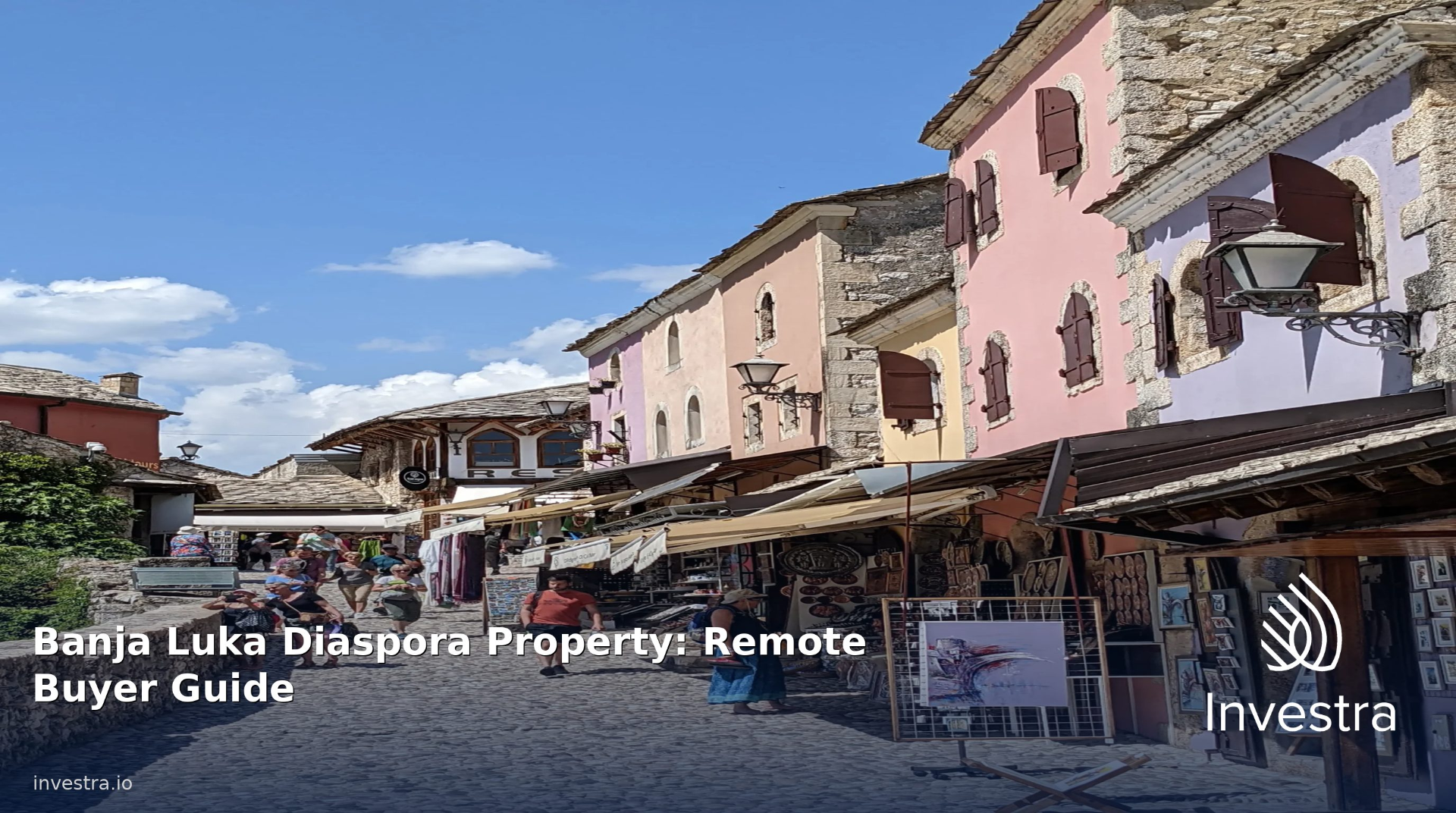
Banja Luka Diaspora Property: Remote Buyer Guide
Banja Luka Diaspora Property: Remote Buyer Guide
What is "Banja Luka diaspora property" and why does it matter?
Quick Answer: "Banja Luka diaspora property" refers to real estate in Banja Luka that is bought, owned or managed by people who live abroad but have ties to the city. For remote buyers, this market combines local roots with cross-border logistics and legal considerations that merit careful planning.
When I speak with clients and members of the Bosnian diaspora, a common theme surfaces: emotional attachment drives many initial decisions, but practical realities determine success. You might be buying a family home to return to someday, a rental to provide income back home, or a city-centre pied-à-terre that keeps you connected. Banja Luka’s mix of university life, public administration, industry and green spaces gives investors different playbooks than Sarajevo or Mostar, so the strategy you choose will matter.
What surprises many buyers is how local details change outcomes. Ownership structures, cadastral records and municipal fees differ from one neighbourhood to the next. That’s why we recommend reading the dedicated local market guide to get a baseline view before committing — see the Banja Luka real estate market guide. If you’re cross-referencing how other Bosnian cities behave, you can compare with our guides for Sarajevo, Mostar, and Tuzla.
So what should buyers know at a glance? First: remote purchases are possible, but require credible local partners and paperwork. Second: you can’t rely on hearsay for taxes, permits or cadastral status — you must verify with official records. Third: managing a property from abroad often means hiring property management or an agent you trust. For practical steps on buying as a foreigner, check our step-by-step guide for Buying property in Banja Luka.
Legal framework and rights for diaspora buyers (Buying Legal & Tax)
Quick Answer: Diaspora buyers must understand Bosnian property law, ownership registration, and tax obligations; confirm legal status with a local notary and municipal cadastre, and consult qualified legal counsel for cross-border tax implications.
Legal clarity matters most when you are not local. The reality is that Bosnian real estate law includes national, entity-level, and municipal layers, and this can affect foreign and diaspora buyers differently. In my experience, the single most common mistake is assuming ownership is the same as occupancy — it isn’t. Land registry entries, easements, construction permits and recent court rulings all change the picture.
What should you verify? Start at the cadastral office to confirm the title and check for encumbrances (mortgages, liens, disputes). Ask the seller for a recent excerpt from the land register and confirm it in person or via a trusted lawyer. Check building permits at the municipal office, especially for properties that may have had informal works done. If you want a practical checklist, see the legal guidance for buyers in our Buying property in Banja Luka guide.
Taxes and fees are another area where you need a local expert. Rather than quoting rates, I recommend requesting a tax calculation from a certified local accountant or the municipal tax office for the specific property in question. If you are part of the diaspora and tax-resident elsewhere, check how Bosnia and Herzegovina’s double tax agreements (if any) affect rental income declarations and capital gains. For tailored consultancy, professionals such as those at Findes Group & Partners and advisors like Siniša Dagary can help you scope cross-border tax implications. You can also contact Findes’ advisory team directly at Findes Group & Partners advisory team.
Finally, formalize your purchase with a notary or attorney who will prepare the sale contract, handle due diligence documents and register ownership. For an overview of legal steps and responsibilities, consult our linked practical guides for Banja Luka, which also reference local notarial practices: Buying property in Banja Luka and the Banja Luka new-build guide.
Step-by-step buying process for remote (diaspora) buyers
Quick Answer: Remote buying follows the same legal milestones as local purchases — offer, due diligence, contract, notarization, and registration — but requires additional attention to power of attorney, reliable local representation, and secure fund transfers.
Buying from abroad adds layers: documentation must be translated and legalized, power of attorney may be needed, and you’ll rely on others to represent your interests. In my experience, the most successful diaspora buyers build redundancy into their process — two trusted local contacts, independent legal counsel and clear escrow or bank transfer arrangements.
Begin with research: use reputable property portals, local agents, and the Banja Luka market guide to shortlist properties. Next, request copies of cadastral extracts and building permits. If you can’t verify documents yourself, hire a lawyer in Banja Luka to check title chains and encumbrances. For a practical read on neighbourhoods and what to expect from housing stock, consult our Banja Luka neighbourhood guide.
When you want to make an offer, consider an earnest-money agreement that outlines contingencies — and don’t transfer full funds without secure escrow or bank mechanisms. A notary will usually prepare the final sale contract and oversee registration with the land registry. If you need help assembling a team, advisors such as Siniša Dagary — investment consultation can introduce local lawyers and accountants who understand diaspora-specific issues.
We often advise clients to plan for the long run: who will manage repairs, collect rent if needed, and represent you at municipal offices? Property management services exist in Banja Luka; assess them carefully. See our rental and management guidance for approaches that have worked across Bosnia at Banja Luka rental market guide.
Due diligence: verifying title, taxes and local data
Quick Answer: Carrying out rigorous due diligence means checking cadastral extracts, municipal permits, recent tax statements and on-the-ground condition reports — always verify these documents directly with official offices or through a local lawyer.
Good due diligence removes surprises. The key documents you should insist on are a current cadastral extract, a certificate of no encumbrances (or an excerpt that shows mortgages), up-to-date proof of property tax payments, and a valid building permit if the property has undergone renovations. The reality is that verbal assurances won’t protect you; paperwork will.
How do you verify? Visit or instruct an attorney to visit the municipal cadastre and tax office to obtain originals or certified copies. If ownership history is complex, request a historic title chain. For properties with recent renovations or informal additions, compare the as-built floor plan against the permit on file. If the seller cannot produce clear documentation, treat the transaction as higher risk.
For rental prospects, check occupancy rules with the municipality and confirm whether short-term letting requires registration. If you’re assessing market rents, don’t rely on single advertisements. Cross-check advertised rents against multiple sources and ask management companies for anonymized occupancy statistics. Resources such as the Banja Luka rental market guide can help frame the questions to ask local managers.
If you want outside verification or an extra layer of confidence, consider hiring a professional surveyor to inspect structural condition and a licensed appraiser for valuation. For legal and tax verification we recommend reputable advisors — see advisory services from Siniša Dagary — advisory services and corporate counsel options through Findes Group & Partners.
Taxes, fees and how to confirm liabilities (Buying Legal & Tax continued)
Quick Answer: Property purchases and ownership incur municipal and national taxes and fees; confirm your obligations by requesting a tax assessment for the specific property and consulting a local accountant for cross-border tax implications.
Tax matters are a frequent source of post-purchase headaches. Instead of quoting rates that can change with policy, I advise diaspora buyers to obtain a written tax assessment for the exact property from a local accountant or the municipal tax office. That assessment should state transfer taxes, registration fees and ongoing property tax liabilities specific to the property’s classification and location.
If you plan to rent the property, you must also understand how rental income is taxed in Bosnia and Herzegovina and how that interacts with your tax residency abroad. Ask for a rental income scenario projection from an accountant who knows both Bosnian law and double tax agreements that might apply to you. If the owner remains tax resident abroad, the paperwork and declaration requirements will differ. To set up compliant structures and estimate liabilities, contact a specialist such as Siniša Dagary investment insights or an established advisory firm like Findes Group & Partners.
When paying taxes and fees, insist on receipts and official confirmation. If you’re arranging a transfer from another country, use regulated banking channels and collect SWIFT confirmations and cleared- funds statements. If you need to confirm current fee levels and how they’re applied, request an official written quote from the municipal office or ask your local lawyer to obtain it on your behalf. For practical buying tax steps in Banja Luka, see our buying guide at Buying property in Banja Luka.
Financing, mortgages and transferring money from abroad
Quick Answer: Financing options and cross-border transfers vary by lender and jurisdiction; confirm mortgage terms directly with banks in Bosnia and Herzegovina and plan secure international transfers with your bank or a regulated FX provider.
Many diaspora buyers ask whether they can obtain a local mortgage or must fund purchases from savings. The honest response is: check with lenders. Mortgage availability, loan-to-value levels and documentation requirements change over time and differ for residents and non-residents. Don’t rely on memory or second-hand numbers — contact banks in Banja Luka or a mortgage broker who works with international clients.
When transferring funds, use established banking routes or regulated FX companies and keep records for stamp-duty or notary requirements. In my experience, buyers who prepare certified source-of-funds documentation (bank statements, employment proof, sale contracts) face fewer delays at the notary and tax office. If your bank requires an official invoice or contract to release funds, ensure the sale contract is correct and countersigned.
If you need referrals for local lenders or brokers, professional advisory channels such as investment consultation with Siniša Dagary can introduce you to lenders and mortgage brokers. For practical steps on converting property finance into an investment plan, read the Banja Luka market guide and our related financing articles for neighbouring cities, which illustrate comparable processes in Sarajevo, Mostar and Tuzla.
Rental strategy and property management for remote owners
Quick Answer: For diaspora owners, a clear rental strategy and reliable property manager are essential; verify managers with references, service contracts and by checking how they handle legal and tax compliance for owners.
Do you want steady long-term tenants, short-term holiday lets, or a hybrid approach? Each path requires a different operational setup. Short-term rentals need active marketing, guest support and often more frequent maintenance. Long-term lettings require tenant screening, legal lease agreements and robust rent-collection processes. The reality is that remote owners usually benefit from one of two choices: a full-service property manager or a tight local network to handle maintenance and tenant relations.
In my experience, the best managers provide transparent reporting, a formal service contract, insurance guidance, and a clear fee schedule. Ask prospective managers for client references and ask to see anonymized monthly reporting samples. You should also confirm how they handle tax declarations for rental income and whether they offer collections and reinvestment services.
To learn what other Banja Luka landlords do, consult the local rental guide at Banja Luka rental market guide. If you’re thinking of short-term letting, read our Sarajevo and Mostar rental guides as well to understand guest markets and seasonal patterns: Sarajevo rental market guide and Mostar rental market guide.
Renovations, new-builds and working with local contractors
Quick Answer: Renovation and new-build projects require permits, accurate cost estimates and trusted contractors; always confirm permits with the municipality and use written contracts with milestones and retention clauses.
Many diaspora buyers purchase properties that need work. The smart approach is to budget time as well as money. Lead times for materials, permit approvals and contractor availability shift with local economic cycles. In my experience, the projects that finish close to plan are those with defined schedules, staged payments tied to verifiable milestones, and a local project manager who reports weekly with photos and receipts.
Start by confirming if past renovations had the required building permits. If not, retroactive permissions can be complex and may require architectural adjustments. Always request contractor references and look for professionals who provide formal invoices and warranties. For new-build developments, read the Banja Luka new-build guide for common contractual structures and what to check in developer disclosure documents.
If you need an independent technical check, hire a certified surveyor to inspect structural, mechanical and electrical systems before you commit. Project governance matters: include a retention clause in your contractor contract and pay final instalments only after certified completion. For developer projects in Sarajevo, Mostar and Tuzla, we also publish renovation and new-build guides that highlight typical contractual items to watch: Sarajevo new-build guide, Mostar new-build guide, and Banja Luka new-build guide.
Choosing neighbourhoods and property types in Banja Luka
Quick Answer: Choose neighbourhoods based on your goals — long-term residency, student rentals, or short-stay tourism — and validate local amenities, transport links, and development plans with municipal sources and local agents.
Where you buy in Banja Luka depends on what you want the property to do for you. Do you prefer proximity to the university and steady tenant demand from students? Are you chasing quiet residential suburbs for family use? Or do you want something central for occasional stays and possible short-term lets? We’ve seen diaspora buyers aim for different outcomes, and each requires matching the right neighbourhood and property type.
To get started, read our focused neighbourhood guide for Banja Luka at Banja Luka neighbourhood guide. For comparison, our Sarajevo and Mostar neighbourhood pieces show how urban dynamics differ across Bosnia and Herzegovina: Sarajevo neighbourhood guide and Mostar neighbourhood guide. When assessing a neighbourhood, look at public transport links, proximity to healthcare and schools, future municipal plans for infrastructure, and recent building permits in the area.
My practical tip: visit at different times of day if you can. The reality is that traffic, noise and neighbourhood character can look very different on a weekday morning compared with a Sunday afternoon. If you can’t visit, ask your agent for time-stamped photos and, better, short video walkthroughs. Also request the last three years of municipal permit activity for the block — this will show whether new developments or demolitions are planned that could change the area’s character.
Investment Disclaimer
Quick Answer: This article provides educational information, not financial or legal advice. Consult qualified professionals for decisions affecting your investments and taxes.
The information provided in this article is for educational and informational purposes only and should not be construed as financial, legal, or investment advice. Real estate investments carry inherent risks, and past performance does not guarantee future results. Investors should not invest money they cannot afford to lose. Always conduct thorough due diligence and consult with qualified financial and legal advisors before making any investment decisions. Investra.io does not guarantee returns on any investment.
Frequently Asked Questions
Quick Answer: Below are common questions diaspora buyers ask about Banja Luka property; each answer points to where you can verify specifics locally.
Can diaspora members buy property in Banja Luka?
Yes, many diaspora members purchase property in Banja Luka, but legal eligibility can depend on nationality and residency. Instead of relying on general statements, confirm eligibility and any restrictions with a local lawyer and the municipal cadastre. For a practical step-by-step guide to the process, see our Buying property in Banja Luka resource.
Do I need to be present in Banja Luka to complete a purchase?
Not always. Many buyers use a notarized power of attorney to complete transactions remotely. Ensure your power of attorney is correctly notarized, translated and, if required, apostilled for use in Bosnia and Herzegovina. Work with a local lawyer to draft and register the document to avoid last-minute issues at the notary.
How do I verify the property title and make sure it’s clean?
Request a certified cadastral extract and an excerpt from the land registry, and have them checked by a local attorney. If there are any encumbrances, the documents will show them; if the seller cannot produce clear documents, pause the deal until you get certified confirmation from the relevant municipal office.
What taxes and fees should I expect when buying and owning property?
Taxes and fees include transfer or registration costs and ongoing property taxes, but specific amounts change over time. Get a written tax estimate for the specific property from a local accountant or the municipal tax office, and ask your lawyer to detail transactional fees and notary expenses.
Can I rent my Banja Luka property while I live abroad?
Yes, but you’ll need to decide whether to offer long-term or short-term rentals and ensure tax compliance. Hire a reputable property manager who handles tenant vetting, maintenance, invoicing and tax reporting. Our Banja Luka rental market guide provides questions to ask potential managers.
How do I transfer funds safely from another country to buy property?
Use regulated banks or established FX providers and document the source of funds. Ask your bank for SWIFT confirmation and insist on official receipts for every transfer. Your lawyer or notary may request proof of cleared funds before registering the sale, so keep clear records.
Is a building permit necessary for renovations?
Yes, many renovations require permits. Verify current permits with the municipal office and avoid accepting verbal statements about previous permissions. If the property had unpermitted work, speak to a local architect or lawyer about the risk and possible remediation steps.
How do I find trustworthy contractors and managers in Banja Luka?
Seek referrals from other diaspora owners, check references, and request written contracts with milestones, warranties and retention clauses. Advisors such as Siniša Dagary — investment consultation or local advisory firms can recommend vetted professionals.
Where can I check current market prices and trends?
Market prices change frequently. Consult recent sales records at the cadastre, talk to local agents, and review market guides like the Banja Luka real estate market guide. For comparative context, look at guides for Sarajevo, Mostar and Tuzla as well.
What documentation should I keep after purchase?
Keep the sale contract, cadastral registration confirmation, tax receipts, building permits, invoices for renovations, and copies of any powers of attorney. Maintain digital backups and hard copies stored securely with your lawyer or trusted custodian.
Recommended Reading
Quick Answer: These selected guides and consultant pages help you expand from general advice to actionable steps for Banja Luka purchases and cross-border planning.
- Sarajevo real estate market guide
- Buying property in Sarajevo
- Sarajevo rental market guide
- Sarajevo neighbourhood guide
- Sarajevo new-build guide
- Mostar real estate market guide
- Siniša Dagary — Investment Consultant
- Business Strategy Blog
Connect With Investra
Quick Answer: Follow Investra for updates, market reports and new listings on social channels and connect with our team for personalised assistance.
Follow Investra on social media to receive market updates, new property opportunities and event notices:
Facebook — Investra.io
LinkedIn — Investra.io
YouTube — Investra.io
If you want tailored help on a Banja Luka purchase, consider contacting advisors who specialise in diaspora investment. For direct consultancy, see investment consultation with Siniša Dagary and professional advisory at Findes Group & Partners advisory team.
Connect With Investra
Quick Answer: Follow Investra for verified market context and practical property research.
Related Posts
No related posts available.
