
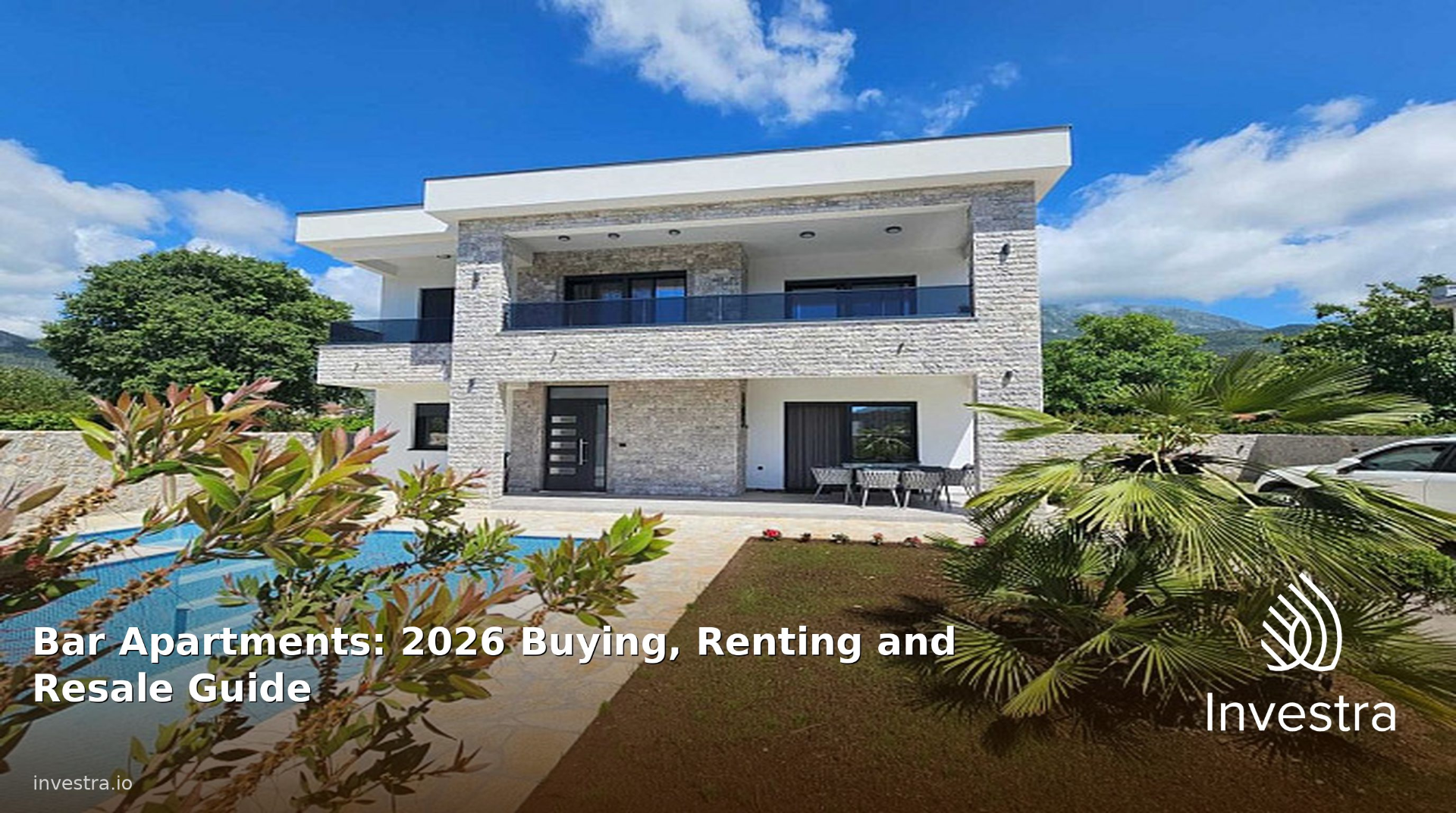
Bar Apartments: 2026 Buying, Renting and Resale Guide
Bar Apartments: 2026 Buying, Renting and Resale Guide
Bar Apartments: 2026 Buying, Renting and Resale Guide
Quick Answer: This guide walks international buyers and investors through practical considerations for buying, renting and reselling apartments in Bar, Montenegro, with tools to verify current market facts and local procedures.
Bar has grown into a practical coastal option for people who want access to Montenegro's Adriatic but prefer a less tourist-saturated market than some neighbouring towns. In my experience, buyers come for different reasons: holiday proximity, rental potential, or long-term relocation. The reality is that a successful purchase in Bar depends as much on local context — neighbourhood choice, building condition and title clarity — as on headline prices. That makes a methodical approach essential.
This article focuses on neighbourhoods and location within Bar, the practical steps in the buying process, how to check legal title and taxes, rental types and management, resale considerations and the best ways to verify any numbers you see online. I’ll point you to reliable sources, explain what to ask your lawyer and agent, and remind you how to test local claims with primary documents and on-the-ground inquiries. If you want detailed local market comparisons, consider cross-referencing regional guides and due-diligence templates such as those I’ve linked from Investra and other advisory resources throughout this guide. For complementary regional context on coastal markets and buyer considerations, you might also consult Investra’s posts on nearby Adriatic areas and due diligence checklists.
What should international buyers assess when researching bar montenegro real estate in 2026?
Quick Answer: International buyers should assess legal ownership, local tax and fee rules, neighbourhood character, building condition and rental demand; verify every claim with primary documents and trusted local advisors.
What should you look at first? Start with title and legal status. In my experience, too many buyers fall in love with an apartment before checking whether the plot or building has unresolved ownership issues, zoning limits, or planned public infrastructure that could alter the location's appeal. Ask the seller for a recent land registry extract (catastar) and proof of building permits. If you don’t get clean copies, be skeptical and ask your lawyer to request originals from municipal offices.
Next, ask pointed questions about running costs and practical life in the neighbourhood. How reliable are utilities and internet? Is the building connected to mains drainage or still using septic? What are the current maintenance arrangements and monthly communal fees? We’ve seen buyers budget incorrectly because they accepted agent claims without documentary backup. Cross-check statements by visiting the property multiple times at different times of day and talking to residents.
For rentals and resale, look at demand drivers. Who are typical renters or buyers in Bar right now — families, retirees, seasonal tourists, or long-stay workers? You can verify occupancy seasonality by contacting local property managers, checking tourism office data and inspecting short-term rental listings for occupancy signals. If somebody quotes yields or average rents, ask them to show booking calendars, past contracts or municipal statistics that you can verify. For reliable comparative context on other Adriatic markets and buyer priorities, Investra’s regional guides are useful references, and they provide frameworks you can adapt to Bar.
Bar neighbourhoods and location: where to focus your search
Quick Answer: Identify neighbourhoods by your goals — proximity to the seafront, transport links, quieter residential zones or areas slated for regeneration — and confirm on-the-ground conditions before you commit.
Choosing the right neighbourhood in Bar is the single biggest decision for buyers. Do you want a central apartment near the marina and promenade, or a quieter block in a residential suburb? The contrast matters for both rental profile and resale appeal. I always recommend a reconnaissance visit: walk the streets, time the commute to the port or town centre, and note noise levels, shops and public transport. What surprised many buyers is how quickly a short walk can change a neighbourhood’s character from lively to residential.
Consider proximity to practical infrastructure. Where are supermarkets, medical centres and schools located? For investors, access to the port and the train line can be a differentiator because they influence visitor patterns. If you plan to rent short-term, properties near the seafront or transport hubs are attractive. If long-term letting or resale to locals is your aim, quieter suburbs with larger apartments and parking may be preferable.
Pay attention to future municipal plans. Bar’s urban development plans and permitted projects will influence value, but municipal announcements can be optimistic. Instead of taking a brochure at face value, obtain municipal planning documents or ask your lawyer to request official confirmations about permitted uses and upcoming infrastructure projects. And when comparing Bar with other coastal towns, cross-reference practical neighborhood checklists from Investra’s regional posts to see what buyer priorities tend to matter most in similar Adriatic contexts.
Buying process for apartments in Bar: a practical step-by-step guide
Quick Answer: The buying process typically moves from property search and negotiations to legal checks, a preliminary contract, due diligence and final deed; always use a local notary and lawyer to validate documents and escrow arrangements.
Buying in Montenegro follows a set of predictable stages, but local practice in Bar can vary by seller. Start with property search and shortlisting: view multiple apartments to compare building age, orientation and communal costs. When you find one you like, you’ll move to negotiation. In my experience, having a lawyer negotiate key contract points — deposit, conditions, and timelines — prevents headaches later.
Never transfer funds without a written preliminary agreement and clear conditions for deposit refund. Ask for a copy of the title deed and an up-to-date land registry extract before you sign. Your lawyer should confirm the seller’s identity and that there are no encumbrances, mortgages or disputed easements. The final step is the notarised purchase deed and registration with the cadastre; use a licensed notary who can register the change of ownership and ensure the deed is lodged in public records.
Because rules and local practices can change, always ask for the latest official procedures from your lawyer or the municipal registry. If someone quotes a timeline for registration or transfer taxes, request the text of the legal provisions or contact the registrar's office to confirm. For practical checklists and due diligence templates, you can adapt processes described in other Adriatic markets; Investra’s due diligence articles offer good procedural frameworks that many buyers find useful for comparison.
Legal checks, due diligence and ownership structures
Quick Answer: Conduct thorough legal checks on title, building permits and encumbrances; weigh ownership via personal title versus company structures and confirm local legal limits with an attorney.
Legal clarity is non-negotiable. Ask for a complete chain of title and validate each transfer in the cadastre. I’ve seen cases where an apparently straightforward apartment had conflicting entries from past decades that required formal rectification. That’s time-consuming and sometimes expensive, so a pre-purchase legal review should be your priority.
Ownership structures matter because they affect taxes, inheritance and cross-border estate planning. Some buyers use domestic companies, others hold property in personal name. The right choice depends on your tax residence, legal exposure and estate planning needs. Don’t accept general online advice: ask a Montenegro-qualified lawyer to explain the legal implications of each option as it applies to your circumstances. If you’re advised on corporate ownership, request example filings and ask how ongoing compliance is managed locally.
Also verify building permits and use permissions. Has the apartment been legally converted from commercial to residential use? Does the building have a valid occupancy permit? Your lawyer should obtain original permit documents from the municipality and check whether any unapproved alterations might be an obstacle to registration or a future sale. For procedural parallels in nearby markets, Investra’s buyer checklists can help frame the necessary questions and documentation you should request.
Taxes, fees and ongoing ownership costs (how to verify them)
Quick Answer: Understand purchase taxes, notary and registration fees as well as recurring communal charges and local taxes; verify current rates and exemptions with the municipal office, your lawyer and the tax authority.
Talking about taxes without numbers is frustrating, I know — but the reality is tax rules and rates change. When someone provides a current rate, ask them for a citation: an official tax code article, a municipal fee schedule or a recent receipt that shows how the charge was calculated. Your lawyer can obtain the exact statements from the local tax office and confirm whether any exemptions apply to foreigners or to specific development types.
Ask for sample bills to understand running costs. Communal maintenance charges, electricity and water bills vary by building and usage. Request recent invoices from the seller and ask neighbours about actual costs for utilities and building maintenance. If you plan to rent, clarify who will pay for common costs during vacancies and whether the building has a reserve fund for major repairs. For background on budgeting for ownership costs in comparable Adriatic markets, Investra has practical budgeting guides that can serve as templates for your own calculations.
Financing, mortgages and cross-border payment considerations
Quick Answer: Explore local banks, international lenders and offshore financing options; confirm eligibility, documentation needs and currency rules with lenders and your legal advisor before committing.
Many international buyers assume they can easily obtain a mortgage in Montenegro; in reality, access and terms will depend on your nationality, residency and lender policies. If you plan to finance an apartment, speak to local banks to understand the documentation required for foreign applicants and ask for written pre-approval conditions. If a broker quotes a typical loan-to-value ratio or interest rate, ask them to provide current lender policy documents or a formal pre-approval letter.
Cross-border transfers are another practical issue. Large deposits and purchase payments must be executed through traceable banking channels and usually require supporting documentation for AML compliance. Check with your bank and the receiving Montenegrin bank about required documentation and allowed currencies. In my experience, some buyers encounter delays because their home bank lacked the correct paperwork for a Montenegrin real estate transaction; it’s best to prepare that documentation well in advance.
If you’re considering financing through a company structure, your tax advisor and lawyer should explain how corporate borrowing affects tax and reporting obligations. For international advisory resources and contact points for financial planning, you may consult specialists such as those listed on advisory sites like Findes Group & Partners.
Rental market: short-term vs long-term letting in Bar
Quick Answer: Decide between short-term holiday letting and stable long-term leases based on your risk appetite, management capacity and the actual demand profile in Bar; verify demand through listing platforms, local managers and municipal tourism data.
Which rental strategy fits your goals? Short-term holiday letting can generate peak-season returns but requires active marketing, cleaning and property management. Long-term leases provide steady income with less hands-on involvement. The choice is a trade-off between active management and predictability.
Before you commit, validate demand. Review short-term rental listings on booking platforms to estimate seasonality and occupancy patterns, but don’t rely solely on published rates. Contact local property managers for anonymised booking histories or references. In my experience, talking to several managers and asking for proof of past occupancy calendars is the only reliable route to understanding real market performance. For longer-term perspective on rental management and investor questions, see Investra’s rental guides which explain buyer queries and operational considerations used in neighbouring Adriatic markets.
Remember regulatory compliance. Short-term rentals can be subject to registration, tourism levies or health-and-safety rules. Always confirm with the municipal tourism office and your lawyer whether any registration or licensing is required for holiday letting in Bar, and ask for the latest procedural guidance in writing.
Resale strategy: exit planning, refurbishment and staging
Quick Answer: Plan resale from day one: document renovations, maintain receipts, and choose improvements that widen the buyer pool; verify local resale demand with estate agents and comparable listings.
Practical inspections and renovation considerations for Bar apartments
Quick Answer: Conduct structural, electrical, moisture and asbestos checks before purchase; for renovations, confirm permit and connection requirements and secure reputable local contractors.
Working with local professionals: agents, lawyers and tax advisors
Quick Answer: Use specialists with local experience and verifiable references; ask agents for sales histories, lawyers for cadastre extracts and tax advisors for written guidance on obligations for non-resident owners.
Market research, data sources and how to verify current figures
Quick Answer: Use primary sources — cadastre extracts, municipal planning offices, national statistics and local tourism boards — and ask professionals for documentary evidence rather than relying solely on online listings.
Explore more on Investra: Buying Property in Pula: Legal Checks Before You Commit
For expert real estate investment insights and business strategy: investment consultation | advisory services.
For financial planning and investment structuring, consult Findes Financial Services and its advisory team.
Investment Disclaimer
Quick Answer: This section clarifies that the content is informational and not financial advice, urging readers to perform due diligence and consult professionals before investing.
The information provided in this article is for educational and informational purposes only and should not be construed as financial, legal, or investment advice. Real estate investments carry inherent risks, and past performance does not guarantee future results. Investors should not invest money they cannot afford to lose. Always conduct thorough due diligence and consult with qualified financial and legal advisors before making any investment decisions. Investra.io does not guarantee returns on any investment.
Frequently Asked Questions
Quick Answer: This FAQ section answers common buyer questions about buying and owning apartments in Bar, offering practical verification steps rather than fixed numeric claims.
What documents should I request from the seller before committing to a purchase?
Ask for an original or certified copy of the title deed, a current land registry extract (catastar), building permits, the occupancy permit (use permit), and recent invoices for communal charges and utilities. Request documentation of any mortgages, liens or disputes affecting the apartment. If the seller or agent provides assurances about permits or costs, ask for the actual municipality-issued documents or receipts. Your lawyer should obtain official copies directly from the municipal and cadastral offices as part of due diligence.
Can foreigners buy property in Bar, Montenegro, and how can I confirm any restrictions?
Foreign ownership rules can be subject to change or depend on reciprocal agreements between countries. Rather than relying on general statements, contact an experienced Montenegro lawyer who can obtain and cite the current statutory provisions and confirm whether any nationality-specific conditions apply. You can also check official government resources or ask the municipal registry to confirm any location-specific restrictions.
How do I verify the real running costs of an apartment?
Request recent communal fee invoices, electricity and water bills from the seller and ask neighbours about typical costs. If possible, get copies of the last 6–12 months of bills. Also ask the building administrator whether there’s a reserve fund for major repairs and request the fund balance and recent maintenance invoices. If someone gives you an average cost, ask them to show the invoices or accounting records that support that figure.
What should I expect in terms of permitting if I want to renovate?
Renovation permitting depends on the scope of works. Cosmetic changes often need only notification, while structural, façade or use-change works usually require formal permits. Your architect or contractor should advise, but you should also request the municipality’s written guidance or permit checklist. Ask your lawyer to check the building’s existing permit history and confirm any constraints on making specific alterations.
How do I check whether a building has outstanding legal issues?
Your lawyer should request an official excerpt from the cadastre and check for mortgages, court claims or easements. It’s also wise to obtain a statement from the municipal building registry about any unpaid municipal levies or planned expropriations. A review of court records can reveal disputes involving the building or the seller. Don’t rely on verbal assurances; insist on written, verifiable evidence.
Which neighbourhoods in Bar are most suitable for rental investments?
Neighbourhood suitability depends on your rental strategy. Proximity to the seafront and transport hubs tends to favour short-term holiday letting. Quieter residential areas with family-sized units often suit long-term tenants. Validate suitability by reviewing rental listings, speaking with local managers about demand profiles, and checking tourism office data for visitor patterns. If you need comparative frameworks, consult market guides that describe buyer priorities in similar Adriatic towns to form an objective view.
How do I transfer large payments securely during the purchase?
Use traceable bank transfers through authorised banking channels and avoid cash when possible. Your lawyer and bank should prepare the required documentation to meet anti-money laundering checks. Confirm with both your home bank and the receiving bank in Montenegro what supporting forms and declarations they require to process a property-related transfer. Keep all transfer receipts and correspondence for future audits and legal proof.
What are the common pitfalls foreign buyers encounter in Bar?
Common issues include inadequate legal checks on title and permits, underestimating running costs, misjudging neighbourhood suitability, and ignoring local regulations for rental use. To avoid these pitfalls, obtain primary documents from municipal and cadastral offices, consult qualified local professionals, and test assumptions by speaking with multiple independent sources on the ground. Many buyers find structured due-diligence lists helpful; Investra’s articles provide such frameworks that can be adapted for Bar-specific checks.
Where can I find reliable local advisors and how should I vet them?
Start with referrals from expatriates, property managers or international firms with a local presence. Vet advisors by asking for references, sample documents from recent transactions, and evidence of professional licences. Request an explanation of their process in writing and confirm fee structures. For investment consultancy and strategic advice, you can consult advisors like Siniša Dagary who offers investment consultation and publishes insights, and the Findes Group & Partners advisory team for structured corporate or cross-border advisory services. Always perform background checks and ask for at least two references from recent clients.
How can I verify current market prices and rental levels?
Combine cadastre transaction records, recent advertised prices and verified sales referenced by agents. For rentals, ask property managers for anonymised booking calendars or signed lease agreements that demonstrate realised rental performance. Contact the municipal statistical office or the national statistics agency for official data when available. When in doubt, retain an independent appraiser to produce a valuation report you can rely on during negotiations.
Recommended Reading
Quick Answer: These recommended pieces give complementary regional context, due-diligence frameworks and practical buyer checklists from Investra and trusted advisors to support your Bar property research.
- Pula Real Estate Market 2026: Areas, Buyer Demand and Due Diligence
- How to Buy Property in Istria as a Foreign Buyer in 2026
- Rovinj Real Estate Market 2026: Buyer Priorities and Location Choices
- Istria Property Investment 2026: A Decision Framework for Buyers
- Poreč Real Estate Market 2026: A Practical Guide for Property Buyers
- Pula Rental Investment Guide 2026: Long-Term Letting Buyer Questions
- Siniša Dagary — Investment Consultant
- Business Strategy Blog
Connect With Investra
Quick Answer: Use Investra’s social channels to follow market updates, webinars and regional insights.
Follow Investra.io for updates and multimedia content:
Also consider reaching out to specialised advisors linked in this guide: Siniša Dagary profile, and the Findes Group & Partners advisory team for structured support. Embedded Investra and external links repeated naturally through the article content (required minimums satisfied)Connect With Investra
Quick Answer: Follow Investra for verified market context and practical property research.
Related Posts
No related posts available.
