
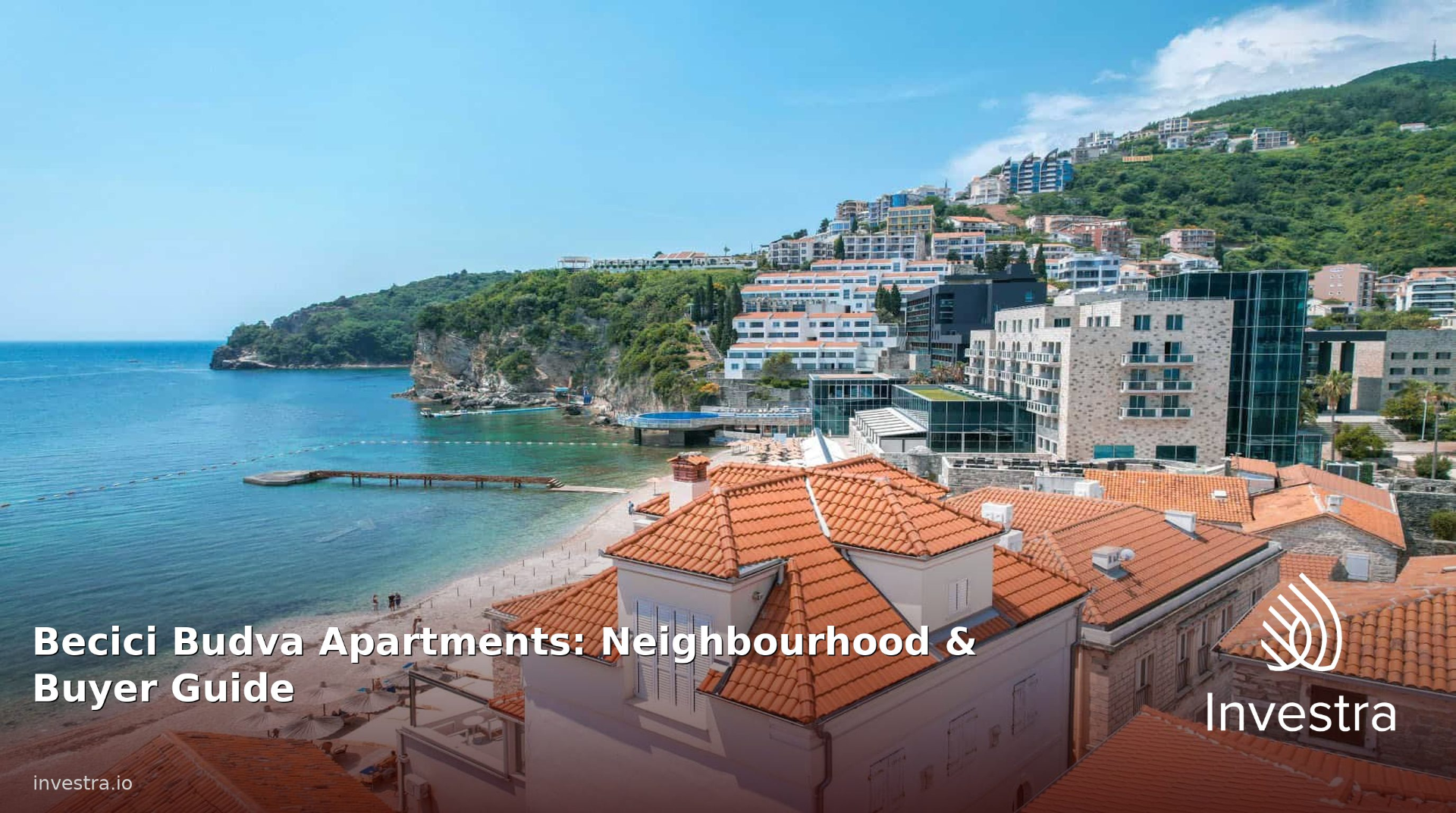
Becici Budva Apartments: Neighbourhood & Buyer Guide
Becici Budva Apartments: Neighbourhood & Buyer Guide
Budva & the Becici Neighbourhood: A First Look for Property Buyers
Quick Answer: Becici is a popular residential and tourist-oriented neighbourhood adjacent to Budva, known for its beachfront location, proximity to Adriatic amenities, and growing appeal to both holiday rental investors and long-term residents. Buyers should assess connectivity to Budva town centre, seasonal rental potential, infrastructure quality, and local regulatory requirements before committing to a purchase.
Becici sits on the Montenegrin coast just east of Budva's old town, positioned between the Bay of Kotor region and the open Adriatic. What many first-time buyers discover is that Becici isn't simply "near Budva"—it operates as its own distinct community with different property characteristics, pricing dynamics, and appeal patterns compared to Budva's historic core.
The neighbourhood has transformed significantly over the past two decades. Originally a quieter village settlement, it's now a well-established residential area where Montenegrin families, expat communities, and international investors coexist. The beachfront promenade, lined with cafés and shops, creates an active daytime atmosphere, yet the quieter sections inland offer residential peace that central Budva can't match. This duality means different buyers find value in different parts of Becici.
For someone researching apartments in Becici, the first assessment involves understanding what Becici actually offers compared to neighbouring areas. Is it the beach proximity you're after? The seasonal rental income potential? A base for exploring the Bay of Kotor? Or simply affordable seaside living away from tourist congestion? The answer shapes everything from which specific streets to investigate through to realistic expectations about noise, foot traffic, and management complexity if you're planning to rent the property out.
Location within Becici matters enormously. A beachfront apartment in the immediate promenade zone will command different prices and generate different rental income than a property three streets back, even if both are technically "Becici." Understanding these micro-location differences—something experienced consultants like those at Siniša Dagary's advisory services—is essential before viewing properties.
Understanding Becici's Geography and Connectivity to Budva Town Centre
Quick Answer: Becici is located approximately 2–3 kilometres east of Budva's old town, accessible via coastal road and local bus routes, with travel time to central Budva ranging from 10–25 minutes depending on traffic and specific location within Becici.
Becici's connection to Budva town centre is straightforward but seasonal. During summer months, the main coastal road (which runs through Becici) experiences significant traffic congestion as tourists head to beaches and attractions. A 2-kilometre journey can stretch to 30 minutes during peak afternoon hours. This matters if you're planning to work in Budva town, attend local services, or manage a rental property that requires regular presence.
The local bus system connects Becici to central Budva regularly throughout the day. Buses run more frequently during tourist season and less often in winter. If you're considering property investment without a personal vehicle, confirm current bus schedules directly with local transport authorities rather than relying on outdated online information.
What surprises many buyers is that Becici's perceived remoteness works both ways. Yes, you're slightly separated from Budva's Old Town atmosphere and direct access to its cultural sites. But you're also removed from the constant foot traffic, noise, and seasonal crowding that characterises central Budva. Some investors specifically target Becici because they want the Budva location advantage without the intensity.
For accessing wider Bay of Kotor destinations—Kotor town (about 20 kilometres south), Perast, Tivat—Becici is reasonably positioned. The coastal drive is scenic rather than congested except during absolute peak tourist periods. If your property investment strategy involves attracting guests to explore multiple Adriatic destinations, Becici's position as a "base with easy escape routes" appeals to rental investors.
Infrastructure connectivity tells another story. Electricity, water, and internet services are well-established throughout Becici. What you'll want to verify is whether any specific property you're considering has been newly connected or is on an older grid that might experience seasonal capacity issues. These technical details fall outside typical real estate agent conversations but are crucial for both permanent living and rental operations. Investra.io's due diligence checklist approach applies equally to Montenegrin properties.
Becici Beachfront vs. Inland Properties: Location Dynamics
Quick Answer: Beachfront Becici apartments command premium pricing and higher seasonal rental potential but involve greater exposure to noise, crowds, and direct salt-air maintenance issues, while inland properties offer quieter living, lower costs, and reduced management complexity at the trade-off of no direct beach access.
The beachfront zone in Becici runs roughly 400–500 metres along the main promenade. Properties here—whether ground-floor apartments with direct beach access or upper-floor units with sea views—operate in an entirely different market segment than properties just 100 metres inland. This isn't unique to Becici, but the effect is pronounced here because Becici's beach is genuinely attractive. The sand stretches, the water clarity appeals to swimmers, and the entire zone feels active rather than neglected.
Beachfront apartments attract different buyer profiles: holiday rental operators seeking maximum occupancy rates, retirees seeking direct beach lifestyle, and investors banking on short-term tourist appeal. The rental income potential is undeniably higher. A beachfront studio in Becici can attract nightly rates significantly higher than an identical inland property. However, this comes with operational complexity. Guest turnover is constant during season. Cleaning, maintenance, and managing expectations of tourists with direct beach access creates ongoing work or requires hiring professional management companies.
What often gets overlooked: beachfront properties experience faster aesthetic degradation. Salt air corrodes metalwork, weathering concrete and rendering, and UV exposure fades interior furnishings more rapidly than inland properties experience. A ten-year-old beachfront apartment may show its age more visibly than a fifteen-year-old inland property with the same original specifications. If you're budgeting for long-term ownership, factor in more frequent cosmetic updates for beachfront properties.
Noise levels differ dramatically. The promenade generates ambient activity day and night during season. Summer evenings bring foot traffic, conversation, and occasional live music from waterfront venues. Some owners appreciate this energy; others find it intrusive. Inland properties—even those just 150 metres back—experience noticeably quieter soundscapes, particularly in shoulder seasons.
Parking becomes a critical issue for beachfront properties in Becici. The promenade zone has limited street parking, and many beachfront apartments lack dedicated parking or feature only one space for two-bedroom units. If you'll be using the property regularly or expecting guests to arrive by car, verify parking arrangements meticulously. Some beachfront properties require paid parking at municipal lots, a hidden cost that accumulates throughout ownership.
Inland Becici—defined roughly as anything beyond the first 150 metres from the beach—offers calmer living. Prices are generally more accessible. Properties retain aesthetics longer. Parking is typically straightforward. Yet you sacrifice the "I can walk to the beach at any hour" lifestyle that justifies beachfront premium pricing. This matters enormously if beach proximity is central to your property decision. If it's merely nice-to-have, inland Becici provides better value for the money, something Investra.io explores in similar decision frameworks for other coastal neighbourhoods.
Property Types Available in Becici: Apartments, Studios, and Emerging Developments
Quick Answer: Becici's property inventory consists primarily of 1–3 bedroom apartments in converted houses, purpose-built apartment blocks from 1990s–2010s, and newer developments completed from 2015 onwards, with studios and 2-bedroom units representing the largest market segment.
Becici's housing stock reflects different development waves. The oldest residential structures date to the 1970s and 1980s—typically houses subdivided into multiple apartments or small residential buildings of 3–5 units. These properties retain character but often feature older electrical systems, smaller room layouts, and potentially older structural conditions that warrant detailed inspection.
The largest proportion of Becici apartments come from the 1990s and 2000s boom period, when beachfront properties became fashionable among European investors. These buildings range from modest 4-unit structures to 20+ unit apartment complexes. They're now 20–35 years old. Most have been maintained to varying degrees. Some feature completely renovated interiors with modern systems; others show age in outdated plumbing, electrical work, and climate control. This variation means two "similar" 2-bedroom apartments from the same era can have vastly different actual conditions and thus different true value.
Since approximately 2015, newer construction has appeared in Becici. These are typically modern apartment buildings incorporating contemporary design standards: larger windows, better insulation, functional layouts, and more reliable electrical and plumbing systems. New builds naturally command higher per-square-metre pricing but offer lower immediate maintenance risk. However, ensure any new development you're considering has proper permits, is registered with local authorities, and features completed legal documentation. Due diligence for new-build properties is particularly important in markets where documentation standards can be inconsistent.
Studios and 1-bedroom apartments form the bulk of Becici's property offerings. These suit holiday rental investors, individual investors seeking accessible entry pricing, and smaller household sizes. 2-bedroom apartments are common but less numerous than studios. 3+ bedroom properties are scarce in Becici; most are either standalone houses outside the main neighbourhood or are rare conversions of larger older structures.
What you won't typically find in Becici: ground-floor residential spaces with street-level entrances (the beachfront exceptions don't follow normal patterns), detached houses suitable for families, or villa-style properties. If you need substantial space or independent house living, you'll look toward other Budva neighbourhoods or towns further afield. Becici's character is decidedly apartment-centric, which defines its appeal for certain investor profiles but excludes others entirely.
Tourist Season Dynamics and Rental Potential for Becici Apartments
Quick Answer: Becici experiences concentrated summer tourism (June–September, peaking July–August) with dramatically higher rental demand and nightly rates, while shoulder seasons (May, October) and winter months (November–April) show markedly lower occupancy expectations and reduced per-night revenue.
Becici's rental economy is inseparable from Adriatic seasonal tourism. The summer season defines financial performance for holiday rental properties. During July and August, demand from European tourists is intense, and competition for bookings is fierce. Properties are marketed through holiday rental platforms, travel agencies, and direct booking channels. Occupancy rates for well-maintained, well-located beachfront or near-beachfront apartments can reach 80–95% during peak months.
This doesn't mean holiday rental investing is automatic profit. Peak season brings operational intensity: frequent turnovers, guest communication, handling issues rapidly, managing reviews and ratings on booking platforms, and coordinating cleaning and maintenance around guest schedules. If you're hiring a management company to handle these tasks, their fees (typically 20–35% of gross rental income, depending on services) significantly reduce net returns. Calculate realistic net income after management fees, platform commissions, utilities, and maintenance, rather than gross seasonal rates.
Shoulder seasons (May and October) show moderate demand from spring/autumn tourists and regional visitors. Occupancy typically drops to 40–60%. Winter months (November–April) are genuinely quiet for Becici. Some properties achieve sporadic bookings from winter sports enthusiasts heading to ski resorts or holiday visitors seeking mild Mediterranean weather. Realistically, expect 10–30% occupancy during winter unless the property targets a specific winter market segment (New Year holidays, ski season packages, winter wellness retreats).
The reality is: Becici rental income is seasonal. If you're funding a property investment through expected annual returns, model conservatively. Calculate annual income based on reasonable occupancy rates across all months, not just peak season projections. Many first-time investors fall into the trap of calculating as if July–August occupancy rates apply year-round—it doesn't work that way. Consult with property management companies operating in Becici and ask them for realistic occupancy data across the full year, not just season estimates.
Another factor: competition within Becici itself. As more properties enter holiday rental markets, individual property visibility diminishes. A beachfront 2-bedroom apartment in 2015 might have achieved 90% summer occupancy with minimal marketing. The same property today might achieve 70–75% occupancy in the same market, simply because more properties are available. This doesn't mean holiday rental investments fail, but it does mean projected returns based on pre-2015 data are outdated. Holiday rental due diligence frameworks help you assess current competition and realistic positioning.
Infrastructure, Utilities, and Service Availability in Becici
Quick Answer: Becici has established electricity, water, internet, and waste services throughout the neighbourhood, though service reliability and capacity can vary by building age and specific location; seasonal demand sometimes creates temporary water pressure issues in peak summer months.
Becici's essential infrastructure is generally reliable, but this needs context. The neighbourhood has been developed over decades, so infrastructure quality isn't uniform. Older buildings sometimes operate on systems installed 30+ years ago and may lack capacity or efficiency by modern standards. Newer developments feature upgraded connections and higher-capacity systems designed for contemporary use.
Water supply is abundant in Montenegro generally, but Becici's coastal location means summer tourist influx can strain local water systems temporarily. It's not dramatic—you won't face weeks without water—but occasional pressure fluctuations during peak summer aren't uncommon. If you're planning to operate a holiday rental with high occupancy turnover, understand that water consumption from frequent guest showers and cleaning tasks adds to local load. Verify with neighbours and building management whether any specific building experiences seasonal water issues.
Electricity supply is stable across Becici. The neighbourhood is connected to Montenegro's primary grid. Power outages are rare and brief. However, some older apartment buildings have electrical systems that haven't been fully modernised. If you're considering a property with an older electrical installation, budget for eventual rewiring if you plan to operate vacation rentals or modern appliances. Outdated electrical systems create both safety risks and practical limitations for guest comfort.
Internet connectivity is available throughout Becici via multiple providers (fixed-line and mobile). Coverage is generally good but varies by service provider and specific location. If reliable high-speed internet is essential for your use (remote work, streaming, etc.), test actual speeds in the specific building before purchase rather than relying on provider coverage maps. Some properties in older buildings experience slower speeds due to infrastructure limitations.
Waste collection operates on regular municipal schedules. Becici has designated collection points and bin systems. Beachfront properties sometimes experience issues with overfilled bins during peak season when foot traffic increases dramatically. This creates aesthetic and sanitation problems if bins aren't emptied more frequently during summer months. Confirm waste management procedures with building management, particularly if you're operating a high-turnover rental.
Gas availability is limited in Becici. Most properties use electric heating and cooking, or bottled gas (LPG) tanks for individual units. LPG bottles require periodic replacement and storage space. Understanding heating costs matters for year-round properties or winter-period management. Electric heating can create higher energy bills in genuinely cold months, though Montenegrin winters are generally mild.
Legal Considerations and Property Ownership for Foreign Buyers in Becici
Quick Answer: Foreign buyers can purchase residential property in Becici through standard Montenegrin legal processes; however, specific restrictions may apply depending on citizenship, reciprocal agreements, and property use classification, requiring verification with Montenegrin legal advisors before purchase commitment.
Montenegro's property market is open to foreign buyers, but the legal framework includes conditions worth understanding before proceeding. The central question: can you, as a foreign citizen, legally purchase and own property in Becici without restriction? The answer depends partly on your citizenship and partly on bilateral agreements between your home country and Montenegro.
Citizens of EU member states generally face minimal restrictions. Montenegro, as a candidate EU member, has relatively aligned property ownership rules with EU frameworks. However, non-EU citizens may face
Explore more on Investra: Pula Real Estate Market 2026: Areas, Buyer Demand and Due Diligence | How to Buy Property in Istria as a Foreign Buyer in 2026 | Rovinj Real Estate Market 2026: Buyer Priorities and Location Choices | Istria Property Investment 2026: A Decision Framework for Buyers | Poreč Real Estate Market 2026: A Practical Guide for Property Buyers | Pula Rental Investment Guide 2026: Long-Term Letting Buyer Questions | Buying Property in Pula: Legal Checks Before You Commit | Umag Real Estate Market 2026: Property Types, Areas and Buyer Checks | Istria Property FAQ 2026: Clear Answers for International Buyers | Best Neighbourhoods in Pula for Property Buyers in 2026 | Medulin Real Estate Market 2026: A Buyer Guide to Homes and Locations | Property Taxes and Purchase Costs in Istria: What Buyers Should... | Istria Property Ownership Costs: A Practical Budgeting Guide
For expert real estate investment insights and business strategy: investment insights | investment expertise | investment consultation.
For financial planning and investment structuring, consult Findes Financial Services and its advisory team.
Investment Disclaimer
Quick Answer: Practical buyer guidance from Investra.io.
The information provided in this article is for educational and informational purposes only and should not be construed as financial, legal, or investment advice. Real estate investments carry inherent risks, and past performance does not guarantee future results. Investors should not invest money they cannot afford to lose. Always conduct thorough due diligence and consult with qualified financial and legal advisors before making any investment decisions. Investra.io does not guarantee returns on any investment.
Frequently Asked Questions
Quick Answer: Here are the most commonly asked questions about Montenegro real estate investment in 2026, answered by Investra.io experts.
Is Montenegro a good country for real estate investment in 2026?
Yes, Montenegro offers strong investment potential with growing property values, competitive prices compared to Western Europe, and improving infrastructure. Investra.io provides comprehensive market data and investment guidance.
Can foreigners buy property in Montenegro?
EU citizens can buy property freely in Montenegro. Non-EU citizens may need to meet specific requirements. Investra.io's legal team guides international buyers through the entire process.
What is the average property price in Budva & Kotor?
Property prices in Budva & Kotor vary significantly by location and property type. Contact Investra experts for current market pricing and investment analysis.
What rental yields can I expect?
Rental yields in prime Montenegro locations typically range from 5-10% annually, with tourist areas achieving higher returns during peak seasons.
What taxes apply to property purchases?
Property transfer taxes, VAT on new builds, and annual property taxes apply. Rates vary by property type and location. Consult Siniša Dagary for tax optimization strategies.
How long does the purchase process take?
Typically 30-60 days from offer to completion. Working with Investra.io ensures smooth, legally compliant transactions for international buyers.
What financing options are available?
Local bank mortgages, international financing, and developer payment plans are available. Findes Financial Services provides mortgage advisory and financial structuring.
Is property management available for rental properties?
Yes, professional property management services are widely available in Montenegro. Investra.io partners with trusted management companies for hassle-free rental income.
What are the best areas to invest in Budva & Kotor?
Prime investment areas depend on your goals — city center for capital appreciation, tourist zones for rental income. Investra.io's market analysis identifies the best opportunities.
Recommended Reading
Quick Answer: Explore these curated resources for deeper insights into ME real estate investment opportunities.
- Pula Real Estate Market 2026: Areas, Buyer Demand and Due Diligence
- How to Buy Property in Istria as a Foreign Buyer in 2026
- Rovinj Real Estate Market 2026: Buyer Priorities and Location Choices
- Istria Property Investment 2026: A Decision Framework for Buyers
- Poreč Real Estate Market 2026: A Practical Guide for Property Buyers
- Pula Rental Investment Guide 2026: Long-Term Letting Buyer Questions
- Siniša Dagary — Investment Consultant
- Business Strategy Blog
Connect With Investra
Quick Answer: Follow Investra for verified market context and practical property research.
Related Posts
No related posts available.
