
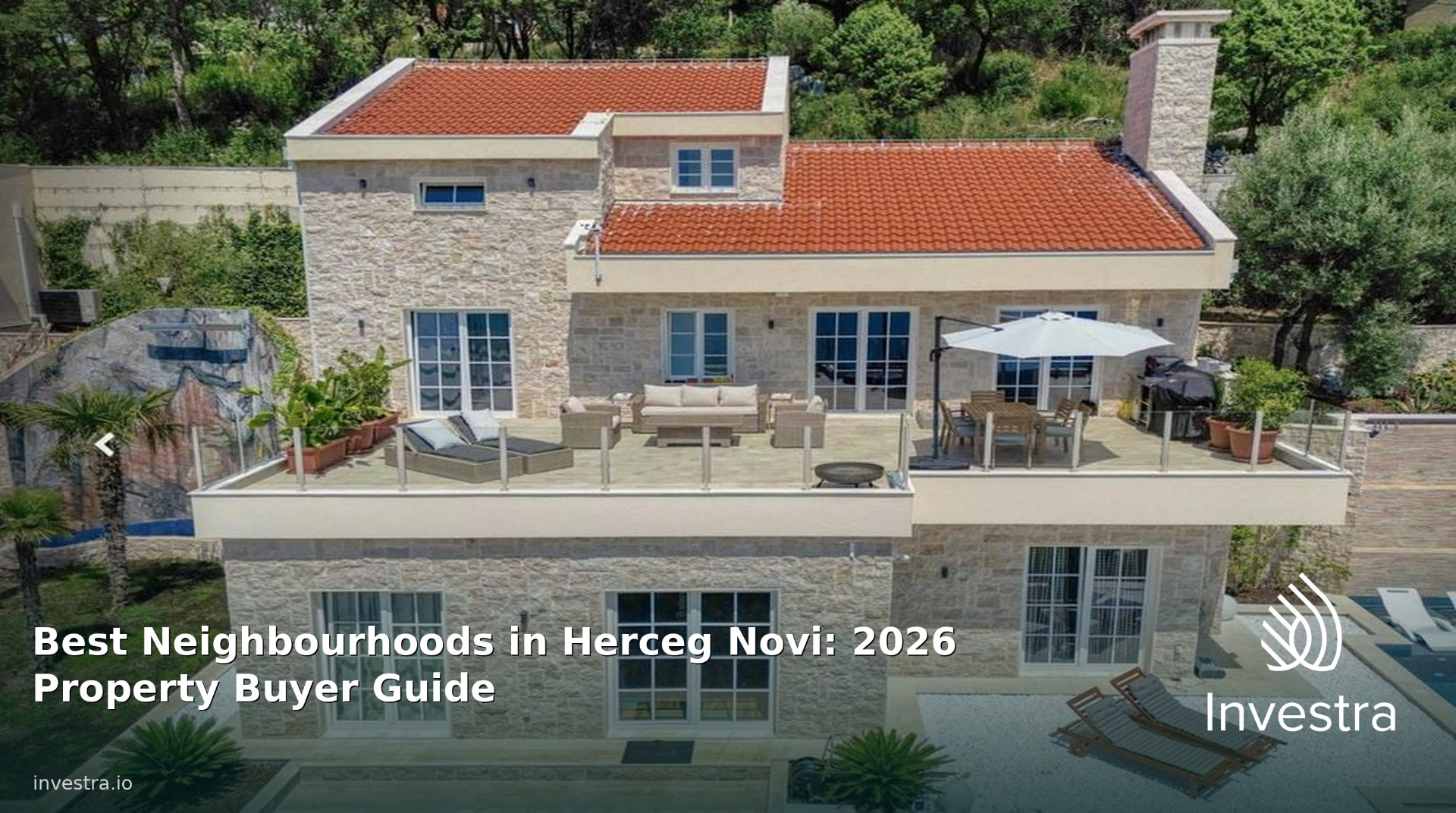
Best Neighbourhoods in Herceg Novi: 2026 Property Buyer Guide
Best Neighbourhoods in Herceg Novi: 2026 Property Buyer Guide
Why Herceg Novi? A 2026 snapshot for international buyers
Quick Answer: Herceg Novi offers a compact coastal city lifestyle with diverse neighbourhoods that appeal to buyers seeking seaside living; international buyers should weigh location, access and local services when researching herceg novi montenegro real estate in 2026. Investra.io and local consultants can help you compare markets across the region.
Herceg Novi feels like a collection of small towns stitched along the Bay of Kotor. In my experience, what attracts international buyers is the mix of historic quarters, accessible coastal promenades, and quieter suburban pockets with marina access. The reality is buyers come with different priorities: some want a compact Old Town flat you can walk out of and feel immersed in history; others want a modern apartment near a marina or a family home with garden space. What surprised many buyers is how quickly location changes daily life here — a five-minute drive can mean a completely different set of amenities, transport links and microclimate.
When researching herceg novi montenegro real estate in 2026, ask practical questions: how close is the nearest grocery store, healthcare facility and school? What's the state of the local road network in winter? How active is the short-term rental market if you plan to let the property? You won't find accurate answers to some of these in general guides — you need to speak to local agents, visit personally if possible, and consult municipal records. For cross-border perspective on coastal towns and buyer behaviour, Investra's regional articles can be useful (see comparisons with Istrian markets like Istria Property Investment 2026). I usually recommend buyers build a shortlist of two or three neighbourhoods, then match those to lifestyle and investment tests: commute, rental demand, planning constraints and resilience to seasonal cycles.
Quick Answer: What should international buyers assess when researching Herceg Novi Montenegro real estate in 2026?
Quick Answer: Assess legal ownership rules, local taxes and costs, neighbourhood amenities, transport links and the realistic rental or personal-use profile of the property; verify each item with local authorities, a licensed lawyer and up-to-date market sources such as Investra and local consultants.
When I advise buyers I begin with a checklist, and you should too. Start by confirming whether the property type and plot are available to foreigners and what approvals are required — rules can vary by property class and location. Next, check planning and building permits at the Herceg Novi municipality and the national cadastre. For fiscal questions — transfer taxes, annual property tax, and VAT where applicable — talk directly to the municipality's finance department and a local tax advisor. The good news is many things are straightforward if you use the right local experts, but the steps are non-negotiable: title checks, land-use verification, utility connections and any liabilities like mortgages or easements.
What else? Neighborhood-level factors are vital. Is the property in a flood-prone or planning-restricted area? How close is it to transport nodes (ferry terminals, main roads) and services (clinics, schools, supermarkets)? If rentals matter, check how other listings perform across seasons — consult local agencies and platforms, and review occupancy patterns. A practical way to verify current rental dynamics is to ask local letting agents for anonymised recent bookings or request anonymised statements from property managers. If you want tailored advisory help, consider experts such as Siniša Dagary investment consultation or the Findes Group & Partners advisory team for on-the-ground guidance.
Neighbourhoods at a glance: Which parts of Herceg Novi to prioritise
Quick Answer: Prioritise neighbourhoods based on lifestyle needs — Old Town for character, Igalo for wellness and promenade living, Meljine for quieter marinas, and Zelenika/Baošići for connectivity; verify specifics through local visits, agent data and municipal maps.
Herceg Novi's neighbourhoods are compact but varied in character. I generally group them into historic, seafront and suburban clusters. The Old Town (Stari Grad) is the cultural heart, narrow streets and fortifications. Igalo, immediately west of the Old Town, is known for its promenade and wellness facilities. Meljine and nearby Lokve offer quieter residential pockets and marina access. Eastwards, Zelenika and Baošići provide quicker links to ferry services and the main road to larger coastal towns. Further afield, smaller settlements like Plat or Bijela are worth separate research if you need specific marina or industrial-adjacent conditions.
What should you do when comparing them? Walk the streets at different times of day. Speak to local shopkeepers. Ask how seasonal traffic affects parking and noise. If you’re considering a property for rental, check where similar listings are clustered and how they market themselves. For a broader view on coastal neighbourhood choices and buyer priorities in nearby Adriatic markets, Investra articles such as Rovinj Real Estate Market 2026 and Medulin Real Estate Market 2026 provide useful parallels.
Old Town (Stari Grad): character, challenges and buyer considerations
Quick Answer: Old Town offers historic charm and walkability but requires close checks on building condition, renovation permissions and access to utilities; consult a conservation-aware surveyor and a local lawyer for title and planning checks.
Old Town properties sell on atmosphere. Stone facades, narrow alleys and views across the bay create an emotional connection many buyers crave. In my experience, buyers who love Old Town living are willing to accept trade-offs: smaller indoor spaces, limited parking and sometimes older infrastructure. What surprised many is how renovation needs can vary from cosmetic works to substantial structural repairs — and the cost and timeline depend on whether a property sits within a protected heritage zone.
Practical touches matter: ask the municipality about any conservation rules, restrictions on external changes, and whether there are incentives or grants for restoration. Get a qualified structural survey that understands historical architecture rather than a generic contractor’s opinion. Confirm that title documents are clean and that the property isn't part of unresolved succession or co-ownership issues. For buyers comparing Old Town living with other coastal historic centres, resources such as Rovinj Old Town or Newer Areas highlight similar trade-offs and due diligence points you should ask your local lawyer to verify.
Igalo & Topla: wellness, promenade life and practical realities
Quick Answer: Igalo and Topla are attractive for buyers seeking promenades, access to spa-legacy facilities and a livelier seafront; confirm service provision, future development plans and seasonal transport links with local authorities and agents.
Igalo has long drawn visitors for wellness and seaside promenades. If you picture morning walks, cafés and easy sea access, this neighbourhood often delivers. Buyers who prioritize daily convenience—shops, cafés and frequent local buses—tend to favour the areas around the promenade. But what many under-estimate is the seasonal rhythm: promenades fill up in summer, which can be great for rental demand if you're letting, but it also changes noise and parking dynamics.
Check municipal plans for promenade works or potential new developments that could affect views and privacy. Speak to current residents about winter life: are services maintained year-round? Can deliveries and tradespeople access your building? If wellness facilities matter, verify the operational status and ownership of any spa complexes or health centres — ownership structures may affect access or future redevelopment plans. For extra context on seaside town living and rental considerations, Investra’s Pula Rental Investment Guide 2026 is a helpful model to understand seasonality impacts.
Meljine & Lokve: marinas, residential calm and infrastructure checks
Quick Answer: Meljine and Lokve offer quieter, marina-adjacent living, but buyers need to verify marina ownership, berth availability and local infrastructure plans before committing.
Meljine is attractive to buyers seeking a more residential pace with marina access close by. In practice, the difference between owning in Meljine and owning in the Old Town is lifestyle: there’s more space, easier parking and often a better fit for families or boat owners. What many foreign buyers find useful is to check marina facilities early in the process—are berths privately owned, leased, or managed by a third party? Berth availability and transfer rules can be a big factor if you plan to store a boat nearby.
Infrastructure is also important. Confirm water pressure, waste collection schedules and road quality. If the property is in a planned development, ask to see the developer's approved plans and any community covenants. An on-the-ground consultant can request copies of utility connection agreements and any outstanding fees. For those comparing marina towns across the region, Investra’s coverage of coastal developments such as Pula New-Build Homes: A Buyer Due Diligence Guide for 2026 offers practical due diligence parallels.
Zelenika, Baošići & Plat: connectivity to transport and neighboring towns
Quick Answer: These eastern neighbourhoods score for road and ferry connections and are practical if you want quick access to regional transport routes; verify ferry schedules, seasonal road maintenance and planned roadworks with local authorities.
If frequent travel to Tivat, Kotor or Montenegro’s main roads matters, consider Zelenika, Baošići or Plat. These areas can offer easier access to the main coastal road and ferry points. In my experience, buyers who travel often—either to work or for family ties—prioritize these neighbourhoods because they cut journey times. However, connectivity comes with questions: how reliable are ferry and bus timetables outside the summer season? Are there planned infrastructure projects that will change traffic patterns?
The sensible approach is to request recent timetables from transport operators and to check municipal planning portals for proposed road upgrades or utility works. Also ask local estate agents for anonymised tenant or owner feedback about winter accessibility. For comparative research across coastal towns and their connectivity, Investra’s analyses like Umag Real Estate Market 2026 show how transport links shape demand patterns in similar Adriatic locations.
New developments and coastal plots: due diligence priorities
Quick Answer: For new builds and coastal plots, prioritise title clarity, approved permits, developer track record and a thorough construction contract review; consult a local attorney and technical surveyor to confirm everything is registered correctly.
New-build properties and coastal plots can be attractive but they require close scrutiny. Developers vary in size and experience; some foreign buyers assume construction standards match their home market. The reality? Standards can differ and contractual protections are critical. In my experience, the most common mistakes are: relying on verbal assurances, not checking whether permits are final or merely applied for, and underestimating the time needed for connection of utilities.
Ask for copies of all permits and confirm them at the municipal office and the cadastre. Review the construction contract with a lawyer who understands local construction law and can flag clauses about completion dates, remedies for delays, and warranty conditions. Independent technical inspections at key stages reduce risk. For procedural checklists, Investra’s buyer due diligence resources such as Istria Property Due Diligence: A Croatian Buyer Checklist and Pula New-Build Homes guide offer frameworks you can adapt for Montenegro checks.
Legal ownership basics for foreigners: how to verify rights and restrictions
Quick Answer: Verify ownership rights through the national cadastre, confirm whether any reciprocity or approval applies for foreign buyers, and always use a local lawyer to review title and contracts.
I always tell buyers: don’t skip the legal legwork. Montenegro has clear land-registration systems, but practices and processing times vary. You should obtain certified excerpts from the cadastre and land registry to confirm the seller’s ownership, any encumbrances and the exact legal boundary of the plot. In my experience, buyers who assume a clear title without a lawyer's confirmation often face delays at closing.
Ask your lawyer to check for mortgages, statutory charges, co-ownership issues, and any outstanding municipal levies. If you're buying a plot, ensure planning permissions match what has been approved — a plot permitted for low-rise residential will not necessarily allow a hotel or multiple apartments. To understand how other jurisdictions handle buyer protections, see comparative guides such as How to Buy Property in Istria as a Foreign Buyer in 2026, then validate how Montenegro’s processes align by consulting a Montenegro-based legal advisor, or consider specialist advice from consultants like Siniša Dagary advisory services.
Taxes, purchase costs and ongoing ownership expenses: how to check current figures
Quick Answer: Taxes and ownership costs vary and change; to get accurate current figures, request written schedules from the municipal finance office, a local tax advisor and your notary, and compare with national guidance.
If you're exploring rental as part of your financial plan, ask for recent anonymised tax rulings or generic guidance from a local accountant about how rental income is declared and taxed. For frameworks on how to structure ownership and estimates of ongoing costs in similar Adriatic jurisdictions, Investra articles such as Property Taxes and Purchase Costs in Istria and Istria Property Ownership Costs provide budgeting templates you can adapt when you confirm Montenegro-specific numbers with local advisors.
Rental market realities: short-term, long-term and compliance
Quick Answer: Understand local short-term rental regulations, licensing and seasonal occupancy patterns; confirm licensing procedures with the municipality and review platform booking histories with local agents before assuming rental income scenarios.
Also check practicalities: who manages bookings, check-in/out, cleaning and maintenance? If you plan to buy a property in a building with a homeowners association, what are its rules about rentals? For comparison on holiday rental due diligence and buyer checks in similar markets, see Investra’s Rovinj Holiday Rental Investment guide and the Pula Rental Investment Guide. For on-the-ground management and compliance help, specialist advisors such as Findes Group & Partners can assist with local regulatory checks and structuring.
Practical buying process: who to hire and the due diligence checklist
Quick Answer: Hire a local real estate agent you trust, an independent technical surveyor, a Montenegro-qualified lawyer and a tax advisor; request a written due diligence checklist and confirm each item with municipal records.
Due diligence should include: certified cadastre and title reports, inspection of any building permits, copies of utility connection agreements, verification of municipal taxes and fees, confirmation there are no unpaid service charges, a building survey for structural and damp issues, and contract clauses that protect your deposit and outline remedies for non-delivery. For structured checklists and examples you can adapt, Investra's resources such as Istria Property Due Diligence and Pula rental guides can be useful starting points — but always tailor them to local Montenegro law with your lawyer.
Investment Disclaimer
Quick Answer: This section provides a legal disclaimer and explains why independent advice is essential before any investment decision.
The information provided in this article is for educational and informational purposes only and should not be construed as financial, legal, or investment advice. Real estate investments carry inherent risks, and past performance does not guarantee future results. Investors should not invest money they cannot afford to lose. Always conduct thorough due diligence and consult with qualified financial and legal advisors before making any investment decisions. Investra.io does not guarantee returns on any investment.
Frequently Asked Questions
Quick Answer: Below are commonly asked buyer questions with practical answers and verification methods tailored to Herceg Novi.
Can foreigners buy property in Herceg Novi, and how do I verify eligibility?
Foreign ownership rules depend on national legislation and any bilateral agreements. The sure way to verify eligibility is to consult Montenegro’s cadastre and a Montenegro-qualified lawyer who can confirm whether the specific property and plot type are transferable to foreign nationals. You can also request written guidance from the municipal property office or a notary public. If you plan to use a company structure to hold the property, discuss legal and tax implications with a corporate lawyer and tax advisor experienced in Montenegro transactions.
How do I check the legal title and ensure there are no hidden encumbrances?
Obtain an official extract from the national cadastre (land registry) to confirm the seller’s title, any mortgages, liens or registered easements. Your lawyer should also request a certified copy of the deed and search for any ongoing disputes or unpaid municipal charges. It’s common practice to require the seller to provide a warranty in the purchase contract, and to structure payments through a notary or escrow to protect against title defects identified late in the process.
What are the typical steps in a Montenegro property purchase?
While transaction sequences vary, the common steps are: initial offer and negotiation; reservation deposit and preliminary agreement; due diligence (title, permits, surveys); signing the final sales contract before a notary; registration of transfer at the cadastre; and settlement of taxes and fees. Consult your lawyer and notary for exact procedural steps and timelines for Herceg Novi transactions to ensure compliance with local practice.
How can I verify current property taxes and purchase costs?
Contact the Herceg Novi municipal finance department for the most recent schedules for property tax, transfer taxes and any municipal fees. Your notary and tax advisor should provide a written estimate prior to signing. For comparative frameworks, review guides such as Investra’s articles on Istria taxes for budgeting methodology, then confirm Montenegro-specific figures with local sources.
What should I ask about utility connections and infrastructure?
Ask for written confirmation of utility availability and connection terms (water, electricity, sewage, internet). Request copies of meter statuses and recent utility bills if possible. If the property is part of a new development, ask the developer for proof that utilities are installed and the terms of their handover to the municipality or management company.
Do I need to be in Montenegro to buy a property?
You don’t strictly need to be present for every step, but I strongly recommend at least one physical visit prior to exchange. Remote purchases are possible through notarised powers of attorney, but these add complexity and risk. If you proceed remotely, ensure you have a trusted local lawyer and possibly a buyer’s agent who can attend viewings, check documents and liaise with the notary on your behalf.
How do seasonal dynamics affect buying decisions in Herceg Novi?
Seasonality influences rental demand, traffic and available services. Visit during both a summer and off-season period if possible, or ask local agents for anonymised occupancy data and year-round service levels. Many buyers underestimate winter conditions and maintenance needs; getting first-hand or recent tenant feedback helps avoid surprises.
Who should I hire to manage a property if I’m not resident?
Look for property managers who offer end-to-end services: tenant sourcing, bookings, cleaning, maintenance and compliance. Request references and sample management agreements. If your property lies within a community with an association, verify who handles communal maintenance and how costs are apportioned. Professional firms like Findes Group & Partners and local consultants can provide tailored management and compliance services.
Where can I get professional, on-the-ground advice in Herceg Novi?
Use a mix of local professionals: a Montenegro-qualified lawyer, a licensed surveyor, an experienced estate agent and a local tax advisor. For investment consultancy and strategic assistance, consider advisors such as Siniša Dagary and his investment insights or contact the Findes advisory team for structured support. Always ask for references and recent client examples before engaging.
Recommended Reading
Quick Answer: These curated resources help you expand your research into coastal markets, due diligence and buyer priorities across the Adriatic region.
- Pula Real Estate Market 2026: Areas, Buyer Demand and Due Diligence
- How to Buy Property in Istria as a Foreign Buyer in 2026
- Rovinj Real Estate Market 2026: Buyer Priorities and Location Choices
- Istria Property Investment 2026: A Decision Framework for Buyers
- Poreč Real Estate Market 2026: A Practical Guide for Property Buyers
- Pula Rental Investment Guide 2026: Long-Term Letting Buyer Questions
- Siniša Dagary — Investment Consultant
- Business Strategy Blog
Connect With Investra
Quick Answer: Follow Investra on social media to receive market updates, webinars and property investment insights.
Follow Investra on social platforms for news and market guidance: Facebook, LinkedIn, YouTube. For personalised consultations you can also contact regional advisors like Siniša Dagary investment consultation or the Findes Group & Partners advisory team who work across Adriatic markets.
Additional Investra and partner links used in-article for referenceConnect With Investra
Quick Answer: Follow Investra for verified market context and practical property research.
Related Posts
No related posts available.
