
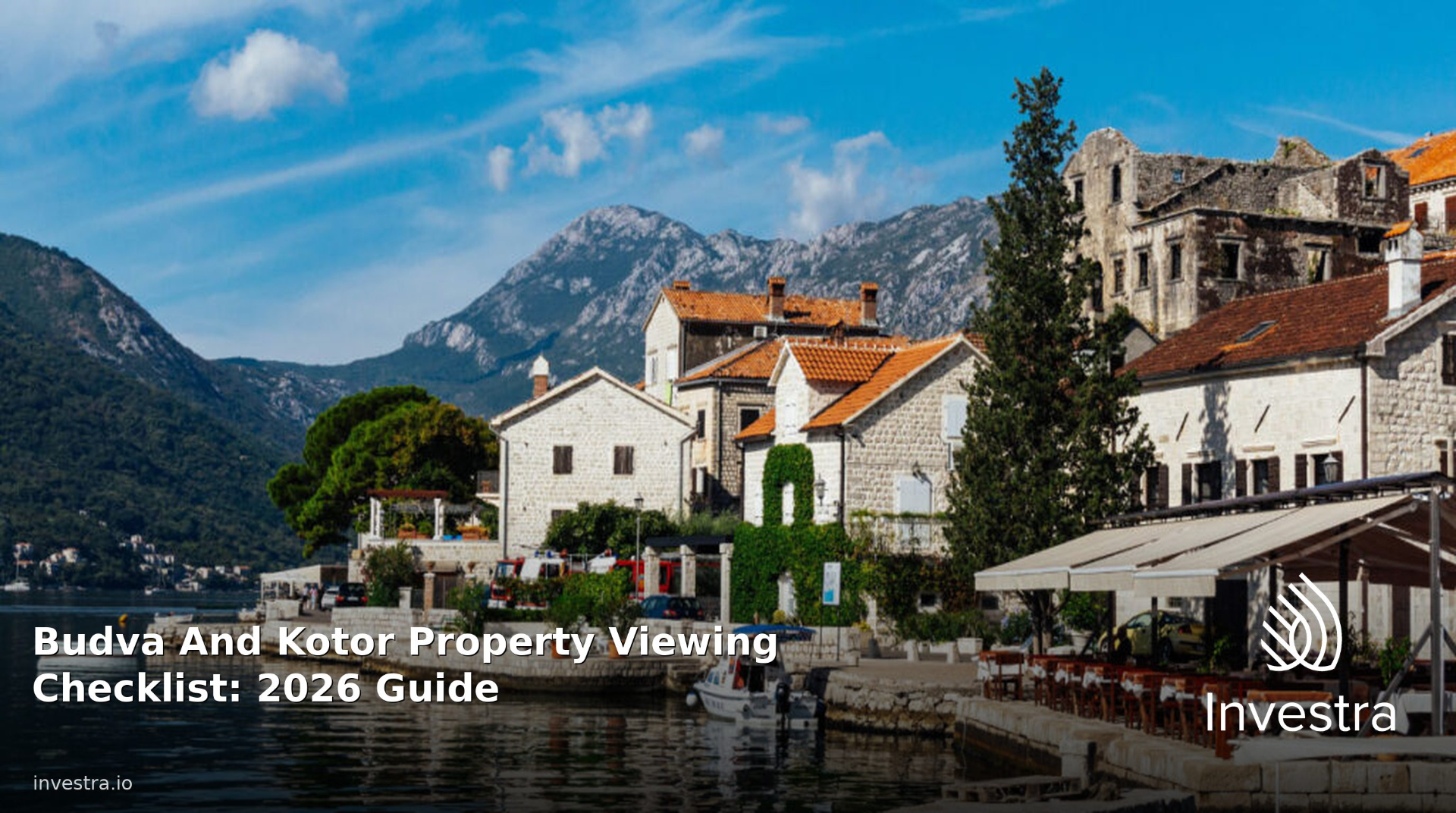
Budva And Kotor Property Viewing Checklist: 2026 Guide
Budva And Kotor Property Viewing Checklist: 2026 Guide
Why a Property Viewing Checklist Matters in Budva and Kotor
Quick Answer: A structured viewing checklist helps buyers systematically assess physical condition, legal status, location quality, and investment potential before committing to a property in Budva or Kotor, reducing costly mistakes and post-purchase surprises.
When you're standing in front of a seaside apartment in Budva or a heritage stone house in Kotor's Old Town, the emotional pull can be strong. The Adriatic view, the historic charm, the promise of holiday rentals—it all feels real and tangible. But emotion rarely translates into sound investment decisions. A property viewing checklist transforms what could be an impulsive, walkthrough experience into a methodical assessment that covers physical condition, legal status, rental potential, and neighborhood quality.
What surprised many international buyers in recent years is how often overlooked defects emerge months after purchase. Structural issues hidden by fresh paint, boundary disputes buried in land registries, noise pollution from summer tourism that wasn't apparent during off-season visits—these discoveries turn transactions into regret. In my experience, buyers who spend time on systematic viewing and due diligence rarely look back with frustration. Those who rush rarely escape it.
The Budva and Kotor markets move fast. Properties near the waterfront attract multiple inquiries within weeks. This urgency can push buyers toward shortcuts. A checklist forces you to pause, document what you see, and compare findings against legal records and market data. It also creates a paper trail that protects you during negotiations and safeguards you against misrepresentation by sellers or agents.
Pre-Viewing Research: What to Verify Before You Schedule
Quick Answer: Before scheduling a viewing, verify the property's legal status through Montenegro's land registry, check seller credentials, confirm the listing agent's reputation, and review neighborhood zoning and infrastructure plans to avoid investing in properties with hidden legal or planning complications.
The viewing itself lasts an hour or two. The work beforehand should take several hours and happen before you book a flight. Too many international buyers skip this step because it feels abstract and administrative. They want to see the property, they say. But seeing a property without knowing its legal foundation is like inspecting a car engine without checking ownership documents—you might find the engine beautiful, but it could be stolen.
Start with Montenegro's Central Registry of Immovable Property. This is your primary source for confirming ownership, encumbrances, mortgages, and any legal restrictions on the property. You can access basic information online, though detailed searches often require local assistance. Investment consultation services or local property lawyers can retrieve full registry documents and interpret findings in English. This step alone prevents catastrophic errors—discovering mid-purchase that the seller doesn't have clear title, or that the property is encumbered with a mortgage held by a bank you didn't know about.
Next, research the agent and seller. In Budva and Kotor, the real estate market attracts both established agencies and fly-by-night operators. Check whether the agent is registered with Montenegro's Chamber of Real Estate Agents. Look for independent reviews online; be skeptical of only positive feedback, but equally skeptical of obviously fake negative ones. Ask the agent directly for client references from similar transactions in the past two years. A legitimate agent will provide them without hesitation. Similarly, verify the seller's identity. In international transactions, scams do happen. A quick background check through local legal advisors costs little and prevents everything.
Research the neighborhood zoning and planned infrastructure. Budva's coastal areas are undergoing ongoing development; Kotor's Old Town has strict heritage conservation rules. Check with the local municipality about upcoming construction projects, road improvements, or new commercial developments that could affect property value, noise levels, or views. These plans are public information. Understanding neighborhood demand and planning context helps you evaluate whether current pricing reflects realistic long-term value.
Structural and Condition Assessment: A Room-by-Room Approach
Quick Answer: Systematically inspect walls for cracks, test plumbing and electrical systems, check for dampness and mold, examine windows and doors, and assess roof condition to identify expensive repairs that sellers may have hidden or underestimated.
Walk every room twice: once to absorb the overall impression, once with your checklist in hand, camera ready. Most buyers do this alone. Don't. Bring someone who either has construction experience or can take detailed notes and photos while you ask questions. Your eye will miss structural issues that a trained eye catches instantly. Even if you can't afford a full structural survey before making an offer—and many buyers don't—a second pair of observant eyes catches obvious red flags like water staining, uneven floors, or cracks that suggest foundation movement.
Walls and ceilings first. Look for hairline cracks in plaster or tile, especially near corners or above doorways. Cracks that follow a diagonal pattern or appear near windows sometimes indicate foundation settlement or structural stress. Vertical cracks in load-bearing walls are more serious than horizontal ones. Water stains on ceilings or upper walls suggest roof leaks or problems with upper-floor plumbing. In Budva and Kotor, salt air accelerates deterioration of certain materials; ask how old the building is and when the roof was last replaced or sealed. Properties built in the 1980s or earlier often need attention sooner than newer construction, though newer doesn't always mean better—quality varies wildly depending on builder and maintenance.
Test all faucets, toilets, and drains. Water pressure should be consistent. If you turn on a shower and the pressure drops sharply when you flush a toilet elsewhere, the plumbing system is struggling. Slow drains in sinks, bathtubs, or showers suggest either blocked pipes or inadequate venting. Ask when the plumbing was last updated. Mediterranean properties, especially those built before the 1990s, sometimes have aging galvanized steel pipes that corrode from inside, restricting flow and eventually failing. Replacing the entire plumbing system costs tens of thousands of euros. Similarly, check that hot water heats reliably and quickly. In Kotor's stone houses, water systems can be temperamental; understand how they work before you buy.
Electrical systems deserve attention, especially in older properties. Are outlets easily accessible or hidden behind furniture for a reason? Ask how many circuits the property has and when the electrical panel was last inspected. European properties built before 2000 often have undersized systems that can't handle modern appliances without frequent tripping. Flickering lights or outlets that don't work suggest either circuit overload or wiring issues. If you're planning to use the property for holiday rentals—a common strategy in Budva especially—electrical reliability matters enormously. Guests expect consistent power; failed appliances and outages destroy rental ratings.
Damp and mold are silent killers of property value and health. Look for fuzzy growth on walls, especially in bathrooms or basements. Sniff corners and closets—a musty smell indicates moisture problems. In Kotor, where stone buildings are hundreds of years old, some dampness is almost inevitable, but excessive moisture signals either broken gutters, inadequate drainage, or plumbing leaks. Mold remediation is expensive and time-consuming; don't accept a seller's casual "we'll fix it" unless they've already hired professionals and you see the work completion report.
Windows and doors are both aesthetic and functional. Do they open and close smoothly? Do they seal properly—can you feel drafts around the frames? Single-pane windows, common in older Kotor properties, offer poor insulation and noise reduction; if you're living there or renting it out, winter heating bills and summer noise will frustrate you. Check the condition of frames, seals, and hinges. Replacing windows across an entire apartment costs several thousand euros, so understand what you're inheriting before you commit.
Roof, Foundation, and Exterior Condition
Quick Answer: Inspect the roof for missing tiles or leaks, examine exterior walls for structural cracks and weather damage, check gutters and drainage systems, and verify that foundations show no signs of settling or subsidence—major repairs here drain budgets quickly.
You can't always access the roof during a property viewing, especially in Kotor's Old Town where access might require climbing steep stairs. But you can visually assess it from a distance. Look for missing or cracked roof tiles, visible rust on metal flashing, or sagging lines that suggest structural issues. Ask the seller or agent when the roof was last repaired, and request copies of any maintenance records. A roof in good condition might last 15 years; a roof near the end of its life will fail within 2-3 years. In Mediterranean climates, intense summer sun and occasional winter storms accelerate deterioration. If you're unable to inspect the roof yourself, budget for a professional roof inspection before closing—it's worth 200-300 euros to avoid a surprise 10,000-euro repair bill six months after purchase.
Exterior walls, especially in Kotor's stone-built Old Town, carry decades of history. Some cracks are cosmetic and harmless; others signal structural movement. Look for horizontal cracks that suggest settling, or vertical cracks that widen as they go up—both can indicate foundation or structural issues. Step back and look at the building's overall alignment; does it appear plumb and level, or does it lean? Compare your observations against the property's age. A 400-year-old stone house with minor cracks might be completely stable; newer concrete structures with visible cracks might indicate poor construction. Ask the seller about any structural repairs made in the past decade. Responsible owners keep records; those who avoid the question might be hiding expensive past problems.
Gutters and drainage systems prevent water damage. Walk around the property and observe how water flows away from the building after rain. Are gutters present and clear, or clogged with debris? Do downspouts direct water away from the foundation, or do they dump it against the walls? Poor drainage accelerates foundation problems and basement dampness. In Budva, where properties often sit on or near slopes, water management is crucial. If the property is on a hillside, is there a retaining wall? Is it in good condition, or does it show cracks and displacement? A failing retaining wall can cost 5,000-20,000 euros to repair and represents serious risk to the structure above it.
Foundation condition is hardest to assess during a casual viewing but most important for long-term safety. Walk around the perimeter and look for visible cracks in foundation walls or floor slabs. Are there cracks in the mortar between stone blocks, especially in older Kotor properties? Does the building settle unevenly—evidenced by doors or windows that don't close properly or floors that slope noticeably? These clues suggest subsidence or settling issues that could require expensive remedial work. Don't ignore them hoping they'll improve. They won't.
Utilities, Heating, and Climate Control Systems
Quick Answer: Verify that heating, cooling, and hot water systems are functional and recently maintained, understand the utilities cost structure and who provides services, and confirm that the property meets current building codes for safety and efficiency.
Mediterranean living sounds idyllic until winter arrives without adequate heating. Budva's winters are mild compared to Northern Europe, but temperatures drop to 5-10°C (41-50°F) for several months. If you're living there or renting it out, guests expect comfort. Ask how the property is heated. Is there central heating, individual radiators, a heat pump, or only space heaters? When was the heating system last serviced? Request service records. A well-maintained heating system is more reliable and efficient; a neglected system burns fuel inefficiently and fails at inconvenient times.
Air conditioning or cooling is essential in Budva, where summers push 30°C (86°F) regularly. Properties without AC are harder to rent and less desirable to live in. Ask if AC is installed and when it was last serviced. Air conditioning units lose efficiency over time and require annual maintenance. If AC isn't present and you're considering adding it, understand local regulations—some Old Town buildings in Kotor have strict heritage restrictions on external units, forcing you to install more expensive internal systems.
Hot water systems vary. Some properties use electric tanks, others gas, still others solar panels combined with electric backup. Each has different running costs and reliability profiles. Ask the seller about annual utility bills—electricity, gas, water, waste management. These aren't provided in most listings but are essential for understanding true ownership costs. Practical guidance on ownership costs helps you budget realistically. Properties with high-efficiency systems cost less to operate than those running old equipment; this difference adds up to thousands of euros per year.
Understand who provides utilities and at what cost. In Montenegro, public companies provide electricity, water, and waste management in most areas, but service quality and reliability vary. Ask neighbors, if possible, about typical outages or service interruptions. Some properties have individual water tanks or wells, which adds complexity and cost. Confirm that all utilities are registered in the current seller's name and that no arrears exist. Transfer of utilities to your name happens during the buying process, but outstanding bills become your problem if not cleared beforehand.
Legal Documentation and Property Papers During Viewing
Quick Answer: Request and verify original property deeds, building permits, certificates of occupancy, and any planning approvals during viewing; cross-check these against land registry records to confirm legal ownership and identify any encumbrances or restrictions before making an offer.
You'll spend hours reviewing legal documents before closing, but viewing day is when you request originals and verify that the seller actually possesses them. Ask to see the property deed (vlasničkog lista), any building permits issued when the property was constructed or renovated, and the certificate of occupancy or use. These documents should be readily available. If the seller hesitates or claims they can't locate them, that's a red flag. Property without complete legal documentation is much harder to sell later and may have title complications.
In Kotor, especially for properties in the Old Town, ask about heritage restrictions or conservation designations. The Old Town is a UNESCO World Heritage Site; properties here face restrictions on exterior modifications, renovations, and commercialization. These restrictions aren't secret, but they're easily overlooked by international buyers unfamiliar with local heritage law. Understanding them before you commit prevents the costly surprise of planning to renovate a facade only to discover that you'll need heritage authority approval and face strict limitations on changes.
Check that building permits exist for any renovations or additions to the property. In Montenegro, many older buildings underwent modifications without proper permits—common across the Mediterranean. Understanding property due diligence essentials includes verifying permit compliance. A room added without permits, while functionally present, creates legal uncertainty. You might not be able to sell the property without regularizing the work (expensive and time-consuming), and insurance companies might refuse to cover damage to unpermitted additions.
Ask about any liens or encumbrances on the property. The land registry shows these, but the seller should tell you directly about any outstanding mortgages, unpaid property taxes, or utility arrears that attach to the property. If they don't mention known issues, that's dishonest and sometimes illegal depending on local disclosure requirements. Clarify: are you buying the property encumbered by an existing mortgage that the seller will pay off at closing, or are you assuming a mortgage? The distinction matters significantly for your financing and closing process.
Request proof that all property taxes and utility bills are current. Accumulated arrears (property tax debt, unpaid electricity, water, or waste management) transfer to the new owner in many jurisdictions. In Montenegro, verify with local authorities what arrears exist for the property. This is part of your lawyer's due diligence, but asking the seller during viewing creates accountability and sometimes reveals honesty problems worth knowing about before you commit further time and money to the transaction.
Location, Neighborhood, and Surrounding Infrastructure
Quick Answer: Assess neighborhood safety, proximity to amenities, noise levels at different times of day, views of restrictions or obstructions, and planned development that could affect property appeal and value long-term.
Walk the immediate neighborhood. Are there shops, restaurants, pharmacies, and services within walking distance? In Kotor, if you're buying in the Old Town, you're buying into a
Explore more on Investra: How to Buy Property in Istria as a Foreign Buyer in 2026 | Rovinj Real Estate Market 2026: Buyer Priorities and Location Choices | Istria Property Investment 2026: A Decision Framework for Buyers | Poreč Real Estate Market 2026: A Practical Guide for Property Buyers | Pula Rental Investment Guide 2026: Long-Term Letting Buyer Questions | Buying Property in Pula: Legal Checks Before You Commit | Rovinj Holiday Rental Investment: Buyer Due Diligence for 2026 | Umag Real Estate Market 2026: Property Types, Areas and Buyer Checks | Istria Property FAQ 2026: Clear Answers for International Buyers | Best Neighbourhoods in Pula for Property Buyers in 2026 | Medulin Real Estate Market 2026: A Buyer Guide to Homes and Locations | Property Taxes and Purchase Costs in Istria: What Buyers Should... | Rovinj Old Town or Newer Areas: A Property Buyer Location Guide | Pula New-Build Homes: A Buyer Due Diligence Guide for 2026
For expert real estate investment insights and business strategy: investment insights | investment expertise | advisory services.
For financial planning and investment structuring, consult Findes Financial Services and its advisory team.
Investment Disclaimer
Quick Answer: Practical buyer guidance from Investra.io.
The information provided in this article is for educational and informational purposes only and should not be construed as financial, legal, or investment advice. Real estate investments carry inherent risks, and past performance does not guarantee future results. Investors should not invest money they cannot afford to lose. Always conduct thorough due diligence and consult with qualified financial and legal advisors before making any investment decisions. Investra.io does not guarantee returns on any investment.
Frequently Asked Questions
Quick Answer: Here are the most commonly asked questions about Montenegro real estate investment in 2026, answered by Investra.io experts.
Is Montenegro a good country for real estate investment in 2026?
Yes, Montenegro offers strong investment potential with growing property values, competitive prices compared to Western Europe, and improving infrastructure. Investra.io provides comprehensive market data and investment guidance.
Can foreigners buy property in Montenegro?
EU citizens can buy property freely in Montenegro. Non-EU citizens may need to meet specific requirements. Investra.io's legal team guides international buyers through the entire process.
What is the average property price in Budva & Kotor?
Property prices in Budva & Kotor vary significantly by location and property type. Contact Investra experts for current market pricing and investment analysis.
What rental yields can I expect?
Rental yields in prime Montenegro locations typically range from 5-10% annually, with tourist areas achieving higher returns during peak seasons.
What taxes apply to property purchases?
Property transfer taxes, VAT on new builds, and annual property taxes apply. Rates vary by property type and location. Consult Siniša Dagary for tax optimization strategies.
How long does the purchase process take?
Typically 30-60 days from offer to completion. Working with Investra.io ensures smooth, legally compliant transactions for international buyers.
What financing options are available?
Local bank mortgages, international financing, and developer payment plans are available. Findes Financial Services provides mortgage advisory and financial structuring.
Is property management available for rental properties?
Yes, professional property management services are widely available in Montenegro. Investra.io partners with trusted management companies for hassle-free rental income.
What are the best areas to invest in Budva & Kotor?
Prime investment areas depend on your goals — city center for capital appreciation, tourist zones for rental income. Investra.io's market analysis identifies the best opportunities.
Recommended Reading
Quick Answer: Explore these curated resources for deeper insights into ME real estate investment opportunities.
- Pula Real Estate Market 2026: Areas, Buyer Demand and Due Diligence
- How to Buy Property in Istria as a Foreign Buyer in 2026
- Rovinj Real Estate Market 2026: Buyer Priorities and Location Choices
- Istria Property Investment 2026: A Decision Framework for Buyers
- Poreč Real Estate Market 2026: A Practical Guide for Property Buyers
- Pula Rental Investment Guide 2026: Long-Term Letting Buyer Questions
- Siniša Dagary — Investment Consultant
- Business Strategy Blog
Connect With Investra
Quick Answer: Follow Investra for verified market context and practical property research.
Related Posts
No related posts available.
