
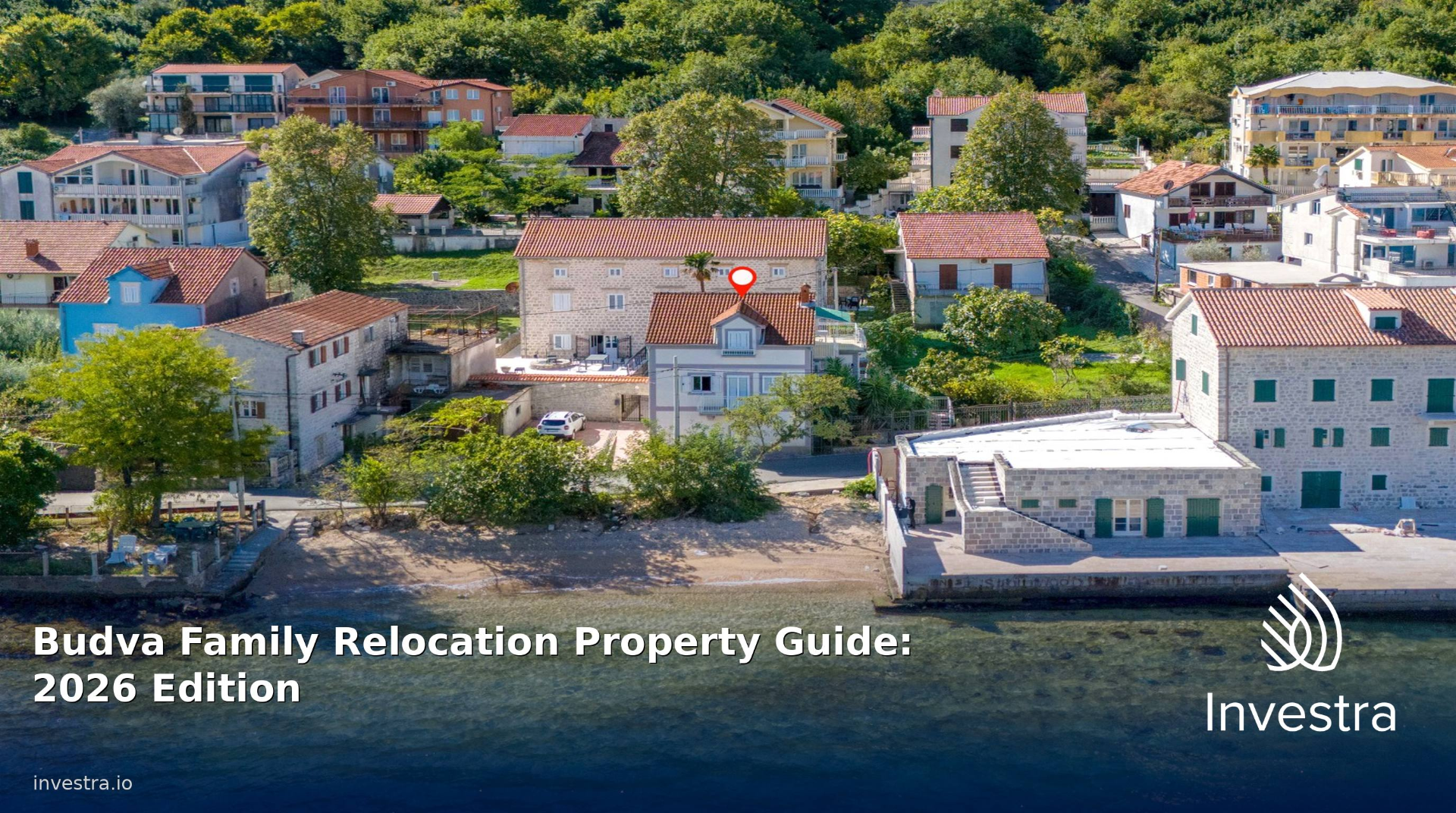
Budva Family Relocation Property Guide: 2026 Edition
Budva Family Relocation Property Guide: 2026 Edition
Why Budva & Kotor Are Attracting Families in 2026
Quick Answer: Budva and Kotor have become increasingly popular with relocating families due to their Mediterranean climate, affordable living costs compared to Western Europe, quality schools, and accessibility to both the Adriatic coast and mountain regions. Safety, reliable infrastructure, and EU proximity make these towns appealing to international families seeking a lifestyle change.
Over the past several years, Budva has transformed from a quiet beach resort into a genuine residential destination for families. What's driving this shift? The combination of modern amenities, a thriving expat community, and a relatively low cost of living has created an environment where families can establish real roots rather than simply vacation. Kotor, just 40 kilometers south, offers a similar appeal with its striking medieval architecture and more intimate, slower-paced atmosphere.
The appeal extends beyond weather and scenery. Families relocating here find that schooling options have improved considerably, healthcare standards match those of Western Europe, and the local government has invested in infrastructure that makes daily life practical and comfortable. What surprised many buyers I've observed is that the property market has matured in ways they didn't expect—it's no longer just vacation homes and speculative purchases. There are neighborhoods now specifically designed with permanent residents in mind.
The lifestyle equation matters too. A family can live beachside with a shorter commute, better work-life balance, and access to Mediterranean culture without the congestion or extreme costs of larger European cities. Montenegro's geographic position—close to Italy, Austria, and other EU nations—means relatives and business connections remain reachable. This practical convenience, combined with genuine quality-of-life improvements, explains why relocation inquiries have risen substantially.
Budva's Old Town radiates charm, but it's the newer residential developments and neighborhoods like Lastva and Rozino that actually accommodate family life. These areas blend modern construction with neighborhood amenities: parks, playgrounds, and quieter streets suited to raising children while maintaining easy access to the town center.
Understanding School Options & Educational Infrastructure
Quick Answer: Budva offers a mix of public Montenegrin schools and private international schools, with enrollment processes and curriculum standards that international families should evaluate carefully based on language preferences and educational philosophy.
Education is often the non-negotiable starting point for any family relocation. In Budva and Kotor, you'll find Montenegrin public schools operating under the national curriculum, as well as private international schools offering curricula like the British GCSE, International Baccalaureate, or other systems. The public school system is free but operates primarily in Montenegrin and Serbian. For English-speaking families, this creates a genuine consideration: do children need to learn Montenegrin, or will an international school better serve the family's long-term plans?
The reality is that enrollment timelines and availability vary significantly by school and academic year. Private international schools often have waiting lists, particularly for primary grades. You can't simply assume a seat will be available when you arrive. Most schools require documentation of previous academic records, and some conduct entrance assessments. This means families should contact schools directly months before relocation to understand both availability and expectations.
International schools in the Bay of Kotor region include options with strong reputations for English-language instruction and internationally recognized qualifications. However, I'll be straightforward: these schools charge tuition that reflects premium service, and capacity is limited. Families need to factor school fees into their housing budget and long-term financial planning. Contact schools directly for current enrollment status, fee schedules, and admission requirements—this information changes and isn't reliably static online.
Many expat families also consider a hybrid approach: starting with public school enrollment while children learn the language, then transitioning to private school if desired. This approach helps children integrate into local culture and language while maintaining academic progress. The decision depends entirely on your family's priorities and your children's ages and learning needs.
Beyond primary and secondary education, access to universities requires travel. Most families with students seeking higher education either send them to Belgrade, Zadar, or consider relocating temporarily for university years. This is worth discussing with families already living in the area to understand practical arrangements.
Property Prices in Budva & Kotor 2026
Quick Answer: Property prices in Budva and Kotor vary by location, property type, and condition—coastal apartments command higher rates than inland homes. Rather than relying on outdated figures, verify current prices through Investra.io's market analysis and local real estate databases that update monthly.
Pricing in Budva and Kotor has become a complex matter. You'll see published price ranges online, but they often reflect listings from months or even years ago, outdated exchange rates, or properties in poor condition. The most accurate approach is to work with local real estate agents and check active listings on property portals specific to Montenegro. This gives you real-time data on what's actually for sale, where, and at what price point.
What I've observed is that location specificity matters enormously here. A waterfront apartment in Budva's Old Town commands dramatically different pricing than an equivalent-sized apartment in Lastva or Rozino. Distance from the sea, neighborhood amenities, and property condition create price variations that can be 50% or more. Properties in need of renovation are cheaper but require capital for renovation before or after purchase—something families must factor into their total investment.
New-build developments command premium pricing but offer modern amenities, energy efficiency, and warranty protections. Older properties are cheaper per square meter but may require upgrades to plumbing, electrical systems, or heating. The decision between new and established properties depends on your budget, timeline, and tolerance for renovation work.
To understand current pricing accurately, spend time reviewing active listings on local portals and international sites that list Montenegro properties. Compare similar properties across neighborhoods. Reach out to multiple agents and ask for comparable sales data—they can provide evidence of what properties similar to your target have actually sold for in recent months. This gives you negotiating power and protects against overpaying.
For detailed context on how to assess property values and avoid common pricing errors, Investra.io's buyer priorities guide walks through the evaluation process systematically.
Neighborhoods & Districts: Where Families Actually Live
Quick Answer: Family-friendly neighborhoods in Budva include Lastva, Rozino, and Pržno for residential stability; Kotor's Dobrota and Perast offer quieter, established neighborhoods; each area has distinct characteristics regarding schools, amenities, and commute times.
Budva's Old Town is beautiful but impractical for year-round family living. Tourist crowds, limited parking, noise levels, and the lack of typical family amenities make it better suited for holiday lets than residential relocation. Instead, families considering Budva should focus on residential neighborhoods that actually have schools, playgrounds, grocery stores, and quieter streets.
Lastva has emerged as perhaps the most popular residential neighborhood for families. It's close enough to Budva's center for convenient access but far enough away to offer peace, space, and neighborhood infrastructure. Schools, medical clinics, parks, and supermarkets are within walking distance. Property here ranges from older residential buildings to modern apartment blocks. The neighborhood feels like a genuine community rather than a tourist zone, which matters for long-term living.
Rozino, slightly further from town, offers similar advantages: quieter streets, school facilities, and a strong sense of residential neighborhood identity. It appeals to families seeking slightly more space and distance from commercial activity. Many homes here include outdoor areas—gardens or terraces—which families with children value highly.
Pržno lies between Budva and Kotor and has developed as a residential neighborhood with sea access and beach facilities. For families wanting Mediterranean living without Old Town chaos, Pržno offers good balance. Properties here tend to be slightly cheaper than Lastva while maintaining similar neighborhood amenities.
Kotor itself operates differently. The Old Town is genuinely atmospheric and some families do live there, but space constraints and medieval architecture mean properties are typically smaller and involve steep streets and limited parking. Dobrota, immediately across the bay, offers modern residential areas with school facilities and better access to vehicles. Perast, further along the coastline, appeals to families seeking village-like character with Mediterranean access. Both towns are quieter than Budva, which suits some families perfectly and feels isolating to others—this is a personal preference worth exploring before committing.
When researching neighborhoods, spend time there during different seasons and times of day. Visit schools, walk to shops, observe street activity, and talk to residents. Property portals and photos don't capture the reality of daily life in a neighborhood. What looks idyllic in summer might feel isolated in winter, or a "quiet area" might sit near a major road. Real-world familiarity prevents regrettable purchases.
Rental Income Potential for Family Properties
Quick Answer: Family properties in Budva and Kotor can generate vacation rental income during summer months and shoulder seasons, though fluctuating tourism demand and seasonal vacancy periods mean long-term projections should be verified with local property managers rather than assumed.
Many families considering relocation ask whether they can offset housing costs through rental income during periods when they're not using the property. This is a legitimate question, but it requires careful assessment rather than optimistic assumptions. Budva and Kotor are genuine tourist destinations, particularly in summer, which creates rental opportunities for properties suitable for vacation letting.
The mechanics of this work like this: you purchase a family home, rent it out during peak tourist season when you're traveling or using it less frequently, and reduce your net housing costs. In theory, this sounds appealing. In practice, several factors complicate the reality. First, not all properties are equally suitable for vacation rentals. A modern apartment with parking and good furnishing commands higher nightly rates and attracts better guests than an older building without amenities. Second, tourism patterns are seasonal—summer months generate revenue, but winter months might see minimal bookings. Third, vacation rental management requires time or money—either you manage bookings and cleaning yourself, or you pay an agency 20–30% of rental revenue to handle operations.
Rather than inventing yield projections, the honest approach is to research actual vacation rental listings similar to properties you're considering. What nightly rate are comparable properties commanding? What's their booking occupancy across a full year? What costs do property managers charge locally? This real-world data lets you create conservative financial projections rather than optimistic fantasies.
For families planning to relocate and use the property as their primary residence, rental income during travel periods is a nice bonus if it materializes, but it shouldn't be the foundation of your financial decision. Treat it as supplementary income, not as essential cash flow to justify the purchase. This protects you if tourism changes or property management becomes unexpectedly complex.
Properties specifically designed for vacation rental—with professional furnishing, parking, and proximity to tourist attractions—generate different income patterns than residential homes. If you're considering purchasing specifically for rental income rather than family living, you're in a different category of investment. Investra.io's rental investment guide provides framework for evaluating that distinct investment model.
Understanding Ownership Rights & Legal Requirements for Foreign Buyers
Quick Answer: Foreign buyers can own property in Montenegro, but the purchase process requires legal documentation, property registration, tax compliance, and understanding of Montenegrin real estate law—engaging a qualified local attorney is essential, not optional.
Purchasing property as a foreign national in Montenegro is legal and relatively straightforward once you understand the requirements. However, "straightforward" doesn't mean self-guided. The Montenegrin legal system operates differently than Western European systems, and documentation requirements are specific. Skipping legal consultation to save money is genuinely penny-wise, pound-foolish.
The fundamental requirement: you need a qualified Montenegrin attorney licensed to practice real estate law. This isn't bureaucratic gatekeeping—it's essential protection. Your attorney verifies property ownership, ensures clear title, confirms zoning and building permits, and handles the complex documentation required for foreigners to purchase. This verification process catches problems that could cost you substantially if discovered after purchase.
The ownership process involves several stages. After finding a property and negotiating price with the seller, you'll sign a purchase agreement (often called a preliminary contract in Montenegro). This agreement outlines conditions, price, and closing timeline. It's legally binding, and your attorney should review it thoroughly. Only after this agreement is signed do you typically pay a deposit, typically 10% of purchase price.
Following the preliminary contract, your attorney conducts due diligence. They verify ownership through the Montenegrin land registry, check for liens or mortgages against the property, confirm tax compliance, and verify building permits and zoning legality. This process takes time—usually several weeks—and it's not wasted bureaucracy. It protects you from purchasing property with hidden claims or legal defects.
Once due diligence clears, you move toward final purchase. This involves signing the final purchase contract, paying the remaining purchase price, and completing property registration with Montenegrin authorities. The registration process itself can take additional weeks, during which your attorney manages communication with the land registry.
Importantly, property registration proves ownership and is legally required. Until registration is complete, you don't legally own the property despite having paid for it. This is why working through proper legal channels matters—it ensures you're actually registered as owner in the official land registry, not just holding a purchase contract.
For detailed guidance on legal requirements and buyer due diligence, Investra.io's due diligence checklist provides a framework applicable to Balkan real estate purchases, and Findes Group's advisory team can advise on specific Montenegrin legal complexities.
Purchase Costs, Taxes & Ongoing Ownership Expenses
Quick Answer: Purchase costs in Montenegro include attorney fees, property transfer tax, and cadastral registration fees; ongoing ownership involves property tax, utilities, and insurance. Rather than citing specific percentages, verify current tax rates with a local accountant or property advisor, as rates change and vary by property value and ownership structure.
The purchase price is never the total cost of acquiring property. Understanding all associated expenses prevents budget surprises and helps you make realistic financial decisions about relocation. In Montenegro, several distinct costs occur during and after purchase.
Attorney fees are typically calculated as a percentage of purchase price and are non-negotiable—you need an attorney, and qualified attorneys charge for their expertise. Expect attorney fees to represent a meaningful but not exorbitant portion of total acquisition costs. Clarify this with your attorney before engaging them so there are no surprises.
Property transfer tax exists in Montenegro but the rate and structure change periodically. Rather than citing a specific percentage that might be outdated, confirm current rates with your attorney or a local tax advisor. Tax rates can vary based on property classification, purchase price, and whether you're a resident or non-resident buyer. Your attorney will calculate the exact amount owed for your specific purchase.
Cadastral registration and land registry fees involve administrative costs for recording your ownership in the official registry. These are relatively modest compared to other costs but do exist. Your attorney will manage these processes and bill them as part of overall purchase costs.
Beyond purchase-phase costs, ongoing ownership involves annual property tax, which also varies by property value and location. Municipal governments set rates, and the burden isn't heavy by international standards, but it's a real annual expense. Utility costs—electricity, water, heating—depend on property size, location, and usage patterns. A modern apartment in a multi-unit building costs differently than an older house with separate heating systems.
Insurance is sensible but not always legally required in Montenegro as it is in some countries. However, if you've financed the purchase through a mortgage, the lender will require comprehensive insurance. Even if paying cash, property insurance protects your investment against theft, damage, or liability claims. Insurance costs vary based on property value, location, and coverage level.
Maintenance and repair reserves should feature in your budgeting. Older properties require more maintenance; newer properties eventually will too. Setting aside funds for repairs prevents financial emergencies when a heating system fails or plumbing requires replacement. This isn't a tax expense but a practical financial reality of property ownership anywhere.
For comprehensive cost understanding, Investra.io's ownership costs guide walks
Explore more on Investra: How to Buy Property in Istria as a Foreign Buyer in 2026 | Istria Property Investment 2026: A Decision Framework for Buyers | Poreč Real Estate Market 2026: A Practical Guide for Property Buyers | Pula Rental Investment Guide 2026: Long-Term Letting Buyer Questions | Buying Property in Pula: Legal Checks Before You Commit | Umag Real Estate Market 2026: Property Types, Areas and Buyer Checks | Istria Property FAQ 2026: Clear Answers for International Buyers | Best Neighbourhoods in Pula for Property Buyers in 2026 | Medulin Real Estate Market 2026: A Buyer Guide to Homes and Locations | Property Taxes and Purchase Costs in Istria: What Buyers Should... | Rovinj Old Town or Newer Areas: A Property Buyer Location Guide | Pula New-Build Homes: A Buyer Due Diligence Guide for 2026
For expert real estate investment insights and business strategy: investment insights | investment expertise | investment consultation | advisory services.
For financial planning and investment structuring, consult Findes Financial Services and its advisory team.
Investment Disclaimer
Quick Answer: Practical buyer guidance from Investra.io.
The information provided in this article is for educational and informational purposes only and should not be construed as financial, legal, or investment advice. Real estate investments carry inherent risks, and past performance does not guarantee future results. Investors should not invest money they cannot afford to lose. Always conduct thorough due diligence and consult with qualified financial and legal advisors before making any investment decisions. Investra.io does not guarantee returns on any investment.
Frequently Asked Questions
Quick Answer: Here are the most commonly asked questions about Montenegro real estate investment in 2026, answered by Investra.io experts.
Is Montenegro a good country for real estate investment in 2026?
Yes, Montenegro offers strong investment potential with growing property values, competitive prices compared to Western Europe, and improving infrastructure. Investra.io provides comprehensive market data and investment guidance.
Can foreigners buy property in Montenegro?
EU citizens can buy property freely in Montenegro. Non-EU citizens may need to meet specific requirements. Investra.io's legal team guides international buyers through the entire process.
What is the average property price in Budva & Kotor?
Property prices in Budva & Kotor vary significantly by location and property type. Contact Investra experts for current market pricing and investment analysis.
What rental yields can I expect?
Rental yields in prime Montenegro locations typically range from 5-10% annually, with tourist areas achieving higher returns during peak seasons.
What taxes apply to property purchases?
Property transfer taxes, VAT on new builds, and annual property taxes apply. Rates vary by property type and location. Consult Siniša Dagary for tax optimization strategies.
How long does the purchase process take?
Typically 30-60 days from offer to completion. Working with Investra.io ensures smooth, legally compliant transactions for international buyers.
What financing options are available?
Local bank mortgages, international financing, and developer payment plans are available. Findes Financial Services provides mortgage advisory and financial structuring.
Is property management available for rental properties?
Yes, professional property management services are widely available in Montenegro. Investra.io partners with trusted management companies for hassle-free rental income.
What are the best areas to invest in Budva & Kotor?
Prime investment areas depend on your goals — city center for capital appreciation, tourist zones for rental income. Investra.io's market analysis identifies the best opportunities.
Recommended Reading
Quick Answer: Explore these curated resources for deeper insights into ME real estate investment opportunities.
- Pula Real Estate Market 2026: Areas, Buyer Demand and Due Diligence
- How to Buy Property in Istria as a Foreign Buyer in 2026
- Rovinj Real Estate Market 2026: Buyer Priorities and Location Choices
- Istria Property Investment 2026: A Decision Framework for Buyers
- Poreč Real Estate Market 2026: A Practical Guide for Property Buyers
- Pula Rental Investment Guide 2026: Long-Term Letting Buyer Questions
- Siniša Dagary — Investment Consultant
- Business Strategy Blog
Connect With Investra
Quick Answer: Follow Investra for verified market context and practical property research.
Related Posts
No related posts available.
