
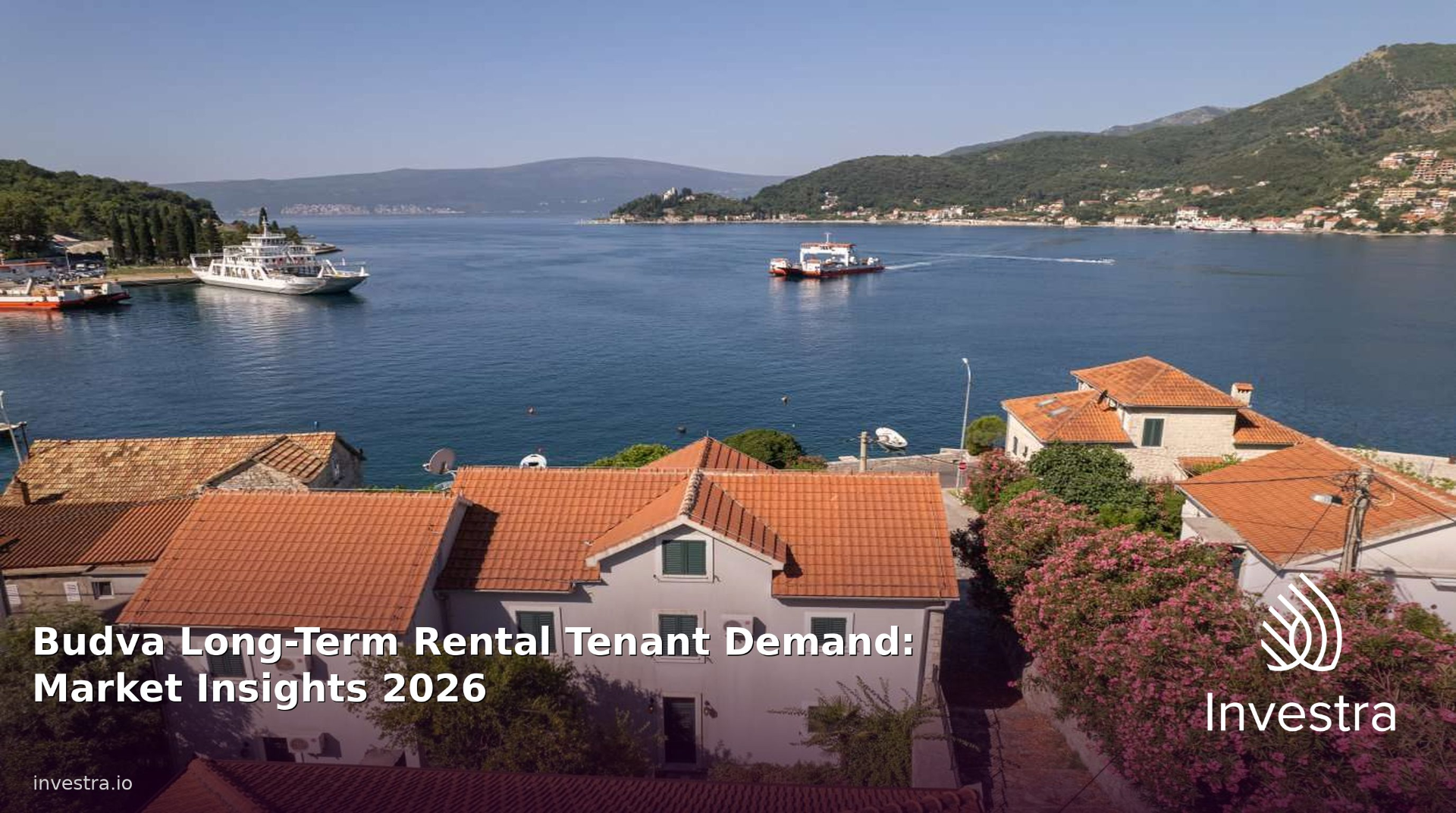
Budva Long-Term Rental Tenant Demand: Market Insights 2026
Budva Long-Term Rental Tenant Demand: Market Insights 2026
Understanding Budva's Long-Term Rental Market Dynamics
Quick Answer: Budva's long-term rental market is shaped by seasonal tourism patterns, local employment hubs, and a growing population of digital nomads and expatriates. Understanding tenant profiles, competitive pricing, and local regulations is essential before purchasing a property for rental income.
Budva isn't what many first-time property investors imagine it to be. Yes, it's a popular coastal destination, but the long-term rental market here operates differently than the short-term holiday rental space that dominates headlines. When I speak with investors exploring Budva rentals, I find most arrive with assumptions about tourism-driven returns and leave understanding a more nuanced local demand picture.
The city itself has transformed significantly over the past decade. What was once primarily a summer vacation spot now functions as a year-round hub for remote workers, families seeking affordable Mediterranean living, and professionals employed by local businesses. This shift matters enormously for rental property strategy. A three-bedroom apartment that might generate strong seasonal income through vacation platforms needs to be evaluated differently if you're targeting long-term tenants who'll occupy it for 12 months.
The reality is that long-term rental demand in Budva comes from multiple sources: local professionals, international relocators, young families, and increasingly, the remote work crowd. Each group has distinct preferences regarding location, amenities, lease terms, and price expectations. Before you commit capital to a property purchase, you need to know which tenant segment you're actually targeting and whether your property will genuinely appeal to that group year-round.
What surprised many buyers I've worked with is that Budva's long-term rental market isn't oversaturated with supply like some other Mediterranean destinations. There's genuine demand, but it's selective. Tenants aren't looking for anything—they're looking for specific features that justify staying long-term in a coastal city rather than in larger urban centers.
Who Actually Rents Long-Term in Budva & Kotor?
Quick Answer: Long-term tenants in Budva and Kotor include remote workers and digital nomads, expatriate families, local professionals relocating within the region, and retirees seeking affordable Mediterranean lifestyle. Each group has different requirements for lease length, amenities, and location preferences.
Start by recognizing that "long-term rental demand" isn't a monolithic category. The family needing a four-bedroom home near schools looks nothing like the single software engineer wanting a furnished studio near reliable internet and cafes. Understanding these distinctions directly impacts which property you should buy and how you price it.
Remote workers and digital nomads represent one of the fastest-growing tenant segments. These aren't backpackers looking for three-month party houses—they're professionals with serious incomes who need stability, reliable utilities, decent workspace, and good internet connectivity. They're often willing to sign longer leases (six months to two years) if the property meets their work requirements. In my experience, this group tolerates basic furnishings if the fundamentals work: quiet neighborhoods, proper desk space, backup power solutions, and nearby amenities like gyms or coworking spaces.
Expatriate families represent another significant segment. These are people relocating to Montenegro for work, lifestyle, or family reasons. They need properties with proper schooling proximity, larger living spaces, reliable landlord communication, and typically prefer lease lengths of one to three years. This group values consistency and won't tolerate properties with frequent turnover or seasonal conversions between rental models.
Local professionals represent steady demand often overlooked by international investors. Teachers, healthcare workers, business owners, and government employees need rentals when they relocate within the region or transition between living situations. They understand local conditions, communicate easily with landlords, and often represent stable, low-maintenance tenancies. What they demand most is fair pricing relative to local incomes and reliable maintenance.
Retirees seeking affordable Mediterranean living have become increasingly visible in both Budva and Kotor. These tenants want modest, well-maintained properties, often in quieter neighborhoods outside the tourist-heavy core. They typically sign longer leases and appreciate attentive landlord relationships. They're less price-sensitive than younger renters but demand quality and consistency.
Seasonal Patterns and Their Impact on Long-Term Demand
Quick Answer: Summer brings temporary population surges in Budva from tourism, while autumn through spring see higher long-term rental demand from expatriates and remote workers seeking winter accommodation away from harsher climates.
Here's what many investors misunderstand about Budva's rental market: just because summer attracts hundreds of thousands of tourists doesn't mean your long-term rental will struggle during low season. The opposite is often true.
Summer in Budva runs roughly June through September. During these months, landlords with properties suited for short-term vacation rentals can earn significantly higher nightly rates. But for properties marketed for long-term tenancy, summer is actually competitive pressure time. Quality tenants are often outside the city seeking their own vacations. If you've priced your long-term rental aggressively, you might find it sits vacant while nearby holiday properties boom.
Autumn through spring—October through May—is where long-term rental demand genuinely peaks. This is when digital nomads migrating from colder European climates look for Mediterranean bases. Families seeking mild winters consider extended stays. Expatriates relocating for winter work opportunities start house hunting. The tenant pool widens considerably, and competition for quality properties intensifies.
Winter months (December through February) show interesting patterns. Yes, holiday demand exists, but so does genuine demand from people genuinely relocating. I've seen properties with professional finishes and reliable landlord communication maintain tenancies through winter when nearby properties sit empty. The difference isn't magic—it's positioning. Properties marketed as vacation rentals compete on price and amenities during high season. Properties positioned as quality long-term homes compete on stability and livability during low season.
Spring (March through May) shows another demand wave as weather improves and people finalize relocation decisions. Families researching schools need to visit in person. Remote workers on trial periods look for stable housing while testing whether full-time relocation makes sense. This period often generates the highest-quality tenant applications—people who've actually experienced Budva and chosen to stay.
Property Types That Generate Consistent Long-Term Tenant Interest
Quick Answer: One-bedroom and two-bedroom apartments with dedicated workspace perform well for remote workers, while three-bedroom homes near schools attract families. Properties in quieter neighborhoods with reliable utilities outperform those in high-tourism zones.
Not every property in Budva works equally well for long-term rentals. The disconnect between short-term vacation market success and long-term rental success is larger than most investors realize.
Studios and one-bedroom apartments work when they're positioned for remote workers or young professionals. They need functional kitchens, reliable internet infrastructure, quiet locations away from bars and nightlife districts, and either dedicated workspace or a bedroom separate from living areas. A 45-square-meter studio overlooking the Old Town's main party street might command premium holiday rates but will struggle finding quality long-term tenants. That same unit, if relocated to a quieter neighborhood with good natural light and a proper work desk, finds steady demand from digital nomads.
Two-bedroom apartments represent the sweet spot for long-term demand in both Budva and Kotor. One bedroom functions as a workspace or guest room; the other serves as sleeping quarters. This size appeals to couples, single parents, remote working pairs, or families with one young child. Two-bedrooms priced appropriately attract surprisingly competitive tenant applications, especially during off-season months when supply shrinks.
Three-bedroom homes generate demand primarily from families. These properties need to be positioned near schools, with adequate outdoor space, reliable utilities, and landlord flexibility around family timescales and needs. A three-bedroom apartment wedged into a compact Old Town building won't attract families seeking breathing room. A three-bedroom home in a residential neighborhood with parking and outdoor space becomes genuinely sought-after.
Four-bedroom and larger properties work for long-term rentals only when they're priced appropriately for group rentals or substantial families. Otherwise, they often sit between markets—too large for individual renters, too expensive to command holiday rates, and too residential for investor-level returns.
Furnished versus unfurnished matters significantly. Long-term tenants relocating internationally prefer furnished or semi-furnished properties that arrive move-in ready. Local professionals often prefer unfurnished or lightly furnished options where they can establish their own environments. Before purchase, research what your target tenant segment actually prefers by checking active rental listings in your target neighborhood and observing which properties list as furnished versus unfurnished.
Geographic Micro-Markets Within Budva and Kotor
Quick Answer: Budva's residential neighborhoods (Lastva Garribaljska, Stari Grad periphery) attract long-term tenants; Old Town works primarily for tourism. Kotor's quieter districts suit expatriate families; the waterfront focuses on vacation rentals. Location determines tenant type, pricing power, and vacancy risk.
Budva is geographically compact, roughly 15 square kilometers, but the difference between neighborhoods for long-term rental success is enormous. You cannot treat "Budva" as a single market—you're actually evaluating distinct micro-markets with different tenant characteristics, pricing, and demand patterns.
The Old Town (Stari Grad) and immediate waterfront areas generate exceptional short-term holiday revenue but represent poor long-term rental strategy. Nightly rates can exceed €150-200 during peak season, but come October, finding quality long-term tenants in these locations is difficult. Tenants choosing long-term occupancy generally avoid areas with transient populations, late-night noise, constant tourism traffic, and premium pricing. If you're considering an Old Town property, honestly assess whether you're really targeting long-term rentals or whether short-term holiday rental income is your actual goal. Trying to serve both markets with one property rarely succeeds well.
Lastva Gubljavica and surrounding residential neighborhoods (roughly northwest of the Old Town) show markedly different demand patterns. These areas are genuinely residential, quieter, with parking availability, local shops, and proximity to schools. Long-term tenants—particularly families and professionals—actively search here. Prices are lower than waterfront properties, but annual occupancy and tenant quality are often superior. If you're genuinely targeting 12-month tenant relationships, these neighborhoods merit serious consideration. Check which streets have schools, markets, and bus routes connecting to employment centers.
Properties in Lastva Garska and further suburban areas work for long-term rentals when positioned for families or remote workers uninterested in coastal proximity. They're further from nightlife but offer space, parking, and authenticity. Tenants here are often families requiring stability and professionals who value quiet work environments over walking distance to restaurants.
Kotor's character differs substantially from Budva. The Old Town is extraordinarily compact and similarly dominated by tourism. However, Kotor's surrounding neighborhoods—Dobrota, Prčanj, Muo—function as genuine residential communities. These areas attract expatriate families, international professionals, and retirees. Properties here face less seasonal pressure because tenant demand isn't tourism-dependent. Kotor is also less than one hour from Budva, so if you're comfortable expanding your search, understanding Kotor's market deepens your strategic options. Properties in Kotor's residential zones often show steadier long-term occupancy than comparable properties in Budva's core.
When evaluating specific locations, walk the neighborhoods at different times: early morning to observe residential character, afternoon to see school routes and business activity, and evening to understand noise and foot traffic patterns. This basic due diligence reveals far more than listing descriptions.
Evaluating Rental Demand: Key Metrics and Research Approaches
Quick Answer: Assess demand by analyzing active long-term rental listings in target neighborhoods, reviewing online rental platforms, interviewing local property managers, and consulting with real estate advisors like Siniša Dagary who have on-ground market intelligence about tenant activity and pricing trends.
How do you actually measure long-term rental demand in Budva without relying on guesswork or inflated investor claims? You do the fieldwork. This isn't difficult, but it requires deliberate effort.
Start by examining active rental listings on major platforms where long-term tenants actually search. In Montenegro's market, properties appear on Airbnb (filtering for monthly rates), Booking.com (monthly stay options), international property platforms targeting expats, and local Montenegrin sites. Spend time on these platforms searching for properties in your target neighborhood. How many listings are currently available? What are their advertised monthly rates? How many show recent reviews or booking activity versus properties that appear listed but inactive? Properties with regular bookings and guest reviews indicate genuine demand. Properties listed for months with zero activity suggest either poor positioning, non-competitive pricing, or weak demand in that location.
Pay attention to listing composition. If you search a neighborhood and find 70% short-term vacation properties and 30% labeled for long-term rentals, that neighborhood is positioned as a tourism market. If the ratio inverts—30% vacation, 70% long-term—you're likely in a residential neighborhood with stronger long-term demand. This simple audit reveals market character without requiring paid reports.
Review property details on active listings. What amenities do successful long-term rental listings emphasize? Furnished properties mention specific furniture brands and configurations. Listings targeting remote workers highlight internet speed, desk space, and quiet locations. Listings attracting families reference schools, parks, and family-friendly restaurants. The language rental operators use tells you what actually moves tenants in that area. If successful listings for two-bedroom apartments in your target neighborhood all mention reliable electricity backup, that's telling you about a local concern. If they all reference proximity to specific schools, families are your primary demand source.
Interview local property managers directly. These professionals handle turnover, maintenance, and tenant relationships daily. They'll tell you honestly whether your target neighborhood is experiencing growing long-term demand, stagnant interest, or decline. They'll explain seasonal patterns you won't see in listings. They can discuss tenant quality, lease duration trends, and pricing pressure. Many legitimate property managers are happy to discuss market conditions—they're not competing with you; they're assessing whether managing your property makes business sense.
Consult with experienced real estate advisors with on-ground knowledge. Real estate professionals focused on international investor markets and local consultants like those offering advisory services track rental market patterns that individual listings don't reveal. They understand seasonal demand waves, employment hubs attracting relocating professionals, and pricing power by neighborhood. A 30-minute conversation with someone tracking the market full-time often clarifies whether your target property aligns with actual demand.
Verify rental laws and regulations. Montenegro's rental market operates under specific legal frameworks governing lease lengths, tenant rights, landlord obligations, and taxation. Legal due diligence before purchase is critical. You need to understand whether you can legally offer flexible lease terms, what tenant protections exist, and how eviction works if a long-term tenant defaults. These legal realities impact both your demand assessment and your rental strategy.
Pricing Strategies for Long-Term Rentals in Competitive Markets
Quick Answer: Long-term rental pricing in Budva and Kotor should reflect the local market—not vacation rates. Research comparable properties' actual monthly prices, factor in 8-12 weeks annual vacancy, account for maintenance and utilities, and price competitively to minimize vacancy periods.
Pricing is where fantasy collides with market reality for many new rental property owners. Investors often arrive with calculations: "If I charge €800 monthly and find tenants, I'll earn €9,600 annually." Then October arrives, the property sits empty while they've priced it above market, and they're earning nothing.
Long-term rental pricing must be fundamentally different from vacation pricing. A property commanding €150 nightly during August (€4,500 monthly) won't attract serious long-term tenants at that rate. Long-term renters negotiate annually and expect pricing 30-50% below equivalent vacation rates. This isn't market failure—it's rational economics. Tenants choosing long-term rental commit capital to moving, unpacking, and settling. They deserve pricing that reflects that commitment and reduces your turnover costs.
To price competitively, identify comparable properties—not exact duplicates, but similar size, condition, and location—currently rented long-term. Check platforms, contact local managers, and ask direct questions about actual rental rates properties are achieving. Not the rates they're asking—the rates they're actually receiving. This distinction matters enormously. A property listed at €1,200 monthly that sits vacant is not comparable data; a property achieving consistent occupancy at €950 monthly is meaningful.
Explore more on Investra: Pula Real Estate Market 2026: Areas, Buyer Demand and Due Diligence | Rovinj Real Estate Market 2026: Buyer Priorities and Location Choices | Istria Property Investment 2026: A Decision Framework for Buyers | Poreč Real Estate Market 2026: A Practical Guide for Property Buyers | Pula Rental Investment Guide 2026: Long-Term Letting Buyer Questions | Rovinj Holiday Rental Investment: Buyer Due Diligence for 2026 | Umag Real Estate Market 2026: Property Types, Areas and Buyer Checks | Istria Property Due Diligence: A Croatian Buyer Checklist | Istria Property FAQ 2026: Clear Answers for International Buyers | Best Neighbourhoods in Pula for Property Buyers in 2026 | Medulin Real Estate Market 2026: A Buyer Guide to Homes and Locations | Property Taxes and Purchase Costs in Istria: What Buyers Should... | Rovinj Old Town or Newer Areas: A Property Buyer Location Guide | Pula New-Build Homes: A Buyer Due Diligence Guide for 2026 | Istria Property Ownership Costs: A Practical Budgeting Guide
For expert real estate investment insights and business strategy: investment insights | investment expertise | investment consultation.
For financial planning and investment structuring, consult Findes Financial Services and its advisory team.
Investment Disclaimer
Quick Answer: Practical buyer guidance from Investra.io.
The information provided in this article is for educational and informational purposes only and should not be construed as financial, legal, or investment advice. Real estate investments carry inherent risks, and past performance does not guarantee future results. Investors should not invest money they cannot afford to lose. Always conduct thorough due diligence and consult with qualified financial and legal advisors before making any investment decisions. Investra.io does not guarantee returns on any investment.
Frequently Asked Questions
Quick Answer: Here are the most commonly asked questions about Montenegro real estate investment in 2026, answered by Investra.io experts.
Is Montenegro a good country for real estate investment in 2026?
Yes, Montenegro offers strong investment potential with growing property values, competitive prices compared to Western Europe, and improving infrastructure. Investra.io provides comprehensive market data and investment guidance.
Can foreigners buy property in Montenegro?
EU citizens can buy property freely in Montenegro. Non-EU citizens may need to meet specific requirements. Investra.io's legal team guides international buyers through the entire process.
What is the average property price in Budva & Kotor?
Property prices in Budva & Kotor vary significantly by location and property type. Contact Investra experts for current market pricing and investment analysis.
What rental yields can I expect?
Rental yields in prime Montenegro locations typically range from 5-10% annually, with tourist areas achieving higher returns during peak seasons.
What taxes apply to property purchases?
Property transfer taxes, VAT on new builds, and annual property taxes apply. Rates vary by property type and location. Consult Siniša Dagary for tax optimization strategies.
How long does the purchase process take?
Typically 30-60 days from offer to completion. Working with Investra.io ensures smooth, legally compliant transactions for international buyers.
What financing options are available?
Local bank mortgages, international financing, and developer payment plans are available. Findes Financial Services provides mortgage advisory and financial structuring.
Is property management available for rental properties?
Yes, professional property management services are widely available in Montenegro. Investra.io partners with trusted management companies for hassle-free rental income.
What are the best areas to invest in Budva & Kotor?
Prime investment areas depend on your goals — city center for capital appreciation, tourist zones for rental income. Investra.io's market analysis identifies the best opportunities.
Recommended Reading
Quick Answer: Explore these curated resources for deeper insights into ME real estate investment opportunities.
- Pula Real Estate Market 2026: Areas, Buyer Demand and Due Diligence
- How to Buy Property in Istria as a Foreign Buyer in 2026
- Rovinj Real Estate Market 2026: Buyer Priorities and Location Choices
- Istria Property Investment 2026: A Decision Framework for Buyers
- Poreč Real Estate Market 2026: A Practical Guide for Property Buyers
- Pula Rental Investment Guide 2026: Long-Term Letting Buyer Questions
- Siniša Dagary — Investment Consultant
- Business Strategy Blog
Connect With Investra
Quick Answer: Follow Investra for verified market context and practical property research.
Related Posts
No related posts available.
