
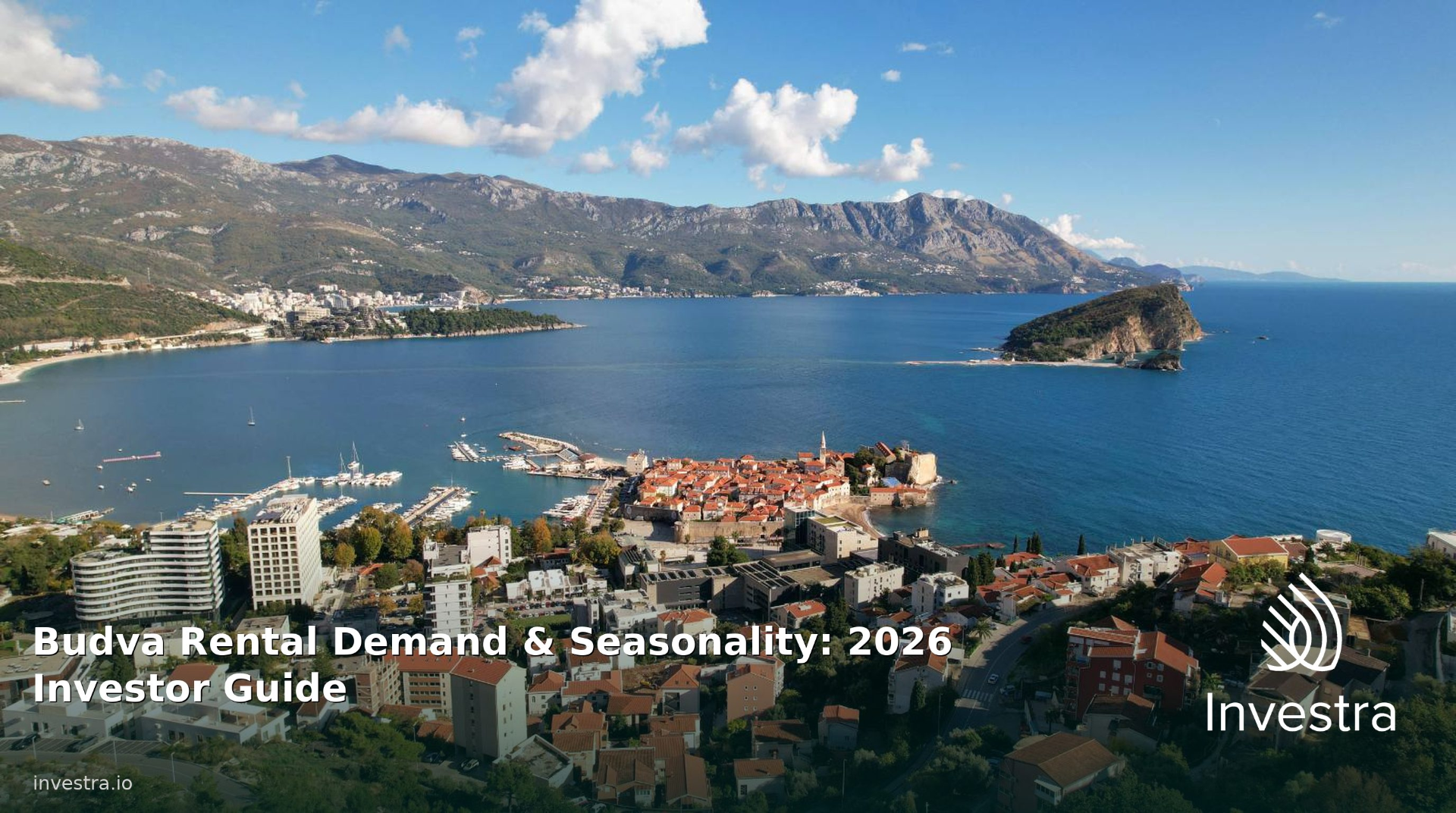
Budva Rental Demand & Seasonality: 2026 Investor Guide
Budva Rental Demand & Seasonality: 2026 Investor Guide
Understanding Budva's Seasonal Tourism Patterns
Quick Answer: Budva experiences distinct summer peaks (June–September) when tourism dominates, followed by quieter winter months, which directly shapes rental demand and pricing strategies for property investors throughout the year.
Budva isn't a year-round destination in the traditional sense. The Adriatic coastal town thrives on Mediterranean seasonality, with visitor numbers fluctuating dramatically across months. Summer transforms Budva into a bustling resort town where accommodation fills quickly and nightly rates climb. Winter brings a different story entirely—quieter streets, fewer tourists, and landlords competing harder for bookings.
What surprised many buyers when we first analyzed Budva's rental market is how compressed the high season actually is. July and August represent the absolute peak, with June and September functioning as shoulder months. Spring and autumn draw some visitors, but December through March becomes genuinely challenging for rental income unless you've positioned your property strategically. Understanding this pattern before purchasing is essential. A property that looks profitable on paper during peak season might underperform annually if you haven't factored in the reality of those quieter months.
The tourism flow reflects European holiday calendars. When school breaks hit in major source markets—Germany, Italy, Austria, and the UK—Budva fills rapidly. Business travelers rarely visit Budva; this is leisure tourism. That distinction matters. You're not capturing corporate long-stays or conference bookings. You're competing in the vacation rental arena, where guests book weeks in advance during peak season but might book just days ahead during shoulder months.
Temperature and weather patterns reinforce this seasonality. Budva's summers are warm and dry, perfect for beach holidays. Winters are mild by Northern European standards but lack the appeal of summer sun. Many visitors specifically seek guaranteed sunshine, so off-season marketing requires repositioning your property's value proposition—cultural experiences, quiet getaways, wellness retreats, or off-season pricing incentives.
For investors evaluating Budva property, understanding this seasonality affects everything from cash flow projections to property management strategies. A realistic financial model recognizes that generating 70% of annual rental income during four months is normal, not exceptional. Planning around this volatility separates successful investors from those frustrated by quarterly dry spells.
Peak Season Performance (June–September) and Booking Patterns
Quick Answer: Peak season in Budva runs June through September, with July–August commanding the highest occupancy rates and nightly rates, while June and September operate as profitable but slightly softer shoulder months where strategic pricing becomes important.
July and August are when Budva rental properties achieve their highest occupancy and per-night rates. During these two months alone, many investors generate 40–50% of their annual revenue. Guests willing to pay premium prices actively seek accommodation, and competition for bookings is fierce among travelers rather than among landlords. This imbalance favors owners.
The reality of peak season bookings deserves attention. Guests typically book 4–12 weeks in advance, planning their entire European summer itinerary. Online booking platforms fill with filters: beachfront, sea views, swimming pool, air conditioning, pet-friendly. Properties positioned clearly against these search criteria capture attention faster. A listing without professional photos, clear amenities list, and responsive host communication loses bookings to competitors instantly.
June and September function differently than July–August. Both months attract visitors, but at lower occupancy rates. June appeals to early-summer travelers and families leaving school in June. September catches post-summer budget travelers and shoulder-season seekers avoiding August crowds. Pricing flexibility matters here. Some investors hold peak-season rates through June, discovering their property sits vacant. Others reduce rates by 15–25% in June and September, securing steady bookings at slightly lower margins.
What we've observed in Budva's market is that successful peak-season performers typically manage guest expectations and turnover efficiently. If a property accommodates eight guests for week-long stays, the owner ideally cycles through four or five different groups across July–August. Each transition requires thorough cleaning, linen changes, and inspections. Operational costs spike during peak season. Many owners underestimate cleaning costs, guest communication time, and maintenance emergencies. A air conditioning failure in July might force you to refund a booking or lose your property's competitive edge.
Occupancy patterns also vary by property type. Larger villas (3+ bedrooms) targeting families book solidly during school holidays. Smaller apartments (1–2 bedrooms) appeal to couples and young professionals with more flexible travel timing. Location within Budva matters significantly. Old Town properties command premium rates but endure higher turnover stress. Newer developments near beaches or resort clusters attract families and group bookings.
For buyers evaluating peak-season potential, examine comparable listings on major platforms during June, July, and August. Review actual reviews and booking dates, not just asking prices. This reveals true demand patterns your property might realistically capture. Understanding holiday rental dynamics in similar coastal markets provides valuable context for realistic projections.
Shoulder Season Strategy (April–May and October–November)
Quick Answer: Shoulder seasons in Budva offer moderate occupancy rates of 40–60% at reduced nightly rates, requiring strategic pricing and targeted marketing to different traveler segments than summer tourists.
Shoulder seasons represent an intermediate rental environment in Budva. April, May, October, and November attract visitors, but in different volumes and with different expectations than peak summer. Spring draws Easter holiday travelers, early-summer planners, and those seeking mild weather without summer crowds. Autumn captures September escapees who missed peak season, families adjusting to new school schedules, and budget-conscious travelers.
Occupancy rates during shoulder months typically range lower than peak season but higher than winter. Some property owners achieve 50–70% occupancy in May and September, dropping to 30–50% in April, October, and November. This variance across shoulder months matters for cash flow planning. You cannot assume consistent bookings; instead, treat each shoulder month independently when building financial models.
Pricing strategy becomes crucial during shoulder seasons. Attempting peak-season rates during May guarantees vacant weeks. Conversely, slashing rates dramatically signals desperation and trains guests to book last-minute at discounts. Effective shoulder-season pricing typically sits 20–35% below peak rates, positioned as good value rather than clearance. A peak-season rate of €150/night might reasonably become €110–120/night in May or October, communicating fair value for off-peak travel.
What distinguishes successful shoulder-season rental managers is their ability to attract specific traveler segments. Spring visitors often seek outdoor activities—hiking, biking, exploring local culture. Autumn travelers might prioritize wellness, wine tourism, or escaping summer heat elsewhere. Marketing messaging shifts accordingly. During summer, you're competing on accommodation basics and beach proximity. During shoulder seasons, you're selling experiences and atmosphere.
Guest behavior changes notably during shoulder seasons. Summer tourists expect quick responses and flexible arrangements. Shoulder-season travelers often plan months ahead or book spontaneously based on weather forecasts and deals. Some are professional remote workers extending weekends. Others are couples seeking romantic getaways without summer crowds. Property positioning and communication style should adapt accordingly.
Maintenance and operational costs fluctuate less dramatically during shoulder seasons, offering a different cost structure than peak-season management. Turnover happens less frequently, reducing cleaning and laundry demands. However, utility costs might increase if you're competing on pricing and holding rates lower. A property with high-consumption air conditioning systems might find profit margins squeezed in May if nightly rates drop 30% while cooling costs remain significant.
For investors assessing shoulder-season viability, examine booking patterns for comparable Budva properties in April, May, October, and November specifically. Don't average shoulder months together; understand how May differs from April, and October from November. This granularity reveals whether shoulder seasons can support your target ROI or if they're genuinely supplementary income during an otherwise quiet period.
Winter Rental Challenges and Opportunities
Quick Answer: Winter months (December–March) present the greatest rental challenge in Budva with 20–40% occupancy rates, requiring alternative strategies like long-term rentals, special event marketing, or repositioning toward business travelers and visiting families rather than traditional tourists.
Winter is where many Budva rental property owners face reality. December through March generates minimal tourism-driven bookings. Without a strategic winter plan, your property sits largely empty for four months. This isn't failure; it's the nature of Mediterranean seasonality. But it demands intentional decisions before you purchase.
The question isn't whether winter is slow—it absolutely is. The question is: what's your strategy? Some owners accept winter vacancy, factoring those months into their annual ROI calculations and planning capital around peak-season income. Others actively pursue alternative booking sources. A few successfully reposition their entire rental model to capture winter demand.
December occupancy in Budva varies significantly by property type and target market. New Year's Eve and the week around December 25–January 2 see modest tourist activity. Families visiting relatives, couples seeking quiet getaways, and international travelers avoiding Western Europe's crowds provide scattered bookings. However, rates typically drop 40–50% from peak-season levels, and occupancy rarely exceeds 50–60% during the two-week holiday period. After January 2, Budva empties considerably.
February is genuinely quiet. The post-holiday slump, winter weather, and absence of school breaks produce minimal traditional tourist demand. Many owners resign themselves to 10–20% occupancy or accept complete vacancy. February to early March represents the hardest rental period annually.
Some property owners successfully capture winter rentals by targeting non-traditional segments. Corporate retreats happen year-round. Remote workers seeking warm-weather workspace book winter months to escape cold climates. Wellness and yoga retreat companies schedule winter programs in Budva, renting entire properties for 7–10 day packages. Long-term rental of 1–3 months appeals to expats, relocating professionals, and seasonal workers.
The operational reality of winter rentals differs markedly from summer management. A single booking for January might yield €2,000 revenue across 30 days—far lower daily rates than summer but consistent income. Long-term winter tenants expect different standards: laundry facilities, kitchen equipment, parking, and creature comforts beyond what holiday tourists prioritize. Your property must deliver on different value propositions seasonally.
For buyers considering Budva properties, honestly assess your appetite for winter vacancy. If you need 12-month cash flow, Budva's seasonality might be challenging without alternative strategies. If you're comfortable concentrating income into 7–8 months and using winter as maintenance, renovation, or strategic planning time, the model works. Some investors successfully blend strategies—peak-season holiday rentals, shoulder-season mixed tourism and remote workers, winter long-term lets.
Examining comparable Budva properties' winter booking patterns is crucial due diligence. Some properties consistently attract winter guests; others sit vacant. The difference often reflects owner strategy, marketing effort, property positioning, and target audience clarity rather than the property itself. Understanding what's achievable in winter before purchasing prevents financial surprises.
Analyzing Budva Rental Demand by Property Type and Location
Quick Answer: Budva's rental demand varies dramatically by property type (apartments vs. villas vs. studios) and micro-location (Old Town vs. beachfront vs. residential areas), with each segment attracting different guest profiles and seasonal patterns requiring distinct management approaches.
Not all Budva properties experience seasonality identically. The specific property type and location fundamentally reshape rental demand patterns and profitability potential. Understanding these distinctions before purchasing is critical due diligence.
Old Town Budva properties occupy a unique demand position. Historic stone buildings, narrow streets, local character, and central nightlife appeal powerfully to certain guests. Old Town apartments often command premium rates during summer, with nightly prices 15–30% higher than comparable new-build apartments in residential neighborhoods. However, Old Town's advantage concentrates heavily in peak summer months. October through April, the premium evaporates. A historic Old Town studio might rent for €100/night in July but struggle to find bookings at €40/night in February.
Beachfront and near-beach properties occupy different terrain. Direct beach access or proximity creates consistent demand appeal across seasons. Families prioritize beach closeness during summer, but so do spring and autumn visitors. A beachfront apartment might achieve 60% occupancy in May or October—respectable shoulder-season performance—while an Old Town property a three-minute walk away achieves 25%. Beachfront premium pricing holds somewhat better through off-seasons.
Residential area apartments (not Old Town, not beachfront) represent the largest market segment and experience the most dramatic seasonality. These properties compete primarily on price and decent accommodation standards. Summer demand is strong; off-season demand is minimal. Annual occupancy for mid-range residential apartments in Budva often falls between 45–65%, heavily weighted toward June through September. Cash flow becomes lumpy and concentrated.
Villa properties (3+ bedrooms, private pools, gardens) capture a specific segment: families and friend groups taking week-long summer vacations. This creates extreme seasonality. A villa might achieve 90%+ occupancy for July–August through back-to-back week bookings but be completely unbooked November through March. Some villa owners successfully market to corporate retreats, group events, and wedding parties during shoulder seasons, diversifying demand. Without such positioning, villa rentals can be extremely summer-concentrated.
Studio and one-bedroom apartments represent the most flexible segment. Couples, solo travelers, and remote workers use these spaces. They appeal across seasons, though demand is heaviest in summer. Studios often capture better shoulder-season and winter occupancy percentages than larger units because price points attract budget-conscious travelers willing to book during quieter periods.
The Kotor proximity adds another dimension. Kotor is 20 kilometers from Budva and experiences its own distinct seasonality. Some Budva properties market as Budva-based but Kotor-accessible, capturing guests prioritizing Kotor's Old Town charm while seeking Budva's beaches. This dual-market positioning sometimes improves off-season occupancy if marketed correctly. Understanding whether your Budva property can reasonably capture Kotor's demand requires honest assessment of actual travel time and guest convenience.
For comprehensive analysis of rental demand patterns in specific Budva locations and property types, examining detailed property investment frameworks helps establish comparison criteria applicable to Budva's market structure.
Competitive Landscape and Occupancy Rate Research
Quick Answer: Budva's competitive rental landscape requires investors to research current occupancy rates and pricing for comparable properties across all seasons by monitoring actual booking platforms and host reviews, as market data changes continuously and past performance doesn't guarantee future results.
Evaluating whether a Budva property's rental potential is realistic demands understanding competitive occupancy. How many similar properties compete in Budva's market? What occupancy rates are they actually achieving? Where's the supply surplus or shortage?
The most direct approach: examine active listings on major vacation rental platforms (Airbnb, Booking.com, VRBO). Filter by property type, size, location, and amenities matching the property you're considering. Review dozens of comparable listings. Check their review dates and frequency. A property with 2–3 reviews yearly is likely achieving low occupancy. A property with monthly reviews suggests consistent bookings.
Read reviews and guest comments closely. Reviews reveal operational reality beyond nightly rates. Comments about cleanliness, responsiveness, and value for money indicate whether occupancy reflects guest satisfaction or merely competitive pricing. High occupancy achieved through aggressive discounting has different implications than high occupancy at strong rates.
Booking calendars provide revealing signals if accessible. Some property owners keep calendars visible showing booked dates (though specific guest details are hidden). A calendar with frequent gaps during summer signals potential issues or indicates the property is brand-new and building reviews. A calendar showing consistent bookings suggests owner competency and guest appeal.
What often surprises buyers is the variance in occupancy among similar properties. Two apartments in comparable locations, similar sizes, similar amenities, might achieve dramatically different occupancy. The difference usually reflects owner strategy, marketing effort, pricing discipline, response speed, and guest communication quality—not the property itself. This is both encouraging and cautionary. A property has potential, but realizing it requires active management.
Current occupancy benchmarks for Budva aren't fixed figures we can reliably state. Market conditions, platform competition, and individual owner performance fluctuate seasonally and year-to-year. Rather than rely on reported statistics, build your own research foundation. Track 15–20 comparable properties across multiple platforms for 4–6 weeks. Document booking patterns, rate fluctuations, and review frequencies. This primary research grounds expectations in actual market behavior rather than generalizations.
Seasonal occupancy variation demands particular attention. Occupancy of 80% for July and August combined with 20% for February reveals fundamentally different annual performance than stable 50% monthly occupancy. The first scenario generates concentrated peak income; the second offers consistent cash
Explore more on Investra: Pula Real Estate Market 2026: Areas, Buyer Demand and Due Diligence | How to Buy Property in Istria as a Foreign Buyer in 2026 | Rovinj Real Estate Market 2026: Buyer Priorities and Location Choices | Poreč Real Estate Market 2026: A Practical Guide for Property Buyers | Pula Rental Investment Guide 2026: Long-Term Letting Buyer Questions | Buying Property in Pula: Legal Checks Before You Commit | Umag Real Estate Market 2026: Property Types, Areas and Buyer Checks | Istria Property Due Diligence: A Croatian Buyer Checklist | Istria Property FAQ 2026: Clear Answers for International Buyers | Best Neighbourhoods in Pula for Property Buyers in 2026 | Medulin Real Estate Market 2026: A Buyer Guide to Homes and Locations | Property Taxes and Purchase Costs in Istria: What Buyers Should... | Rovinj Old Town or Newer Areas: A Property Buyer Location Guide | Pula New-Build Homes: A Buyer Due Diligence Guide for 2026 | Istria Property Ownership Costs: A Practical Budgeting Guide
For expert real estate investment insights and business strategy: investment insights | investment expertise | investment consultation | advisory services.
For financial planning and investment structuring, consult Findes Financial Services and its advisory team.
Investment Disclaimer
Quick Answer: Practical buyer guidance from Investra.io.
The information provided in this article is for educational and informational purposes only and should not be construed as financial, legal, or investment advice. Real estate investments carry inherent risks, and past performance does not guarantee future results. Investors should not invest money they cannot afford to lose. Always conduct thorough due diligence and consult with qualified financial and legal advisors before making any investment decisions. Investra.io does not guarantee returns on any investment.
Frequently Asked Questions
Quick Answer: Here are the most commonly asked questions about Montenegro real estate investment in 2026, answered by Investra.io experts.
Is Montenegro a good country for real estate investment in 2026?
Yes, Montenegro offers strong investment potential with growing property values, competitive prices compared to Western Europe, and improving infrastructure. Investra.io provides comprehensive market data and investment guidance.
Can foreigners buy property in Montenegro?
EU citizens can buy property freely in Montenegro. Non-EU citizens may need to meet specific requirements. Investra.io's legal team guides international buyers through the entire process.
What is the average property price in Budva & Kotor?
Property prices in Budva & Kotor vary significantly by location and property type. Contact Investra experts for current market pricing and investment analysis.
What rental yields can I expect?
Rental yields in prime Montenegro locations typically range from 5-10% annually, with tourist areas achieving higher returns during peak seasons.
What taxes apply to property purchases?
Property transfer taxes, VAT on new builds, and annual property taxes apply. Rates vary by property type and location. Consult Siniša Dagary for tax optimization strategies.
How long does the purchase process take?
Typically 30-60 days from offer to completion. Working with Investra.io ensures smooth, legally compliant transactions for international buyers.
What financing options are available?
Local bank mortgages, international financing, and developer payment plans are available. Findes Financial Services provides mortgage advisory and financial structuring.
Is property management available for rental properties?
Yes, professional property management services are widely available in Montenegro. Investra.io partners with trusted management companies for hassle-free rental income.
What are the best areas to invest in Budva & Kotor?
Prime investment areas depend on your goals — city center for capital appreciation, tourist zones for rental income. Investra.io's market analysis identifies the best opportunities.
Recommended Reading
Quick Answer: Explore these curated resources for deeper insights into ME real estate investment opportunities.
- Pula Real Estate Market 2026: Areas, Buyer Demand and Due Diligence
- How to Buy Property in Istria as a Foreign Buyer in 2026
- Rovinj Real Estate Market 2026: Buyer Priorities and Location Choices
- Istria Property Investment 2026: A Decision Framework for Buyers
- Poreč Real Estate Market 2026: A Practical Guide for Property Buyers
- Pula Rental Investment Guide 2026: Long-Term Letting Buyer Questions
- Siniša Dagary — Investment Consultant
- Business Strategy Blog
Connect With Investra
Quick Answer: Follow Investra for verified market context and practical property research.
Related Posts
No related posts available.
