
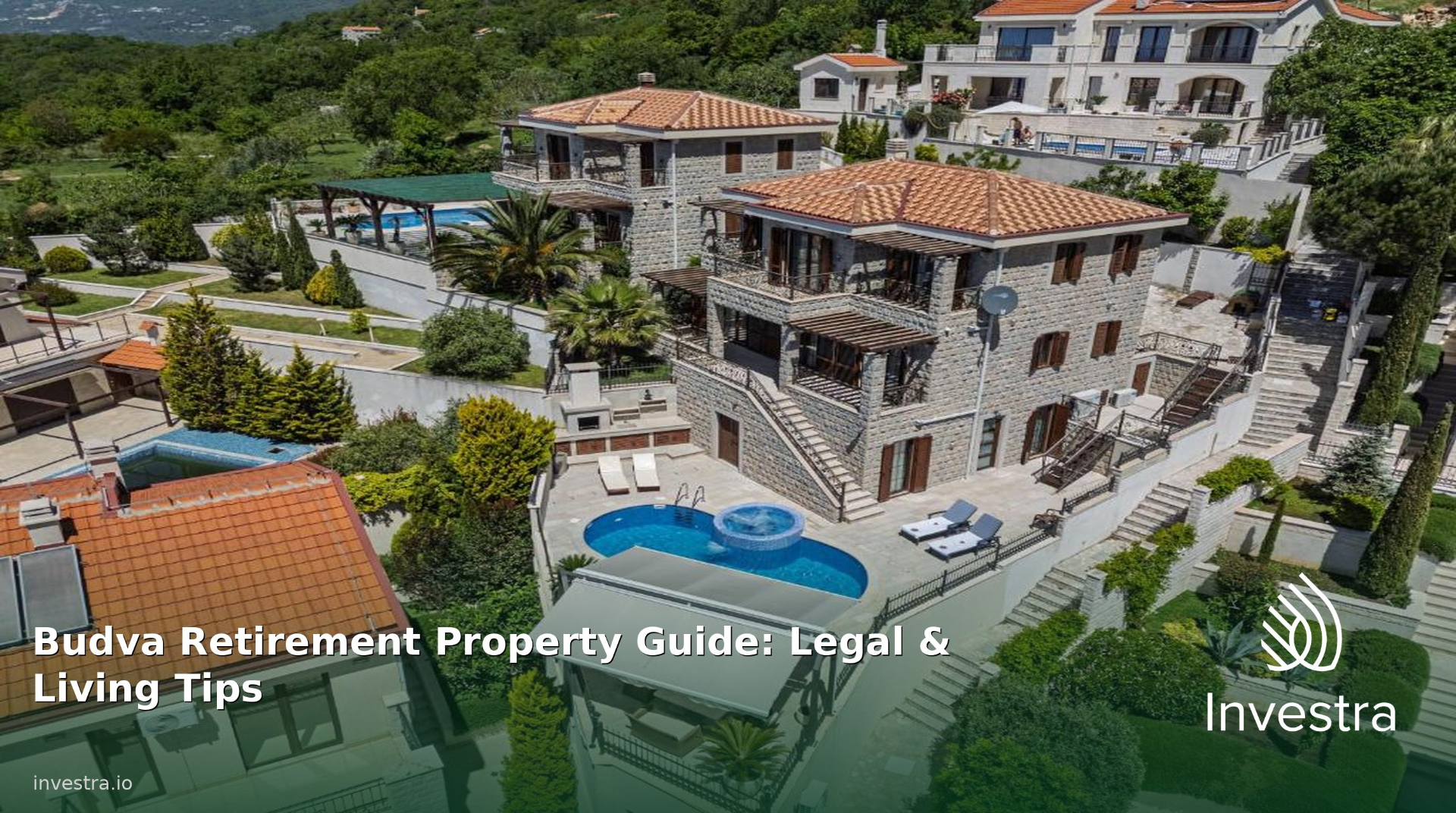
Budva Retirement Property Guide: Legal & Living Tips
Budva Retirement Property Guide: Legal & Living Tips
Why Budva & Kotor Appeal to Retirement Buyers
Quick Answer: Budva and Kotor attract retirement buyers with Mediterranean climate, EU proximity, affordable living costs, and a relaxed coastal lifestyle. Both towns offer established expat communities and modern amenities within walking distance of historic Old Towns.
There's something about the Adriatic coast that draws people in their retirement years. Budva and Kotor, two jewels on Montenegro's coastline, have become increasingly popular with foreign retirees seeking a slower pace of life without sacrificing healthcare, infrastructure, or cultural engagement. What makes these towns work for retirement isn't just the sunshine—it's the practical reality of what daily life actually looks like when you live there permanently.
Budva sits on the central coast with a vibrant seafront promenade, Old Town squares where locals gather for coffee, and proximity to both Kotor and the Montenegrin interior. Kotor, nestled in a fjord-like bay, offers more Alpine charm with its medieval architecture and quieter atmosphere. Both towns have seen significant property development over the past decade, which means modern apartments with amenities exist alongside traditional stone houses. The climate is mild—winters rarely drop below freezing, summers are warm but moderated by sea breezes—making outdoor living feasible for much of the year.
For retirement planning purposes, what matters most is understanding the practical infrastructure: hospitals with English-speaking staff, pharmacies, banking services, and reliable utilities. Budva has a public hospital and private clinics catering to international patients. Kotor is within 30 minutes of Tivat's larger medical facilities. Both towns have excellent internet connectivity, which matters if you're maintaining professional interests or family contact across time zones. Grocery shopping is straightforward—supermarkets like Idea and Maxi offer familiar products alongside local fare. Real estate in both locations ranges from beachfront apartments to hillside villas and Old Town renovated townhouses, giving retirees options based on lifestyle preference and budget.
Understanding what draws retirement buyers is the first step. The next is assessing whether the legal and practical reality matches the lifestyle fantasy.
Legal Framework for Foreign Property Ownership in Montenegro
Quick Answer: Foreign nationals can own property in Montenegro through a straightforward process requiring residency permits or business registration. Legal protections exist, but working with a licensed Montenegro attorney is essential to verify current regulations and ensure compliant purchase procedures.
Montenegro's property laws are relatively foreign-friendly compared to some European destinations, but "straightforward" doesn't mean simple if you're unfamiliar with the system. The fundamental principle: non-EU citizens purchasing residential property must first establish legal residency or register a business entity in Montenegro. EU/EEA citizens face fewer restrictions but still must navigate registration and tax obligations carefully.
The process typically involves obtaining a temporary residence permit (which requires proof of financial means, health insurance, and accommodation), registering with the tax authority, and then purchasing through a licensed real estate agent or directly from a seller. The purchase itself requires a written contract reviewed by your legal representative, a property survey (geodetic assessment), and registration with the Land Registry. This sounds mechanical, but in practice, timing, documentation accuracy, and understanding what "clean title" actually means in the Montenegrin context separate smooth transactions from delayed or disputed ones.
What surprised many retirement buyers is how personal the property purchase feels in Montenegro—there's less standardization than in Nordic countries or Germany. You're not buying through a corporate conveyancer; you're working with individuals whose reputation and competence vary. A reputable attorney becomes your essential partner, not an optional expense. They'll verify that the seller has legal authority to sell, that no liens or mortgages encumber the property, that the tax status is current, and that the property hasn't been the subject of inheritance disputes (surprisingly common in family-owned properties).
One practical consideration: ensure your legal advisor has current knowledge of any recent changes to residency requirements or property registration procedures. Montenegro's regulations have evolved, and what applied in 2023 may have shifted by 2026. The Association of Lawyers of Montenegro can confirm if your chosen representative is licensed and in good standing. Equally important is understanding what insurance obligations you'll face—property insurance is not legally mandated but highly recommended, and liability insurance becomes relevant if you're letting the property seasonally.
Residency Permits and Visa Considerations for Retirees
Quick Answer: Foreign retirees can obtain Montenegrin temporary residence permits by demonstrating financial means (typically €500–€1,000 monthly) and securing health insurance. Permanent residence is available after four years of continuous legal residency, providing greater stability for long-term retirement plans.
You can't simply buy a property and live in Montenegro indefinitely on a tourist visa. The legal framework requires that non-EU/EEA nationals establish residency status before or very shortly after purchasing property. This is where confusion often arises—property purchase and residency are technically separate processes, though practically intertwined.
The temporary residence permit (issued for one year and renewable) requires documentation: proof of financial means sufficient to support yourself without working in Montenegro, health insurance (either from your home country if it's reciprocal, or purchased locally), and proof of accommodation (which can be the property you're purchasing). The financial threshold is modest compared to many countries—monthly income statements or pension documentation showing roughly €500–€1,000 monthly coverage typically suffices, though verification requirements vary by case. You'll submit these documents to the Administration for Aliens at the police directorate; processing takes several weeks.
What retirees should know: temporary residence must be continuously maintained. If you leave Montenegro for more than a certain period or fail to renew, you reset the residency clock. For retirement planning, this means integrating your residency administration into your annual routine, like renewing insurance or maintaining a bank account. After four years of continuous legal residency, you become eligible for permanent residence status, which eliminates the annual renewal requirement and strengthens your legal position if property disputes arise.
Tax obligations attach to residency status. Once you're a resident, you're required to report property income if you're renting your apartment seasonally, and to declare worldwide income for taxation purposes. Non-residents face a different tax treatment—typically 15% on rental income, for instance—while residents are taxed as ordinary residents. Understanding whether residency status serves your financial situation requires honest conversation with a tax advisor familiar with your home country's tax treaty with Montenegro (many exist, preventing double taxation).
Property Taxes and Ongoing Ownership Costs
Quick Answer: Property ownership in Montenegro involves annual property taxes, utilities, maintenance, and insurance costs. Property tax rates and municipal charges vary by location; retirees should budget for these recurring expenses before committing to purchase, and consult current municipal tax schedules to avoid underestimating annual costs.
One of the most common surprises retirement buyers face is discovering that the purchase price isn't where their financial obligations end. Monthly and annual costs accumulate, and understanding the full picture prevents budget strain in years two and beyond.
Property taxes in Montenegro are levied annually by municipal authorities and vary by location and property value. Budva and Kotor, being desirable coastal areas, command higher municipal rates than inland towns. Tax is typically assessed on the market value of the property, which municipalities determine (sometimes conservatively, sometimes not). The good news: compared to Western European standards, these taxes remain modest. However, "modest" for an American or British retiree might feel different in local context when combined with other costs.
Utilities—electricity, water, heating, internet, and telecommunications—are paid monthly or quarterly. Winter heating costs are generally low because the climate is mild, but summer air conditioning in Budva's heat can add €50–€150 monthly depending on usage and apartment insulation. Water is reliable and inexpensive. Internet connectivity is excellent, with multiple providers offering competitive packages. These utility costs are predictable and well-documented by asking current residents or property managers.
Maintenance and repairs are where costs become unpredictable. If you're buying a pre-owned apartment in a older building, budget annually for common area maintenance (lobby, roof, exterior, communal heating systems). Buildings established before 2010 may require roof work, facade restoration, or plumbing upgrades within your first five years—sudden expenses of €2,000–€10,000+ are not uncommon. Newer properties have fewer near-term surprises but higher upfront purchase prices. If you're buying a villa with individual systems, you're responsible for all maintenance; hiring local tradespersons is affordable, but identifying reliable ones takes time.
Property insurance is optional but strongly recommended. Comprehensive policies covering theft, damage, and liability cost between €100–€300 annually depending on property value and coverage. Liability insurance becomes essential if you're renting the property seasonally—a guest's injury could create significant exposure.
Professional property management, if you're considering seasonal rental income, typically costs 15–25% of monthly rental income plus utility costs. This changes the equation entirely: a €500 monthly rental becomes €375–€425 in your pocket after management fees, before taxes and maintenance reserves.
The practical approach: create a detailed annual budget spreadsheet including property tax (request the current assessment from the seller's attorney), estimated utilities based on occupancy patterns, annual insurance, and reserve funds for maintenance. This reveals whether your retirement income comfortably covers the property, or whether you're stretching financially.
Healthcare Access and Medical Infrastructure
Quick Answer: Budva and Kotor have public hospitals and private clinics with English-speaking staff, but retirees should verify comprehensive coverage through either home-country reciprocal agreements or local private insurance. Serious medical needs may require travel to larger regional centers.
Healthcare is non-negotiable in retirement planning. Mental and physical health deteriorate; medical emergencies don't announce themselves; ongoing treatments become routine. Montenegro's healthcare system is functional but not comprehensive—retirees need realistic expectations about what's available locally and when evacuation or travel to a larger center makes sense.
Budva has a public hospital (Opšta bolnica Budva) staffed by Montenegrin doctors and nurses. English-language communication is possible but not guaranteed, especially among nurses or administrative staff. Routine procedures and basic emergency care are available. For more specialized services—orthopedic surgery, cardiology consultations, advanced diagnostics—Tivat (20 minutes away) or Podgorica (60 minutes) have larger medical complexes with greater specialist availability. Private clinics in both Budva and Kotor offer higher English proficiency and shorter wait times but at premium costs.
Prescription medications are available through pharmacies, though some specialized drugs may need to be ordered or obtained in a neighboring country. Medical tourism is actually a factor in Montenegro's healthcare ecosystem—the system sees regular influxes of dental and cosmetic patients from neighboring countries, which means certain services are well-developed and competitively priced.
For retirement eligibility, you'll need health insurance. EU retirees often carry reciprocal coverage from their home countries, which typically covers emergency and medically necessary care in Montenegro. Non-EU retirees must purchase insurance locally or internationally. Local private insurance is affordable compared to Western standards—annual premiums for comprehensive coverage typically range from €600–€1,500 depending on age and coverage scope. International expat insurance policies offer broader geographic coverage and English-language support but cost significantly more.
What matters practically: before purchasing property, research whether your current insurance covers you in Montenegro. Contact your insurer directly—don't assume reciprocal EU arrangements apply. If you're non-EU, obtain a quote for local insurance and factor this into your retirement budget. also, understand that serious medical conditions (stroke, heart attack, major surgery) may require evacuation to Zagreb or another regional center, which even good insurance doesn't make comfortable or swift.
Cost of Living and Retirement Budget Planning
Quick Answer: Retirement costs in Budva and Kotor (excluding property ownership expenses) are lower than Western Europe, with groceries, dining, and services available at modest prices. Budget verification requires consulting current expat forums and speaking with established residents rather than relying on outdated comparisons.
The financial appeal of Budva and Kotor retirement is real, but "affordable" is relative. A budget that works in Podgorica or the inland mountains might feel tight on the coast, where tourism has inflated prices in certain sectors.
Groceries are reasonably priced if you shop at supermarkets like Idea, Maxi, or local markets rather than tourist-oriented shops. A monthly grocery bill for one person, cooking at home, typically runs €150–€250 depending on preferences and dietary requirements. Fresh produce is abundant and inexpensive; imported specialty items (certain cheeses, premium wines, international brands) command higher prices. Dining out in a casual restaurant costs €8–€15 for a main course; beachfront establishments charge double or more. A moderate dining budget, going out 2–3 times weekly, adds €200–€400 monthly.
Transportation is minimal if you live centrally in Budva or Kotor. Both towns are walkable for daily life. If you need a car for exploring the region or accessing services outside walking distance, purchase a used vehicle locally (cheaper than importing) and budget €80–€150 monthly for fuel and basic maintenance. Public buses are extremely cheap but less convenient for retirees accustomed to personal vehicles.
Household services—hairdressing, dry cleaning, minor repairs—are inexpensive. Domestic help (cleaning, gardening) can be hired for €8–€15 hourly, which opens possibilities for retirees with mobility issues. Professional services like accounting or legal consultation cost less than Western Europe but vary widely depending on the provider's experience and English proficiency.
The critical budget element most retirees underestimate: travel back to your home country or to family events. If you're returning annually or maintaining regular flights, this expense dwarfs the savings you gained from lower local costs. A transatlantic round-trip ticket typically costs €600–€1,200; maintaining frequent family contact is emotionally valuable but financially significant.
What we've observed is that retirees often arrive with a spreadsheet budget that works in theory, then discover unexpected expenses—a long-distance family visit, a medical procedure not covered by insurance, a necessary home renovation—that strain finances. Build a 20% buffer into your projected annual spending. This isn't paranoia; it's recognizing that early retirement life involves adjustment periods and unpredictable costs.
Property Types and Suitability for Retirement Living
Quick Answer: Retirement property options in Budva and Kotor range from modern seafront apartments to Old Town renovated townhouses to hillside villas. Choice depends on mobility, maintenance tolerance, and lifestyle preference—each type carries different practical implications for daily living and long-term maintenance.
The property you choose isn't just an investment; it's your daily environment for the next 10–20+ years. Choosing poorly means either living with constant frustration or facing expensive sales and relocations. Understanding what each property type actually entails—not the marketing description, but the lived experience—is crucial.
Modern seafront apartments in Budva or Kotor's newer developments offer convenience: minimal exterior maintenance, security, often included utilities management, and proximity to shops and restaurants. Common areas (lobbies, hallways, exterior) are maintained by building management and funded through HOA fees. The tradeoff: less privacy, potential noise from neighbors, and less control over your living environment. If mobility is an issue, ground-floor or elevator-serviced apartments are essential—not all Montenegrin buildings have elevators despite multiple stories. What surprised some buyers is how much noise travels in concrete-frame European apartment buildings; visiting the property during evening hours reveals whether neighboring residents have similar lifestyle patterns to yours.
Old Town renovated townhouses, particularly in Kotor and Budva's historic centers, offer character and prestige but demand realistic assessment. Charm comes with narrow staircases (problematic for those with joint issues), limited parking (parking is in municipal lots 5–10 minute walks away), and ongoing restoration costs. Many Old Town properties are built into medieval structures with thick stone walls (excellent for temperature stability) but limited electrical capacity, small windows, and moisture challenges in basement levels. Older plumbing and heating systems require regular attention. These properties suit active, mobile retirees who enjoy historic ambiance and don't mind stairs; they're unsuitable for those with mobility limitations.
Swimming pool properties are increasingly common. Pools require weekly maintenance and annual professional servicing; budget €1,500–€3,000 annually for seasonal opening, chemical management, and filter cleaning. A non-functional pool becomes an eyesore and a liability risk.
For retirement specifically, the practical choice is often a modern ground-floor or low-level apartment in a well-maintained building with reliable property management. This eliminates major maintenance unknowns, provides security, and allows you to leave for extended periods (visiting family) without worrying about property issues. The financial trade-off—higher purchase price, ongoing HOA fees—is acceptable when it transl
Explore more on Investra: Pula Real Estate Market 2026: Areas, Buyer Demand and Due Diligence | How to Buy Property in Istria as a Foreign Buyer in 2026 | Rovinj Real Estate Market 2026: Buyer Priorities and Location Choices | Istria Property Investment 2026: A Decision Framework for Buyers | Poreč Real Estate Market 2026: A Practical Guide for Property Buyers | Pula Rental Investment Guide 2026: Long-Term Letting Buyer Questions | Buying Property in Pula: Legal Checks Before You Commit | Rovinj Holiday Rental Investment: Buyer Due Diligence for 2026 | Umag Real Estate Market 2026: Property Types, Areas and Buyer Checks | Istria Property Due Diligence: A Croatian Buyer Checklist | Istria Property FAQ 2026: Clear Answers for International Buyers | Best Neighbourhoods in Pula for Property Buyers in 2026 | Medulin Real Estate Market 2026: A Buyer Guide to Homes and Locations | Property Taxes and Purchase Costs in Istria: What Buyers Should... | Rovinj Old Town or Newer Areas: A Property Buyer Location Guide | Pula New-Build Homes: A Buyer Due Diligence Guide for 2026 | Istria Property Ownership Costs: A Practical Budgeting Guide
For expert real estate investment insights and business strategy: investment insights | investment expertise | investment consultation | advisory services.
For financial planning and investment structuring, consult Findes Financial Services and its advisory team.
Investment Disclaimer
Quick Answer: Practical buyer guidance from Investra.io.
The information provided in this article is for educational and informational purposes only and should not be construed as financial, legal, or investment advice. Real estate investments carry inherent risks, and past performance does not guarantee future results. Investors should not invest money they cannot afford to lose. Always conduct thorough due diligence and consult with qualified financial and legal advisors before making any investment decisions. Investra.io does not guarantee returns on any investment.
Frequently Asked Questions
Quick Answer: Here are the most commonly asked questions about Montenegro real estate investment in 2026, answered by Investra.io experts.
Is Montenegro a good country for real estate investment in 2026?
Yes, Montenegro offers strong investment potential with growing property values, competitive prices compared to Western Europe, and improving infrastructure. Investra.io provides comprehensive market data and investment guidance.
Can foreigners buy property in Montenegro?
EU citizens can buy property freely in Montenegro. Non-EU citizens may need to meet specific requirements. Investra.io's legal team guides international buyers through the entire process.
What is the average property price in Budva & Kotor?
Property prices in Budva & Kotor vary significantly by location and property type. Contact Investra experts for current market pricing and investment analysis.
What rental yields can I expect?
Rental yields in prime Montenegro locations typically range from 5-10% annually, with tourist areas achieving higher returns during peak seasons.
What taxes apply to property purchases?
Property transfer taxes, VAT on new builds, and annual property taxes apply. Rates vary by property type and location. Consult Siniša Dagary for tax optimization strategies.
How long does the purchase process take?
Typically 30-60 days from offer to completion. Working with Investra.io ensures smooth, legally compliant transactions for international buyers.
What financing options are available?
Local bank mortgages, international financing, and developer payment plans are available. Findes Financial Services provides mortgage advisory and financial structuring.
Is property management available for rental properties?
Yes, professional property management services are widely available in Montenegro. Investra.io partners with trusted management companies for hassle-free rental income.
What are the best areas to invest in Budva & Kotor?
Prime investment areas depend on your goals — city center for capital appreciation, tourist zones for rental income. Investra.io's market analysis identifies the best opportunities.
Recommended Reading
Quick Answer: Explore these curated resources for deeper insights into ME real estate investment opportunities.
- Pula Real Estate Market 2026: Areas, Buyer Demand and Due Diligence
- How to Buy Property in Istria as a Foreign Buyer in 2026
- Rovinj Real Estate Market 2026: Buyer Priorities and Location Choices
- Istria Property Investment 2026: A Decision Framework for Buyers
- Poreč Real Estate Market 2026: A Practical Guide for Property Buyers
- Pula Rental Investment Guide 2026: Long-Term Letting Buyer Questions
- Siniša Dagary — Investment Consultant
- Business Strategy Blog
Connect With Investra
Quick Answer: Follow Investra for verified market context and practical property research.
Related Posts
No related posts available.
