
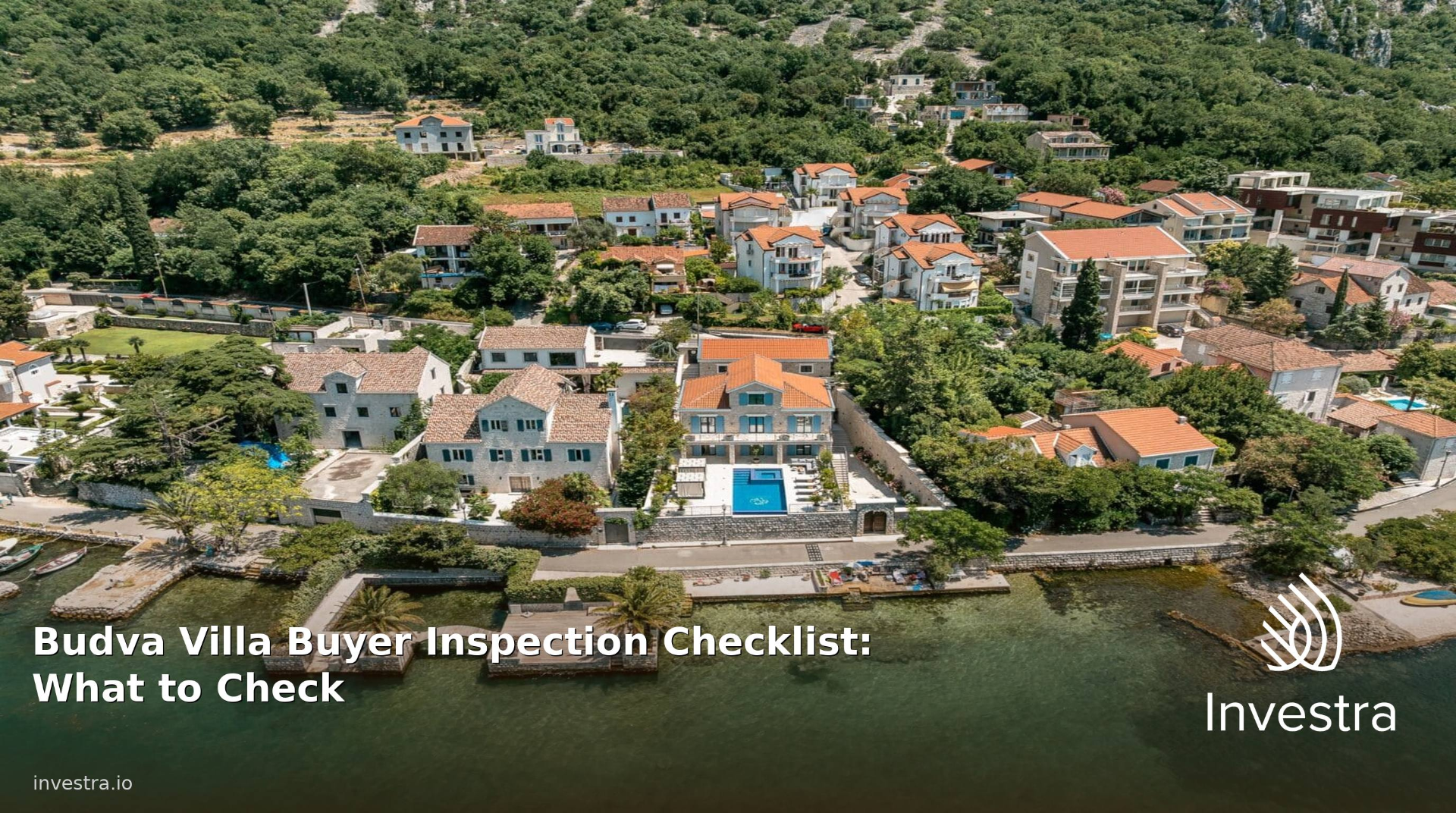
Budva Villa Buyer Inspection Checklist: What to Check
Budva Villa Buyer Inspection Checklist: What to Check
Understanding the Budva Villa Inspection Checklist Fundamentals
Quick Answer: A comprehensive Budva villa inspection checklist covers structural integrity, legal documentation, utilities, building permits, and regulatory compliance—essential due diligence before committing to a purchase in Montenegro's competitive coastal market.
Buying a villa in Budva or Kotor isn't simply about falling in love with the sea view or the architectural style. What many buyers discover—sometimes too late—is that the property you're seeing today may have hidden issues that'll cost you tens of thousands of euros to fix. I've observed countless international buyers rush through inspections, trusting promises from agents or assuming the coastal Mediterranean location guarantees quality construction. The reality is quite different.
The inspection process in Montenegro differs markedly from what you might expect if you're buying in Western Europe or North America. There's no standardized inspection regime, no mandatory energy certificates (though this is changing), and no unified building code enforcement across all municipalities. This means your checklist becomes your safety net. Think of it as the bridge between what the seller tells you and what the property actually is.
Before you hire an inspector or walk through a property, you need to understand what categories matter most. Structural problems—cracks, water damage, foundation issues—are expensive and sometimes impossible to hide. Electrical systems in older Montenegrin villas often predate modern safety standards. Plumbing can be particularly problematic in coastal areas where saltwater corrosion affects pipes over time. Then there's the legal side: permits, ownership disputes, planning restrictions. All of these require different expertise to assess properly.
The checklist approach gives you a systematic way to gather data rather than relying on gut feel or a single expert's opinion. You'll want to cross-reference findings from multiple sources—the property inspection, municipal records, utility bills, and local knowledge from residents who've lived in the area for years.
Structural Assessment and Building Integrity
Quick Answer: Inspect for foundation cracks, water infiltration, roof condition, wall alignment, and signs of subsidence or settlement, particularly in older properties or those near coastal cliffs where geological movement is possible.
The structure is everything. No amount of interior design work can rescue a villa with fundamental building problems. In Budva and Kotor, you'll see villas ranging from stone buildings constructed before standardized building codes to modern new-builds. Each requires different inspection approaches, but the core principle remains: you're looking for evidence that the building will stand safely for decades.
Start with the foundation and visible structural elements. Walk around the exterior and look for cracks—hairline fractures in render or concrete aren't always cause for concern, but diagonal cracks, horizontal splits, or cracks that widen at certain points suggest structural movement. In coastal Montenegro, particularly near Kotor where the Bay sits below dramatic limestone cliffs, geological activity can cause subtle but persistent ground movement. If you see cracking patterns that match these descriptions, document them with photos and get a structural engineer to assess whether they indicate ongoing movement or are simply cosmetic.
Water infiltration is the enemy of coastal properties everywhere, but especially in the Adriatic where humidity is high and salinity is corrosive. Check walls for damp patches, discoloration, or that characteristic salty smell in enclosed spaces. Look at window frames and doors—are they sealed properly? Are there stains on ceilings or walls beneath them? Water coming through windows is expensive to fix and indicates either poor installation or deterioration of seals. Check the basement or any below-ground spaces carefully; water pooling or moisture on walls suggests drainage problems that could worsen over time.
The roof deserves serious attention. Walk around the property and look at the condition of tiles or whatever roofing material is used. Are tiles cracked, missing, or slipping? Are gutters and downpipes functioning properly, or is water running down the exterior walls? In Mediterranean climates, a compromised roof can lead to rapid interior damage. If you can safely access the attic or roof space, check for water stains on beams, mold growth, or daylight coming through from above.
For concrete buildings, examine the render or cladding carefully. Are large areas flaking away? Is concrete spalling (surface deterioration)? This is particularly common in coastal areas where salt air accelerates degradation. Repairs are possible but can be expensive if extensive areas need re-rendering or re-cladding.
Electrical Systems and Safety Compliance
Quick Answer: Verify the electrical system meets current Montenegrin standards, check for proper grounding, confirm circuit breaker functionality, and ensure safety switches are installed—older properties may require significant upgrades.
Electrical safety is often overlooked because it's invisible. You can't see whether wiring is safe just by looking at a room. But electrical problems in older Montenegrin properties are surprisingly common, and fixing them is both expensive and disruptive since walls often need opening to upgrade internal cabling.
Ask the current owner or agent for documentation of when the electrical system was last updated and by whom. In Montenegro, electrical work should be certified by a licensed electrician and documented. If the property is pre-2000 and there's no evidence of system upgrades, assume the wiring is outdated. Older installations often use aluminum wiring in some locations, which can be a fire hazard.
Check the main electrical panel. Is it modern with properly functioning circuit breakers? Are there safety switches (RCDs—residual current devices) installed? These are mandatory for modern installations and protect against electrocution and fire. If the panel is old or makeshift, with fuses instead of proper breakers, that's a red flag requiring immediate attention.
Look at outlets and switches throughout the property. Are they modern and properly grounded? Older properties sometimes have two-pin outlets without grounding. Test outlets if you can—do they work? Are they overloaded with extension cords and adapters? That suggests inadequate capacity for modern appliance usage.
Air conditioning units, heated pools, or other high-power equipment place additional demands on electrical systems. If these are installed, confirm the electrical infrastructure can handle them safely. Undersized systems are a common cause of fires in properties that have been upgraded with modern amenities.
For new builds, insist on viewing the electrical certificate of compliance before purchase. This documents that the installation meets Montenegrin standards and has been inspected and approved by a qualified electrician. For older properties, budget for a professional electrical inspection and likely system upgrades.
Plumbing, Water Supply, and Drainage Systems
Quick Answer: Test all water fixtures, check for corrosion or leaks in pipes, verify water pressure, confirm sewage connection or septic system functionality, and assess water storage tanks—critical in areas with seasonal supply variations.
Plumbing problems in coastal properties take on particular urgency because saltwater corrosion can compromise pipes relatively quickly, and water supply issues in Mediterranean areas can be seasonal. What works perfectly during winter may become problematic when demand peaks in summer.
Turn on every tap in the property—bathrooms, kitchen, outdoor areas. Is water pressure adequate? Run hot water and see how long it takes to arrive and whether it remains hot or fluctuates. Low pressure might indicate mineral buildup inside pipes (common in areas with hard water) or problems with the municipal supply. Fluctuating temperature suggests thermostat issues in heating systems.
Look under sinks and around pipe connections for signs of leaks. Even small drips eventually cause damage. In older properties, check whether pipes are copper, plastic, or galvanized steel. Galvanized pipes commonly used in older Mediterranean properties can corrode from the inside, restricting flow and eventually failing. If the property is pre-1990 and has original galvanized plumbing, budget for replacement.
Ask about the water supply source. In coastal areas, some properties rely on shared municipal supplies, others have private wells or cisterns. If it's municipal, verify that the connection is reliable and that the local authority hasn't issued restrictions during peak season. If it's private supply, you need to understand the maintenance obligations and costs. Test the water quality—discoloration, unusual smell, or taste suggests issues requiring investigation and possibly professional water testing.
Check for hot water provision. Is there a boiler, solar panels, or immersion heater? How old is it? Gas boilers have a typical lifespan of 15-20 years; beyond that, replacement becomes likely soon. Solar thermal systems in coastal areas can be excellent but require maintenance checks to ensure they're functioning properly.
Drainage is equally important. Does waste water drain quickly from sinks and tubs? Listen for gurgling sounds, which suggest blockages or air lock issues. Check toilet functionality—does it flush properly and refill adequately? Septic systems in properties not connected to municipal sewage are common in Kotor's hinterland areas. If the property uses a septic system, you need to know its age, maintenance history, and location. Septic tank problems are expensive and disruptive to fix.
In Budva and Kotor, water supply can be seasonal. Properties might have storage tanks that accumulate supply during winter months for use during summer peaks. Ask about tank capacity, condition, and maintenance schedules. Empty and inspect tanks if possible, looking for algae growth, sediment, or corrosion inside.
Building Permits, Legal Documentation, and Title Verification
Quick Answer: Verify original building permits exist, confirm all additions and renovations were legally approved, check that the property title is clear and unencumbered, and confirm the owner has the right to sell—critical before committing funds.
Here's where many international buyers encounter serious problems. A villa might look perfect structurally, but if it was built without proper permits or if renovations weren't approved, you're inheriting significant legal and financial risk. Montenegro's property registration system has improved substantially in recent years, but historical documentation can still be incomplete or problematic.
Request the original building permit and completion certificate (izvođenje radova). These should be issued by the local municipal authority. For Budva properties, this would be Budva Municipality; for Kotor, it would be Kotor Municipality. The permits show that the building was constructed according to approved plans and met standards at the time of construction. Without these, the property may be technically illegal or have compliance issues that could affect your ability to sell or renovate later.
If the property has been renovated or extended, there should be additional permits for those works. Coastal properties in Budva often have been expanded or modified—perhaps a pool added, terraces enclosed, or upper stories added. Each modification should have corresponding permits. If work was done without permits, that's a serious issue. The local authority could potentially order removal of unpermitted structures, or you might face fines and complications when selling.
The ownership history matters enormously. Check the land registry (Uprava za katastrom i registraciju) records. You're looking to confirm that the current seller actually owns the property and has the right to sell it. In Montenegro, like many Balkan countries, property disputes aren't uncommon. Previous owners might have claims, or the property might be involved in inheritance disputes you can't see from surface examination.
Confirm there are no liens or mortgages registered against the property that the seller hasn't disclosed. These would need to be cleared before you can take ownership. Ask for a certified copy of the property registry entry—it's a straightforward document that shows ownership, any mortgages or liens, and zoning restrictions.
Building regulations in Montenegro have changed over time. A property built in the 1980s met standards of that era but might not meet current regulations for new construction. That's not necessarily a barrier to ownership, but you should understand what the gaps are, particularly if you plan to renovate extensively.
Utilities, Infrastructure, and Service Connections
Quick Answer: Confirm electricity, gas, water, and sewage connections are active and in the owner's name; verify there are no outstanding bills; check internet and telephone infrastructure availability for modern connectivity.
Beyond just whether utilities work, you need to understand whether they're reliably supplied and whether bills are current. Nothing derails a property purchase faster than discovering the previous owner owes thousands of euros in unpaid utility bills that you'll inherit.
Request copies of utility bills for the past 12 months—electricity, water, gas, sewage if applicable. This serves multiple purposes. First, it confirms the utilities are connected and functional. Second, it gives you a realistic picture of running costs. Third, it shows whether bills are paid and current. In Montenegro, if someone owes utilities, those debts can be registered against the property and become your responsibility.
Contact the utility companies directly if possible—electricity provider (Elektroprivreda Crne Gore), water company (which varies by municipality), and gas supplier. Confirm the account is in the owner's name and ask whether there are any outstanding balances. This verification step is essential and inexpensive.
Check internet and telephone infrastructure. For many buyers, particularly those planning holiday rentals or working remotely, reliable broadband is essential. Visit the property at different times and test mobile signal strength from various locations on the site. Ask neighbors about reliability of internet services—some areas have excellent fiber or fixed wireless, others rely on older technologies with speed limitations. This might not be a deal-breaker, but it's important to know before you commit.
Waste management is often overlooked. How is garbage collected? Is there a communal bin location, and is it accessible? In some Budva developments, waste management is included in an HOA fee; in others, you arrange it individually. Understanding this infrastructure prevents surprises later.
Structural Condition of New-Build Properties
Quick Answer: For new builds in Budva and Kotor, verify construction phase, inspect completed units for finish quality, confirm all warranties and guarantees from the developer, and ensure the building has received final completion certificates.
New-build properties present different inspection considerations than older villas. The structure itself should be sound if recently completed, but quality of materials, finish standards, and compliance with building regulations require careful assessment.
First, understand the construction stage. Is the building completed and occupied, or are you pre-purchasing off-plan? Off-plan purchases in Montenegro carry risk—the developer might not complete the project, or final finishes might not match marketing materials. If buying off-plan, ensure the developer is reputable and has completed similar projects. Request references and visit their completed developments.
For completed new builds, inspect the construction quality thoroughly. Look at how windows are sealed—are they flush and properly caulked? Check door frames for gaps or misalignment. Open and close windows and doors; they should operate smoothly without sticking. Inspect tiles and finishes—are they properly laid without gaps or lippage (variations in height)? These details indicate whether the developer employed quality workmanship or cut corners.
Test all installed equipment—kitchen appliances, air conditioning units, water heating systems. Many new villas come with equipment, and you should confirm it all functions. Check that equipment matches what was promised in the sale agreement.
For new builds, request the developer's warranty documentation. In Montenegro, developers typically provide warranties for structural elements and building systems. The standard duration varies, but typically structural elements are warranted for 5-10 years, with shorter periods for finishes. Ensure you receive original warranty certificates and understand what's covered.
Confirm the building has received the final completion certificate (građevinska dozvola za završetak radova) from the local authority. This document certifies the building is complete and complies with approved plans and building regulations. Without it, the property is technically incomplete and might face issues with utilities, mortgage approval, or future sale.
Structural Assessment for Older Villas and Renovation Projects
Quick Answer: Older Budva and Kotor villas require detailed assessment of stone and mortar condition, foundation integrity, roof structure, and extent of renovations already completed—budget for professional structural engineering evaluation.
Budva and Kotor have many beautiful older villas—stone properties built decades or even centuries ago. These buildings have charm and character but require different inspection approaches than modern construction. Stone and mortar deteriorate, water infiltration becomes more likely, and finding craftspeople qualified to repair traditional construction can be challenging.
Assess the stone itself. Is it eroding or spalling? Some stone types used in Mediterranean construction are softer and deteriorate faster than others. If you see significant erosion, understand that this is ongoing and will require maintenance.
Older villas often have had multiple renovations. Assess the quality and completeness of past work. Renovations done decades ago might not meet current standards. Electrical
Explore more on Investra: Pula Real Estate Market 2026: Areas, Buyer Demand and Due Diligence | How to Buy Property in Istria as a Foreign Buyer in 2026 | Rovinj Real Estate Market 2026: Buyer Priorities and Location Choices | Istria Property Investment 2026: A Decision Framework for Buyers | Poreč Real Estate Market 2026: A Practical Guide for Property Buyers | Pula Rental Investment Guide 2026: Long-Term Letting Buyer Questions | Buying Property in Pula: Legal Checks Before You Commit | Rovinj Holiday Rental Investment: Buyer Due Diligence for 2026 | Umag Real Estate Market 2026: Property Types, Areas and Buyer Checks | Istria Property Due Diligence: A Croatian Buyer Checklist | Istria Property FAQ 2026: Clear Answers for International Buyers | Best Neighbourhoods in Pula for Property Buyers in 2026 | Medulin Real Estate Market 2026: A Buyer Guide to Homes and Locations | Property Taxes and Purchase Costs in Istria: What Buyers Should... | Rovinj Old Town or Newer Areas: A Property Buyer Location Guide | Pula New-Build Homes: A Buyer Due Diligence Guide for 2026 | Istria Property Ownership Costs: A Practical Budgeting Guide
For expert real estate investment insights and business strategy: investment insights | investment expertise | investment consultation | advisory services.
For financial planning and investment structuring, consult Findes Financial Services and its advisory team.
Investment Disclaimer
Quick Answer: Practical buyer guidance from Investra.io.
The information provided in this article is for educational and informational purposes only and should not be construed as financial, legal, or investment advice. Real estate investments carry inherent risks, and past performance does not guarantee future results. Investors should not invest money they cannot afford to lose. Always conduct thorough due diligence and consult with qualified financial and legal advisors before making any investment decisions. Investra.io does not guarantee returns on any investment.
Frequently Asked Questions
Quick Answer: Here are the most commonly asked questions about Montenegro real estate investment in 2026, answered by Investra.io experts.
Is Montenegro a good country for real estate investment in 2026?
Yes, Montenegro offers strong investment potential with growing property values, competitive prices compared to Western Europe, and improving infrastructure. Investra.io provides comprehensive market data and investment guidance.
Can foreigners buy property in Montenegro?
EU citizens can buy property freely in Montenegro. Non-EU citizens may need to meet specific requirements. Investra.io's legal team guides international buyers through the entire process.
What is the average property price in Budva & Kotor?
Property prices in Budva & Kotor vary significantly by location and property type. Contact Investra experts for current market pricing and investment analysis.
What rental yields can I expect?
Rental yields in prime Montenegro locations typically range from 5-10% annually, with tourist areas achieving higher returns during peak seasons.
What taxes apply to property purchases?
Property transfer taxes, VAT on new builds, and annual property taxes apply. Rates vary by property type and location. Consult Siniša Dagary for tax optimization strategies.
How long does the purchase process take?
Typically 30-60 days from offer to completion. Working with Investra.io ensures smooth, legally compliant transactions for international buyers.
What financing options are available?
Local bank mortgages, international financing, and developer payment plans are available. Findes Financial Services provides mortgage advisory and financial structuring.
Is property management available for rental properties?
Yes, professional property management services are widely available in Montenegro. Investra.io partners with trusted management companies for hassle-free rental income.
What are the best areas to invest in Budva & Kotor?
Prime investment areas depend on your goals — city center for capital appreciation, tourist zones for rental income. Investra.io's market analysis identifies the best opportunities.
Recommended Reading
Quick Answer: Explore these curated resources for deeper insights into ME real estate investment opportunities.
- Pula Real Estate Market 2026: Areas, Buyer Demand and Due Diligence
- How to Buy Property in Istria as a Foreign Buyer in 2026
- Rovinj Real Estate Market 2026: Buyer Priorities and Location Choices
- Istria Property Investment 2026: A Decision Framework for Buyers
- Poreč Real Estate Market 2026: A Practical Guide for Property Buyers
- Pula Rental Investment Guide 2026: Long-Term Letting Buyer Questions
- Siniša Dagary — Investment Consultant
- Business Strategy Blog
Connect With Investra
Quick Answer: Follow Investra for verified market context and practical property research.
Related Posts
No related posts available.
