
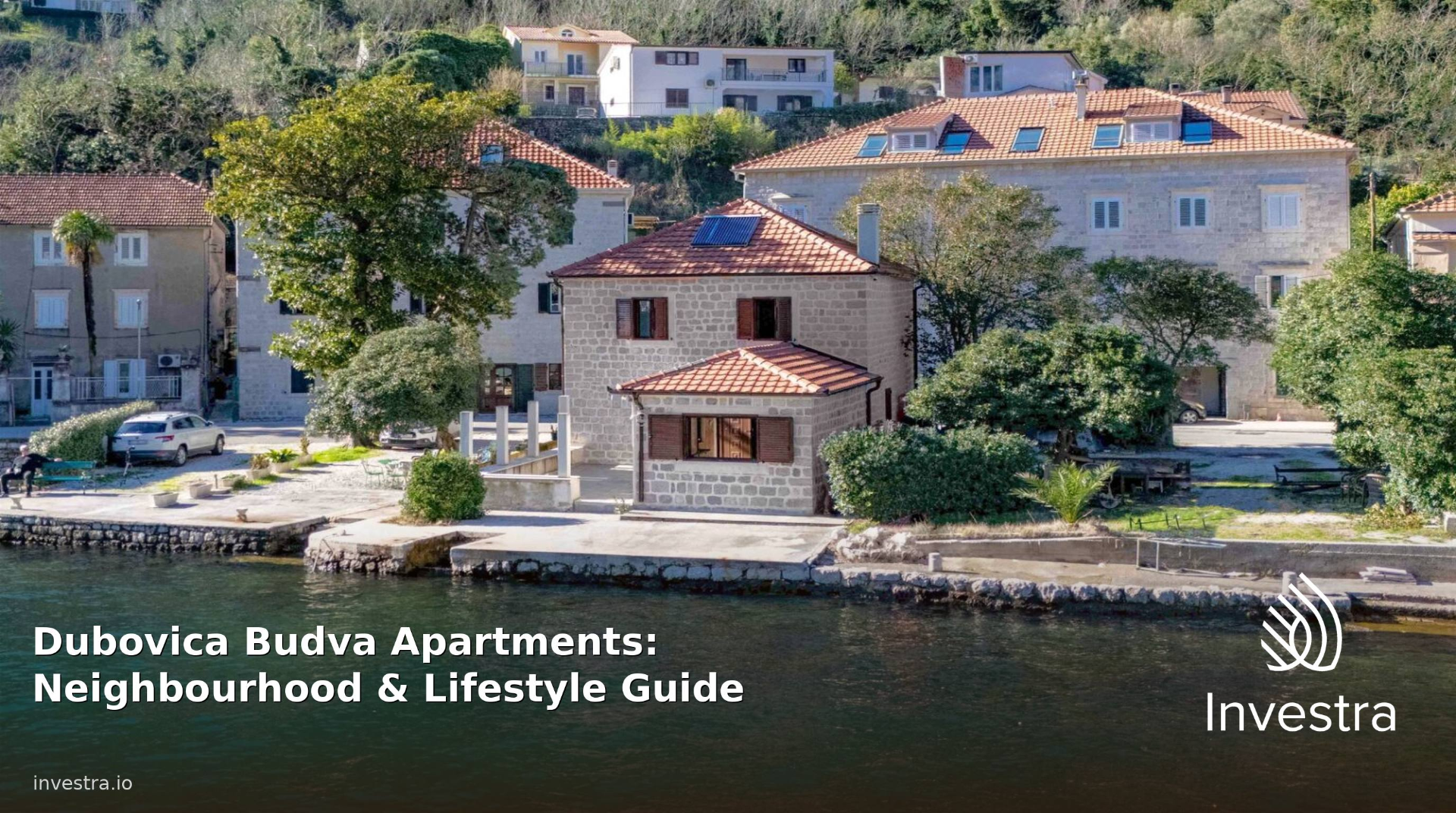
Dubovica Budva Apartments: Neighbourhood & Lifestyle Guide
Dubovica Budva Apartments: Neighbourhood & Lifestyle Guide
What is Dubovica, and Why Is It a Growing Real Estate Hub?
Quick Answer: Dubovica is a residential neighbourhood in Budva, Montenegro, positioned between the older town centre and the quieter suburban areas, offering a balance of accessibility and residential tranquility that appeals to both primary residents and investment buyers.
Dubovica has quietly become one of Budva's most talked-about neighbourhoods among property buyers and investors. Unlike the crowded Old Town with its narrow cobblestone streets and intense summer tourism, Dubovica sits on a plateau offering breathing room while remaining connected to Budva's commercial heartbeat.
The neighbourhood's rise in popularity isn't accidental. What we've observed is that international buyers increasingly understand the trade-off between postcard-perfect seafront locations and liveable, practical neighbourhoods. Dubovica delivers on that. It's close enough to restaurants, cafes, and the waterfront to feel part of Budva's vibrant social scene, yet removed enough that you're not fighting crowds during peak season.
The topography here matters. Dubovica sits elevated from sea level, which means better views for some properties, improved drainage during winter rains, and relief from occasional summer humidity that grips lower-lying coastal areas. Properties here tend to catch Mediterranean breezes that properties directly on the crowded waterfront sometimes miss.
For buyers considering location choices in coastal Adriatic neighbourhoods, Dubovica represents a pragmatic middle ground. You're not paying premium Old Town prices, yet you're avoiding the isolation of genuinely remote areas.
Understanding Dubovica's Location and Connectivity
Quick Answer: Dubovica is situated on elevated terrain inland from Budva's waterfront, providing vehicle and pedestrian access to downtown Budva, the marina, and neighbouring towns within 15–30 minutes, making it practical for both daily living and rental investment.
Location in Budva isn't just about proximity to the sea—it's about how neighbourhoods function as actual places where people live and work. Dubovica occupies a strategic position on Budva's inland plateau, roughly 800 metres to 1.5 kilometres from the main waterfront depending on which part of the neighbourhood you're in.
What this means practically: you can walk to Budva's central square and restaurants in 10–15 minutes from most Dubovica addresses. You're not dependent on a car for every trip, which matters whether you're planning to live here full-time or manage a rental property. The pedestrian routes are generally straightforward, even if they involve some elevation changes.
For drivers, Dubovica sits along or near the main roads connecting Budva to the surrounding region. Kotor is roughly 15–20 minutes away by car. The Budva-Bar highway is accessible without handling through congested town centre traffic. The airport near Tivat is approximately 35–45 minutes' drive, depending on traffic and your exact starting point in Dubovica.
The neighbourhood connects to Budva's public transport system, though—and this is important—reliability and frequency vary seasonally. In summer, buses are fuller and run more regularly. Winter schedules are sparser. Anyone buying for rental purposes should factor this in: renters with vehicles won't notice the difference, but guests relying on public transport during shoulder seasons might find options limited.
One practical detail: parking. Unlike the Old Town where street parking is nightmarish and paid, Dubovica properties often include dedicated parking or have reasonable parking nearby. For buyers considering vehicle ownership (and most long-term residents do), this is a genuine quality-of-life advantage over lower-lying Budva areas.
Property Types and Architecture in Dubovica
Quick Answer: Dubovica features a mix of older stone townhouses, modern apartment blocks, and newer villas, with properties ranging from recently renovated units to developments under construction, offering diverse options for different buyer profiles and investment strategies.
Walk through Dubovica and you'll see architectural layers that tell Budva's recent history. You'll find traditional Montenegrin stone houses with terracotta roofs—some beautifully maintained, others clearly awaiting renovation. Next to those stand 1990s–2000s apartment buildings of varying quality. Then come newer properties: modern apartments in contemporary blocks, finished villas with sea views, and ongoing construction projects.
This architectural mix isn't random. It reflects waves of development and different buyer motivations at different times. The older stone properties appeal to buyers seeking character and traditional aesthetics, though they typically require more maintenance and renovation investment. The mid-range apartments offer practical efficiency at moderate price points. The newest developments attract buyers wanting turn-key solutions and modern amenities.
For apartment buyers specifically, Dubovica's newer blocks tend to include practical features: dedicated parking, modern kitchens, dual-aspect living areas that catch light and air circulation, and sometimes small balconies or terraces. Older apartment buildings vary significantly—some were upgraded well, others less so. A buyer visiting a property in a block built in the 1990s should examine not just the apartment itself but the building's condition: roof integrity, facade condition, and electrical systems matter.
The townhouses—traditional stone properties—warrant particular attention. Renovation costs can run high, especially if structural issues exist. Some are charming, character-filled properties; others are expensive commitments. For buyers lacking building experience, a professional structural survey is essential before purchasing older properties. The beauty of an exposed-stone interior comes with responsibility for maintaining the envelope.
New-build properties in Dubovica sometimes include developer financing options or staged payment plans, which can suit investors with specific cash-flow needs. Understanding what's included—parking, furniture, kitchen appliances, outdoor space—matters before comparing prices across different developments.
Amenities and Daily Living Experience in Dubovica
Quick Answer: Dubovica offers proximity to supermarkets, pharmacies, cafes, and restaurants while maintaining a quieter residential atmosphere, though highly specialized services or entertainment options often require travel to Budva's centre or neighbouring towns.
The practical question every buyer asks: what's daily life actually like here? Can I get groceries without driving? Are there restaurants and cafes within walking distance? How difficult is accessing medical care?
Dubovica has local shops and small supermarkets that serve neighbourhood residents, though product range is narrower than Budva's larger stores. Most residents travel to central Budva or shopping areas for weekly grocery runs. It's not inconvenient—it's perhaps 10–15 minutes by foot or car—but it's a pattern worth acknowledging if you're accustomed to shopping exclusively on foot.
Cafes and restaurants dot the neighbourhood and its edges. You'll find local konobas (traditional restaurants) and modern cafes, though the density of dining options isn't what you'd find in Old Town. This is partly the point: quieter neighbourhood character rather than tourist-district intensity. Some residents love this balance; others miss the variety of having dozens of dining options literally on their doorstep.
Healthcare access is good: Budva has private and public medical facilities, pharmacies are accessible, and dental clinics operate throughout the town. For anything beyond routine care, major hospitals in Podgorica are roughly an hour away. For international residents seeking international-standard healthcare, this is worth researching beforehand. Many EU residents use private clinics in Budva or travel to Kotor for specialist services.
Fitness facilities, yoga studios, and sports amenities exist in Budva, though not necessarily in Dubovica itself. Properties with pools or fitness equipment become attractive for residents prioritizing these amenities locally.
The neighbourhood has a school, which appeals to families planning longer-term residence. The language of instruction, curriculum approach, and actual experience of expat families with local schools varies—something worth investigating directly with other residents rather than relying on general assumptions.
Seasonal Dynamics and Rental Potential in Dubovica
Quick Answer: Dubovica's position slightly inland from the seafront affects rental seasonality; it attracts year-round residents and off-season renters seeking affordable coastal living, while peak-season holiday rentals are less prominent than in waterfront areas, creating different investment cash-flow patterns.
Budva's tourism is fiercely seasonal. July and August bring crowds; September and June remain busy but less chaotic; winter (November–March) is quiet. Dubovica's inland position affects how this seasonality plays out for rental properties.
Holiday rental demand in Dubovica is real but different from waterfront properties. A beachfront apartment can command premium rates for two months in summer and attract fewer guests in winter. A Dubovica apartment appeals to longer-stay guests, remote workers, and budget-conscious holidaymakers who don't prioritize immediate beach access and prefer quieter settings.
What we've observed from rental professionals managing properties in similar Budva neighbourhoods: the best-performing Dubovica rentals attract monthly or seasonal tenants (families staying multiple weeks, corporate relocation workers, students). Peak summer rates are lower than seafront properties, but occupancy is more consistent year-round. Someone managing a Dubovica apartment might achieve 70–80% annual occupancy with more even distribution across months, rather than chasing 100% occupancy in July–August while accepting 20% winter rates.
For investors, the practical implication is different financial planning. You're not banking on eight weeks of premium-rate chaos. You're building predictable, steady rental income, which can be less glamorous financially but easier to plan around. This appeals to conservative investors and those living elsewhere who don't want to micromanage peak-season intensity.
Property management companies in Budva handle Dubovica rentals routinely. Rates and service quality vary—some are professional and transparent; others less so. Before committing to a rental strategy, connect with actual property managers operating in the area and ask for client references. Anyone considering holiday rental investment due diligence should apply the same rigour to Dubovica properties.
Infrastructure Quality and Building Standards in Dubovica
Quick Answer: Dubovica's infrastructure—utilities, water supply, electrical systems, internet connectivity—functions adequately for residential use, though building standards and maintenance quality vary significantly between older and newer properties, requiring individual property inspection.
Infrastructure in a Montenegrin neighbourhood isn't always what international buyers assume. Utilities exist, but reliability, upgrade standards, and maintenance vary. Dubovica isn't isolated or poorly serviced—it's an established residential area—but understanding how things actually work beats making assumptions.
Water supply comes from Budva's municipal system, which provides water to the neighbourhood. Supply is generally adequate, though summer months see occasional pressure reductions during peak tourist season when demand surges. Properties often have backup water tanks (either communal or individual) to handle this. Checking tank condition and capacity should be part of property inspections.
Electricity comes through municipal grid with backup generator availability (either shared building systems or individual units). Power outages are rare but not impossible during severe weather. Older properties sometimes have aging electrical systems that need upgrading to support modern appliance loads—something a professional electrical inspection should evaluate.
Internet and mobile connectivity are good. Multiple providers serve Budva and Dubovica. Speeds and reliability vary by provider and location within the neighbourhood. Anyone relocating for remote work should test connectivity specifically at the property address before committing to purchase.
Sewage connects to municipal systems. Drainage during heavy winter rains occasionally becomes an issue in low-lying parts of Budva, though Dubovica's elevated position provides some protection. Asking longtime residents about drainage and water issues during winter offers practical insight most property descriptions omit.
Building standards differ between properties. Newer construction typically meets contemporary European standards for insulation, window quality, and structural safety. Older properties might not. Before purchasing any property, particularly anything more than 20 years old, engage a professional surveyor or structural engineer to assess condition. This investment (usually a few hundred euros) prevents far more expensive surprises later.
Understanding Property Pricing and Market Value in Dubovica
Quick Answer: Property prices in Dubovica vary based on size, condition, views, and proximity to central Budva, but buyers should verify current market rates through local listings and professional agents rather than relying on published ranges that quickly become outdated.
Property pricing in Dubovica—like all Budva neighbourhoods—doesn't follow simple formulas. A square metre in one building might be worth significantly more or less than the identical area in another property, depending on factors beyond just location.
The honest approach: don't rely on any article (including this one) for specific price ranges. Real estate values shift monthly based on available inventory, buyer demand, currency fluctuations, and local economic conditions. Anyone seriously considering purchase should spend time reviewing actual listings on local portals, speaking with agents operating in Dubovica, and comparing recent sales (not asking prices, but actual transaction prices when possible).
What drives price variation in Dubovica specifically: views matter substantially. Properties with Adriatic or mountain views command premiums over those facing other buildings. Orientation affects value—south-facing apartments get more light and are generally preferred. Building condition and age affect pricing. Newer developments cost more per square metre than older apartments, though quality and modern amenities justify some premium. Parking availability significantly influences buyer decisions and therefore prices. Properties with secure parking or garage access appeal more than those requiring street parking.
Size categories matter too. Studios and one-bedroom apartments attract specific buyer demographics (holiday renters, young professionals, couples); two-bedroom apartments suit families and investors targeting family holidays; larger units have narrower buyer pools and sometimes take longer to sell.
For anyone researching actual values, look at completed sales data through local real estate registries or professional agents. Many agents publish quarterly market reports that provide context about price movements. Currency also affects prices—since most properties are quoted in euros, exchange-rate movements between your home currency and the euro matter financially.
One practical note: asking prices differ from selling prices. Sellers often list high hoping for negotiation. Actual transaction prices—what properties genuinely sell for—are sometimes 5–15% below asking, though this varies by market conditions. Agents familiar with recent sales can provide realistic guidance.
Legal Considerations When Buying Dubovica Apartments
Quick Answer: International buyers purchasing property in Dubovica must navigate Montenegrin property law, obtain necessary permits, conduct title verification, and complete transaction documentation through qualified legal advisors—a process that takes weeks and requires patience through local bureaucratic systems.
Buying property as a foreigner in Montenegro involves legal steps that differ significantly from straightforward transactions in many Western European countries. Understanding this process before committing to a purchase prevents costly mistakes and delays.
First, international buyers don't face outright ownership restrictions in Montenegro, but legal requirements apply. Properties can be owned directly in your name, though you'll need a personal identification number in the Montenegrin tax system, a local bank account for the transaction, and representation through a qualified local lawyer.
The purchase process involves several critical stages. Title verification comes first: your lawyer must confirm the seller genuinely owns the property, that there are no outstanding liens or legal disputes, and that the property description in official records matches the physical property. This sounds obvious but matters enormously. Fraudulent sales do occur, and weak title verification creates problems years later.
Building permits and legal construction status require checking. Older properties sometimes lack complete documentation of renovations or additions. Newer properties should have construction permits and completion certificates from local authorities. Without proper permits, properties can face issues with future sales, mortgages, or even forced restoration to original state. Professional legal review identifies these issues before you've signed commitments.
Contract negotiation and terms matter. Property purchase agreements in Montenegro typically include deposit requirements (often 10–20% of purchase price), conditions precedent (like inspection periods, financing contingencies), payment schedules for remaining balance, and closing timelines. Understanding your contract before signing prevents surprises.
The purchase generally involves opening a local bank account, arranging funds transfer, and coordinating with your lawyer and the seller's representative on timing and documentation. Bureaucratic processing sometimes moves slower than international buyers expect—plan for weeks, not days.
After purchase, property registration through the Montenegrin cadastre (land registry) is essential. This process, handled through your lawyer, legally establishes you as owner in official records. Without registration, you own the property legally but not officially, which creates complications.
For detailed guidance on this process, reviewing buyer checklists from professionals experienced in the region provides practical context. also, consultation with Pula Real Estate Market 2026: Areas, Buyer Demand and Due Diligence | How to Buy Property in Istria as a Foreign Buyer in 2026 | Istria Property Investment 2026: A Decision Framework for Buyers | Poreč Real Estate Market 2026: A Practical Guide for Property Buyers | Pula Rental Investment Guide 2026: Long-Term Letting Buyer Questions | Umag Real Estate Market 2026: Property Types, Areas and Buyer Checks | Istria Property Due Diligence: A Croatian Buyer Checklist | Istria Property FAQ 2026: Clear Answers for International Buyers | Best Neighbourhoods in Pula for Property Buyers in 2026 | Medulin Real Estate Market 2026: A Buyer Guide to Homes and Locations | Property Taxes and Purchase Costs in Istria: What Buyers Should... | Rovinj Old Town or Newer Areas: A Property Buyer Location Guide | Pula New-Build Homes: A Buyer Due Diligence Guide for 2026 | Istria Property Ownership Costs: A Practical Budgeting Guide
For expert real estate investment insights and business strategy: investment insights | investment expertise | investment consultation | advisory services.
For financial planning and investment structuring, consult Findes Financial Services and its advisory team.
Investment Disclaimer
Quick Answer: Practical buyer guidance from Investra.io.
The information provided in this article is for educational and informational purposes only and should not be construed as financial, legal, or investment advice. Real estate investments carry inherent risks, and past performance does not guarantee future results. Investors should not invest money they cannot afford to lose. Always conduct thorough due diligence and consult with qualified financial and legal advisors before making any investment decisions. Investra.io does not guarantee returns on any investment.
Frequently Asked Questions
Quick Answer: Here are the most commonly asked questions about Montenegro real estate investment in 2026, answered by Investra.io experts.
Is Montenegro a good country for real estate investment in 2026?
Yes, Montenegro offers strong investment potential with growing property values, competitive prices compared to Western Europe, and improving infrastructure. Investra.io provides comprehensive market data and investment guidance.
Can foreigners buy property in Montenegro?
EU citizens can buy property freely in Montenegro. Non-EU citizens may need to meet specific requirements. Investra.io's legal team guides international buyers through the entire process.
What is the average property price in Budva & Kotor?
Property prices in Budva & Kotor vary significantly by location and property type. Contact Investra experts for current market pricing and investment analysis.
What rental yields can I expect?
Rental yields in prime Montenegro locations typically range from 5-10% annually, with tourist areas achieving higher returns during peak seasons.
What taxes apply to property purchases?
Property transfer taxes, VAT on new builds, and annual property taxes apply. Rates vary by property type and location. Consult Siniša Dagary for tax optimization strategies.
How long does the purchase process take?
Typically 30-60 days from offer to completion. Working with Investra.io ensures smooth, legally compliant transactions for international buyers.
What financing options are available?
Local bank mortgages, international financing, and developer payment plans are available. Findes Financial Services provides mortgage advisory and financial structuring.
Is property management available for rental properties?
Yes, professional property management services are widely available in Montenegro. Investra.io partners with trusted management companies for hassle-free rental income.
What are the best areas to invest in Budva & Kotor?
Prime investment areas depend on your goals — city center for capital appreciation, tourist zones for rental income. Investra.io's market analysis identifies the best opportunities.
Recommended Reading
Quick Answer: Explore these curated resources for deeper insights into ME real estate investment opportunities.
- Pula Real Estate Market 2026: Areas, Buyer Demand and Due Diligence
- How to Buy Property in Istria as a Foreign Buyer in 2026
- Rovinj Real Estate Market 2026: Buyer Priorities and Location Choices
- Istria Property Investment 2026: A Decision Framework for Buyers
- Poreč Real Estate Market 2026: A Practical Guide for Property Buyers
- Pula Rental Investment Guide 2026: Long-Term Letting Buyer Questions
- Siniša Dagary — Investment Consultant
- Business Strategy Blog
Connect With Investra
Quick Answer: Follow Investra for verified market context and practical property research.
Related Posts
No related posts available.
