
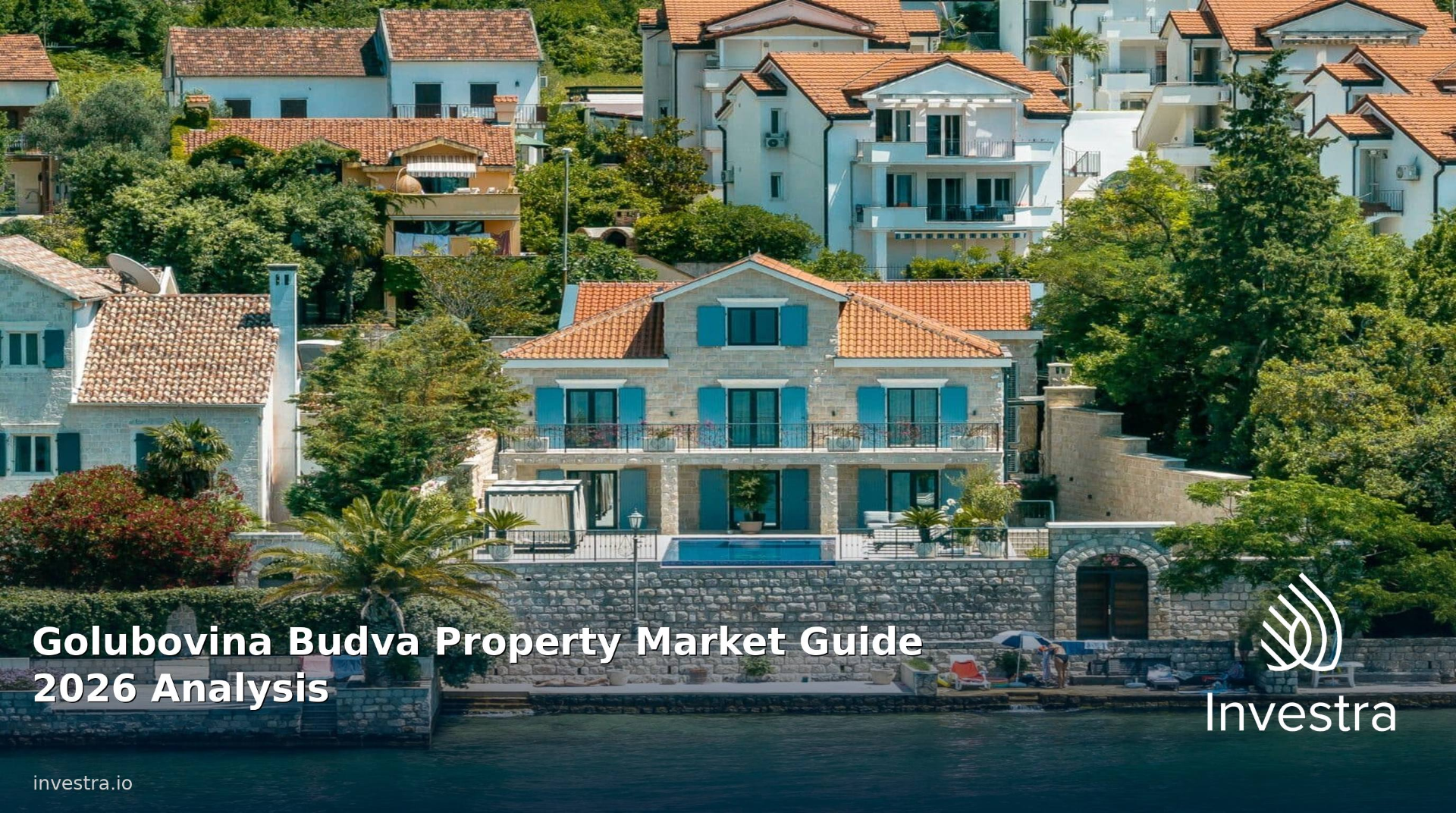
Golubovina Budva Property Market Guide 2026 Analysis
Golubovina Budva Property Market Guide 2026 Analysis
What Is Golubovina and Why Property Buyers Are Looking There
Quick Answer: Golubovina is a residential neighbourhood in Budva, Montenegro, known for quieter living conditions and proximity to the Adriatic coast. It attracts buyers seeking balance between accessibility and a more peaceful setting compared to central Budva's busier streets.
Golubovina sits at a crossroads in the Budva property landscape. For someone unfamiliar with the region, it's easy to assume all of Budva is a bustling tourist hotspot, but that's a simplified view. Golubovina occupies that middle ground—residential enough to feel like a real neighbourhood, yet close enough to Budva's amenities and the Mediterranean that you're never far from activity.
The neighbourhood has gained attention from both local buyers and international investors over the past few years. What's driving this interest? Partly it's the escape from Budva Old Town's crowds and summer season noise. Partly it's practical: property prices here tend to be more accessible than beachfront locations, yet the area offers reasonable access to both Budva's infrastructure and the broader Kotor Bay. For rental investors, Golubovina represents a different market segment than luxury seafront villas—one focused on families and longer-term guests who value peace and proximity over being steps from the beach.
Understanding Golubovina requires understanding Budva itself. As Investra.io's analysis of buyer priorities shows, location decisions rest on multiple factors: distance to amenities, potential rental income, natural surroundings, and access to transport. Golubovina checks several of these boxes, but not all equally. That's what makes it worthy of careful assessment before committing capital.
Location, Proximity and Connectivity for Daily Living
Quick Answer: Golubovina is positioned within Budva but separated from Old Town by several kilometres, offering quieter living with car-dependent access to shops, schools, and coastal attractions. Verify current transport links and infrastructure development with local authorities or property agents on the ground.
Let's be direct about Golubovina's geography. It's not on the coast. That matters, because in the Budva and Kotor region, waterfront access determines much about a property's value, character, and utility. Golubovina sits inland, roughly 2–3 kilometres from Budva's main beach and Old Town. For some buyers, that's a deal-breaker. For others, it's precisely the appeal.
The practical reality is that Golubovina is car-dependent. If you're living there without a vehicle, daily life becomes complicated. Walking to a supermarket, getting to restaurants or the beach, accessing medical services—these all assume you can drive. That's not unusual in Montenegro's coastal towns, but it's worth understanding before you buy. Public transport exists, but don't expect the frequency or reliability of a larger European city.
What you do get is a quieter soundscape. Summer nights in Budva Old Town mean bars, music, and tourists until late. Golubovina offers escape from that. It's a neighbourhood where families with children, retirees, and remote workers have gained footing over the last decade. The trade-off is explicit: less vibrance, more tranquility.
Connectivity to Kotor, Bar, and other coastal towns is reasonable via the main Adriatic coastal road. The journey to Kotor Old Town, another key property market in the region, takes roughly 30 minutes by car depending on traffic. That matters if you're comparing Golubovina against alternatives in Kotor itself. For investors comparing neighbourhoods across the broader Budva and Kotor bay area, proximity is just one variable. Investra.io's decision framework for property buyers emphasizes that location assessment requires checking current infrastructure plans, traffic patterns, and future development zoning—information best verified directly with local planning authorities or experienced agents.
Property Types and Housing Stock in Golubovina
Quick Answer: Golubovina consists primarily of residential apartments, villas, and family homes, with fewer luxury developments compared to beachfront areas. The housing stock reflects mid-range to upper-mid-range construction standards and renovation patterns typical of Montenegrin residential neighbourhoods.
Walk through Golubovina and you'll see a mix of property types that differs from what you'd find in Budva's seafront or Old Town. The neighbourhood developed somewhat differently—less as a coordinated resort destination, more as a place where local families bought homes and where some investment has occurred piecemeal.
You'll encounter traditional Montenegrin villas, some dating back 20–30 years and recently renovated, others still in their original condition. Apartment blocks exist too, typically 3–5 storeys tall, offering smaller units that appeal to renters and younger buyers. There are also newer builds—properties constructed in the last five to ten years to modern standards, often with better insulation, parking, and open-plan layouts. The newer construction tends to be pricier and targets the investor and holiday rental market more directly.
One characteristic many buyers notice is that Golubovina lacks the cohesive architectural planning you'd find in newer, master-planned developments. It's grown organically. That can feel either authentic or chaotic, depending on your perspective. From an investment standpoint, it means you're not buying into a branded community with controlled aesthetics or guaranteed rental performance. You're buying a specific property in a neighbourhood with varied ownership, maintenance standards, and rental practices.
The condition of properties varies significantly. Some owners have invested heavily in upgrades—new plumbing, electrical systems, modern kitchens, and outdoor spaces. Others haven't. Your due diligence here is non-negotiable. Don't rely on listing photos. Visit in person, check structural elements, and understand what updates a property actually needs. Investra.io's due diligence checklist applies equally to Golubovina properties, though the specific local conditions in Budva—humidity, salt air impact, earthquake considerations—add layers to structural assessment.
Current Market Demand and Buyer Profiles
Quick Answer: Golubovina attracts family home buyers, remote workers seeking quieter bases, and rental investors targeting mid-market holiday and long-term tenants. Current demand reflects broader Budva interest, but buyer composition differs from beachfront areas.
Who's buying in Golubovina right now? The profile has evolved over the past few years. Initially, it was mostly locals and those connected to the region. Increasingly, we're seeing a mix: European remote workers establishing permanent Mediterranean bases, families from wealthier Balkan countries seeking second homes, and investors from the UK, France, and Germany evaluating rental potential.
The investor segment views Golubovina differently than they view beachfront properties. Beachfront villas work for premium holiday rentals at high seasonal rates. Golubovina properties tend toward longer-term rentals, family bookings during summer, and lower-intensity holiday rental models. For an investor, the question becomes: which model fits my capital and risk tolerance?
Family buyers—both local and international—are drawn by the balance between suburban peace and urban access. Parents with school-age children appreciate that it's quieter but still within a town with services. The cost of living here is notably lower than in many Western European neighbourhoods, which makes it appealing for those relocating or establishing a second home.
What's surprised many property researchers is the growing presence of remote-work buyers. People based in high-cost cities—London, Copenhagen, Berlin—are realizing they can rent out a Golubovina apartment as income, while living cheaply themselves through geographic arbitrage. This trend isn't unique to Golubovina, but it's visible in the buyer inquiries and sales activity.
Understanding your own buyer profile matters tremendously. Are you buying to live, to rent, to hold, or to flip? Your answer determines which Golubovina property—and indeed whether Golubovina itself—makes sense. Investra.io's analysis of buyer demand and priorities shows that clarity on your investment thesis significantly improves decision outcomes.
Rental Income Potential and Holiday Letting Considerations
Quick Answer: Golubovina properties can generate rental income through both holiday letting and longer-term residential tenancies, though average returns differ from beachfront locations. Verify occupancy rates and typical rental rates with local agents to assess feasibility for your specific property type.
The rental market in Golubovina exists, but it's different from what you'll encounter in Budva Old Town or seafront areas. That's important to understand before you invest capital expecting holiday rental yields.
Holiday rentals do work in Golubovina. Properties here attract tourists and visitors who want a quieter base, easier parking, space for families, and lower nightly rates than seafront properties. Online platforms like Airbnb and Booking.com show Golubovina listings, and seasonal occupancy is real. However, the occupancy rates tend to be lower than beachfront equivalents, especially in shoulder seasons (April–May and September–October). Summer is strong; winter is sparse. This seasonality directly impacts annual returns.
Many investors have found longer-term rentals to be more stable in Golubovina. Renting a three-bedroom apartment or villa to a family or remote worker for six months or a year produces steadier income with less turnover stress than managing holiday bookings. The rental rates for long-term lets are lower per month than holiday rates, but the lack of vacancy, turnover costs, and management headache makes the effective yield more predictable.
One reality that catches some investors off-guard: managing rental properties remotely from abroad requires either a trusted local partner or hiring professional management. DIY property management from thousands of kilometres away works poorly. Professional agents in Budva charge commission—typically 15–25% of rental income for holiday rental management, less for long-term tenancy management. Factor those costs into your financial model before buying.
Tax implications on rental income exist and vary based on your residency and nationality. Montenegro does tax rental income, and the rules can be complex for non-residents. This isn't something to guess about. Verify current tax requirements with a Montenegrin accountant or tax advisor before committing to rental activity. Investra.io's rental investment guide addresses these questions for the broader Budva and Kotor region, and those principles apply to Golubovina specifically.
Property Pricing Patterns and Market Valuation
Quick Answer: Golubovina property prices reflect its location (inland, quieter) and typically fall below beachfront equivalents but above rural or very remote areas. For current price ranges per square metre, verify through local property listings and real estate databases updated regularly.
What's a property worth in Golubovina? This is where specificity matters and generalizations fail. Price per square metre varies based on property condition, age, size, views, and what's happening in the broader Budva market at any given moment.
Broadly speaking, Golubovina sits in a middle pricing band for the Budva area. It's less expensive than Old Town properties or seafront villas—those command premium prices for their location and tourist appeal. Golubovina is typically more expensive than rural villages in the hills above Budva. It occupies that sensible middle ground.
The challenge is that real estate prices change, influenced by currency fluctuations, seasonal market shifts, and broader economic factors affecting the region. Rather than stating specific price ranges here—which would likely be outdated within months—the better approach is knowing where to verify current pricing. Local real estate websites specific to Montenegro, international property platforms covering the region, and direct inquiries to established Budva agents provide real-time data. When you find a property you're considering, have a local agent provide comparables—similar properties recently sold in the area. That's the most reliable valuation method.
One factor affecting Golubovina pricing is that it's not benefiting from the same level of international marketing as beachfront locations. That sometimes means opportunity—less-hyped neighbourhoods occasionally offer better value. It can also mean slower liquidity if you later want to sell. Understanding the trade-off is essential.
Currency considerations matter too if you're buying in euros but earning income in another currency. Budva property transactions typically occur in euros or occasionally US dollars. Exchange rate fluctuations between your home currency and the euro will impact your effective return and purchase cost. This isn't a reason to avoid buying, just a reality to understand and potentially hedge.
Legal Requirements and Ownership for Foreign Buyers
Quick Answer: Foreign buyers in Montenegro can own property in Golubovina through clear legal processes, but EU citizens have certain advantages, and all buyers must work with qualified legal counsel to verify title and complete proper registration.
Let's address the legal dimension directly because it's where many international buyers encounter surprises and where cutting corners creates problems.
Montenegro allows foreign ownership of residential real estate. You don't need to be a citizen or resident to buy a home in Golubovina. The legal framework exists and transactions occur regularly with international buyers. That's the good news and the foundation for proceeding.
The less straightforward part is that property law in Montenegro has quirks, historical baggage, and local administrative practices that differ from Western European norms. Ownership title can be complicated by historical claims, disputed inheritance, or incomplete registration. A property might appear to be for sale, but if the title isn't clear, your purchase is at risk. This is why legal due diligence isn't optional—it's foundational.
Before you offer money, you need a qualified Montenegrin property lawyer to verify several things: that the seller actually owns the property (confirmed through the cadaster—the property registry), that there are no disputes or liens against it, that building permits were obtained legally if the property is newly constructed, and that utilities (water, electricity, sewage) are properly connected and registered. Overlooking any of these invites problems that can take years and significant money to resolve.
The purchase process itself involves a notarized contract, a property valuation for tax purposes, and formal registration with the cadaster. EU citizens have somewhat smoother pathways, though the process remains thorough. Non-EU buyers face additional scrutiny, particularly regarding funds source, but it's manageable with proper documentation.
Work with a lawyer who practices regularly in Montenegrin property law. Don't try to save money on legal costs here. A good lawyer typically costs €500–€2,000 for a standard residential purchase, far less than the cost of discovering problems after you've already transferred money. Investra.io's guide on legal checks before purchase addresses similar considerations for the broader region, with principles directly applicable to Golubovina.
Taxes, Ownership Costs and Ongoing Expenses
Quick Answer: Property ownership in Golubovina incurs purchase taxes, annual property taxes, and ongoing costs like utilities and maintenance. To understand current tax rates and municipality-specific fees, verify with local tax authorities or your legal advisor, as these change periodically.
Buying property in Golubovina involves costs beyond the purchase price itself. Many buyers underestimate these, then feel surprised when they receive bills or realize ongoing expenses are higher than anticipated. Understanding the full cost picture before you commit is essential.
Purchase-related costs include property transfer tax or value-added tax (VAT, depending on the transaction type), notary fees for contract certification, cadastral registration fees, and legal advisor fees. These typically range as a percentage of the purchase price, though exact figures depend on the specific transaction and current regulations. Rather than guessing, ask your lawyer to provide a detailed breakdown of estimated closing costs before you commit to an offer.
Annual ownership costs include property tax, which is assessed by the municipality and varies based on the property's location and registered value. Utility costs—water, electricity, heating—depend on the property's size and your usage patterns. If your property is in a condominium or multi-unit building, there are common area maintenance fees, typically charged monthly by the building administrator. These cover repairs to shared spaces, waste management, and building insurance.
If you're renting the property out, there's additional costs: property management fees if you hire
Explore more on Investra: How to Buy Property in Istria as a Foreign Buyer in 2026 | Poreč Real Estate Market 2026: A Practical Guide for Property Buyers | Rovinj Holiday Rental Investment: Buyer Due Diligence for 2026 | Umag Real Estate Market 2026: Property Types, Areas and Buyer Checks | Istria Property FAQ 2026: Clear Answers for International Buyers | Best Neighbourhoods in Pula for Property Buyers in 2026 | Medulin Real Estate Market 2026: A Buyer Guide to Homes and Locations | Property Taxes and Purchase Costs in Istria: What Buyers Should... | Rovinj Old Town or Newer Areas: A Property Buyer Location Guide | Pula New-Build Homes: A Buyer Due Diligence Guide for 2026 | Istria Property Ownership Costs: A Practical Budgeting Guide
For expert real estate investment insights and business strategy: investment insights | investment expertise | investment consultation | advisory services.
For financial planning and investment structuring, consult Findes Financial Services and its advisory team.
Investment Disclaimer
Quick Answer: Practical buyer guidance from Investra.io.
The information provided in this article is for educational and informational purposes only and should not be construed as financial, legal, or investment advice. Real estate investments carry inherent risks, and past performance does not guarantee future results. Investors should not invest money they cannot afford to lose. Always conduct thorough due diligence and consult with qualified financial and legal advisors before making any investment decisions. Investra.io does not guarantee returns on any investment.
Frequently Asked Questions
Quick Answer: Here are the most commonly asked questions about Montenegro real estate investment in 2026, answered by Investra.io experts.
Is Montenegro a good country for real estate investment in 2026?
Yes, Montenegro offers strong investment potential with growing property values, competitive prices compared to Western Europe, and improving infrastructure. Investra.io provides comprehensive market data and investment guidance.
Can foreigners buy property in Montenegro?
EU citizens can buy property freely in Montenegro. Non-EU citizens may need to meet specific requirements. Investra.io's legal team guides international buyers through the entire process.
What is the average property price in Budva & Kotor?
Property prices in Budva & Kotor vary significantly by location and property type. Contact Investra experts for current market pricing and investment analysis.
What rental yields can I expect?
Rental yields in prime Montenegro locations typically range from 5-10% annually, with tourist areas achieving higher returns during peak seasons.
What taxes apply to property purchases?
Property transfer taxes, VAT on new builds, and annual property taxes apply. Rates vary by property type and location. Consult Siniša Dagary for tax optimization strategies.
How long does the purchase process take?
Typically 30-60 days from offer to completion. Working with Investra.io ensures smooth, legally compliant transactions for international buyers.
What financing options are available?
Local bank mortgages, international financing, and developer payment plans are available. Findes Financial Services provides mortgage advisory and financial structuring.
Is property management available for rental properties?
Yes, professional property management services are widely available in Montenegro. Investra.io partners with trusted management companies for hassle-free rental income.
What are the best areas to invest in Budva & Kotor?
Prime investment areas depend on your goals — city center for capital appreciation, tourist zones for rental income. Investra.io's market analysis identifies the best opportunities.
Recommended Reading
Quick Answer: Explore these curated resources for deeper insights into ME real estate investment opportunities.
- Pula Real Estate Market 2026: Areas, Buyer Demand and Due Diligence
- How to Buy Property in Istria as a Foreign Buyer in 2026
- Rovinj Real Estate Market 2026: Buyer Priorities and Location Choices
- Istria Property Investment 2026: A Decision Framework for Buyers
- Poreč Real Estate Market 2026: A Practical Guide for Property Buyers
- Pula Rental Investment Guide 2026: Long-Term Letting Buyer Questions
- Siniša Dagary — Investment Consultant
- Business Strategy Blog
Connect With Investra
Quick Answer: Follow Investra for verified market context and practical property research.
Related Posts
No related posts available.
