
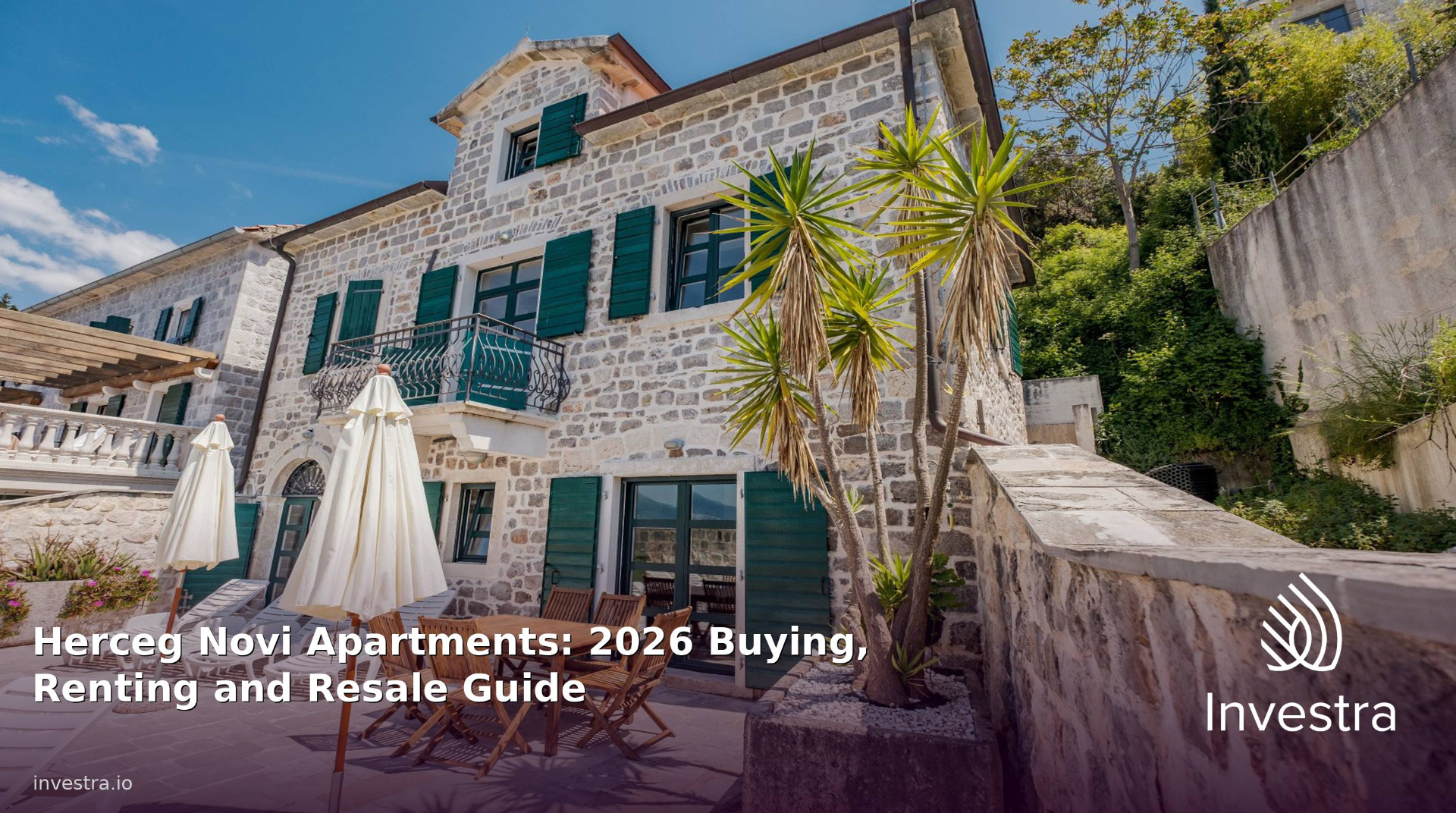
Herceg Novi Apartments: 2026 Buying, Renting and Resale Guide
Herceg Novi Apartments: 2026 Buying, Renting and Resale Guide
What should international buyers assess when researching herceg novi montenegro real estate in 2026?
Quick Answer: International buyers should assess legal title, local planning rules, running costs, transport links and rental demand to determine whether a Herceg Novi purchase meets their goals; verify all data with local authorities, licensed lawyers and current market reports.
When you begin researching herceg novi montenegro real estate in 2026 the list of questions can feel never‑ending. From my experience advising buyers across the Adriatic, the single most important shift recently has been the emphasis on verifying live documentation rather than relying on memory or online listings alone. What surprised many buyers is how much the local details—a permit for a terrace, a municipal plan for coastal access, or the exact wording in a title deed—change outcomes.
So what should you assess first? Start with your objective: is this a holiday apartment, a long‑term rental, or a buy‑to‑hold that you will sell in several years? Each goal changes the priority of neighbourhoods, size and finishes. Then check title and ownership history with Montenegro's cadastral office and ask sellers for up‑to‑date encumbrance certificates. Don’t assume that every listing’s legal status is clean—ask for scanned primary documents and have a local lawyer confirm them.
Market context matters, too. Compare Herceg Novi against other Adriatic coastal towns using regional research; Investra.io’s market guides on neighbouring coastal areas can help you build context, for example Pula and Rovinj guides provide methodology you can replicate when assessing Herceg Novi: Pula Real Estate Market 2026, Rovinj Real Estate Market 2026. If you want advisory help on strategy, consultant Siniša Dagary has practical advisory services that many international buyers find useful (advisory services).
Finally, verify quantitative facts—tax rates, transfer costs, municipal charges and utility tariffs—with official sources. I always tell clients: treat numbers in blogs or listings as prompts to check, not facts. Contact the Herceg Novi municipality, a notary, and a licensed real estate agent for up‑to‑date figures before you sign anything.
Herceg Novi — a local overview and market dynamics
Quick Answer: Herceg Novi is a coastal town with a mix of historic centre and newer seaside developments; observe occupancy patterns and local planning updates to understand demand dynamics for apartments.
Herceg Novi’s geography is compact but varied: old stone streets and a waterfront promenade sit beside newer districts that developed after the Yugoslav era. In my experience, the town’s appeal to buyers has two faces—heritage lovers who want an apartment in the old town, and international buyers searching for modern flats with sea views that are easier to rent seasonally. The reality is neither option is universally better; each suits different buyer goals.
Market dynamics here are driven by tourism seasonality, domestic buyer interest and cross‑border demand from nearby countries. In recent years tourists have sought authentic Adriatic experiences, which can lift demand for well‑located apartments in the historic centre. At the same time, buyers often prize easy access to ferry connections and road links to larger Montenegrin cities. To understand current trends for yourself, consult local listing portals and ask the municipal planning office for recent permit activity; this will show where new supply is coming from.
For comparative research I often suggest looking at Investra.io’s guides to nearby markets to understand valuation drivers and buyer priorities. The Poreč and Umag analyses show how coastal tourism patterns shape apartment demand in smaller towns: Poreč Real Estate Market 2026, Umag Real Estate Market 2026. Comparing different coastal towns helps you frame realistic expectations for liquidity and tenant types in Herceg Novi.
Neighbourhoods & location: where to focus your apartment search in Herceg Novi
Quick Answer: Focus on neighbourhoods that match your goal—historic centre for character and short-term rentals, seaside promenades for tourist demand, and elevated suburbs for quieter year‑round living—and verify local services and access.
Choosing the right neighbourhood in Herceg Novi will determine everything from your day‑to‑day quality of life to how easy it is to rent the apartment. In our advisory work we’ve seen buyers fall in love with the charm of the old town and then struggle with limited parking and narrow access for holiday guests. Conversely, roadside developments with modern blocks can offer parking and easier management but may lack the atmosphere guests seek.
When assessing locations, check three practical things on site: access (roads and public transport), utilities (water pressure, waste collection schedules) and micro‑climate (does the spot get strong afternoon winds or reliable summer breezes?). Ask neighbours about noise, seasonal footfall and any planned construction. For international buyers, proximity to ferry terminals or the main highway may matter more than a sea view if your plan includes frequent travel or long‑term lettings.
Use local resources to cross‑check what you see in viewings. Municipal zoning maps and building permit records will tell you if a quiet street will be disrupted by a new block next year. For methodical due diligence, follow the checklists used in other Adriatic markets; Investra’s guides on Pula, Rovinj and Medulin illustrate how to compare neighbourhood amenities and buyer priorities: Medulin Real Estate Market 2026, Rovinj Old Town or Newer Areas, Best Neighbourhoods in Pula.
Buying process in Montenegro: step‑by‑step for Herceg Novi apartments
Quick Answer: The buying process typically moves from initial offer to reservation, due diligence, contract and notarised transfer; always use a local notary and a lawyer to confirm steps and required documents.
From initial contact to keys in hand, buying an apartment in Herceg Novi follows a set of legal milestones that are similar across Montenegro, but local practice matters. In my practice I advise clients to sequence the purchase carefully: make an offer contingent on a short due‑diligence period; secure a reservation agreement with defined conditions; and only sign a final sales contract after a lawyer confirms clear title and absence of liens.
Your local lawyer will request documents such as the title deed, cadastral plan extract, building permit, energy certificate (if required) and proof of seller identity. Notaries in Montenegro play a central role in authenticating the final deed transfer and collecting relevant taxes and duties. If your purchase involves a company, the process adds corporate documentation to the checklist. We always recommend meeting your notary in person or arranging secure video calls to confirm identities and signatures.
If you want procedural examples, Investra’s Croatia market pieces show transaction checklists and due diligence formats you can adapt: Buying Property in Pula: Legal Checks, Pula New‑Build Homes: Due Diligence Guide. Those articles are practical templates for documenting what you’ll need in Herceg Novi.
Due diligence: documents and checks every buyer must request
Quick Answer: Request the title deed, cadastral extract, building permits, tax clearance and utility statements, and have a local lawyer verify them against registers and municipal records.
Proper due diligence is non‑negotiable. In practice, I’ve seen buyers assume a single clean deed equals full ownership, only to find unresolved servitudes or informal agreements that complicate resale. To prevent that, ask for originals or certified copies of all property documents and insist on a lawyer who will verify them directly with the cadastral service and municipal offices.
Key items to obtain include the current title deed, a cadastral map extract, land‑use or zoning certificates, building permits for any constructed or modified elements, municipal debt statements, and recent utility bills. If the apartment is part of a condominium, ask for the condominium rules, minutes of the homeowners’ association meetings and records of any pending repair liabilities. For multiple‑unit buildings, examine the technical building documentation so you understand shared systems like heating and waste.
If you prefer an organised checklist, Investra’s Istria due diligence and FAQ resources provide structured buyer checklists that can be used as a model when assembling documents in Herceg Novi: Istria Property Due Diligence, Istria Property FAQ 2026.
Ownership structures and legal options for foreign buyers
Quick Answer: Foreign buyers can hold property as individuals or through entities; each structure has practical consequences for taxes, inheritance and resale—discuss options with a local lawyer and tax advisor.
Choosing how to hold title in Montenegro affects estate planning, tax reporting and the ease of future transactions. In my advisory work I often see purchasers default to individual ownership without considering company structures that might fit investment portfolios better. The reality is there’s no one‑size‑fits‑all answer; the best option depends on your nationality, long‑term plans and compliance obligations at home.
Talk to a Montenegrin lawyer about implications for inheritance and transferability. If you plan to operate a rental business, discuss whether to use a local company, an offshore entity or personal ownership. A professional can also explain cross‑border tax reporting obligations you’ll create in your country of residence. When we advise clients, we coordinate Montenegrin counsel with their home tax advisors to ensure international compliance and clarity.
For practical samples of ownership considerations and budgeting for ongoing costs, Investra’s ownership and taxation guides from neighbouring markets include useful frameworks: Istria Property Ownership Costs, Property Taxes and Purchase Costs in Istria. Use those templates to prepare questions for your Montenegrin advisors.
Taxes, fees and ongoing ownership costs — how to verify up‑to‑date figures
Quick Answer: Confirm transfer taxes, annual property taxes, and municipal fees with Herceg Novi’s tax office, your notary and a local accountant rather than relying on online estimates.
I avoid quoting numbers because tax rules and local fees change and vary by property type. What I always tell clients is that verifying current charges is a straightforward process: contact the Herceg Novi municipal tax office for property tax rates and local charges; ask a licensed notary to calculate transfer duties at the moment of contract signing; and consult a Montenegrin accountant for expected annual running costs.
Other ongoing costs to model include condominium maintenance, utilities, insurance and periodic repairs. For holiday rental apartments you should also budget management, cleaning and marketing costs. If you plan to rent, discuss VAT and income tax registration with your accountant so you understand gross‑to‑net calculations in your business plan.
To structure this verification, use checklists found in regional buyer guides. Investra’s practical budgeting guides for Istria help buyers create realistic ownership cost plans that you can adapt for Herceg Novi by substituting local fee inputs: Istria Property Ownership Costs, Istria Property Investment 2026. For bespoke calculations engage a local accountant or the Findes Group & Partners advisory team who specialise in cross‑border property advisory (Findes Group & Partners, Findes advisory team).
Renting your apartment in Herceg Novi — short‑term versus long‑term strategies
Quick Answer: Decide between short‑term holiday rentals and long‑term leases based on location, management ability, and local regulations; verify short‑term rules with the municipality and a tax advisor.
Choosing a rental strategy is one of the most consequential decisions an investor makes. Short‑term holiday lets can generate high seasonal demand in prime locations, but they require active management, cleaning, and marketing. Long‑term leases reduce turnover and administration but may produce steadier, lower‑maintenance income. In my experience, buyers underestimate the time and costs required to operate successful short‑term rentals unless they partner with an experienced operator.
For checklists and owner questions when evaluating rental investments see Investra’s rental investment and due diligence articles from nearby markets: Pula Rental Investment Guide 2026, Rovinj Holiday Rental Investment. Those guides contain practical questions to ask property managers and platform operators that you can use in Herceg Novi.
Resale prospects and exit strategies for apartments in Herceg Novi
Quick Answer: Resale prospects depend on location, building quality and market liquidity; plan exit scenarios and check resale comparables and local buyer demand before you commit.
Investra’s market articles provide frameworks for assessing resale potential by comparing buyer priorities across coastal towns: Decision Framework for Buyers, Poreč Market Guide. Use these to structure your own exit analysis and to prepare documentation that speeds up future transactions.
Financing and mortgages for international buyers — what to expect and how to check terms
Quick Answer: Mortgage availability and terms for foreign buyers vary; contact Montenegrin banks and independent mortgage brokers for current eligibility rules and rate quotes.
For structured approaches to mortgage checks and buyer questions, Investra’s Croatia‑focused articles offer relevant templates you can use to collect comparable quotes from lenders and to prepare the information a bank will require: Pula New‑Build Homes: Due Diligence, Buying Property in Pula: Legal Checks. If you want tailored investment structuring, consider reaching out to advisors such as Siniša Dagary for a consultation: investment consultation.
Working with agents, lawyers and property managers in Herceg Novi
Quick Answer: Choose licensed local professionals, verify their references and past transactions, and ensure clear written scopes of work for agents, lawyers and managers.
If you want external advisory support that coordinates multiple specialists, consider international consultant networks and advisory firms. The Findes Group & Partners advisory team can assist cross‑border buyers with tax and structuring questions (Findes Group & Partners, Findes Group & Partners advisory team). And for strategy and market entry services, Siniša Dagary’s profiles and insights are practical starting points: Siniša Dagary, Siniša Dagary investment insights.
Practical viewing checklist and negotiation tips for apartments
Quick Answer: During viewings inspect structural condition, water and electricity systems, sound insulation, and obtain a written list of included items; negotiate based on verifiable defects or required work.
To refine your approach, refer to negotiation and due diligence templates used in neighbouring markets; Investra’s buyer guides offer practical frameworks for viewings and negotiation that you can adapt: Decision Framework for Buyers, Pula Rental Investment Guide 2026.
How to verify current local data and update your assumptions
Quick Answer: Always verify rates, permissions and market metrics directly with Montenegro’s cadastral and municipal offices, licensed notaries, banks and live market reports rather than relying on archived web articles.
If you need market activity and transaction evidence, request sales records from local agents and independent market reports. Investra’s market guides are good starting points for methodology and comparison—see their Pula, Rovinj and Poreč guides and then adapt the research approach for Herceg Novi: Pula Real Estate Market 2026, Rovinj Real Estate Market 2026, Poreč Market Guide. For tailored help in structuring these verifications, connect with advisors like Siniša Dagary for strategy and coordination: Siniša Dagary profile.
Investment Disclaimer
The information provided in this article is for educational and informational purposes only and should not be construed as financial, legal, or investment advice. Real estate investments carry inherent risks, and past performance does not guarantee future results. Investors should not invest money they cannot afford to lose. Always conduct thorough due diligence and consult with qualified financial and legal advisors before making any investment decisions. Investra.io does not guarantee returns on any investment.
Frequently Asked Questions
Can foreigners buy property in Herceg Novi?
Yes, many foreigners purchase property in Montenegro, but rules and practical steps vary by nationality and property type. Instead of relying on blog assertions, check the Ministry of Justice and the local notary for current foreign ownership rules. A local lawyer can confirm whether any special permissions or registrations are required for your nationality and the specific parcel you’re considering.
What documents should I ask the seller for before making an offer?
Request the title deed, cadastral extract, building permit, condominium documentation if applicable, and recent utility bills. Ask for evidence of no municipal debts and any contracts relating to the property. Have these documents verified by a Montenegrin lawyer who will cross‑check them with public registries and clarify any encumbrances.
How do I check if the apartment has outstanding communal repair debts?
Ask the homeowners’ association (or building manager) for a statement of the account and minutes of recent meetings. Your lawyer should request official confirmation from the condominium’s bank account or the association’s treasurer. Municipal records may also show if there are liens related to the building, so include that search in your due diligence scope.
Are short‑term holiday rentals legal in Herceg Novi?
Short‑term letting is common but subject to local registration and tourist tax rules. Confirm requirements with the Herceg Novi municipality and a local tax advisor. They will tell you if you need a tourism licence, what guest registration looks like, and how tourist taxes are collected and remitted.
What are the common pitfalls when buying an older apartment in the old town?
Older properties can be charming but often need structural work, updated utilities and moisture remediation. Expect to verify the building’s technical documentation, ask about insulation and heating systems, and commission a structural survey. Confirm whether previous renovations had proper permits. These checks help avoid surprise costs after purchase.
How do I find a trusted local lawyer or agent in Herceg Novi?
Ask for references from previous international clients, check membership in professional associations, and confirm licencing with Montenegro’s relevant authorities. International networks and advisory firms like the Findes Group & Partners or consultant profiles such as Siniša Dagary’s can provide vetted introductions to recommended professionals.
Should I form a company to buy an apartment?
That depends on your objectives. Holding property through an entity can help with estate planning or running a rental business, but it adds accounting and reporting obligations. Discuss tax consequences with both a Montenegrin accountant and your home country tax advisor before choosing a structure.
How can I estimate ongoing running costs for an apartment?
Obtain recent utility bills from the seller, ask the homeowners’ association for maintenance cost history, and get quotes for expected insurance and management fees. For tax or fee rates, contact the municipal tax office. Use local contractor quotes to estimate potential repair and renovation budgets.
What steps protect my deposit during a reservation period?
Use a written reservation agreement that specifies conditions for refund, time limits for due diligence, and the exact deposit amount. Preferably hold deposits in a notary escrow account or a trust arrangement administered by your lawyer. Clear contract terms reduce disputes if the transaction does not complete.
How can I compare Herceg Novi to other Adriatic investment locations?
Compare using consistent metrics: buyer demand seasonality, legal clarity, local infrastructure and historical liquidity. Read regional market guides to learn comparative methodology—Investra’s articles on Pula, Rovinj and Poreč show how to frame comparisons and questions to ask local agents and authorities.
Who should I contact for cross‑border tax and legal coordination?
Use a Montenegrin law firm and an accountant who can coordinate with your home country advisors. International advisory teams such as Findes Group & Partners can help with cross‑border tax structuring and compliance, and consultants like Siniša Dagary can provide strategy consultations and introductions to local partners.
Recommended Reading
- Pula Real Estate Market 2026: Areas, Buyer Demand and Due Diligence
- How to Buy Property in Istria as a Foreign Buyer in 2026
- Rovinj Real Estate Market 2026: Buyer Priorities and Location Choices
- Istria Property Investment 2026: A Decision Framework for Buyers
- Poreč Real Estate Market 2026: A Practical Guide for Property Buyers
- Pula Rental Investment Guide 2026: Long-Term Letting Buyer Questions
- Siniša Dagary — Investment Consultant
- Business Strategy Blog
Connect With Investra
Follow Investra.io on social media for market updates and new listings: Facebook, LinkedIn, YouTube.
Embedded Investra links used across article: Additional Investra references included inline where relevant: Embedded Siniša Dagary links used above and here for convenienceConnect With Investra
Quick Answer: Follow Investra for verified market context and practical property research.
Related Posts
No related posts available.
