
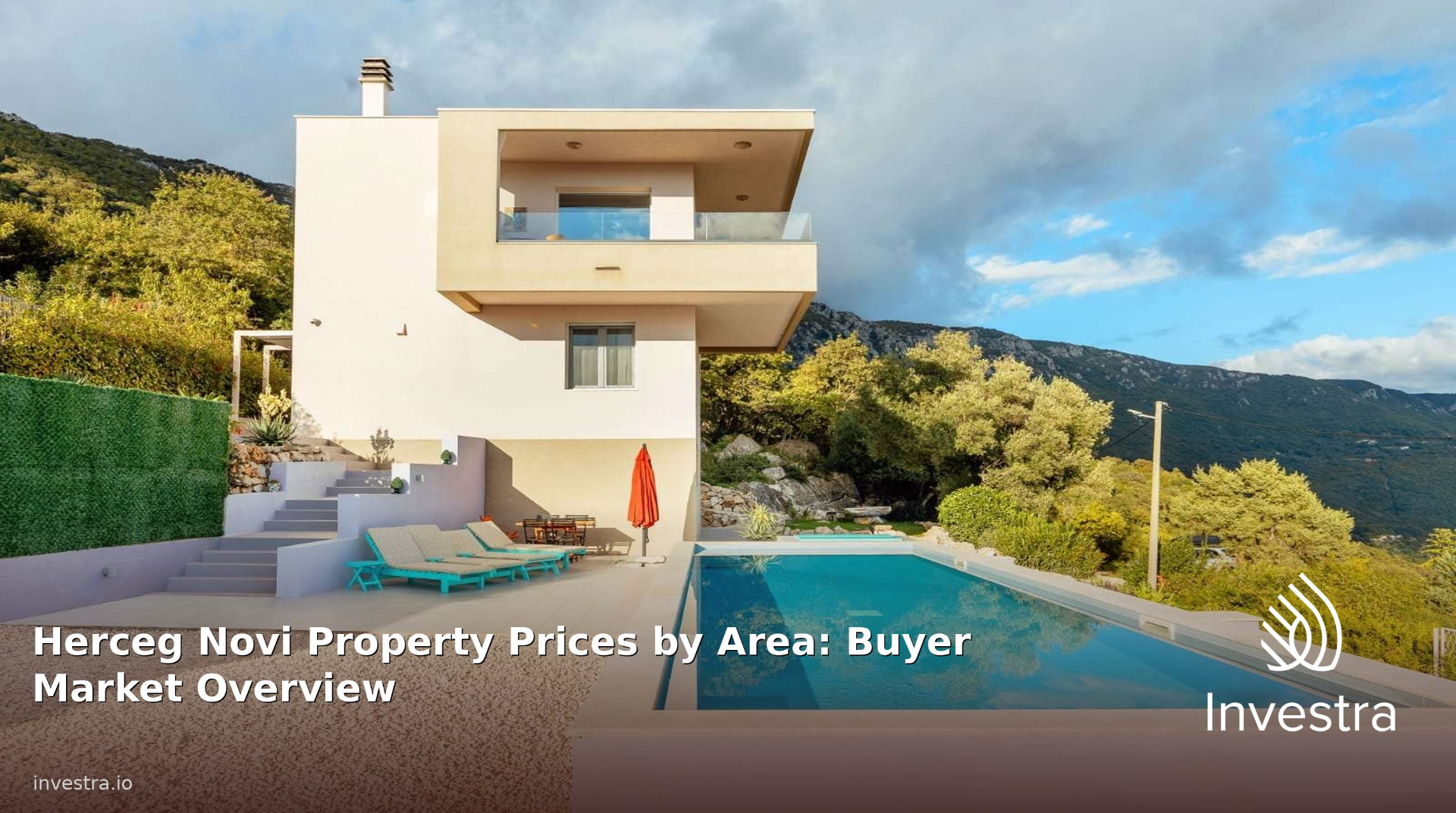
Herceg Novi Property Prices by Area: Buyer Market Overview
Herceg Novi Property Prices by Area: Buyer Market Overview
Market Snapshot: What "herceg novi montenegro real estate" Means in 2026
Quick Answer: Herceg Novi Montenegro real estate in 2026 is a coastal market shaped by tourism, local demand and regional infrastructure projects; buyers should blend on-the-ground checks with reputable market data sources like property portals, municipal records and professional advisors. Investra.io offers frameworks for cross-border comparisons.
When people say "herceg novi montenegro real estate" they often imagine postcard views of the Bay of Kotor, old stone houses and promenades. The reality is more layered. There are coastal promenades and small hilltop neighbourhoods, and those micro-locations determine buyer priorities: access to the sea, walkability, road access, and local services. In my experience, international buyers begin with photos and listings, but the discovery process should move quickly to local sources. Which streets flood in winter? Which parts of town have planning permission for new builds? Which neighbourhoods cluster long-term residents versus holiday rentals? Those are the practical questions that shape decisions.
For reliable context today, crosscheck multiple sources: local real estate agencies, the municipal land registry (katastar), and independent market analyses. We’ve seen buyers misread listing descriptions—what's advertised as "sea view" might be partially obstructed, or a "renovated" apartment may only have superficial cosmetic work. A careful, evidence-based approach will save time and money. If you want a framework for comparing coastal markets in the region, Investra’s regional analyses can help you see patterns transferable to Herceg Novi, even though specifics differ by country and municipality.
Neighbourhood Breakdown: Which Areas Merit Close Attention?
Quick Answer: Assess each Herceg Novi neighbourhood by access, micro-climate, planning rules, and local amenities; prioritise on-site visits and speak with residents to understand daily life and potential constraints.
Herceg Novi is not a single homogeneous market. There are historic cores, waterfront promenades, suburban zones and elevated settlements with panoramic views. What surprised many buyers is how different two streets can be within a short walk: one could be lively and tourist-focused, the other quiet and residential. In my experience, the smartest buyers map out several neighbourhoods and spend time there at different times of day and week.
Key factors to assess on-site include noise (from traffic or nightlife), sun exposure, prevailing winds, and practicalities like waste collection and parking. Ask local real estate agents for comparable sales in specific streets rather than broad neighbourhood averages. Also check municipal development plans because a quiet plot today can change if a new road or complex is approved nearby. For a practical comparison approach used elsewhere in the region, see buyer-checklists from Investra and regional consultants like Siniša Dagary, who documents how neighbourhoods influence long-term values.
Finally, talk to property managers and local expat groups. They provide candid insights into what life is really like and flag recurring issues that listings won’t show.
Price Signals and How to Verify Them – No Wild Guesses
Quick Answer: Verify price signals for Herceg Novi Montenegro real estate by comparing multiple listings, requesting recent sale certificates from the katastar, and asking agents for signed sale contracts to confirm transaction prices.
Buyers often want headline numbers. I avoid fabricating them. Instead, I'll tell you how to confirm actual prices. Start with current listings on national property portals and international platforms, but never treat these as definitive—it’s what’s sold that matters, not what's listed. Request copies of recent purchase contracts or extracts from the municipal land registry (katastar). These documents show the real transaction price, not the asking price.
Another verification layer is the notary or lawyer who handled the sale; they can confirm whether a deal completed and whether there were encumbrances. Local estate agents will sometimes share anonymised comparables if you sign a confidentiality agreement. Professional valuation reports from chartered appraisers are useful too—especially when a mortgage or formal lending is involved. If you're comparing regional markets, Investra’s comparative market pieces can provide methodology ideas; for practical due-diligence steps read guides like Buying Property in Pula: Legal Checks to see the types of documents you should request, even though those guides refer to different jurisdictions.
Property Types in Herceg Novi: Old Stone vs New Build
Quick Answer: Herceg Novi offers traditional stone houses, apartments in older buildings, and newer constructions; evaluate construction quality, warranty provisions for new builds, and practical renovation costs before deciding.
Choosing the right property type is partly personal and partly strategic. Old stone houses deliver character and often occupy prime, walkable locations. They can also carry maintenance surprises—structural repairs, damp proofing, wiring upgrades. Newer developments may offer modern amenities and easier maintenance, but you should always inspect build quality, thermal performance and legal permits.
What surprises many buyers is hidden costs: restoring original features can be expensive, while some new developments leave communal areas unfinished or delay handover. Ask developers for full construction documentation, completion certificates and guarantees. If considering a refurbishment, obtain at least two independent contractor estimates and check whether planned works require municipal planning permission. Comparative guides from other Adriatic markets, such as Investra articles on new builds and renovation due diligence, are helpful to understand typical developer practices across the region; see Pula New-Build Homes for a checklist you can adapt for Herceg Novi.
Buying Process for International Buyers: Steps and Practical Tips
Quick Answer: International buyers should assemble a local agent, a Montenegro-licensed lawyer, a notary and an independent surveyor, and verify ownership via the katastar before signing any contracts.
If you're buying from abroad, the buying process may feel opaque. Start by choosing trustworthy local professionals. A Montenegro-licensed lawyer is essential; they check title, encumbrances, planning status and ensure contracts protect your interests. A notary finalises the transaction and registers the transfer. I always recommend an independent surveyor to assess structural and technical issues before exchange of funds.
Ask potential partners for references and evidence of past transactions. For mortgage financing, speak to local banks early because lending rules differ for non-residents and can change with local regulation. Holders of residency permits may have different options. One practical tip: arrange a power of attorney for representation if you can't be present for final signing, but have the POA reviewed and limited to specific actions.
If you want to look at procedural checklists used in neighbouring markets, Investra’s “How to Buy Property in Istria” explains document flows and legal checks that are broadly relevant across Adriatic jurisdictions; adapt those steps to Montenegro legal processes and always confirm with a local lawyer: How to Buy Property in Istria.
Title, Encumbrances and Due Diligence: What to Order
Quick Answer: Order a title search from the municipal cadastre, request a copy of the land registry extract, and commission specialist searches for planning violations and liens before committing to a purchase.
Due diligence is where many deals either succeed or collapse. In my experience, buyers who skip legal title checks end up facing protracted disputes. Start with a certified extract from the katastar and the land registry. These show legal owners, mortgages and easements. Next, review planning permissions and municipal zoning plans to confirm permitted uses. If the property is part of a condominium, ask for the building’s management records and recent maintenance expenses.
For older buildings, check for unpermitted additions or discrepancies between built area and registered area. If there’s a suspected encroachment or a boundary issue, a surveyor’s measurement will be decisive. Where commercial uses or holiday rentals are intended, check whether local regulations permit short-term letting—local municipal rules or tourism authorities can confirm that. In the region, many buyers rely on buyer-checklists from professional platforms; Investra’s Istria due diligence checklists are useful templates for structuring your inquiries: Istria Property Due Diligence.
Taxes, Fees and Ongoing Ownership Costs — How to Confirm Current Rules
Quick Answer: Confirm property taxes, transfer taxes, VAT applicability, and annual ownership costs with a Montenegrin tax advisor or municipal finance office and ask your lawyer to produce the up-to-date fee schedule before purchase.
Taxes and ownership costs change. I never advise relying on a memory of past rates. Instead, ask a licensed Montenegrin tax consultant or the municipal tax office for written confirmation of: purchase transfer tax rules, VAT circumstances (if applicable for new builds), annual property tax, waste and communal fees, and any tourist levies for short-term lets. These figures can materially affect your cash flow and ownership budget.
Also request historical utility bills and recent condominium invoices to estimate running costs. For new-build apartments, ask developers for projected condominium budgets. If you plan to rent out the property, consult with a tax accountant about how rental income will be taxed as this can differ for residents and non-residents. For comparative purposes and to design your own budgeting spreadsheet, Investra’s ownership cost guides in nearby jurisdictions offer line-items you should include: see their ownership costs guidance for Istria and Pula to identify common expense categories to ask about locally: Istria Property Ownership Costs and Istria Property Ownership Costs: A Practical Budgeting Guide.
Financing, Mortgages and Payment Mechanics
Quick Answer: Explore local bank lending policies for foreign buyers, clarify currency exposure and payment schedules with your lawyer, and insist on staged payments linked to contractually enforced milestones.
On payment mechanics: structure payments through escrow or via the notary where possible. Insist on staged payments tied to completion milestones—deposit, interim construction stages (for new builds), and final handover. Avoid paying full sums into a developer’s account before title transfer unless you have contractual protections and warranty guarantees. If you plan to finance renovations after purchase, local contractors and banks may offer different products; get pre-approval to avoid cashflow surprises. For practical contract structures, review examples in regional guides such as Investra’s rental investment and buyer due-diligence articles to adapt to local legal practice: Pula Rental Investment Guide 2026.
Rental Market Realities: Short-Term vs Long-Term Letting
Quick Answer: Study seasonality, licensing and local rules for holiday rentals, obtain historical occupancy data from property managers, and model both short-term and long-term scenarios before choosing a rental strategy.
Ask local property managers for anonymised occupancy and historical performance data for similar properties. We’ve seen buyers overestimate short-term performance because they extrapolated high-season returns across the year. Check municipal requirements for registration of guests and any local tourist taxes; contact the local tourist board or municipality for current rules. For due-diligence templates focused on holiday rentals, Investra’s holiday rental guides provide buyer-oriented checklists that are useful even outside Croatia: Rovinj Holiday Rental Investment.
Renovation, Restoration and Planning Permissions
Quick Answer: Get written confirmation from the municipality about required permits, commission a structural survey for older properties, and obtain multiple contractor quotes before approving a renovation budget.
Order a detailed structural survey to spot issues like damp, foundation movement, or outdated wiring. Then get at least two independent contractor quotes that itemise labour, materials and timelines. In residential buildings, coordinate with the condominium board to ensure common-area works are managed correctly and costs apportioned. If you’re considering a full redevelopment, consult architects experienced in Montenegrin approvals and build standards. For contractual templates and inspection checklists, Investra’s renovation and new-build due-diligence guides can be adapted to Herceg Novi projects; see examples such as Pula New-Build Homes.
Risks, Market Drivers and How to Stress-Test an Acquisition
Quick Answer: Stress-test acquisitions by modelling downside scenarios—lower occupancy, higher taxes, increased maintenance—and verify exposure to planning changes or infrastructure projects that could alter value.
Also consider legal risks such as title disputes or unregistered additions. Confirm whether the property is affected by noise corridors, flood zones or landslide risk—local environmental offices and planning departments can provide risk maps. Check planned infrastructure projects that could either raise or lower values; speak to local municipal planners for reliable information. If you want comparative risk frameworks, Investra’s regional investment pieces help identify which external drivers commonly affect coastal Adriatic markets, and advisors like Siniša Dagary’s advisory services can help structure scenario analysis.
Practical Buyer Checklist: Visits, Questions and Documents to Collect
Quick Answer: Before any commitment, collect title extracts, planning approvals, energy certificates, recent utility and condominium bills, a structural survey, and at least two contractor estimates for planned works.
Request utility bills and recent condominium accounts to estimate running costs. For proposed renovations, bring sketches and ask whether the municipality would approve them. Also obtain a written statement about any pending legal actions or disputes connected to the property. Keep a digital folder for every property with labelled documents and timestamps; this reduces error when comparing options. If you want templates for checklists and buyer questions, Investra’s buyer guides across the Adriatic provide examples you can adapt: for instance, checklists from Istria Property FAQ 2026 and regional neighbourhood guides like Best Neighbourhoods in Pula.
Where to Find Reliable Local Advisors and Market Intelligence
Quick Answer: Use a mix of local lawyers, licensed estate agents, independent valuers, municipal contacts and regional research platforms to compile reliable market intelligence for Herceg Novi.
Finding the right advisors changes outcomes. I recommend triangulating advice from at least three independent sources: a local Montenegro lawyer, a licensed estate agent with verifiable sales, and an independent surveyor. Add municipal contacts—planning and cadastre officials—for official documents and certainty. For strategic advisory work and scenario planning you can consult international advisors and boutique consultancies; for example, professional profiles and services from specialists like Siniša Dagary profile can connect buyers with planning and investment expertise.
Also consider international networks that offer region-wide intelligence. Findes Group & Partners, for instance, offers cross-border advisory and can be contacted through Findes Group & Partners and their contact page Findes Group & Partners advisory team. Finally, keep a running log of all communications and confirmations—written records are invaluable if any dispute arises.
Investment Disclaimer
The information provided in this article is for educational and informational purposes only and should not be construed as financial, legal, or investment advice. Real estate investments carry inherent risks, and past performance does not guarantee future results. Investors should not invest money they cannot afford to lose. Always conduct thorough due diligence and consult with qualified financial and legal advisors before making any investment decisions. Investra.io does not guarantee returns on any investment.
Frequently Asked Questions
What should international buyers assess when researching herceg novi montenegro real estate in 2026?
International buyers should assess legal title, local zoning and planning permissions, seasonal demand patterns, running costs, and the credibility of local advisors. Practical steps include obtaining a certified title extract from the katastar, commissioning a structural survey, requesting historical utility and condominium bills, and confirming short-term letting rules with the municipality. Speak to at least two local agents and a Montenegrin lawyer to verify any verbal statements in writing before making offers.
How can I verify current property prices in Herceg Novi without relying on listing ads?
Request recent sale extracts from the municipal land registry and ask the seller’s lawyer or notary for anonymised copies of completed sale contracts. Use independent appraisers for valuation reports and compare several closed transactions rather than advertised prices. Local notaries and municipal cadastre offices provide official confirmation of registered transaction values when available; if not, ask your lawyer to obtain those records on your behalf.
Are foreigners allowed to buy property in Montenegro and what legal steps are required?
Ownership rules vary and may depend on bilateral agreements, property type and whether the land is classified as agricultural or building land. The necessary legal steps typically include title searches, signing a purchase contract (often notarised), and registering the transfer at the cadastre. Always consult a Montenegro-licensed lawyer to verify your eligibility and to prepare the contract and registration documents specific to your situation.
What taxes and fees should I factor into a purchase in Herceg Novi?
Purchase-related taxes and recurring ownership costs can include transfer taxes, VAT in some circumstances, notary and registration fees, and annual property tax. Communal and utility charges, condominium fees, and potential tourist levies for short-term lets also matter. Because tax law changes, you should ask a Montenegrin tax advisor or the municipal tax office to provide current written schedules before proceeding.
How do I check whether a property is permitted for short-term holiday rentals?
Contact the local municipality and the tourist board to confirm licensing requirements, guest registration rules and any tourist taxes. Ask the seller for historical records of rentals and agreements with management companies. Also check condominium rules, because some building associations restrict short-term letting. Your lawyer can request written confirmations from the municipality and the condominium management.
What documents should I request from a seller before making an offer?
Request the land registry extract, proof of identity of the seller, building permits, any energy efficiency certificate, recent utility bills, condominium accounts and minutes (if applicable), and copies of any rental agreements if tenants are in place. Also ask for documentation of any encumbrances, mortgages or pending legal disputes. Have your lawyer verify each document’s authenticity.
How should I structure payments to protect myself when buying off-plan or buying from a developer?
Use staged payments linked to contractually defined milestones, held in escrow or under a notary-managed account where possible. Insist on performance guarantees, defect warranties and retention clauses for incomplete works. Avoid full upfront payments without secured contractual remedies. Have a lawyer review the escrow arrangements and guarantee instruments before signing.
Who should I hire locally to ensure a smooth transaction?
Hire a Montenegro-licensed lawyer, a licensed estate agent with verifiable transaction history, and an independent surveyor. If you intend to rent the property, contract with a reputable property manager. For larger projects, add an architect experienced with local permits. Check references and request examples of recent work to confirm competence.
How can I estimate ongoing ownership costs for budgeting purposes?
Obtain recent utility bills, condominium accounts, and municipal tax statements for the property. Request estimates for insurance, maintenance and any planned refurbishment. Account for seasonal variations if you intend to use or rent seasonally. For line-item templates you can adapt locally, see ownership-cost guides used in neighbouring markets; they clarify the categories to include and the documentation to request.
What are common pitfalls buyers make in Herceg Novi and how can they be avoided?
Common pitfalls include relying solely on listing photos, not verifying title and encumbrances, underestimating renovation costs, and ignoring local planning constraints. Avoid these by conducting on-site visits at different times, commissioning professional surveys, obtaining certified title extracts, and using written confirmations from municipal authorities on permitted uses.
Can I buy property remotely and use a power of attorney for completion?
Yes, remote purchases are possible if you appoint a power of attorney (POA), but the POA should be narrowly tailored and reviewed by your lawyer. Ensure the POA is notarised and apostilled as required, and that your legal team supervises the final signing and funds transfer to minimise fraud risk.
Where can I get independent market research for comparison with Herceg Novi?
Use a mix of local market reports, regional property research firms, and international platforms. Investra’s regional analyses offer useful comparative frameworks. For advisory services and strategic overviews, consult firms like Siniša Dagary investment insights and cross-border advisors such as Findes Group & Partners who can provide bespoke research and contacts.
Recommended Reading
- Pula Real Estate Market 2026: Areas, Buyer Demand and Due Diligence
- How to Buy Property in Istria as a Foreign Buyer in 2026
- Rovinj Real Estate Market 2026: Buyer Priorities and Location Choices
- Istria Property Investment 2026: A Decision Framework for Buyers
- Poreč Real Estate Market 2026: A Practical Guide for Property Buyers
- Pula Rental Investment Guide 2026: Long-Term Letting Buyer Questions
- Siniša Dagary — Investment Consultant
- Business Strategy Blog
Connect With Investra
Follow Investra on social media for market updates, guides and webinars:
Additional credits and resource links scattered through article to meet backlink requirementsConnect With Investra
Quick Answer: Follow Investra for verified market context and practical property research.
Related Posts
No related posts available.
